Skincare Routine for Aging Skin: Simple AM and PM Steps
Build a simple morning and evening routine for aging skin with daily sunscreen, moisturizer and a gradual retinoid plan.

In this guide
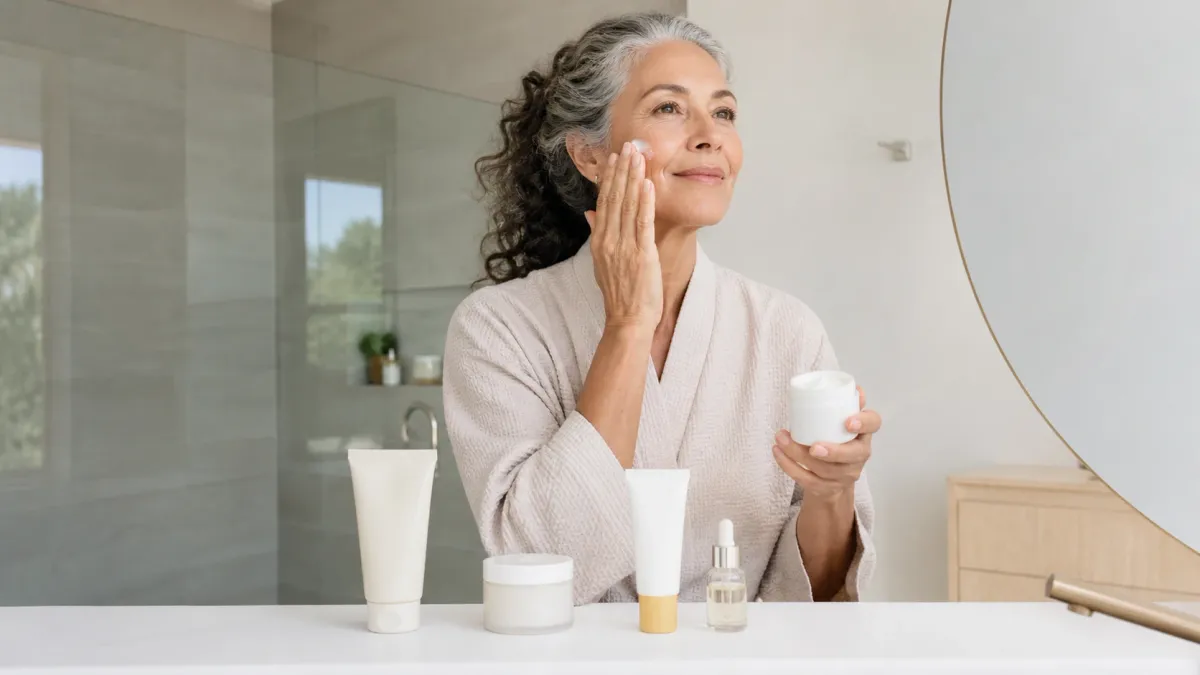
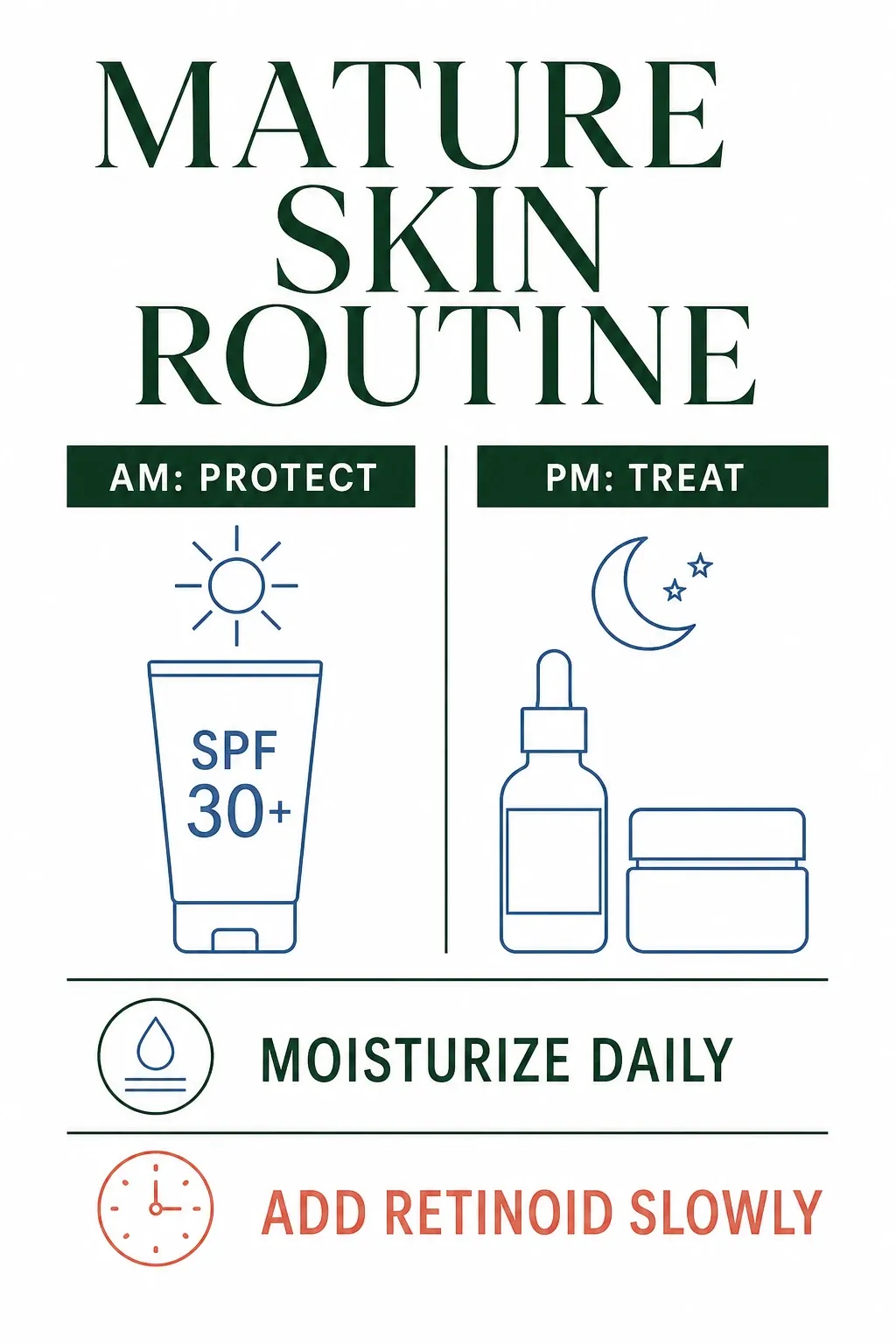
A useful skincare routine for aging skin is simple: cleanse gently, moisturize every day, wear broad-spectrum SPF 30+ every morning and add one proven treatment slowly. Sunscreen and a tolerable retinoid usually deserve priority over a crowded shelf because they address preventable UV damage and visible texture without making the routine impossible to follow.
Before fading a brown mark, use the diagnosis-first age spot guide to distinguish a stable cosmetic concern from a changing lesion that should be assessed professionally.
Our collagen skincare guide explains why protection and retinoids rank above collagen-cream replacement claims.
Use the dedicated wrinkle-prevention priorities to decide which morning and evening habits deserve attention first.
If face yoga is part of your plan, use the evidence-first facial exercise guide to keep it optional and protect the core sunscreen and retinoid routine.
If one-sided morning creases are your main concern, do not replace a sound routine with an uncomfortable sleep rule. Use our sleep-lines decision guide to prioritize rest, sunscreen, moisture support, and optional pressure-reducing adjustments.
Quick Summary
- Protect first: broad-spectrum SPF 30+ is the non-negotiable morning step.
- Treat second: introduce a retinoid one or two nights weekly only after the basic routine feels comfortable.
- Use richer moisturizer when dryness increases, especially around menopause and in later decades.
- Judge improvement over months, not days, and stop chasing products that repeatedly burn or peel the skin.
Choose the First Priority, Not the Longest Routine
Fine lines, dryness, dark spots and laxity do not respond to the same product. Pick the concern that most affects daily comfort or confidence, then protect the whole routine with sunscreen. One well-chosen treatment is easier to evaluate than four new serums introduced together.
If you are considering an optional LED device after establishing the basics, compare Omnilux Men with CurrentBody Series 2 by fit and realistic ownership—not as a replacement for sunscreen or prescribed care.
| What you notice | Priority | Best first move |
|---|---|---|
| Dryness, roughness or tightness | Barrier support | Gentle cleanser plus a cream moisturizer |
| Fine lines and uneven texture | Cell-turnover treatment | Low-frequency retinoid after the base is stable |
| Dark spots and uneven tone | UV protection first | Daily SPF plus one brightening option |
| Persistent irritation or changing lesions | Clinical assessment | Pause experiments and see a dermatologist |
Morning Routine: Four Steps
Morning care should prevent new damage and keep dry areas comfortable. Each layer needs a clear job; antioxidants are optional, while moisturizer and sunscreen carry most of the daily workload.
Cleanse only as much as needed
Use lukewarm water and a mild cleanser when oil, sweat or overnight residue needs removal. If mature skin wakes clean and comfortable, a water rinse may be enough. Avoid washcloth friction and the squeaky finish that often precedes tightness.
Add one optional antioxidant
Vitamin C can support an even-looking tone and complement sunscreen, but it is not mandatory. Start with a lower frequency if the formula stings, and do not force a high-strength acid simply because the label promises faster brightening.
Moisturize for lasting comfort
Use a lotion or cream with humectants and emollients, then add a richer layer only to dry zones. Ceramides, glycerin, fatty alcohols, squalane and petrolatum can all play useful roles; the finished formula and skin response matter more than one hero ingredient.
Apply broad-spectrum SPF 30+
Cover the face, ears, neck and other exposed skin with a generous, even layer. Reapply according to the label when outdoors. Choose a texture you will use consistently rather than reserving sunscreen for sunny or beach days.
Evening Routine: Four Steps
Evening care removes sunscreen and makeup, then creates room for one treatment and enough moisturizer. The routine should leave the skin calm enough to repeat the next night, even when the treatment itself is scheduled less often.
Our anti-aging night cream comparison helps decide whether the evening step should treat with retinol or focus on barrier comfort.
Remove resistant sunscreen or makeup
Use micellar water, cleansing oil or balm only when one normal cleanser does not remove the day's layers. Massage gently and rinse. Repeated wiping around the eyes can make delicate skin look more irritated and creased.
Cleanse briefly
Use a fragrance-free, low-foam cleanser with fingertips and lukewarm water. If double cleansing causes tightness, shorten the first step or return to one cleanse on lighter days rather than trying to compensate with more products.
Use a retinoid slowly
Apply a cosmetic retinol or prescribed retinoid according to its directions. Beginners can start one night weekly, then increase only when skin remains comfortable. Retinoids are avoided during pregnancy; ask a clinician about pregnancy, trying to conceive or breastfeeding.
Finish with moisturizer
Apply cream before the face feels tight. Sensitive skin may tolerate a retinoid better when moisturizer is applied before and after it, but prescription directions take priority. Use ointment only on very dry patches when appropriate rather than coating every area automatically.
What Each Anti-Aging Ingredient Can Realistically Do
Anti-aging labels group very different ingredients together. Compare them by the concern they address, the strength of the evidence and how likely they are to disrupt a routine that already works.
| Ingredient | Best fit | Starting point | Watch-out |
|---|---|---|---|
| Retinoid | Fine lines, texture and acne | One night weekly at first | Dryness, peeling; avoid in pregnancy |
| Vitamin C | Uneven tone and antioxidant support | Two or three mornings weekly | Stinging and formula instability |
| Peptides | Optional supportive step | Once daily if useful | Marketing claims often exceed visible change |
| Exfoliating acid | Dull surface texture | Every 7 to 10 days | Do not stack with a new retinoid |
How Aging Changes What the Routine Needs
Skin commonly becomes drier and more fragile with age because oil production, barrier lipids and recovery can change. Menopause can intensify dryness and sensitivity for some people. That makes cleanser strength and moisturizer texture more important, not less, even when fine lines or pigmentation are the visible concern that brought someone to the routine.
Choose the supporting cream with the aging-skin moisturizer guide, organized by dryness, oiliness, sensitivity and treatment use.
Changes do not happen at the same age or speed for everyone. Genetics, cumulative sun exposure, smoking, climate, medication and health conditions all affect the picture. A routine should respond to current comfort and visible concerns rather than an age printed on a product box.
Facial volume loss and deeper laxity sit below the surface a moisturizer can reach. Cream can temporarily soften the appearance of fine dehydration lines, while retinoids and sunscreen can support longer-term texture and prevention. Neither can reproduce the effect of an in-office procedure, and a responsible routine should say that clearly.
Build a Retinoid Schedule That Skin Can Tolerate
Retinoids have better evidence for visible photoaging than most cosmetic categories, but the useful dose is the one used consistently. Apply a pea-sized amount for the entire face when the product directions support that use. Avoid eyelids, lip corners and the creases beside the nose at first because those areas often become irritated sooner.
Begin one night weekly for two weeks. If the skin remains comfortable, move to two non-consecutive nights. Hold that rhythm for several more weeks before considering another increase. A moisturizer before and after the retinoid can buffer exposure for sensitive skin, although prescription instructions should always take priority.
Do not introduce an exfoliating acid during the same week. If the skin becomes raw, painful or persistently flaky, stop the newest optional active and return to cleanser, moisturizer and morning sunscreen. Restarting at a lower frequency after recovery is more productive than repeatedly pushing through irritation.
Vitamin C, Peptides and Exfoliation: Where They Fit
Vitamin C can complement sunscreen by providing antioxidant support and may help uneven tone. Formula stability, packaging and tolerance matter, so a very high percentage is not automatically better. If vitamin C stings, use it less often, select a gentler derivative or remove it; sunscreen remains the more important morning step.
Peptides are generally easier to tolerate, but product claims range from reasonable hydration support to promises that exceed what topical cosmetics can demonstrate. Keep a peptide serum when it improves comfort or appearance without replacing a priority product. The peptide serum comparison explains the differences between formulas without treating every peptide as equivalent.
Exfoliating acids can smooth dull surface flakes, but mature skin often needs less frequent use. A mild acid every seven to ten days may be enough. If a retinoid already improves texture, another exfoliant may add more irritation than information.
Dark Spots, Uneven Tone and Sun Protection
Dark spots can reflect cumulative sun exposure, post-inflammatory marks or other conditions. Daily sunscreen helps prevent existing contrast from becoming more pronounced and protects any brightening routine. Hats and shade add protection that no serum can provide.
Vitamin C, azelaic acid, niacinamide and retinoids can fit different tone-focused routines, but choose one starting point. The anti-aging sunscreen guide compares wearable protection, while the vitamin C serum guide covers formula and irritation differences.
When one targeted serum still has a clear job, use the anti-aging serum decision guide to place it in the morning or evening routine.
Any new, changing, irregular or bleeding pigmented lesion needs professional assessment. Do not repeatedly exfoliate a spot that has not been identified. Cosmetic fading and medical diagnosis are different tasks.
How to Adapt the Routine for Very Dry or Sensitive Mature Skin
Replace foaming cleanser with a creamy fragrance-free formula, cleanse once at night when practical and use a cream instead of a gel. The dry-skin routine gives a full barrier-first plan, and the skin-barrier guide separates ordinary dryness from active irritation.
Apply treatment less often rather than layering more soothing products around an intolerable schedule. If a retinoid remains painful despite a careful introduction, ask a dermatologist about a different strength, vehicle or alternative. Bakuchiol is marketed as gentler, but it does not have the same depth of evidence; our retinol versus bakuchiol comparison explains that trade-off.
One Product Example That Fits the Plan
This is not a mandatory purchase or a universal best product. It is one concrete example whose role is clear enough to evaluate without turning the article into a product list.
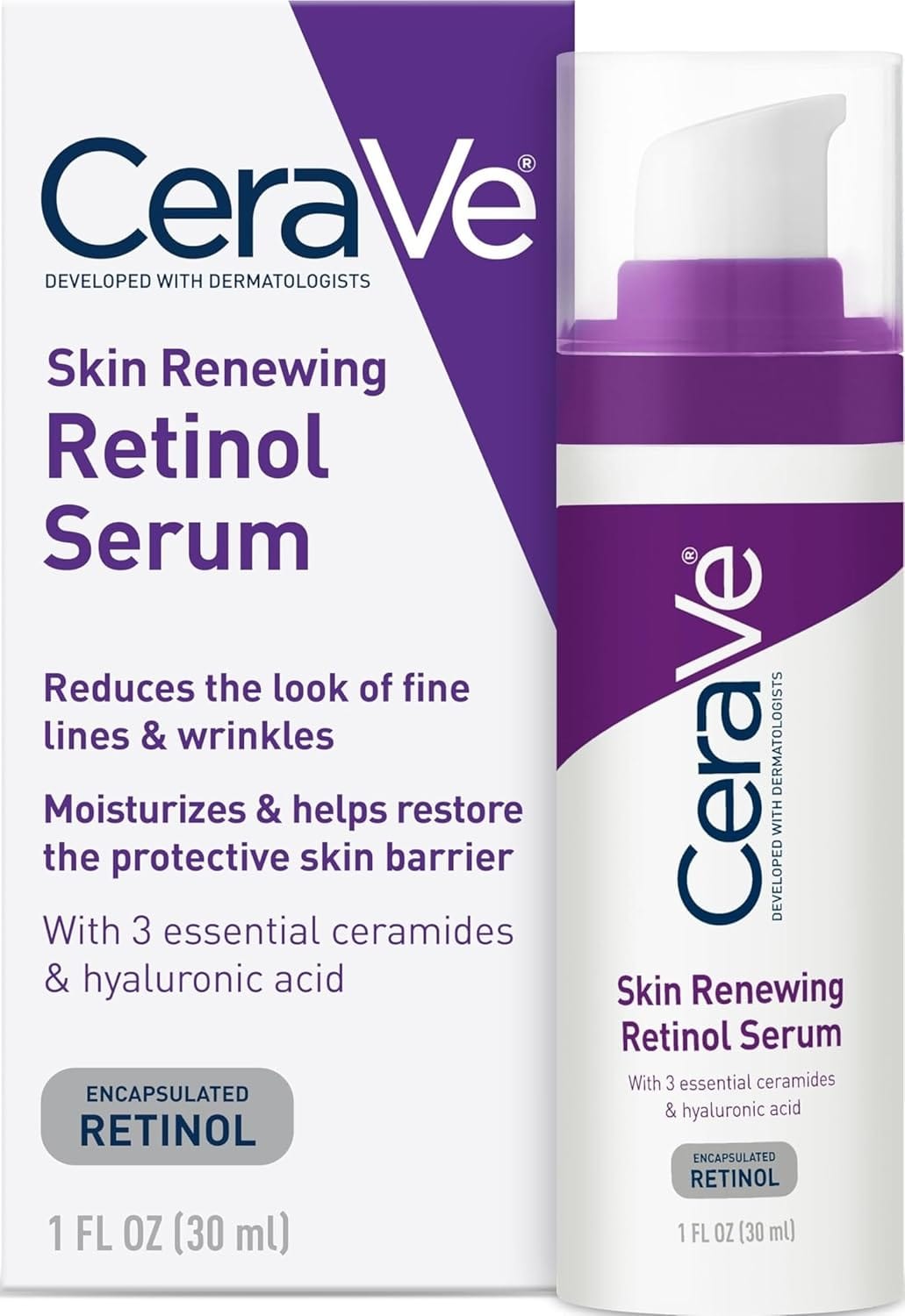
CeraVe Skin Renewing Retinol Serum
Best considered by a retinol beginner whose cleanser, moisturizer and sunscreen already feel stable.
It offers an approachable cosmetic retinol format with barrier-supporting ingredients in one step.
Watch-out: Start slowly. Retinol can irritate, and retinoids should be avoided during pregnancy. Check the current ingredient list and seller before ordering.
View on AmazonAs an Amazon Associate, SkinOptimizer may earn from qualifying purchases. Prices and availability can change.
Timeline: When to Adjust
Set the review date before adding the product. Short-term tolerability and longer-term results are different questions, and both need a defined checkpoint.
| When | What to check | Decision |
|---|---|---|
| First 2 weeks | Comfort, dryness and sunscreen wear | Reduce frequency if products burn or pill |
| Weeks 4 to 8 | Texture and tolerance | Keep photos and do not add another active |
| Months 3 to 6 | Fine lines and uneven tone | Compare in similar light and continue SPF |
| Any time | New, bleeding or changing lesion | Arrange a professional skin examination |
Common Mistakes That Undermine the Routine
- Buying a separate serum for every aging concern before sunscreen is consistent.
- Starting retinol nightly and interpreting raw peeling as proof of effectiveness.
- Using a scrub or strong acid to remove every visible flake.
- Expecting peptides or facial oil to replace sunscreen or a proven treatment.
- Changing cleanser, moisturizer and active in the same week.
- Ignoring new or changing spots because they resemble ordinary age-related pigmentation.
When the routine becomes hard to read, return to gentle cleansing, moisturizer and morning sunscreen. The slow skincare method gives a controlled reintroduction plan instead of another shopping list.
When to Ask a Dermatologist
See a dermatologist for a new or changing mole, a spot that bleeds or does not heal, persistent rash, severe itching, swelling or painful cracking. Professional options can also address concerns that cosmetics cannot meaningfully change, but they require individualized discussion of skin tone, healing, medications, cost and downtime.
How to Evaluate the Routine Without Guessing
Write down the starting concern and use the same cleanser, moisturizer and sunscreen while testing one optional treatment. Photograph the same area in similar light every two weeks. Separate comfort, redness, active breakouts, texture and discoloration because each can move at a different speed.
Immediate burning, swelling, blistering or painful cracking is not a waiting-period problem. Stop the newest optional product and seek appropriate care. For ordinary dryness or mild irritation, reduce frequency and return to the basic routine until skin is comfortable.
At the planned review point, ask three questions: Is the target concern improving? Is the routine comfortable enough to continue? Can the cost and time be maintained? A product that produces a small benefit but repeatedly destabilizes the rest of the routine may not be the best choice.
The Bottom Line
A strong aging-skin routine does not try to erase age. It protects skin from preventable UV damage, restores comfort when dryness increases and uses one evidence-based treatment at a tolerable pace. Keep sunscreen daily, let moisturizer do real work and evaluate retinoid results over months rather than escalating every week.
Our anti-wrinkle cream buying guide compares one retinol treatment and two moisture-focused night options without unsupported lifting claims.
Frequently Asked Questions
What is the best skincare routine for aging skin?
Use a gentle cleanser, moisturizer and broad-spectrum SPF 30+ every morning. At night, cleanse, apply one targeted treatment such as a retinoid when appropriate, and moisturize. Add optional products only for a defined concern.
At what age should I start an anti-aging routine?
There is no required age. Daily sunscreen and a comfortable moisturizer are useful at any adult age. Add a retinoid or other treatment when a specific concern justifies the cost and possible irritation.
Can mature skin use retinol every night?
Some people eventually can, but nightly use is not the starting goal. Begin once or twice weekly, follow the product or prescription directions and increase only when skin remains comfortable.
Is vitamin C or retinol better for aging skin?
They do different jobs. Vitamin C is usually a morning antioxidant and tone-support step; retinoids have stronger evidence for texture and fine lines. Sunscreen remains essential with either choice.
Does aging skin need a separate night cream?
Not automatically. The same moisturizer can work morning and night if it is comfortable under sunscreen and rich enough in the evening. A separate cream is useful only when the texture solves a real need.
Start the routine with our guide to the best cleansers for mature skin, organized by dryness, sensitivity, and makeup or sunscreen removal.