Collagen-Boosting Skincare: What Works and What Cannot
An evidence-first guide to collagen skincare, including retinoids, peptides, collagen creams, sunscreen and realistic results.
In this guide
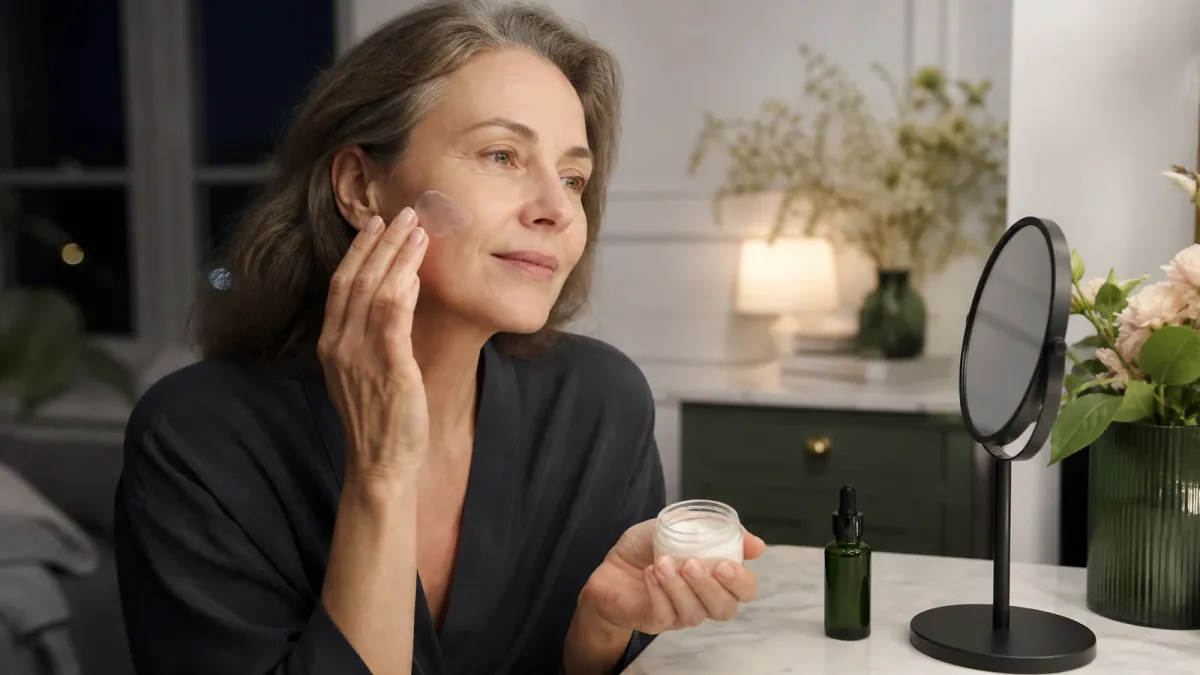
The most credible collagen-supporting skincare routine protects existing skin from UV exposure, uses a retinoid slowly when appropriate and keeps the barrier moisturized. A cream containing collagen can hydrate the surface, but it does not insert intact replacement collagen into the dermis. Peptides and growth-factor products may have formula-specific benefits, yet their evidence is less consistent than sunscreen and retinoids and should not be treated as guaranteed collagen rebuilding.
Quick Summary
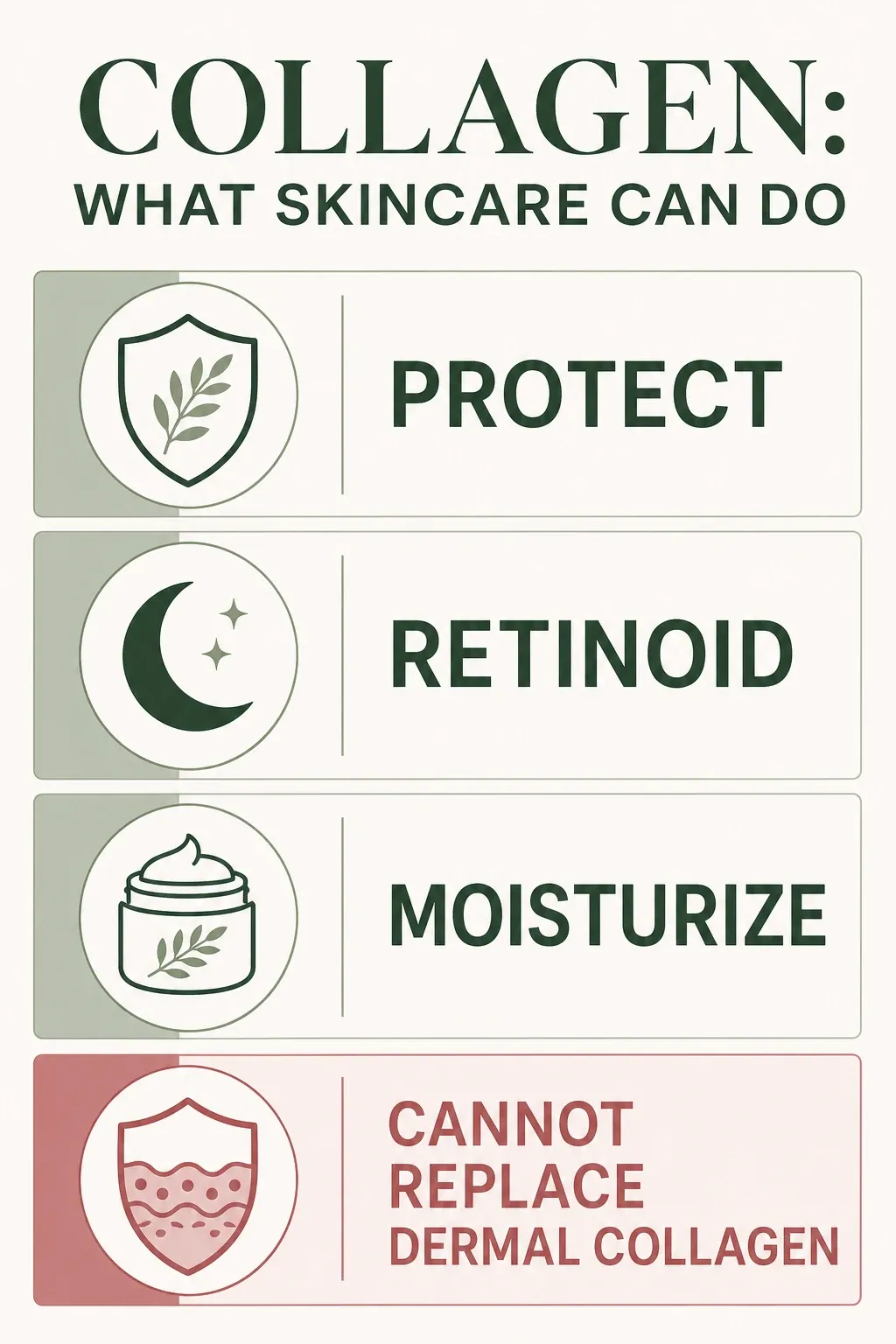
- Protect first: UV exposure accelerates collagen breakdown and photoaging.
- Retinoids have the clearest topical evidence for mild wrinkles and photoaged skin.
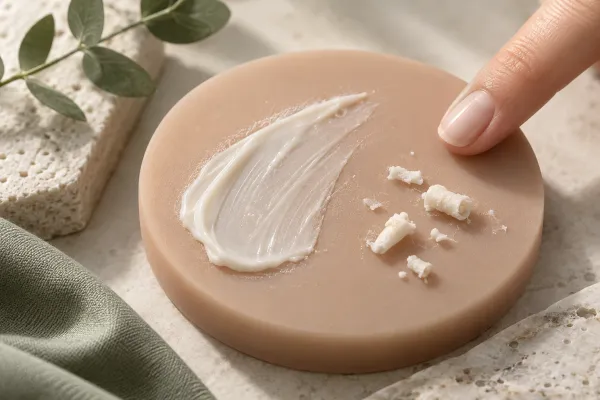
- Topical collagen is mainly a moisturizing or film-forming ingredient, not a dermal refill.
- Evaluate peptide, vitamin C and growth-factor products by the finished formula and trial evidence, not the label word alone.
Start With What Collagen Is
Collagen is a structural protein in the dermis, the deeper skin layer beneath the epidermis. It contributes to strength and support alongside elastin, glycosaminoglycans, blood vessels and cells. Skin aging is not simply an empty collagen tank. The organization and quality of the whole extracellular matrix change over time.
Intrinsic aging, hormonal change and genetics influence collagen production and breakdown. Ultraviolet exposure accelerates damage through oxidative stress, inflammation and enzymes that degrade matrix proteins. That is why a prevention step can be more important than a cream labeled with the word collagen.
The phrase “collagen-boosting” is used for several different jobs: protecting existing matrix, stimulating skin signaling, improving hydration so lines look softer or adding collagen-derived material to the surface. Those jobs should not be presented as equivalent.
| Label claim | What it may mean | What it does not prove |
|---|---|---|
| Contains collagen | Surface hydration or film formation | Replacement of dermal collagen |
| Supports collagen | An ingredient has a plausible pathway | A visible result in this formula |
| Clinically tested | Some study may exist | Independent, blinded or comparative evidence |
| Peptide complex | One or more short amino-acid chains | That the peptide reaches its target |
| Firming | Temporary hydration, film or texture change | Structural lifting |
A product can still be useful when the claim is narrower. A collagen cream may be a comfortable moisturizer. A peptide serum may improve hydration. A retinoid may improve mild wrinkles over months. Clear language allows readers to pay for the job they actually need.
Evidence Tier One: Daily UV Protection
Ultraviolet radiation is a major preventable driver of photoaging. It contributes to collagen fragmentation and changes in elasticity, pigment and texture. Reducing that exposure protects the result of every other routine step.
Use broad-spectrum SPF 30 or higher on exposed skin and combine it with shade, clothing, a broad-brimmed hat and sunglasses. Choose water resistance for sweat or water and reapply according to the label. The randomized sunscreen trial that followed 903 adults found less progression of photoaging in the daily-use group than in the discretionary-use group.
That study does not show that sunscreen creates new collagen on demand. It supports preventing additional UV-driven change. Our UV protection guide covers shade, clothing, sunscreen amount and exposure context, while the anti-aging sunscreen guide compares wearable formulas.
Evidence Tier Two: Retinoids
Retinoids are vitamin A derivatives. Prescription tretinoin has decades of use and controlled evidence for photoaged skin. Over-the-counter retinol is less standardized but can be a practical starting point. Both require patience and tolerance management.
A systematic review of randomized controlled trials found evidence that topical tretinoin improves photoaging and can induce new collagen formation. A separate randomized vehicle-controlled retinol study reported improvement in fine wrinkles and increased collagen production in naturally aged skin. Results from prescription tretinoin should not be used as proof that every cosmetic retinol cream performs identically.
Start one night weekly. Apply a small amount according to the product directions and moisturize. Increase to two non-consecutive nights only after the skin remains comfortable for several weeks. Persistent burning, raw peeling or swelling is not necessary for collagen change.
Retinoids are avoided during pregnancy. People with active eczema, rosacea-like inflammation, severe dryness or a history of strong reactions should discuss options with a qualified professional. The retinol anti-aging guide explains strength, vehicles and timelines in more detail.
Evidence Tier Three: Vitamin C
Vitamin C is involved in normal collagen synthesis and functions as an antioxidant. In a topical product, the challenge is not the biological importance of vitamin C; it is delivering a stable, tolerable form at a useful concentration in the finished formula.
L-ascorbic acid is the most studied form but can be unstable and irritating. Derivatives may be more stable or comfortable, yet they require their own evidence. A product turning dark orange or brown may have oxidized, and packaging that repeatedly exposes the formula to air and light can reduce stability.
Use vitamin C as an optional morning companion under sunscreen, not as a replacement for sun protection. If it stings, pills or makes sunscreen difficult to apply, remove it. The preventive value of a stable sunscreen routine is clearer than the value of forcing an unstable antioxidant into every morning.
Evidence Tier Four: Peptides and Growth Factors
Peptides are short chains of amino acids with many possible structures and functions. Some are designed as signaling peptides, carrier peptides or neurotransmitter-influencing peptides. The category is too broad for the statement “peptides work” to be meaningful.
A recent systematic review and meta-analysis of oral and topical peptides found modest pooled effects on wrinkles, while elasticity and density results were inconsistent and much of the wrinkle signal was driven by oral formulations. The authors called for larger standardized trials. That supports cautious interest, not a universal promise for peptide creams.
Growth-factor preparations also vary. A systematic review of topical growth factors found modest improvements in texture and lines across heterogeneous studies, with few controlled comparisons and uncertain persistence beyond six months. Cost, formula quality and transparent evidence matter.
What About Oral Collagen Supplements?
Oral collagen is a separate question from topical skincare. Some randomized trials and meta-analyses report small improvements in hydration, elasticity or wrinkles with specific hydrolyzed collagen products. However, formulations, doses, study duration, funding and outcome measures vary.
Ingested collagen is digested into peptides and amino acids; it does not travel intact to a chosen facial wrinkle. A positive trial for one branded hydrolysate does not establish that every powder or gummy works. Supplements also add allergy, dietary, cost and quality-control considerations.
SkinOptimizer does not treat a supplement as a required collagen step. A balanced diet with adequate protein and micronutrients supports normal physiology. People who are pregnant, have kidney disease, food allergies or take medication should discuss supplements with a qualified clinician rather than relying on a beauty claim.
A Collagen-Supporting Morning Routine
1. Gentle cleanse
Remove oil and residue without scrubbing or creating a tight finish. Over-cleansing adds irritation, not collagen.
2. Optional antioxidant
Use a stable vitamin C or niacinamide formula only when it stays comfortable and layers well.
3. Moisturizer and SPF
Support hydration, then finish with broad-spectrum SPF 30+ and physical protection.
Moisturizer can make skin look smoother within hours because a hydrated outer layer reflects light differently and shallow dehydration lines soften. That is a useful benefit. It should simply be named hydration rather than collagen rebuilding.
Dry skin may need a cream with glycerin, ceramides, fatty alcohols and an occlusive component. Oily skin may prefer a lotion or gel-cream. The moisturizers for aging skin guide compares texture and barrier roles.
A Collagen-Supporting Evening Routine
Cleanse gently and choose between a treatment night and a recovery night. On treatment night, use one retinoid according to directions. On recovery night, use moisturizer only or an optional peptide moisturizer. Do not stack retinol, glycolic acid and a strong peel because they all sound active.
| Night type | Steps | Reason |
|---|---|---|
| Retinoid night | Cleanse, retinoid, moisturizer | One evidence-based treatment slot |
| Recovery night | Cleanse and moisturizer | Protect tolerance and barrier comfort |
| Optional peptide night | Cleanse and peptide moisturizer | Supportive care without another exfoliant |
| Irritated-skin night | Cleanse if needed and bland moisturizer | Pause optional actives until comfortable |
The routine should stay stable long enough to evaluate. Hydration changes can appear quickly. Retinoid improvements in fine lines and photoaged texture take months. Collagen remodeling is not an overnight process, and a temporary tight film is not proof of structural change.
Use the slow skincare introduction method if your shelf already contains several actives. Readers who cannot tolerate retinol can compare evidence and trade-offs in the retinol versus bakuchiol guide.
Two Product Examples With Different Jobs
These are not a required pair. The first is a treatment example for a reader whose basic routine is stable. The second is a moisture-first example for a reader who needs comfort and does not want another retinoid. Choose one missing job.
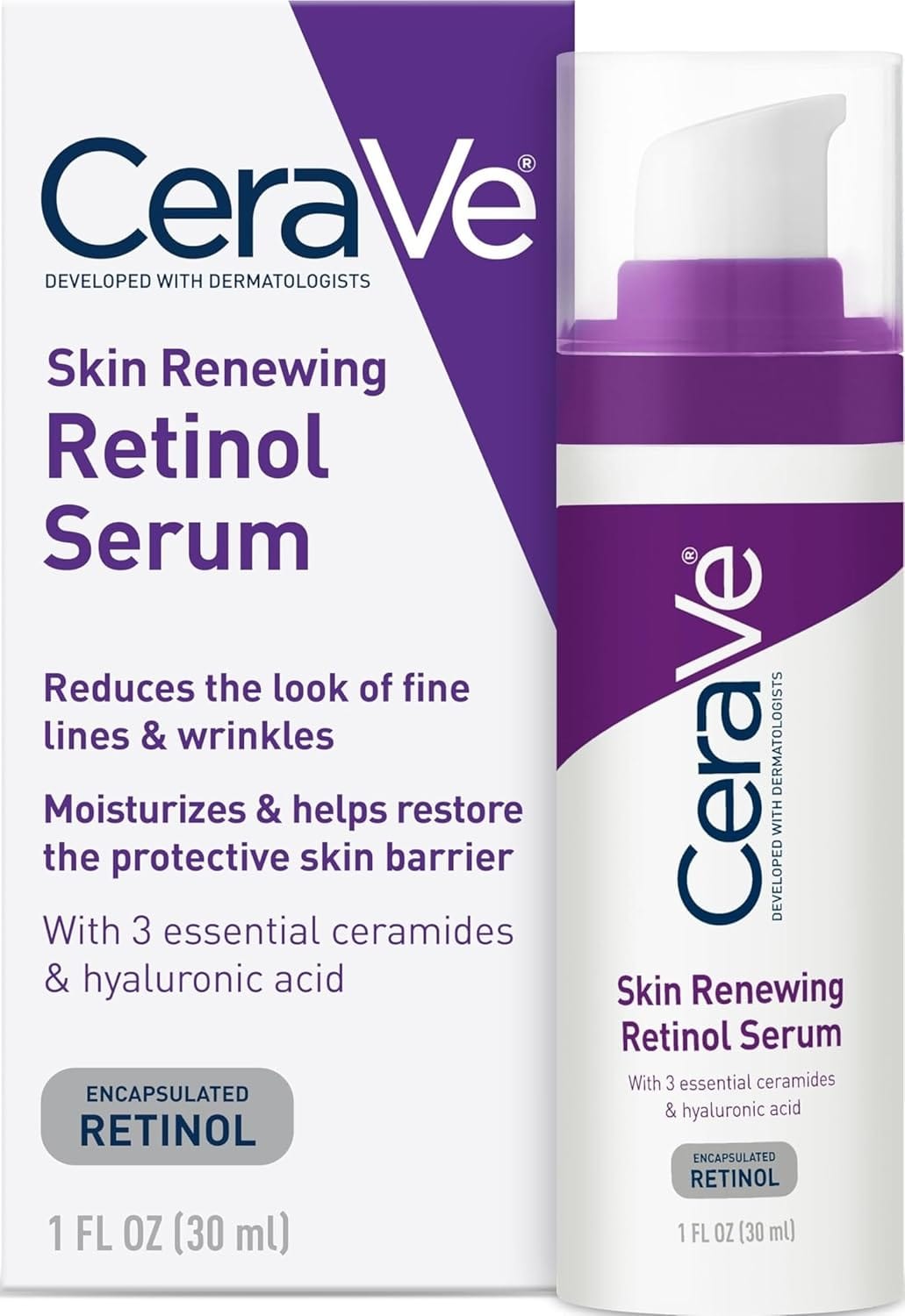
CeraVe Skin Renewing Retinol Serum
A retinol beginner with a stable cleanser, moisturizer and sunscreen routine.
It puts cosmetic retinol in a fragrance-free, moisturizing serum format with ceramides, giving the product one clear evening job.
Watch-out: Retinol can still irritate. Start slowly, verify the current directions and ingredient list, and avoid retinoids during pregnancy.
View on AmazonAs an Amazon Associate, SkinOptimizer may earn from qualifying purchases. Prices, sellers and availability can change.
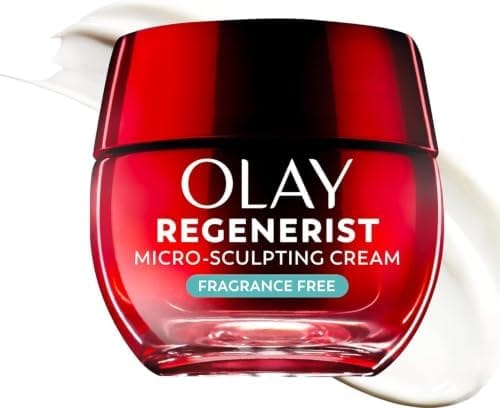
Olay Regenerist Micro-Sculpting Cream Fragrance-Free
Normal-to-dry skin that needs a richer moisturizer with niacinamide and peptides.
Its most defensible role is hydration and barrier-supportive moisturizing, with peptides as a secondary formula feature rather than a lifting promise.
Watch-out: Confirm the fragrance-free variant and current seller. Rich texture may feel heavy on oily skin, and the cream cannot lift sagging tissue.
View on AmazonAs an Amazon Associate, SkinOptimizer may earn from qualifying purchases. Prices, sellers and availability can change.
How to Read a Collagen Product Label
Read the ingredient list for routine fit, not for a magic position. A peptide near the end can still be used at a low functional level, while a highlighted collagen complex near the beginning can still be mainly a humectant or film former. The label does not reveal penetration, stability or clinical effect by itself.
Look for opaque, air-limiting packaging when the formula contains light- or air-sensitive ingredients. Retinol in a clear open jar is harder to protect than in an opaque pump or tube. Vitamin C packaging should also reduce repeated exposure.
Separate sensory claims from treatment claims. “Silky,” “plumping” and “firming feel” can describe immediate cosmetic performance. “Reduces wrinkle depth over twelve weeks” is a measurable outcome and should be supported by a relevant study on the finished product.
Common Collagen-Skincare Mistakes
- Buying topical collagen as replacement tissue: expect surface conditioning, not dermal refilling.
- Starting five actives together: irritation can interrupt the routine before any treatment has time to work.
- Skipping sunscreen: prevention is displaced by repair marketing.
- Transferring prescription evidence: tretinoin results do not automatically prove every retinol cream.
- Treating all peptides as one ingredient: structure, delivery and finished formula differ.
- Using tightness as proof: a film-forming sensation is not structural lifting.
Results Timeline and Better Measurements
In the first days, judge comfort, pilling and hydration. A moisturizer can soften shallow dry lines quickly. A retinoid should be judged mainly for tolerance during the first month. Do not increase frequency because nothing dramatic happened after two applications.
At eight to twelve weeks, compare texture, mild lines and uneven tone in consistent light. At six months, decide whether the treatment earns its place. Use the same camera distance, neutral expression and time of day. Avoid judging sagging from a close wide-angle selfie.
Stop the newest optional product with persistent burning, swelling, blistering or a spreading rash. Seek care for severe symptoms. If even a bland moisturizer stings for more than a short reset period, a skin condition may need professional assessment.
What Skincare Cannot Do for Collagen Loss
Skincare cannot reposition descended fat compartments, restore age-related bone change or produce the mechanical effect of a surgical lift. Moisturizer can improve surface quality, and retinoids can improve mild photoaged texture, but those benefits do not equal structural lifting.
Procedures such as lasers, microneedling, radiofrequency and ultrasound have different evidence, costs and risks. Results depend on device, operator, skin type, settings and aftercare. The sagging-skin guide explains when a topical routine has reached its realistic limit.
Do not use a home device over active inflammation or combine it casually with strong actives. A professional consultation is appropriate when the desired change involves deep wrinkles, significant laxity, scars or a rapidly changing skin concern.
The Bottom Line
Collagen-supporting skincare works best when it protects before it promises repair. Use daily UV protection, keep the barrier moisturized and add one retinoid slowly when it is appropriate. Vitamin C, peptides and growth factors can be optional formula-specific additions, but they should not replace the foundation.
A collagen cream may still be a good moisturizer. It simply does not refill the dermis with intact collagen. Judge every product by its real job, human evidence, tolerance and timeline. That approach creates a more effective routine and removes the need to chase every new “collagen-boosting” launch.
Frequently Asked Questions About Collagen-Boosting Skincare
Can skincare really boost collagen?
Some topical retinoids have evidence for improving photoaged skin and collagen-related changes. Sunscreen helps protect against additional UV damage, while many other claims are formula specific.
Do collagen creams replace lost collagen?
No. Topical collagen mainly hydrates or forms a film at the surface; it does not insert intact replacement collagen into the dermis.
Is retinol or vitamin C better for collagen?
Retinoids have stronger clinical evidence for mild wrinkles and photoaging. Vitamin C can be a useful antioxidant companion when the formula is stable and tolerated.
Are peptide creams worth it?
They can be worthwhile as comfortable moisturizers or formula-specific treatments, but peptide evidence varies. Do not assume every peptide complex rebuilds collagen.
How long does collagen-supporting skincare take to work?
Hydration can change appearance within days. Retinoid improvements usually require at least eight to twelve weeks and often several months of consistent use.