Best Anti-Wrinkle Creams: Retinol, Peptide and Moisture Picks
Compare anti-wrinkle creams by the job they do: retinol for photoaged texture, peptides for support and moisturizer for temporary plumping.

In this guide

The best anti-wrinkle cream depends on the job you need. Choose retinol for gradual improvement in mild fine lines and photoaged texture, a richer moisturizer for dry skin and temporary plumping, or a peptide and niacinamide cream for supportive care when retinoids are not tolerated. Daily broad-spectrum SPF 30+ remains more important than buying several treatment creams.
Topicals cannot reproduce muscle relaxation. Compare that job with the evidence and risks of preventative Botox, including realistic limits and urgent warning signs.
Quick Summary
- Best treatment focus: RoC Retinol Correxion for a clear retinol night step.
- Best moisture focus: Olay Regenerist Fragrance-Free for richer daily hydration.
- Best retinoid-free night cream: CeraVe Skin Renewing Night Cream for dry or sensitive routines.
- Do not buy a wrinkle cream for lifting, instant collagen replacement or procedure-level results.
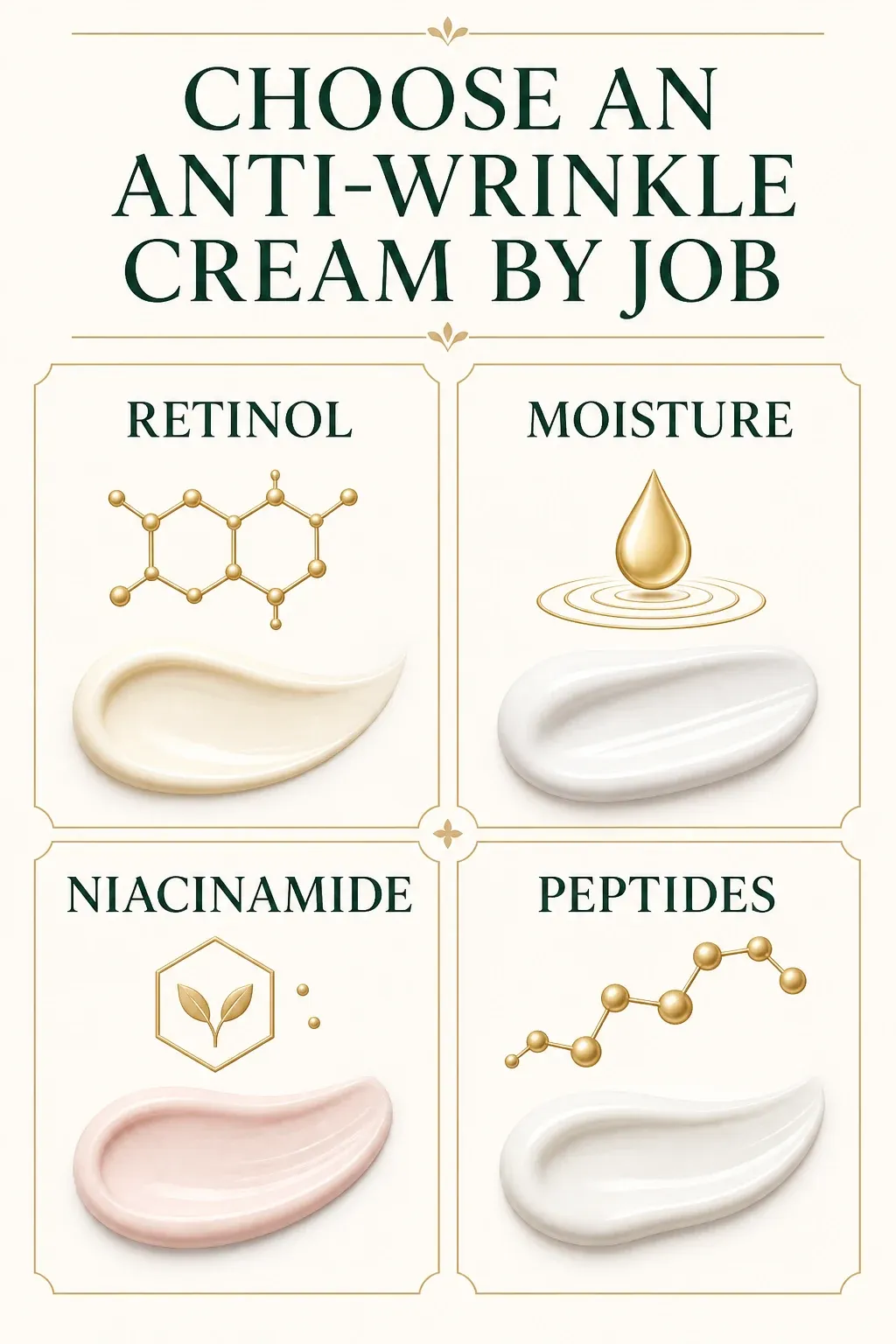
Choose an Anti-Wrinkle Cream by Job
Anti-wrinkle creams often combine hydration, active ingredients and marketing into one promise. Separating those functions makes shopping easier. A retinol cream is a treatment product. A peptide and niacinamide cream is usually a supportive moisturizer. A rich night cream may soften dehydration lines without directly treating deeper wrinkles.
Start with the concern that affects the routine most. If the skin is tight and flaky, buy moisture before retinol. If hydration is stable and mild photoaging is the target, choose one retinoid. If retinoids repeatedly cause painful irritation or are not appropriate, use a well-formulated moisturizer and discuss alternatives with a dermatologist.
| Your priority | Look for | Skip when |
|---|---|---|
| Fine lines and rough photoaged texture | Retinol or clinician-directed retinoid | Skin is currently raw, peeling or pregnancy applies |
| Dryness and temporary plumping | Glycerin, ceramides, dimethicone, hyaluronic acid | Texture is too heavy or causes congestion |
| Support without retinol | Niacinamide and formula-specific peptides | The product relies only on a lifting claim |
| Prevention | Separate broad-spectrum SPF 30+ | Cream provides no adequate daytime UV protection |
Our Three Picks at a Glance
| Product | Primary job | Best fit | Main watch-out |
|---|---|---|---|
| RoC Retinol Correxion | Retinol treatment | Photoaged texture and mild lines | Irritation and pregnancy restrictions |
| Olay Regenerist Fragrance-Free | Rich moisturizer | Normal-to-dry skin wanting niacinamide and peptides | May feel heavy on oily skin |
| CeraVe Skin Renewing Night Cream | Retinoid-free night moisture | Dry or sensitive routines | Not a retinol treatment |
None of these products is universally best. The ranking changes with dryness, sensitivity, pregnancy, acne tendency and whether a separate retinoid already exists in the routine. A product that duplicates another active can be worse value than a simpler moisturizer.
1. RoC Retinol Correxion Deep Wrinkle Night Cream
This is the clearest treatment-focused option in the shortlist. Retinol gives the cream a defined role for mild lines and photoaged texture, while the cream base makes it easier to place in a simple evening routine. It is not the best starting point for skin that is already irritated or for someone who uses another facial retinoid.
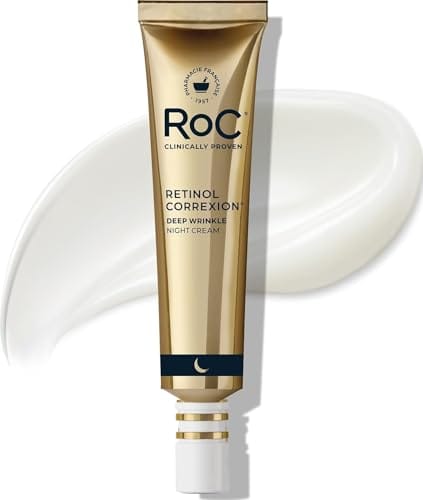
RoC Retinol Correxion Deep Wrinkle Night Cream
Normal, combination or dry skin seeking one over-the-counter retinol night step.
It has a clear active job and can replace, rather than add to, a separate treatment serum.
Watch-out: Begin slowly. Retinol can irritate, should not be stacked with another retinoid and is avoided during pregnancy.
View on AmazonAs an Amazon Associate, SkinOptimizer may earn from qualifying purchases. Prices, sellers and availability can change.
Use one or two nights weekly at first after gentle cleansing. Apply moisturizer afterward if needed. Do not pair it with a leave-on acid on the same starting nights. The retinol introduction guide explains frequency and irritation signals.
2. Olay Regenerist Micro-Sculpting Cream Fragrance-Free
This option is better understood as a rich moisturizer with niacinamide and peptides than as a structural sculpting product. It fits dry or normal skin that wants comfortable hydration and supportive ingredients but does not need retinol in the same jar. It can also pair with a separate retinoid used on selected nights.
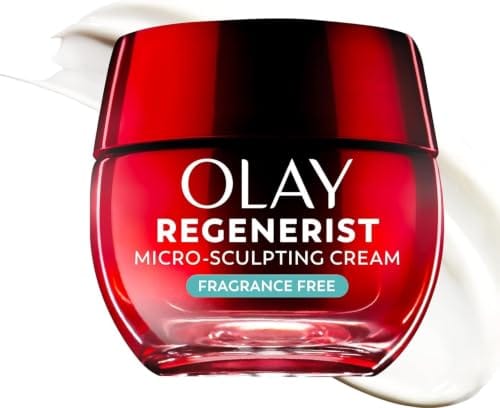
Olay Regenerist Micro-Sculpting Cream Fragrance-Free
Normal-to-dry skin prioritizing hydration, niacinamide and a richer cream texture.
It supports moisture and barrier comfort without forcing another retinoid into the routine.
Watch-out: The texture may feel heavy on oily or congestion-prone skin. Confirm the fragrance-free version and current label.
View on AmazonAs an Amazon Associate, SkinOptimizer may earn from qualifying purchases. Prices, sellers and availability can change.
Use it as the moisturizer step, not as an additional serum. Immediate smoothness mainly reflects hydration and emollience. Evaluate longer-term texture and tone over several months, while keeping claims about lifting or sculpting in perspective.
3. CeraVe Skin Renewing Night Cream
This is the retinoid-free option for dry, sensitive or treatment-heavy routines. It combines a richer moisturizer base with niacinamide, ceramides, hyaluronic acid and peptides. Its strongest job is overnight moisture and barrier support. It does not contain the same retinol treatment used in CeraVe Skin Renewing Retinol Serum.
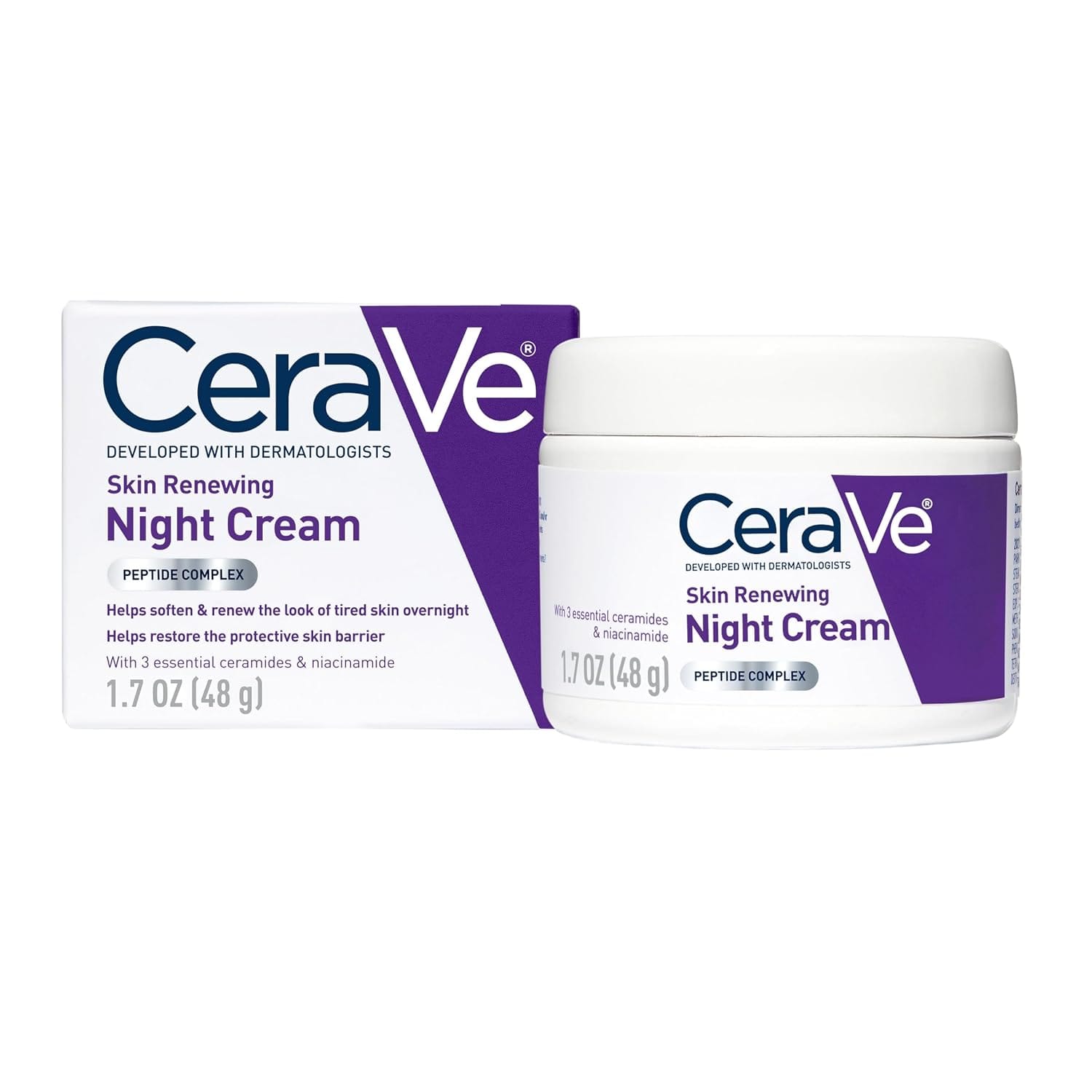
CeraVe Skin Renewing Night Cream
Dry or sensitive skin needing richer night moisture without adding another retinoid.
It separates the moisturizer job from treatment, which helps when a retinoid is used only on selected nights.
Watch-out: It is not a retinol cream and should not be expected to deliver the same treatment role. Rich texture can feel heavy.
View on AmazonAs an Amazon Associate, SkinOptimizer may earn from qualifying purchases. Prices, sellers and availability can change.
Apply after cleansing or after a compatible treatment. Someone with oily skin may prefer a lighter lotion, while very dry skin may still need a small amount of ointment on specific flaky zones. The moisturizers for aging skin guide provides more texture options.
Which Ingredients Deserve Priority?
Retinoids: the treatment anchor
Retinoids have a stronger evidence base for photoaged texture and mild lines than most cosmetic categories. Prescription tretinoin and over-the-counter retinol are not identical in strength, stability or irritation. A retinol cream is reasonable when the user wants a simpler vehicle and can follow a gradual schedule.
Use only one retinoid. Applying a retinol cream over a retinal serum does not create a smarter routine. It increases exposure and makes irritation harder to control. Retinoids are avoided during pregnancy, and medication-specific questions belong with the prescribing clinician.
Moisturizers: fast visual improvement with a clear limit
Glycerin and hyaluronic acid attract water. Ceramides, fatty alcohols and oils smooth gaps between surface cells. Dimethicone and petrolatum reduce water loss. A complete cream can make shallow lines look softer quickly because hydrated skin reflects light more evenly.
This plumping effect is real but temporary. It should not be described as new dermal collagen. Someone whose lines change dramatically between dry and well-moisturized days may get more value from a consistent moisturizer than from a second active serum.
Niacinamide and peptides: supportive, formula-specific options
Niacinamide can support barrier function and has controlled formula-specific research for fine lines, tone and texture. Higher percentages are not automatically more effective and can sting. A 4% or 5% product used consistently may be more useful than a 10% serum that repeatedly irritates.
Peptides are not one ingredient. Different sequences, concentrations and delivery systems have different evidence. Use a peptide cream when the complete formula fits hydration and tolerance needs. Do not treat the word peptide as proof of a lifting effect.
Vitamin C and acids: useful, but easy to over-stack
Vitamin C can support antioxidant protection and uneven tone in the morning. Formula stability and packaging matter. Exfoliating acids can smooth dull surface texture, but they can also worsen dryness when combined with a new retinol cream.
If the routine already contains vitamin C, retinol, an acid and a peptide cream, remove duplication before adding another wrinkle product. The slow-start framework is useful when the shelf has become impossible to evaluate.
How to Build the Routine Around Your Pick
| Time | Core step | Optional step | Avoid |
|---|---|---|---|
| Morning | Gentle cleanse, moisturizer, SPF 30+ | Vitamin C if tolerated | Relying on wrinkle cream instead of sunscreen |
| Retinol night | Cleanse, retinol cream, moisturizer if needed | None at first | Acid, scrub or second retinoid |
| Recovery night | Cleanse and moisturizer | Peptide or niacinamide within the cream | Adding treatment because the routine feels too simple |
Daily sunscreen protects the progress made by the evening routine. The anti-aging sunscreen guide compares formats, and the sunscreen reapplication guide explains outdoor top-ups.
Apply retinol at night because many formulas are light-sensitive and because separating it from the morning routine simplifies sunscreen layering. Use a pea-sized amount for the face when the directions support that amount. Applying a thick layer does not accelerate results proportionally.
Match the Cream Texture to Your Skin
Dry skin often benefits from a cream containing humectants, emollients and an occlusive component. Choose Olay or CeraVe when the moisturizer job is more urgent than adding treatment. The dry-skin routine shows where richer cream belongs without creating a crowded routine.
Oily or congestion-prone skin may prefer a lotion or serum retinol instead of a rich cream. A heavy texture is not more effective simply because it feels substantial. Keep the active job but change the vehicle when shine, pilling or congestion makes consistent use difficult.
Sensitive skin should prioritize fragrance-free formulas and one active at a time. CeraVe is the simplest moisture-first choice in this shortlist; RoC is the more treatment-focused choice and therefore needs a slower start. Someone who cannot use retinoids can compare the trade-offs in the retinol versus bakuchiol guide.
Combination skin does not require two complete routines. Use a moderate layer over the whole face and add a richer cream only to dry zones. Product performance should be judged after several hours, not only by the first silky application.
How We Chose These Products
The shortlist uses five filters: a clear ingredient job, a complete formula that fits a common routine, a direct product page, an available product image and a limitation that can be explained honestly. We excluded products that required unverifiable testing claims, relied mainly on dramatic lifting language or did not add a distinct role.
We did not rank by star rating because marketplace reviews mix different skin types, expectations and sometimes product variants. We did not rank by price because prices change. We also excluded clinical-sounding endorsements when documentation did not show what was assessed, by whom and against which outcome.
Product formulas can change. Check the current ingredient list, size, directions and seller. Patch testing does not guarantee that the full face will tolerate a product, but it can help identify an immediate local reaction before wider use.
Results Timeline: What to Expect
First week
Moisturizer may improve tightness and surface smoothness. Retinol should be judged mainly for tolerance.
Weeks 4-8
Texture may begin to look more even. Keep the same lighting and do not increase frequency through irritation.
Months 3-6
Compare mild lines, tone and overall photoaged texture. Structural lifting remains outside the cream's role.
If the skin becomes painfully dry, shiny-raw, swollen or blistered, stop the newest optional product. Return to gentle cleanser, moisturizer and sunscreen, and seek care when symptoms are severe or persistent. A reaction is not a necessary purge for anti-wrinkle skincare.
What to Skip
- Collagen replacement claims: topical collagen mainly conditions the surface.
- Instant facelift promises: temporary film or hydration effects do not reposition tissue.
- High-strength stacks: more actives can produce more irritation rather than more improvement.
- Unclear variants: fragrance-free, SPF and retinol versions may look similar but perform different jobs.
- Jar prestige: packaging and price do not establish formula efficacy.
- Undocumented testing language: ask what was actually tested before treating the claim as evidence.
What the Evidence Supports
The American Academy of Dermatology identifies sunscreen and moisturizer as the two most effective foundational anti-aging products and recommends focusing on one concern. Its retinoid guidance supports retinol for mild fine lines while stressing gradual introduction and sun protection.
A twelve-week randomized retinol comparison found modest improvement in wrinkle severity with the retinol comparator. Controlled studies of topical niacinamide have also reported fine-line and texture improvements, but these results belong to the tested formulas and participant groups rather than every niacinamide cream.
The Bottom Line
Choose an anti-wrinkle cream by job. RoC is the treatment-focused retinol option. Olay is the richer moisture and niacinamide option. CeraVe is the retinoid-free night cream for dry or sensitive routines. Keep sunscreen daily, introduce only one product and judge the result over months. A good cream can improve hydration, texture and mild lines; it cannot deliver a facelift or replace every type of professional treatment.
Compare treatment and moisture-first evening formulas in our anti-aging night cream guide.
Frequently Asked Questions
What is the most effective ingredient in an anti-wrinkle cream?
Retinoids have the strongest topical role for mild fine lines and photoaged texture. Moisturizers can quickly soften dehydration lines, while sunscreen helps prevent additional UV-related aging.
Is a retinol cream better than a peptide cream?
A retinol cream is usually the stronger treatment choice for photoaged texture. A peptide cream may be easier to tolerate and can provide useful moisture, but peptide evidence varies by formula.
Can I use anti-wrinkle cream every night?
A plain moisturizer can usually be used nightly. Start a retinol cream once or twice weekly and increase only when the skin remains comfortable and the product directions support more frequent use.
Do expensive wrinkle creams work better?
Not automatically. Ingredient role, formula stability, packaging, tolerance and consistent use matter more than price. An expensive cream can still rely mainly on ordinary hydration or vague lifting claims.
Do I still need sunscreen with an anti-wrinkle cream?
Yes. Broad-spectrum SPF 30+ helps prevent additional photoaging and is especially important in a routine using retinoids or exfoliating acids.