Daily Skincare Routine for Dry Skin: Simple AM and PM Steps
Follow a simple morning and evening routine for dry skin with gentle cleansing, layered hydration, richer moisturizer and daily sunscreen.

In this guide
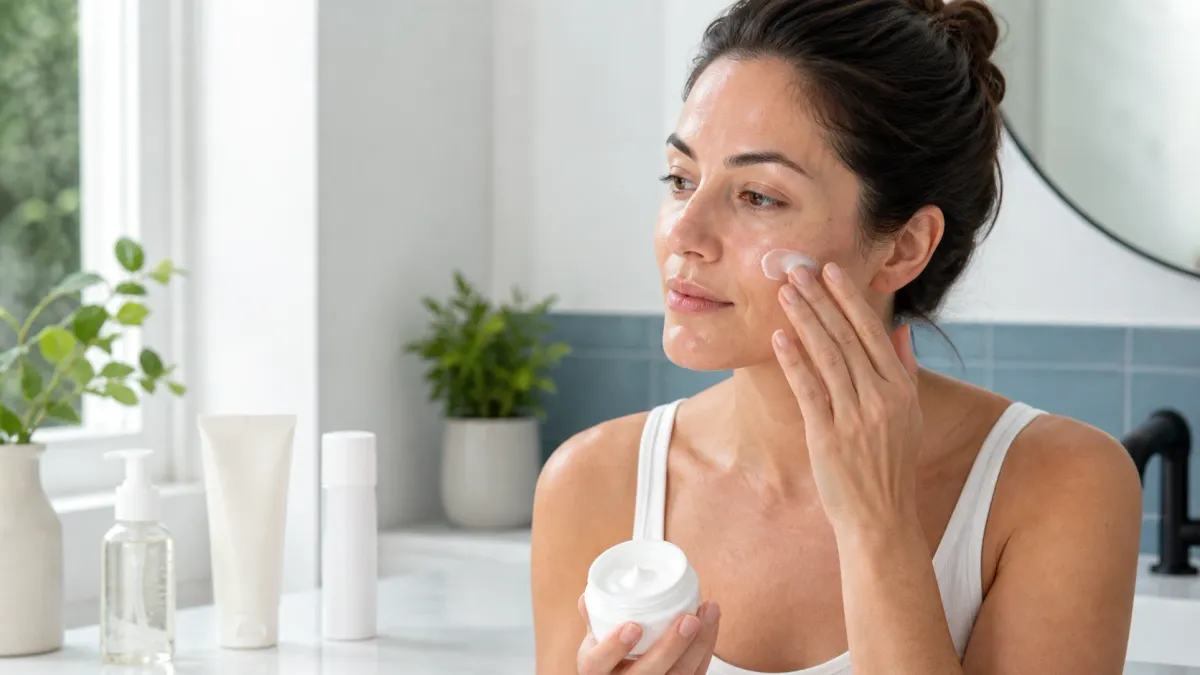
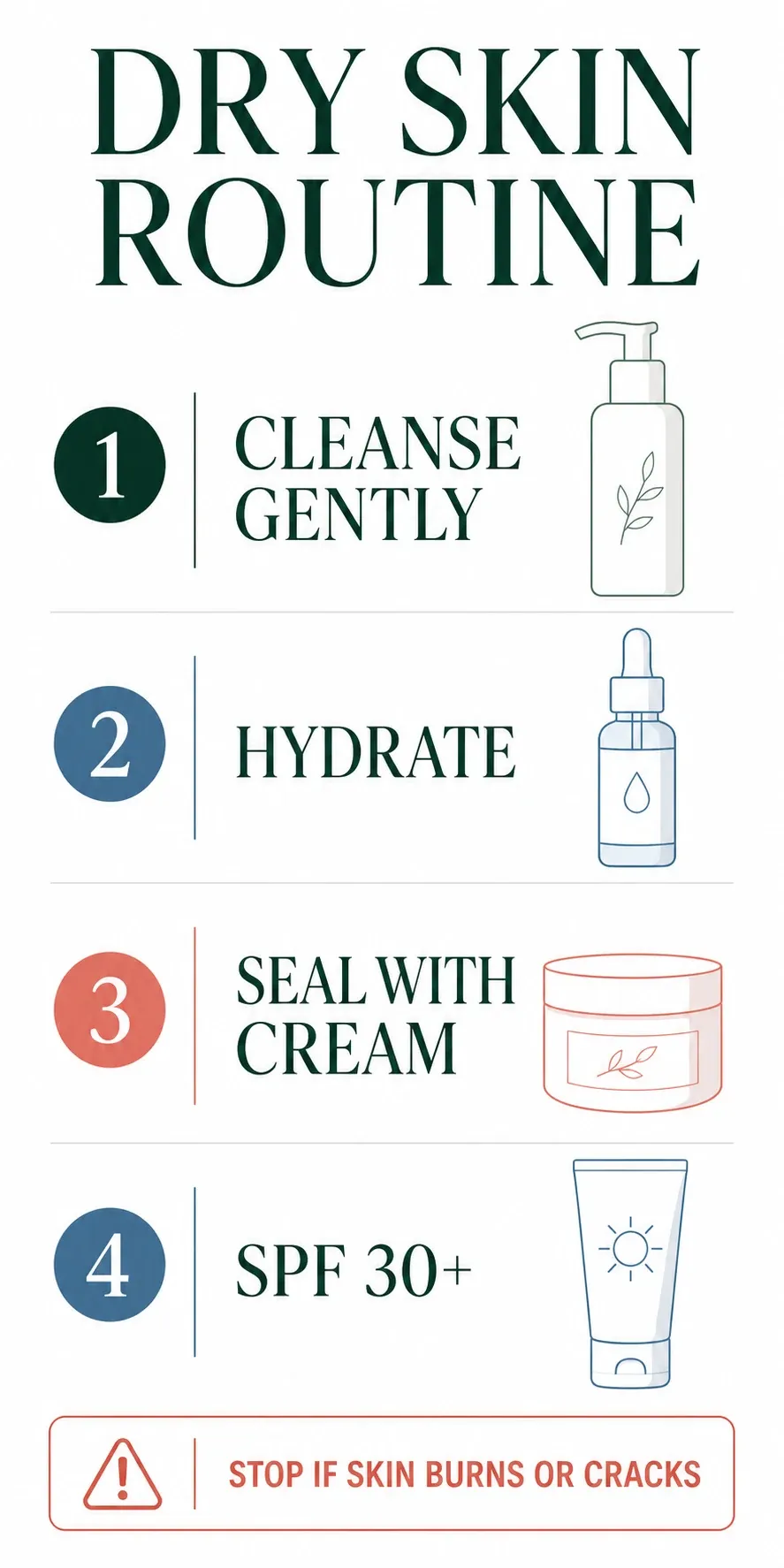
A reliable dry-skin routine is built around water and barrier support, not a long shelf. In the morning, cleanse only if needed, apply hydration to slightly damp skin, seal it with a cream and finish with broad-spectrum SPF 30+. At night, remove sunscreen or makeup gently, cleanse, use one optional treatment and moisturize before the skin feels tight.
Use the dry-skin moisturizer decision guide to choose between a daily face cream, a simple sensitive-skin formula and a rough-body treatment.
Quick Summary
- Use a gentle, fragrance-free cleanser and stop chasing a squeaky-clean finish.
- Apply moisturizer while skin is still slightly damp, then add a richer layer only where needed.
- Introduce one active at a time; dryness, burning and peeling are not proof that a product is working.
- Choose broad-spectrum SPF 30+ every morning because dry skin still accumulates UV damage.
First Decide: Dry, Dehydrated or Irritated?
Dry skin usually produces less oil and often feels rough across much of the face. Dehydrated skin lacks water temporarily and can look shiny while still feeling tight; irritation adds burning, redness or sudden sensitivity.
| Signal | Likely pattern | Best first adjustment |
|---|---|---|
| Roughness and fine flakes most days | Dry skin | Use a cream with humectants and barrier lipids |
| Shine plus tightness after cleansing | Dehydrated or over-cleansed | Reduce cleansing and active frequency |
| Products suddenly sting | Irritated barrier | Pause optional actives and simplify |
| Itchy, cracked or inflamed patches | Possible dermatitis | Seek qualified medical advice |
Morning Routine
The morning routine should replace comfort lost overnight and create an even sunscreen layer. Use the fewest steps that achieve both goals.
Cleanse only when needed
Use lukewarm water and a low-foam cleanser when sweat, a heavy night product or residue needs removal. If skin wakes comfortable and clean, a water rinse may be enough; repeated cleansing can remove lipids without adding a benefit.
Hydrate slightly damp skin
Apply a simple hydrating serum or essence only if moisturizer alone does not prevent tightness. Glycerin, hyaluronic acid and panthenol can attract water, but they work best when followed by a product that slows evaporation.
Seal with a cream
Choose a fragrance-free cream or richer lotion with ingredients such as ceramides, fatty acids, squalane or petrolatum. Press a smaller amount over the whole face, then add a second thin layer to cheeks or flaky zones instead of coating every area heavily.
Finish with SPF 30+
Use a broad-spectrum sunscreen that you can apply generously without stinging. A moisturizing cream sunscreen may replace a separate morning moisturizer, but do not mix sunscreen into another product because that makes an even protective film harder to achieve.
Evening Routine
Night care removes the day's layers and gives dry skin a longer period without makeup or environmental exposure. It is also where over-treatment commonly begins.
Remove resistant layers gently
Use micellar water, a mild cleansing balm or an oil cleanser when makeup or water-resistant SPF does not come off with one normal cleanse. Avoid rubbing with cotton pads until the skin looks red; removal should loosen the film rather than polish the face.
Cleanse briefly
Follow with the same gentle cleanser only when residue remains. Keep water lukewarm, use fingertips and pat rather than scrub dry. If double cleansing leaves the face tight, return to one cleanse on lighter days.
Use one optional treatment
A retinoid, exfoliant or prescription treatment belongs after cleansing only when it solves a defined concern. Start at a low frequency and do not stack acids with a new retinoid; dry skin needs more recovery time, not more simultaneous actives.
Moisturize before tightness starts
Apply cream while the skin is still slightly damp. Add a thin layer of petrolatum or an ointment only to persistent dry patches when tolerated. Occlusion is a targeted tool, not a requirement for the entire face every night.
Choose Treatments Without Breaking the Routine
A basic routine can be effective without any active serum. Add treatment only after cleanser, moisturizer and sunscreen remain comfortable for at least one to two weeks.
| Concern or product | Best use | Starting rhythm | Watch-out |
|---|---|---|---|
| Fine lines or uneven texture | Low-strength retinoid | One night weekly | Burning, raw peeling or swelling |
| Dull surface flakes | Mild lactic acid or PHA | Every 7 to 10 days | Persistent stinging or shiny-raw skin |
| Redness and sensitivity | No new active | Barrier-only reset | Symptoms persist or worsen |
| Post-breakout marks | Azelaic acid if tolerated | Two nights weekly | Rash, itching or increasing dryness |
Adjust Dry-Skin Care by Season and Environment
Cold weather and indoor heating
Use a cream instead of a light lotion, shorten hot showers and consider a clean humidifier if indoor air is very dry. Keep the humidifier maintained because a dirty reservoir can spread irritants.
Humid weather
Reduce the amount of cream before changing the whole routine. A lighter lotion in the morning and richer cream at night may preserve comfort without leaving sunscreen or makeup unstable.
After exercise
Rinse or cleanse sweat without scrubbing, then replace moisturizer where skin feels tight. Reapply sunscreen before returning outdoors according to its directions.
How to Read a Moisturizer Label for Dry Skin
Look for a formula that combines more than one job. Humectants such as glycerin, hyaluronic acid, urea and panthenol help bind water; emollients such as squalane and fatty alcohols smooth rough spaces; occlusives such as petrolatum and dimethicone slow evaporation. A product does not need every ingredient, but a cream that combines these functions is usually more useful than a watery serum alone.
If a urea moisturizer is the next purchase you are considering, our facial urea buying guide explains how to match the body-area label, concentration and complete formula.
Ceramides, cholesterol and fatty acids can support the lipid structure of the outer skin layer. The exact order on an ingredient list does not reveal the final performance, so treat the label as a screening tool rather than a guarantee. Texture, packaging, fragrance and how long comfort lasts are equally practical decision points.
Fragrance-free is a better filter than unscented when skin is reactive because an unscented product may still contain masking fragrance. Botanical oils and extracts are not automatically soothing; they can add complexity and contact-allergy risk. When the barrier is irritated, a shorter list in a well-formulated cream is often easier to troubleshoot.
A 14-Day Dry-Skin Reset
This reset is useful when the shelf is crowded, products sting or the face feels both tight and coated. It is not a treatment for eczema or another diagnosed condition; it creates a stable cosmetic baseline and shows whether unnecessary steps are contributing to discomfort.
| Days | Routine | What to record |
|---|---|---|
| 1 to 3 | Gentle cleanse only when needed, cream, morning SPF | Immediate tightness, burning and visible flakes |
| 4 to 7 | Keep products fixed; change moisturizer amount by zone | Comfort after two hours and at bedtime |
| 8 to 10 | Add one hydrating serum only if cream is not enough | Whether comfort improves without pilling |
| 11 to 14 | Test one optional treatment on one night | Next-day redness, peeling and sensitivity |
Photograph the same cheek in the same lighting every three or four days and score tightness from zero to five. Avoid judging a routine by the first glossy minute after application. The better result is steady comfort, fewer rough patches and sunscreen that remains wearable through the morning.
How to Layer Hydration Without Pilling
Use thinner water-based products before cream, but keep each layer modest. Spread serum over slightly damp skin, wait until it no longer feels very wet, then press moisturizer over it. If sunscreen rolls into flakes, the problem may be excess product, incompatible film-formers or rubbing rather than insufficient waiting time.
Reduce the number and amount of layers before changing brands. The guide to stopping skincare pilling explains how silicone, gums and repeated rubbing can destabilize the film. Our guide on layering moisturizer and serum also shows where a hydrating step belongs without creating a ten-product routine.
Face oil goes after cream because it mainly slows water loss; it does not provide the same mix of water and emulsified ingredients as a moisturizer. Use one or two drops on dry zones and judge the next morning. More oil can increase shine and transfer without improving barrier comfort.
For mature or treatment-exposed dryness, see the moisturizer guide for aging skin, including humectant, emollient and occlusive roles.
Dry-Skin Myths That Lead to Over-Treatment
- “Flakes always need exfoliation.” Flakes can reflect irritation and impaired shedding. Exfoliating them repeatedly may create a smoother hour and a more painful week.
- “Natural oils repair every dry barrier.” Oils can soften and seal, but they do not automatically supply humectants or the complete lipid balance a cream can provide.
- “More water fixes dry skin.” Normal hydration supports health, but drinking extra water does not replace topical barrier care when the surface loses water too quickly.
- “A rich cream must clog pores.” Texture alone cannot predict breakouts. Apply the cream where needed, introduce it without other changes and judge the actual response.
- “Tingling means an active is penetrating.” Persistent tingling, burning and redness are irritation signals, not a performance score.
Shop the Routine by Step
Use these SkinOptimizer buying guides for the one step that is actually missing. Each guide compares product texture, routine fit and practical limitations before linking to retailers.
Choose a dry-skin moisturizer
Compare creams and lotions for tightness, flakes and barrier support.
Compare optionsChoose a hydrating serum
Compare hyaluronic acid serums when moisturizer alone is not enough.
Compare optionsCommon Mistakes That Make the Routine Harder
- Using hot water and long cleansing sessions because flakes look like dirt.
- Applying a humectant serum without moisturizer and then blaming the serum for tightness.
- Exfoliating every visible flake instead of reducing irritation and adding barrier support.
- Testing a new retinoid, acid and vitamin C product in the same week.
- Skipping sunscreen because the chosen formula feels drying instead of finding a better texture.
- Using fragranced oils as the only moisturizer when the skin also needs water-binding ingredients.
When a routine becomes confusing, return to cleanser, moisturizer and morning sunscreen for several days. Then reintroduce one optional step at a time. The slow skincare method gives a longer reset framework, while the skin-barrier guide explains signs that irritation has overtaken the original concern.
When to Ask a Dermatologist
Seek professional advice when dryness is painful, widespread, suddenly severe or accompanied by swelling, oozing, deep cracks or intense itching. Persistent patches around the eyes or mouth, recurrent rashes and products that burn despite a simplified routine can indicate eczema, contact dermatitis or another condition that needs a diagnosis rather than another cosmetic product.
How to Judge Whether the Routine Is Working
Define success before introducing another product. Comfort can change within days, while clogged pores, discoloration and fine lines usually need a longer observation window. Photograph the same areas in similar light and record burning, tightness, flakes, breakouts and product wear as separate signals instead of relying on a general impression.
Keep cleanser, moisturizer and sunscreen stable while testing one optional step. Note the date, amount, placement and frequency of the change. When several products change together, an improvement cannot be attributed confidently and an irritation trigger becomes much harder to identify.
Evaluate tolerability every morning after an active night. Mild temporary dryness may be manageable by lowering frequency, but persistent burning, swelling, painful cracking or a spreading rash is a stop signal. Do not increase strength merely because the first application did not produce a visible sensation.
At four to six weeks, compare the specific concern that motivated the change. A successful routine should be repeatable, comfortable and affordable enough to maintain; a product that creates a short cosmetic effect while repeatedly destabilizing the rest of the routine has not earned its place.
Also check whether the routine fits real mornings and evenings. A theoretically perfect sequence that is skipped when work runs late is less useful than a shorter version used consistently. Keep the essential steps visible, store optional treatments separately and write their weekly rhythm on the package or calendar to prevent accidental overlap.
The Bottom Line
Dry skin improves when the routine repeatedly does four jobs: remove only what needs removing, add water-binding hydration, slow water loss with the right moisturizer and protect the result from UV exposure. Keep that base stable, adjust texture and amount by zone or season, and add only one treatment for one defined concern.
Pregnancy changes which optional treatments belong in an otherwise gentle dry-skin plan. Our pregnancy-safe skincare routine provides a clear retinoid stop list and a product-by-product review method.
When the cleansing step still feels confusing, compare cream, lotion, and low-foam options in our guide to the best cleansers for dry and sensitive skin.
Frequently Asked Questions
Should dry skin be cleansed in the morning?
Not always. If skin wakes clean and comfortable, a lukewarm water rinse may be enough. Use a gentle cleanser when sweat, residue or a heavy overnight product needs removal, and judge the step by comfort rather than foam.
Is hyaluronic acid enough for dry skin?
Usually not by itself. Hyaluronic acid is a humectant that can support hydration, but dry skin also benefits from a cream or lotion that slows water loss and supplies barrier-supporting lipids.
Can dry skin use retinol?
Yes, but start only after the basic routine feels stable. Use a low frequency, moisturize well, avoid introducing an exfoliating acid at the same time and reduce use if burning or raw peeling develops.
Why does moisturizer sting dry skin?
Brief mild tingling can occur with some formulas, but persistent burning suggests irritation or a compromised barrier. Stop the product, simplify the routine and seek advice if even bland products continue to burn.
What is the best moisturizer texture for dry skin?
A cream is often a better starting point than a gel because it usually reduces water loss more effectively. Very dry patches may need a targeted ointment, while humid weather or makeup days may suit a lighter lotion.
Dry skin lacks oil, while dehydration can affect any skin type; use our separate dehydrated-skin routine when temporary tightness and water loss are the main pattern.
When dryness seems worse at one address, the hard water skin guide explains how to confirm hardness and test shorter rinsing before changing the whole routine.