Best Anti-Aging Serums: What Works and How to Choose
Choose an anti-aging serum by the job it can realistically do, then fit it into a simple morning or night routine without stacking irritation.
In this guide
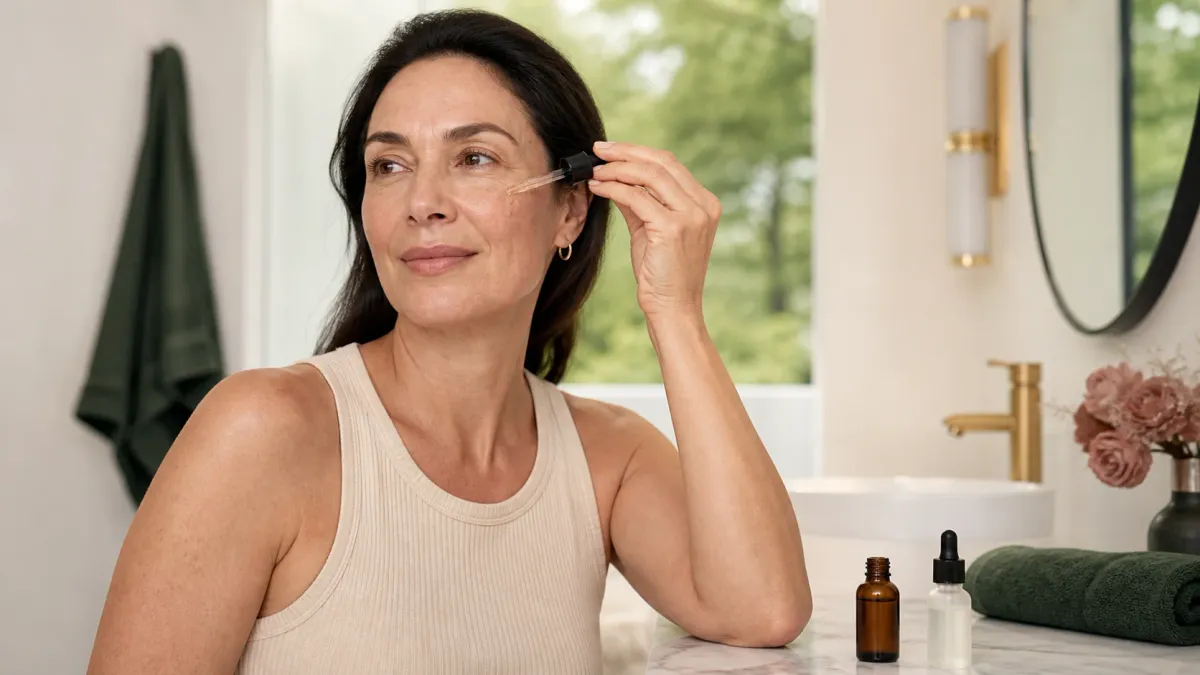
The best anti-aging serum depends on one main concern. Choose vitamin C in the morning for antioxidant and uneven-tone support, a retinoid at night for fine lines and texture, or a peptide/niacinamide serum as a gentler optional extra. Keep moisturizer and broad-spectrum SPF 30+ in place, add only one serum at a time and judge results over eight to twelve weeks or longer.
Quick Summary
- Choose one serum job instead of stacking several active ingredients.
- Retinoids have the strongest topical evidence for fine lines and photoaged texture.
- Vitamin C evidence is useful but formula stability and tolerance matter.
- Peptides and hyaluronic acid are supportive, not replacements for sunscreen or retinoids.
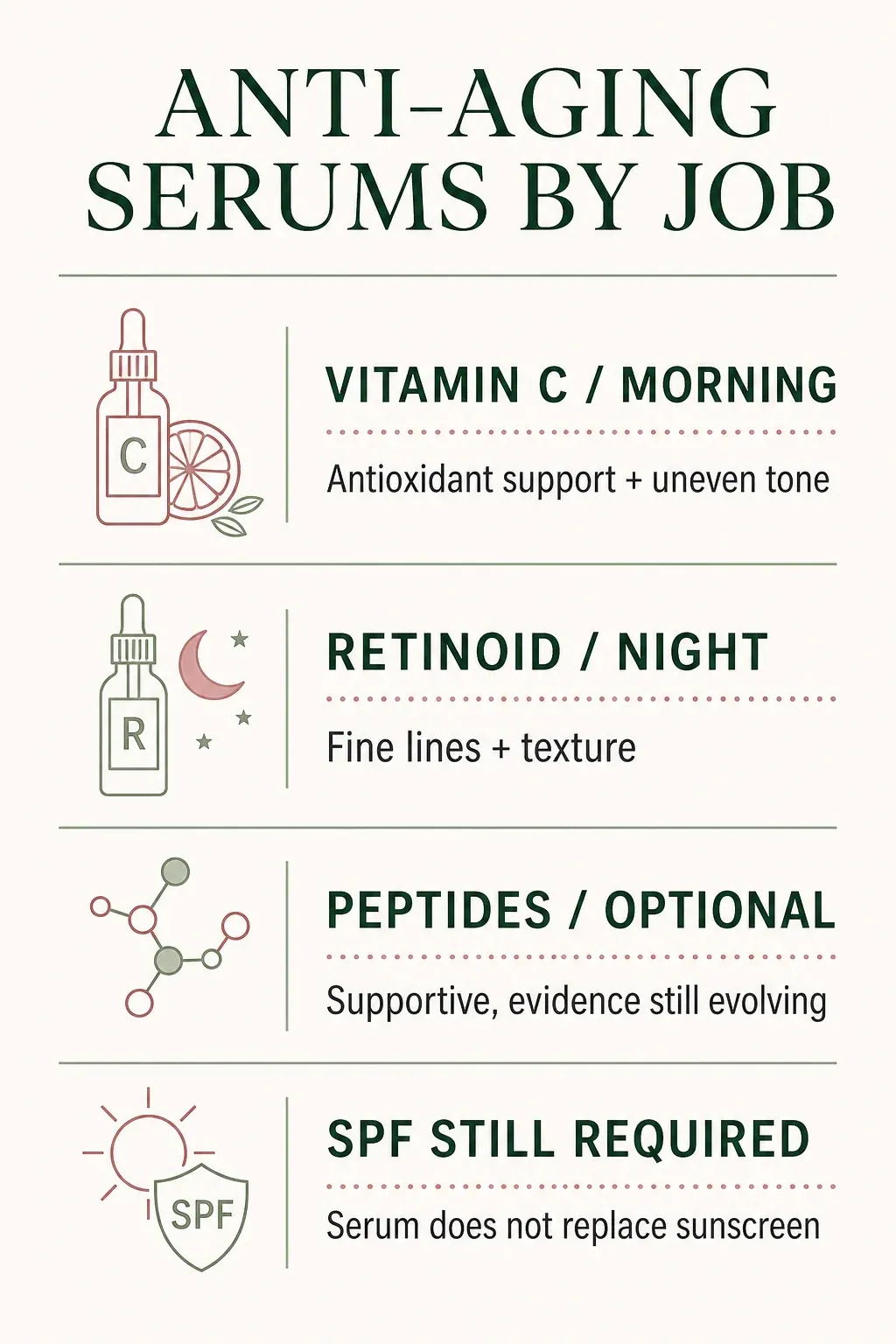
Choose a Serum by Job, Not by the Longest Ingredient List
An anti-aging serum is a concentrated leave-on step, but concentration alone does not make it useful. The right serum has one defined job that is not already being handled by another product. For most routines, that means choosing between morning antioxidant support, a night retinoid, or an optional supportive formula built around peptides or niacinamide.
Start with the concern you can actually see. Fine lines and rough photoaged texture point toward a retinoid. Uneven tone and a dull appearance may justify a stable vitamin C formula. Persistent dryness is usually a moisturizer problem, not a reason to buy a hyaluronic acid serum and continue using an inadequate cream.
| Main concern | Best serum job | When to use | What it cannot do |
|---|---|---|---|
| Fine lines and rough texture | Retinoid | Night | Replace sunscreen or erase deep folds |
| Uneven tone and dullness | Vitamin C antioxidant | Morning | Reverse every type of pigmentation |
| Sensitive skin wanting a gentle extra | Peptide or niacinamide support | Morning or night | Match prescription-level retinoid evidence |
| Tight, flaky or dehydrated skin | Usually moisturizer first | Morning and night | Repair a weak routine by itself |
The American Academy of Dermatology recommends starting with sunscreen and moisturizer, then focusing on one remaining concern. That order prevents a common mistake: buying several treatment serums while the skin is still repeatedly irritated by cleansing, weather or insufficient moisture.
Which Anti-Aging Serum Ingredients Have the Best Evidence?
Evidence is not equally strong across ingredients, and evidence for an ingredient is not automatically evidence for every finished product containing it. Formula stability, packaging, concentration, delivery and consistent use all influence what reaches the skin. Marketing often collapses those details into one highlighted ingredient name.
Topical retinoids have the clearest evidence for photoaged texture and fine lines. A systematic review of randomized trials of topical tretinoin found consistent improvements in several signs of photoaging, while also noting variation between formulations and study methods. Over-the-counter retinol is related to tretinoin but is not identical in strength, conversion or evidence.
Vitamin C has useful but smaller and more formulation-dependent evidence. A systematic review of topical vitamin C included seven publications with 139 volunteers and reported improvements in uneven, wrinkled skin, while emphasizing the need for more research and longer use. That supports realistic antioxidant and tone claims, not an overnight facelift.
Peptides are promising but broad. A 2026 systematic review and meta-analysis found modest overall wrinkle effects across peptide studies, with results driven largely by oral formulations and inconsistent effects on elasticity and density. A peptide serum can be a reasonable comfort-first option, but it should not be sold as a guaranteed collagen replacement.
Retinoid serum: the treatment-focused route
Choose a retinoid serum when fine lines, uneven texture or mild discoloration are the main concern and your basic routine is already stable. Retinol is available without prescription, while tretinoin and some other retinoids require medical guidance. The complete retinol guide explains these differences without treating every vitamin A derivative as interchangeable.
Start once weekly at night. Use a small amount according to the label, avoid the eyelids and corners of the nose and mouth, and follow with moisturizer. Increase to two non-consecutive nights only when the skin remains comfortable. Persistent burning, swelling or raw peeling is a reason to stop, not evidence that the product is working faster.
Vitamin C serum: the morning antioxidant route
L-ascorbic acid is the most studied form of topical vitamin C, but it is also difficult to formulate and can oxidize. Darkening, a sharp odor change or a formula that repeatedly stings may signal that the product no longer fits your routine. Opaque or air-limiting packaging and a realistic use-up period matter more than decorative glass.
A 20% L-ascorbic acid formula can be intense for a first vitamin C serum. Sensitive users may prefer a lower concentration or a derivative-based product even if the marketing sounds less powerful. Apply vitamin C after cleansing and before moisturizer and sunscreen. It supports the morning routine; it does not replace broad-spectrum SPF.
Niacinamide, peptides and hyaluronic acid: supportive routes
Niacinamide can support barrier function and uneven tone in a well-formulated product. Higher percentages are not automatically more effective and can be more irritating. If niacinamide already appears in your moisturizer, a separate 10% serum may simply duplicate the same job.
Hyaluronic acid is a humectant, not a structural filler when applied in a cosmetic serum. It can improve surface hydration when sealed with a suitable moisturizer. In a dry environment, layering a watery humectant under an inadequate cream may still leave the skin tight later in the day.
Peptide serums are best viewed as optional supportive care for someone who values a light layer and cannot or does not want to use a retinoid. Compare the complete formula, packaging and comfort rather than assuming every peptide name has clinical proof in that finished bottle. Our peptide serum guide separates formula roles from exaggerated lifting language.
Build a Morning and Night Serum Routine
| Routine step | Morning | Night |
|---|---|---|
| Cleanse | Gentle cleanse or rinse | Remove sunscreen and makeup without scrubbing |
| Serum | Vitamin C or niacinamide if needed | Retinoid on scheduled nights |
| Moisturize | Texture that layers without pilling | Enough richness to prevent tightness |
| Protect | Broad-spectrum SPF 30+ | No sunscreen required during sleep |
You do not need a serum in both routines. Someone using a retinoid at night may prefer a plain morning routine. Someone with sensitive skin may use vitamin C only three mornings weekly. Consistency at a tolerable frequency is more useful than forcing daily use because the label suggests it.
If fine lines are the primary concern, the fine-lines routine guide shows how sunscreen, moisturizer and treatment fit together before another serum is added.
Apply from thinnest to thickest only when that produces a comfortable result. Waiting long periods between layers is usually unnecessary unless a product direction specifically requires it. If products pill, simplify the number of layers, reduce the amount and allow the previous layer to settle briefly.
Use the slow skincare method when adding any new serum. Hold cleanser, moisturizer and sunscreen constant for roughly two weeks, then introduce the serum at a low frequency. This makes it easier to identify whether stinging, breakouts or dryness came from the new formula.
Two Anti-Aging Serums With Clearly Different Jobs
These are role-based examples, not universal winners. We chose products with a direct product page, a verifiable current ingredient story and a distinct place in a routine. Product formulas, sellers and package sizes can change, so verify the current listing before ordering.
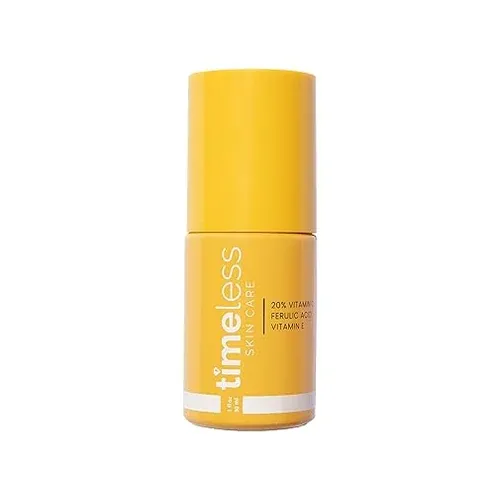
Timeless 20% Vitamin C + E Ferulic Acid Serum
Normal-to-oily or discoloration-prone skin already comfortable with acidic vitamin C formulas.
The current formula uses 20% L-ascorbic acid with vitamin E and ferulic acid in a fragrance-free serum.
Watch-out: Twenty percent L-ascorbic acid may sting sensitive skin. Check color and freshness, and refrigerate if the manufacturer recommends it.
View on AmazonAs an Amazon Associate, SkinOptimizer may earn from qualifying purchases. Prices, sellers and availability can change.
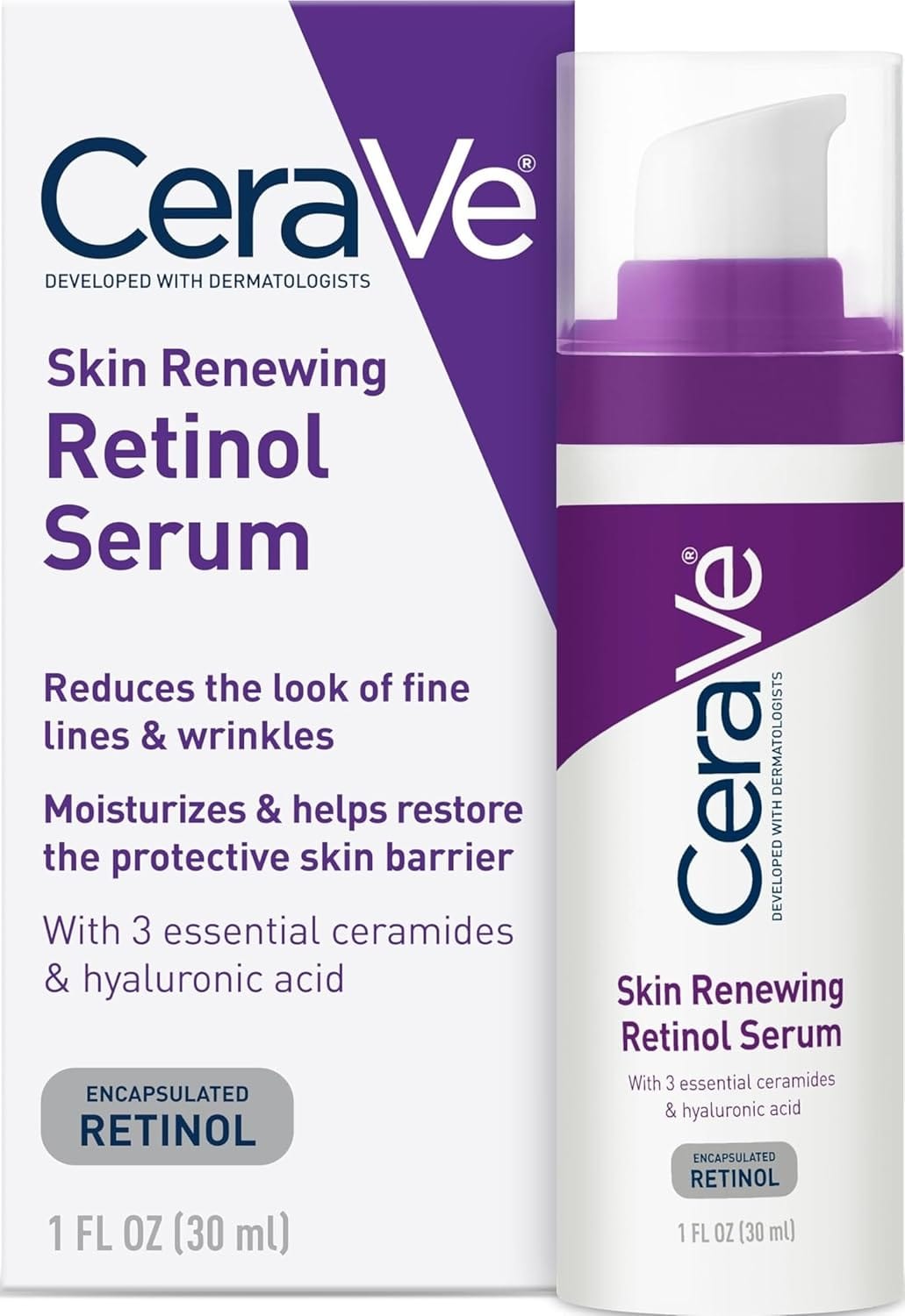
CeraVe Skin Renewing Retinol Serum
A retinol beginner who wants a fragrance-free serum with ceramides, niacinamide and hyaluronic acid.
Its role is clear: cosmetic retinol for night use in a formula that also addresses routine comfort.
Watch-out: Retinol can still irritate and should be introduced slowly. Avoid retinoids during pregnancy and use sunscreen consistently.
View on AmazonAs an Amazon Associate, SkinOptimizer may earn from qualifying purchases. Prices, sellers and availability can change.
How We Selected the Product Examples
SkinOptimizer did not rank these products by marketplace stars or claim to have tested them on every skin type. We evaluated the job of the formula, official product information, ingredient transparency, practical routine fit, packaging considerations, and whether the limitations could be stated clearly.
The Timeless serum represents a strong L-ascorbic acid route. The manufacturer currently lists 20% L-ascorbic acid, vitamin E and ferulic acid and recommends using the product while fresh. The CeraVe serum represents an over-the-counter retinol route; the official product page lists retinol, ceramides, niacinamide and hyaluronic acid and directs evening use.
We excluded products that would duplicate those jobs without adding a meaningful choice. We also excluded dramatic “medical grade,” “Botox-like” and instant lifting claims when the product page did not provide enough formula-specific evidence to explain what was measured.
Choose by Skin Type and Current Tolerance
Dry or mature skin
Dry skin often needs moisturizer more urgently than another serum. Choose a creamy cleanser, apply a moisturizer that combines humectants, emollients and an occlusive component, and use the serum at a lower frequency. The moisturizer guide for aging skin helps build that foundation.
A retinoid serum can be applied over moisturizer if direct application repeatedly causes tightness. This buffer may reduce intensity, but it does not make an intolerable product mandatory. If the skin remains raw or painful, stop and seek professional advice.
Oily or acne-prone skin
A lightweight serum can fit oily skin, but oiliness does not protect against irritation. Avoid pairing a retinol serum with a separate acne retinoid. If benzoyl peroxide or salicylic acid is already part of the routine, introduce the anti-aging serum on different nights and observe total dryness.
Choose non-comedogenic supporting products and avoid assuming that every oil or rich cream causes acne. The oily-skin routine explains how to balance sebum control with barrier comfort.
Sensitive or reactive skin
Patch test and introduce only one formula. A high-strength L-ascorbic acid serum may be less suitable than a lower-strength or derivative formula. Retinoids may not be appropriate during an active eczema, rosacea or barrier flare. The AAD advises people with substantial redness or inflammation to discuss retinoids with a dermatologist.
If even bland moisturizer stings, pause optional serums. Follow the sensitive-skin barrier reset and seek care for persistent rash, swelling or pain.
Serum Results: What Can Change and When?
Days 1-14
Judge comfort, pilling and hydration. Do not use this short window to declare collagen remodeling.
Weeks 6-12
Compare texture and tone in similar lighting. Keep frequency stable if the skin remains comfortable.
Months 3-6
Evaluate mild lines, discoloration and overall routine value. Deep folds require different expectations.
Take a baseline photograph in indirect daylight with the same camera distance and no beauty filter. A serum can improve hydration, mild fine lines, uneven tone or texture, depending on its active. It cannot restore lost facial volume, reposition sagging tissue or provide the result of a procedure.
Daily sunscreen remains the prevention anchor. In a randomized trial, regular sunscreen use was associated with less measured skin aging than discretionary use. The trial report supports consistent photoprotection, not the idea that a serum can compensate for repeated UV exposure.
Common Anti-Aging Serum Mistakes
- Buying by percentage alone: stability, vehicle and tolerance matter.
- Stacking vitamin C, acids and retinoids immediately: irritation can obscure whether any product helps.
- Using a serum instead of moisturizer: a thin humectant layer may not prevent water loss.
- Applying retinol nightly from day one: a slower schedule is easier to sustain.
- Keeping oxidized vitamin C: a visibly changed formula may no longer perform as intended.
- Expecting a peptide to act like a prescription retinoid: their evidence and mechanisms differ.
- Ignoring the neck: neck skin can be more reactive; introduce products there separately.
The Bottom Line
The best anti-aging serum is the one with a defined job and a tolerable place in your routine. Choose vitamin C for morning antioxidant and uneven-tone support, a retinoid for night treatment of fine lines and texture, or a peptide/niacinamide formula as a gentler optional extra. Keep moisturizer and sunscreen in place, introduce one serum at a time and judge change over months rather than days.
Frequently Asked Questions
Which serum is best for anti-aging?
Choose by concern: retinoids for fine lines and texture, vitamin C for antioxidant and uneven-tone support, and peptides or niacinamide as optional supportive care. No single serum is best for every skin type.
Can I use vitamin C and retinol together?
Yes, many people use vitamin C in the morning and retinol on scheduled nights. Introduce them separately and reduce frequency if the combined routine causes persistent dryness or burning.
Do anti-aging serums replace moisturizer?
Usually not. A serum can deliver a targeted active or humectant, while moisturizer reduces water loss and supports comfort. Dry or retinoid-treated skin often needs both.
How long does an anti-aging serum take to work?
Hydration can change the surface quickly, but tone, texture and fine-line improvements usually require eight to twelve weeks or several months of consistent, tolerable use.
Should sensitive skin use an anti-aging serum?
Sensitive skin can use a carefully chosen serum, but start with a stable fragrance-free basic routine, patch test and introduce one formula at a low frequency. Pause if bland products already sting.