Best Anti-Aging Sunscreens in 2026: 8 SPF Picks for Mature Skin
Compare eight broad-spectrum sunscreen options by hydration, tint, finish and outdoor use to find an SPF that fits mature or photoaged skin.
In this guide
What is the best anti-aging sunscreen?
The best anti-aging sunscreen is a broad-spectrum SPF 30 or higher that you can apply generously every day. EltaMD UV Daily SPF 40 is our most balanced hydrating face pick, Colorescience Face Shield Flex SPF 50 is the strongest mineral tint for visible discoloration, and La Roche-Posay Anthelios Melt-In Milk SPF 60 is the most practical outdoor face-and-body option. Sunscreen helps prevent additional photoaging; it does not erase every existing wrinkle or replace medical evaluation of suspicious lesions.
The anti-aging guide for melanin-rich skin explains why tinted photoprotection, barrier comfort and one active at a time belong in the same plan.
Sunscreen supports prevention rather than instant erasure. Our age spot guide covers diagnosis, realistic fading timelines and procedure risks by skin context.
Our complete guide to wrinkle prevention shows where sunscreen fits alongside shade, clothing, moisturizer and retinoids.
Sunscreen works best inside a routine that also controls dryness and treatment irritation. Our simple AM and PM routine for aging skin shows where moisturizer, SPF and a gradual retinoid schedule fit.
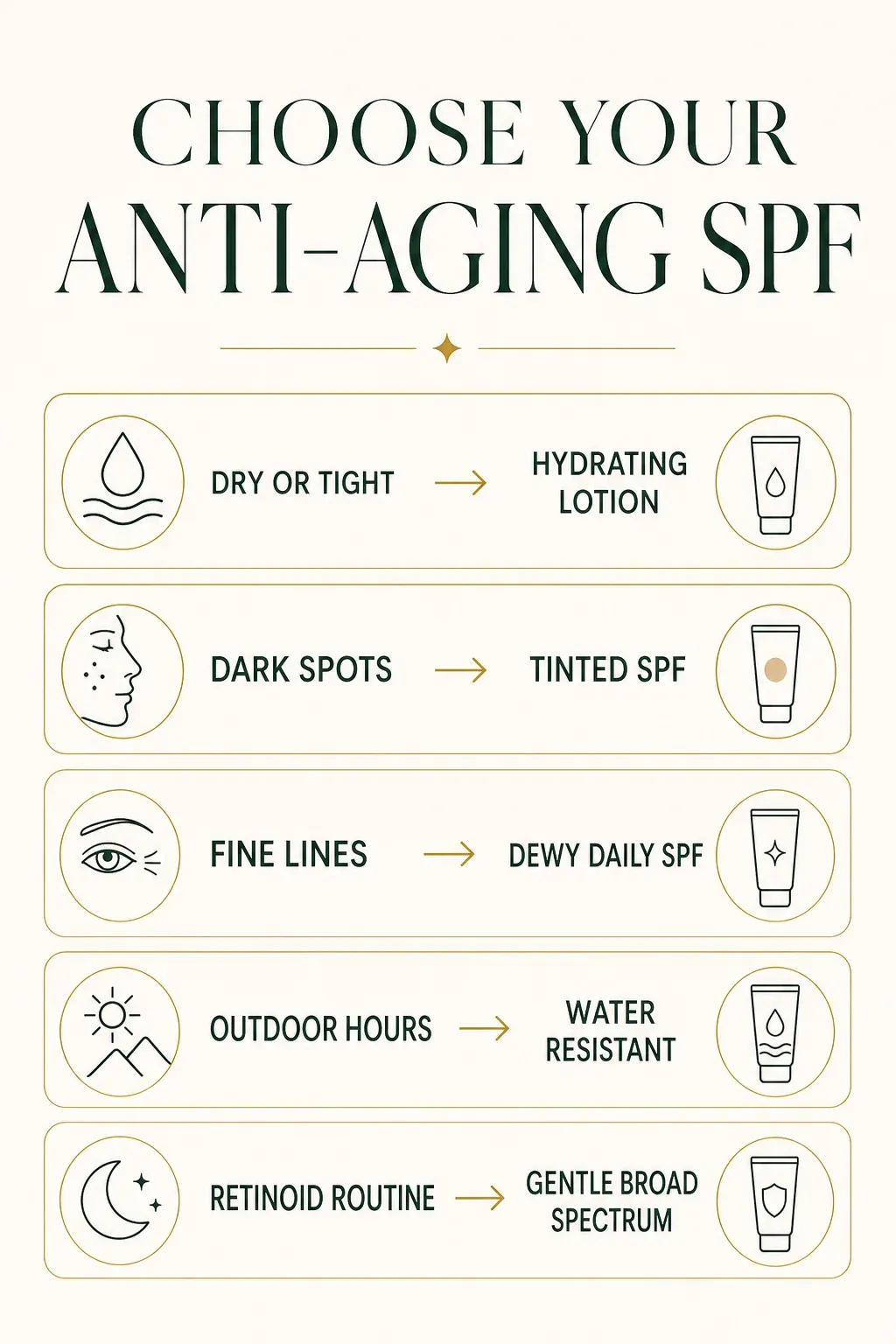
Match protection to the way your skin is aging
- Dry or tight skin: choose a hydrating lotion rather than a powdery matte finish.
- Dark spots or uneven tone: consider a properly matched tinted sunscreen you can apply at the full amount.
- Fine lines under makeup: use a flexible dewy daily SPF that does not pill over moisturizer.
- Long outdoor exposure: prioritize water resistance, generous quantity and face-and-body coverage.
- Retinoid routine: keep morning sunscreen gentle and consistent instead of stacking more aggressive actives.
Sunscreen is often called the best anti-aging product because it addresses a major preventable source of visible skin change: repeated ultraviolet exposure. UVA contributes to collagen breakdown, uneven pigmentation and texture changes, while UVB is strongly associated with sunburn. A daily sunscreen cannot freeze biological aging, but it can reduce the additional damage that makes skin look older earlier.
The evidence is stronger than a cosmetic slogan. In a randomized trial indexed on PubMed, the daily-sunscreen group showed 24% less skin aging than the discretionary-use group over the study period. The American Academy of Dermatology likewise identifies sunscreen and moisturizer as two of the most effective anti-aging products and recommends broad-spectrum SPF 30 or higher.
That evidence does not make every expensive sunscreen superior. The useful product is the one that gives appropriate protection, matches your exposure and feels comfortable enough to use at the labeled amount. Readers focused on existing lines should also compare our evidence-led guide to skincare for fine lines; sunscreen is prevention and maintenance, not a stand-alone wrinkle treatment.
How to Choose Sunscreen for Mature or Photoaged Skin
Start with the same baseline recommended for adults of every age: broad-spectrum protection and SPF 30 or higher. The AAD also recommends water resistance, especially when sweat or water is expected. The FDA explains that SPF primarily reflects UVB protection, while broad-spectrum labeling indicates protection across UVA and UVB testing requirements. Review the FDA's current sunscreen guidance rather than assuming a higher number lasts longer.
After those essentials, choose for application behavior. Mature skin often becomes drier, but not every adult over 40 has dry skin. A rich cream may help one reader use enough and cause another to underapply because it feels greasy. The correct finish is the one that supports a full, even layer without pilling, eye stinging or an obvious cast.
| Main concern | Start with | Do not assume |
|---|---|---|
| Dryness or tightness | Hydrating lotion or sunscreen over moisturizer | More oil always means more protection |
| Sun spots or melasma | Tinted broad-spectrum sunscreen with a suitable shade | Tint treats established pigmentation |
| Fine lines under makeup | Flexible lotion or serum finish | A thin primer layer reaches labeled SPF |
| Retinoid sensitivity | Gentle fragrance-free morning SPF | More actives in the sunscreen are automatically better |
| Outdoor exposure | 40- or 80-minute water resistance | SPF 60 removes the need to reapply |
Prioritize UVA-aware broad-spectrum protection
Fine lines and pigment changes make UVA protection especially relevant to the anti-aging search intent, but U.S. shoppers should not interpret SPF as a direct UVA score. Look for the broad-spectrum statement and apply the product as directed. A high SPF that is used too thinly or rubbed away cannot deliver the protection demonstrated during testing.
Hydration improves comfort, not the SPF number
Hyaluronic acid, glycerin, ceramides and emollients can make sunscreen more comfortable on dry skin. They do not independently raise the labeled SPF unless they are part of the tested finished formula. If a moisturizing sunscreen still feels tight, use a simple moisturizer underneath and allow it to settle before applying SPF.
Use tint as a practical application tool
A suitable tint can reduce white cast and provide light cosmetic coverage, which may make generous daily use easier. Iron-oxide pigments are also often discussed for visible-light concerns in hyperpigmentation, but shade match remains essential. Our tinted sunscreen comparison provides more options across finishes and tones.
Best Anti-Aging Sunscreens: Quick Comparison
This table ranks routine fit, not wrinkle-reversal power. SkinOptimizer did not independently measure each product's UVA protection, finish or clinical outcome. Compare the current Drug Facts label and use the selected sunscreen at the labeled amount.
| Product | Best for | Main limitation |
|---|---|---|
| EltaMD UV Daily Face Sunscreen SPF 40 | Normal-to-dry facial skin, makeup days and routine daily wear. | Not water resistant; confirm whether the selected listing is tinted or untinted and SPF 40 or SPF 50. |
| Eucerin Sun Advanced Hydration Lotion SPF 50 | Dry skin and exposed neck, chest, hands or arms. | The richer finish may feel too dewy on oily skin; check current directions and seller before ordering. |
| DRMTLGY Universal Tinted Moisturizer SPF 46 | Normal-to-dry skin seeking sheer tint and glow. | One tint is not universal, and the finish may be too radiant for oily skin. |
| Colorescience Face Shield Flex SPF 50 | Uneven tone, visible sun spots and mineral-only shoppers who want coverage. | Premium price and shade selection; tone-adapting does not mean one shade fits everyone. |
| CeraVe Skin Renewing Day Cream SPF 30 | Experienced retinol users seeking a simplified daytime moisturizer-SPF. | Not for every sensitive or prescription-retinoid routine; introduce carefully and follow professional advice. |
| La Roche-Posay Anthelios Melt-In Milk SPF 60 | Long outdoor days, body coverage and water resistance. | Not mineral-only; high SPF still requires correct amount, reapplication, shade and clothing. |
| Neutrogena Invisible Daily Defense Face Serum SPF 60+ | Active days, humid weather and readers who dislike heavy creams. | The fluid texture makes under-application easy, and organic filters may sting some eyes. |
| ISDIN Eryfotona Actinica Mineral SPF 50+ | Mineral-fluid shoppers who have discussed cumulative sun damage with a clinician. | Not medical treatment; current formula may include fragrance and alcohol, and the bottle is expensive. |
The 8 Best Anti-Aging Sunscreens in 2026
1. EltaMD UV Daily Face Sunscreen SPF 40
EltaMD UV Daily is the most balanced everyday face option in this list for skin that feels drier with age. The current product family combines zinc oxide with an organic UV filter and adds hyaluronic acid in a light moisturizing base. It is designed to sit more like a daily moisturizer than a dense outdoor lotion, which matters because the anti-aging value comes from consistent full-amount use rather than an impressive ingredient list used sparingly.
Its elegant daily finish comes with a clear tradeoff: this is not the water-resistant choice for swimming, long runs or very sweaty outdoor work. The exact SPF and tint options vary within the listing, so verify the selected version before checkout. If octinoxate or another organic filter has previously irritated your eyes, choose a mineral-only alternative.
- Best for: Normal-to-dry facial skin, makeup days and routine daily wear.
- Skip if: You need water resistance or a mineral-only formula.
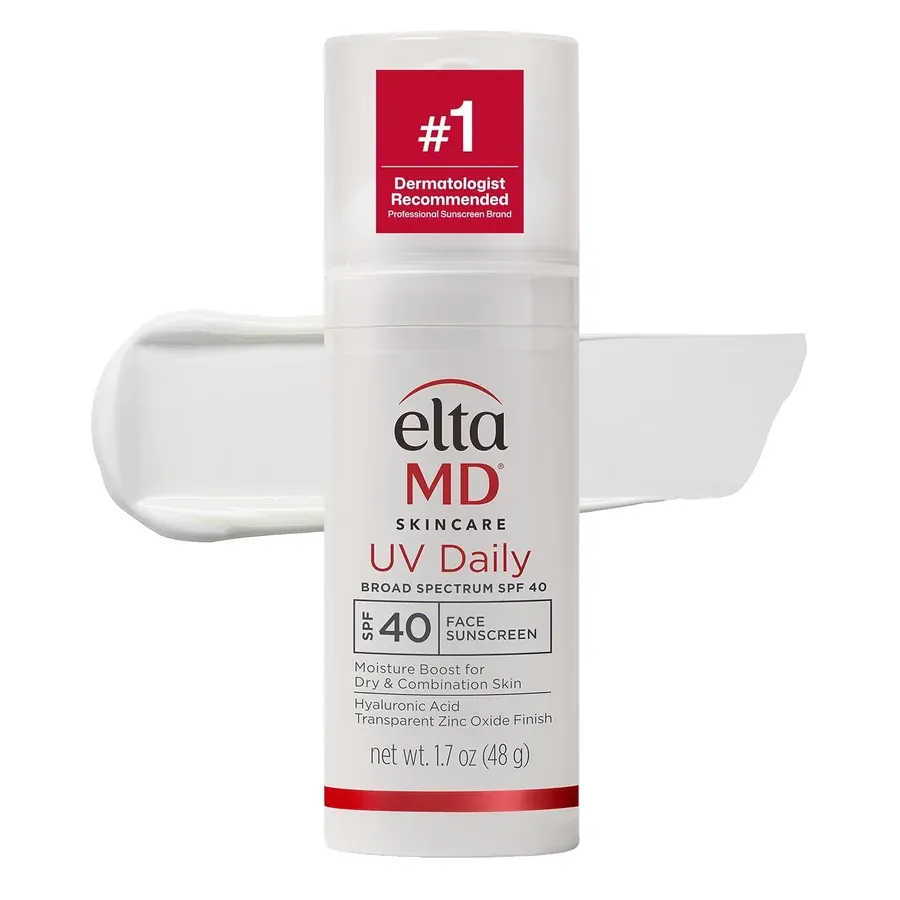
EltaMD UV Daily Face Sunscreen SPF 40
Why it fits: A lightweight sunscreen-moisturizer format that makes daily broad-spectrum protection easier on dry or dehydrated skin.
Watch-out: Not water resistant; confirm whether the selected listing is tinted or untinted and SPF 40 or SPF 50.
View EltaMD UV Daily on AmazonAs an Amazon Associate, SkinOptimizer may earn from qualifying purchases.
2. Eucerin Sun Advanced Hydration Lotion SPF 50
Eucerin Advanced Hydration SPF 50 earns its place as the practical high-SPF hydration pick. The fragrance-free formula uses humectants including hyaluronic acid and is sold in a larger five-ounce format, making it easier to protect the neck, chest, arms and hands rather than saving an expensive face bottle for special occasions. Those areas often show cumulative sun exposure as clearly as the face.
This is a hydrating sunscreen lotion, not a wrinkle treatment, and it should not be presented as one. The larger format and dewy finish can feel richer than people with very oily skin prefer. It is an outdoor-friendly option, but verify the current water-resistance directions and allow it to set before dressing to reduce transfer.
- Best for: Dry skin and exposed neck, chest, hands or arms.
- Skip if: You want a compact matte facial fluid.
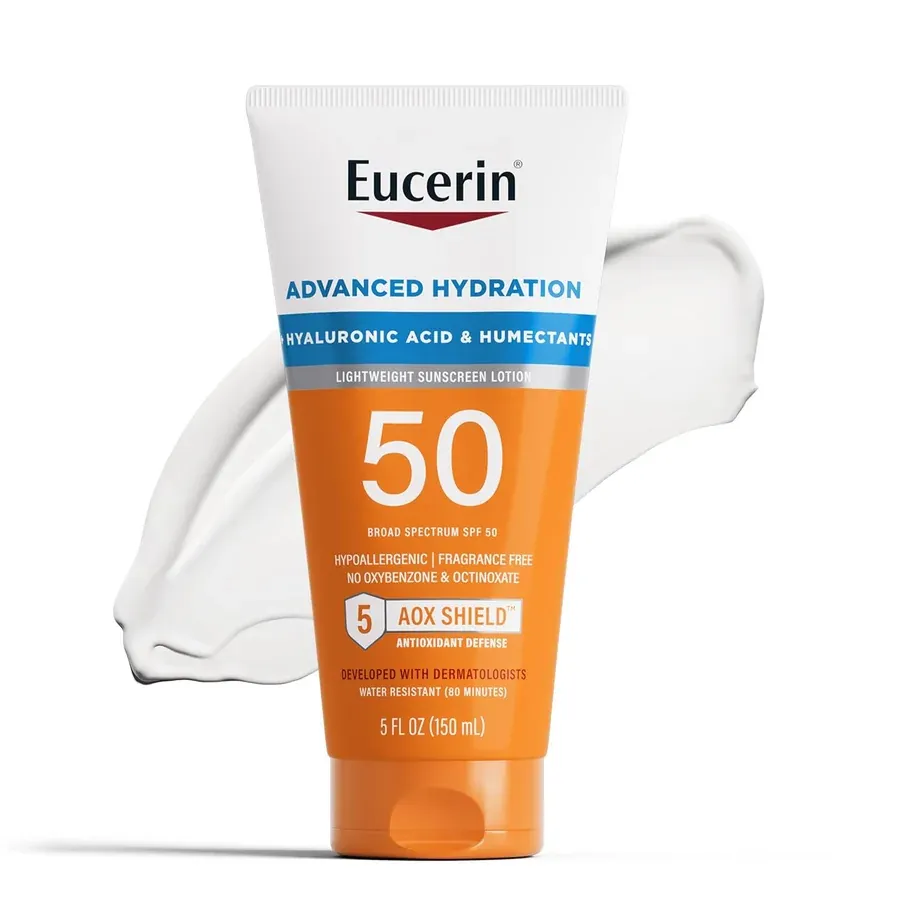
Eucerin Sun Advanced Hydration Lotion SPF 50
Why it fits: A fragrance-free SPF 50 lotion with humectants in a size that supports generous use beyond the face.
Watch-out: The richer finish may feel too dewy on oily skin; check current directions and seller before ordering.
View Eucerin Advanced Hydration on AmazonAs an Amazon Associate, SkinOptimizer may earn from qualifying purchases.
3. DRMTLGY Universal Tinted Moisturizer SPF 46
DRMTLGY Universal Tinted Moisturizer pairs broad-spectrum SPF 46 with sheer color and a dewy finish. The tint can soften the visible contrast of uneven tone without requiring a separate full-coverage base, while niacinamide and hyaluronic acid support the cosmetic feel of the formula. It is useful for readers who repeatedly underapply chalky mineral sunscreen because they dislike the finish.
Universal tint is marketing language, not a promise that one shade disappears on every complexion. The product uses zinc oxide with octinoxate, so it is not mineral-only, and the glowy finish can emphasize shine. Apply the labeled sunscreen amount first; do not use a foundation-style thin layer and assume the SPF remains equivalent.
- Best for: Normal-to-dry skin seeking sheer tint and glow.
- Skip if: A universal tint or dewy finish does not suit your complexion.
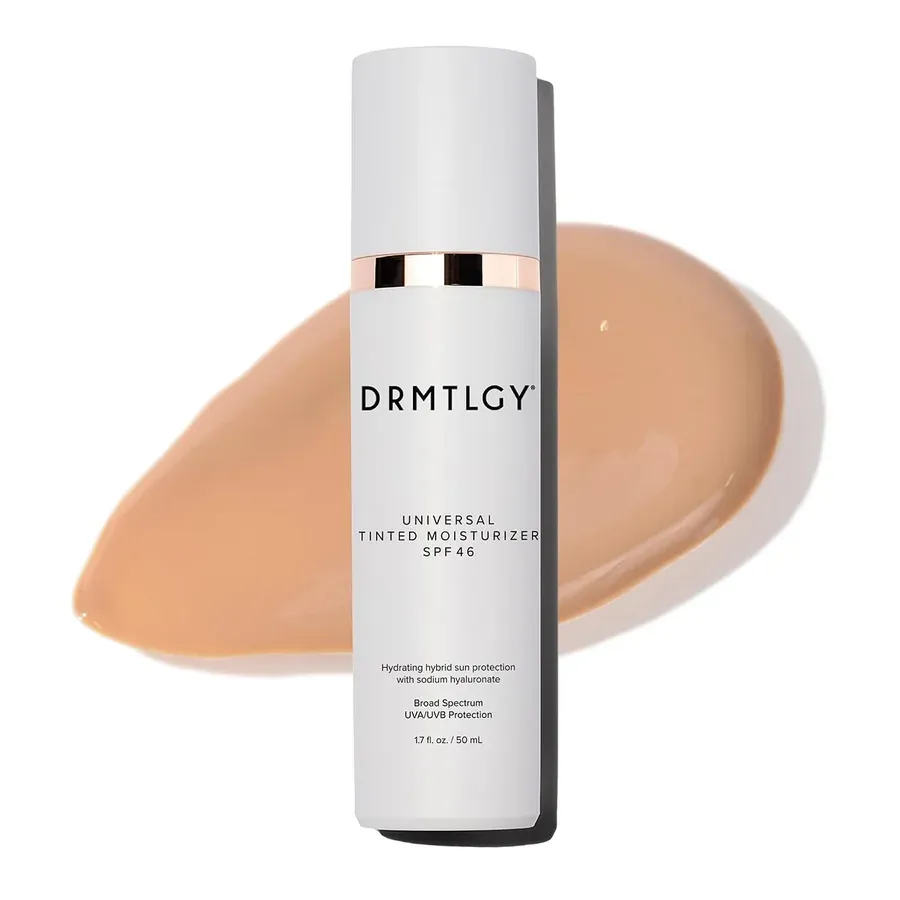
DRMTLGY Universal Tinted Moisturizer SPF 46
Why it fits: A sheer tinted hybrid sunscreen for readers who want daily protection and light tone-evening in one step.
Watch-out: One tint is not universal, and the finish may be too radiant for oily skin.
View DRMTLGY SPF 46 on AmazonAs an Amazon Associate, SkinOptimizer may earn from qualifying purchases.
4. Colorescience Face Shield Flex SPF 50
Colorescience Face Shield Flex is the strongest complexion-focused mineral option here. Its tinted zinc-oxide formula offers buildable tone-adapting color and 40-minute water resistance, so it can bridge sunscreen and light makeup while remaining more outdoor-capable than many cosmetic tints. A tint can also reduce the ashy cast that makes full mineral application difficult across deeper skin tones.
The shade must still be chosen carefully; tone-adapting pigment does not erase undertone and depth differences. It is also the most expensive product in the comparison, and the buildable coverage may feel like makeup to readers who want an invisible fluid. Buy the correct shade from a reliable seller and check the sealed packaging on arrival.
- Best for: Uneven tone, visible sun spots and mineral-only shoppers who want coverage.
- Skip if: You want a low-cost invisible sunscreen with no makeup effect.
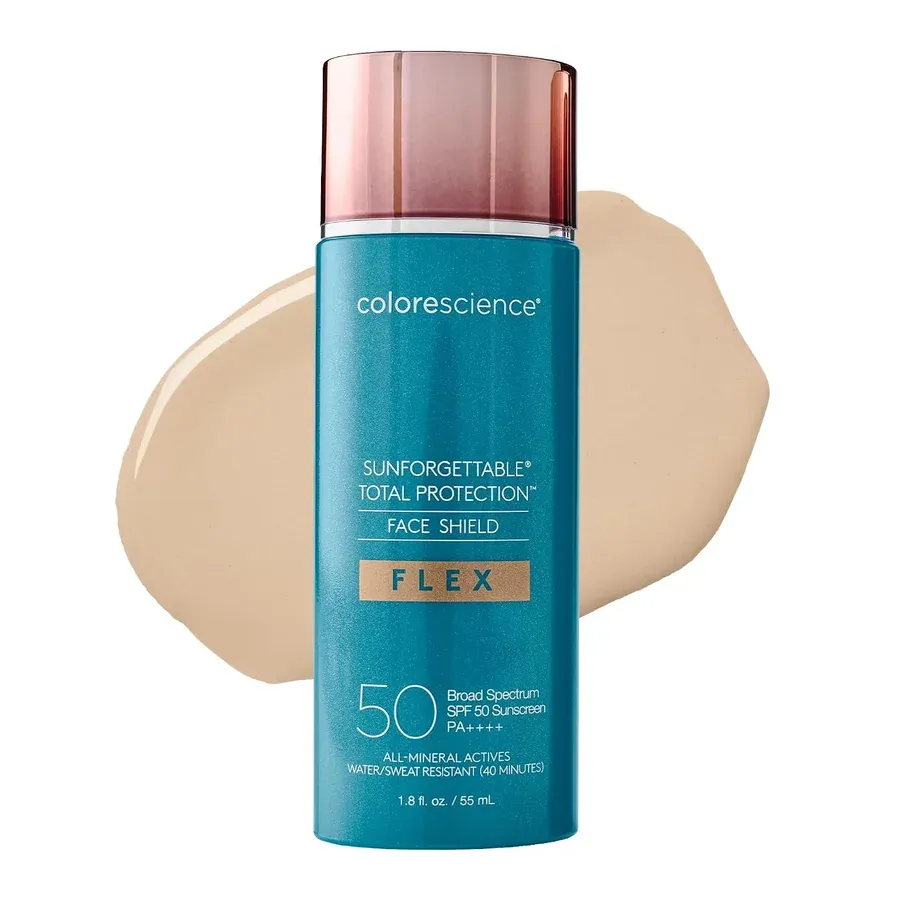
Colorescience Face Shield Flex SPF 50
Why it fits: A tinted zinc-oxide SPF 50 with buildable coverage and 40-minute water resistance.
Watch-out: Premium price and shade selection; tone-adapting does not mean one shade fits everyone.
View Colorescience Flex on AmazonAs an Amazon Associate, SkinOptimizer may earn from qualifying purchases.
5. CeraVe Skin Renewing Day Cream SPF 30
CeraVe Skin Renewing Day Cream combines SPF 30, moisturizer and encapsulated retinol in one product. That can simplify a routine for someone who wants a daytime moisturizer with a gradual retinol component rather than layering several cosmetic products. Ceramides and hyaluronic acid support hydration, while the sunscreen component provides the broad-spectrum protection required in any retinoid-focused routine.
This is the most conditional recommendation in the list. Retinol can irritate sensitive skin, and the product does not replace a stronger prescription retinoid or a dedicated outdoor sunscreen. Do not add it on top of an already aggressive retinoid routine without professional guidance, and stop if persistent burning or peeling develops.
- Best for: Experienced retinol users seeking a simplified daytime moisturizer-SPF.
- Skip if: You are pregnant, highly reactive or already using a prescription retinoid unless your clinician approves it.
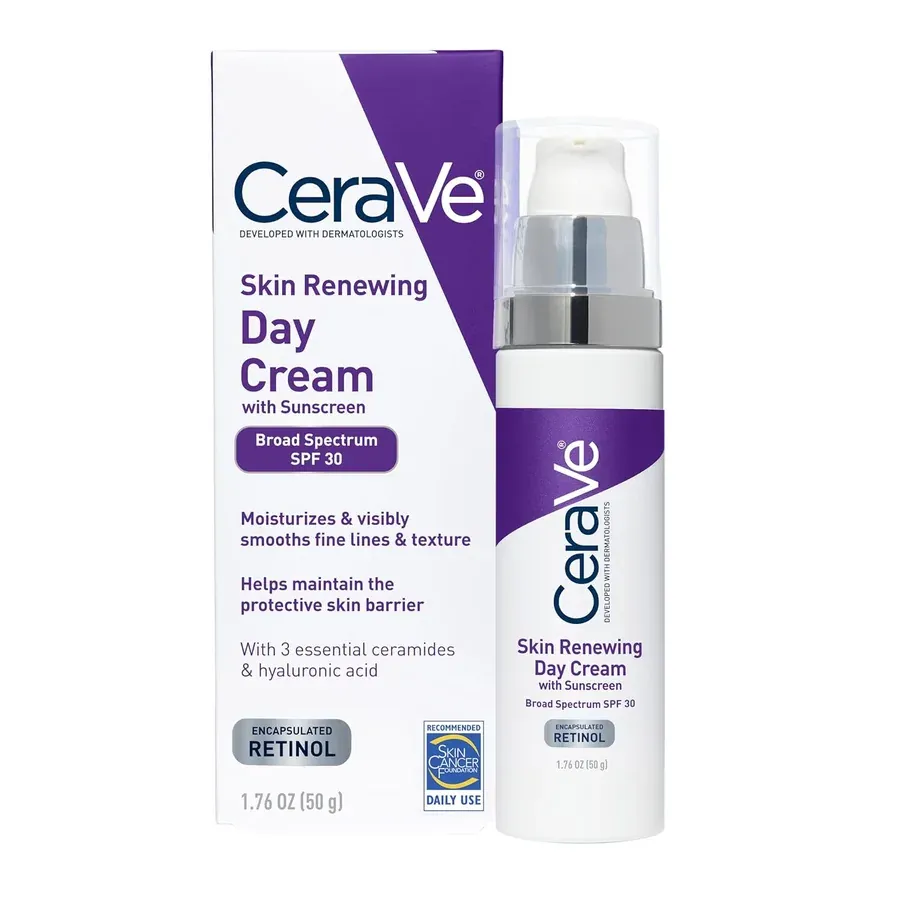
CeraVe Skin Renewing Day Cream SPF 30
Why it fits: A moisturizer with SPF 30 and encapsulated retinol for experienced users who want fewer daytime layers.
Watch-out: Not for every sensitive or prescription-retinoid routine; introduce carefully and follow professional advice.
View CeraVe Day Cream on AmazonAs an Amazon Associate, SkinOptimizer may earn from qualifying purchases.
6. La Roche-Posay Anthelios Melt-In Milk SPF 60
La Roche-Posay Anthelios Melt-In Milk SPF 60 is the broad-use outdoor pick. The oil-free lotion is designed for face and body, includes antioxidant ingredients and carries an 80-minute water-resistance claim. It suits travel, long walks, gardening and beach days when a cosmetically elegant office sunscreen is not enough for the exposure.
A high SPF does not remove the need to reapply, seek shade or use protective clothing. The lotion is not mineral-only, and a formula that feels comfortable on the body may still sting the eye area. Apply it before exposure, follow the label after swimming or sweating and use a separate eye-tolerant facial option if needed.
- Best for: Long outdoor days, body coverage and water resistance.
- Skip if: You need mineral-only facial sunscreen or have sensitive eyes.
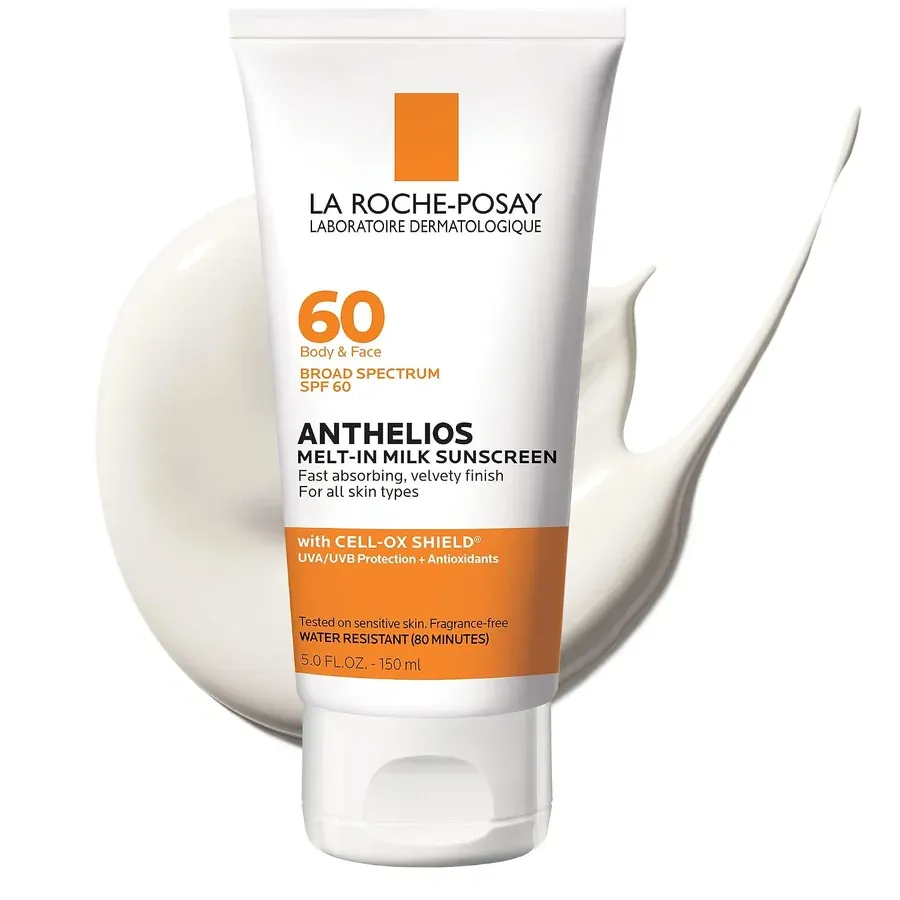
La Roche-Posay Anthelios Melt-In Milk SPF 60
Why it fits: An SPF 60 face-and-body lotion with antioxidants and 80-minute water resistance for extended outdoor use.
Watch-out: Not mineral-only; high SPF still requires correct amount, reapplication, shade and clothing.
View Anthelios Melt-In Milk on AmazonAs an Amazon Associate, SkinOptimizer may earn from qualifying purchases.
7. Neutrogena Invisible Daily Defense Face Serum SPF 60+
Neutrogena Invisible Daily Defense Face Serum offers a lighter serum-style alternative to creamy high-SPF lotions. The fragrance-free listing combines broad-spectrum SPF 60+ with antioxidants and 80-minute water resistance, making it more practical for humid weather, active commuting and outdoor exercise than many elegant daily moisturizers. It dries without the obvious white cast associated with some mineral formulas.
This is an organic-filter sunscreen, so people with known filter or eye sensitivity should patch test cautiously. A thin serum feel can also encourage under-application; measure by the label rather than stopping when the face merely feels coated. The finish and tolerance are personal, not guaranteed by the word invisible.
- Best for: Active days, humid weather and readers who dislike heavy creams.
- Skip if: Organic filters commonly sting your eyes or reactive skin.
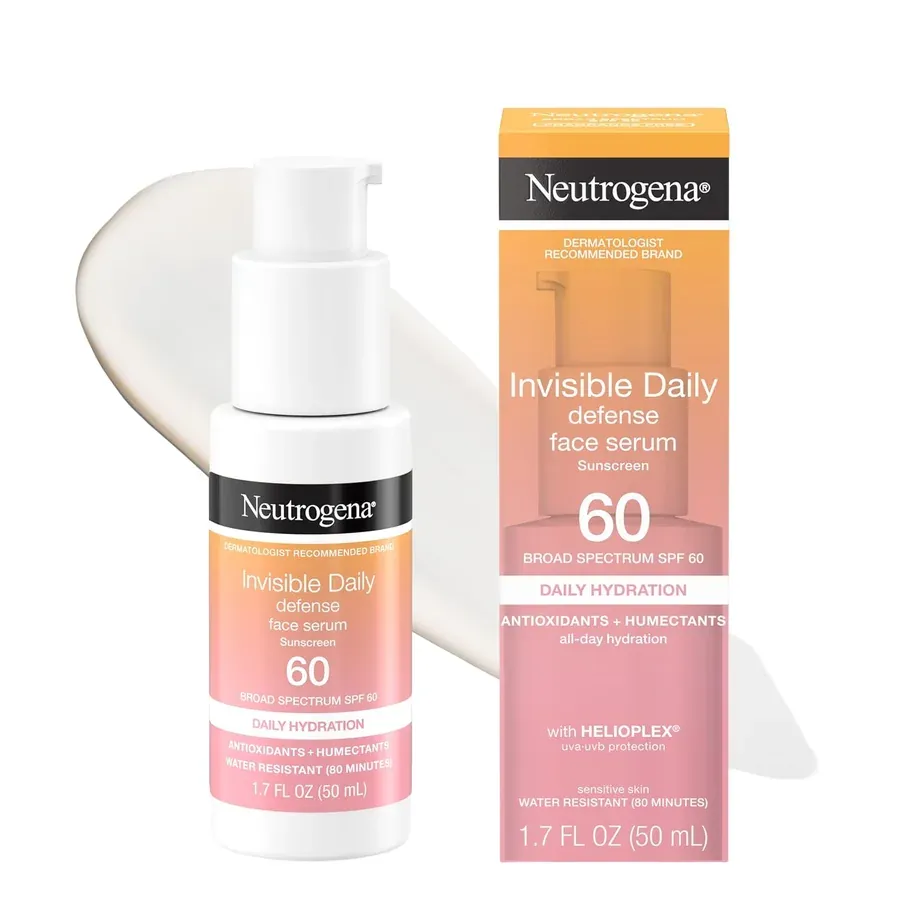
Neutrogena Invisible Daily Defense Face Serum SPF 60+
Why it fits: A fragrance-free serum sunscreen with SPF 60+ and 80-minute water resistance.
Watch-out: The fluid texture makes under-application easy, and organic filters may sting some eyes.
View Neutrogena Face Serum on AmazonAs an Amazon Associate, SkinOptimizer may earn from qualifying purchases.
8. ISDIN Eryfotona Actinica Mineral SPF 50+
ISDIN Eryfotona Actinica is a premium mineral face sunscreen built around zinc oxide, a fluid texture and 40-minute water resistance. The formula is widely positioned for people concerned about cumulative sun exposure and is easier to spread than many dense mineral pastes. Its one-and-a-half-ounce size fits a facial routine rather than generous body use.
Do not treat a product name or DNA-repair marketing as treatment for precancerous lesions, skin cancer or established medical disease. The current formula can include fragrance and alcohol, which may be poor fits for reactive skin, and the price is high. Anyone with actinic keratoses or suspicious lesions needs a dermatologist, not a premium sunscreen claim.
- Best for: Mineral-fluid shoppers who have discussed cumulative sun damage with a clinician.
- Skip if: Fragrance, alcohol or premium pricing is a concern, or you are seeking medical treatment.
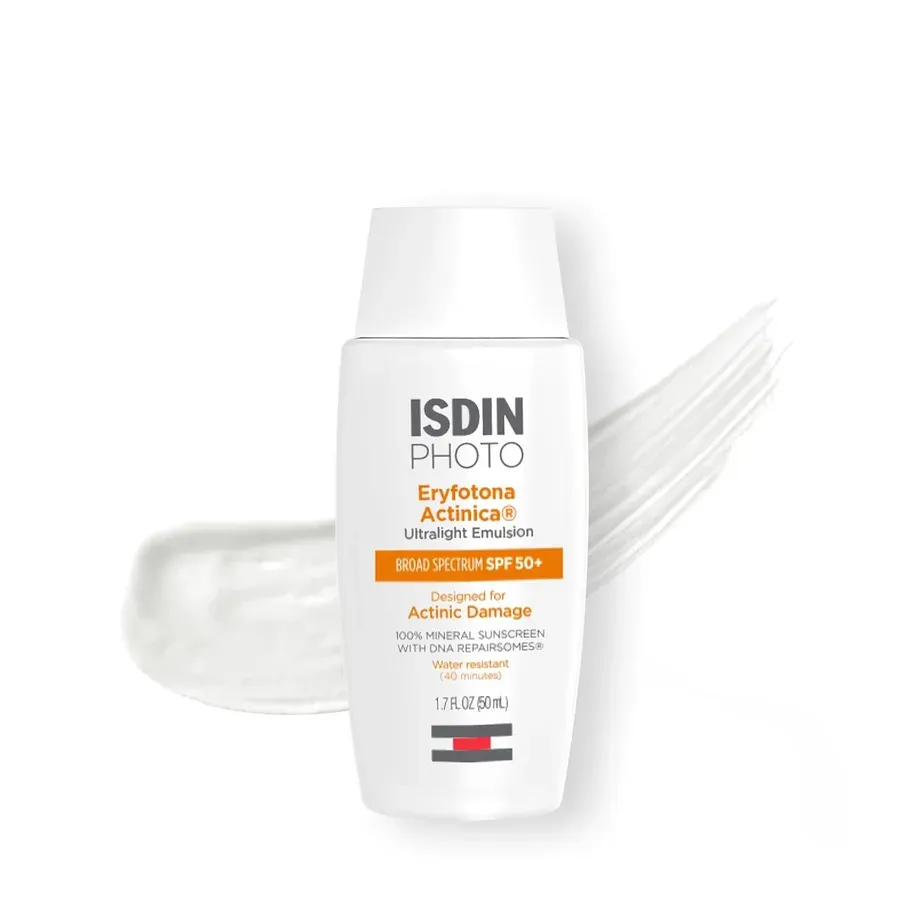
ISDIN Eryfotona Actinica Mineral SPF 50+
Why it fits: A fluid zinc-oxide SPF 50+ with 40-minute water resistance for face-focused daily use.
Watch-out: Not medical treatment; current formula may include fragrance and alcohol, and the bottle is expensive.
View ISDIN Eryfotona on AmazonAs an Amazon Associate, SkinOptimizer may earn from qualifying purchases.
How to Layer Sunscreen With Vitamin C, Moisturizer and Retinoids
In the morning, keep the order simple: gentle cleanse or rinse, treatment serum if tolerated, moisturizer if needed, then sunscreen as the final skincare layer before makeup. Allow wet layers to settle so rubbing does not create pilling or an uneven sunscreen film. Our guide to layering moisturizer and serum explains how to reduce competing textures.
Vitamin C is commonly used in the morning before sunscreen, but antioxidants do not replace UV filters. Start with a small number of products and stop if the combination produces persistent stinging. More layers do not automatically create better anti-aging results if they make sunscreen separate, pill or become impossible to apply generously.
Retinoids are normally used at night, according to product or prescription directions. Sunscreen matters because an irritated or peeling routine is more vulnerable to discomfort and discoloration. If you are deciding between options, the retinol versus bakuchiol comparison separates evidence, tolerance and pregnancy-related considerations.
How Much Anti-Aging Sunscreen Should You Apply?
Use the amount stated on the label and cover every exposed area, including ears, neck, upper chest and backs of hands. The familiar two-finger method can be a useful facial reminder, but bottle directions remain authoritative because product density and intended areas differ. Apply before sun exposure and let the film set before makeup or clothing.
Reapply at least every two hours while outdoors and after swimming or sweating according to the water-resistance label. Indoors, exposure depends on window proximity and actual daylight conditions; our guide to indoor versus outdoor sunscreen explains when window-side routines deserve more attention. A desk day and a beach day should not use identical assumptions.
What Sunscreen Cannot Do for Existing Wrinkles or Sun Damage
Sunscreen can reduce additional UV-driven change, but it cannot diagnose or treat skin cancer, erase deep wrinkles or guarantee that existing pigmentation will fade. A 2016 study indexed on PubMed reported visible improvement in signs of photodamage during a year of daily broad-spectrum sunscreen use, but that does not convert every retail formula into a corrective treatment.
Changing, bleeding or non-healing spots, rough lesions that repeatedly crust, and suspected actinic keratoses require professional evaluation. Do not use a premium “repair” sunscreen as a reason to delay care. The AAD's guide to wrinkle remedies and sun protection also emphasizes shade, protective clothing and avoiding tanning.
The Bottom Line
The best anti-aging sunscreen is not the bottle with the longest list of cosmetic claims. It is the broad-spectrum sunscreen that fits your skin, exposure and routine well enough to use correctly every day. EltaMD UV Daily is the balanced hydrating face pick, Colorescience Flex is the mineral tint for visible discoloration, and La Roche-Posay Melt-In Milk is the more durable face-and-body outdoor option.
Build the rest of the routine around that protection instead of asking serums and moisturizers to compensate for inconsistent SPF. For a broader everyday comparison by skin type, continue with our daily sunscreen guide. For reactive skin, use the dedicated sensitive-skin sunscreen picks.
Frequently Asked Questions About Anti-Aging Sunscreen
Can sunscreen actually prevent wrinkles?
Daily broad-spectrum sunscreen cannot stop intrinsic aging, but it can reduce additional UV-driven photoaging. A randomized trial found less skin aging in the daily-use group than in the discretionary-use group. Protection still depends on sufficient application, reapplication and other sun-protective measures.
Is SPF 30 or SPF 50 better for anti-aging?
Both can be appropriate when they are broad spectrum and applied correctly. SPF 50 offers a higher tested level of UVB protection and can provide more margin for real-world use, but it does not last longer or eliminate the need to reapply. Comfort, UVA coverage, water resistance and application amount matter too.
Should mature skin use mineral or chemical sunscreen?
Mature skin does not automatically require one filter type. Mineral formulas may suit some reactive users but can feel dry or leave a cast; organic or hybrid formulas can be lighter and more transparent but may sting some eyes. Choose the full formula that your skin tolerates at the labeled amount.
Can I use sunscreen with retinol or vitamin C?
Yes. Vitamin C is normally applied before moisturizer and sunscreen in the morning, while retinoids are commonly used at night. Sunscreen is especially important when an active routine leaves skin more vulnerable to irritation or discoloration. Introduce one change at a time and follow prescription instructions.
Does moisturizer with SPF count as sunscreen?
A moisturizer labeled broad-spectrum SPF is tested as a sunscreen, but only when you apply enough to reach the labeled protection. Many people use moisturizer too sparingly. If the required amount feels heavy, use a lighter dedicated sunscreen rather than relying on a thin cosmetic layer.
For comfortable evening SPF removal, see our mature-skin cleanser guide, including when an oil or balm is useful and when one cleanse is enough.