Oxygen Facial Benefits: What Is Proven and What Is Hype?
Oxygen facials may create temporary hydration and radiance, but services are not standardized. Separate oxygen claims from exfoliation, serum and energy effects.

In this guide
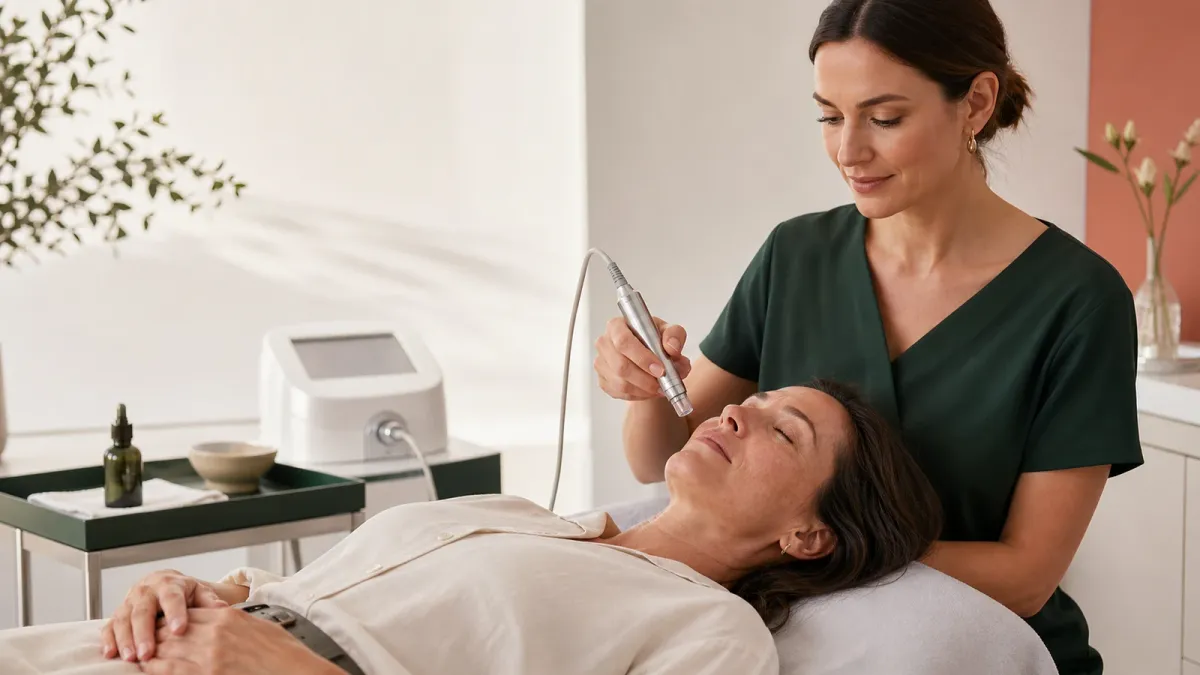
An oxygen facial may temporarily make skin look smoother, more hydrated or brighter, but the service is not standardized and oxygen itself has limited evidence for lasting rejuvenation. Exfoliation, massage, suction and humectant serums often explain much of the immediate glow. It should not be sold as proven acne treatment, collagen remodeling or detoxification.
Quick Summary
- Ask whether the service sprays oxygen, creates CO2 or combines several devices.
- Small combination studies cannot isolate oxygen as the active benefit.
- Expect short-term hydration or surface radiance rather than permanent wrinkle change.
- Reactive, infected or recently treated skin should defer the facial.
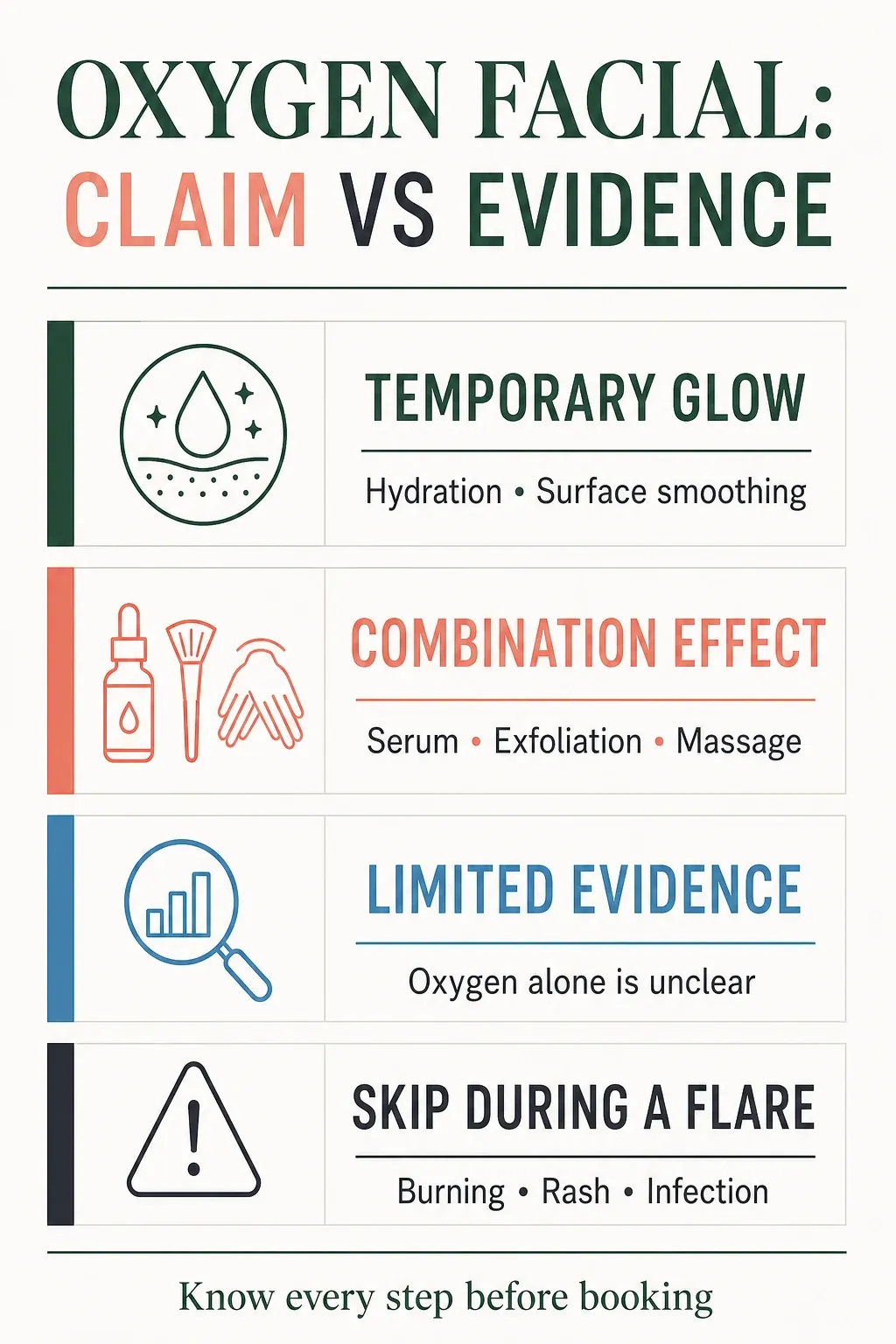
Oxygen facials occupy an appealing middle ground between skincare and procedures: they sound scientific, promise no downtime and often produce an immediate glow. The problem is that the name can describe very different combinations, and most research cannot separate oxygen from exfoliation, serum and energy. This guide translates the marketing into a realistic decision by mechanism, evidence, skin sensitivity and cost.
What Is an Oxygen Facial?
“Oxygen facial” is a marketing umbrella, not one standardized medical procedure. A spa may spray pressurized oxygen and serum onto the skin, use a device that creates carbon dioxide at the surface to increase local blood flow, or combine exfoliation, suction, radiofrequency, massage and moisturizing products. Results cannot be attributed to oxygen until the exact protocol is known.
Medical hyperbaric oxygen therapy places a patient in a pressurized chamber for specific medical indications. It is not the same as a cosmetic facial and should not be used as evidence that a spa spray rebuilds collagen. Topical oxygen used for chronic wounds is also a distinct clinical intervention.
Ask the provider to name every step, active serum and device. A facial that exfoliates and applies hyaluronic-acid serum may create smoother, more hydrated skin even if the oxygen component adds little. Combination treatments make before-and-after claims difficult to interpret.
| Service label | What may happen | Evidence problem |
|---|---|---|
| Oxygen infusion | Oxygen jet applies a serum or mist | Oxygen and serum effects are not separated |
| Carboxy facial | CO2 reaction may increase local oxygen delivery | Different mechanism from sprayed oxygen |
| Three-in-one facial | Exfoliation, infusion and energy are combined | No single component can claim the result |
| Topical oxygen therapy | Medical oxygen delivery to a wound | Wound evidence does not prove anti-aging benefit |
| Hyperbaric oxygen | Whole-body medical chamber treatment | Not a cosmetic spa facial |
What Does the Evidence Actually Show?
Direct evidence for cosmetic oxygen facials is sparse. Studies use different devices, combinations and outcome measures, and many lack a control group. This makes it impossible to promise that oxygen itself creates a durable anti-aging change.
A small ten-person study of a three-in-one OxyGeneo treatment reported improvements after six weekly sessions. The protocol combined exfoliation, topical infusion, a carboxy-style oxygenation mechanism and radiofrequency. With only ten participants and no untreated comparison, it cannot isolate oxygen or establish long-term benefit.
A review of topical oxygen in dermatology described a small set of supportive studies for acne, hair loss and chronic skin disease, while calling for larger research. Those medical or adjunctive contexts are not proof that a one-off spa facial reduces wrinkles. The delivery methods and treatment goals differ.
A correlation study found that facial skin oxygen tension decreased with age and correlated with some elasticity measures. Correlation does not show that spraying oxygen on the surface reverses aging. The skin oxygenation study measured physiology; it did not test a commercial facial.
The safest interpretation is modest and short term: the full facial may temporarily improve surface smoothness, hydration or radiance. Evidence is not strong enough to claim durable collagen remodeling, acne treatment, pigment correction or medical detoxification from oxygen alone.
Potential Benefits by Time Horizon
Immediately after treatment, hydrated products and exfoliation can make the surface feel softer and reflect light more evenly. Massage and warmth can cause temporary redness or a flushed look. These changes may be useful before an event if the skin tolerates the service.
Over days, the benefit depends more on the exfoliation depth, product ingredients and baseline barrier than on the word “oxygen.” A humectant serum can temporarily increase water at the surface. Strong exfoliation can instead trigger dryness, stinging or a breakout-like irritation.
Claims of new collagen, scar remodeling or lasting pore reduction require controlled studies over weeks or months. The available combination studies are too small to support those promises. For actual photoaging prevention, daily broad-spectrum sunscreen has a much clearer role.
| Claim | Reasonable interpretation | Better evidence-based option |
|---|---|---|
| Instant glow | Possible from hydration and surface smoothing | Gentle routine plus consistent moisturizer |
| Plumper skin | Temporary water-binding effect is plausible | Humectant and barrier-support products |
| Fewer wrinkles | Short-lived optical softening may occur | Sunscreen, retinoid or targeted procedure |
| Clears acne | Not established as primary acne treatment | Evidence-based acne routine or clinician care |
| Detoxifies skin | Not a meaningful dermatology claim | Treat the specific diagnosed concern |
| Builds collagen | Not proven for oxygen spray alone | Compare resurfacing and collagen-stimulating options |
Who Might Enjoy One, and Who Should Wait?
A healthy adult with stable, non-reactive skin may enjoy a gentle hydrating facial before an event. The best candidate expects a temporary cosmetic refresh, not treatment of a medical condition. The service should disclose every serum and exfoliating step.
Wait if the skin is sunburned, infected, actively inflamed, recently peeled, newly lasered or stinging with basic moisturizer. People with eczema, rosacea, acne, fragrance allergy or post-inflammatory hyperpigmentation need a conservative protocol. The oxygen may not be the risky part; exfoliation, fragrance and suction may be.
If redness is a recurring concern, start with the redness and rosacea routine. For a damaged barrier, use the skin-barrier restoration guide before scheduling an elective facial.
Pregnancy or breastfeeding does not make plain oxygen exposure automatically dangerous, but the complete serum and device protocol matters. Ask the obstetric clinician about retinoids, salicylic acid, strong peels, electrical energy or unfamiliar actives rather than relying on the service name.
Possible Side Effects
Temporary redness, tightness, dryness, stinging, swelling or small bumps can follow a facial. Fragrance, botanical extracts, preservatives and exfoliating acids can trigger irritant or allergic reactions. Suction and abrasion can cause bruising or broken capillaries in susceptible skin.
Equipment that touches skin needs proper cleaning and single-use components where appropriate. Poor hygiene can spread bacteria or aggravate acne and folliculitis. Ask how handpieces, tubing and bowls are cleaned between clients.
Stop the service if burning, sharp pain, breathing symptoms or eye irritation occurs. Seek urgent care for facial swelling with breathing difficulty, widespread hives or severe eye symptoms. Persistent rash, blistering, infection signs or worsening pigment needs clinical assessment.
How to Read Oxygen-Facial Marketing
- “Infuses oxygen into the skin”: ask how penetration was measured in humans.
- “Stimulates collagen”: ask for controlled trials of that exact device and protocol.
- “Detoxifies”: ask which toxin is measured and how.
- “Kills acne bacteria”: ask whether the claim applies to oxygen, an active serum or another energy source.
- “Zero downtime”: ask about exfoliation, suction and your own sensitivity history.
- “Medical grade”: request the device identity and regulatory indication.
The FDA distinguishes cosmetic appearance claims from claims that a product changes the structure or function of skin. Its anti-aging product guidance explains why a moisturizer that makes lines less noticeable is not the same as a treatment proven to remodel tissue.
Oxygen Facial vs. Hydrafacial, Microdermabrasion and LED
A hydradermabrasion-style treatment generally combines fluid, suction, exfoliation and serum delivery. Microdermabrasion mechanically removes part of the outer stratum corneum. An oxygen facial may include either of those steps, but the name alone does not disclose depth or device.
Read the microdermabrasion versus dermabrasion guide before comparing “resurfacing” promises. A gentle surface treatment cannot reproduce surgical dermabrasion, and a stronger treatment is not automatically better for reactive skin.
LED uses specified wavelengths and energy to create photobiomodulation effects. It has a different mechanism from oxygen spray. The LED light therapy evidence guide explains why wavelength, dose and device clearance matter.
For vascular redness or superficial pigment, IPL is a more targeted energy procedure with greater potential benefit and greater risk. The IPL treatment guide helps distinguish a medical light treatment from a spa facial.
Building a Better At-Home “Glow” Routine
A temporary glow often comes from hydration, a smoother stratum corneum and consistent sun protection. Use a gentle cleanser, moisturizer suited to your skin and broad-spectrum sunscreen. Add one evidence-based active only when the barrier is comfortable.
For dry or dehydrated skin, the anti-aging moisturizer guide can help match humectants, emollients and occlusives. For gradual texture improvement, the collagen-support guide sets realistic timelines.
Do not recreate a pressurized oxygen service with concentrated oxygen near oils, flames or unapproved devices. Home oxygen has fire and medical-use risks. A misting tool filled with water is not the same technology and does not need an oxygen claim to provide temporary comfort.
Questions to Ask Before Booking
- What exact device and oxygen-delivery method do you use?
- Which steps exfoliate, suction, heat or apply electrical energy?
- What are the complete serum ingredients?
- Which result comes from oxygen rather than the other steps?
- How is the equipment cleaned between clients?
- How do you modify the service for rosacea, acne or pigment risk?
- What should I do if burning or swelling appears later?
Ask for the total cost of the recommended series and what evidence supports repeat visits. If the expected benefit lasts only days, compare that with a routine or treatment that addresses the actual concern. Event-ready convenience can still have value when it is described honestly.
How Much Value Does a Series Add?
One gentle facial can test tolerance and show how long the cosmetic effect lasts for you. A package of six sessions assumes that repeated treatment creates cumulative benefit, yet the supporting evidence may come from a tiny combination study rather than the exact service being sold. Ask for the protocol and outcome measure before committing.
Calculate the annual cost, travel time and days spent modifying your routine around appointments. Compare that total with a dermatologist consultation, a consistent moisturizer and sunscreen, or a procedure with stronger evidence for the actual concern. The expensive skincare evidence guide applies the same principle: price and complexity are not proof of superior results.
Use a simple before-and-after test
Take photographs in the same room, light, camera position and facial expression before treatment, after 24 hours and after one week. Do not compare the clinic's ring-light image with a casual phone photo. Note hydration, stinging, redness and texture rather than relying only on “glow.”
If improvement disappears after a day, decide whether short event preparation is still worth the price. If irritation lasts longer than the benefit, the protocol is a poor fit. A useful service does not need exaggerated permanence to justify a limited cosmetic role.
What to do after an unexpected reaction
Stop new actives and use only products already known to be comfortable. Photograph the reaction, list every product used during the facial and contact the provider. The slow-start method can help simplify recovery without hiding symptoms.
Persistent burning, swelling, crusting, pus or spreading redness needs clinical assessment. Do not book another session to “push through” a purge, because a cosmetic oxygen facial should not require worsening inflammation to work. Ask for the full ingredient list to support allergy or irritation review.
Common Oxygen Facial Mistakes
- Assuming every service is the same: oxygen, CO2, exfoliation and radiofrequency are different components.
- Crediting oxygen for the whole result: serum and surface smoothing may explain the glow.
- Treating active disease at a spa: acne, eczema and rosacea need diagnosis and a controlled plan.
- Booking on irritated skin: more steps can worsen a damaged barrier.
- Buying a series after one photo: lighting and temporary hydration can exaggerate change.
- Confusing cosmetic oxygen with hyperbaric therapy: evidence cannot be transferred between them.
The Bottom Line
An oxygen facial may make skin look temporarily smoother, more hydrated or brighter, but the service is not standardized and oxygen itself has limited direct evidence for lasting rejuvenation. Combination steps often explain much of the visible result.
Choose it as an optional cosmetic experience, not a treatment for acne, wrinkles, pigment or “toxins.” Ask what every step does, avoid irritated skin and compare a repeated series with simpler evidence-based care.
Frequently Asked Questions About Oxygen Facial Benefits
How long do oxygen facial benefits last?
Immediate smoothness or radiance may last from a day to several days, depending on exfoliation, hydration and the person's routine. Strong evidence for durable oxygen-specific rejuvenation is lacking.
Do oxygen facials build collagen?
There is not enough controlled evidence to show that sprayed oxygen alone creates meaningful lasting collagen remodeling. Small studies usually combine oxygen-related steps with exfoliation, serum or radiofrequency.
Can an oxygen facial clear acne?
It is not an established primary acne treatment. Some topical oxygen research exists in different clinical contexts, but a spa facial can also irritate acne through friction, occlusive products or contaminated equipment.
Are oxygen facials safe for sensitive skin?
A gentle version may be tolerated, but fragrance, acids, suction, abrasion and heat can trigger sensitive or rosacea-prone skin. Ask for every ingredient and step, and defer treatment during a flare.
Is an oxygen facial the same as hyperbaric oxygen therapy?
No. Hyperbaric oxygen is a medical treatment delivered in a pressurized chamber for defined indications. A cosmetic facial uses a surface device or combination protocol and cannot borrow that medical evidence.
This article is for informational purposes only and does not replace professional dermatological advice.