How to Restore Your Skin Barrier: Evidence-Based Repair Protocol
Science-backed guide to restoring your skin barrier. The 4-phase repair protocol, 3:1:1 ceramide ratio, and ingredients that rebuild the lipid barrier.

In this guide
Your skin barrier - the stratum corneum - is a sophisticated lipid matrix that determines whether your skin retains moisture, resists irritants, and repairs itself. When this barrier is compromised, the result is increased transepidermal water loss (TEWL), which leads to dryness, sensitivity, and a visibly dull complexion. Effective barrier repair requires more than just moisturizing - it requires providing the skin with ceramides, cholesterol, and fatty acids in the correct physiological ratio of 3:1:1.
Product pick included
Jump to product pickThis evidence-based guide covers the biology of the skin barrier, the four-phase repair protocol, which ingredients work at what stage, and how to build a routine that restores barrier function. For a complete skincare foundation, explore our guide to anti-aging ingredients and best moisturizers for barrier repair.
TL;DR - Skin Barrier Repair
- Ceramides are essential: The barrier requires a 3:1:1 ratio of ceramides, cholesterol, and fatty acids for proper repair
- Stop all actives: No retinoids, AHAs, BHAs, vitamin C, or benzoyl peroxide until barrier is healed
- Gentle cleansing: Use a pH-balanced (4.5-5.5), non-foaming cleanser. Avoid sulfates and alcohols
- Moisturize damp skin: Apply moisturizer within 3 minutes of washing to lock in water
- SPF is mandatory: A damaged barrier is more vulnerable to UV damage. SPF 30+ every day
- Timeline: Mild damage heals in 2-4 weeks. Moderate damage takes 4-8 weeks. Severe may take 12+ weeks
The Skin Insider
The most common cause of a damaged skin barrier is not genetics - it is over-exfoliation and misuse of active ingredients. The skin barrier is designed to protect, not to be stripped daily. When you use AHAs, retinoids, and benzoyl peroxide simultaneously, you are chemically and mechanically dismantling the structure that keeps irritants out. The 3:1:1 ratio of ceramides, cholesterol, and fatty acids is not a marketing claim - a clinical study in the Journal of Clinical and Aesthetic Dermatology confirmed that this specific ratio is the optimal formulation for barrier repair. Most moisturizers do not meet this standard.
Signs of a Damaged Skin Barrier
| Symptom | What It Feels Like | Severity Indicator |
|---|---|---|
| Dryness / flaking | Tight, rough texture, visible flakes | Mild to moderate |
| Redness / inflammation | Warm, irritated, blotchy | Moderate |
| Stinging / burning | Products that never stung now cause discomfort | Moderate to severe |
| Breakouts | Small bumps, clogged pores, increased acne | Moderate |
| Increased sensitivity | Reaction to products, weather, or touch | Moderate to severe |
| Dehydrated but oily | Skin produces excess oil to compensate for moisture loss | Moderate |
The 4-Phase Barrier Repair Protocol
Phase 1: Stop the Damage (Days 1-7)
Goal: Remove all irritants and let the barrier begin healing.
- Stop ALL active ingredients: retinoids, AHAs, BHAs, vitamin C, benzoyl peroxide, niacinamide (if stinging), and all exfoliants
- Switch to a pH-balanced, non-foaming, cream or oil cleanser
- Apply a ceramide-rich moisturizer immediately after cleansing (within 3 minutes)
- Use SPF 30+ every morning
- No washing with hot water. Lukewarm only
- No towels on the face. Pat dry gently
Phase 2: Rebuild the Lipid Matrix (Weeks 2-3)
Goal: Provide the building blocks for barrier repair in the correct ratio.
- Apply a moisturizer formulated with the 3:1:1 ratio of ceramides, cholesterol, and free fatty acids
- Add a hyaluronic acid serum on damp skin before moisturizer for deep hydration
- Continue gentle cleansing and SPF 30+
- Consider a squalane or jojoba oil as an occlusive layer at night
Phase 3: Reintroduce Supporting Actives (Weeks 4-6)
Goal: Once the barrier is stable, carefully reintroduce beneficial ingredients.
- Add niacinamide (start at 2%) - supports barrier function and reduces inflammation
- Introduce peptides for collagen support
- Continue ceramide-rich moisturizer as the base
- Monitor for any signs of reaction. If stinging returns, drop back to Phase 2
Phase 4: Maintenance (Week 7+)
Goal: Maintain barrier health while using targeted treatments.
- Reintroduce retinoids at a lower frequency (1-2x/week) and lower concentration
- Continue ceramide moisturizer as your daily base
- Exfoliate only 1x/week at most
- SPF 30+ every day without exception
Key Barrier Repair Ingredients
| Ingredient | Category | Function | Phase |
|---|---|---|---|
| Ceramides (1, 3, 6-II) | Lipid | Fill gaps between skin cells, restore barrier | 1-4 |
| Cholesterol | Lipid | Maintains membrane fluidity, supports ceramide function | 1-4 |
| Free Fatty Acids | Lipid | Complete the 3:1:1 ratio for barrier repair | 1-4 |
| Hyaluronic Acid | Humectant | Draws water into the skin, reduces TEWL | 1-4 |
| Glycerin | Humectant | Attracts moisture, supports barrier hydration | 1-4 |
| Squalane | Emollient | Locks in moisture, mimics natural sebum | 2-4 |
| Niacinamide (2-5%) | Active | Supports barrier function, reduces inflammation | 3-4 |
| Peptides | Active | Signal collagen production, support repair | 3-4 |
Barrier Repair Protocol - Visual Guide
01Stop the DamagePhase 1: Days 1-7UrgencyComplexityStop ALL actives. Gentle cleanser only. Ceramide moisturizer on damp skin. SPF 30+ daily. Pat - don't rub.02Rebuild LipidsPhase 2: Weeks 2-3UrgencyComplexity3:1:1 ratio moisturizer + HA serum on damp skin. Squalane as occlusive at night. Continue gentle cleansing and SPF.03Reintroduce ActivesPhase 3: Weeks 4-6UrgencyComplexityAdd niacinamide 2% then peptides. Keep ceramide moisturizer as base. Monitor for reactions.04MaintenancePhase 4: Week 7+UrgencyComplexityReintroduce retinoids at low frequency. Exfoliate 1x/week max. Maintain SPF and ceramide moisturizer daily.Quick Decision GuideBarrier StateMild dryness→Phase 1-2: 2-4 weeksBarrier StateRedness + stinging→Phase 1-3: 4-8 weeksBarrier StateSevere damage→All phases: 12+ weeksBarrier StatePrevention only→Phase 4: Maintenance routineBarrier StateNot sure→Stop all actives for 2 weeks. If skin improves, barrier was compromised.Educational skincare guide. Not medical advice.Barrier Repair Essential
Product pick
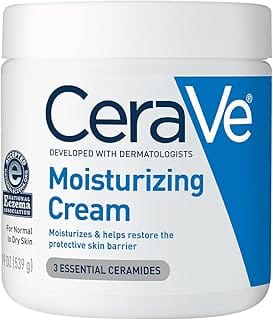
CeraVe Moisturizing Cream
Why it fits: A fragrance-free ceramide moisturizer that fits barrier-repair routines when skin feels tight, dry, or reactive. Keep the rest of the routine simple while the barrier calms.
Watch-out: Check the ingredient list and introduce it slowly if your skin is reactive.
Check Availability on Amazon →As an Amazon Associate, we earn from qualifying purchases.
As an Amazon Associate, we earn from qualifying purchases.
🧱
Daily Barrier Repair Routine
Morning: Gentle cleanser or water rinse → HA serum (damp skin) → Ceramide moisturizer → SPF 30+
Evening: Gentle cleanser → HA serum (damp skin) → Ceramide moisturizer → Squalane oil (optional occlusive)
This minimalist routine is the gold standard for barrier repair. No actives, no exfoliants, no fragrances. The American Academy of Dermatology recommends applying moisturizer within 3 minutes of bathing to lock in moisture and restore the protective barrier.
The Optimizer's Edge
Most barrier repair advice focuses on what to add, but the most critical step is what to remove. A damaged barrier cannot heal while you continue using active ingredients. The 3:1:1 ratio of ceramides, cholesterol, and fatty acids is the clinically validated standard for repair - and most moisturizers on the market do not meet this ratio, regardless of price. Look for products that specifically list ceramide NP, cholesterol, and linoleic or linolenic acid in the top half of the ingredient list. If you are unsure whether your moisturizer meets the standard, choose one that explicitly states it follows the 3:1:1 ratio. For a complete approach, explore our best moisturizers for barrier repair and best ingredients for barrier repair.
Your Clear Skin Checklist
- Step 1: Stop ALL active ingredients. Switch to a gentle, pH-balanced cleanser and ceramide-rich moisturizer.
- Step 2: Apply moisturizer within 3 minutes after washing. Use lukewarm water. No rubbing, no exfoliating.
- Step 3: Be patient: mild damage heals in 2-4 weeks. Add SPF 30+ every morning. Reintroduce actives only after barrier feels strong again.
⛶ Fullscreen
Skin Barrier Healing Questions: Timelines, Acne, and Signs of Progress
How long does skin barrier repair take? There is no dependable universal countdown. Mild irritation may feel calmer after several days of removing the trigger and simplifying the routine, while repeated over-exfoliation, eczema, allergic contact dermatitis, infection, or prescription-treatment irritation can take longer and may need professional care. Judge the trend rather than promising a fixed number of days.
How do you know the skin barrier is improving? Water, cleanser, and moisturizer sting less; tightness and flaking decrease; redness becomes less reactive; and a basic routine feels predictable again. Improvement does not require the skin to look poreless or produce no oil. See our damaged skin barrier signs for a symptom-based check.
Can barrier damage cause acne? Irritation, friction, and an overloaded routine can occur alongside breakouts and can make acne treatment harder to tolerate, but “barrier damage” is not a complete acne diagnosis. Do not assume every breakout will clear through moisturizer alone. Keep cleansing gentle, avoid picking, and use evidence-based acne care when needed.
When should you restart actives? Wait until the basic cleanse-and-moisturize routine no longer stings and the skin has remained stable for several days. Restart one active at a lower frequency, then watch the response before adding another. The AAD's gentle face-washing guidance supports using lukewarm water, fingertips, and avoiding scrubbing while the routine is sensitive.
Seek qualified care for swelling, hives, blistering, weeping, spreading rash, severe pain, signs of infection, eye involvement, or symptoms that persist despite removing likely irritants. A cosmetic barrier routine cannot diagnose eczema, rosacea, allergy, infection, or another skin condition.
Water conditions can overlap with barrier stress; follow our hard water and skin decision guide to test temperature, cleansing time, and moisturizer timing without assuming minerals are the only cause.
Frequently Asked Questions About Skin Barrier Repair
How long does it take to restore a damaged skin barrier?Timelines vary by severity. Mild damage (dryness, tightness) typically heals in 2-4 weeks with consistent use of ceramide-rich moisturizers and removal of all active ingredients. Moderate damage (redness, stinging) requires 4-8 weeks. Severe damage (persistent inflammation, compromised barrier) may take 12+ weeks. The key is consistency - using the right products every day without interruption. Healing is not linear; you may see improvement in the first week followed by a plateau.Can I use too many products when repairing my barrier?Yes. Introducing multiple active ingredients simultaneously is a common cause of barrier damage. During repair, use the minimum effective routine: gentle cleanser, hyaluronic acid serum, ceramide moisturizer, and SPF. Do not add vitamin C, retinoids, AHAs, BHAs, or niacinamide until the barrier feels strong again (typically 4-6 weeks). Add new products one at a time with at least one week between each introduction to identify any negative reactions.What are the signs of a damaged skin barrier?Common signs include persistent dryness and flaking, redness and inflammation, stinging or burning when applying products, increased sensitivity to environmental factors, breakouts in unusual patterns, a tight or uncomfortable feeling after cleansing, and skin that looks dehydrated but feels oily on the surface. The most reliable diagnostic test is to stop all active ingredients for 2 weeks. If your skin improves, your barrier was compromised.Do I need to see a dermatologist for barrier repair?Mild to moderate barrier damage can be resolved with a consistent home routine. However, consult a dermatologist if you experience severe pain, persistent redness that does not improve after 4 weeks of barrier repair, signs of infection (oozing, crusting), or if you have a pre-existing skin condition like eczema, rosacea, or psoriasis that may be contributing to the barrier dysfunction.Can diet affect my skin barrier?Yes. A diet rich in essential fatty acids (omega-3 and omega-6), antioxidants, and adequate hydration supports barrier health. Sources like fatty fish, flaxseed, walnuts, and avocados provide the building blocks for lipid synthesis. Conversely, a diet high in processed foods, sugar, and unhealthy fats can promote systemic inflammation that weakens the barrier. Staying hydrated supports the moisture gradient that drives passive hydration from the dermis to the epidermis.
This article is for informational purposes only and does not replace professional dermatological advice. If you have persistent skin concerns, consult a board-certified dermatologist.