Microdermabrasion vs. Dermabrasion: Which Fits Your Goal?
Microdermabrasion is superficial; dermabrasion is surgical resurfacing. Compare realistic results, downtime, scar uses and pigment risks.

In this guide
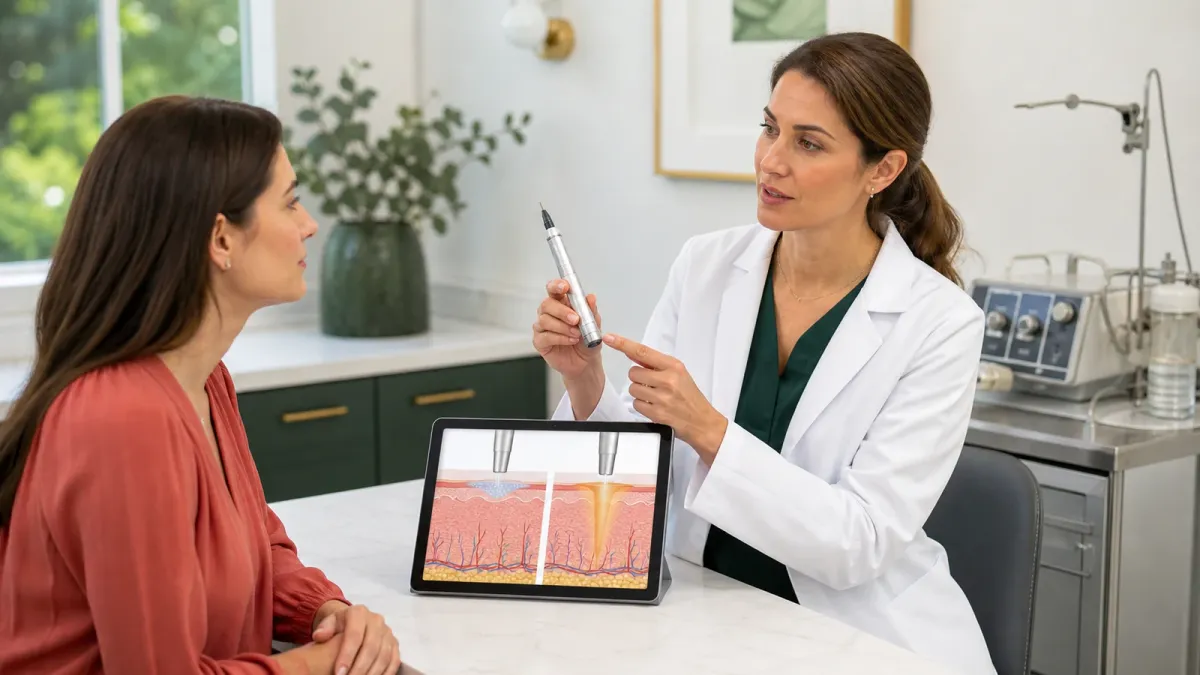
Microdermabrasion lightly removes the outer stratum corneum and may temporarily smooth dull or mildly uneven skin with little downtime. Dermabrasion is surgical resurfacing that reaches the dermis and may improve selected deeper scars or contour irregularities, but it requires wound care and carries greater infection, scarring and pigment risks. They are different procedure categories, not low and high settings of the same facial.
Quick Summary
- Microdermabrasion offers modest surface smoothing and usually requires a series.
- Dermabrasion creates a surgical wound for selected deeper concerns.
- Microdermabrasion does not erase deep ice-pick, rolling or boxcar scars.
- Skin tone, keloid tendency, infection and medication history affect risk.
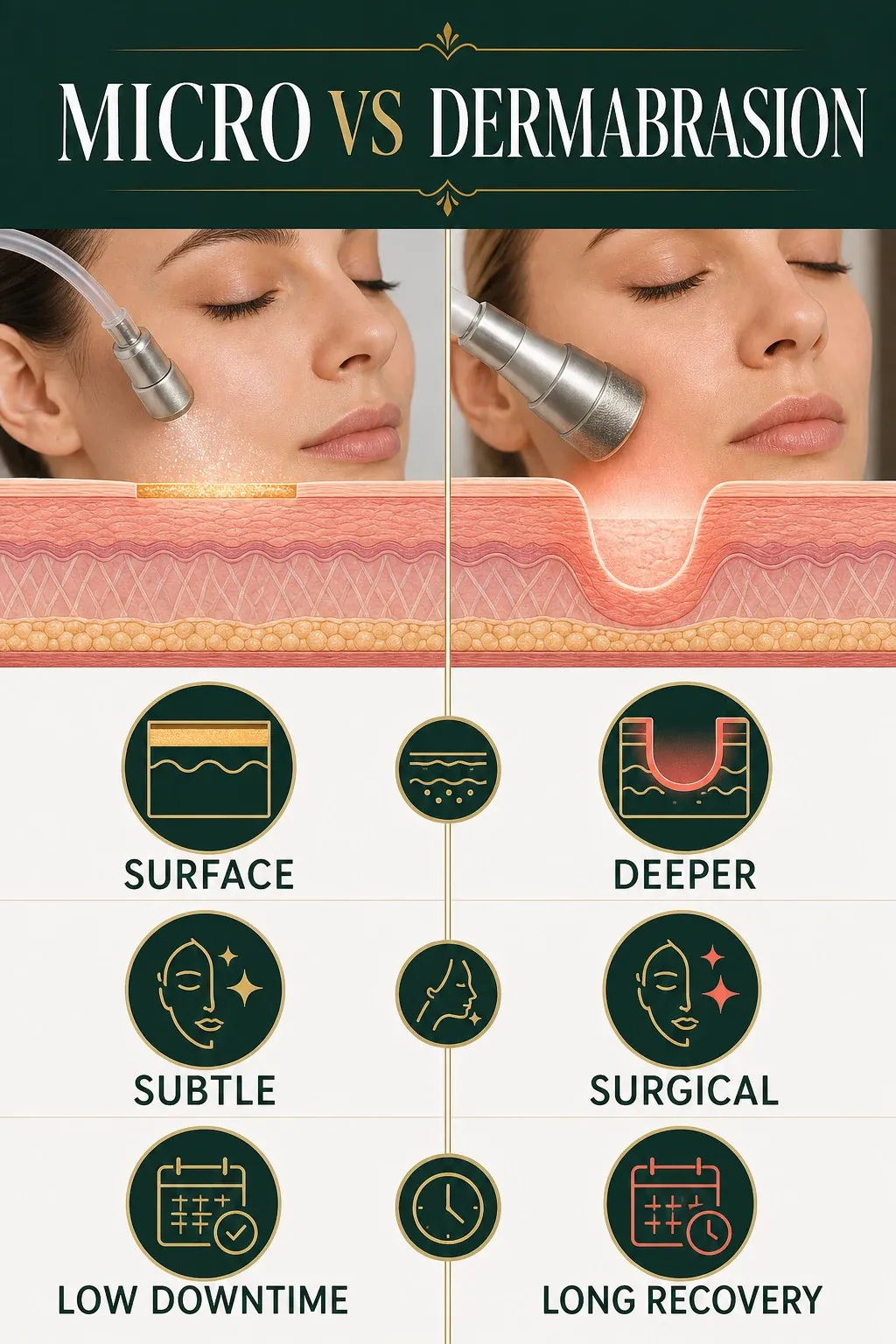
Microdermabrasion and dermabrasion share a similar name but not the same depth, recovery or risk. Treating them as gentle and strong versions of one facial can lead readers to expect deep scar correction from a surface treatment or underestimate surgery. This guide compares the actual tissue depth, evidence, downtime and skin-tone considerations before a consultation.
The Core Difference Is Treatment Depth
Microdermabrasion is a superficial, minimally invasive procedure that removes part of the outer stratum corneum. Dermabrasion is a surgical resurfacing procedure that intentionally removes the epidermis and reaches into the dermis. Their recovery, risks and realistic results are therefore fundamentally different.
Calling both “polishing” hides the most important decision. Microdermabrasion may temporarily smooth a rough surface and brighten uneven tone after a series. Dermabrasion creates a controlled wound to remodel selected scars or deeper irregularities.
At-home scrubs and suction tools are not equivalent to dermatologist-performed microdermabrasion. A salon treatment is not equivalent to surgical dermabrasion. Confirm who performs the procedure, what depth is intended and what complication care is available.
| Feature | Microdermabrasion | Dermabrasion |
|---|---|---|
| Depth | Outer stratum corneum | Epidermis into dermis |
| Setting | Clinic, medical spa or salon depending on rules | Medical surgical setting |
| Anesthesia | Usually none | Local anesthesia, sedation or other plan |
| Downtime | Often little; redness may last a day or two | Open wound and weeks of visible healing |
| Best fit | Mild dullness or surface texture | Selected scars and deeper contour irregularity |
| Main risk | Irritation, bruising and dark marks | Infection, scarring and lasting pigment change |
What Microdermabrasion Can Realistically Do
Microdermabrasion uses crystals or a diamond-tipped handpiece with suction to abrade the outer layer. Skin may feel smoother and look temporarily brighter. A series is usually needed, and maintenance may be offered because the visible effect is not permanent.
The AAD describes treatment for dull complexion, uneven tone or texture, age spots and selected dark marks. It also notes that dermatologist-performed treatment goes deeper than home kits while remaining non-invasive. The AAD microdermabrasion FAQ reports that many people receive five to sixteen sessions.
An evidence review found that microdermabrasion can change dermal matrix constituents and improve contour irregularity, but its role in acne and dyschromia is limited. A procedure can be popular and still have modest outcomes.
The evidence-based microdermabrasion review supports that restrained interpretation. Histologic changes do not guarantee a large visible result, and increased product penetration is not automatically beneficial when the follow-up product irritates.
NCBI's clinical microdermabrasion overview lists active infection as a contraindication and rosacea, telangiectasia and keloid tendency as cautions. It also emphasizes equipment sterilization and sun protection after treatment.
Mild texture and dullness
Removing some compacted surface cells can make the skin feel smoother and reflect light more evenly. The effect is closer to controlled exfoliation than deep remodeling. Hydration and temporary swelling can also influence the early “glow.”
Compare the benefit with a well-designed topical routine before buying a long series. The safer exfoliation guide explains other surface methods and their irritation risks.
Dark spots and melasma
Microdermabrasion may improve selected superficial uneven tone, but it can also provoke inflammation and post-inflammatory hyperpigmentation. Melasma is recurrent and influenced by UV, visible light, hormones and heat. Mechanical treatment is not a universal first choice.
The AAD warns that people who tend to develop dark spots after injury may be at higher risk. Use the dark-spot guide for darker skin to stabilize triggers and sun protection before adding a procedure.
Acne and acne scars
Microdermabrasion does not meaningfully lift deep ice-pick, rolling or boxcar scars. The AAD says it is used to even skin tone and can support the overall result, not treat the scar architecture itself. A systematic review of non-energy scar treatments found microdermabrasion produced the least significant results.
In that systematic review of acne-scar treatments, microdermabrasion achieved the least significant improvement among the reviewed non-energy techniques. The authors also noted small and heterogeneous studies, so precise percentage promises remain inappropriate.
Active inflammatory acne can also be irritated by abrasion and suction. Control breakouts before elective scar treatment. The acne-scar treatment guide matches scar type to subcision, microneedling, lasers, fillers and surgery.
What Dermabrasion Is Designed to Treat
Dermabrasion uses a rapidly rotating instrument or another abrasive technique to remove skin to a planned depth. Because it reaches the dermis, wound healing can reorganize collagen and smooth selected contour irregularities. It is a surgical procedure performed by a trained medical specialist.
NCBI's clinical review of dermabrasion lists scars, rhytides, lentigines and selected actinic lesions among uses. It also details infection, dyspigmentation, milia and scarring risks. Candidate selection is as important as technique.
Dermabrasion is not a casual upgrade for “extra glow.” It can be appropriate for selected acne scars, traumatic scars, rhinophyma or contour blending, but modern lasers and other techniques may be preferred in many cases. A consultation should compare options, not simply defend the procedure the clinic already owns.
Which Procedure Fits Which Goal?
| Goal | More plausible starting point | Why |
|---|---|---|
| Temporary surface smoothness | Microdermabrasion or topical exfoliation | The concern is superficial |
| Mild dullness before an event | Gentle routine; optional microdermabrasion | Low downtime matters more than deep change |
| Deep acne scars | Scar-specific medical plan | Microdermabrasion is too superficial |
| Selected surgical or traumatic scar | Dermabrasion or another specialist procedure | Controlled dermal remodeling may be needed |
| Melasma | Diagnosis, tinted SPF and targeted therapy | Injury and heat can worsen pigment |
| Active acne or infection | Treat disease first | Abrasion can spread irritation or infection |
This table is a decision frame, not a treatment prescription. Scar type, skin tone, medical history and tolerance for downtime change the answer. A professional should examine the skin in person.
The non-surgical anti-aging comparison places microdermabrasion beside peels, microneedling and energy devices. Dermabrasion belongs in a surgical-risk conversation.
Recovery After Microdermabrasion
The face can look pink or red, feel tight and develop mild swelling or sensitivity for a day or two. Bruising, petechiae, stinging and increased sun sensitivity can occur. Aggressive suction raises risk without guaranteeing more benefit.
Use a bland moisturizer and broad-spectrum sunscreen. Avoid scrubs, acids, retinoids and picking until the skin feels normal and the provider allows them. The skin-barrier restoration guide provides a simple base when ordinary products sting.
Do not interpret temporary smoothness as permission to exfoliate again the next day. The over-exfoliation warning guide explains how repeated surface injury can create burning, shiny-raw skin and acne-like bumps.
Call the provider for blistering, escalating pain, pus, spreading redness, eye irritation or a pigment change that is worsening. Do not book another session merely because a prepaid series says weekly.
Recovery After Dermabrasion
Dermabrasion leaves an open wound that requires detailed wound care. Swelling, drainage, crusting and significant redness are expected parts of recovery, but the surgeon should define what is normal day by day. Social downtime can last weeks, while redness or color change can last longer.
Infection prevention, antiviral planning for herpes history and sun avoidance may be needed. Dressings and ointments must be used exactly as instructed. A skincare routine cannot substitute for surgical follow-up.
Seek urgent advice for fever, increasing pain, foul drainage, rapidly spreading redness, eye symptoms or uncontrolled bleeding. Report new raised scarring or persistent pigment change early. Keep all follow-up appointments even when healing appears uncomplicated.
Skin Tone and Pigment Risk
Any controlled injury can trigger hyperpigmentation, and deeper injury can also cause hypopigmentation. NCBI guidance notes increased dyspigmentation risk after dermabrasion in Fitzpatrick type III and higher. That does not create an absolute rule, but it demands careful counseling and specialist experience.
Microdermabrasion is often described as safe for all skin colors, yet the AAD still warns that people prone to post-inflammatory dark marks can develop more discoloration. Technique and diagnosis matter. “Gentle” is not the same as pigment-neutral.
Ask the provider to show outcomes on similar tones and explain the prevention and rescue plan for pigment change. The melanin-rich skin moisturizer guide helps keep aftercare bland and comfortable without introducing unnecessary brightening actives.
Who Should Delay or Avoid Treatment?
Active bacterial, fungal or viral infection is a reason to delay abrasion. A herpes history, keloid tendency, active inflammatory acne, eczema, rosacea, immunosuppression and wound-healing problems need individual assessment. A changing mole must be evaluated before cosmetic resurfacing.
Isotretinoin timing is more nuanced than old universal waiting rules, but it still requires discussion with the dermatologist or surgeon. Do not rely on a salon questionnaire to resolve surgical scar risk. Share exact dose and dates.
Pregnancy, anticoagulants and other medications may change the plan depending on depth and anesthesia. Never stop prescribed treatment independently. Elective procedures can wait until risk is clear.
How to Prepare for Microdermabrasion
- Disclose cold sores, keloids, dark-mark tendency and all medications.
- Stop retinoids, acids or waxing only according to professional instructions.
- Avoid tanning and arrive without a fresh sunburn.
- Do not treat an active rash, open lesion or inflamed acne area.
- Ask how the handpiece is sterilized and whether tips are single-use.
Schedule the first session well before an important event. Even a low-downtime procedure can cause visible redness or bruising. Do not test a new clinic the day before photographs or travel.
How to Prepare for Dermabrasion
A surgeon should review medical history, wound healing, scarring, pigment risk, smoking, medication, anesthesia and herpes history. Baseline photographs and a written recovery plan are essential. Arrange transport and help if sedation or extensive wound care is involved.
Ask whether the full face or a selected area will be treated and how borders will be blended. Confirm who is reachable after hours. Understand the expected stages of wound appearance before surgery.
Smoking can impair healing and may need to stop before and after surgery under medical guidance. Sun exposure and certain products may also need restriction. Follow the surgeon’s individualized instructions rather than a generic internet checklist.
Cost and Series Logic
Microdermabrasion is commonly sold as a multi-session package because results are subtle and temporary. Calculate the full series plus maintenance. Compare that cost with a topical plan or another procedure better matched to the goal.
Dermabrasion has a higher one-time procedural cost plus anesthesia, facility, prescriptions, time off and follow-up. Insurance usually does not cover cosmetic treatment. Scar reconstruction after injury may have different coverage rules.
Do not choose based on price per session alone. An unsuitable cheap treatment repeated sixteen times can cost more than one properly selected consultation and plan. Ask what change would make the provider stop the series.
How to Choose a Provider
For microdermabrasion, confirm training, hygiene, device maintenance and escalation access. A dermatologist should evaluate uncertain lesions, active disease or high pigment risk before salon treatment. Local scope-of-practice rules vary.
Dermabrasion should be performed by a physician trained in surgical skin resurfacing. Ask about board certification, procedure volume, skin-tone experience, anesthesia, infection prevention and management of scars or dyspigmentation.
Before-and-after photographs should match your scar type and skin tone and use consistent lighting. Ask how long after treatment the “after” image was taken. Early swelling can temporarily smooth contours.
Common Comparison Mistakes
- Treating the names as intensity levels: dermabrasion is a surgical category.
- Expecting microdermabrasion to erase deep scars: it does not reach the architecture.
- Ignoring pigment risk: superficial treatment can still trigger dark marks.
- Buying a series before one response is known: tolerance and value should be assessed.
- Restarting acids immediately: recovery needs a simple plan.
- Choosing dermabrasion for “glow”: the wound burden is disproportionate.
- Using home suction on active acne: irritation and bruising can worsen.
Questions for the Consultation
- Which skin layer and exact concern are you treating?
- Why is this procedure better than a peel, microneedling or laser?
- What improvement is realistic after one session or series?
- What is the risk of dark or light spots for my skin tone?
- How long will redness, crusting and social downtime last?
- Who handles infection, scarring or pigment complications?
- Which products and medications must change, and who approves that change?
A provider should be comfortable saying that neither procedure fits. Deep scars often need combination treatment, while ordinary dullness may improve with a simpler routine. The goal is the right level of intervention, not the most dramatic procedure name.
The Bottom Line
Microdermabrasion is a superficial procedure for modest smoothing and temporary brightness with little downtime. Dermabrasion is surgical resurfacing that reaches the dermis and may improve selected scars or contour irregularities, but it brings substantially more recovery and risk.
Do not choose between them by price or the word “abrasion.” Match treatment depth to problem depth, involve a dermatologist or surgeon when scars, pigment risk or active disease are present, and refuse any plan that cannot explain expected change and complication care.
Frequently Asked Questions About Microdermabrasion vs. Dermabrasion
Is dermabrasion just stronger microdermabrasion?
No. Microdermabrasion is superficial and minimally invasive, while dermabrasion intentionally reaches the dermis and is a surgical resurfacing procedure.
Can microdermabrasion remove acne scars?
It may improve surface tone but does not meaningfully remodel deep ice-pick, rolling or boxcar scars. Scar-specific treatment depends on architecture and may require combinations.
How long is microdermabrasion downtime?
Many people have little downtime, although redness, swelling, sensitivity or bruising can last a day or two. Dark marks and other complications can occur.
How long does dermabrasion take to heal?
The open wound heals over days to weeks, while redness and pigment change can last longer. Exact recovery depends on depth, area, skin tone and wound care.
Is microdermabrasion safe for dark skin?
It can be performed on all skin colors, but people prone to post-inflammatory hyperpigmentation can still develop dark marks. Conservative technique and diagnosis remain important.
This article is for informational purposes only and does not replace professional dermatological advice.