IPL Treatment for Skin: Benefits, Limits and Risks
IPL can help selected redness, vessels and superficial pigment. Compare realistic benefits, skin-tone risks, sessions and provider questions.
In this guide
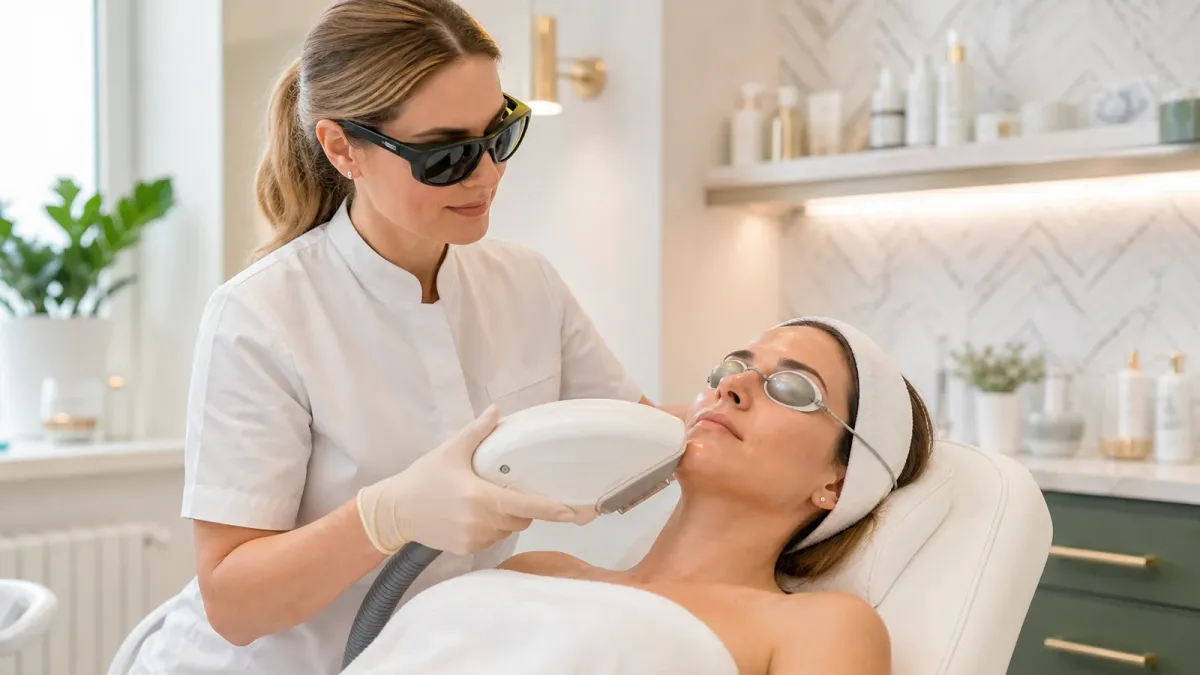
IPL treatment can improve selected facial vessels, redness, superficial brown spots and some uneven texture. It is broad-spectrum intense light, not a laser, and results are usually mild to moderate rather than a full wrinkle or scar correction. Safety depends on the diagnosis, skin tone, tanning history, device settings and operator experience.
Quick Summary
- IPL works best when a specific vascular or superficial pigment target is identified.
- Evidence is stronger for vessels and irregular pigment than for deep wrinkles.
- Darker or recently tanned skin needs more conservative selection and settings.
- Compare providers by device plan and complication care, not package price.
IPL is often sold as a broad photofacial for redness, spots, pores and wrinkles, but one device does not improve every concern equally. This guide turns that promise into a treatment decision: define the target, compare IPL with laser, account for skin tone and medication risks, and know what a qualified consultation should include.
What IPL Treatment Actually Does
Intense pulsed light sends a range of visible-light wavelengths into the skin. Filters, pulse duration, fluence and cooling are adjusted so selected pigment or blood vessels absorb more energy than the surrounding tissue. The target heats and is gradually cleared or becomes less visible.
IPL is not a laser. A laser produces a more specific beam, while IPL is broad-spectrum light filtered for a treatment goal. That flexibility can be useful for mixed red and brown signs of sun damage, but it also makes device settings and operator judgment central to safety.
The word “photofacial” does not identify the device, filter or target. Ask for those details before comparing clinics. A treatment marketed under the same name can use different equipment and settings.
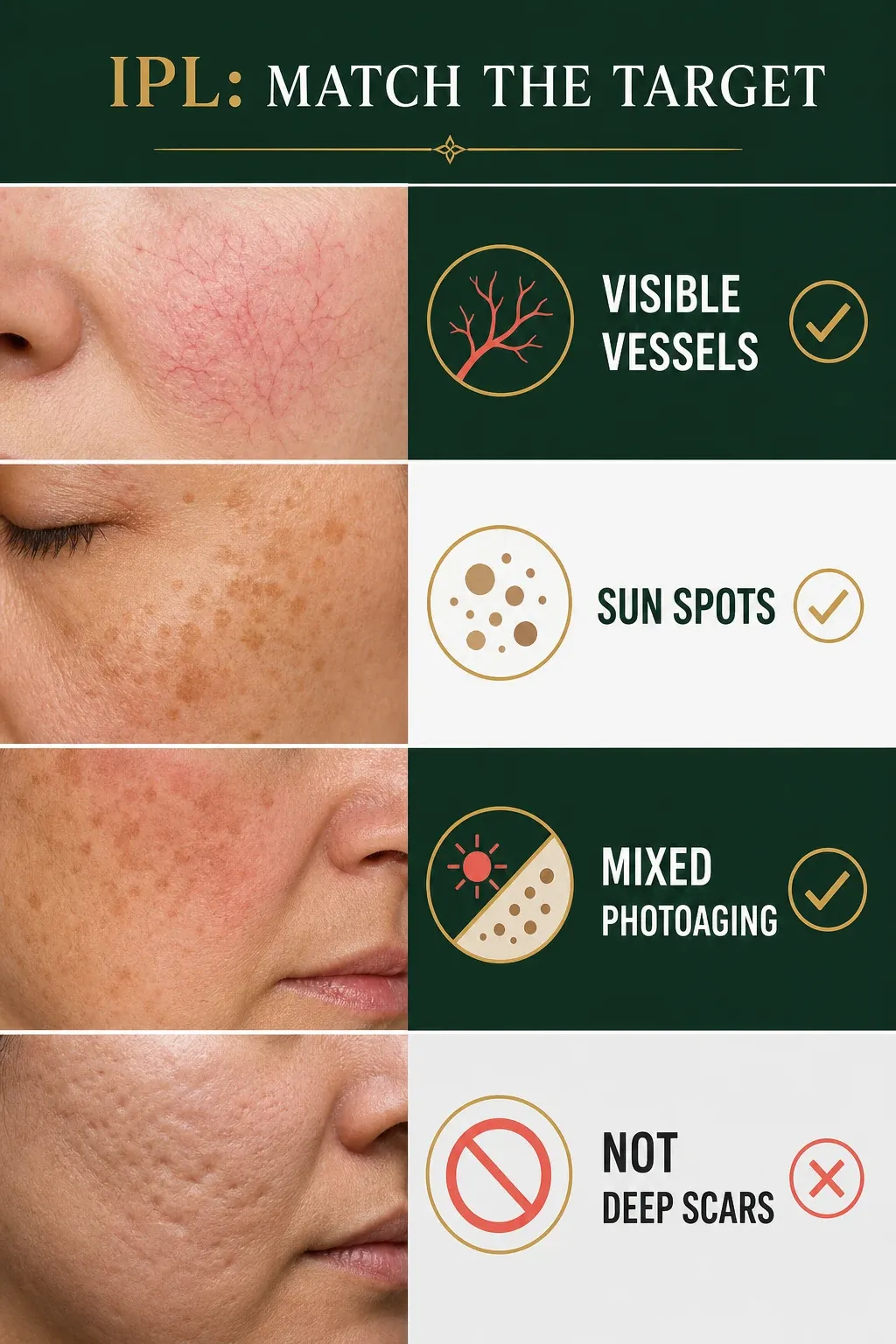
| Concern | What IPL may target | Important limit |
|---|---|---|
| Visible small vessels | Hemoglobin in selected red vessels | Not every redness pattern is vascular |
| Sun spots or freckles | Superficial excess melanin | Melasma can behave unpredictably |
| Mixed photoaging | Redness, mottled pigment and some texture | Deep wrinkles and laxity need other strategies |
| Acne-related redness | Selected persistent red marks | IPL does not replace acne control |
| Hair reduction | Melanin in darker hair follicles | This requires a hair-removal protocol, not a facial setting |
Diagnosis comes before wavelength. Brown color can represent a freckle, post-inflammatory hyperpigmentation, melasma or a lesion that should not be treated cosmetically. Redness can come from visible vessels, rosacea, dermatitis or an active reaction.
Which IPL Benefits Have the Best Support?
A randomized split-face trial of three IPL sessions found improvement in skin texture, telangiectasia and irregular pigmentation. It did not find a significant wrinkle benefit, and most improvements were mild to moderate. One participant developed a scar, which is a reminder that “non-surgical” does not mean risk-free.
The broader systematic review of IPL rejuvenation included 16 studies and 637 participants. Many reported improvements across photoaging outcomes, but nine studies had low methodological quality and treatment parameters varied. The evidence supports selective benefit, not a guaranteed full-face reset.
The underlying randomized split-face IPL trial is useful because untreated skin on the same face served as the comparison. It found no significant wrinkle difference and reported pain-related withdrawal plus one scar. That result is more informative than an uncontrolled clinic gallery.
A small prospective study followed repeated IPL sessions for twelve months and found no lasting change in measured barrier function or nerve sensitivity among healthy volunteers. Its sample included only seventeen women, so the reassuring sensitivity findings should not be generalized to every skin condition or device setting.
Use IPL when several superficial red and brown concerns overlap and a qualified provider considers the pattern suitable. For one precise vessel, scar type or deep wrinkle, another modality may be more targeted. The non-surgical treatment comparison shows where light, resurfacing, injectables and tightening procedures differ.
Redness and visible vessels
IPL can reduce selected facial telangiectasia and diffuse vascular redness because hemoglobin absorbs parts of the light spectrum. Results depend on vessel size, depth, color and location. A clinician should distinguish rosacea vessels from dermatitis, flushing triggers or a rash.
IPL may support a rosacea plan, but it does not remove the tendency to flush or replace trigger management. Review the redness and rosacea routine before adding an elective procedure to irritated skin.
Brown spots and mottled sun damage
Superficial freckles and lentigines can darken briefly after treatment, then flake or fade. Deeper pigment, post-inflammatory marks and melasma need a more cautious diagnosis. Heat and inflammation can worsen some pigment patterns.
Do not let a clinic fire IPL over a changing, bleeding or irregular lesion without medical assessment. Cosmetic light can alter its appearance and delay diagnosis. The dark-spot guide for deeper skin tones explains why the cause matters before treatment strength.
Texture and fine lines
IPL may create modest texture improvement through controlled thermal effects, but it is not a deep resurfacing procedure. The randomized trial found no significant rhytid improvement. Deep lines, etched creases and laxity should not be sold as reliable IPL outcomes.
Daily sunscreen, retinoids when appropriate and smoking avoidance remain foundational. The collagen-support guide separates topical prevention from procedures that create a larger remodeling response.
Who Is a Reasonable IPL Candidate?
A reasonable candidate has a clearly identified superficial vascular or pigment target, realistic expectations and skin that is not recently tanned or actively inflamed. The provider should know the person's baseline skin tone, tendency to form dark marks or keloids, medications and previous procedure reactions.
Historically, IPL rejuvenation studies enrolled many people with lighter Fitzpatrick types. Modern devices and experienced operators can treat a broader range, but melanin competes for light energy. Darker skin or a tan narrows the margin between treating the target and overheating surrounding skin.
Ask how often the provider treats your skin tone with that exact device and indication. Request representative photographs in consistent lighting. “Safe for all skin” is not a sufficient protocol.
| Situation | Why it matters | Next step |
|---|---|---|
| Recent tan or self-tanner | More competing pigment and burn risk | Wait and follow provider timing |
| Melasma history | Heat or inflammation may worsen patches | Discuss alternatives and recurrence risk |
| Dark marks after irritation | Higher PIH tendency | Use conservative settings and a pigment plan |
| Photosensitizing medication | May change light response | Review every drug and supplement |
| Active rash, infection or open skin | Healing and diagnosis are uncertain | Treat the active problem first |
| Suspicious lesion | Cosmetic treatment can delay diagnosis | Dermatology assessment before IPL |
IPL vs. Laser: The Practical Difference
IPL uses filtered broad-spectrum light. Lasers use a more defined wavelength and can be selected for a precise chromophore or depth. Neither category is automatically stronger, safer or better; the indication and parameters decide.
A vascular laser may be preferable for a particular vessel, while a pigment laser may better target a selected lesion. Ablative and non-ablative resurfacing lasers create different levels of controlled injury for texture and scars. Ask what outcome justifies the chosen energy source.
Laser hair removal is another distinct use. It targets pigment in hair follicles across repeated growth cycles. The laser hair removal guide explains why hair color, wavelength and skin tone determine that plan.
What Happens During an IPL Session?
The provider photographs and cleans the area, confirms the target and protects the eyes. A cooling gel or device contact cooling may be used. Test spots can help assess response, especially when pigment risk is higher.
Pulses can feel like heat or a quick snap. The provider watches immediate skin response and adjusts only within the planned protocol. Treating until the skin looks dramatically inflamed is not a quality marker.
A full-face session often takes less than an hour, but timing varies by device and area. Multiple sessions are common because one exposure rarely clears every vessel or spot. Package size should follow diagnosis, not the other way around.
Results, Sessions and Maintenance
Some vessels or spots may look darker or more visible before fading. Redness and mild swelling can occur for hours or days. Texture and pigment changes are usually judged over weeks, not the next morning.
The randomized trial used three monthly sessions. The systematic review reported a mean of about four sessions but wide variation. Those numbers describe studied protocols, not a universal prescription.
New sun damage, vascular changes and flushing can continue after treatment. Maintenance may be offered, yet daily photoprotection and control of the underlying condition determine how long results remain visible. Use the everyday sunscreen guide to choose a formula you can apply consistently.
IPL Risks and Stop Signs
Expected short-term effects can include warmth, redness, swelling and temporary darkening of treated pigment. Less common complications include blistering, crusting, burns, infection, scars and permanent hyperpigmentation or hypopigmentation. Eye protection is mandatory.
An FDA device summary lists erythema and follicular edema among common effects for one IPL system and describes rarer crusting, purpura, blisters and pigment changes. Clearance applies to the specific device and intended use; it is not a blanket guarantee for every machine or clinic.
The FDA clearance summary for that IPL system also describes required skin preparation and protective eyewear. It supports device-specific safety language, not the claim that all “photofacials” share one risk profile.
Contact the treating clinician for escalating pain, large blisters, spreading redness, pus, fever, eye symptoms or a color change that is worsening rather than settling. Do not peel crusts or treat a burn with acids or retinoids.
How to Prepare
- Avoid tanning: follow the clinic's timing for sun, tanning beds and self-tanner.
- List every medication: include prescriptions, over-the-counter drugs and supplements.
- Pause only when instructed: do not stop medication independently for a cosmetic procedure.
- Protect the barrier: report active eczema, cold sores, infection or recent peel.
- Clarify the target: photograph the vessel or spot and agree on the expected change.
Ask whether a test spot is appropriate and how long it will be observed. Confirm who operates the device and who is available if a complication develops. Regulations and training requirements differ by location.
Aftercare Without Product Overload
Use the provider's instructions. A gentle cleanser, bland moisturizer and broad-spectrum sunscreen are usually easier to tolerate than a complex active routine. Avoid picking at darkened spots or crusts.
Retinoids, exfoliating acids, benzoyl peroxide and abrasive tools may need a temporary pause, but the interval depends on the treatment and skin response. The skin-barrier restoration guide explains a simple base without pretending a complication can be managed only with cosmetics.
Limit heat, vigorous exercise and sun when advised. Do not use ice directly on skin or apply an unapproved steroid or bleaching cream. Call the clinic when instructions are unclear.
When IPL Is the Wrong Tool
IPL is not a reliable standalone treatment for deep acne scars, marked skin laxity, severe active acne or every form of melasma. It cannot diagnose a suspicious lesion. A more precise procedure or medical treatment may be needed.
For depressed scars, treatment is chosen by scar type and may combine subcision, microneedling, laser, fillers or surgery. The acne-scar treatment guide shows why one “rejuvenation” device cannot address all scar architecture.
For recurrent flushing or a rash, stabilize the condition first. For deep wrinkles, discuss resurfacing, injectables or surgery with appropriate professionals. Refusing an unsuitable procedure is a sign of a careful provider.
Questions to Ask at the Consultation
- What exact diagnosis and chromophore are you treating?
- Which device, filter and cooling method will you use?
- How many people with my skin tone have you treated for this concern?
- Would a test spot change the plan?
- What improvement is realistic after one course?
- Which complications are most relevant to me?
- Who handles a burn, pigment change or infection?
Photographs should use the same lighting, camera position and expression. Ask whether images show the device and settings proposed for you. Marketing photographs from a manufacturer are weaker evidence than the provider's consistent results.
Common IPL Mistakes
- Buying a “photofacial” without a diagnosis: the name does not identify the target.
- Treating recently tanned skin: extra melanin changes energy absorption.
- Expecting deep wrinkle correction: evidence is stronger for vessels and superficial pigment.
- Ignoring melasma history: heat and inflammation can worsen some patterns.
- Choosing by price alone: operator experience and follow-up matter.
- Restarting actives too soon: post-treatment skin needs a controlled plan.
The Bottom Line
IPL can improve selected superficial vessels, irregular pigment and some texture when the target, device settings and candidate are well matched. It is not a universal wrinkle treatment and it is not automatically safer than a laser.
Choose the provider before the package. Ask for a diagnosis, exact device plan, skin-tone experience, test-spot logic and complication pathway. Protect the skin from tanning and follow conservative aftercare so an elective treatment does not create a longer-lasting pigment problem.
Frequently Asked Questions About IPL Treatment for Skin
How many IPL sessions are usually needed?
Many protocols use three to five sessions, but the number depends on the target, device and response. A package should follow diagnosis rather than set the treatment goal.
Is IPL safe for dark skin?
It can be used selectively, but epidermal melanin increases burn and pigment risk. Choose a provider with substantial experience treating your skin tone and ask about conservative settings and a test spot.
Does IPL remove wrinkles?
IPL may create modest texture change, but one randomized trial found no significant wrinkle improvement. Deep lines and laxity usually need a different or combined strategy.
Can IPL make melasma worse?
Yes, heat or inflammation can worsen some melasma patterns. A dermatologist should confirm the diagnosis and discuss safer alternatives, recurrence and pigment prevention.
How long is IPL downtime?
Redness, swelling and darkening of spots can last hours to several days. Blisters, severe pain, crusting or spreading redness require prompt contact with the treating clinician.
This article is for informational purposes only and does not replace professional dermatological advice.