Best Moisturizers for Aging Skin: Choose the Right Formula
A practical guide to moisturizers for aging skin, with ingredient roles, skin-type decisions and product examples chosen for comfort rather than hype.
In this guide
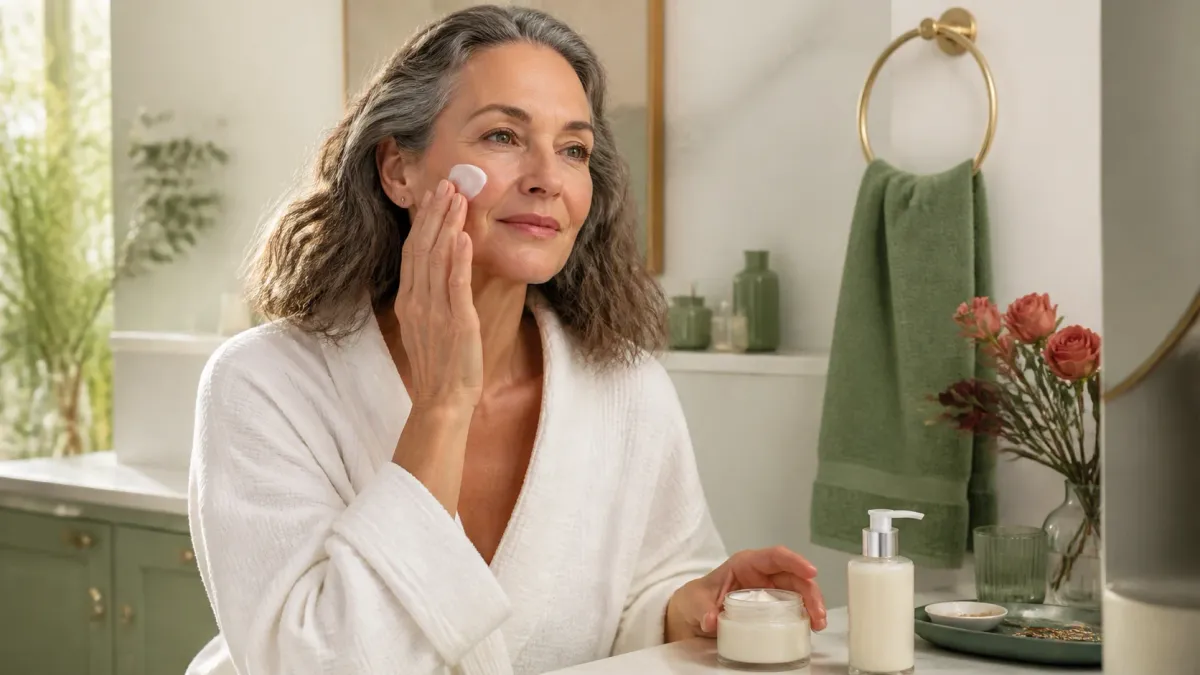
The best moisturizer for aging skin combines a humectant such as glycerin, emollients that smooth rough texture and enough occlusion to reduce water loss. Choose a cream for dry skin, a lotion or gel-cream for oily skin and a simple fragrance-free formula for sensitive skin. Moisturizer can soften dehydration lines, but daily broad-spectrum SPF 30+ and a separate retinoid treatment address different anti-aging jobs.
Quick Summary
- Match moisturizer texture to current dryness, oiliness, sensitivity and climate.
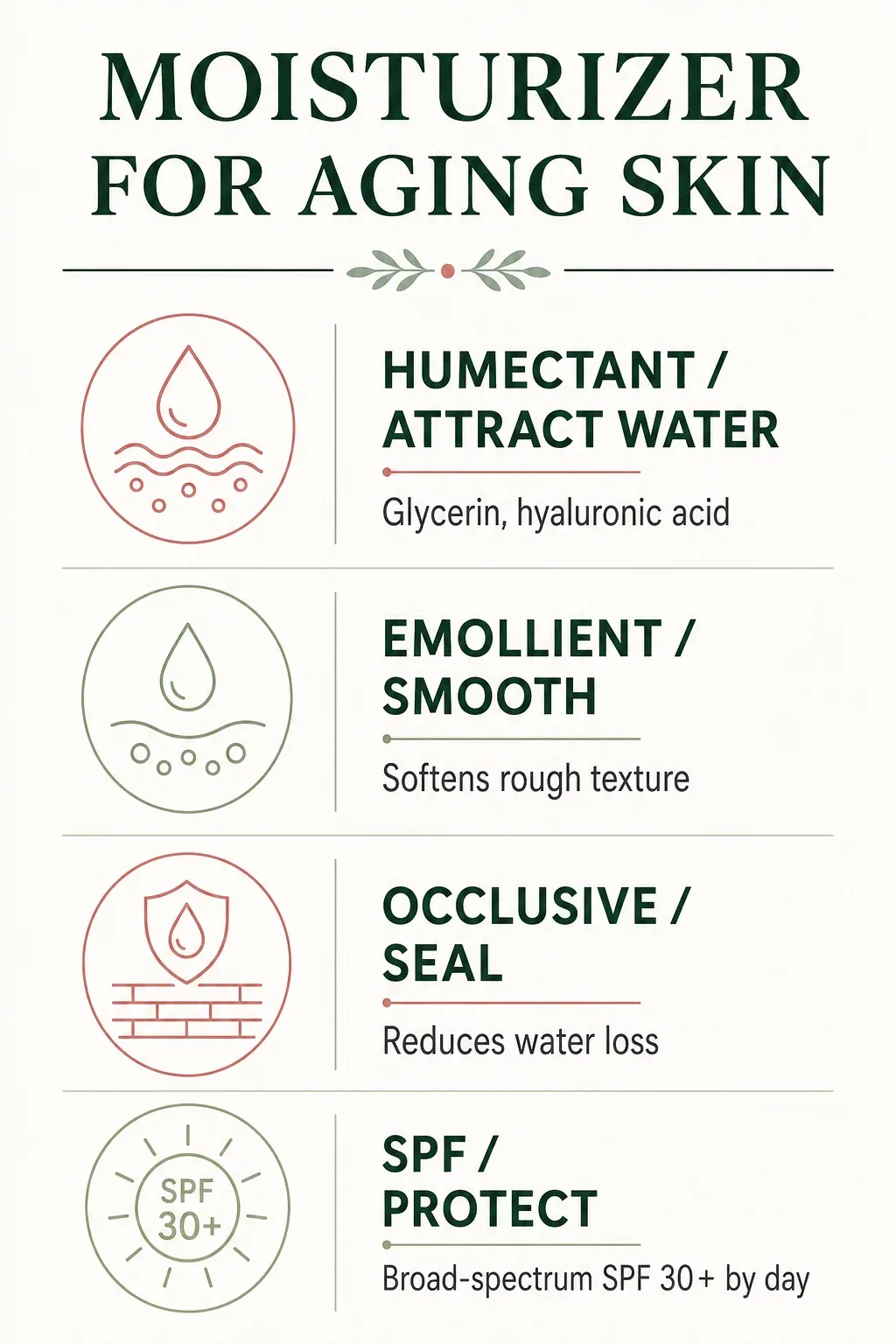
- Humectants attract water; emollients smooth; occlusives slow water loss.
- Ceramides and niacinamide can support the barrier but do not replace sunscreen.
- One reliable moisturizer used consistently is more useful than several overlapping creams.
What Aging Skin Actually Needs From a Moisturizer
Aging skin often becomes drier because barrier lipids, natural moisturizing factors and oil production change over time. A good moisturizer does not need to “reverse aging” to be useful. Its first job is to reduce water loss, improve comfort and make rough surface texture look smoother.
The best formula depends on current skin behavior, not age alone. One person in their sixties may need a rich cream; another may still prefer a light lotion. Climate, menopause, cleansing habits, retinoid use, eczema and acne all change the ideal texture.
| What your skin does | Best texture | Useful formula features | Main caution |
|---|---|---|---|
| Feels tight and flakes | Cream or balm | Glycerin, ceramides, emollients, occlusives | Avoid adding retinol until comfortable |
| Normal but fine lines look dry | Medium cream | Humectant plus emollient blend | Do not confuse plumping with wrinkle removal |
| Shiny or congestion-prone | Lotion or gel-cream | Non-comedogenic, fragrance-free | Rich age-labeled creams may feel heavy |
| Reactive or stinging | Simple fragrance-free cream | Shorter ingredient story, barrier support | Stop optional actives during a flare |
The AAD calls sunscreen and moisturizer the two most effective foundational anti-aging products. Moisturizer can immediately soften the appearance of some fine lines by trapping water, while sunscreen helps prevent additional photoaging. Neither claim requires a luxury price or an exotic ingredient.
Its anti-aging product selection guidance also recommends choosing products for your skin type and treating one remaining concern instead of starting several irritating products at once.
The Three Ingredient Jobs Every Moisturizer Combines
Humectants attract water into the outer skin layer. Glycerin, hyaluronic acid, urea and panthenol are common examples. Hyaluronic acid is useful, but it is not automatically superior to glycerin. The amount, molecular size, vehicle and ingredients layered over it all affect the final result.
Emollients fill spaces between rough surface cells and make the skin feel smoother. Fatty alcohols, squalane, triglycerides, shea butter and many plant oils can serve this role. “Alcohol” in an ingredient name does not always mean drying alcohol; cetyl and cetearyl alcohol are fatty emollient ingredients.
Occlusives reduce water loss by forming a partial seal. Petrolatum, dimethicone and some waxes are examples. Very dry skin often benefits from stronger occlusion at night, while oily skin may prefer a lighter silicone-based finish.
| Ingredient family | Primary job | Examples | Best use |
|---|---|---|---|
| Humectant | Attract and hold water | Glycerin, hyaluronic acid, urea | Dehydrated surface and fine dry lines |
| Emollient | Smooth rough texture | Squalane, fatty alcohols, shea butter | Dryness and reduced softness |
| Occlusive | Slow water loss | Petrolatum, dimethicone, waxes | Very dry skin and exposed areas |
| Barrier lipid | Support organized barrier lipids | Ceramides, cholesterol, fatty acids | Dry or sensitized routines |
Ceramides, cholesterol and fatty acids mirror families of lipids present in the skin barrier. A formula containing these can be helpful, especially for dry or sensitized skin, but the label alone does not reveal the ratio or delivery. Judge the complete product by comfort and routine performance.
Niacinamide may support barrier function and uneven tone. Peptides are optional supporting ingredients, not a reason to accept an uncomfortable base. A 2026 systematic review of peptide interventions found modest overall wrinkle effects but inconsistent elasticity and density outcomes, supporting cautious rather than dramatic claims.
Day Moisturizer vs Night Moisturizer
A day moisturizer must layer well under sunscreen or include broad-spectrum SPF 30+ itself. A night moisturizer can be richer because makeup and sunscreen do not need to sit over it. Those are practical differences, not evidence that the skin only absorbs repair ingredients at night.
You can use one fragrance-free moisturizer morning and night if the texture works. Use a separate night cream when you need more occlusion or a treatment active. Our day versus night moisturizer guide gives a simple decision tree.
If the daytime product contains sunscreen, do not use it as the only night moisturizer solely to finish the tube; filters add no nighttime benefit. If a night cream contains retinol, it is a treatment product and requires a gradual schedule rather than automatic nightly use.
Compare treatment-focused evening formulas separately in the anti-aging night cream guide. If shallow lines remain the main concern after hydration improves, the fine-lines skincare guide explains when a retinoid may add value.
Three Moisturizers for Distinct Aging-Skin Needs
These examples cover a budget barrier cream, a dedicated retinoid-free night cream and a richer supportive facial moisturizer. They are not ranked by price or popularity. Choose the role that matches your skin and verify the current product variant before purchase.
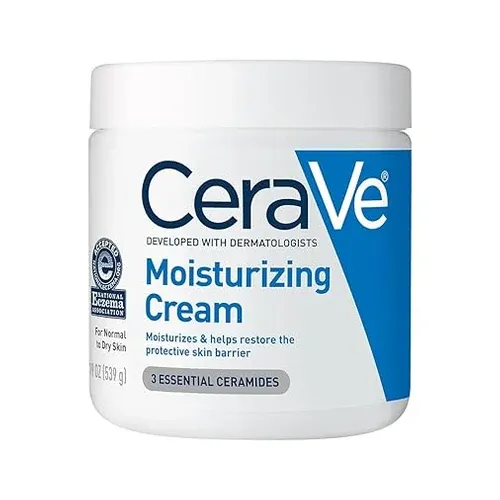
CeraVe Moisturizing Cream
Dry face or body skin needing a fragrance-free cream with a simple barrier-support role.
It combines humectants, ceramides and occlusive ingredients in a widely usable cream for face or body.
Watch-out: The jar format and rich texture may not suit every acne-prone face. Verify the exact size and seller.
View on AmazonAs an Amazon Associate, SkinOptimizer may earn from qualifying purchases. Prices, sellers and availability can change.
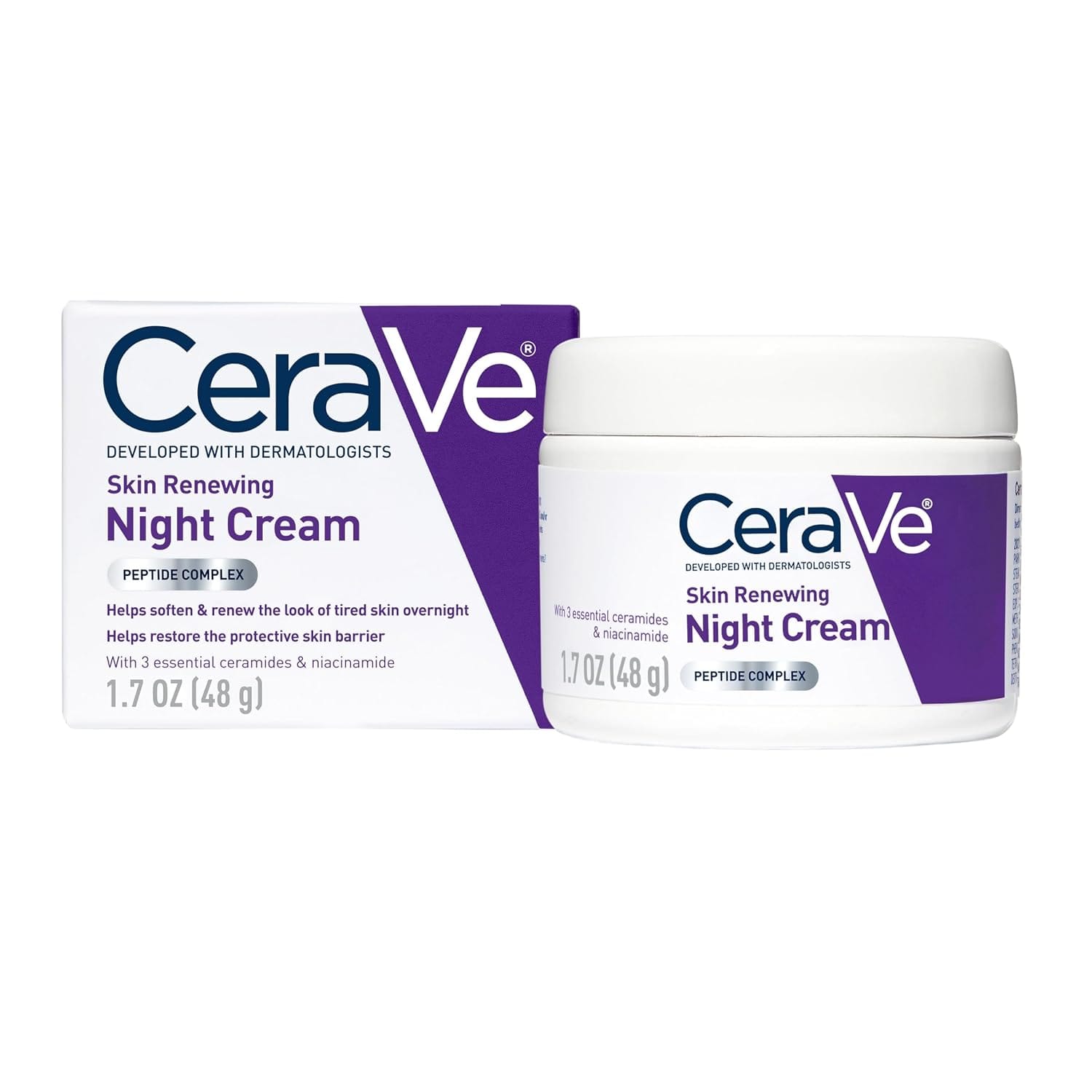
CeraVe Skin Renewing Night Cream
Dry or sensitive-leaning facial skin wanting ceramides, niacinamide, hyaluronic acid and peptides without retinol.
It is a richer face-specific option whose primary value remains moisture and barrier comfort.
Watch-out: A rich night cream may feel heavy on oily skin. Peptides are supportive, not a facelift in a jar.
View on AmazonAs an Amazon Associate, SkinOptimizer may earn from qualifying purchases. Prices, sellers and availability can change.
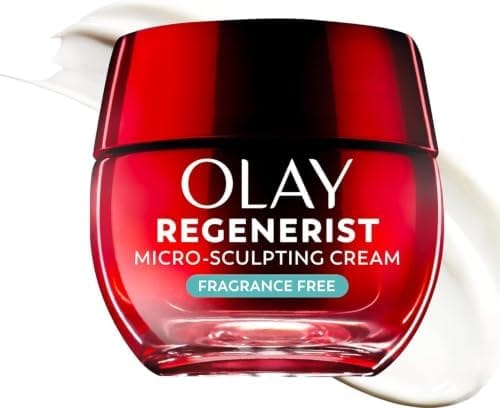
Olay Regenerist Micro-Sculpting Cream Fragrance-Free
Normal-to-dry skin preferring a plush facial cream with niacinamide and peptides.
It provides a distinct cosmetic-support route for someone who values richer texture but does not need retinol in the moisturizer.
Watch-out: Select the fragrance-free version and verify the latest ingredient list. It may be too rich for very oily skin.
View on AmazonAs an Amazon Associate, SkinOptimizer may earn from qualifying purchases. Prices, sellers and availability can change.
How We Selected These Moisturizers
We evaluated the job of each formula, official ingredient information, texture, fragrance status, routine fit and whether a reader could identify a clear reason to choose it. A product did not qualify simply because it used “mature,” “firming” or “collagen” in its marketing.
SkinOptimizer has not personally tested every listed product on every skin type. We do not treat marketplace star ratings as clinical evidence. Reviews can help identify packaging or texture patterns, but they combine different climates, routines, skin conditions, sellers and expectations.
We also did not rank by current price because prices and sizes change. CeraVe Moisturizing Cream represents a straightforward barrier-and-body route. CeraVe Skin Renewing Night Cream is a face-specific richer route without retinol. Olay offers a distinct niacinamide-and-peptide formula for readers who prefer that texture.
Before ordering, check the current seller, package size, directions and ingredient list. A brand can reformulate without changing the name dramatically. Similar jars may contain fragrance, sunscreen or retinol, which changes the routine role.
Choose by Skin Type, Climate and Treatment Use
Dry skin
Use a cream with humectants plus emollients and an occlusive component. Apply after cleansing while the skin is slightly damp, then add a thin petrolatum layer only to stubborn dry areas if needed. A separate hyaluronic acid serum is optional.
Winter heating, wind and low humidity may require a richer night layer than summer. The daily routine for dry skin explains how cleansing and application timing affect the result.
Oily or combination skin
Aging skin can still produce substantial sebum. Choose a lotion or gel-cream and use more only on dry zones. Do not buy a heavy cream solely because the label targets older adults. Congestion, sunscreen pilling and an uncomfortable greasy finish reduce consistency.
The oily-skin routine separates sebum control from dehydration. If the skin shines but stings after cleansing, reduce stripping products before adding stronger mattifying ingredients.
Sensitive or reactive skin
Choose fragrance-free basics and patch test. “Hypoallergenic” does not guarantee zero allergy. Keep the routine small and avoid introducing a moisturizer, retinol and exfoliating toner in the same week.
If even plain moisturizer causes prolonged stinging, swelling or rash, stop optional products and seek care. The barrier repair guide provides a conservative reset while you identify the trigger.
Skin using retinoids or exfoliating acids
Prioritize a bland, reliable moisturizer. Retinoids can increase dryness and irritation during introduction. A richer cream may help, but it cannot make an overly aggressive schedule appropriate. Reduce treatment frequency when the skin becomes raw or persistently uncomfortable.
Keep the moisturizer free of additional exfoliating acids at first. The retinol guide explains buffering, frequency and sun-protection basics.
How to Apply Moisturizer for Better Comfort
- Cleanse with lukewarm water and a mild cleanser. Avoid scrubbing.
- Pat lightly and leave the skin slightly damp rather than dripping wet.
- Apply a moderate, even layer over face, jaw and exposed neck.
- Use more only on areas that remain tight or flaky.
- In the morning, finish with broad-spectrum SPF 30+.
- At night, apply treatment serums first only when tolerated and directed.
Neck skin can be more reactive than facial skin. Introduce retinoids there separately, at a lower frequency, and use moisturizer consistently. Do not assume that a product tolerated on the forehead will automatically suit the eyelids or neck.
Can Moisturizer Reduce Wrinkles?
Moisturizer can make dehydration lines look softer quickly by increasing water content in the outer skin layer. That plumping effect can improve the appearance of fine texture and make the complexion look brighter. It does not rebuild lost facial volume or erase deep expression lines.
The AAD wrinkle guidance states that moisturizing traps water and can reduce the appearance of some fine lines. It also emphasizes daily broad-spectrum SPF 30+, avoiding irritation and giving products time.
For treatment of photoaged texture, a retinoid has a different role. Keep moisturizer as the daily foundation and introduce treatment separately. This distinction prevents every jar from being judged by whether it can perform like prescription therapy.
Why Sunscreen Still Matters More Than an “Anti-Aging” Label
UV exposure contributes to photoaging, uneven pigmentation and loss of skin elasticity. Daily sunscreen does not stop intrinsic aging, but it reduces a preventable driver. A randomized trial reported 24% less measured skin aging in the daily sunscreen group than the discretionary-use group.
Read the trial summary as support for regular use, not as a promise that sunscreen reverses existing wrinkles. Choose broad-spectrum SPF 30 or higher, apply enough and combine it with shade and protective clothing when exposure is substantial.
A daytime moisturizer with SPF can work when it is applied in a sunscreen-sized amount and offers broad-spectrum SPF 30+. Many people apply moisturizer sparingly, so a separate sunscreen may make adequate coverage easier.
Common Moisturizer Mistakes
- Choosing by age label: texture should match current skin behavior.
- Using hyaluronic acid without sealing it: a watery serum may not prevent water loss.
- Buying several creams for the same job: one reliable formula is usually enough.
- Expecting collagen cream to replace collagen: topical collagen mainly conditions the surface.
- Adding retinol during a barrier flare: stabilize comfort first.
- Applying too little sunscreen-moisturizer: the SPF claim depends on adequate application.
- Ignoring pilling: reduce layers or change texture instead of rubbing harder.
Results Timeline and When to Seek Help
First application
Judge spread, finish and immediate stinging. Hydration may soften surface lines.
One to two weeks
Assess persistent tightness, flakes, pilling and whether the routine feels stable.
Six to twelve weeks
Evaluate comfort and whether supporting actives have a useful long-term place.
See a dermatologist for persistent rash, swelling, painful cracks, bleeding, severe itch or a sudden change that does not improve with a simple routine. Dryness can be cosmetic, but it can also accompany eczema, medication effects or another condition that a moisturizer alone will not solve.
The Bottom Line
The best moisturizer for aging skin is a formula that traps water, smooths rough texture and suits the person using it. Choose humectants, emollients and occlusives in a texture matched to dry, oily, sensitive or treatment-exposed skin. Keep claims realistic: moisturizer can improve comfort and soften dehydration lines, while sunscreen prevents additional photoaging and retinoids address a different treatment job.
Frequently Asked Questions
What type of moisturizer is best for aging skin?
Dry aging skin often benefits from a cream combining humectants, emollients and occlusives. Oily aging skin may prefer a lotion or gel-cream. Sensitive skin usually does best with a simple fragrance-free formula.
Can moisturizer really reduce wrinkles?
Moisturizer can trap water and soften the appearance of shallow dehydration lines. It does not restore lost facial volume or erase deep expression wrinkles.
Are ceramides or hyaluronic acid better for mature skin?
They do different jobs. Hyaluronic acid is a humectant that supports surface hydration, while ceramides are barrier lipids. Many useful formulas combine them with glycerin, emollients and occlusives.
Do I need a separate day and night moisturizer?
Not necessarily. One moisturizer can work morning and night if it layers well under sunscreen and is rich enough overnight. Use separate products only when texture, SPF or a treatment active creates a real need.
Should a moisturizer for aging skin contain retinol?
It can, but retinol turns the cream into a treatment that requires gradual use and extra attention to irritation. A plain moisturizer plus a separate retinoid offers more control for many people.
If dryness begins immediately after washing, compare the best cleansers for mature skin before expecting moisturizer to correct an overly aggressive cleanse.