Best Urea Face Creams: 5% Formulas and Variant Checks
Compare Eucerin, ZEROID and Sebamed urea face creams. Check strength, fragrance, market versions and retinoid cautions before buying a facial formula.
In this guide
Quick Answer
Compare Eucerin UreaRepair 5% face cream, the explicitly labeled ZEROID Richenic 5% variant, and Sebamed Relief Face Cream 5% Urea. Match facial use and the exact market version before comparing percentage. Sebamed's current list includes fragrance; hand and foot creams are not automatic facial substitutes.
As an Amazon Associate, we earn from qualifying purchases. Affiliate links do not change our editorial selection.
Ready to compare the exact products? Check current price, selected variant and seller before buying.
Quick Summary
- Start with the intended body area, not the biggest percentage.
- Regional ZEROID strengths and Eucerin product formats must be distinguished.
- Persistent burning or medically affected skin needs advice, not a stronger cream.
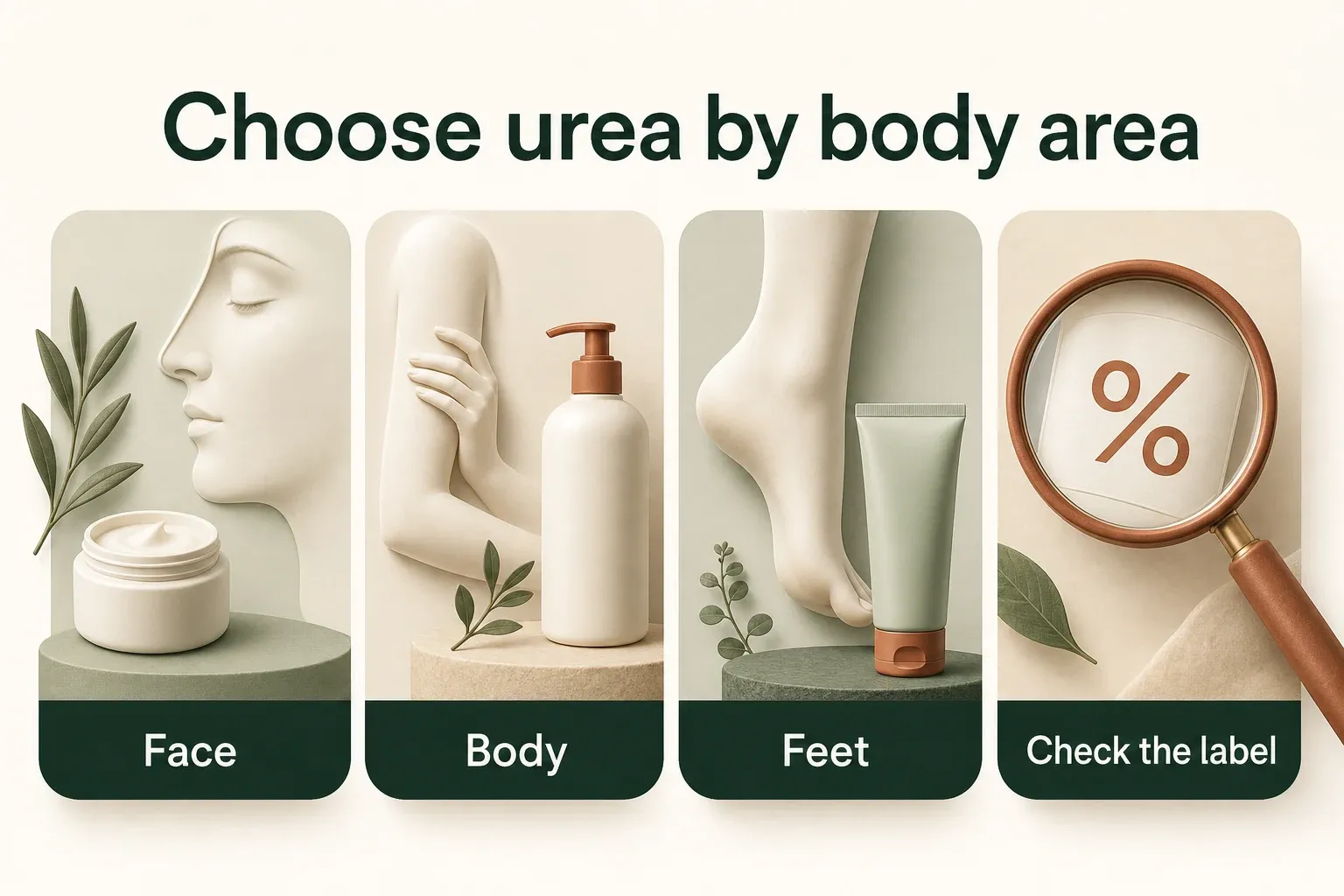
SkinOptimizer Editorial Team. Label and source review: August 31, 2026. This is an editorial buying guide, not hands-on testing or individual medical advice. Reddit informed the questions; manufacturer information and cited clinical sources inform the answers. Illustrations are not evidence of product performance.
Start with a face cream, not the highest percentage
The best urea face cream is a facial moisturizer with a clearly identified formula, an appropriate texture, and directions that fit your skin.
For a focused comparison, start with Eucerin UreaRepair 5% face cream, the explicitly labeled ZEROID Richenic Cream Urea 5% variant, and Sebamed Relief Face Cream 5% Urea. The percentage is part of the decision, not the whole decision.
Our first filter is body area. A 5% hand cream, a 10% foot cream, and a 5% facial cream are not interchangeable shopping results.
Urea appears in all sorts of products, including high-strength callus treatments. A familiar ingredient or brand name is not enough to make one of those products an appropriate facial substitute.
We checked the product information available on August 31, 2026. This guide is an editorial comparison of labels and purchasing constraints, not a hands-on texture test or a treatment recommendation for eczema, acne, or another diagnosed condition.
Where a market version or retailer listing differs, we make that distinction explicit rather than treating all packages as identical.
| Product | Why it belongs in the comparison | Essential check |
|---|---|---|
| Eucerin UreaRepair 5% face cream | Explicit facial format with disclosed urea strength | Match the regional face product, not a hand or foot cream. |
| ZEROID Richenic Cream Urea 5% | Alternative facial moisturizer with an explicitly labeled 5% variant | The 5% and 10% products and regional sizes must not be conflated. |
| Sebamed Relief Face Cream 5% Urea | Another clearly identified 5% facial option | The current manufacturer list includes Parfum. |
The shortlist and the limits of each pick
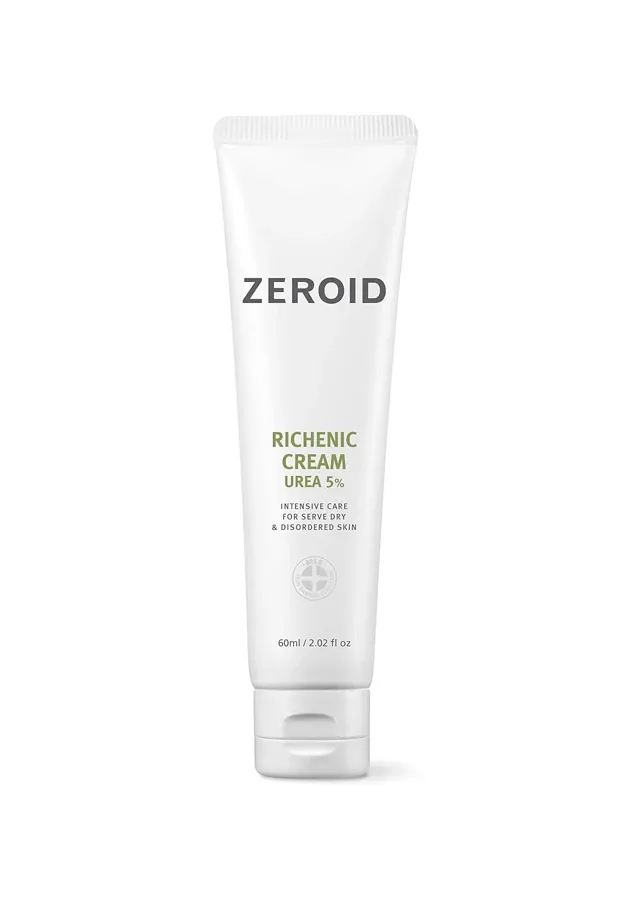
ZEROID Richenic Cream Urea 5%, 60 mL
Why compare: Compare the explicitly labeled 5% variant as an alternative facial moisturizer.
Watch out: Other regional strengths and sizes exist; verify 5% on the selected and received package.
Manufacturer specifications · Product photo: manufacturer/retailer.
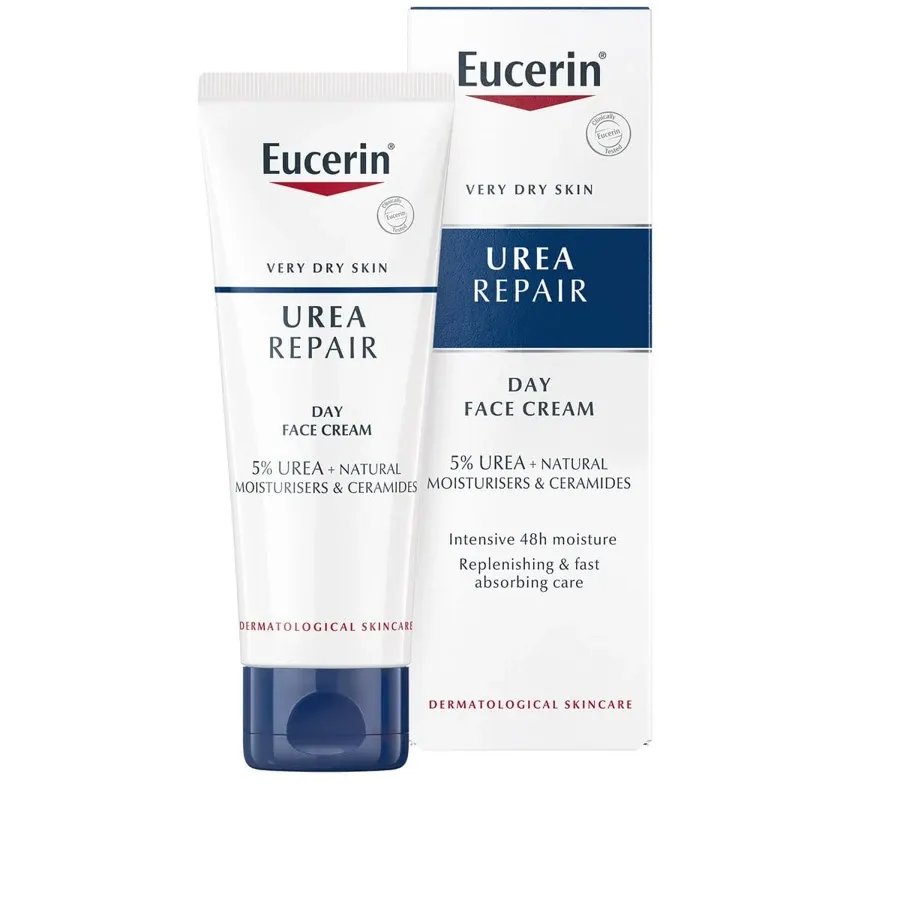
Eucerin UreaRepair 5% Face Cream
Why compare: Compare an explicitly identified 5% urea facial cream.
Watch out: Regional naming and packaging vary. Do not replace with a hand, foot or body listing.
Manufacturer specifications · Product photo: manufacturer/retailer.
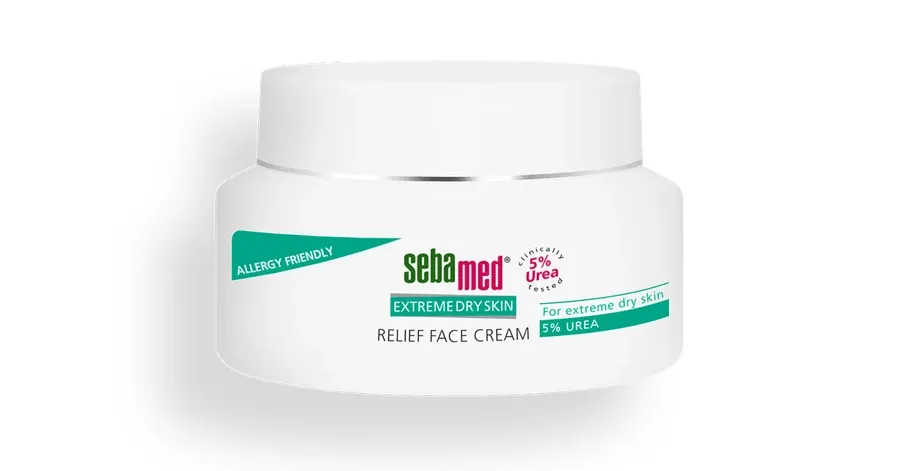
Sebamed Relief Face Cream 5% Urea
Why compare: Compare if you tolerate its complete 5% facial formula.
Watch out: Current manufacturer ingredient list includes Parfum; not a fragrance-free recommendation.
Manufacturer specifications · Product photo: manufacturer/retailer.
Eucerin UreaRepair 5% face cream: the straightforward facial starting point
Eucerin's current UK facial product page identifies a 5% urea face cream with other moisturizing components. Product names and packaging can vary across markets, so use the actual face-product page and the received package to establish identity.
Do not assume that every Eucerin product containing urea has the same percentage or the same intended area of use.
- Why compare it: This is the option to compare first if your priority is a clearly labeled facial product from a familiar pharmacy brand.
- What still matters: The decision still depends on the rest of the formula and whether you want that texture in your routine.
- What has not been tested: We have not measured how it sits under makeup or compared its finish against the other creams on volunteers, so we do not invent a universal comfort ranking.
Our Amazon research returned hand, foot, and body products prominently for searches that included the words “face” and “5%.” We therefore link the verified manufacturer identity rather than substituting the most visible marketplace result.
If you find an imported offer elsewhere, compare the full name, market, strength, package size, and ingredient panel before buying. A correct search phrase does not guarantee a correct product result.
ZEROID Richenic Cream Urea 5%: buy the version, not just the name
- Variant check required: ZEROID is a useful alternative to investigate, but it requires unusually careful variant checking.
- Regional strength difference: The global brand information identifies a Richenic Cream Urea 5% product, while other regional brand information includes a 10% version.
- Exact offer checked: The Amazon product we checked was explicitly labeled Urea 5%, 60 mL.
- Do not generalize: That is not permission to treat every Richenic listing as the same formula or size.
The verified 5% retailer label includes urea, panthenol, silicones, and other moisturizing ingredients. We include it as an alternative formula architecture to compare, not as a proven lighter or more effective winner.
An online description of a “silky finish” is not a texture result from our own testing. If you avoid silicones or particular plant extracts, review the complete current label rather than the headline ingredient.
Use ZEROID's global product information as brand context and verify the regional package you intend to purchase. The existence of different sizes and strengths is a reason to slow down at checkout.
If a seller's title says 5% but the photograph or received tube says 10%, resolve that mismatch before use rather than assuming it is only updated artwork.
Sebamed Relief Face Cream 5% Urea: an option with a fragrance caveat
Sebamed provides a clearly named Relief Face Cream 5% Urea and publishes its ingredient list.
The current list includes Parfum, so we do not label it fragrance-free or make it the automatic first choice for a reader who needs to avoid fragrance. Its sensitive-skin positioning does not override that ingredient check.
- Potential fit: This is an option to compare if you tolerate the full formula and specifically want a 5% facial cream.
- Fragrance exclusion: It is a weaker fit when fragrance exclusion is a non-negotiable requirement.
- Purpose of the caveat: The point of including that caveat is not to portray every fragranced formula as harmful; it is to prevent a shopper from buying a product that conflicts with an existing, clearly stated constraint.
The manufacturer also gives eye-area placement precautions. Read and follow the package directions rather than using a facial cream as an eye treatment.
Dry eyelids, burning eyes, or recurrent irritation around the eye deserve their own assessment. Our sensitive-eye cream guide explains why eye-area symptoms should not simply be treated as another place to try a stronger moisturizer.
What urea contributes to a moisturizer
DermNet describes urea as a moisturizing and keratolytic ingredient: it can help retain water and soften dry, scaly skin. How a product behaves depends on concentration and the complete formulation.
That is why a small number on a facial moisturizer and a high percentage on a foot treatment should not be collapsed into one universal category.
For a buying decision, concentrate on the job you want the moisturizer to do. Is your skin generally dry and rough, or are you trying to treat persistent scaling, a rash, or a diagnosed skin condition?
A routine-supporting moisturizer can address a cosmetic need, but it cannot identify the cause of ongoing inflammation or replace prescribed treatment.
If your current bland moisturizer already keeps your face comfortable, urea is optional. You do not need to add it to “complete” your natural moisturizing factors or because an ingredient trend suggests your routine is missing something.
If you are choosing between a conventional cream and a urea cream, compare the actual problem you want to solve rather than assuming the more specialized label must be superior.
Our guide to moisturizing dehydrated skin and dry-skin routine help place that choice within the full routine. Neither water-attracting ingredients nor a richer finish can compensate for every irritating product or cleansing habit. The ingredient is one tool, not a diagnosis.
Is 5% better than 10% for the face?
Five percent is the strength selected for this shortlist because several identifiable facial products use it, allowing a more focused comparison.
It is not a universal medical rule that 5% suits everyone or that every 10% facial product is inappropriate. The body area on the label, complete formula, skin condition, and tolerance all matter.
- Body area first: Do not extrapolate from a heel cream that worked well to facial use.
- Other formula differences: A product may contain other exfoliating ingredients, have a different base, or be intended for thickened skin in another area.
- Brand names do not settle it: The same brand can sell several such formulas.
- Do not guess an undisclosed percentage: Reading “urea enriched” without a disclosed percentage does not allow you to estimate that percentage from the order of ingredients.
If your clinician recommended a particular strength or product, follow that advice rather than substituting a higher concentration to get faster results.
More stinging is not proof of more useful exfoliation. A product that causes ongoing discomfort can be a poor choice even if its percentage is commonly recommended in forums.
| What the label actually says | What you can conclude | What you cannot conclude |
|---|---|---|
| Urea 5% facial cream | The named product discloses a facial use and strength | That all 5% products have the same texture or tolerance |
| Urea-enriched body moisturizer | Urea is part of that product's formula | A precise percentage that is not disclosed |
| High-strength foot or callus cream | The product targets another body area and need | That it is a stronger facial moisturizer |
Texture and the rest of the formula still decide daily use
Two creams with 5% urea can feel quite different because the other ingredients and overall formulation differ. One may be more suitable for the finish you prefer under sunscreen; another may be more comfortable in an evening routine.
We cannot rank those experiences from ingredient lists alone, which is why the product notes separate verified label facts from editorial reasons to compare.
If rich products tend to feel unpleasant, do not solve the problem by choosing the highest urea percentage in a similarly rich base. Start by looking at the format you want.
If your skin is very dry, a lightweight serum with urea-related marketing may not replace the cream step you actually need. Our dry-skin moisturizer comparison offers alternatives when urea is not the decisive requirement.
Be precise about other exclusions.
- Check every required exclusion: “Urea cream” does not mean fragrance-free, niacinamide-free, silicone-free, or suitable for every allergy.
- Read the specific label: Sebamed's published fragrance ingredient is one example of why a general sensitive-skin category is not enough.
- Combine filters on one exact product: If niacinamide is your main exclusion, use the niacinamide-free moisturizer guide as a separate filter and verify both requirements on the same exact product.
Using urea alongside tretinoin, adapalene, or exfoliants
Do not assume a urea face cream is automatically the best supporting moisturizer for an already irritated retinoid routine.
Urea can sting, especially when skin is compromised, and a product's potential to affect penetration is another reason not to improvise combinations with prescription treatments. Ask your prescriber or pharmacist about the actual formula when you are using a medicated routine.
For people whose main problem is peeling or burning while using tretinoin, our tretinoin moisturizer guide starts with simpler supporting options and clinician-directed boundaries.
A more specialized ingredient is not always the missing piece. Persistent symptoms may require assessment of the treatment plan rather than another stronger-feeling cream.
- Limit simultaneous changes: Likewise, do not add a new exfoliating acid at the same time as a new urea product if you want to understand how the moisturizer feels.
- Keep the result interpretable: Changing several products simultaneously makes irritation harder to interpret.
- Respect a treatment plan: If you have a diagnosed condition, follow the clinician's plan rather than applying a general cosmetic introduction strategy to medically affected skin.
When not to keep experimenting
- Damaged-skin boundary: Avoid using urea products on broken, infected, or oozing skin unless an appropriate clinician specifically directs you.
- Eye-area precautions: Keep them away from the eyes and follow each product's placement warnings.
- Avoid universal safety claims: Those boundaries are more useful than an absolute “gentle enough for everyone” claim.
- Do not dismiss symptoms: A lower percentage is not a reason to disregard symptoms.
Stop the suspect cosmetic if you develop significant or persistent burning, a rash, or swelling, and seek medical advice. Severe allergic symptoms require urgent care.
Do not keep applying a product to prove that your skin will eventually adjust, and do not treat worsening discomfort as a normal sign that dead skin is being removed.
The AAD's small-area testing guidance can help with introducing an ordinary new skincare product.
It does not diagnose allergy, certify a cream as safe for a diseased area, or replace advice after a substantial reaction. Keep the ingredient label and product details available if you need professional help.
Shopping for imported face creams without a variant mismatch
- Match the five identifiers: For every offer, compare five things: exact product name, intended body area, disclosed percentage, package size, and market version.
- Pause at a mismatch: If any of those disagree between title, photograph, and description, pause the purchase.
- Resolve uncertainty before buying: A seller may be using old artwork, but you should not have to guess when the difference determines whether you want the product.
ZEROID is a particular example: regional 5% and 10% products exist, and size differences appear in the information available to shoppers.
Eucerin is another: body, hand, foot, day-face, and night-face products are easy to mix up in search results. This guide does not declare them interchangeable or assume a reformulation applies identically in every country.
Compare delivered price only after resolving identity. Shipping and import costs can make a modestly priced cream expensive, and a large quantity is poor value when you have not tried the formula.
If the exact product is difficult to obtain, a different well-identified moisturizer may be a better purchase than an uncertain marketplace substitute.
A practical way to judge whether the purchase helped
- Name the problem: Before starting, describe the cosmetic concern in ordinary language: rough-feeling cheeks, tightness after cleansing, or an uncomfortable finish under sunscreen.
- Observe one change: Then keep the rest of the routine stable where practical and observe whether that specific issue improves without new discomfort.
- Avoid over-attribution: Avoid assigning a cream credit for every change in skin appearance during the same period.
Do not require visible peeling as proof that a urea moisturizer is doing something useful. The desired outcome in this buying guide is a comfortable, usable moisturizer—not the strongest sensation.
If it adds irritation or makes you reluctant to apply your sunscreen, the ingredient's theoretical appeal does not make it a good fit for your routine.
Reddit-informed FAQs
These questions reflect discussions about urea for the face and retinoid routines, texture and availability, and regional product confusion. User experiences helped identify the decisions; they do not establish a medical dose or a universal winner.
Should I buy 5% or 10% urea for my face?
Start with an actual face product and its directions, not the percentage alone. This shortlist focuses on identified 5% options; it does not claim that every person should use 5% or that every 10% facial formula is unsuitable.
If you have sensitive, inflamed, or medically treated skin, ask a clinician about the specific product before experimenting.
Can I use an inexpensive urea body or foot cream on my face?
Do not assume it is a facial substitute. Body and foot products can have different strengths, additional exfoliants, and different intended uses. Follow the label.
A low price per ounce or a familiar brand does not establish facial suitability, and an undisclosed urea percentage should not be guessed from an ingredient list.
Can I combine a urea face cream with adapalene or tretinoin?
Ask your prescriber or pharmacist about the exact formula, particularly if your skin is already peeling or irritated.
A urea moisturizer can sting and is not automatically the best supporting product for every retinoid routine. Do not change prescription strength or frequency to accommodate a new cosmetic cream without professional advice.
Is burning normal because urea exfoliates?
Persistent or significant burning is not a result to pursue. Stop the suspect product and seek advice when symptoms continue or include rash, swelling, or damaged skin.
Do not apply a urea cream to broken or oozing areas based on an internet recommendation. A moisturizer should not need to hurt to justify the purchase.
Is hydroxyethyl urea the same as a cream labeled 5% urea?
No. Hydroxyethyl urea is a different ingredient name, and its presence does not establish that a product contains 5% urea.
A marketing reference to hydration or natural moisturizing factors does not supply a missing concentration. For this shortlist, the relevant check is the exact product's explicit urea declaration and intended facial use.
If your priority is a conventional rich cream rather than urea specifically, compare our barrier-support moisturizers. The buying-guide hub keeps that alternative available without turning every dry-skin purchase into an ingredient experiment.
This article is for informational purposes only and does not replace professional dermatological advice.