Best Cleansers for Dry and Sensitive Skin: Gentle Picks That Don't Strip
A barrier-first cleanser guide with three practical picks for dry, sensitive and easily irritated skin.

In this guide
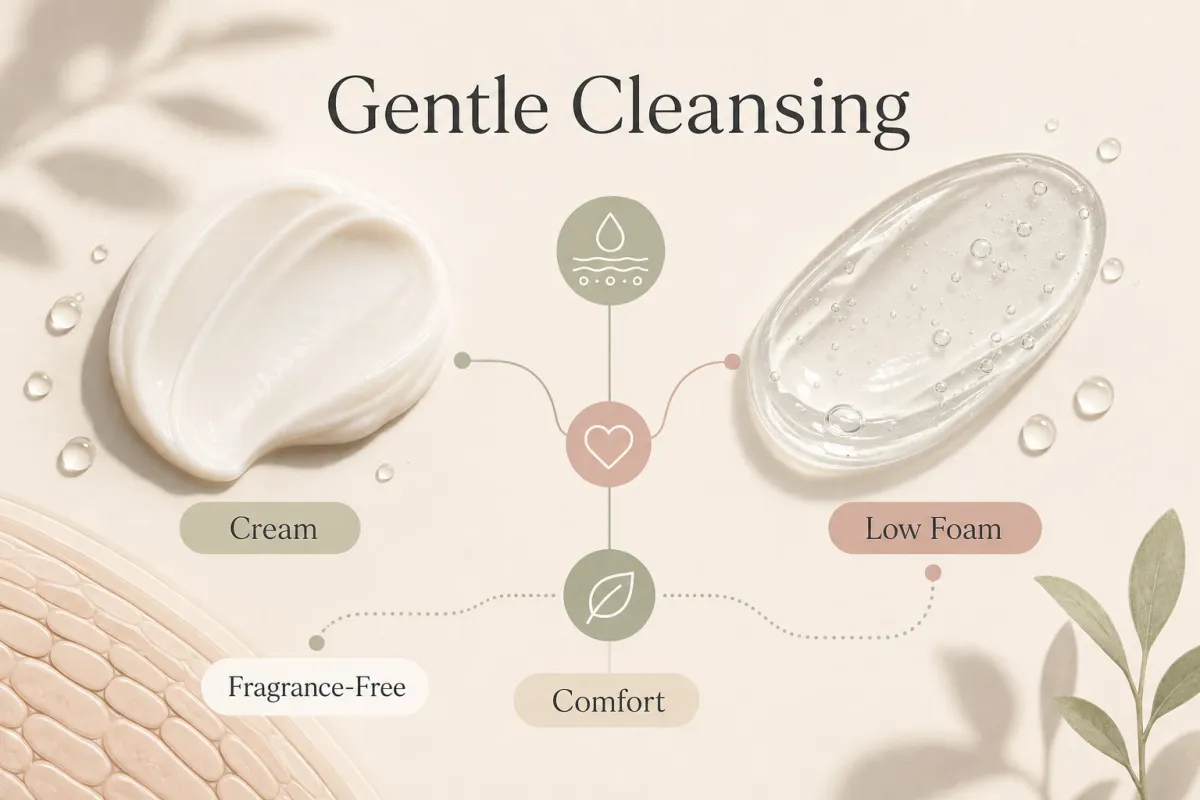
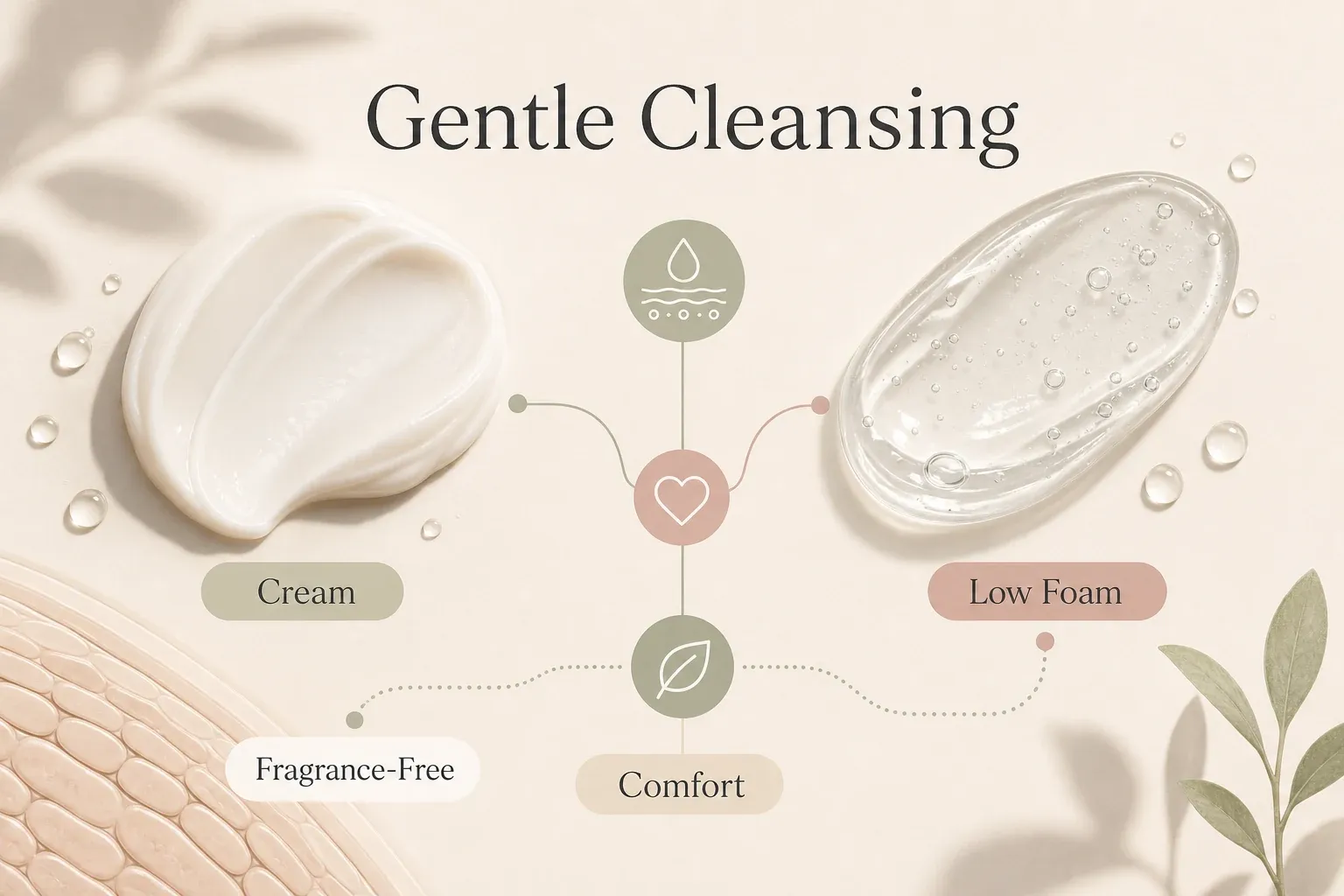
Quick Answer: The best cleansers for dry and sensitive skin are usually fragrance-free cream, lotion, or low-foam formulas that remove the day's sunscreen and debris without leaving tightness or burning. Start with a simple non-active cleanser and judge it by the ten-minute comfort test after rinsing. Choose more removal power only when makeup or water-resistant sunscreen requires it. “Hypoallergenic,” “natural,” and “for sensitive skin” are not guarantees, so check the current ingredient list and stop if irritation persists.Quick Summary
- For dry, sensitive skin, cleanser mildness matters more than abundant foam or a long ingredient list.
- Cream and lotion textures are good starting points; a well-formulated low-foam gel can also work.
- Fragrance-free is more useful than “unscented,” which may still contain masking fragrance.
- Pick one cleanser for your daily job. Add an oil or balm first only for stubborn makeup or resistant SPF.
Need the practical choice first?
Compare formula types, see the three-product shortlist, or check when sensitivity needs more than a product swap.
Compare Formats See the Picks Match Removal Power See Warning SignsOpen the Full-Size Gentle Cleansing GuideEditorial Note: SkinOptimizer is an editorial skincare resource. We assess current product labels, ingredient roles, routine fit, and reputable sources. We have not personally tested the products in this guide, and “sensitive skin” can have many causes that a product list cannot diagnose.
Finding the best cleansers for dry and sensitive skin is less about collecting the longest list and more about matching removal power to a fragile comfort margin. Dry skin lacks enough water and/or surface lipids to feel flexible. Sensitive skin is more likely to sting, burn, itch, flush, or react to products and environmental triggers. The two often overlap, but they are not identical.
A cleanser stays on the skin briefly, yet it can still matter because surfactants interact with surface oils and proteins. The right product removes what should leave. The wrong combination of formula, hot water, friction, and frequency can leave the face feeling stripped before moisturizer is applied. That is why this guide ranks formula type and routine fit before packaging claims.
Best Cleanser Types for Dry and Sensitive Skin
| Cleanser type | Best use | Main limitation |
|---|---|---|
| Cream or lotion | Daily cleansing when skin feels tight, flaky, or easily reactive | May leave a conditioned film or struggle with resistant makeup |
| Low-foam gel | Dry-combination skin wanting a cleaner rinse without strong lather | “Gel” does not guarantee mildness; check fragrance and actives |
| Oil or balm | First step for makeup and water-resistant sunscreen | May need a second mild cleanse if residue remains |
| Micellar water | Light removal or low-water situations | Rinsing may feel better for very reactive skin; friction from pads can irritate |
| Active acne cleanser | A defined acne goal when the barrier is stable | Salicylic acid or benzoyl peroxide can compound dryness |
The American Academy of Dermatology's dry-skin guidance recommends gentle, fragrance-free products and warns that some deodorant soaps are too harsh for dry, sensitive skin. DermNet's detailed soap and cleanser overview also explains that sensitive skin may sting during or after cleansing and that fragrance, preservatives, botanicals, and active ingredients can be triggers for some people.
The Skin Insider
Do not use foam as your quality score. Low foam can clean effectively, while a silky or “natural” formula can still contain fragrance or botanicals that your skin dislikes. Read the complete label and judge the result after rinsing.
What to Look for on the Ingredient List
No single ingredient makes a cleanser universally safe. Formula design, concentration, rinse-off behavior, and individual allergy history all matter. Still, a short screening process can remove obvious mismatches.
Fragrance-free
A practical default for reactive skin. “Unscented” can mean odor-masking ingredients are present.No unnecessary actives
Skip exfoliating acids and strong acne actives when tightness, flaking, or stinging is the current problem.Comfort-supporting base
Glycerin, panthenol, ceramides, and fatty alcohols may support a less stripped feel, but the whole formula decides performance.Current label
Formulas change. Check the bottle or manufacturer page rather than relying on an old review.
Research on soaps and synthetic detergent cleansers describes why surfactant choice and pH can influence barrier disruption. That does not mean every synthetic detergent cleanser is gentle or every soap is disastrous. It means the cleansing system should be evaluated as a formulation rather than reduced to one “good” or “bad” ingredient.
Humectants and emollient ingredients
Glycerin attracts water and is common in gentle formulas. Panthenol, ceramides, and emollient ingredients may contribute to a more conditioned post-rinse feel. Because cleanser contact is brief and the product is rinsed away, do not expect the same moisturizing effect as a leave-on cream. A suitable cleanser minimizes unnecessary removal; your dry-skin routine still needs a moisturizer and daytime sunscreen.
Fragrance, essential oils, and botanicals
Fragrance is not guaranteed to cause a reaction, but removing it is a sensible way to reduce variables for skin that is already reactive. Essential oils and botanical extracts can also be allergens or irritants for some people. “Natural” does not mean lower risk. If you have a known allergy, compare the full INCI list rather than relying on front-label positioning.
Exfoliating and acne-active cleansers
Salicylic acid and benzoyl peroxide can be useful when acne is the defined goal, but they are not default ingredients for dry, stinging skin. If acne and dryness overlap, the acne-prone cleanser guide explains how to keep a gentle base while using active washes more selectively. Avoid stacking an active cleanser, leave-on acid, scrub, and retinoid simply because each one is marketed for clearer skin.
Three Gentle Cleanser Picks by Use Case
These recommendations are organized by routine job, not by a claim that one formula is best for every sensitive person. Product formulas, packaging, prices, and availability can change. Check the current label before use.
| Pick | Best for | Watch-out |
|---|---|---|
| Vanicream Gentle Facial Cleanser | Simple fragrance-free daily cleansing with a cleaner-rinsing feel | Can still feel drying if used too often or with hot water |
| CeraVe Hydrating Facial Cleanser | Normal-to-dry skin preferring a lotion-like, non-foaming rinse | Conditioned finish may feel heavy to oily areas |
| Cetaphil Gentle Skin Cleanser | Dry or sensitive skin wanting a low-lather rinse-or-wipe format | May not remove resistant makeup or sunscreen alone |

Vanicream Gentle Facial Cleanser
Who it fits: dry-combination or sensitive skin wanting a fragrance-free cleanser that rinses relatively clean.
Why it fits: It is a useful simple base when active ingredients are not the cleansing goal.
Watch-out: No cleanser is allergy-proof, and twice-daily use may still be too much for very dry skin.
Check current Amazon options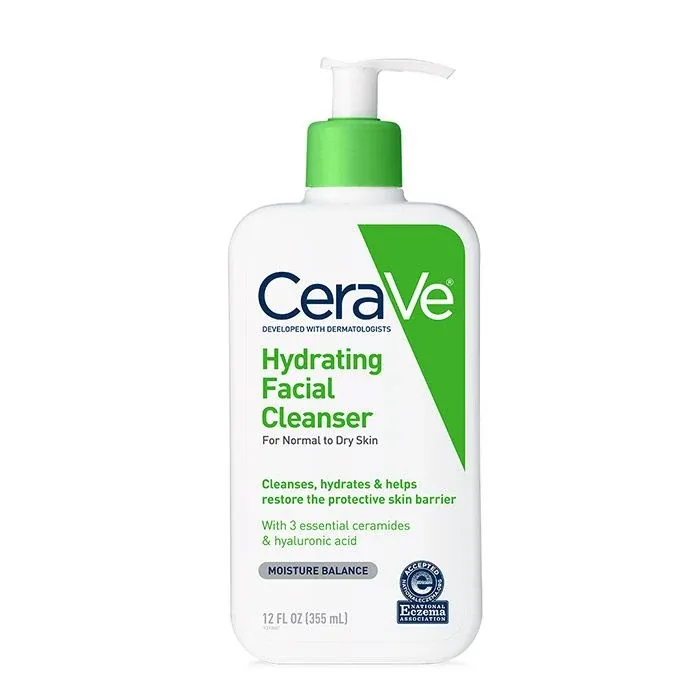
CeraVe Hydrating Facial Cleanser
Who it fits: normal-to-dry skin that prefers a non-foaming lotion texture.
Why it fits: It demonstrates a barrier-focused cleansing format with a soft conditioned finish.
Watch-out: It may not satisfy readers who want a crisp rinse or need to remove long-wear makeup.
Check current Amazon options
Cetaphil Gentle Skin Cleanser
Who it fits: dry or sensitive skin wanting a creamy, low-lather cleanser that can be rinsed or removed according to label directions.
Why it fits: Its current U.S. formula uses glycerin, panthenol, and niacinamide in a simple everyday format.
Watch-out: It is not an acne treatment and may feel too conditioned for some oily users.
Check current Amazon optionsAs an Amazon Associate, we earn from qualifying purchases. Product availability, labels, and prices can change.
For a closer formula and application breakdown, read our Cetaphil Gentle Skin Cleanser guide. If you are choosing between major drugstore brands, the CeraVe versus Cetaphil comparison separates cleanser and moisturizer decisions instead of declaring one brand universally better.
The Optimizer's Edge
The best cleanser is the one that solves today's removal job with the smallest comfort cost. If a cream cleanser leaves sunscreen behind, add a targeted first cleanse at night rather than replacing it with a harsh wash morning and night.
Match Removal Power to Your Routine
Dry and sensitive skin often runs into a tradeoff: a very gentle cleanser feels comfortable but may not remove water-resistant sunscreen or long-wear makeup efficiently. The answer is not always a stronger daily cleanser. You can separate the heavy-removal job from the everyday-cleansing job.
| What is on your skin? | Practical method | Stop point |
|---|---|---|
| No makeup; light daily sunscreen | One cream, lotion, or low-foam cleanser at night | Stop after one comfortable rinse |
| Water-resistant sunscreen | Oil or balm first; mild water-based cleanser only if residue remains | Do not scrub to force one cleanser to work |
| Long-wear makeup | Target eye/lip removal, then oil or balm, then assess | Stop when residue is gone and skin feels flexible |
| Morning without heavy overnight products | Water rinse or small amount of gentle cleanser | Skip cleanser if water alone leaves skin comfortable |
Our guides to cleansing oils and cleansing balms compare first-step formats. Double cleansing is optional, not a badge of a serious routine. If the first product removes everything and rinses cleanly, a second wash may add more irritation than value.
How to Test a Cleanser Without Confusing the Result
- Keep the rest of the routine stable. Do not introduce a new acid, retinoid, and cleanser in the same week.
- Start once nightly. Add morning use only if oil, sweat, or overnight products create a clear need.
- Use lukewarm water and fingertips. Skip cleansing brushes and rough washcloths.
- Check at ten minutes. Note tightness, stinging, warmth, redness, flakes, and residue.
- Reassess after one to two weeks. Stop earlier for persistent irritation or an immediate allergic-type reaction.
The AAD's face-washing recommendations support this low-friction approach: use a gentle non-abrasive cleanser, lukewarm water, fingertips, and avoid scrubbing. Technique cannot rescue a badly matched product, but harsh technique can make a suitable one feel worse.
Signs the cleanser may be too much:
- Your face feels tight or shiny-raw before moisturizer.
- Water and previously comfortable products begin to sting.
- Flaking increases around the nose, mouth, or eyes.
- You keep adding richer products to compensate for cleansing.
Sensitive Skin, Eczema, and Rosacea: Know the Boundary
A gentle cleanser can reduce an avoidable source of irritation, but it does not diagnose or treat the cause of persistent sensitivity. Eczema, rosacea, allergic contact dermatitis, perioral dermatitis, acne treatments, and medication effects can all change what the skin tolerates. Product marketing often groups these conditions under “sensitive skin,” which can make a cosmetic choice sound more medically capable than it is.
Pause and seek qualified care when:
- A rash is spreading, painful, weeping, crusted, or disrupting sleep.
- You develop facial swelling, hives, breathing symptoms, or eye involvement.
- Redness and burning continue despite simplifying the routine.
- You suspect a prescription, allergy, or chronic skin condition is involved.
If redness or rosacea is already diagnosed, use the broader redness and rosacea routine to coordinate cleansing with moisturizer, sunscreen, and trigger management. If the skin barrier feels newly damaged from overuse, the skin-barrier damage guide explains what to pause and how to restart slowly.
Adjust Cleansing When the Environment Changes
A cleanser that feels balanced in humid summer weather can become too much during winter heating, air travel, or a dry climate. Cold air and low indoor humidity can reduce the margin for error, while heat, sweat, and water-resistant sunscreen can increase the amount that needs removing. The product has not necessarily “stopped working”; the daily removal job and the skin's comfort threshold have changed.
In dry conditions, try using the cleanser only at night, shortening massage time, and applying moisturizer promptly after rinsing. After exercise, rinse sweat soon but avoid turning every workout into a full active-cleansing session. When travel water feels unusually hard or chlorinated, keep contact brief and watch for new tightness. These small adjustments are safer than repeatedly replacing the entire routine.
Shaving also changes the calculation. Freshly shaved skin may sting with fragrance, acids, or strong foam. Cleanse before shaving when possible, use a well-tolerated shaving medium, and keep the post-shave routine simple. If burning continues beyond a brief transient sensation, pause the suspected product rather than covering it with more layers.
Common Buying Mistakes
Buying the longest ingredient list
More extracts and actives create more variables; they do not guarantee comfort.Trusting “hypoallergenic” as a promise
The label can reduce likely allergens but cannot guarantee that an individual will not react.Choosing by skin type only
Retinoids, weather, shaving, and barrier damage can temporarily change what oily or combination skin needs.Expecting cleanser to moisturize
A mild cleanser can reduce stripping, but a leave-on moisturizer still does the sustained hydration work.Your Clear Skin Checklist
- Start fragrance-free and non-active when the main problem is dryness or stinging.
- Choose cream, lotion, or low-foam texture by the removal job and rinse preference.
- Use one cleanser nightly first; add steps only when residue proves they are needed.
- Check comfort ten minutes after rinsing and change one variable at a time.
- Stop and seek help for persistent, severe, spreading, or allergic-type symptoms.
Readers whose needs are shaped by age-related dryness, sensitivity, and makeup removal can use our dedicated guide to the best cleansers for mature skin.
Readers with a confirmed rosacea diagnosis can continue with the dedicated guide to the best cleansers for rosacea, including flare-day and sunscreen-removal decisions.
Final Takeaway
The best cleanser for dry sensitive skin is not necessarily the creamiest bottle or the product with the most soothing claims. It is a fragrance-free, appropriately mild formula that removes your real daily layers and leaves the skin comfortable. Begin with the simplest non-active option, use low-friction technique, and add a targeted first cleanse only when sunscreen or makeup makes it useful. If the skin still burns or rashes after routine simplification, the next step is professional evaluation, not an endless product search.
Frequently Asked Questions About Best Cleansers for Dry and Sensitive Skin
Is a cream cleanser always best for dry sensitive skin?
It is a strong starting point because cream and lotion formulas often produce less foam and a more conditioned finish. A mild low-foam gel can also work. Judge the complete formula and post-rinse comfort.
Should sensitive skin cleanse in the morning?
Not always. If the skin is dry, comfortable, and free from a heavy overnight product, a lukewarm-water rinse may be enough. Cleanse when sweat, oil, medication instructions, or product residue creates a reason.
Can micellar water replace face wash for dry skin?
It can remove light makeup or sunscreen, but some sensitive users prefer rinsing away the remaining surfactants. Avoid repeated rubbing with cotton pads and follow the product directions.
What ingredients should sensitive skin avoid in a cleanser?
There is no universal blacklist. Fragrance, essential oils, exfoliating acids, benzoyl peroxide, and certain preservatives can be problems for some people. Use your allergy history and current barrier condition to narrow variables.
How do I know if dryness is actually eczema or rosacea?
A cleanser cannot answer that. Persistent itching, rash, flushing, visible vessels, burning, swelling, crusting, or repeated flares should be evaluated by a qualified professional rather than self-diagnosed from a product response.
This article is for informational purposes only and does not replace professional dermatological advice.