Pregnancy-Safe Skincare Routine: What to Use and Avoid
Build a pregnancy-safe routine with gentle cleansing, moisturizer, sunscreen and a clear guide to ingredients that need review or avoidance.
In this guide
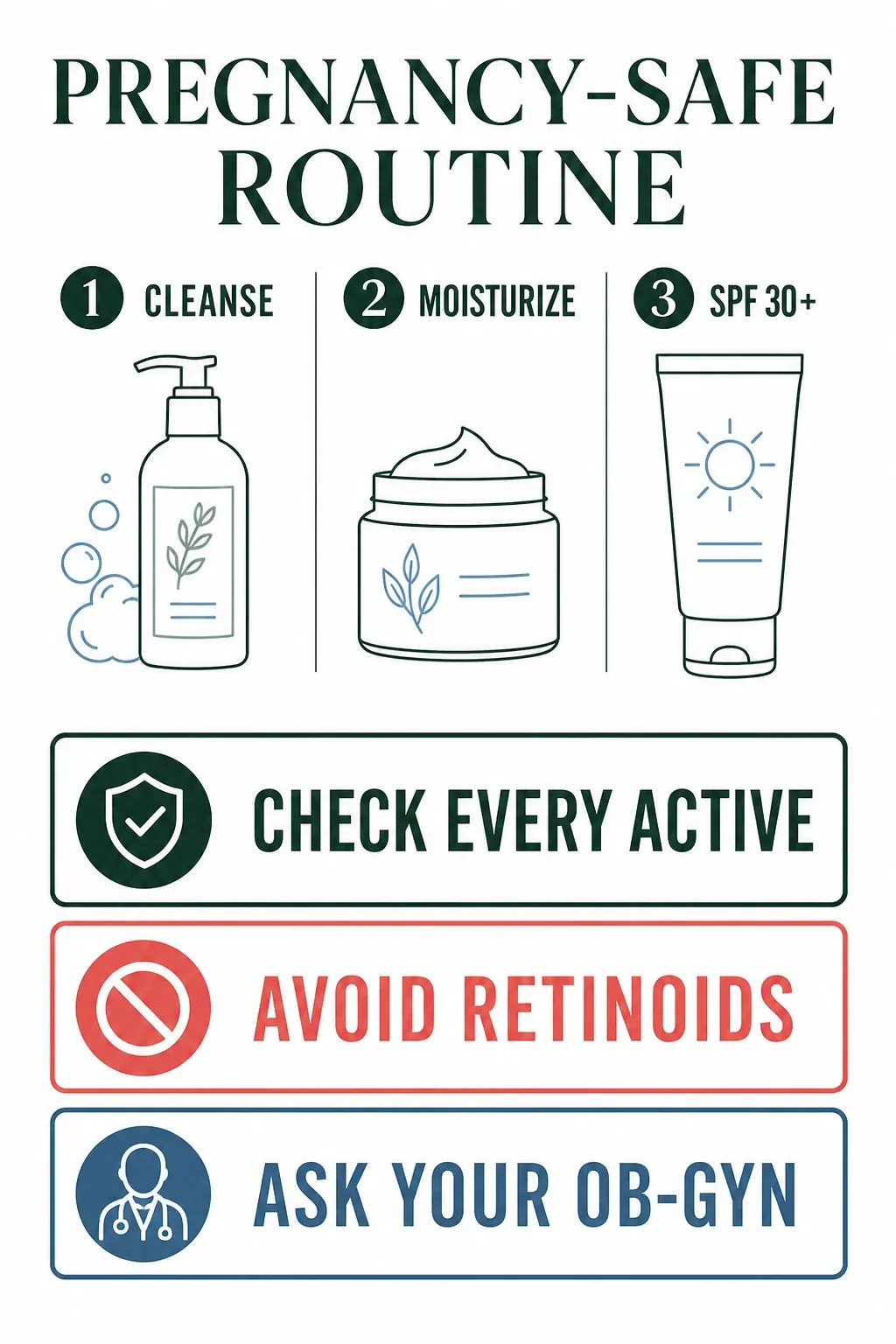
A pregnancy-safe skincare routine can stay simple: cleanse gently, moisturize and use broad-spectrum SPF 30+ every morning. Stop cosmetic retinoids and contact the prescribing clinician before changing prescription treatment. For acne or dark spots, discuss options such as azelaic acid, benzoyl peroxide or limited topical acids with your OB-GYN or dermatologist rather than assuming 'natural' means safe.
Quick Summary
- Avoid retinoids during pregnancy and review every prescription and high-strength active with the prescribing clinician.
- Keep the base routine simple: gentle cleanser, moisturizer and broad-spectrum SPF 30+.
- Azelaic acid and some over-the-counter acne options may fit, but individual guidance still matters.
- Natural, organic and essential-oil labels are not reliable pregnancy-safety categories.
Screen Every Active Before Building the Routine
Separate basic cleansers, moisturizers and sunscreens from treatment products. Then check the active ingredient, concentration, directions and how much skin it covers. A face wash used briefly is a different exposure from a prescription applied over a large area, which is why blanket internet lists are not enough.
| What you notice | Priority | Best first move |
|---|---|---|
| Retinoid or retinol | Avoid during pregnancy | Stop cosmetic use and contact prescriber for medication advice |
| Hydroquinone | Avoid unless specifically directed | Choose another dark-spot plan with a clinician |
| Azelaic acid | Commonly discussed option | Start gently after clinician review |
| Benzoyl peroxide or topical acids | May be acceptable in limited use | Confirm concentration and frequency with OB-GYN |
Morning Routine: Four Steps
The pregnancy morning routine prioritizes comfort and UV protection. Hormonal changes can make skin drier, more reactive, more acne-prone or more likely to develop melasma, so keep the base stable while symptoms change.
Cleanse gently or rinse
Use a mild fragrance-free cleanser when sweat, oil or residue needs removal. If skin becomes dry or reactive, a lukewarm water rinse may be enough in the morning. Avoid scrubs and harsh essential-oil cleansers marketed as 'detoxifying.'
Use one reviewed treatment if needed
Azelaic acid may be considered for acne and uneven tone, but confirm the product and schedule with your clinician. Do not substitute a botanical brightener simply because it lacks a familiar drug name.
Moisturize
Choose a simple lotion or cream that prevents tightness and supports sunscreen wear. Fragrance-free formulas are easier to troubleshoot when pregnancy changes scent tolerance or skin reactivity. Apply more to dry zones rather than adding several new serums.
Apply broad-spectrum SPF 30+
Use sunscreen every morning on the face, ears, neck and exposed skin. A zinc oxide or titanium dioxide formula can be a useful lower-irritation choice, but mineral sunscreen is not the only possible option. The best formula is one your clinician accepts and you can apply adequately.
Evening Routine: Four Steps
Evening care removes sunscreen and makeup, then keeps treatment decisions visible. Do not hide an unreviewed active inside a long multi-step routine where it becomes easy to miss.
Remove makeup and resistant sunscreen
Use micellar water, cleansing balm or oil when needed, then rinse. Pregnancy-related sensitivity can make repeated wiping uncomfortable, so let the cleanser loosen the film and use minimal friction.
Cleanse briefly
Use the same gentle cleanser as in the morning. Avoid hot water and brushes. If the face feels tight after cleansing, reduce frequency or choose a milder formula rather than adding a fragranced oil to cover the discomfort.
Apply only reviewed treatment
Use azelaic acid or another clinician-approved product according to directions. Do not use retinol, retinal, adapalene, tretinoin or other retinoids during pregnancy. Contact the prescriber for medication-specific instructions rather than relying on a blog to manage a prescription.
Moisturize
Finish with a comfortable lotion or cream. A thin layer of petrolatum can protect small dry areas when tolerated. Keep the routine boring enough that a new rash, sting or breakout can be linked to the newest change.
Pregnancy Ingredient Guide: Avoid, Ask or Keep Simple
This table is a conversation guide, not a substitute for individual medical advice. Product strength, body area, frequency and prescription status can change the answer.
| Ingredient | Best fit | Starting point | Watch-out |
|---|---|---|---|
| Retinoids | Avoid | Do not use during pregnancy | Includes retinol and prescription retinoids |
| Hydroquinone | Avoid unless directed | Discuss alternatives | High absorption compared with many cosmetics |
| Azelaic acid | Ask/commonly accepted | Low frequency first | Can sting reactive skin |
| Benzoyl peroxide, salicylic or glycolic acid | Ask | Limited topical use may fit | Confirm dose, area and frequency |
What to Stop, What to Review and What Can Stay
Retinoids are the clearest stop category in pregnancy. This includes retinol and retinal in cosmetics as well as prescription retinoids such as tretinoin and adapalene. Stop cosmetic retinoids and contact the prescribing clinician promptly for instructions about any medication; do not make broader prescription changes from a blog post alone.
Hydroquinone is commonly placed on avoid lists because a relatively high proportion can be absorbed through skin and pregnancy safety data are limited. Melasma care should begin with daily sunscreen and clinician-reviewed alternatives instead of aggressive bleaching or home peels.
Benzoyl peroxide, azelaic acid, topical salicylic acid and glycolic acid may fit some pregnancy routines. ACOG lists these as over-the-counter ingredients that can be used during pregnancy, while the AAD still recommends discussing amount and use with an obstetrician. The practical answer is not a blanket yes or no: show the exact product to the clinician.
Pregnancy Acne Without Retinoids
Start by keeping cleansing gentle and moisturizer consistent. Pregnancy acne does not require scrubbing, alcohol-heavy toner or a shelf of essential oils. Azelaic acid is often considered because it can support both acne and uneven tone, while benzoyl peroxide may fit inflammatory acne after clinician review.
Topical salicylic acid or glycolic acid may be acceptable in limited over-the-counter use, but strength and surface area matter. Avoid high-dose peels and large-area experimentation. Our acne-prone routine explains lesion types, but pregnancy changes the treatment options and its retinoid recommendation does not apply.
Deep, painful or scarring acne deserves early dermatology input. Some oral and prescription topical medications are not used during pregnancy, while others may be considered. A clinician can weigh severity and pregnancy stage in a way a retail product list cannot.
Melasma and Dark Spots During Pregnancy
Hormonal changes can trigger melasma, often across the cheeks, forehead and upper lip. Broad-spectrum sunscreen, shade and a hat form the foundation because visible light and UV exposure can worsen contrast. A tinted mineral sunscreen containing iron oxides may help with visible-light protection, but shade matching and adequate application still matter.
Do not replace hydroquinone with an unreviewed botanical mixture. Azelaic acid and vitamin C may be discussed with a clinician, but irritation can make pigmentation look more noticeable. The sensitive-skin sunscreen guide helps compare comfortable formats, and the daily sunscreen guide covers application habits.
Melasma may change after delivery, so aggressive treatment during pregnancy is rarely the only opportunity. Protect consistently, document changes and revisit treatment options postpartum with a professional.
Dryness, Sensitivity and the "Natural" Trap
Pregnancy can change oil production, scent tolerance and reactivity. Use a fragrance-free cleanser, moisturizer and sunscreen as the baseline. If even simple products sting, pause optional treatment and follow the skin-barrier reset while arranging care if symptoms persist.
Natural and organic are sourcing or marketing descriptions, not toxicology conclusions. Essential oils contain biologically active fragrance compounds and may irritate or trigger contact allergy. FDA notes that cosmetic labeling still requires consumers to read ingredients and discuss concerns with healthcare professionals.
Facial oils can reduce water loss, but they do not automatically replace moisturizer and are not automatically pregnancy-safe because they come from plants. The guide on facial oils and breakouts explains texture and acne considerations; the exact oil and formulation still need review.
Breastfeeding and the Postpartum Reset
Do not assume pregnancy restrictions and breastfeeding restrictions are identical. Exposure can depend on application site, contact with the infant, medication and clinician judgment. Review prescriptions and treatment actives again after delivery before restarting an old retinoid or applying products near the chest.
Sleep disruption, hormonal change and a new schedule can make a long routine unrealistic. Keep the basic cleanser, moisturizer and sunscreen visible, then add treatment after it has been reviewed. The nighttime routine guide shows how to organize one optional active without stacking.
One Product Example That Fits the Plan
This is not a mandatory purchase or a universal best product. It is one concrete example whose role is clear enough to evaluate without turning the article into a product list.
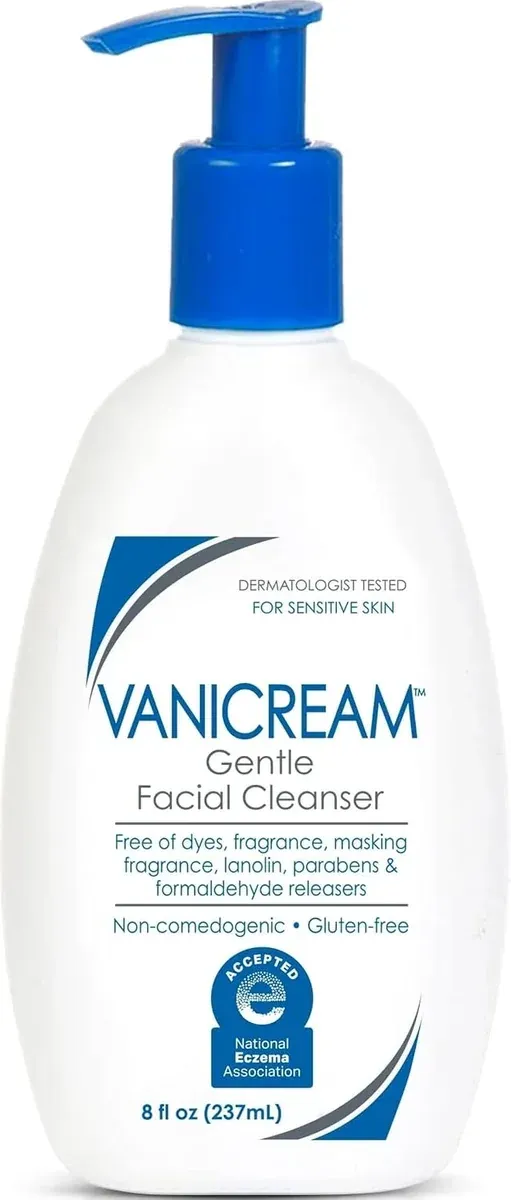
Vanicream Gentle Facial Cleanser
A practical example for someone who wants to simplify the cleansing step during pregnancy or increased sensitivity.
A basic fragrance-free cleanser keeps the routine focused on removing residue without adding another treatment active.
Watch-out: This is a cleanser example, not proof of universal pregnancy safety. Check the current ingredient label and ask your clinician about individual allergies or restrictions.
View on AmazonAs an Amazon Associate, SkinOptimizer may earn from qualifying purchases. Prices and availability can change.
Timeline: When to Adjust
Set the review date before adding the product. Short-term tolerability and longer-term results are different questions, and both need a defined checkpoint.
| When | What to check | Decision |
|---|---|---|
| Positive test or planning pregnancy | List prescriptions, retinoids and high-strength actives | Contact prescriber or OB-GYN |
| First 1 to 2 weeks | Keep cleanser, moisturizer and SPF stable | Record new sensitivity or acne |
| After clinician review | Introduce one approved treatment | Use the lowest practical frequency |
| Postpartum or breastfeeding | Review the list again | Do not assume pregnancy rules are identical |
Common Mistakes That Undermine the Routine
- Assuming every natural, organic or essential-oil product is pregnancy-safe.
- Treating all chemical sunscreen filters as inherently unsafe without individual guidance.
- Continuing a cosmetic retinoid because the concentration looks low.
- Stopping a prescription medication without contacting the prescribing clinician.
- Using a strong DIY peel to replace a paused acne or dark-spot treatment.
- Introducing several pregnancy-marketed products at once when skin is already changing.
- Assuming the same restrictions automatically apply during breastfeeding and postpartum.
When the routine becomes hard to read, return to gentle cleansing, moisturizer and morning sunscreen. The slow skincare method gives a controlled reintroduction plan instead of another shopping list.
When to Ask a Dermatologist
Contact your OB-GYN, dermatologist or pharmacist when a current prescription or active ingredient is uncertain. Seek prompt medical care for facial swelling, blistering, breathing difficulty, a widespread rash or signs of infection. New severe acne, rapidly changing pigmentation or intense itching during pregnancy also deserves professional assessment rather than cosmetic experimentation.
How to Evaluate the Routine Without Guessing
Write down the starting concern and use the same cleanser, moisturizer and sunscreen while testing one optional treatment. Photograph the same area in similar light every two weeks. Separate comfort, redness, active breakouts, texture and discoloration because each can move at a different speed.
Immediate burning, swelling, blistering or painful cracking is not a waiting-period problem. Stop the newest optional product and seek appropriate care. For ordinary dryness or mild irritation, reduce frequency and return to the basic routine until skin is comfortable.
At the planned review point, ask three questions: Is the target concern improving? Is the routine comfortable enough to continue? Can the cost and time be maintained? A product that produces a small benefit but repeatedly destabilizes the rest of the routine may not be the best choice.
The Bottom Line
A pregnancy-safe skincare routine begins with removal, not replacement: remove retinoids, review prescriptions and keep cleanser, moisturizer and sunscreen stable. Add treatment only after checking the exact ingredient and schedule with a qualified professional. Simple does not mean ineffective; it means every active has been noticed and justified.
Frequently Asked Questions
What skincare routine is safe during pregnancy?
A simple starting routine is gentle cleanser, moisturizer and broad-spectrum SPF 30+. Review every treatment active and prescription with your OB-GYN, dermatologist or pharmacist because concentration and use pattern matter.
Can I use retinol while pregnant?
No. Dermatology guidance recommends avoiding retinoids during pregnancy, including cosmetic retinol and prescription forms. Contact the prescriber for medication-specific instructions.
Can I use salicylic acid during pregnancy?
ACOG lists topical salicylic acid among over-the-counter ingredients that may be used during pregnancy, but product strength, area and frequency still matter. Confirm your exact product with your OB-GYN.
What can I use for pregnancy acne?
Azelaic acid, benzoyl peroxide and some topical acids may be considered in pregnancy. Ask your OB-GYN or dermatologist to match the option to acne severity, skin sensitivity and the rest of your care.
Is mineral sunscreen required during pregnancy?
Not necessarily. Mineral filters can be a useful choice for reactive skin, but do not assume every non-mineral sunscreen is unsafe. Choose a broad-spectrum SPF 30+ formula after discussing individual concerns with your clinician.
Skin Care During Pregnancy: A Simple Safety Decision Rule
Keep the basic routine simple: gentle cleansing, moisturizer, and broad-spectrum sunscreen. Then review every medication and active ingredient with your obstetric clinician and, when needed, a dermatologist. Pregnancy safety cannot be decided from a product category or “clean beauty” label alone.
Avoid retinoids during pregnancy. The American Academy of Dermatology's pregnancy skincare guidance lists prescription and over-the-counter retinoids among ingredients to avoid and recommends telling your obstetrician and dermatologist about medication and skincare use. That includes products marketed as retinol, retinal, adapalene, tretinoin, tazarotene, or other vitamin A derivatives unless your clinician gives specific direction.
Do not turn an ingredient list into a self-prescribed treatment plan. The American College of Obstetricians and Gynecologists discusses topical options for acne during pregnancy and recommends checking with an ob-gyn when an over-the-counter ingredient is not clearly covered. Guidance can differ by concentration, body area, frequency, formulation, medical history, and whether the product is prescription or cosmetic.
This article provides educational boundaries, not a personalized “safe list.” Product formulas change, and pregnancy or breastfeeding may change the recommendation. Bring the exact label or ingredient list to your clinician when you need a product-specific answer.