Best Sunscreens for Sensitive Skin in 2026: 8 Gentle SPF Picks
Compare eight gentle sunscreen options by filter type, finish, tint and water resistance to find a formula that fits your sensitive skin.
In this guide
What is the best sunscreen for sensitive skin?
The best sunscreen for sensitive skin is a broad-spectrum SPF 30 or higher that avoids your known triggers and feels comfortable at the full labeled amount. EltaMD UV Clear SPF 46 is our most balanced face pick for redness-prone or acne-prone sensitive skin, La Roche-Posay Anthelios Mineral Gentle Lotion SPF 50 is the strongest mineral face-and-body option, and CeraVe Hydrating Mineral Sheer Tint SPF 30 is the practical choice when white cast is the main barrier. Choose a product labeled water resistant for swimming or sweating.
Pregnancy does not make every non-mineral sunscreen automatically unsafe. The pregnancy-safe routine guide explains the role of SPF 30+, mineral options for sensitivity and when to ask an OB-GYN about a formula.
Start with your reaction, not the marketing label
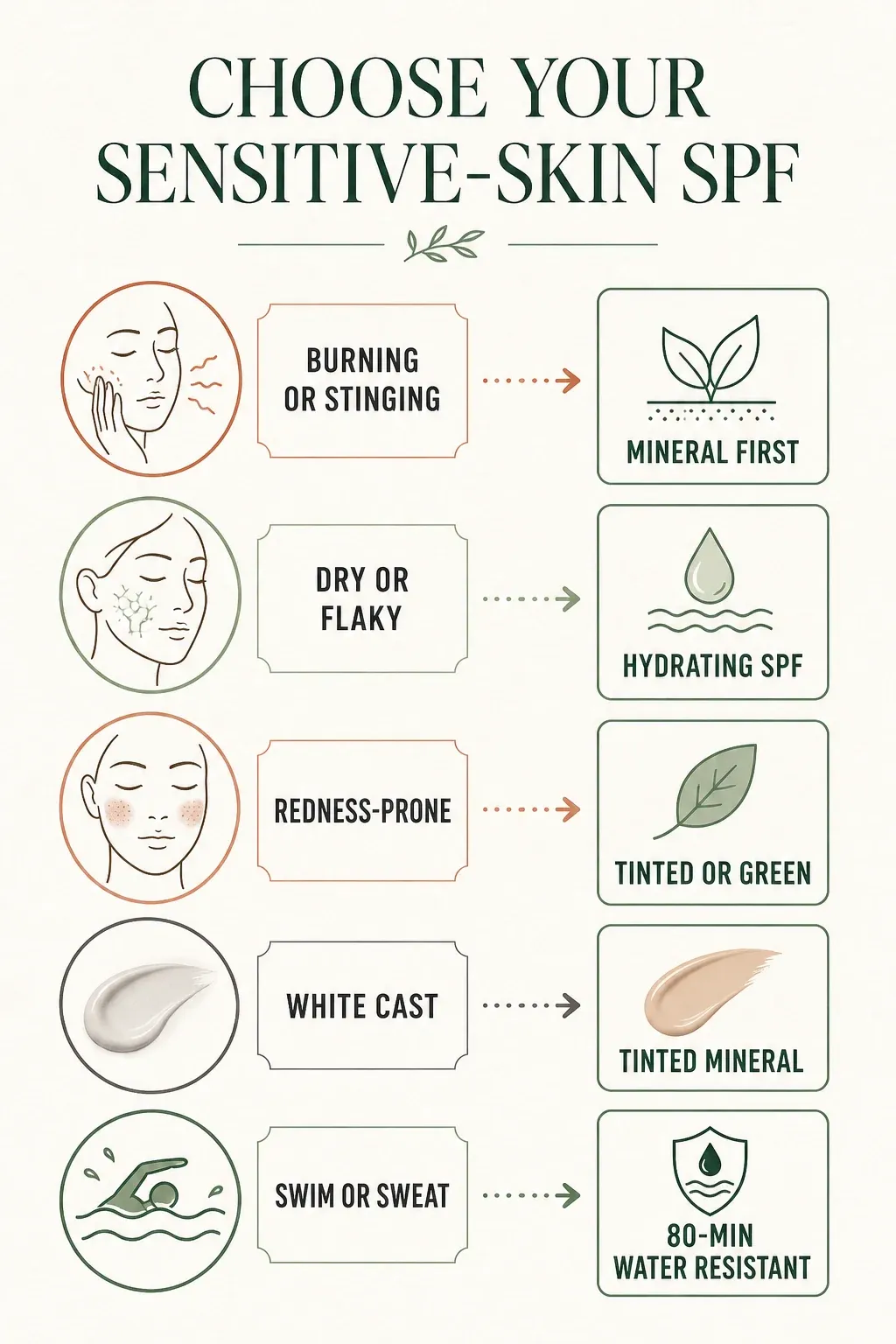
- Burning or stinging: try a fragrance-free mineral formula first, but judge the complete formula rather than zinc oxide alone.
- Dry or flaky skin: use a hydrating sunscreen or apply a bland moisturizer underneath instead of choosing the driest mineral lotion.
- Redness-prone skin: consider a sheer green or well-matched tint, and avoid assuming every botanical ingredient is soothing.
- White cast: choose a tinted mineral formula or a transparent hybrid formula you can apply generously.
- Swimming or sweating: check for 40- or 80-minute water resistance on the current Drug Facts label.
Best sunscreens for sensitive skin lists often reduce the decision to one sentence: buy mineral sunscreen. That is a useful starting point for some people, but it is not a complete buying rule. A zinc-heavy lotion may avoid an organic filter that stings your eyes yet still feel dry, leave a visible cast or contain another ingredient your skin dislikes.
This guide uses a reaction-first approach. Start with what goes wrong: burning around the eyes, tightness over a damaged barrier, visible redness, a chalky cast or poor wear during exercise. Then choose the formula that removes that obstacle without creating a new one.
The American Academy of Dermatology notes that the term “sensitive skin” on a sunscreen label is not formally defined by the FDA. Such formulas often use zinc oxide or titanium dioxide and omit fragrance or common irritants, but the wording still does not predict every individual response. See the AAD explanation of how to decode sunscreen labels.
How to Choose Sunscreen for Sensitive Skin
Begin with the non-negotiables: broad-spectrum protection, SPF 30 or higher and enough cosmetic comfort to apply the product generously. The AAD recommends a broad-spectrum, water-resistant SPF 30 or higher and advises people with sensitive skin to consider zinc oxide or titanium dioxide. Its current guidance also makes clear that sun-protective clothing and shade remain part of the plan. Read the AAD guide to choosing sunscreen.
After protection, identify the smallest useful formula category. If several sunscreens burn, start with a fragrance-free mineral formula. If heavy mineral creams make you underapply, a fragrance-free hybrid may be the more realistic daily choice. The sunscreen you use correctly is more protective than a theoretically gentle bottle that stays in the cabinet.
| Your main issue | Start with | Watch for |
|---|---|---|
| Immediate stinging | Fragrance-free mineral formula | Applying over cracked or freshly irritated skin |
| Dryness or flaking | Hydrating lotion or moisturizer underneath | Very matte zinc-heavy finishes |
| Redness plus acne | Lightweight tint or transparent hybrid | Niacinamide if it is a known trigger |
| White or purple cast | Tinted mineral or sheer hybrid | A poor tint match that encourages under-application |
| Outdoor activity | 40- or 80-minute water resistance | Elegant daily formulas with no water-resistance claim |
Mineral sunscreen is a starting point, not a tolerance guarantee
Zinc oxide and titanium dioxide are common first choices for reactive skin because they are less likely to irritate some users than certain organic filters. The complete formula still matters. Preservatives, plant extracts, film formers, pigments and the texture itself can influence comfort.
Do not turn “natural” into a safety shortcut. Essential oils and fragranced botanical blends may be poor choices for skin that already reacts easily. A shorter ingredient list can simplify troubleshooting, but length alone does not tell you whether a formula will work.
Broad spectrum and water resistance answer different questions
Broad spectrum means the product has met testing requirements for UVA as well as UVB protection. Water resistance describes tested protection during swimming or sweating for either 40 or 80 minutes. One claim does not replace the other.
The FDA advises applying sunscreen as directed and reapplying at least every two hours while outdoors, as well as after swimming or sweating according to the label. Review the FDA's current sun-safety guidance rather than treating SPF as a fixed number of protected minutes.
Choose tint and finish at the same time
Untinted mineral sunscreen can leave an ashy, white or purple cast, especially on medium and deep skin tones. A tint can reduce that visible residue, but one or three shades cannot match every depth and undertone. Check the dried finish in daylight before deciding.
If discoloration is part of your concern, compare the dedicated options in our guide to the best tinted sunscreens. If breakouts are the main constraint, use the separate acne-prone sunscreen guide instead of assuming every sensitive-skin formula is non-comedogenic.
Best Sunscreens for Sensitive Skin: Quick Comparison
This is a decision table, not a clinical ranking. “Best for” identifies the clearest use case based on current formula and label information. SkinOptimizer has not independently verified every finish claim on every complexion.
| Product | Best for | Main limitation |
|---|---|---|
| EltaMD UV Clear SPF 46 | Redness-prone, acne-prone daily wear | Hybrid; no water-resistance claim |
| La Roche-Posay Mineral Gentle SPF 50 | Mineral face-and-body outdoor use | Can leave a visible cast |
| CeraVe Mineral Sheer Tint SPF 30 | Tinted mineral daily wear | Three shades; not the sport pick |
| Hero Superlight SPF 30 | Redness-conscious, acne-prone skin | Green tint is not universal |
| Eucerin Sensitive Mineral SPF 50 | Affordable mineral face and body | High-zinc finish may look pale |
| Blue Lizard Sensitive SPF 50 | Body, family and active days | Less elegant than a facial fluid |
| CeraVe Hydrating Sheer SPF 30 | Dry, treatment-sensitive skin | Hybrid filters may sting some users |
| Tower 28 SunnyDays SPF 30 | Tinted coverage across many shades | Shade selection; not an outdoor sport SPF |
The 8 Best Sunscreens for Sensitive Skin in 2026
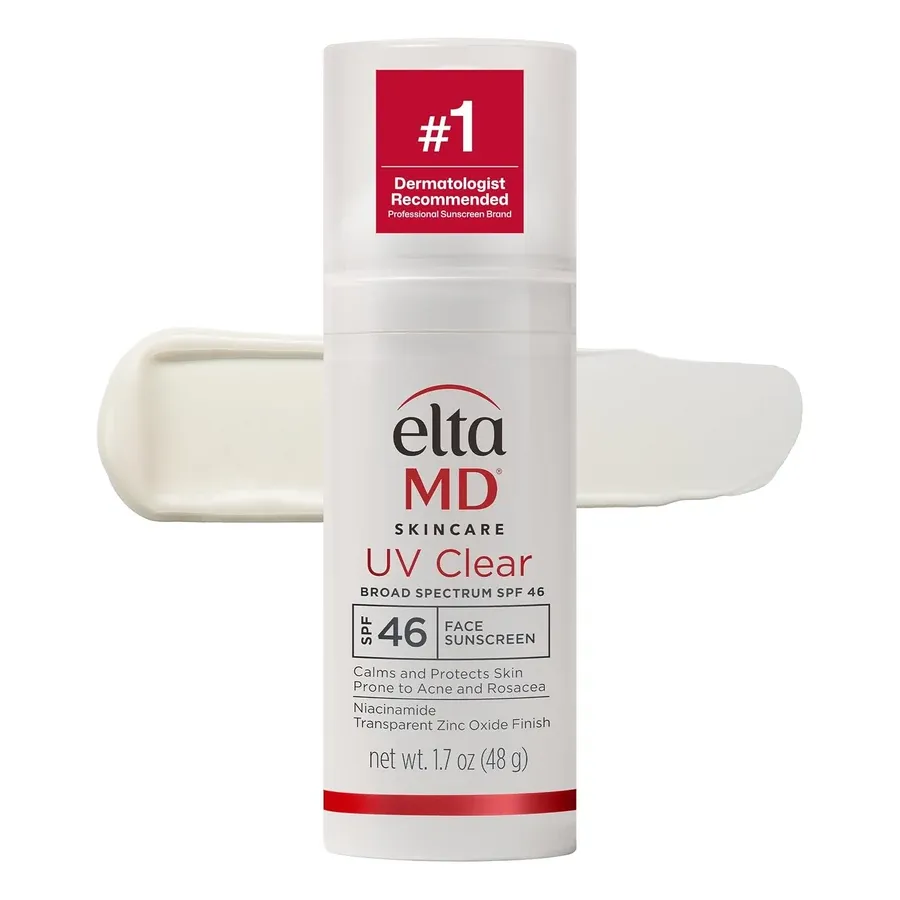
1. EltaMD UV Clear Broad-Spectrum SPF 46
EltaMD UV Clear is the most balanced daily face option here because it combines a light lotion texture with zinc oxide and an organic filter. The current untinted formula also contains niacinamide and is positioned for acne-prone and rosacea-prone skin. It is a practical bridge for readers who find traditional mineral lotions too heavy.
The formula is not mineral-only, is not the water-resistant choice for exercise, and niacinamide can irritate a minority of users. The untinted version can also show differently across skin tones. Choose it for an ordinary workday or city routine, then keep a separate outdoor sunscreen.
- Best for: combination, acne-prone or redness-prone sensitive skin.
- Skip if: niacinamide or octinoxate is a known trigger.
EltaMD UV Clear SPF 46
Why it fits: a lightweight hybrid formula for readers balancing redness, breakouts and a dislike of heavy sunscreen.
Watch-out: not water resistant; verify the seller, tint and current ingredient list before ordering.
View EltaMD on AmazonAs an Amazon Associate, we earn from qualifying purchases.
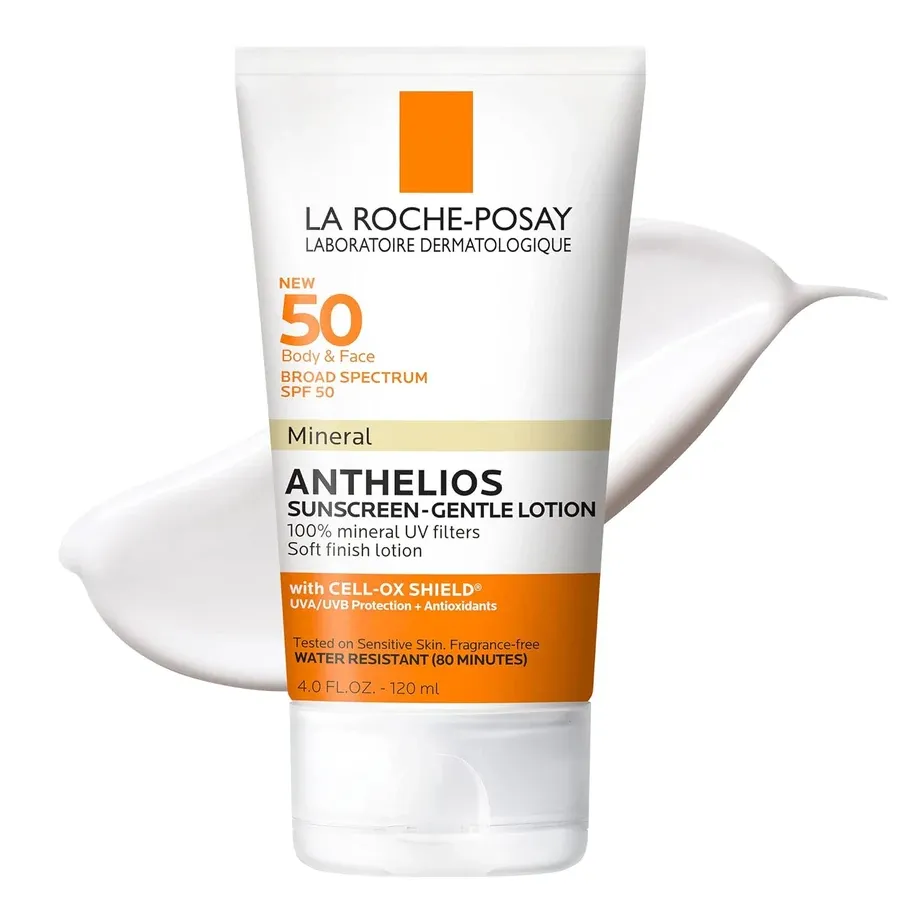
2. La Roche-Posay Anthelios Mineral Gentle Lotion SPF 50
This 100% mineral lotion uses zinc oxide and titanium dioxide, is fragrance-free and is labeled for both face and body. Its 80-minute water resistance makes it more useful for parks, beaches and exercise than a delicate daily facial fluid. It is also oil-free and positioned for sensitive skin.
The compromise is visible residue. La Roche-Posay itself acknowledges that mineral filters can leave a white, ashy or purple cast on some skin tones. Warming the lotion between the fingers and applying in sections can improve spread, but it cannot make an unsuitable cast disappear.
- Best for: mineral-only shoppers who want one outdoor face-and-body product.
- Skip if: an invisible finish is your top priority.
La Roche-Posay Mineral Gentle SPF 50
Why it fits: fragrance-free mineral protection for face and body with 80-minute water resistance.
Watch-out: may leave a visible cast, especially on medium and deep skin tones.
View La Roche-Posay on AmazonAs an Amazon Associate, we earn from qualifying purchases.
3. CeraVe Hydrating Mineral Sheer Tint SPF 30
CeraVe's tinted mineral sunscreen uses zinc oxide and titanium dioxide with ceramides, hyaluronic acid and niacinamide. The tint is the practical advantage: it is designed to reduce the whitening effect that makes many users apply too little mineral sunscreen. The current U.S. range includes light, medium and deep options.
Three flexible shades still cannot fit every undertone. The finish is glowy rather than strongly matte, and the product is not the primary choice for swimming or heavy sweating. Apply the full amount in two thin layers and check the dry-down at the jawline in daylight.
- Best for: normal-to-dry sensitive skin that wants a low-cost mineral tint.
- Skip if: none of the three shades blends cleanly.
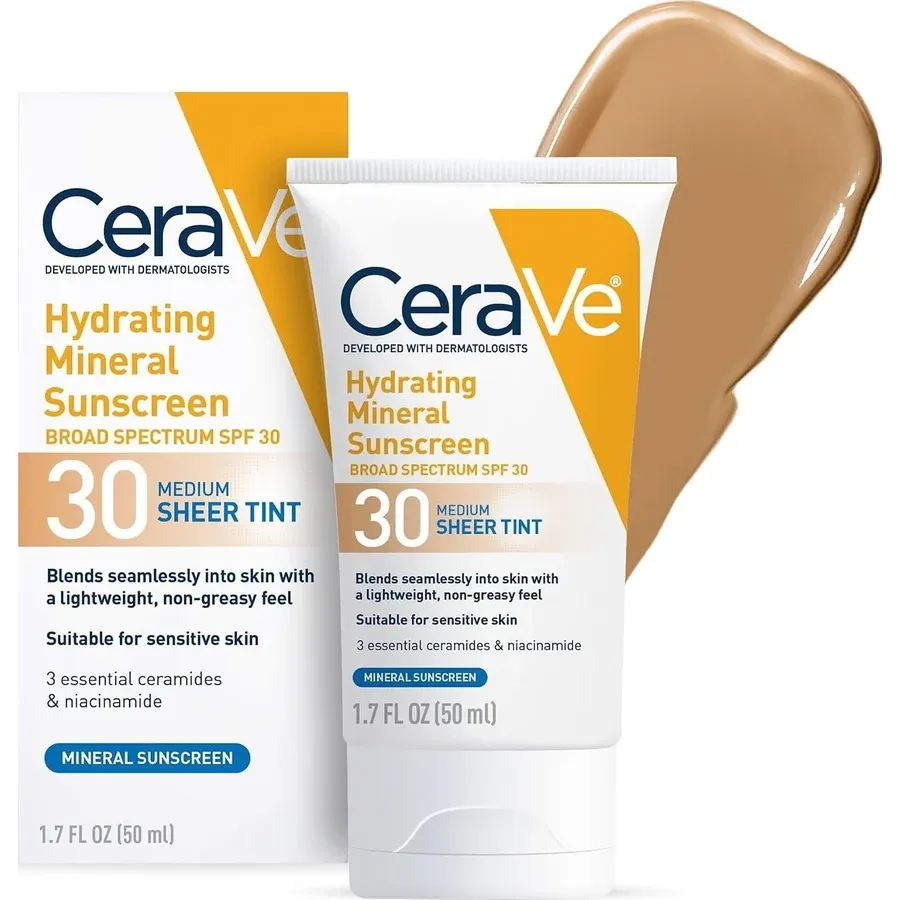
CeraVe Mineral Sheer Tint SPF 30
Why it fits: mineral filters plus a tint, ceramides and hydration support at a drugstore price.
Watch-out: the three-shade range will not suit every depth or undertone.
View CeraVe Tint on AmazonAs an Amazon Associate, we earn from qualifying purchases.
4. Hero Cosmetics Force Shield Superlight SPF 30
Hero Superlight uses zinc oxide in a gel-cream with a sheer green tint. The tint is meant to soften the visible look of redness, while the lighter texture makes it easier to layer over an acne routine than a dense beach lotion. It is fragrance-free and positioned as non-comedogenic.
A green tint is a cosmetic tool, not a treatment, and it will not disappear equally on every complexion. This is also a daily SPF 30 rather than the strongest choice for long outdoor exposure, swimming or heavy sweat. Use the acne sunscreen comparison if clogged pores matter more than sensitivity.
- Best for: blemish-prone sensitive skin with visible redness.
- Skip if: the green tint looks obvious after dry-down.
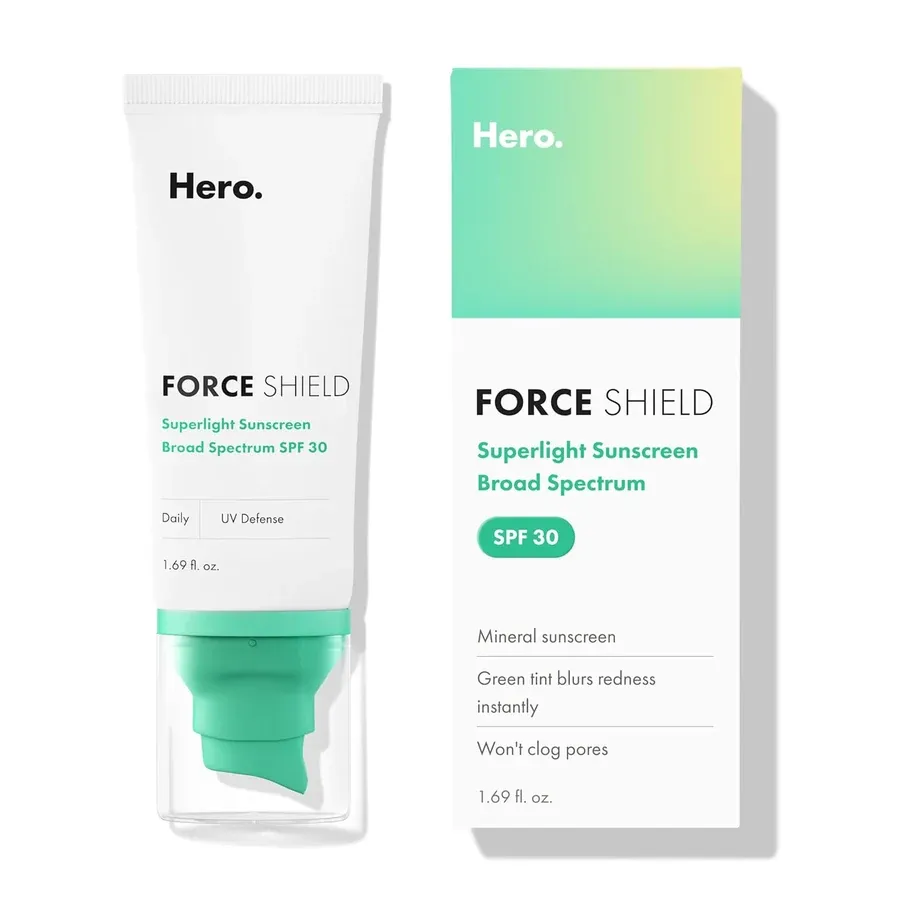
Hero Superlight SPF 30
Why it fits: a fragrance-free zinc-oxide gel cream with a light green tint for blemish-prone routines.
Watch-out: the tint is not universal and the formula is not the sport or swim pick.
View Hero on AmazonAs an Amazon Associate, we earn from qualifying purchases.
5. Eucerin Sensitive Mineral Sunscreen SPF 50
Eucerin's Sensitive Mineral lotion uses 24% zinc oxide and carries an 80-minute water-resistance claim. It is fragrance-free, hypoallergenic and non-comedogenic according to the current U.S. product information. The four-ounce format makes more sense for exposed arms, chest and shoulders than a premium 1.7-ounce face bottle.
The high zinc level can feel more substantial and may leave visible residue despite the brand's lightweight positioning. Do not use it on damaged or broken skin; that warning appears in the brand directions. For a compromised facial barrier, repair the routine first and compare our guide to avoiding skin-barrier damage.
- Best for: budget-conscious mineral body protection and outdoor days.
- Skip if: you need a nearly invisible facial finish.
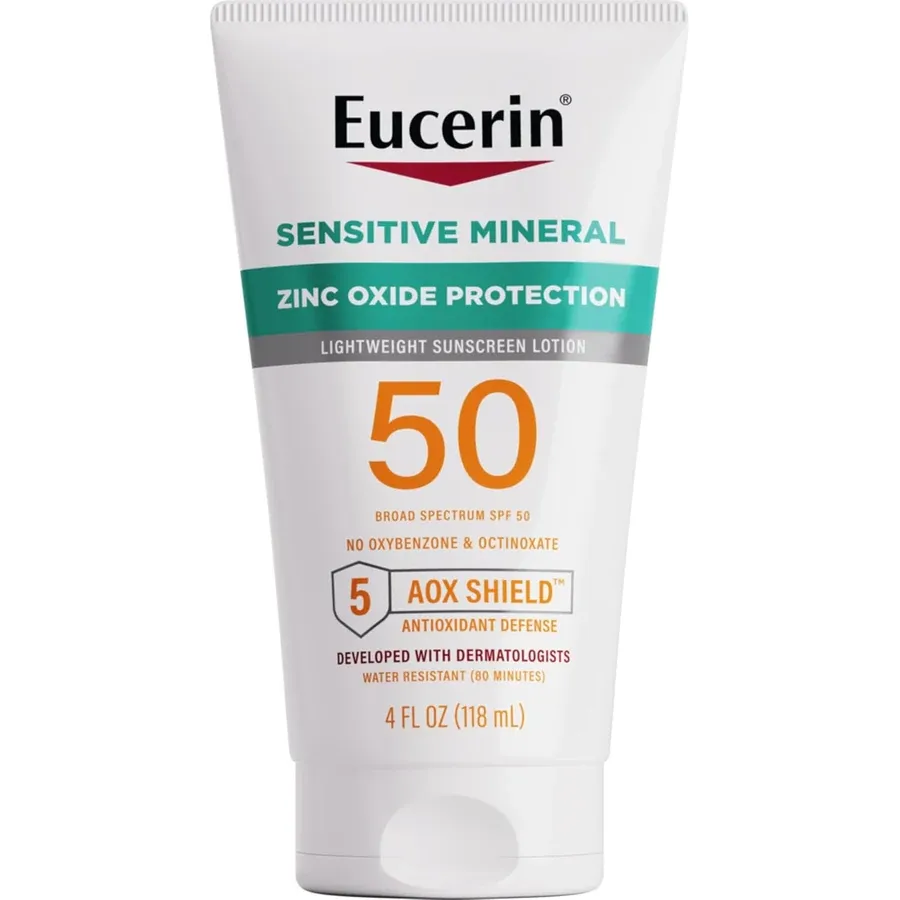
Eucerin Sensitive Mineral SPF 50
Why it fits: a fragrance-free 24% zinc-oxide lotion with 80-minute water resistance.
Watch-out: may look pale or feel substantial; do not apply to damaged or broken skin.
View Eucerin on AmazonAs an Amazon Associate, we earn from qualifying purchases.
6. Blue Lizard Sensitive Mineral Sunscreen SPF 50
Blue Lizard Sensitive is another mineral face-and-body option, but its clearest strength is straightforward outdoor use. It provides broad-spectrum SPF 50, uses zinc oxide and titanium dioxide, and is water resistant for 80 minutes. The bottle's color-changing cap is a useful UV reminder, especially for households managing several people.
This is not the most refined under-makeup texture in the group, and mineral residue remains possible. The formula also includes aloe and other inactive ingredients, so “mineral” does not mean ingredient-free. Compare the current package if you have a specific allergy.
- Best for: body application, family routines, gardening and water days.
- Skip if: you want a weightless facial primer finish.
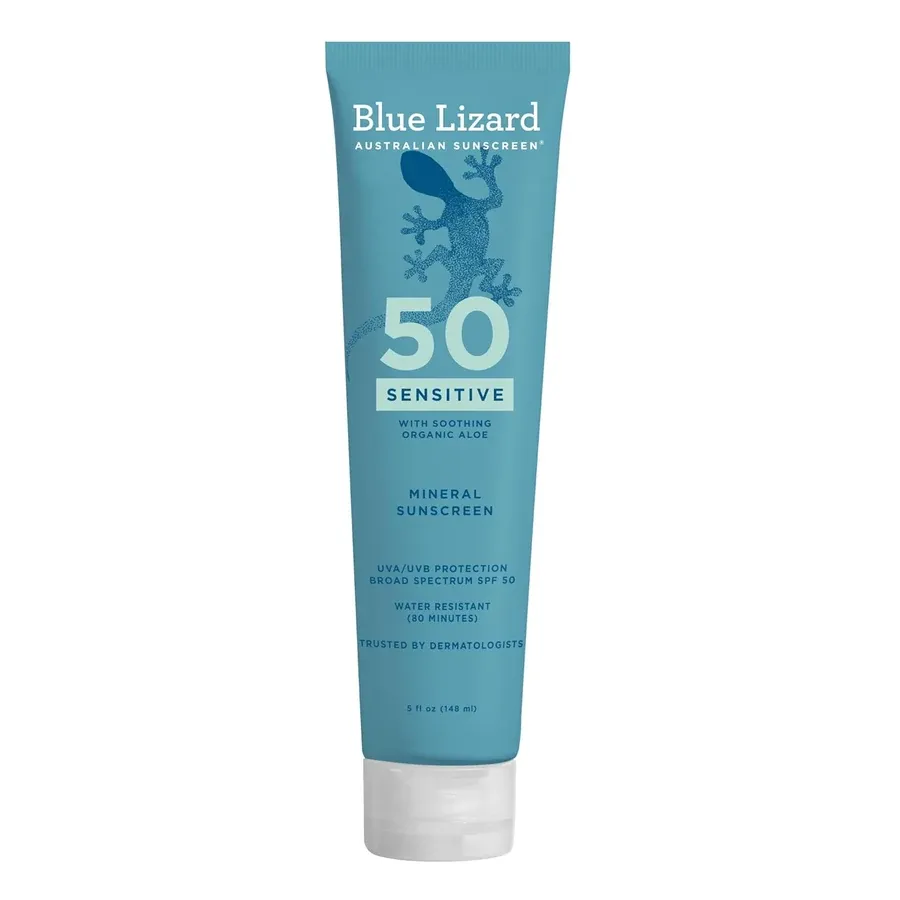
Blue Lizard Sensitive SPF 50
Why it fits: mineral face-and-body protection with 80-minute water resistance and a UV-reactive cap.
Watch-out: less cosmetically elegant than a facial fluid and can leave mineral residue.
View Blue Lizard on AmazonAs an Amazon Associate, we earn from qualifying purchases.
7. CeraVe Hydrating Sheer Sunscreen SPF 30
This CeraVe formula combines zinc oxide with organic filters and adds ceramides and hyaluronic acid. It is fragrance-free, designed for face and body and labeled water resistant for 80 minutes. The hybrid approach is useful for someone who wants a more spreadable finish than a traditional mineral lotion without giving up zinc oxide entirely.
Hybrid does not automatically mean non-stinging. Organic filters can bother some eyes or a severely compromised barrier, and the hydrating finish will not satisfy someone looking for a dry matte surface. Pair it with a minimal routine; our sensitive-skin routine guide explains how to reduce overlapping variables.
- Best for: normal-to-dry skin, face and body, and active days.
- Skip if: organic sunscreen filters are your known trigger.
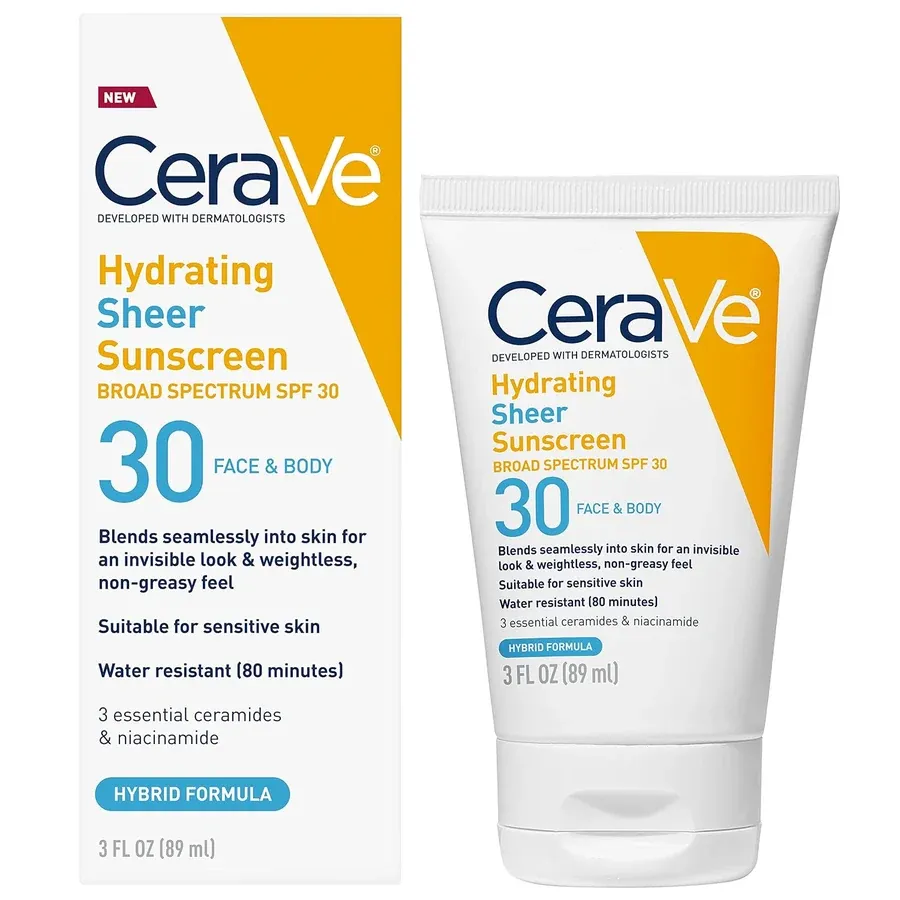
CeraVe Hydrating Sheer SPF 30
Why it fits: hydrating face-and-body sunscreen with ceramides, zinc oxide and 80-minute water resistance.
Watch-out: hybrid filters can still sting some eyes or reactive skin.
View CeraVe Sheer on AmazonAs an Amazon Associate, we earn from qualifying purchases.
8. Tower 28 SunnyDays Tinted SPF 30
Tower 28 SunnyDays is the complexion-product option. It uses zinc oxide, offers buildable light-to-medium coverage and comes in a much wider shade range than one-tint mineral sunscreens. The formula is fragrance-free and carries the National Eczema Association Seal of Acceptance, a useful third-party signal rather than a promise that no one will react.
The challenge is applying a foundation-like product at a true sunscreen amount. Use two thin passes and check the hairline, jaw and ears. Shade-specific Amazon listings also require care: confirm the shade name, seller and return policy before ordering.
- Best for: sensitive skin wanting coverage and more shade choice.
- Skip if: you prefer sheer bare-skin wear or need a sport sunscreen.
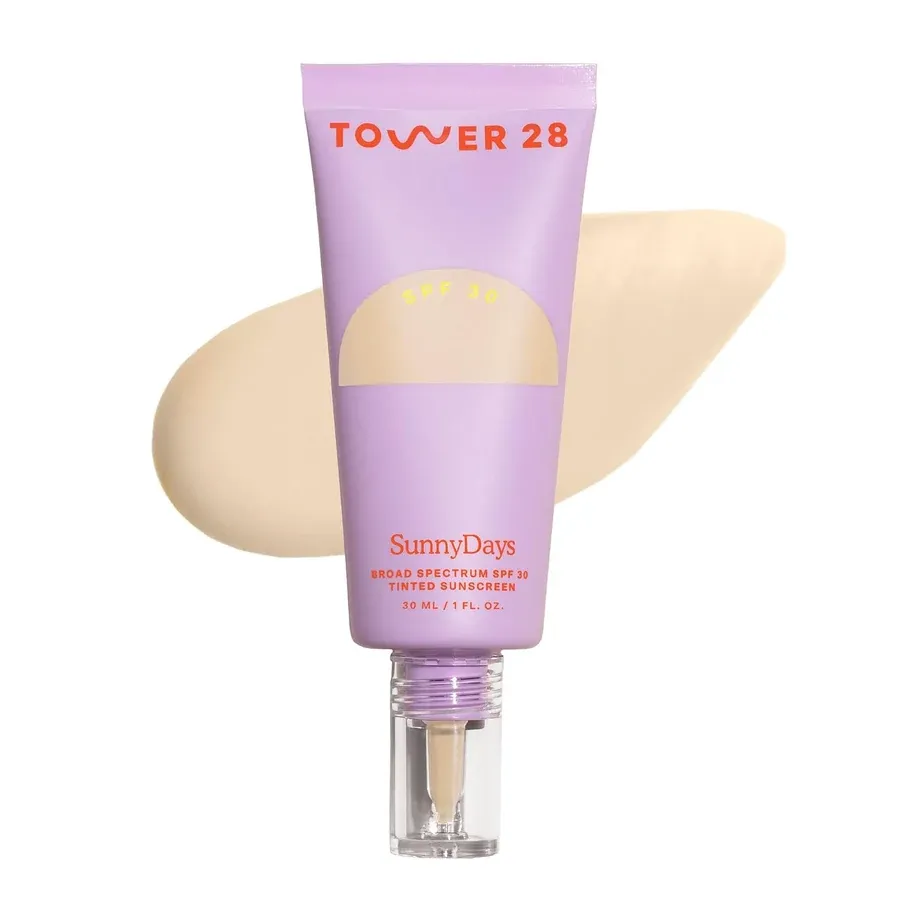
Tower 28 SunnyDays SPF 30
Why it fits: mineral SPF with buildable coverage and a broader shade range than most tinted sunscreens.
Watch-out: the linked listing is shade-specific; verify shade and seller before checkout.
View Tower 28 on AmazonAs an Amazon Associate, we earn from qualifying purchases.
How to Patch-Test Sunscreen Without Wasting a Week
A patch test cannot prove that a sunscreen will never react on the whole face, but it can make a dramatic immediate response less likely. Apply a small amount near the jaw or behind the ear once daily for several days. Follow the product directions and avoid testing on freshly exfoliated, shaved or visibly broken skin.
If the area becomes persistently red, swollen, itchy or painful, stop. Do not keep “pushing through” because the label says sensitive or hypoallergenic. A dermatologist can help distinguish irritation from allergic or photoallergic contact dermatitis when reactions repeat across products.
Keep stable: cleanser, moisturizer, acne treatment and makeup.
Change one thing: the sunscreen being tested.
Record: where it was applied, whether it was sunny, and when symptoms began.
Stop early: for swelling, hives, blistering, eye symptoms or significant pain.
If every sunscreen suddenly stings, simplify the routine before buying a ninth bottle. Use a gentle cleanser and a bland moisturizer such as those in our guide to moisturizers for sensitive skin. When even water or moisturizer burns, the immediate problem may be barrier disruption rather than sunscreen category.
How Much Sunscreen Should Sensitive Skin Use?
Sensitive skin does not need a smaller protective amount. Apply according to the product directions to all exposed skin. For the face and neck, many people use the two-finger method as a practical estimate, but bottle design and lotion thickness vary, so the Drug Facts label remains the final instruction.
Apply sunscreen as the last skincare step and let it settle before makeup. If a full amount pills, reduce unnecessary layers underneath instead of reducing sunscreen. Our explainer on whether SPF 30 is enough separates SPF value from application behavior.
Reapply at least every two hours while outdoors and after the water-resistance interval, swimming, sweating or towel drying. For a dedicated activity comparison, see the best water-resistant sunscreens. No sunscreen is waterproof, sweatproof or an excuse to skip shade and clothing.
What to Avoid When Sunscreen Keeps Irritating Your Skin
Avoid chasing every “clean,” “reef safe,” “baby” or “hypoallergenic” label as if it were a regulated tolerance score. The AAD notes that several of these marketing terms are not formally defined in the way shoppers often assume. Read the active and inactive ingredients and compare them with products that caused previous reactions.
Fragrance is a sensible first exclusion for reactive skin. Essential oils and aromatic plant extracts belong in the same troubleshooting conversation. Alcohol can feel drying in some formulas, but the position and role of an ingredient matter; do not reject an otherwise comfortable sunscreen from one ingredient name alone.
Also avoid stacking irritation underneath sunscreen. A strong acid, benzoyl peroxide, retinoid and foaming cleanser can leave the face reactive before SPF is applied. The goal is not to build the most active morning routine. It is to build a stable one that ends with protection.
The Bottom Line
The best sunscreen for sensitive skin is not automatically the product with the shortest ingredient list or the highest zinc percentage. It is the broad-spectrum SPF you can apply generously without repeating your known trigger. For immediate stinging, mineral-first is a rational starting point. For white cast or heavy texture, a tinted mineral or fragrance-free hybrid may be the better daily answer.
Use a separate water-resistant formula for active days, patch-test one change at a time and stop when a product causes persistent burning, swelling or pain. A comfortable routine beats a theoretically perfect sunscreen that you cannot use.
Frequently Asked Questions About Sunscreen for Sensitive Skin
Is mineral sunscreen always better for sensitive skin?
No. Zinc oxide and titanium dioxide are useful first choices because many people tolerate them well, but inactive ingredients, texture and the condition of your skin barrier still matter. A fragrance-free hybrid formula may be more comfortable if heavy mineral lotion causes dryness or under-application.
Why does sunscreen burn around my eyes?
Eye burning can come from a filter, fragrance, sweat moving the formula or applying too close to the lash line. Try a fragrance-free mineral product around the orbital area, avoid rubbing, and stop if symptoms persist. Significant eye pain or swelling requires professional advice.
Can I apply sunscreen over eczema or broken skin?
Do not assume a sensitive-skin label makes a product appropriate for cracked, weeping or infected skin. Follow the product warning; many labels say not to use on damaged or broken skin. Ask a qualified clinician how to protect an actively inflamed area.
Is SPF 50 too strong for sensitive skin?
No. SPF describes tested UVB protection, not how harsh the formula is. An SPF 50 sunscreen can be comfortable, while an SPF 30 formula can irritate. Compare the complete formula, broad-spectrum claim, finish and water resistance.
How long should I test a new sunscreen?
Apply a small amount to the same limited area for several days before full-face use, while keeping the rest of the routine stable. A patch test cannot rule out every delayed or sunlight-related reaction, so stop and seek advice if you develop persistent rash, swelling, blistering or pain.
Sensitivity and dryness overlap, but they are not identical. Compare cream, vehicle and moisturizer fit for dry skin and use the ingredient-reaction checklist to separate a documented trigger from a viral blacklist.
For comfortable evening removal, our rosacea cleanser guide explains when one gentle cleanse is enough and when resistant sunscreen needs a separate first-removal step.