Best Sunscreen for Dry Skin: How to Choose Without Pilling
Dry skin needs broad-spectrum SPF 30 or higher in a comfortable cream or lotion. Compare the full vehicle, layering and full-dose finish, not filter myths.
In this guide
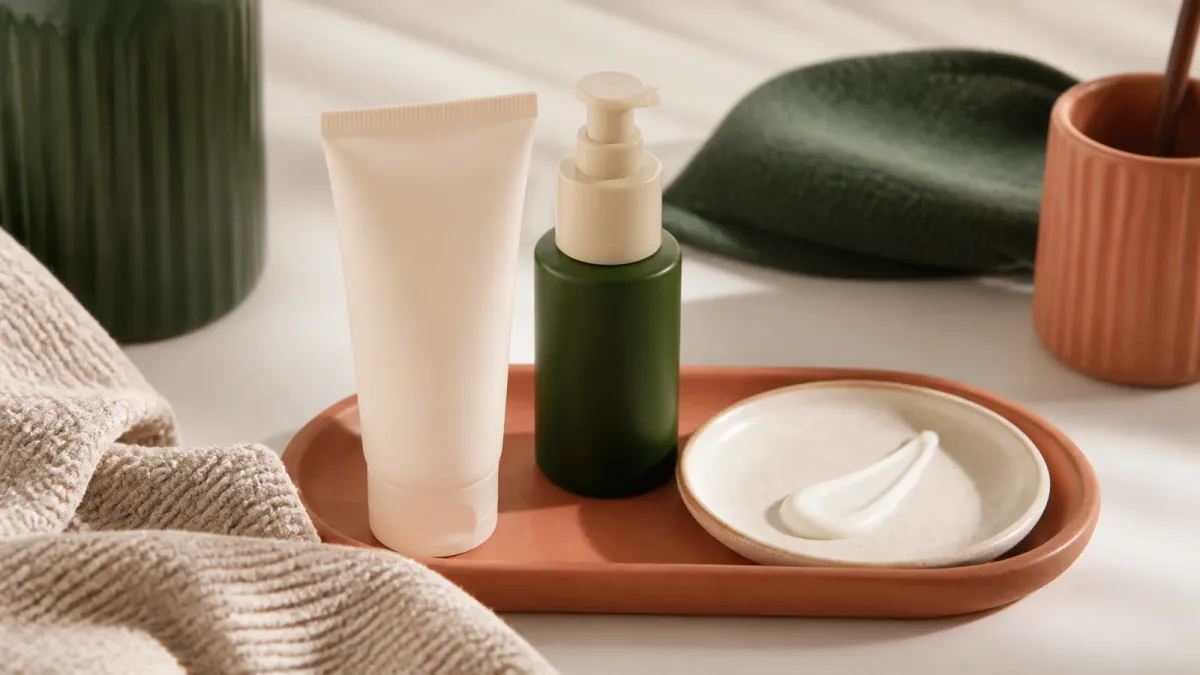
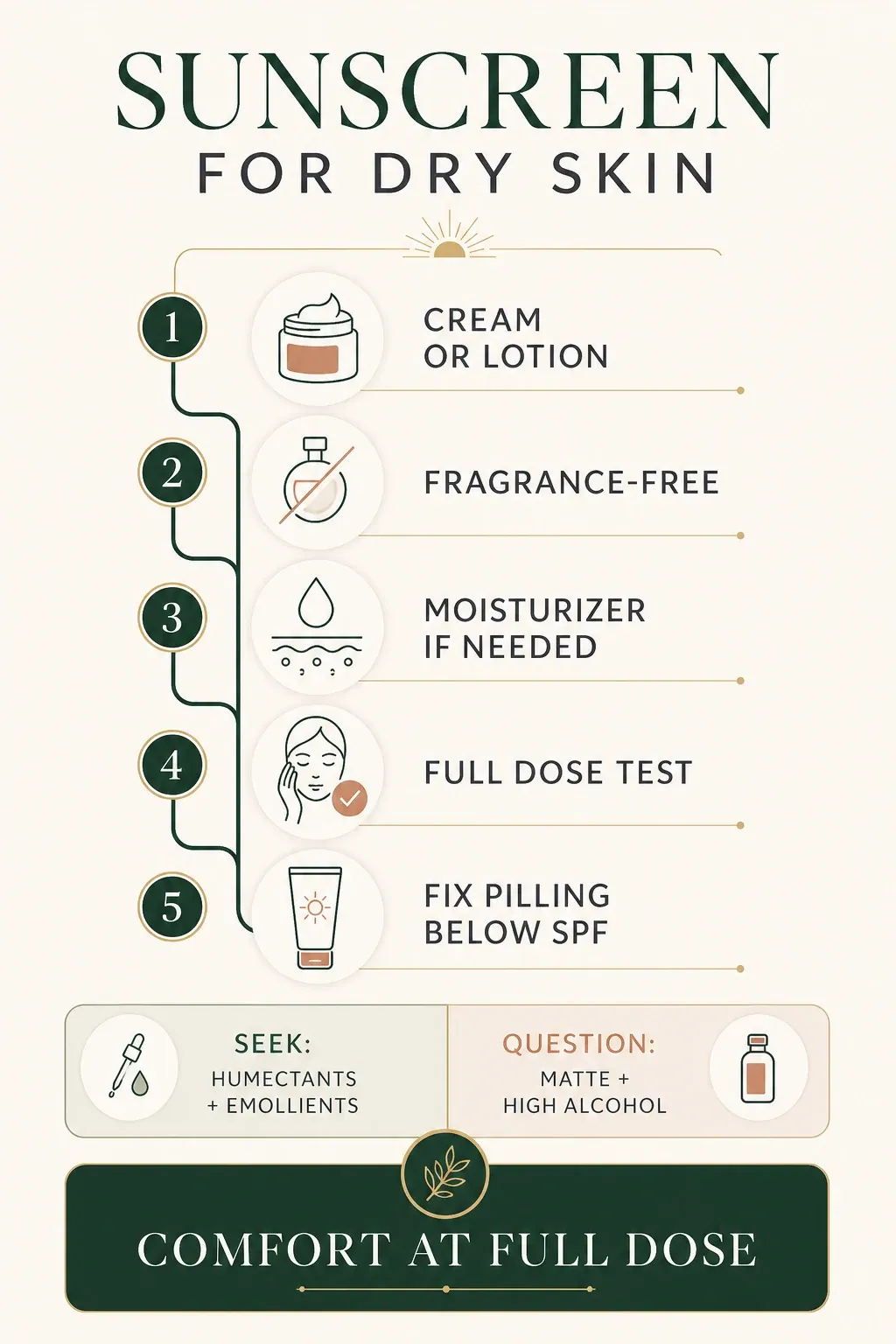
For dry skin, choose a broad-spectrum, water-resistant sunscreen with SPF 30 or higher in a cream or moisturizing lotion that stays comfortable at the full application amount.
Mineral versus organic filters do not determine dryness by themselves; the complete vehicle, alcohol, fragrance, humectants and emollients matter.
Apply moisturizer underneath when sunscreen alone is not enough, and simplify layers if it pills.
Content substantially revised: . Originally published October 19, 2024 (UTC). This date reflects the documented content revision, not a new article.
Quick Summary
- Choose cream or moisturizing lotion before ranking filter categories.
- Fragrance-free formulas are useful when dry skin is also reactive.
- Apply moisturizer first when sunscreen alone does not support the barrier.
- Test cast, comfort and pilling at the full protective dose.
Dry skin can make sunscreen feel like a tradeoff between protection and comfort. A matte mineral formula may catch on flakes, while a light organic-filter fluid may sting because of its vehicle.
This guide evaluates the complete formula, shows when moisturizer belongs underneath and solves pilling without reducing the sunscreen amount.
Dry Skin Needs the Right Vehicle, Not Just the Right Filter
A sunscreen for dry skin should provide broad-spectrum SPF 30 or higher in a cream or moisturizing lotion that stays comfortable at the required dose. Mineral versus organic filters do not determine dryness by themselves.
The complete vehicle, alcohol, fragrance, humectants, emollients and film formers matter.
Dry skin loses water and lacks enough surface lipids to remain flexible. A sunscreen can support comfort, but it may not replace a dedicated moisturizer during winter, retinoid use or eczema flares. Protection and barrier care are separate jobs that can share one formula.
The AAD sunscreen selection guide recommends looking for moisturizing or dry-skin labeling. It still prioritizes SPF 30 or higher, broad-spectrum protection and water resistance.
| Dry-skin need | Helpful formula feature | Possible problem |
|---|---|---|
| Tightness | Cream or lotion with humectants and emollients | Fast-drying alcohol-heavy fluid |
| Flaking | Flexible moisturizing film | High powder load that catches on scales |
| Sensitivity | Fragrance-free formula | Fragrance, essential oils or multiple actives |
| Retinoid dryness | Separate moisturizer under sunscreen | Stacking exfoliating morning products |
| Deep skin tone | Transparent or well-matched tint | Visible white or gray cast |
| Outdoor sweat | Water-resistant cream or lotion | Rich but non-resistant moisturizer with SPF |
Ingredients to Look For
Glycerin, hyaluronic acid, propanediol and related humectants can support surface hydration. Ceramides, fatty alcohols, squalane, dimethicone and plant-derived emollients can improve softness and flexibility. Petrolatum is highly occlusive but less common in elegant facial sunscreens.
Ingredient presence does not reveal the full amount or performance. A well-balanced emulsion can outperform a long list of fashionable moisturizers. Judge comfort after an adequate application rather than the label alone.
The AAD's updated dry-skin guidance recommends gentle fragrance-free products, moisturizer and broad-spectrum water-resistant SPF 30 or higher. It also advises avoiding indoor tanning.
Fragrance-free versus unscented
Fragrance-free usually means fragrance ingredients were not added for scent. Unscented can include ingredients that mask odor. Reactive or eczema-prone skin should prioritize fragrance-free labeling and still review the full formula.
Botanical extracts and essential oils can add scent or allergy potential without improving UV protection. Natural does not guarantee hypoallergenic. Patch test a new formula when past reactions make that useful.
Mineral, Organic or Hybrid for Dry Skin?
Mineral sunscreens use zinc oxide, titanium dioxide or both. They can suit sensitive skin but may feel drying when the formula contains a high powder load or sets very matte. A cream base can offset that effect.
Organic-filter sunscreens can create transparent, flexible films and may feel more hydrating. Some use alcohol to reduce heaviness, which can sting compromised skin. Hybrid formulas combine filter types and should be judged as finished products.
If skin burns with several formulas, try a fragrance-free mineral cream and rebuild the barrier. The sensitive-skin sunscreen guide compares formula tradeoffs without treating mineral as automatically perfect.
Should Moisturizer Go Under Sunscreen?
Yes, when sunscreen alone does not relieve dryness. Apply moisturizer first, allow it to settle, then apply sunscreen as the final skincare step. Do not mix the products in your hand because that can disturb the tested sunscreen film.
A moisturizer with SPF can replace a separate morning moisturizer when it is broad spectrum, SPF 30 or higher and applied at the sunscreen dose. Many people apply moisturizer too sparingly for that role. Reapplication still follows outdoor exposure and label directions.
The serum and moisturizer layering guide explains morning order and pilling fixes. Remove duplicate serums before reducing sunscreen.
How to Test Texture Before Buying a Full Size
Apply the intended amount to face and neck, not a pea-sized sample on the hand. Observe spreading, eye sting, cast, tightness, shine and pilling for several hours. Repeat on two or three days because weather and moisturizer can change the result.
Test under makeup if makeup is part of the routine. A formula that forms a stable even film without separating is more useful than one that looks perfect only when under-applied. Samples and return policies can reduce waste.
| After application | Likely issue | First adjustment |
|---|---|---|
| Immediate tightness | Vehicle too drying or barrier compromised | Add moisturizer or change to cream |
| Pills in rolls | Too much rubbing or incompatible layers | Use less underneath and press gently |
| Flakes look worse | Powdery/matte film catching on scale | Repair barrier and choose flexible lotion |
| Burns around eyes | Migration, fragrance, alcohol or filter sensitivity | Use a water-resistant stick around eyes |
| Gray or white cast | Mineral dispersion or tint mismatch | Try transparent or matched tinted formula |
| Breakouts increase | Formula, cleansing or active overlap | Keep routine stable and track lesions |
A Lightweight Option to Compare
Affiliate disclosure: As an Amazon Associate, we earn from qualifying purchases.
CeraVe Hydrating Sheer Sunscreen SPF 30 — Face & Body, 3 fl oz

This fragrance-free hybrid formula is an option when dry skin needs a lighter daytime layer rather than a heavy cream. CeraVe lists broad-spectrum SPF 30, ceramides and 80-minute water resistance.
Buy it if: You want one face-and-body sunscreen and are comfortable using moisturizer underneath when needed.
Skip it if: You need a mineral-only formula, a tint, or have a known allergy to a listed ingredient.
Its lightweight texture may not provide enough comfort for very dry, flaky skin without separate moisturizer. Check the full application amount for sting and pilling; we have not independently wear-tested this product.
View CeraVe Hydrating Sheer SPF 30 on Amazon
Check the 3 fl oz variant, seller, current label and delivery availability before buying. No price or stock guarantee is implied.
Dry Skin and Acne Treatment
Retinoids, benzoyl peroxide and salicylic acid can increase dryness. Sunscreen protects treatment progress but does not repair every barrier problem. Use a bland moisturizer and reduce nonessential actives before abandoning the prescribed plan.
Choose non-comedogenic labeling if helpful, but do not assume every cream clogs pores. The acne-prone sunscreen guide compares lighter formulas, while the barrier guide addresses stinging and flaking.
Apply treatment at night if directed and sunscreen in the morning. Separate strong actives from a flaky face rather than scrubbing scales away. Scarring or painful acne needs professional care.
Eczema, Rosacea and Allergy-Prone Skin
Use fragrance-free products and avoid applying sunscreen to actively broken or weeping skin unless a clinician directs it. Mineral filters may be easier to tolerate, but inactive ingredients still matter. Patch test and introduce one product at a time.
The AAD moisturizer selection advice emphasizes fragrance-free cleanser and moisturizer for dry, sensitive skin. Red, cracked, painful or bleeding skin may need diagnosis and prescription care.
For persistent facial redness, review the rosacea and redness routine. Heat, rubbing and a crowded active routine can be more important than filter class.
Winter Routine for Dry Skin
Use a gentle cleanser or rinse in the morning, apply a cream moisturizer to slightly damp skin, then sunscreen. Reduce exfoliation when cheeks sting or flake. Protect lips and ears during cold outdoor activity.
Snow reflection and altitude can increase exposure while wind worsens dryness. Choose a water-resistant cream and carry it for reapplication. The year-round sunscreen guide shows how to scale protection without treating every indoor winter day as a ski slope.
Summer Routine for Dry Skin
Dry skin can still prefer a lighter lotion in humidity. Keep broad-spectrum SPF 30 or higher and water resistance for sweat or swimming. A separate rich moisturizer may be unnecessary if the sunscreen remains comfortable.
Reapply approximately every two hours outdoors and after water, sweat or toweling. Do not choose a lower SPF solely for a lighter feel. Compare fluid and lotion vehicles within the same protection standard.
Application Without Pilling
Use thin, even underlying skincare layers and allow them to settle. Apply sunscreen in sections and press or spread gently rather than rubbing repeatedly. If it pills, remove the least necessary serum first.
Do not mix sunscreen with moisturizer, foundation or face oil. Mixing changes the film and can create uneven protection. Apply makeup after sunscreen sets.
A face oil usually goes after moisturizer at night, not under daytime sunscreen when it destabilizes the finish. See the face oil guide for barrier and acne tradeoffs.
Tinted Sunscreen for Dry and Melanin-Rich Skin
A tint can reduce white cast and may add iron oxides that support visible-light protection for hyperpigmentation. Match the shade in daylight across the full application amount. A tint that looks good at one dot may become orange or gray at the correct dose.
Dry skin needs a flexible tint that does not collect around flakes. Use the tinted sunscreen guide and avoid heavy powder immediately over a still-dry surface. Moisturize first when needed.
A Two-Week Dry-Skin Sunscreen Test
Keep cleanser, moisturizer and treatment stable. Use the sunscreen every morning at the intended dose and record tightness, flaking, sting, cast and pilling. Note weather and outdoor time.
At the end of week one, change only one variable if needed: add moisturizer, remove a serum or switch the eye-area format. At week two, decide whether the formula supports adequate use. Do not stock up before this test.
Moisturizer With SPF or Two Separate Products?
A moisturizer with sunscreen can work when it is labeled broad spectrum, SPF 30 or higher and applied at the sunscreen amount. The main risk is behavioral: people often use a thin moisturizer dose and assume the SPF still matches the label test.
Apply it as sunscreen, including ears, neck and other exposed areas.
Two separate products provide more flexibility when dry skin needs a rich barrier cream but the preferred sunscreen is a lighter film. They also make it easier to change moisturizer at night without changing UV protection. The tradeoff is another layer that may pill.
The AAD sunscreen FAQ notes that creams are useful for dry skin and the face. It still requires adequate application, broad spectrum, SPF 30 or higher and water resistance.
Body Sunscreen for Dry Arms, Legs and Hands
Dry body skin often tolerates a richer lotion than the face. Apply moisturizer after bathing, then use sunscreen on exposed areas before going outdoors. Long sleeves and UPF clothing reduce both UV exposure and the amount of repeated sunscreen needed.
Hands lose product through washing and sanitizer, so reapply after those activities when exposure continues. Protect the backs of hands during driving, gardening and outdoor work. A non-greasy hand-compatible formula can improve adherence.
For a large exposed area, choose packaging that dispenses enough product. A tiny facial pump can encourage under-application on the body. Compare cost per full-body use rather than cost per bottle.
Dryness After Removal
Remove water-resistant sunscreen with a gentle cleanser rather than repeated scrubbing. A first cleanse with a compatible oil or balm can help heavy films, followed by a mild water-based cleanser only when needed. Double cleansing is optional, not a requirement for every formula.
Apply moisturizer to slightly damp skin after cleansing. If the face stings, pause exfoliating acids and retinoids until comfort returns. Persistent rash or cracked skin needs medical assessment.
Common Dry-Skin Sunscreen Mistakes
- Blaming the filter alone: vehicle and inactive ingredients often drive comfort.
- Skipping moisturizer through flaking: sunscreen does not replace barrier repair.
- Mixing products: dilution can disrupt the protective film.
- Using too little to avoid heaviness: change texture instead.
- Scrubbing off scale: friction worsens irritation.
- Choosing matte by default: oil-control finishes can emphasize dryness.
When to See a Dermatologist
Seek care for painful cracks, bleeding, widespread itch, swelling, hives or a rash that persists after stopping the product. Eczema, allergic contact dermatitis, rosacea and medication irritation require different plans. Bring the complete label.
If every sunscreen stings, stabilize the barrier and use clothing, shade and a hat while selecting another formula. Do not rely on untested DIY sunscreen. A clinician can help identify allergens or a condition that needs treatment.
The Bottom Line
The best sunscreen for dry skin is a broad-spectrum SPF 30 or higher cream or moisturizing lotion that remains comfortable at an adequate dose. Filter category alone cannot predict dryness; the full vehicle and barrier condition matter.
Layer moisturizer underneath when needed, avoid fragrance during reactivity and change format if the correct amount pills or tightens. Protection only works when the tested film can be used consistently. Reassess texture after season, treatment, barrier condition, outdoor activity or travel plans change significantly.
Frequently Asked Questions About Best Sunscreen for Dry Skin
What type of sunscreen is best for dry skin?
Choose a broad-spectrum, water-resistant SPF 30 or higher cream or moisturizing lotion. The best formula remains comfortable and spreads evenly at the full protective dose.
Is mineral sunscreen better for dry skin?
Not automatically. Mineral filters can suit sensitive skin but may feel drying in powdery or matte vehicles. A moisturizing mineral cream can work well, as can a hydrating organic-filter lotion.
Should I apply moisturizer before sunscreen?
Yes, when sunscreen alone does not relieve dryness. Apply moisturizer first, allow it to settle and use sunscreen as the final skincare step without mixing the two.
Why does sunscreen pill on dry skin?
Pilling can come from too many layers, excess product, rubbing or incompatible film formers. Remove an optional serum, use less underneath and press sunscreen on gently.
Can dry skin use tinted sunscreen?
Yes. A flexible moisturizing tint can reduce white cast and add visible-light protection for selected pigment concerns. Test the full amount in daylight because tint changes with dose.
This article is for informational purposes only and does not replace professional dermatological advice.