Best Tinted Sunscreens in 2026: Shade Range, Finish and Skin Type Compared
Compare the best tinted sunscreens of 2026 by shade range, finish, skin type and water resistance, with seven clear picks and honest limitations.
In this guide
Which tinted sunscreen should you buy?
Supergoop! Protec(tint) SPF 50 is our best overall daily pick, Tower 28 SunnyDays SPF 30 is the strongest sensitive-skin shade system, and e.l.f. Halo Glow Skin Tint SPF 50 is the best budget option. Do not choose on SPF alone: the right product must match your depth and undertone, stay comfortable at a full sunscreen amount, and offer water resistance when your day actually requires it.
The best tinted sunscreen is the one you can apply generously without turning orange, gray, greasy, or cakey. That sounds obvious, but many buying guides reduce the decision to a shade count and an SPF number. Neither tells the whole story. A formula with one “universal” tint can disappear on one complexion and look conspicuous on another. A skin tint with eighteen shades may match beautifully, yet still be a poor beach sunscreen if it is not labeled water resistant.
This guide treats tinted SPF as both sun protection and a complexion product. SkinOptimizer did not conduct a controlled wear test, so these are not disguised personal-test claims. We reviewed current brand specifications, shade architecture, UV filters, finish, coverage, fragrance information, water-resistance labeling, application directions, and routine fit. We also checked whether the product makes sense when applied in a real sunscreen amount—not merely as a few makeup-like dots.
Seven products made the final list because each solves a different purchase problem. The comparison also explains when you should skip tint entirely, when makeup with SPF is not enough, and why a flexible shade is not the same thing as a true shade match. If you are still deciding between filter types, read our mineral vs. chemical sunscreen guide first; this page focuses on choosing a tinted product.
Quick Summary
- Best overall daily option: Supergoop! Protec(tint) Daily Skin Tint SPF 50.
- Best premium mineral option: Colorescience Face Shield Flex SPF 50.
- Best for sensitive skin: Tower 28 SunnyDays Tinted SPF 30.
- Best budget option: e.l.f. Halo Glow Skin Tint SPF 50.
- Best rule: prioritize a believable shade and a finish you can wear at the labeled application amount.
Why iron oxides make tint more than a cosmetic extra
Mineral pigments called iron oxides create much of the visible color in tinted sunscreens. Research suggests that formulas containing iron oxides can improve protection against visible light compared with untinted UV-only products, an important nuance for people concerned about pigment changes. That does not make every tint a melasma treatment, and shade compatibility still matters. The practical takeaway is narrower: a well-matched tinted sunscreen may offer a useful visible-light advantage while avoiding the obvious white cast of some mineral formulas.
This guide was prepared by the SkinOptimizer Editorial Team. We compared current labels, official product information, formula characteristics, application directions, and independent sunscreen guidance. We do not claim undocumented hands-on testing or medical credentials. Shade availability, formulas, and retailer stock can change, so check the current label and shade selector before buying.
Best tinted sunscreens in 2026 at a glance
| Product and shade system | Finish and best fit | Main watch-out |
|---|---|---|
| Supergoop! Protec(tint) SPF 50 14 flexible shades | Natural; balanced everyday wear | Not water resistant |
| Colorescience Face Shield Flex SPF 50 Six shade families currently shown | Demi-matte; premium mineral coverage | Brand page shade copy is inconsistent |
| Tower 28 SunnyDays SPF 30 17 shades | Natural; sensitive skin | No sport-level water-resistance claim |
| e.l.f. Halo Glow Skin Tint SPF 50 18 shades | Dewy; budget and active days | Glow may be too shiny for oily skin |
| CeraVe Sheer Tint SPF 30 3 shades | Natural; simple drugstore routine | Limited undertone and depth precision |
| Naked Sundays BeautyScreen SPF 50 15 flexible shades | Glowy; foundation-like coverage | Choose another SPF for swimming |
| Alleyoop Sunsational SPF 50 16 shades | Natural glow; mineral skin tint | Some shades may have limited availability |
If white cast is your main concern, compare this shortlist with our broader guide to the best sunscreens for darker skin. If you need sweat or swim protection, start with the label rather than the tint and use our water-resistant sunscreen guide.
The 7 best tinted sunscreens by real-world fit
Supergoop! Protec(tint) Daily Skin Tint SPF 50
Protec(tint) takes the top spot because it balances the three things most shoppers are trying to combine: serious daily SPF, a usable complexion range, and makeup-like wear without heavy foundation coverage. The current range includes fourteen flexible shades, and the light, buildable coverage leaves a natural rather than flat finish. Its hybrid filter system combines zinc oxide with organic filters, which helps explain why it feels different from a classic all-mineral paste.
The flexibility is useful, but “flexible” still means one shade spans more than one complexion. Check swatches on faces near your depth and undertone, especially if you are very cool, very olive, or between categories. The bigger limitation is water resistance: the brand explicitly identifies the product as not water resistant. It is a city, office, and normal-day sunscreen—not the bottle to choose for a long run, humid hike, or pool day.
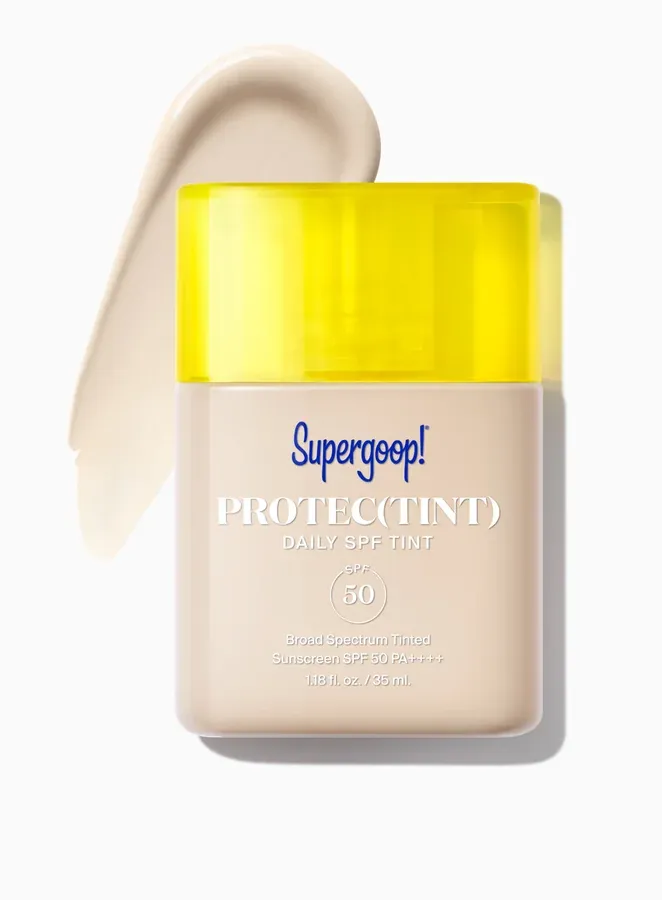
Supergoop! Protec(tint) SPF 50
Best for: normal, dry, and combination skin seeking natural daily coverage. Watch-out: it is not water resistant.
Check current Amazon optionsAs an Amazon Associate, we earn from qualifying purchases.
Product facts checked against the current Supergoop! product page.
Colorescience Sunforgettable Face Shield Flex SPF 50
Face Shield Flex is the premium pick for someone who wants a mineral sunscreen that behaves more like a medium-coverage complexion product. Encapsulated pigments release as the lotion is blended, and the finish sits closer to demi-matte than dewy. The formula is fragrance-free and labeled water resistant for forty minutes, giving it more practical range than a purely cosmetic office-day tint.
There is one transparency problem worth knowing before checkout. The current selector displays six shade families, while an FAQ line on the same page still refers to four. That kind of stale on-page copy is exactly why we do not present shade count as timeless truth. Use the live selector, confirm the shade name in your cart, and buy from a retailer with a workable return policy. The higher price is also difficult to justify if you prefer sheer coverage.
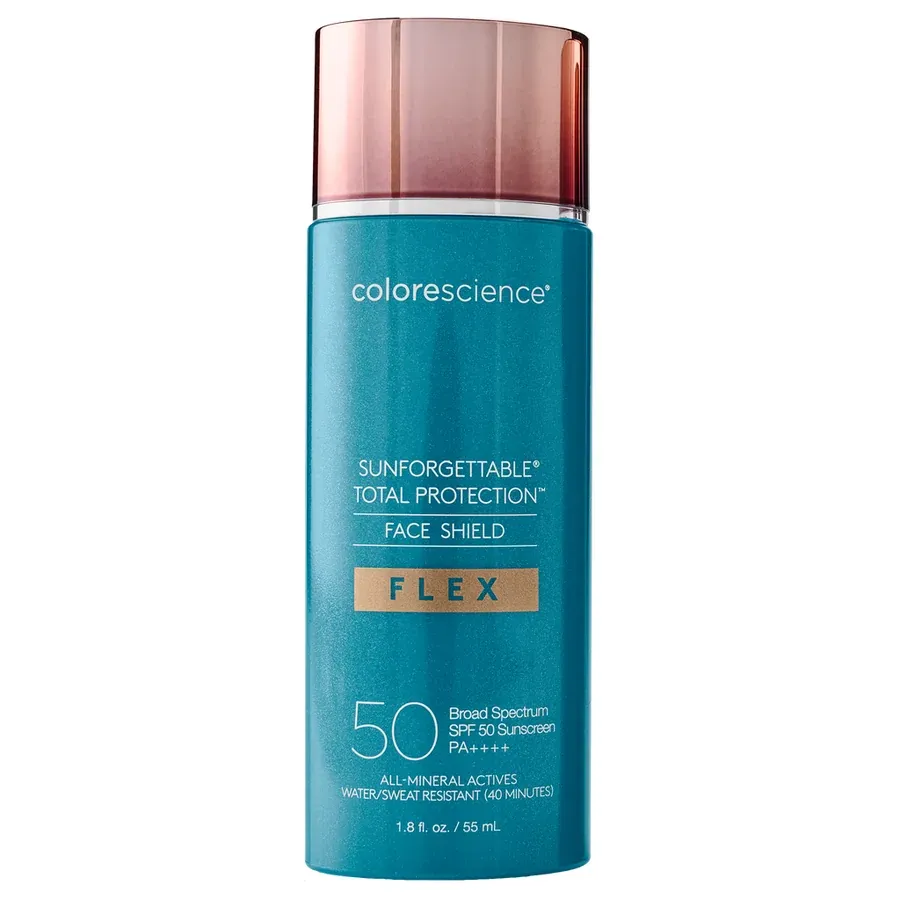
Colorescience Face Shield Flex SPF 50
Best for: sensitive or normal-to-oily skin wanting demi-matte mineral coverage. Watch-out: verify the current shade selector before ordering.
Check current Amazon optionsAs an Amazon Associate, we earn from qualifying purchases.
Product facts checked against the current Colorescience product page.
Tower 28 SunnyDays Tinted SPF 30
Tower 28 is the clearest choice for sensitive-skin shoppers who refuse to settle for one or three tints. The zinc-oxide mineral formula comes in seventeen shades, offers light-to-medium buildable coverage, and has a natural finish. It is fragrance-free and carries the National Eczema Association Seal of Acceptance, a useful signal for people who react to heavily fragranced or aggressive complexion products.
The brand recommends a quarter-sized amount for the face, which is a helpful reality check. Apply that amount in two thin passes instead of dotting it like concealer. The product is SPF 30 rather than SPF 50, and its current product information does not make it the obvious water-resistant sport pick. For acne-prone skin, no “non-comedogenic” label is a guarantee; introduce it carefully and compare our acne-prone sunscreen options if breakouts are your main constraint.
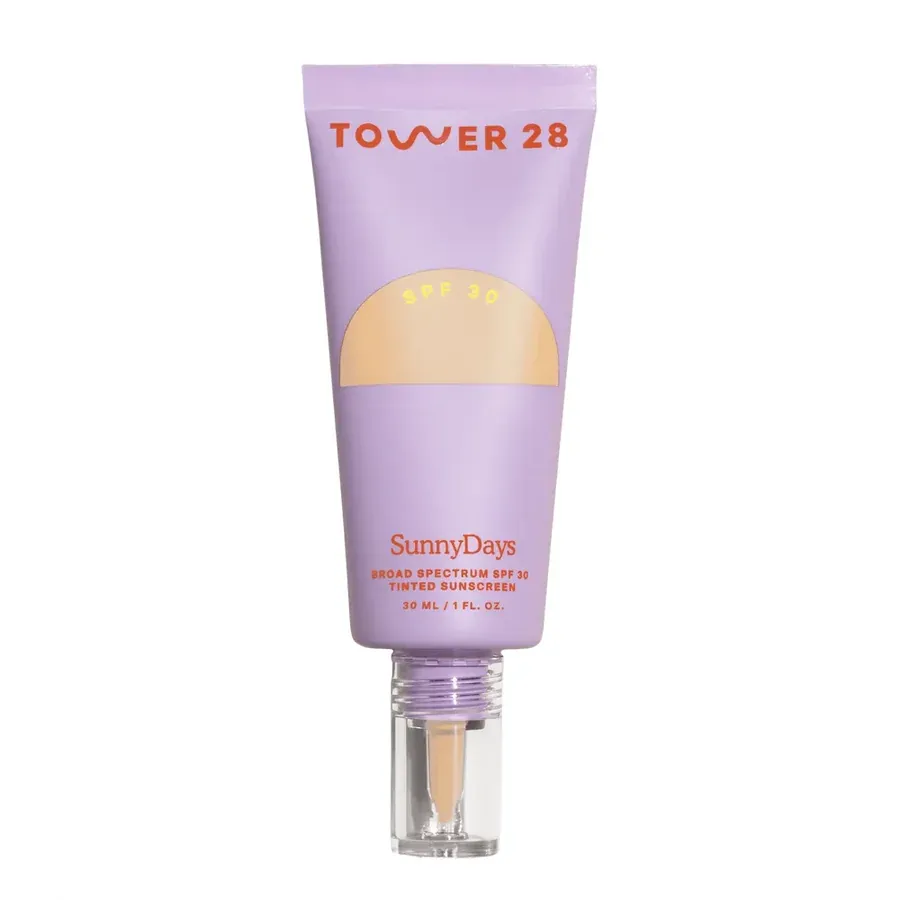
Tower 28 SunnyDays SPF 30
Best for: sensitive skin that needs light-to-medium coverage across many shades. Watch-out: use a labeled water-resistant sunscreen for sports or swimming.
Check current Amazon optionsAs an Amazon Associate, we earn from qualifying purchases.
Product facts checked against the current Tower 28 product page.
e.l.f. Halo Glow Skin Tint SPF 50
e.l.f. delivers the strongest specification-to-price story in this group: mineral SPF 50, eighteen shades, light buildable coverage, and eighty minutes of labeled water resistance. That combination makes it unusually versatile for a low-cost skin tint. The dewy finish can look fresh on normal or dry skin, and the shade range gives buyers a better chance of finding depth and undertone alignment than one-tint drugstore formulas.
Water resistance does not mean rub-proof makeup or all-day protection. Reapply after the labeled interval and after toweling, and expect the cosmetic finish to change. Very oily skin may find the glow excessive, especially over a rich moisturizer. Let skincare settle, apply the sunscreen in two passes, and place powder only where needed instead of reducing the sunscreen amount.
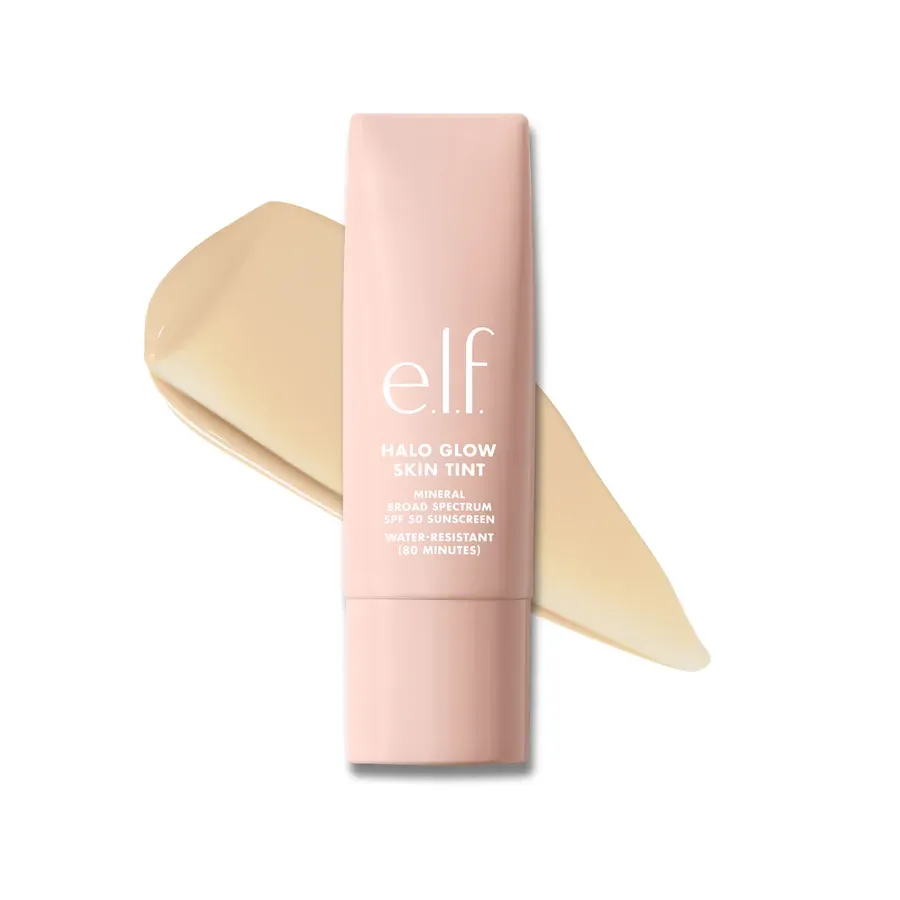
e.l.f. Halo Glow Skin Tint SPF 50
Best for: budget shoppers, normal-to-dry skin, and active days. Watch-out: the dewy finish can amplify shine.
Check current Amazon optionsAs an Amazon Associate, we earn from qualifying purchases.
Product facts checked against the current e.l.f. product page.
Apply enough first; perfect the finish second
The protection on the label assumes a meaningful application amount. If a tinted formula looks heavy at that amount, splitting it into two thin layers is more sensible than using five decorative dots. Let the first pass set, add the second, then use concealer only where needed. Reapplication can disturb the finish, so press on a compatible lotion, cushion, or stick rather than rubbing repeatedly. A beautiful tint applied too sparingly is makeup—not a reliable sunscreen strategy.
If a solid format would make midday touch-ups easier, compare our best sunscreen sticks for makeup-friendly reapplication. The guide separates clear, matte, mineral, and water-resistant options and explains why repeated overlapping passes matter.
CeraVe Hydrating Mineral Sunscreen SPF 30 Sheer Tint
CeraVe is the uncomplicated drugstore option for readers who want mineral filters, familiar barrier-support ingredients, and a natural-looking tint without shopping a prestige complexion line. The formula uses zinc oxide and titanium dioxide, includes ceramides, and is positioned as lightweight and non-greasy. It can work well for normal, dry, or sensitive skin that wants subtle evening rather than visible foundation coverage.
The three-shade system is the central limitation. Light, Medium, and Deep cover depth bands, but they cannot represent the range of cool, warm, neutral, olive, and red undertones within those bands. A sheer product can forgive a near match, not an obvious mismatch. If the tint pulls orange, ashy, or noticeably darker at the jawline, do not keep it simply because the skincare ingredients look good.
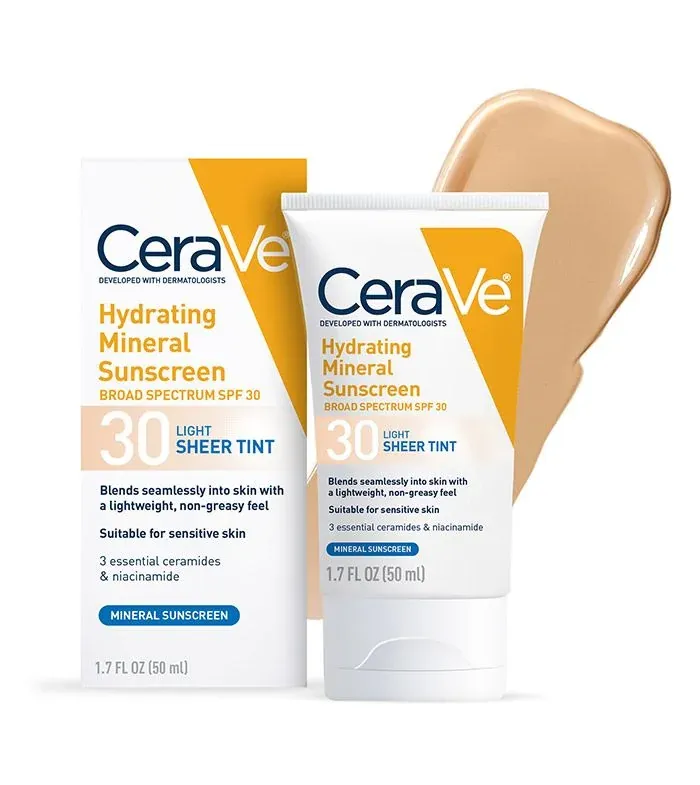
CeraVe Sheer Tint SPF 30
Best for: normal, dry, or sensitive skin wanting a familiar mineral formula. Watch-out: three shades cannot fit every undertone.
Check current Amazon optionsAs an Amazon Associate, we earn from qualifying purchases.
Product facts checked against the current CeraVe product page.
Naked Sundays BeautyScreen SPF 50 Peptide Foundation Tint
BeautyScreen is for the reader who wants tinted sunscreen to replace more of a makeup step. Its fifteen flexible shades, buildable foundation-like coverage, and glowy finish make it the most complexion-product-like pick here. The oil- and fragrance-free formula also includes humectant and emollient support such as polyglutamic acid and squalane. It suits normal-to-dry skin that wants visible evening and does not mind radiance.
Higher coverage makes full sunscreen application more demanding. Work in thin layers and check the hairline, ears, jaw, and neck in daylight. The brand's directions also tell users to choose a water-resistant sunscreen for swimming or sweating, so do not confuse SPF 50 with sport readiness. If your preferred result is bare-skin sheer, this is more product than you need.
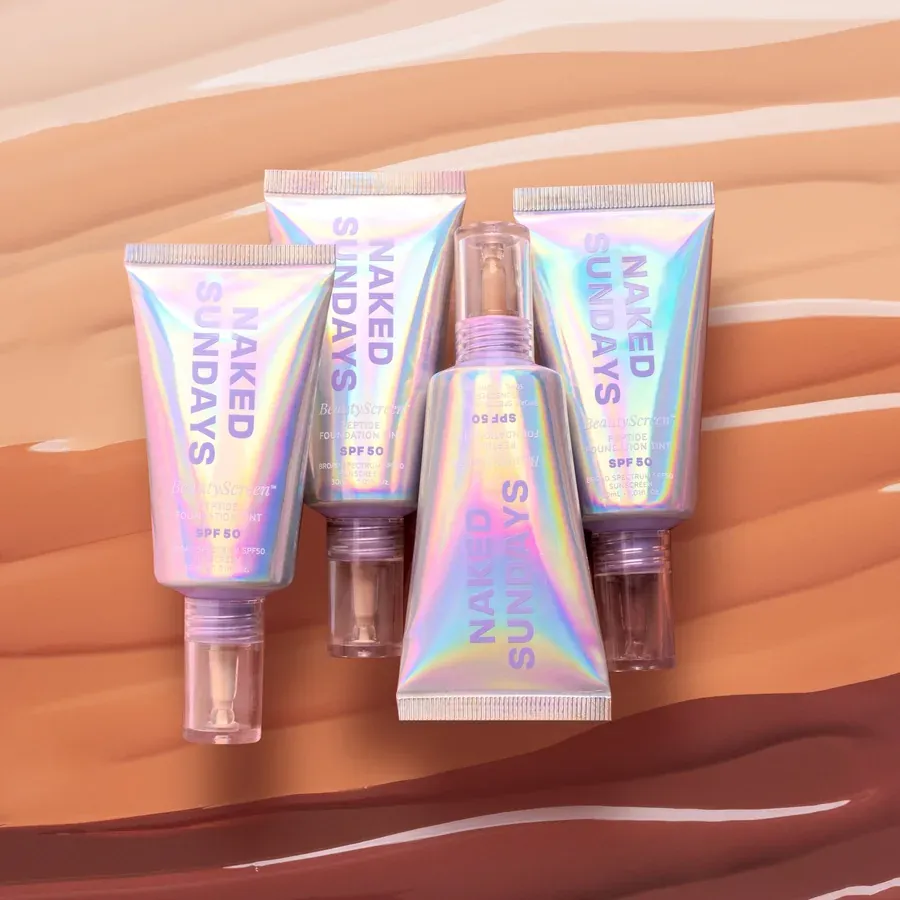
Naked Sundays BeautyScreen SPF 50
Best for: normal-to-dry skin wanting glowy, buildable complexion coverage. Watch-out: select another sunscreen for swimming or heavy sweating.
Check current Amazon optionsAs an Amazon Associate, we earn from qualifying purchases.
Product facts checked against the current Naked Sundays product page.
Alleyoop Sunsational Daily Skin Tint SPF 50
Alleyoop rounds out the list with a 100% mineral zinc-oxide formula, sixteen shades, light-to-medium buildable coverage, and a natural glow. It is fragrance-free and includes niacinamide, allantoin, and jojoba-derived support. The formula makes sense for shoppers who want a true skin-tint experience but prefer a mineral-only active filter.
The shade range is broad on paper, but current stock matters more than the catalog total. Several shade variants have shown uneven availability, so confirm that your actual match is in stock rather than buying the nearest color. Niacinamide is useful for many people but not automatically better if your routine already contains it in a serum and moisturizer.
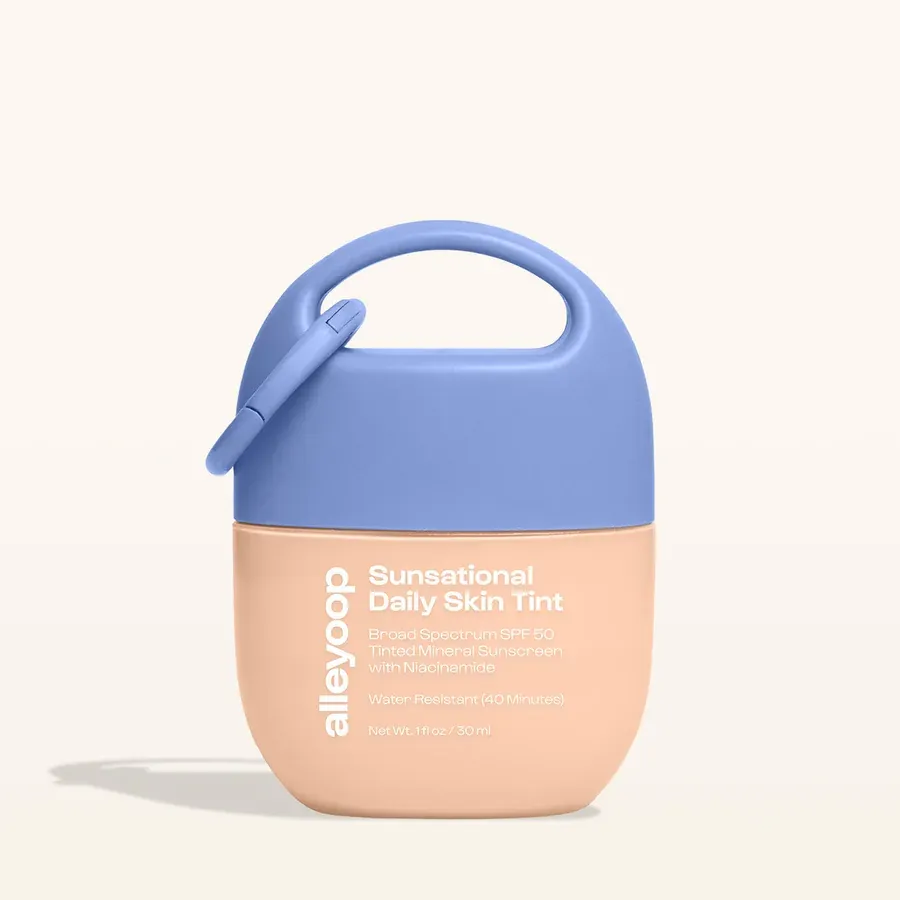
Alleyoop Sunsational SPF 50
Best for: mineral-only shoppers who want buildable coverage and a natural glow. Watch-out: check live shade availability before ordering.
Check current Amazon optionsAs an Amazon Associate, we earn from qualifying purchases.
Product facts checked against the current Alleyoop product page.
How to match tinted sunscreen to your skin tone
Start with depth, then undertone. Depth tells you whether a shade is fair, light, medium, tan, deep, or rich. Undertone tells you whether the color leans cool or rosy, warm or golden, neutral, olive, or red. A sheer tint may stretch across nearby depths, but it cannot fully neutralize a strong undertone mismatch. Test along the jaw and look in indirect daylight after the formula has dried for several minutes.
| Your starting point | Best shade architecture | Common mismatch signal |
|---|---|---|
| Fair or light, cool/neutral | Multi-shade range with clear undertones | “Universal” tint dries orange or too dark |
| Medium or olive | Neutral and olive options, not only golden | Formula turns peach, pink, or gray |
| Tan or deep | Several deep shades with distinct undertones | Ash at hairline or red cast across the face |
| You want very sheer coverage | Flexible tint near your depth | Visible jawline despite “sheer” claim |
| You want medium coverage | True shade range, ideally swatched on faces | Coverage increases the color mismatch |
Do not use a darker sunscreen as bronzer over the entire face. You need an even protective film. Choose a close match, then add bronzer or blush afterward. If no tint matches, an untinted transparent sunscreen plus separate makeup is the better system. Our additional dark-skin sunscreen picks include options where cast avoidance matters more than complexion coverage.
Tinted sunscreen vs. skin tint, BB cream, and foundation with SPF
A product name does not establish how it should be used. “Tinted sunscreen” usually signals sunscreen first, while “skin tint with SPF” sounds makeup-led—but both can be regulated sunscreen products when the Drug Facts label identifies sunscreen actives and directions. The decisive questions are whether it is broad spectrum, what application the label requires, and whether you will use enough.
Best when protection is the primary job and coverage is sheer to medium. Look for broad-spectrum SPF 30 or higher.
Can work as sunscreen if it has proper sunscreen labeling and you apply the directed amount. Do not treat a few drops as full protection.
Coverage and correction vary widely. Check the Drug Facts panel and do not assume the category name guarantees sufficient sunscreen use.
Usually applied too thinly to be your only defense. Use it as extra coverage over sunscreen unless the labeled amount is realistically wearable.
Our detailed guide to whether SPF makeup really works explains the dose problem. If you need a general sunscreen before choosing tint, begin with the best everyday sunscreen guide.
How much tinted sunscreen should you apply?
Follow the directions on the exact product. As general guidance, the American Academy of Dermatology recommends a broad-spectrum, water-resistant sunscreen with SPF 30 or higher and reapplication about every two hours outdoors, as well as after swimming or sweating. For the face, many dermatologists use the two-finger approach as a practical approximation, but packaging directions take priority because vehicles and intended areas differ.
For a tint, divide the amount into two layers. Spread the first evenly over the center of the face, temples, hairline, jaw, and around the eyes if tolerated. Wait briefly, then add the second. Bring a separate untinted sunscreen down the neck if matching a face tint there looks unnatural. Do not forget the ears and lips. Reapplication remains necessary even when the finish still looks intact; our anti-aging sunscreen guide explains why daily UV control matters more than cosmetic treatment claims.
For outdoor guidance, see the American Academy of Dermatology sunscreen instructions. The FDA sunscreen monograph is the primary reference for US sunscreen labeling. For the visible-light nuance, see the published iron-oxide sunscreen study and a related review of visible light and pigmentation.
When a tinted sunscreen is the wrong choice
Skip tint when every available shade looks wrong, when you cannot apply enough without texture problems, or when your activity demands stronger water resistance than the product offers. Tint is also unnecessary if you already enjoy an invisible sunscreen under a separate complexion product. Combining two products can give you more control than forcing one hybrid to do both jobs badly.
Stop using a formula that causes persistent burning, swelling, hives, or worsening irritation. Stinging around the eyes may improve with a different filter system or by keeping the product away from the lash line, but severe or lasting reactions need professional advice. If your skin is already sensitized, simplify first and use our skin-barrier recovery guide before experimenting with multiple complexion products.
Five checks before you buy
- Protection: broad-spectrum SPF 30 or higher on the current label.
- Shade: believable depth and undertone after the product dries.
- Finish: comfortable at a full application amount, not only a makeup-sized amount.
- Routine fit: fragrance, eye-area comfort, and ingredient overlap work for your skin.
- Activity fit: a labeled water-resistance time when you will swim or sweat.
Final verdict
Supergoop! Protec(tint) is the best balanced daily recommendation, Tower 28 offers the most convincing sensitive-skin shade architecture, and e.l.f. delivers the strongest budget specifications. Colorescience is the premium mineral choice when coverage and forty-minute water resistance justify the price. CeraVe works only if one of its three shades truly matches; Naked Sundays and Alleyoop are better for shoppers who want a more makeup-like skin-tint experience.
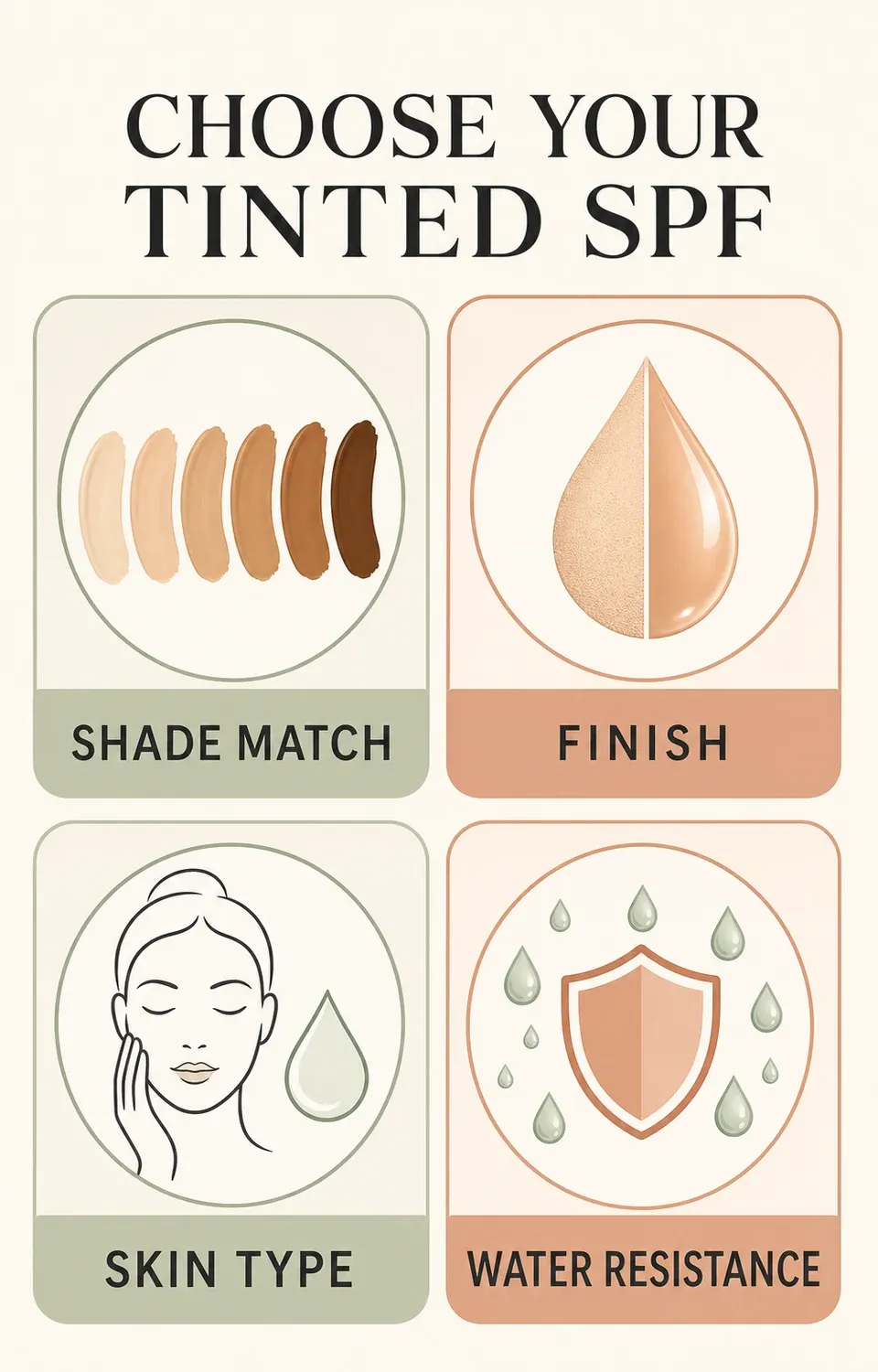
The smartest purchase is not necessarily the formula with the highest SPF or longest shade list. It is the one you will apply evenly, in enough product, and reapply for the day you are actually having. Shade, finish, skin type, and water resistance are not secondary details—they determine whether the sunscreen leaves the bottle.
Frequently asked questions
Is tinted sunscreen better than regular sunscreen?
Not automatically. A well-matched tint containing iron oxides may add visible-light protection and reduce white cast, but regular sunscreen can be the better choice when it is easier to apply generously or offers the water resistance you need. Broad-spectrum protection, sufficient application, and reapplication remain the priorities.
Can tinted sunscreen replace foundation?
Yes, when its coverage and finish suit you. Sheer formulas even tone, while skin-tint hybrids can provide light-to-medium coverage. Apply the full sunscreen amount first; add concealer rather than reducing the dose to make the finish lighter.
Does tinted sunscreen help with melasma or dark spots?
Iron-oxide tints can be useful because visible light can contribute to pigmentation, especially in darker skin tones. Sunscreen is prevention and support, not a stand-alone treatment. Persistent melasma or changing pigment should be discussed with a dermatologist.
How do I reapply tinted sunscreen over makeup?
Press on a compatible lotion, cushion, or sunscreen stick without aggressive rubbing, and follow the product's labeled amount as closely as practical. Powders and mists can help cosmetically but are difficult to apply evenly enough as the only reapplication method.
Is SPF 30 enough in a tinted sunscreen?
Broad-spectrum SPF 30 is a reasonable daily minimum when applied correctly. SPF 50 offers more margin for imperfect application, but a comfortable SPF 30 used generously can be more protective in practice than an SPF 50 tint you apply too thinly.
This article is for informational purposes only and does not replace professional dermatological advice.