Best Moisturizers for Sensitive Skin in 2026: Picks by Skin Need
Five sensitive-skin moisturizers compared by texture, barrier need, ingredient tradeoffs, and a dermatologist-backed patch-test method.

In this guide
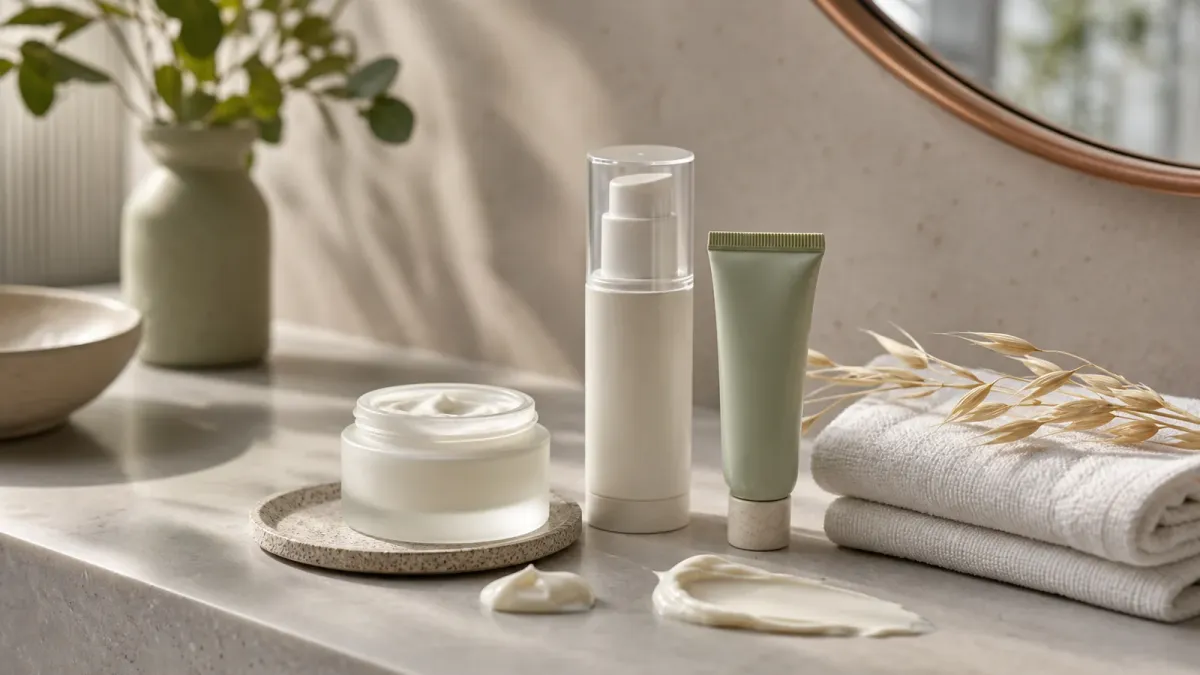
The best moisturizer for sensitive skin is the simplest texture that keeps your face comfortable all day without stinging, itching, or triggering clogged pores. Vanicream Daily Facial Moisturizer is our best overall pick; CeraVe Moisturizing Cream is the stronger dry-barrier choice; and Aveeno Calm + Restore Oat Gel is the lighter option. Patch-test every new formula, even when it says “fragrance-free” or “hypoallergenic.”
- Start with texture: gel for lightweight hydration, lotion for everyday balance, cream for dryness, and an ointment only on very dry spots.
- Look for useful basics: glycerin, ceramides, petrolatum, dimethicone, squalane, hyaluronic acid, and colloidal oatmeal can all play different roles.
- Avoid label shortcuts: “natural,” “clean,” and “unscented” do not guarantee a reaction-free product.
- Change one product at a time: otherwise you may never know what helped or caused the problem.
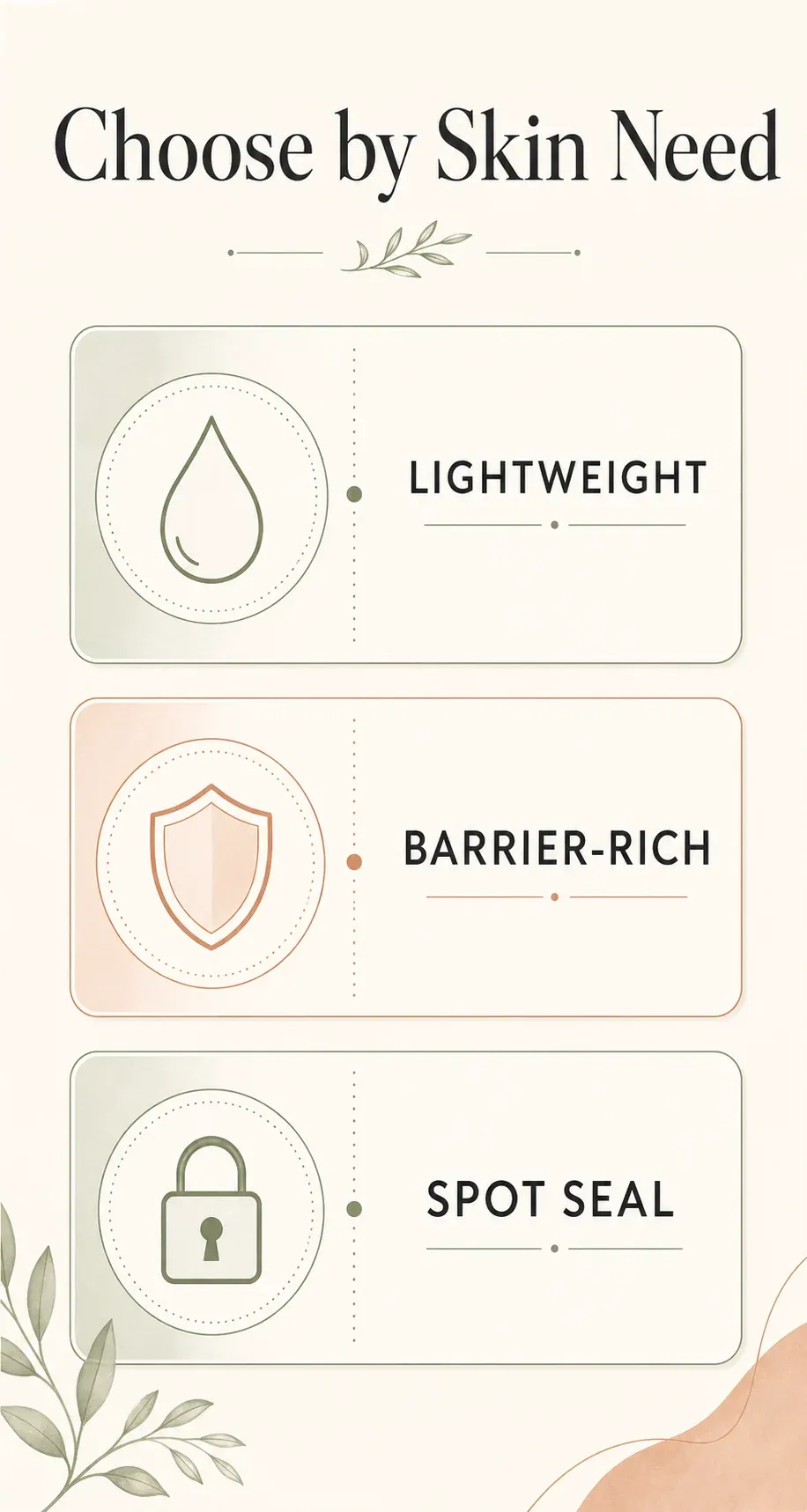
Best moisturizers for sensitive skin should make your routine quieter, not more complicated. If your face burns after cleansing, flushes when the weather changes, or reacts to products that everyone else seems to love, a long “hero ingredient” list is often the wrong place to begin. I prefer to make the decision in this order: identify the texture your skin needs, choose a short and understandable job for the formula, then watch for ingredients you already know you dislike.
That is why this is not another generic top-ten list. Sensitive skin can also be dry, oily, acne-prone, eczema-prone, or temporarily reactive after retinoids and exfoliating acids. A rich cream can be excellent for one reader and unnecessarily occlusive for another. A light gel can feel elegant but still leave a damaged barrier tight by lunchtime. The right result is not a fashionable finish; it is skin that feels normal enough that you stop thinking about it.
Below, we compare five widely available fragrance-free options by real need rather than hype. You will also find a patch-test method, an ingredient framework, and clear limits for each pick. If your routine itself may be contributing to sensitivity, start with our guide to avoiding skin-barrier damage and simplify before adding another active.
Best Moisturizers for Sensitive Skin: Quick Comparison
| Pick | Best fit | Main limitation |
|---|---|---|
| Vanicream Daily Facial Moisturizer | Most sensitive-skin routines; normal to dry facial skin | A lotion may not be enough for severely dry patches |
| CeraVe Moisturizing Cream | Dry, tight, barrier-stressed skin; face and body | Rich finish can feel heavy on oily or clog-prone faces |
| Aveeno Calm + Restore Oat Gel | Combination or oily-sensitive skin; warm weather | May be too light for significant dryness; oat is not for everyone |
| La Roche-Posay Toleriane Double Repair | Normal/combination skin and daytime layering | Niacinamide can sting some highly reactive complexions |
| Cetaphil Moisturizing Cream | Budget-friendly rich moisture for dry face and body | Rich texture plus niacinamide and sweet almond oil narrow the fit |
If you already know that heavy creams feel wrong, compare more options in our guide to the best gel moisturizers. If flaking and tightness are the dominant problem, our broader dry-skin moisturizer comparison may be the better starting point.
Our Five Best Picks, Matched to Skin Need
1. Vanicream Daily Facial Moisturizer
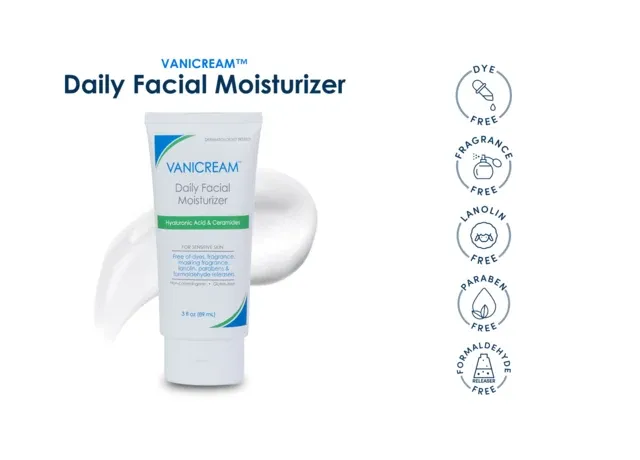
Vanicream is the cleanest default recommendation in this group because the formula does several barrier-support jobs without turning the product into an active-treatment cocktail. The brand lists glycerin and hyaluronic acid for water-binding, squalane for emollience, and five ceramides. It is also formulated without botanical extracts or essential oils—useful when you are trying to reduce the number of possible variables.
The lotion texture works best for normal-to-dry facial skin and usually layers more easily than a heavy cream. It is non-comedogenic and pH balanced according to the manufacturer, and it holds the National Eczema Association Seal of Acceptance. That seal is reassuring, but it still cannot predict your individual response.
Choose it if: you want one low-drama morning-and-evening facial moisturizer and do not need an ointment-like seal. Skip or layer it if: your cheeks remain flaky or tight; a richer cream at night or a tiny amount of petrolatum on isolated dry spots may be more effective.
Formula details: Vanicream; seal listing: National Eczema Association.
Check Vanicream on AmazonAs an Amazon Associate, we earn from qualifying purchases.
2. CeraVe Moisturizing Cream
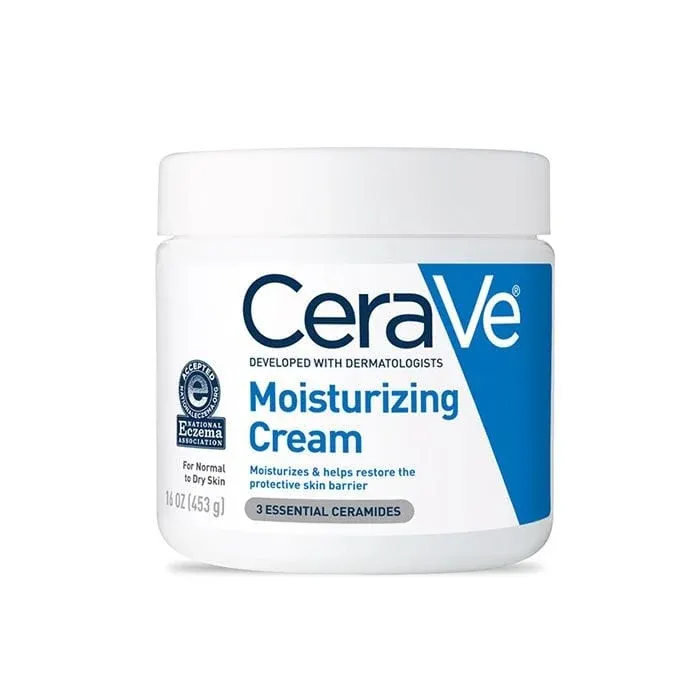
CeraVe Moisturizing Cream is the practical step up when a lotion disappears but tightness quickly returns. Its fragrance-free cream base combines three ceramides, glycerin, hyaluronic acid, dimethicone, and petrolatum. In plain language, it brings water-binding ingredients together with smoothing and more occlusive components, so it is better equipped to slow water loss than a light gel.
This is also the most versatile face-and-body option in the lineup. I would use a thin layer on the face and a fuller layer on hands, neck, or body. The tradeoff is texture: oily-sensitive or congestion-prone skin may experience it as too rich, especially under sunscreen. “Non-comedogenic” is useful label information, but your own pore response still matters.
Choose it if: your skin feels rough, tight, or weather-stressed and you want one generous-value cream. Skip it if: you consistently dislike petrolatum-rich finishes or need a weightless morning layer. For a head-to-head brand breakdown, see our CeraVe vs. Cetaphil comparison.
Formula details: CeraVe.
Check CeraVe on Amazon3. Aveeno Calm + Restore Oat Gel Moisturizer
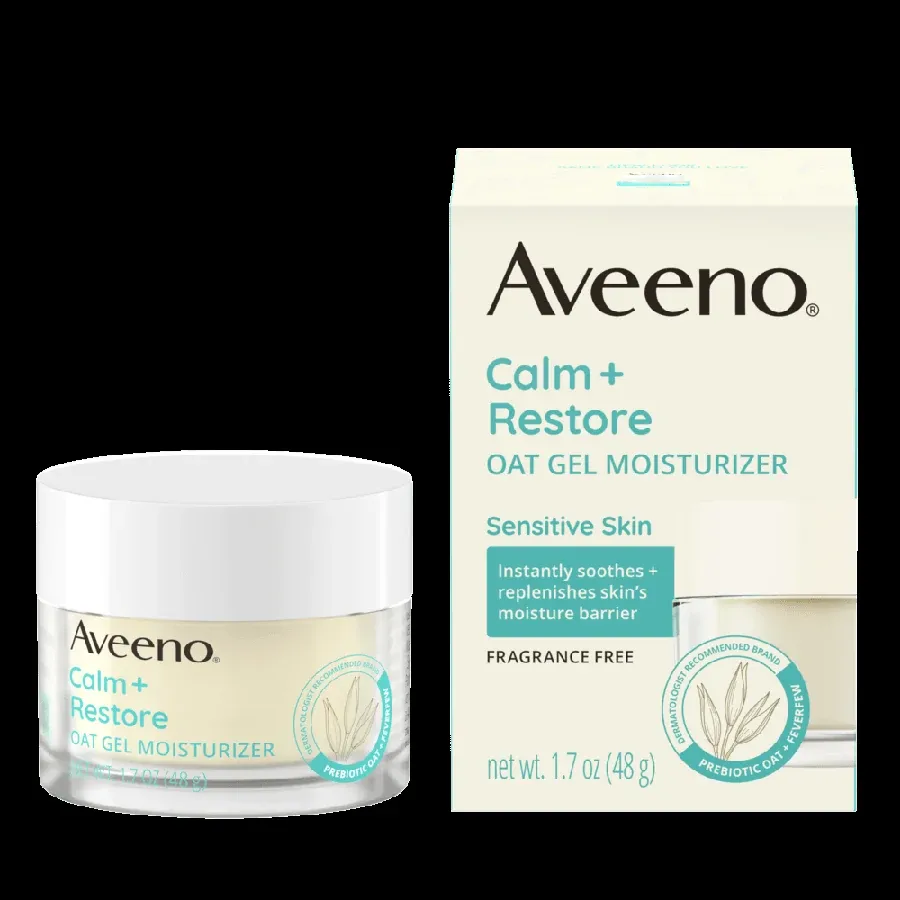
Aveeno Calm + Restore is the texture-first pick for readers who find classic sensitive-skin creams suffocating. The fragrance-free gel-cream uses prebiotic oat and feverfew in a water-rich base. It spreads easily, absorbs quickly, and is more compatible with a shiny T-zone, humid weather, or a layered daytime routine.
The manufacturer reports 48-hour moisturization and rapid barrier support, but those are brand test claims rather than a promise about your face. The more useful editorial observation is the fit: this type of gel is a sensible first trial for combination-sensitive skin, while very dry or peeling skin may need a cream on top. Oat-based formulas can also be unsuitable for a small subset of users, so do not skip the patch test simply because the positioning says “calm.”
Choose it if: you want fragrance-free hydration without a waxy or occlusive finish. Skip it if: you need a rich seal or have reacted to oat-containing skincare before. Combination skin readers can also compare our moisturizers for combination skin.
Formula and brand testing details: Aveeno.
4. La Roche-Posay Toleriane Double Repair Face Moisturizer
La Roche-Posay Toleriane Double Repair sits between a fluid lotion and a heavy barrier cream. The current U.S. formula highlights ceramide-3, glycerin, niacinamide, squalane, and thermal water. It is fragrance-free, oil-free, drying-alcohol-free, and non-comedogenic according to the brand. That balance makes it a strong daytime candidate for normal or combination-sensitive skin, particularly when you need sunscreen or makeup to sit smoothly above it.
The limitation is niacinamide. Many people tolerate it well, but highly reactive or already over-exfoliated skin can sting with niacinamide-containing formulas. If you have a known history with the ingredient, Vanicream is the simpler starting point. If you do choose Toleriane, apply a thin layer to slightly damp skin and give it a few minutes before sunscreen.
If niacinamide is an ingredient you need to exclude, use our label-checked niacinamide-free moisturizer shortlist; a general sensitive-skin label does not establish that exclusion.
Choose it if: you want a polished everyday lotion with barrier-support ingredients and a less occlusive feel than CeraVe Cream. Skip it if: niacinamide reliably makes you flush or burn. Formula details: La Roche-Posay.
5. Cetaphil Moisturizing Cream
Cetaphil Moisturizing Cream is another fragrance-free, rich face-and-body option, with glycerin, petrolatum, dimethicone, panthenol, niacinamide, and sweet almond oil listed in the current U.S. formula. It is a useful choice when you want a large, practical cream for dry areas rather than a small prestige face jar.
Its broader ingredient mix also means it is not automatically interchangeable with CeraVe. The presence of niacinamide and sweet almond oil may matter if you already know you react to either one, and the rich finish can be more than an oily-sensitive face needs. A label such as “hypoallergenic” is not a guarantee; it means the formula was designed to reduce common triggers, not eliminate individual allergy.
Choose it if: you want a substantial, fragrance-free cream for dry face and body and already tolerate niacinamide. Skip it if: you want the shortest possible variable list or are shopping for a very light facial layer. Formula details: Cetaphil.
How to Read a Sensitive-Skin Moisturizer
Moisturizers usually combine three kinds of work. Humectants attract water into the upper skin; emollients fill the rough spaces between skin cells; and occlusives reduce water loss. You do not need to memorize every ingredient, but this framework prevents a common mistake: buying a water-rich gel for a severely dry barrier and then assuming moisturizer “does not work.” DermNet’s clinical overview explains the same distinction and notes that richer occlusives can aggravate acne or folliculitis for some people.
| Job | Common examples | What to watch |
|---|---|---|
| Humectant | Glycerin, hyaluronic acid, urea | Urea and acids can sting cracked or acutely irritated skin |
| Emollient | Squalane, fatty alcohols, plant oils | Botanical origin does not make an ingredient allergy-proof |
| Occlusive | Petrolatum, dimethicone, waxes | Excellent for water loss; potentially too heavy for congestion-prone areas |
Fragrance-free is useful—but not a safety certificate
Fragrance is a sensible first exclusion for reactive skin, and “fragrance-free” is more useful than “unscented.” An unscented product may include ingredients that mask another odor. The American Academy of Dermatology specifically recommends reading for fragrance-free wording when testing a new product. Even so, preservatives, surfactants, botanicals, or an otherwise helpful active can still cause irritation or allergy. That is why a patch test matters more than any single marketing term.
A floral mist is not automatically a sensitive-skin step. Before layering one under moisturizer, compare the real benefits and fragrance limits of rosewater and patch-test the finished formula.
“Natural” can still be irritating
Essential oils, citrus extracts, and aromatic plant compounds can make a formula feel appealing while increasing the number of exposure variables. If your skin is currently reactive, a bland formula is not boring; it is diagnostic. Once skin is stable, you can decide whether extras offer a benefit worth testing. This is also why our sensitive-skin routine keeps the core steps deliberately short.
Ceramides help the formula make sense; they do not guarantee success
Ceramides are lipids naturally found in the skin barrier, so they are rational additions to a moisturizer. But the full vehicle still determines feel and tolerance. A ceramide cream can be too rich, while a ceramide lotion can be too light. Treat the ingredient as one piece of the formulation—not a reason to ignore texture, fragrance, or your reaction history.
How to Introduce a Moisturizer Without Guesswork
The AAD recommends testing a product on a small area twice daily for seven to ten days before broader use. Use a spot that is easy to monitor, such as the bend of your elbow or a small area along the jaw if the product is intended for the face. Apply the normal amount and frequency; a one-minute wrist test is not enough to reproduce repeated exposure. If you develop redness, itching, swelling, or significant burning, wash it off and stop. The full AAD patch-testing instructions also explain when a dermatologist-led allergy evaluation may be useful.
| What happens | First move | Next decision |
|---|---|---|
| Mild brief tingling only on over-exfoliated skin | Pause strong actives and simplify | Retry only after the barrier feels normal |
| Itchy rash, swelling, or worsening redness | Stop and wash off | Seek medical advice if severe or persistent |
| Comfort improves but dryness returns quickly | Use a slightly richer cream at night | Seal only dry spots rather than the whole face |
| New congestion without irritation | Reduce amount or move to a lighter texture | Use rich cream only where needed |
Once the patch test is clear, apply moisturizer after cleansing while skin is still slightly damp. You do not need a dripping-wet face; you simply want to reduce the time that freshly cleansed skin sits dry. If you use a hydrating serum, keep the order simple: serum first, moisturizer second. Our guide to layering serum and moisturizer covers timing and pilling in more detail.
In the morning, finish with sunscreen. Moisturizer does not replace UV protection unless the product is specifically labeled with broad-spectrum SPF and you apply enough. If sunscreen repeatedly stings, compare the filters and finish in our guide to the best everyday sunscreens rather than abandoning protection altogether.
Our Bottom Line
For most readers, Vanicream Daily Facial Moisturizer is the best place to start because it balances a facially elegant lotion texture with a restrained, barrier-supportive formula. Move to CeraVe Moisturizing Cream when dryness and water loss are the bigger problem. Choose Aveeno Calm + Restore when weight and shine are the main obstacles to consistent moisturizing.
The best result is not a product that sounds impressive. It is a product you can use twice a day without drama, combined with fewer irritants and a routine you can actually understand. Keep your first trial boring, observe your skin for more than one application, and make the next change based on what happened—not on the next viral ingredient.
Frequently Asked Questions
What is the safest moisturizer ingredient for sensitive skin?
There is no single universally safest ingredient. Glycerin, petrolatum, dimethicone, squalane, and ceramides are common starting points because they serve understandable moisturizing roles, but any complete formula can irritate an individual. Choose fragrance-free, check your known triggers, and patch-test the finished product rather than trusting one highlighted ingredient.
Is CeraVe or Cetaphil better for sensitive skin?
Neither brand is automatically better. In the creams compared here, CeraVe emphasizes three ceramides and has a rich petrolatum/dimethicone base; Cetaphil includes glycerin, petrolatum, dimethicone, panthenol, niacinamide, and sweet almond oil. CeraVe is our more straightforward dry-barrier pick, while Cetaphil is a practical rich face-and-body alternative if you tolerate its broader ingredient mix.
Should sensitive skin use gel, lotion, cream, or ointment?
Use the least heavy texture that keeps skin comfortable. Gel suits oily or combination skin, lotion is a balanced facial default, cream is better for persistent dryness, and ointment is most useful as a thin final seal on isolated very dry areas. A single face can need different textures in different zones or seasons.
Can a fragrance-free moisturizer still cause a reaction?
Yes. Fragrance-free removes one common trigger category, but reactions can still occur to preservatives, botanicals, active ingredients, or other components. “Hypoallergenic” and “dermatologist-tested” also do not guarantee tolerance. Patch-test and stop if you develop persistent burning, itching, rash, or swelling.
How long should I test a new moisturizer before using it on my whole face?
The American Academy of Dermatology recommends applying a new product to a small test area twice daily for seven to ten days. If the test remains clear, introduce it to the face while keeping the rest of your routine stable. That makes any later reaction easier to trace.
If tightness begins immediately after washing, review the best cleanser choices for rosacea-prone skin before expecting moisturizer to cancel an overly aggressive cleanse.