The Complete Skincare Routine for Sensitive Skin: Evidence-Based Guide to Barrier Repair
The best skincare routine for sensitive skin focuses on barrier repair with ceramides and niacinamide. Evidence-based 4-step guide for calm, healthy skin.

In this guide
If your skin reacts to almost everything you put on it, you are not alone. Up to 70% of people report having sensitive skin. Finding a routine that does not cause stinging, redness, or breakouts can be exhausting. The good news is that a science-backed approach can calm reactivity and strengthen your skin barrier over time.
Ethnicity alone cannot predict sensitivity. If you are searching specifically for Asian skin guidance, our concern-first Asian skincare guide separates skin tone, skin type, dark marks, and K-beauty myths.
Sensitive skin can also have an oily T-zone and dry cheeks. Our combination-skin moisturizer guide includes fragrance-free and zoned-application options.
Two common drugstore options are compared in our CeraVe versus Cetaphil guide, including exact cleanser, cream, and lightweight lotion matchups.
For low-friction sunscreen and makeup removal, compare our fragrance-aware cleansing oil picks and patch test the complete formula.
If you are building this routine for a teenager, use the more age-specific guide to teenage skincare for sensitive skin so acne treatments and sunscreen choices stay beginner-safe.
The best skincare routine for sensitive skin focuses on barrier repair, gentle cleansing, and targeted ingredients like ceramides and niacinamide. This evidence-based guide walks you through a complete routine that works with your skin, not against it.
If sensitive skin also develops blackheads, use our salicylic acid cleanser guide for lower-strength and 2% options. Start only after the barrier feels stable, and treat fragrance, menthol, and active frequency as separate tolerance variables.
TL;DR - Skincare Routine for Sensitive Skin
- ? Use a gentle, non-foaming, fragrance-free cleanser to avoid stripping the barrier
- ? Look for barrier-repairing ingredients: ceramides, niacinamide, panthenol, centella asiatica
- ? Mineral sunscreen with zinc oxide is gentler for reactive skin than chemical filters
- ? Introduce one new product at a time and patch test before full application
- ? Fragrance, alcohol, and harsh sulfates are the most common triggers to avoid
Need the barrier-support moisturizer first? Jump to the product card before reading the full routine.
Jump to moisturizer pickUnderstanding Sensitive Skin: More Than Just a Feeling
Sensitive skin is not a medical diagnosis but a condition characterized by heightened reactivity. Impaired skin barrier function plays a central role. When the stratum corneum is compromised, irritants penetrate more easily, triggering inflammation, stinging, and redness. This increased transepidermal water loss (TEWL) is a hallmark of reactive skin.
The American Academy of Dermatology recommends fragrance-free products formulated for sensitive skin. The Cleveland Clinic advises patch testing all new products and avoiding common irritants like alcohol and fragrances.
For low-friction makeup removal, compare our best micellar waters for sensitive, dry, and makeup-wearing skin. Fully saturating the pad and pressing before wiping can matter as much as the bottle label.
An expert panel review in PMC (PMC5608132) confirmed that barrier repair formulations containing ceramides, cholesterol, and fatty acids are clinically effective at reducing sensitivity over time.
Step 1: Gentle Cleansing
Cleansing is the foundation of any routine. For sensitive skin, the wrong cleanser can undo hours of barrier repair. Choose wisely:
- Non-foaming, cream or milk-based cleansers are best - they cleanse without stripping
- Avoid sulfates (SLS/SLES) - these harsh surfactants damage the barrier
- Look for glycerin, ceramides, and panthenol - these hydrate while cleansing
- Fragrance-free is non-negotiable - fragrance is a leading cause of contact dermatitis
The CeraVe Hydrating Facial Cleanser is a commonly used option. It contains ceramides, is non-comedogenic, and leaves skin hydrated rather than tight. For compatible moisturizers, our guide to the best fragrance-free moisturizers for sensitive skin covers complementary products.
Step 2: Targeted Treatment
Once the barrier is supported, introduce treatments carefully. The most evidence-backed options for sensitive skin include:
- Niacinamide - strengthens the barrier by increasing ceramide and fatty acid synthesis. A review in PMC (PMC8389214) confirmed it upregulates key barrier components including ceramides and filaggrin
- Centella Asiatica (Cica) - soothes inflammation and supports wound healing
- Panthenol (Provitamin B5) - improves hydration and reduces TEWL
- Azelaic Acid - reduces redness and inflammation without irritation
A 2025 clinical study in PMC (PMC12274965) found that a cream containing centella asiatica, ceramide NP, and panthenol significantly reduced facial redness and improved barrier function in sensitive skin over 4 weeks.
For a deeper dive, our guide to the best ingredients for skin barrier repair provides a detailed breakdown of what works and why.
If you are considering an optional facial mist, our hypochlorous acid spray comparison checks skin-use labels, storage and refill limitations without treating a spray as a replacement for moisturizer or treatment.
Step 3: Barrier-Supporting Moisturizer
Moisturizer is the most important step. The goal is to replenish the skin's natural lipid barrier with the right ingredients:
- Look for a 3:1:1 ratio of ceramides, cholesterol, and fatty acids - this matches healthy skin and is clinically proven for barrier repair (PMC5608132)
- Choose fragrance-free, dye-free formulas in opaque, airless packaging to protect sensitive ingredients
- Apply to damp skin after cleansing to lock in maximum hydration
- Use consistently - barrier repair takes 4-8 weeks of daily application
The La Roche-Posay Toleriane Double Repair Moisturizer contains ceramide-3, niacinamide, and prebiotic thermal water. It addresses both hydration and barrier support in a single step.
When a specific ingredient exclusion drives the purchase, our niacinamide-free moisturizer guide explains how to verify the exact market formula before choosing its texture.
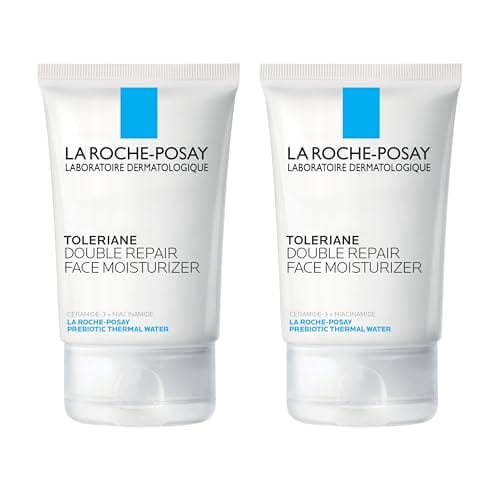
Barrier-support moisturizer pick
La Roche-Posay Toleriane Double Repair Face Moisturizer
Why it fits: This fragrance-free face moisturizer fits sensitive routines because it combines ceramide-3, niacinamide, glycerin, and prebiotic thermal water in a lightweight daily formula.
Watch-out: Patch test first if your skin is actively burning or rash-prone. If niacinamide stings, pause and simplify to a bland moisturizer until the barrier calms.
View Product on AmazonAs an Amazon Associate, we earn from qualifying purchases.
For extremely reactive skin, Vanicream Daily Facial Moisturizer is the safest choice. It contains only essential ingredients - ceramides, squalane, glycerin, and hyaluronic acid - with no fragrance, dyes, lanolin, or parabens.
Our guide to the power of ceramides for moisture locking explains how these lipid molecules restore and maintain the skin barrier.
Step 4: Mineral Sunscreen
Sunscreen is non-negotiable, even for sensitive skin. Mineral formulas are the gentler choice:
- Zinc oxide or titanium dioxide sit on top of the skin and reflect UV rays without being absorbed
- SPF 30 or higher is recommended for daily protection
- Fragrance-free and non-comedogenic are essential to avoid irritation
- Chemical filters (avobenzone, oxybenzone) are more likely to cause stinging and redness
Not sure which SPF level is right? Our comparison of indoor vs outdoor sunscreen explains when different levels are needed.
What to Avoid With Sensitive Skin
| Ingredient / Category | Why to Avoid | Gentler Alternative |
|---|---|---|
| Fragrance / Parfum | Leading cause of allergic contact dermatitis (30-40% of cases) | Fragrance-free formulas |
| Drying Alcohols | Strip the barrier, increase TEWL, cause stinging | Fatty alcohols (cetyl, stearyl) are safe |
| Sulfates (SLS, SLES) | Harsh surfactants that strip natural oils | Cream cleansers with glycerin |
| High AHAs/BHAs | Can over-exfoliate and irritate reactive skin | PHA (gluconolactone) |
| Essential Oils | Potent irritants and allergens | Fragrance-free, essential-oil-free formulas |
Our guide to ceramides for skin barrier health covers the different ceramide classes and how to choose the right formulation.
How to Introduce New Products Safely
- Patch test every product behind your ear or on your inner arm for 3-5 days before facial use
- Introduce one product at a time so you can identify what works or triggers a reaction
- Keep a routine journal - note how your skin feels after each new product
- Wait 2-3 minutes between layers to allow absorption without pilling or irritation
For a complete framework on selecting products, our guide to how to choose the right moisturizer helps match products to your skin's tolerance levels.
When sensitivity is linked to diagnosed rosacea, compare the rosacea cleanser options by current skin state instead of treating every red or stinging face as the same problem.
Conclusion
Building a skincare routine for sensitive skin does not require a cabinet full of products. Focus on four steps:
- Gentle cleansing - non-foaming, fragrance-free, sulfate-free
- Barrier-supporting treatment - niacinamide, centella, or panthenol
- Ceramide-rich moisturizer - 3:1:1 lipid ratio for barrier repair
- Mineral sunscreen - zinc oxide SPF 30+ every day
Choose fragrance-free, alcohol-free formulas and introduce new products slowly. With consistent care, even the most reactive skin can become calmer and more resilient.
For more on maintaining a healthy barrier, explore our guide to the best face moisturizers for dry skin and our overview of what causes pilling in skincare.
For a barrier-first product decision, see our comparison of the best cleansers for dry and sensitive skin, including cream, low-foam, and makeup-removal use cases.
Frequently Asked Questions About Skincare Routine for Sensitive Skin
What is the best skincare routine for sensitive skin?
How do I know if I have sensitive skin?
What ingredients should I avoid with sensitive skin?
Can sensitive skin use retinol or acids?
How long does it take to repair sensitive skin barrier?
This article is for informational purposes only and does not replace professional dermatological advice.
How we research and correct content: Editorial Policy.