Best Cleansers for Rosacea: Gentle Picks by Skin State
A state-based cleanser guide for rosacea-prone skin, including flare days, daily cleansing and sunscreen removal.
In this guide
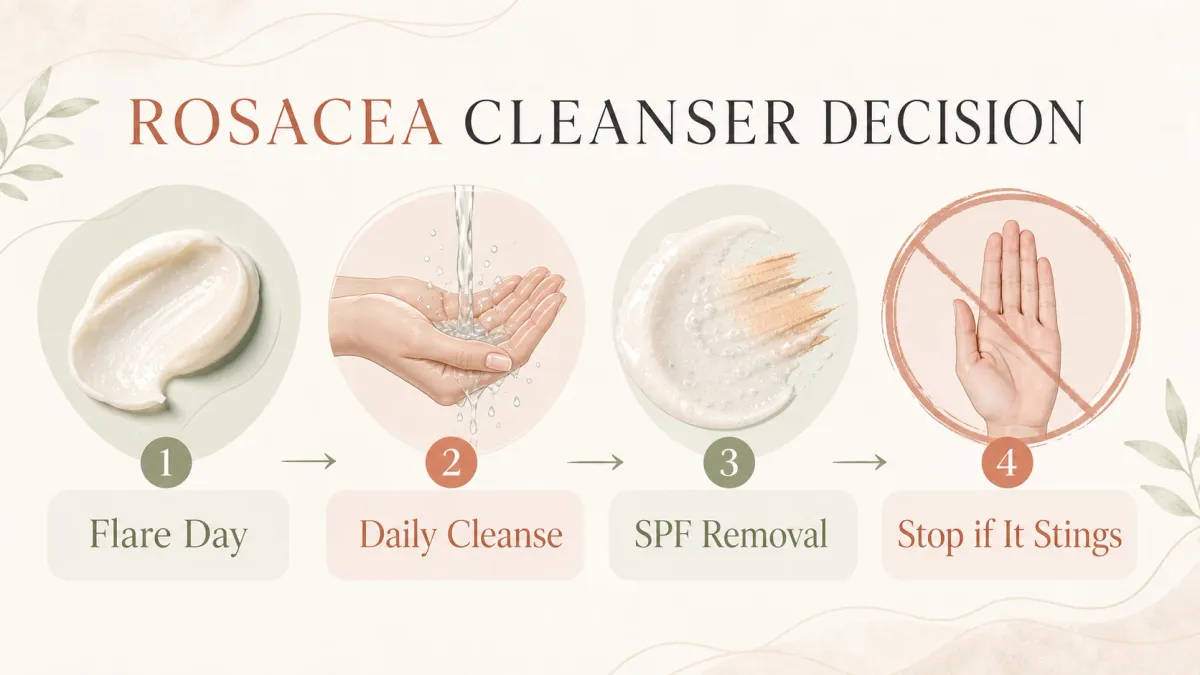
- Choose by current skin state, not by the loudest “deep clean” claim.
- Fragrance, scrubs, hot water, and repeated washing can add avoidable irritation.
- Use a separate, gentle first-removal step only when sunscreen or makeup truly requires it.
- Acne-like rosacea bumps do not automatically call for an acne cleanser.
Need the practical choices first?
Jump to the cleanser examples, flare-day plan, or sunscreen-removal decision.
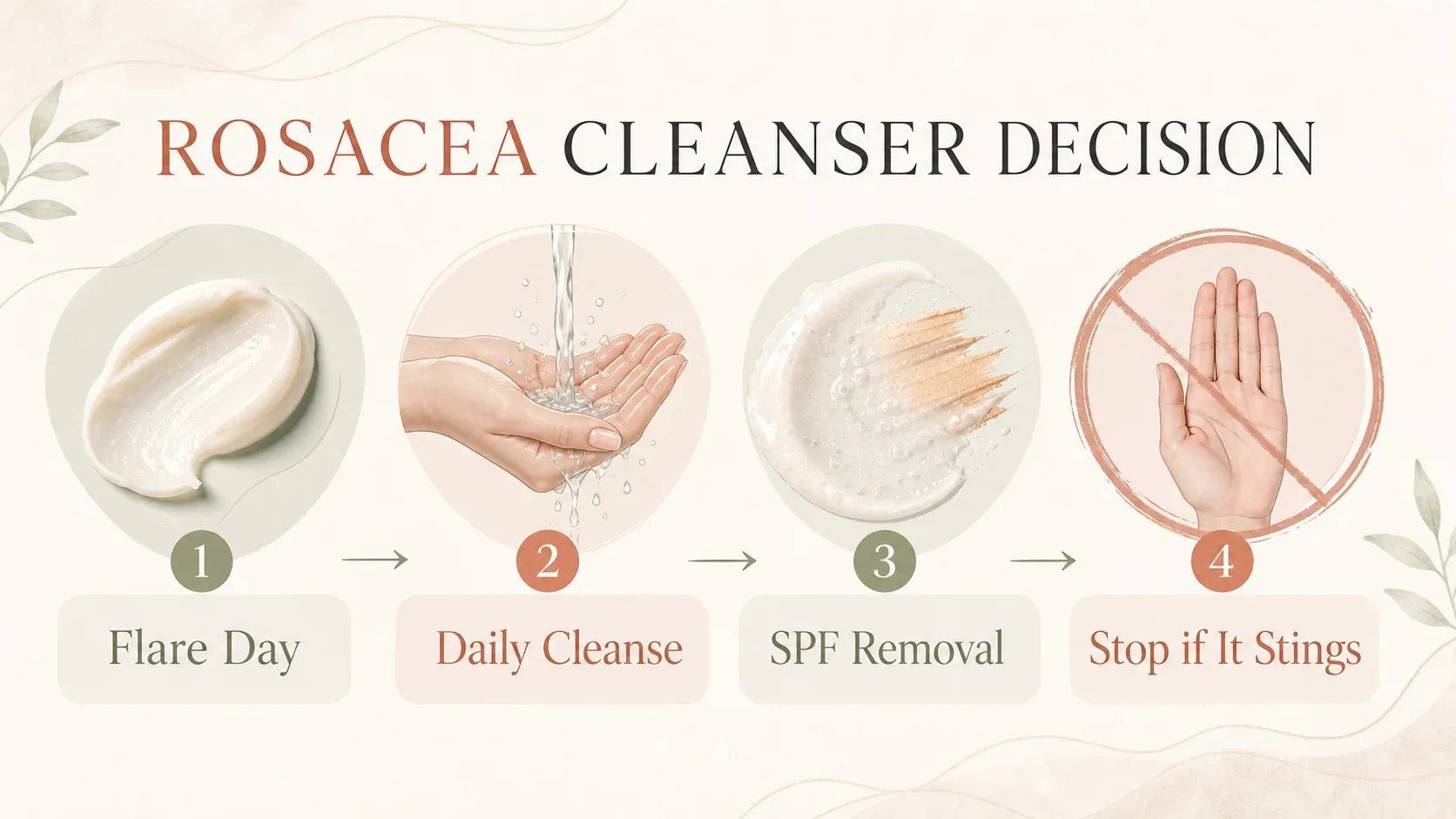
The best cleansers for rosacea do a deliberately limited job. They lift away oil, sunscreen, makeup, sweat, and environmental residue while asking as little as possible from already reactive skin. They should not promise to “detox,” erase redness, shrink blood vessels, or treat the condition. Those claims confuse cleansing with medical care.
At SkinOptimizer, we use a skin-state decision instead of ranking one universal winner. The same person may want a lotion cleanser during a dry flare, a low-foam gel on an ordinary day, and a separate first-removal step after water-resistant sunscreen. That is more useful than assuming everyone with rosacea has the same oil level, tolerance, medication routine, or makeup habits.
The American Academy of Dermatology's rosacea skin-care guidance recommends a mild cleanser rather than soap, gentle fingertip application, warm rather than hot water, thorough rinsing, and no rubbing or scrubbing. DermNet's rosacea overview similarly places gentle over-the-counter cleansing within supportive care. Those principles guide the shortlist below. They do not turn an editorial product example into a medical endorsement.
Best Cleansers for Rosacea: Choose by Skin State
These examples are not treatments and are not guaranteed to prevent a flare. They are familiar, fragrance-free cleanser formats that make the decision easier to understand. Compare the current package and ingredient list, then introduce only one new cleanser at a time.
| Current skin state | Useful starting texture | Main watch-out |
|---|---|---|
| Dry, tight, or easily stinging | Non-foaming lotion or cream | A conditioned film may not remove resistant SPF alone. |
| Combination or oilier but reactive | Simple low-foam gel | More foam does not mean a better or safer cleanse. |
| Heavy sunscreen or makeup | Gentle first removal, then a short rinse cleanse if needed | Two full cleanses can be too much during a flare. |
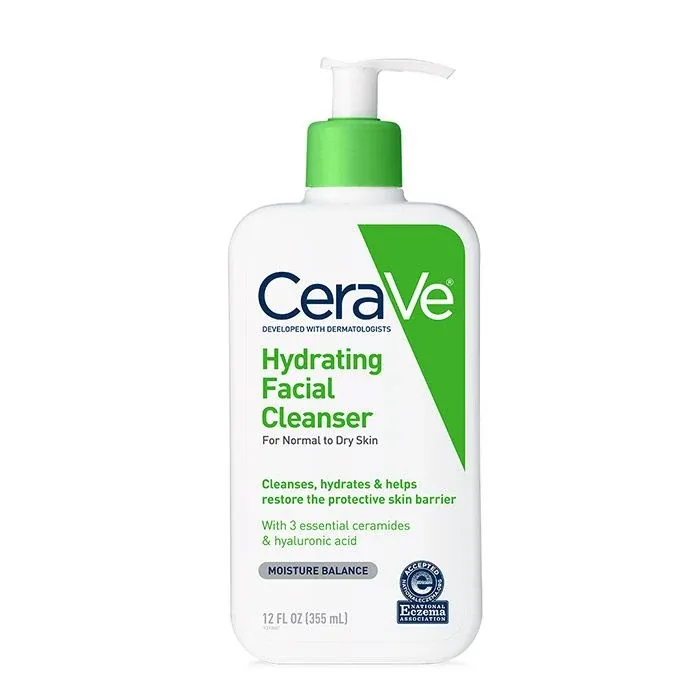
Who it fits: dry or tight-feeling skin that prefers a non-foaming lotion cleanser. Why it fits this decision: it is a straightforward fragrance-free baseline when post-rinse comfort matters more than abundant foam. Watch-out: it is not a rosacea treatment, its conditioned finish may feel heavy, and resistant sunscreen may require a separate first-removal step.
Check CeraVe Hydrating options on Amazon
Who it fits: sensitive skin wanting a fragrance-free cleanser with a relatively clean rinse. Why it fits this decision: it keeps the formula role simple when actives belong elsewhere in the routine. Watch-out: no cleanser is allergy-proof, a gel can still feel drying to very dry skin, and twice-daily use may be excessive during a flare.
Check Vanicream options on Amazon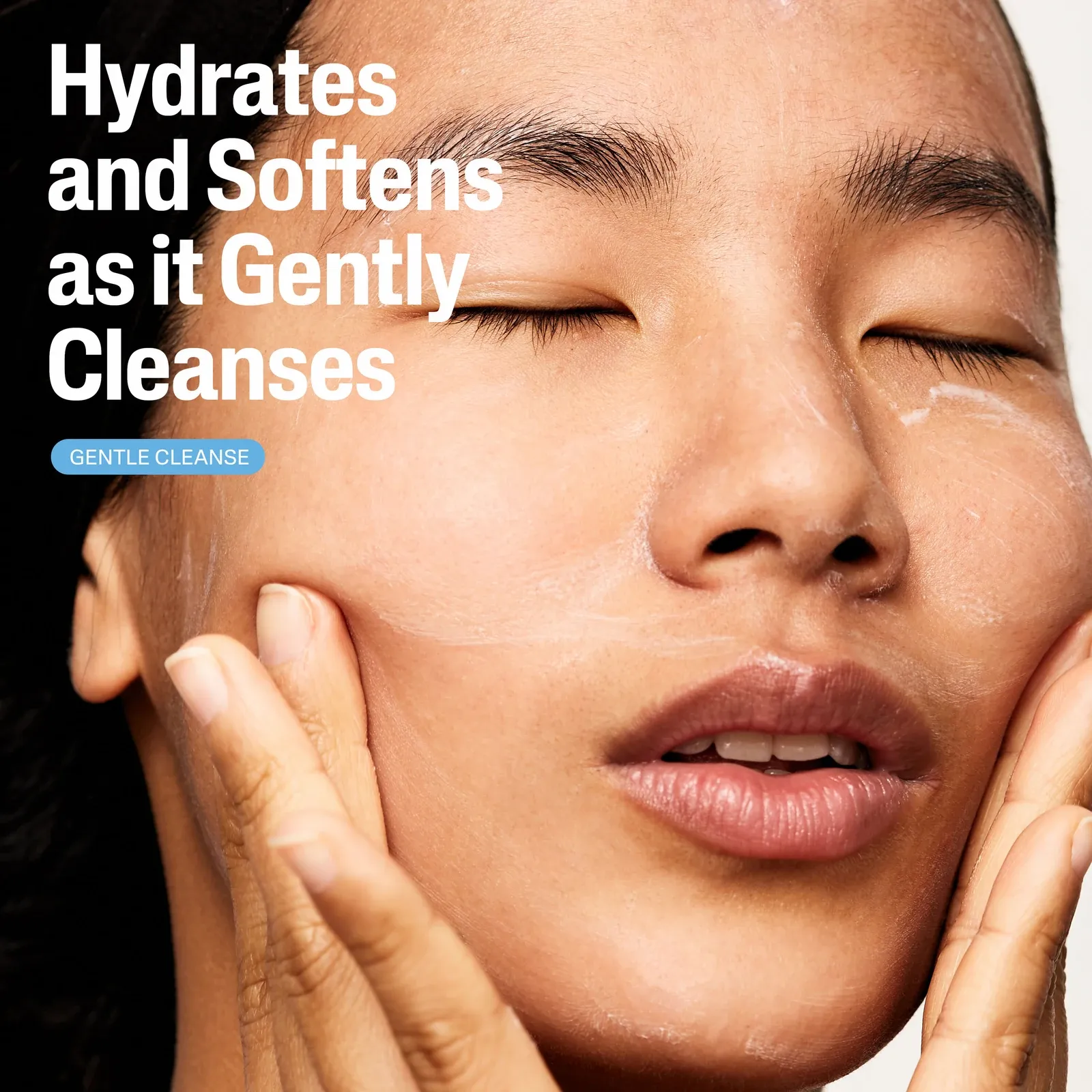
Who it fits: normal-to-dry sensitive skin preferring a creamy, low-lather rinse or wipe format. Why it fits this decision: it illustrates a low-foam option for readers who dislike the feel of gel cleansers. Watch-out: it does not treat redness or bumps, may feel too conditioned for oilier areas, and may not remove durable makeup or sunscreen by itself.
Check Cetaphil Gentle options on AmazonAs an Amazon Associate, we earn from qualifying purchases. Product availability, formulas, packaging, and prices can change.
Rosacea, Redness, and Sensitive Skin Are Not Interchangeable
Facial redness can come from many sources: heat, sun exposure, friction, irritation, contact allergy, acne treatment, a damaged barrier, eczema, seborrheic dermatitis, lupus, or rosacea. A product guide cannot tell you which one you have. If the diagnosis is uncertain, do not use a cleanser as a self-test.
Rosacea can involve persistent color change, flushing, visible vessels, stinging, burning, acne-like bumps, skin thickening, or eye symptoms. It can also look different across skin tones. The AAD notes that other conditions may resemble rosacea and that professional diagnosis helps determine an appropriate plan. If redness is new, one-sided, painful, swollen, rapidly worsening, or accompanied by eye pain or vision change, product shopping should not be the next step.
For an established diagnosis, cleansing is supportive. The AAD's diagnosis and treatment guidance places gentle skin care alongside trigger management and, when needed, medical treatment. A cleanser may make the routine more comfortable and compatible with prescribed products, but it does not replace them.
What to Do on a Rosacea Flare Day
A flare day is not the time to prove that your cleanser can remove everything in one aggressive pass. Reduce variables and friction. If your clinician has given you a treatment routine, follow that plan rather than replacing it with internet product advice.
Use fingertips and enough product to reduce drag. Thirty gentle seconds can be more sensible than prolonged massage.
Choose lukewarm water. Very hot water can add heat and discomfort; icy water is not a treatment.
Skip brushes, washcloth scrubbing, textured pads, and grainy particles while skin is reactive.
Persistent burning, swelling, hives, or worsening redness after a new product is a reason to stop and reassess.
Morning cleansing can be optional for some very dry people if their skin and treatment plan do not require it. A lukewarm-water rinse may be enough. Oilier skin, overnight medication residue, or a clinician-directed routine may justify a mild cleanser. The rule is not “never cleanse twice”; it is “do not cleanse more aggressively than the day's residue requires.”
Ingredients and Claims to Treat Carefully
The AAD advises people with rosacea-prone skin to avoid common irritants such as fragrance, menthol, camphor, sodium lauryl sulfate, glycolic acid, and lactic acid when these trigger sensitivity. That does not mean every person will react to every ingredient, or that a formula is automatically suitable because it excludes one item.
| Label or feature | What it can tell you | What it cannot prove |
|---|---|---|
| Fragrance-free | No intentionally added fragrance according to the current label | That no ingredient can irritate or cause allergy |
| Soap-free or syndet | The cleanser does not rely on traditional soap | That the surfactant system will feel comfortable for you |
| Non-comedogenic | The brand positions it for lower pore-clogging risk | That it treats acne-like rosacea bumps |
| Dermatologist-tested | A brand testing claim that requires context | A universal dermatologist approval or rosacea guarantee |
Humectants such as glycerin can make a cleanser feel less stripping, while ceramides and emollient ingredients may support a more conditioned finish. Because cleansers are rinsed off, do not expect them to deliver the same role as a leave-on moisturizer. If tightness continues, review the whole routine and compare our moisturizers for sensitive skin rather than buying a more complex cleanser.
How to Remove Sunscreen or Makeup Without Over-Cleansing
Daily sunscreen is important in a rosacea routine, but water-resistant SPF, long-wear foundation, and eye makeup can be difficult to remove with a mild lotion cleanser alone. The answer is not automatically two long foaming cleanses.
- Light daily SPF: try one thorough but gentle cleanse first.
- Water-resistant SPF or makeup: loosen the resistant layer with a compatible cleansing oil, balm, or micellar product, then rinse or follow with a short mild cleanse only if residue remains.
- Eye makeup: hold remover against the area briefly instead of repeated rubbing.
- During a flare: reduce optional makeup and resistant layers when practical rather than escalating cleansing friction.
Oil and balm cleansers are not automatically better or worse for rosacea. Some people like the reduced friction; others dislike residue, botanical oils, fragrance, or the need for a second cleanse. Our broader guide to cleanser versus face wash explains how formula format differs from marketing language.
Finish with a moisturizer that you already tolerate. Add sunscreen for sensitive skin the next morning rather than trying to compensate for a harsh evening cleanse with more products.
Rosacea Bumps Are Not Automatically Ordinary Acne
Rosacea can produce papules and pustules that resemble acne, but the conditions and treatment plans are not identical. Reaching immediately for a strong salicylic acid, glycolic acid, scrub, or benzoyl peroxide cleanser can increase irritation. If you also have diagnosed acne, a clinician can help decide whether an active wash fits, how often to use it, and what should stay off the most reactive areas.
For ordinary acne-prone skin without rosacea, our acne-prone cleanser guide separates gentle baseline cleansers from salicylic acid and benzoyl peroxide options. Do not transfer that active-cleanser schedule to rosacea-prone skin without considering the diagnosis, current flare state, and treatment plan.
Azelaic acid is used in some rosacea treatment plans, but a rinse-off cleanser is not a substitute for an appropriate leave-on or prescription product. If you are comparing non-cleanser formats, see our editorial guide to azelaic acid products and keep medical treatment decisions with a qualified professional.
Build a Minimal Rosacea Cleansing Routine
| Time | Default plan | Adjust when |
|---|---|---|
| Morning | Water rinse or short mild cleanse, then tolerated moisturizer and sunscreen | Use cleanser when oil, medication residue, or your clinician's plan requires it |
| Evening | One gentle cleanse to remove the day's residue | Add a first-removal step only for resistant SPF or makeup |
| Flare day | Simplify products, minimize friction, and follow prescribed care | Seek help for severe, persistent, eye-related, or unfamiliar symptoms |
Change one variable at a time. A new cleanser, moisturizer, sunscreen, and treatment started together makes the cause of stinging almost impossible to identify. Keep the rest of the routine stable and use a small-area trial before broad use when your skin is reactive. The National Rosacea Society also explains that products without its Seal of Acceptance still require label reading and individual evaluation; the seal is useful context, not a guarantee for every person.
If the barrier already feels damaged, use our skin barrier repair protocol to simplify the surrounding routine. If sensitivity is broader than rosacea, the sensitive-skin routine guide covers how to reduce variables without turning skincare into a long elimination ritual.
How to Test a New Cleanser Without Changing the Whole Routine
Start when the skin is relatively stable, not on the worst day of an unfamiliar flare. Keep your moisturizer, sunscreen, prescriptions, water temperature, and cleansing frequency unchanged. Use the new cleanser on a small area as directed for several days before applying it broadly. This does not rule out every delayed reaction, but it gives you a cleaner comparison than replacing several products at once.
For the first full-face uses, choose an ordinary day without heavy makeup or water-resistant sunscreen. Use a modest amount, cleanse briefly, rinse thoroughly, and note how the skin feels immediately, after five minutes, and later that evening. Tightness, lingering heat, increasing redness, itching, or the need to apply much more moisturizer are useful stop signals. A little foam, a high price, or an elegant texture is not evidence that the formula is a better match.
If symptoms appear, stop the cleanser and return to the last simple routine you tolerated. Do not repeatedly challenge visibly inflamed skin to “build tolerance.” Contact a qualified professional when the reaction is severe, persistent, involves swelling or hives, or makes it difficult to distinguish irritation from the underlying condition.
- The cleanser is fragrance-free and does not rely on scrub particles or a cleansing brush.
- The texture matches today's dryness, oil level, and removal job.
- You use lukewarm water, fingertips, a short contact time, and a thorough rinse.
- You stop if a new product causes persistent burning, swelling, or worsening redness.
- You treat ongoing rosacea with an appropriate professional plan, not with stronger cleansing.
Frequently Asked Questions About the Best Cleanser for Rosacea
Is a cream or gel cleanser better for rosacea?
A cream or lotion cleanser often suits dry, tight, reactive skin, while a simple low-foam gel can feel cleaner on oilier skin. Texture alone does not determine tolerance. Fragrance, surfactants, frequency, water temperature, medication use, and the amount of sunscreen or makeup all influence the result.
Should I cleanse rosacea-prone skin once or twice a day?
The AAD describes gentle cleansing up to twice daily, but very dry or flaring skin may not need a full cleanser step every morning. An evening cleanse is usually the more important removal step. Follow your clinician's instructions when topical medication changes the schedule.
Can a cleanser reduce rosacea redness?
A comfortable cleanser may reduce avoidable irritation from harsh washing, but it does not treat persistent vessels, inflammation, or the underlying condition. Claims that a rinse-off cleanser will cure rosacea or permanently remove redness are not realistic.
Can I use salicylic acid cleanser if I have rosacea and clogged pores?
Salicylic acid can be too irritating for some rosacea-prone skin, especially during a flare or alongside other active treatments. Because clogged pores, acne, and acne-like rosacea bumps require different decisions, ask a qualified professional before adding a medicated cleanser to reactive skin.
When should cleanser stinging be checked by a professional?
Stop the new product if burning persists after rinsing or you develop swelling, hives, marked worsening, or pain. Seek prompt care for eye pain, light sensitivity, vision change, severe swelling, or a rapidly worsening rash. A clinician can also help when redness has never been formally diagnosed.
Final Takeaway
The best cleanser for rosacea is not the formula with the longest ingredient list or the strongest redness claim. It is the mildest option that reliably completes today's removal job without tightness, heat, or repeated friction. Start with a fragrance-free lotion, cream, or low-foam gel; keep the cleanse short; add a separate removal step only when durable sunscreen or makeup makes it necessary; and stop treating a cleanser like medication.
This article is for informational purposes only and does not replace professional dermatological advice.