Sunscreen Ingredients to Avoid: Evidence, Allergy and Labels
There is no universal sunscreen blacklist. Learn which exclusions have a clear reason and why FDA requests for more data do not mean proven unsafe.
In this guide
Most people do not need to avoid every organic or mineral sunscreen filter.
Avoid PABA or trolamine salicylate if encountered, a documented allergen, a formula that repeatedly irritates, an unsafe spray or powder use, and any product lot in an official recall.
FDA requests for additional data on several filters did not mean those ingredients were proven unsafe, and bemotrizinol became a permitted US active in 2026.
Content substantially revised: . Originally published October 19, 2024 (UTC). This date reflects the documented content revision, not a new article.
Quick Summary
- Additional regulatory data needed is not the same as proven unsafe.
- PABA and trolamine salicylate have a distinct FDA safety concern.
- Fragrance, vehicle and format can cause problems independent of the UV filter.
- Build a personal exclusion list from reactions, labels and official recalls.
Sunscreen ingredient lists are often translated into simplistic clean-versus-toxic rankings. That approach misstates regulatory uncertainty, ignores inactive ingredients and can leave readers unprotected.
This guide updates the US filter context through 2026, identifies exclusions with a clear reason and shows how to read Drug Facts, allergy and recall information.
There Is No Universal Sunscreen Ingredient Blacklist
Most people do not need to avoid every organic or mineral UV filter. The useful exclusions are specific: a documented allergy, an ingredient that repeatedly causes irritation, a format that cannot be used safely, or a product affected by an official recall.
Fear-based lists often confuse missing regulatory data with proof of harm.
In the United States, sunscreen is an over-the-counter drug. The active ingredients appear in a Drug Facts panel, separate from inactive ingredients such as fragrance, preservatives, emollients and film formers. Reactions can come from either group.
The AAD sunscreen safety guidance emphasizes the established public-health benefits of protection. If safety concerns prevent use, zinc oxide or titanium dioxide formulas are practical alternatives for many people.
| Label finding | What it means | Reason to avoid or switch |
|---|---|---|
| Zinc oxide / titanium dioxide | Mineral active filters | Switch only for intolerance, cast or poor fit |
| Avobenzone and other organic filters | Absorb UV in the finished formula | Documented reaction or unsuitable finish |
| Bemotrizinol | Newly permitted US active in 2026 | Judge the complete product and label |
| PABA / trolamine salicylate | Removed from the US monograph in September 2026 | Avoid if encountered |
| Fragrance | Inactive sensory ingredient | Avoid for fragrance allergy or reactive skin |
| Spray propellant / alcohol | Format and vehicle components | Avoid inhalation, flame and poor coverage |
What the FDA Status Actually Says in 2026
The FDA's sunscreen monograph Q&A proposed zinc oxide and titanium dioxide as generally recognized as safe and effective based on available data. It proposed PABA and trolamine salicylate as not GRASE because of safety concerns. Several other filters required additional data for a positive determination.
Regulatory update: On September 10, 2026, FDA finalized removal of PABA and trolamine salicylate from the OTC sunscreen monograph because their risks outweigh their benefits. FDA reported no known current US sunscreen products containing them.
The agency explicitly stated that the additional-data category was not a conclusion that those ingredients were unsafe. That distinction matters for avobenzone, oxybenzone, octinoxate, octisalate, octocrylene, homosalate and related filters. A headline that converts uncertainty into proven toxicity is inaccurate.
In June 2026, the FDA added bemotrizinol to the permitted monograph actives. It was the first new US sunscreen active in more than two decades. Ingredient guides written before that decision need updating.
Ingredients and Formats to Avoid for a Clear Reason
Avoid a specific ingredient after a confirmed allergy or repeatable reaction. Fragrance is a common practical exclusion for reactive skin, while some people react to particular UV filters or preservatives. Bring the exact Drug Facts and inactive-ingredient list to an allergy or dermatology appointment.
Avoid PABA or trolamine salicylate if an old or imported product contains them. They are uncommon in current US products, but the FDA's final September 2026 removal gives a clear reason. Do not generalize that conclusion to every filter with a chemical name.
Avoid using sprays near flame or while inhaling the mist. Spray into the hands before applying to the face, use a ventilated area and rub for even coverage. Format misuse can be a more immediate risk than the active ingredient.
Fragrance and sensitive skin
The AAD sunscreen selection guide recommends fragrance-free options for sensitive or allergy-prone skin and mineral filters when sunscreen stings. Unscented is not always equivalent to fragrance-free because masking fragrance may still be present.
Eye sting can come from migration, sweat, fragrance, alcohol or a particular filter system. Use a water-resistant stick around the eyes and a lotion elsewhere. Do not reduce the total face dose to solve one sensitive area.
Mineral Sunscreen Is an Option, Not a Moral Category
Zinc oxide and titanium dioxide can provide effective broad-spectrum protection in a suitable finished formula. They are often well tolerated by reactive skin, but they can leave white cast, feel drying or pill. Tinted dispersions can improve appearance on deeper skin tones.
Mineral filters also absorb UV; describing them as only reflecting radiation is incomplete. The protection comes from a tested film, not from a natural-versus-chemical identity. An uneven mineral paste is not automatically safer or more effective than a well-formulated organic-filter sunscreen.
Use the sensitive-skin sunscreen guide to compare tolerance, cast and texture. Patch testing can reduce surprise but does not guarantee full-face comfort.
Organic Filters: Evaluate the Finished Product
Organic filters absorb ultraviolet energy and convert it to small amounts of heat. They can create transparent, lightweight formulas that improve use on deeper skin tones and under makeup. Individual filters cover different wavelength ranges, so combinations create broad-spectrum performance.
Systemic absorption studies prompted requests for more safety data, but detection in blood is not itself proof of harm. The FDA has continued to recommend sun protection while data are developed. Do not stop using sunscreen without replacing it with another protective strategy.
The FDA's 2025 testing update explains the continuing evidence process and proposed status. It also confirms that the 2021 proposed changes had not been finalized at that point.
Pregnancy and Breastfeeding
Many clinicians recommend zinc oxide or titanium dioxide during pregnancy when a person wants the most conservative absorption profile. The complete formula and medical history still matter. Ask an obstetric clinician when a label, medication or skin condition creates uncertainty.
Do not use pregnancy as a reason to abandon sun protection, especially when melasma is a concern. Shade, clothing, hats and a tolerated sunscreen work together. Avoid applying products where an infant may ingest them from skin contact.
Reef-Safe and Environmental Claims
Reef-safe and reef-friendly are not standardized guarantees. Local rules may restrict selected filters, while environmental impact depends on formulation, concentration, use, wastewater and ecosystem conditions. Follow destination law without turning a marketing badge into universal proof.
Protective clothing can reduce the amount of sunscreen needed on the body and remains effective without washing off. Choose a compliant sunscreen for exposed skin. Do not substitute homemade oils, which lack tested SPF and broad-spectrum performance.
Nanoparticles in Mineral Sunscreen
Nanoscale zinc oxide and titanium dioxide improve transparency. Available evidence reviewed by regulators supports limited penetration through intact skin, but damaged skin and inhalation routes require context. A lotion on intact skin is different from breathing airborne powder.
Avoid loose sunscreen powders as the main protection and do not inhale spray or powder products. Use a tested lotion, cream or stick for the base layer. Powder can be an optional touch-up only when adequate coverage is maintained.
Preservatives, Parabens and Alcohol
Preservatives protect water-based products from microbial contamination. Avoiding all preservatives can create a less safe formula, especially in a jar used at the beach. A documented allergy should guide a specific exclusion rather than a broad clean-beauty list.
Alcohol can help create a light, quick-drying film but may sting very dry or compromised skin. Fatty alcohols such as cetyl or stearyl alcohol are different ingredients and often support cream texture. Do not reject them because the names share one word.
The dry-skin sunscreen guide helps screen alcohol-heavy vehicles, fragrance and insufficient emollience without blaming the entire filter class.
Contamination and Recall Are Product Problems
Benzene is not an intended sunscreen active. If a product is recalled for contamination, stop using the affected lot and follow the official recall instructions. Do not conclude that every sunscreen containing the same UV filter has the contaminant.
Check FDA recall notices, the brand lot number and retailer communication. Avoid relying on viral lists that remain online after a recall scope changes. Product, lot and date are essential.
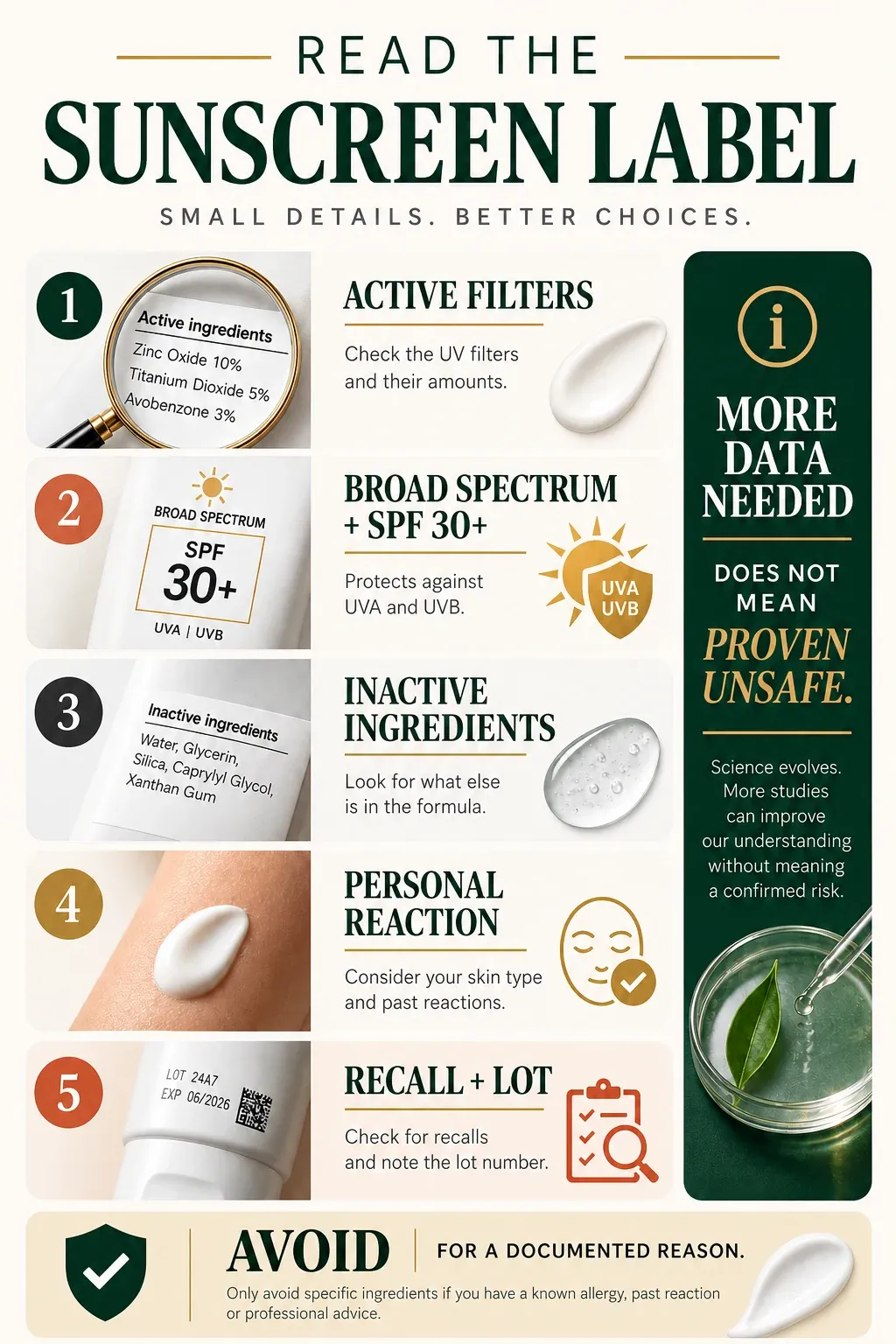
How to Read the Drug Facts Panel
| Panel section | What to check | Decision |
|---|---|---|
| Active ingredients | UV filters and percentages | Identify mineral, organic or hybrid system |
| Purpose | Sunscreen | Confirms the OTC drug role |
| Uses | Sunburn prevention and permitted claims | Ignore unsupported cure language |
| Warnings | Broken skin, eyes, ingestion and age limits | Follow product-specific safety |
| Directions | Timing, amount and reapplication | Use the tested schedule |
| Inactive ingredients | Fragrance, vehicle and allergens | Screen personal intolerance |
Look for broad spectrum, SPF 30 or higher and water resistance. SPF mainly describes sunburn protection under testing and does not mean hours in the sun. Water resistance is labeled for 40 or 80 minutes.
Check expiration and storage directions. Heat can damage a product left in a car, and an expired drug product should be replaced. Do not combine two low-SPF products and add the numbers.
Choose by Skin Need
Acne-prone skin may prefer a non-comedogenic fluid or gel, while dry skin may need a cream. Rosacea or reactive skin may tolerate fragrance-free mineral filters better. Darker skin tones often need transparent or tinted finishes that do not discourage adequate use.
Compare the acne-prone sunscreen guide and tinted sunscreen guide. The best formula is the one that meets protection standards and can be applied at the required amount.
What Not to Avoid by Default
Do not avoid avobenzone merely because it is organic, or zinc oxide merely because it is a nanoparticle dispersion. Both can be part of effective broad-spectrum formulas. The meaningful comparison is wavelength coverage, finished-product testing, tolerance and application.
Do not avoid every preservative. Water-based sunscreen used with warm hands at a beach needs microbial control. A preservative-free claim can be a formulation choice, but it is not a universal safety upgrade.
Do not avoid all alcohols from the name alone. Ethanol can feel drying in some vehicles, while cetyl, cetearyl and stearyl alcohol are fatty alcohols used to build and soften emulsions. Read the complete formula and observe the actual response.
Ingredient Decisions for Teens and Families
A teen with acne may prioritize a light non-comedogenic formula, while a younger child or reactive user may prefer fragrance-free mineral filters. The teen sunscreen habit guide explains how texture, school and sport affect adherence.
Families can use different face and body products without needing a separate filter ideology for each person. A large water-resistant lotion may serve outdoor body use, while a tinted face product solves cast.
Label the products and supervise spray application to avoid inhalation and missed areas.
For everyday exposure across seasons, see the year-round UV guide. Ingredient selection matters only after the plan covers adequate amount, exposed area and reapplication.
A Structured Reaction Review
When a sunscreen causes a reaction, record where it appeared, how quickly it started and whether sunlight, sweat or another product was present. Immediate eye sting differs from a delayed itchy rash on sun-exposed areas.
Stop the suspected product and protect with clothing while the skin settles.
Save photographs of both the Drug Facts and inactive ingredients. Compare them with previously tolerated formulas rather than guessing from one highlighted filter. A dermatologist or allergist may use patch or photopatch testing when the history warrants it.
Common Ingredient-List Mistakes
- Calling every organic filter unsafe: additional-data status is not proof of harm.
- Calling mineral sunscreen chemical-free: all ingredients are chemicals.
- Ignoring inactive ingredients: fragrance or vehicle may cause the reaction.
- Trusting reef-safe badges: the term is not a universal standard.
- Using DIY oils: they lack tested SPF and broad-spectrum protection.
- Confusing recall contamination with an active: verify product and lot.
When to See a Dermatologist or Allergist
Seek care for hives, swelling, blistering, breathing difficulty or a persistent spreading rash. Photoallergic reactions can appear where sun and product overlap. Bring both active and inactive ingredient lists.
For mild stinging, stop the product and return to a bland routine. The barrier repair guide can help distinguish temporary irritation from a product that should be avoided. Replace sun protection with clothing and a tolerated formula rather than going unprotected.
The Bottom Line
Most readers do not need a long sunscreen blacklist. Avoid PABA or trolamine salicylate if encountered, documented allergens, recalled lots and formats you cannot use safely. Additional data needed for an active does not mean proven unsafe.
Choose broad-spectrum SPF 30 or higher in a formula you can apply generously. When uncertainty remains, a fragrance-free zinc oxide or titanium dioxide product plus clothing and shade offers a practical conservative path.
Frequently Asked Questions About Sunscreen Ingredients to Avoid
Which sunscreen ingredients should everyone avoid?
There is no long universal blacklist. PABA and trolamine salicylate have distinct FDA safety concerns, while personal allergens, irritating inactive ingredients and recalled lots should be avoided specifically.
Does the FDA say oxybenzone is unsafe?
The FDA requested additional data for a positive GRASE determination and stated that this category was not a conclusion that the ingredient was unsafe. People with allergy or sensitivity can choose another filter.
Are mineral sunscreens safer?
Zinc oxide and titanium dioxide have sufficient public data for proposed GRASE status and often suit sensitive skin. The finished formula can still irritate, pill, feel drying or leave cast.
Is bemotrizinol approved in the United States?
Yes. In June 2026, the FDA added bemotrizinol to the permitted over-the-counter sunscreen monograph active ingredients, the first new addition in more than two decades.
Should I avoid fragrance in sunscreen?
Choose fragrance-free sunscreen if you have sensitive skin, fragrance allergy, eczema or repeated stinging. Fragrance is an inactive ingredient and does not improve UV protection.
This article is for informational purposes only and does not replace professional dermatological advice.