Best Sunscreens for Dark Skin in 2026: No-White-Cast Picks
Five no-white-cast sunscreens compared by finish, tint, skin type, water resistance, and real reapplication needs.
In this guide
The best sunscreens for dark skin provide broad-spectrum SPF 30 or higher, disappear without a gray cast, and have a finish you will apply generously. Black Girl Sunscreen Make It Matte SPF 45 is our matte pick; Supergoop Unseen SPF 50 is the clearest primer-like option; EltaMD UV Clear Deep Tint SPF 46 is the targeted tinted choice; and Neutrogena Purescreen+ gives mineral-SPF shoppers four tint options. No single tint matches every deeper skin tone, so finish and shade fit matter as much as the filter type.
Skin tone is not skin type, and ethnicity does not determine one routine. Our inclusive skincare guide for Asian skin tones explains how to choose by acne, sensitivity, dryness, and pigment response instead.
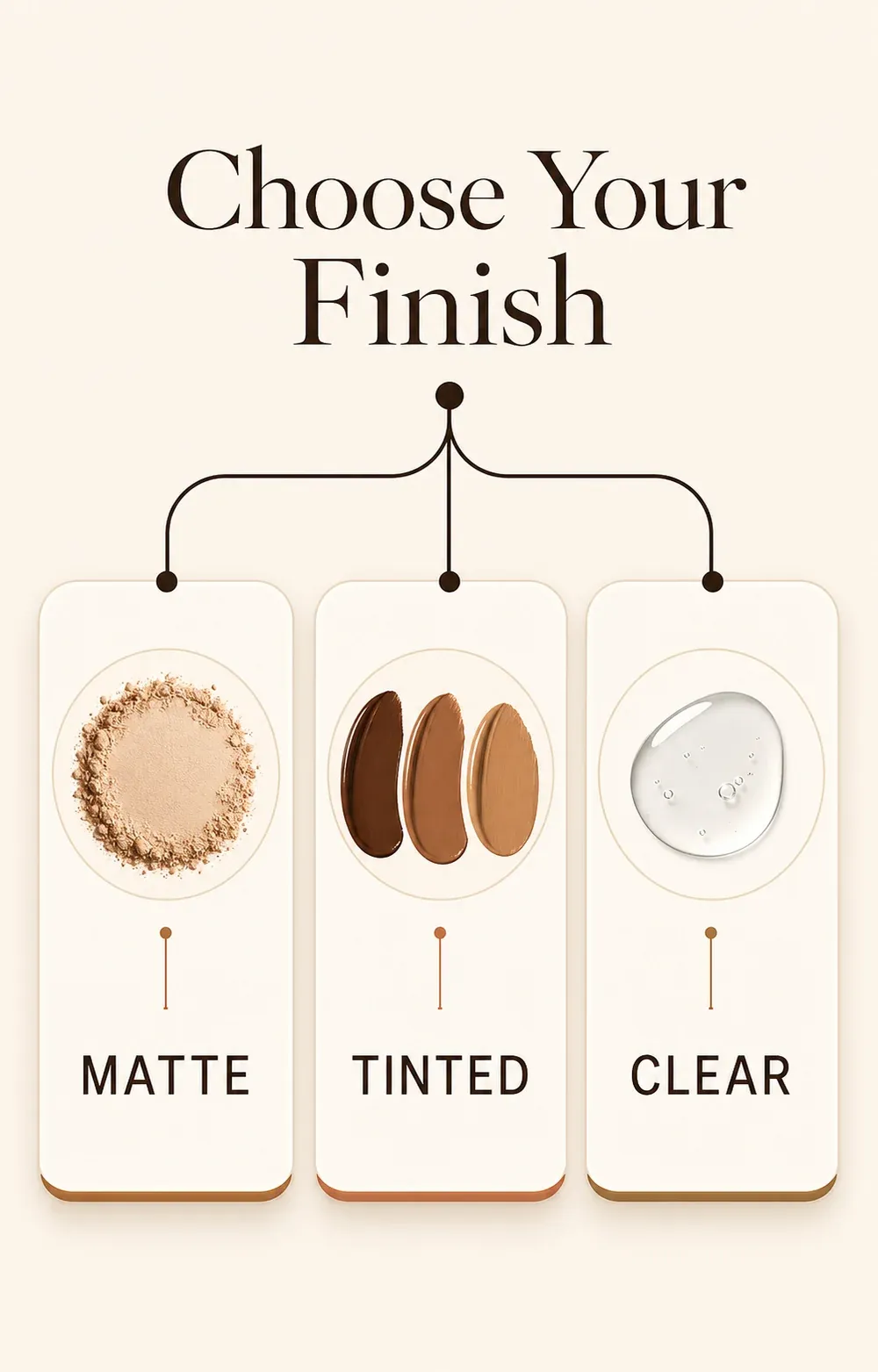
- Choose clear when white cast is your main barrier and you do not want coverage.
- Choose tinted when visible white residue or hyperpigmentation support matters—but verify the undertone in daylight.
- Choose matte for oil control and makeup grip; choose a more emollient base if tightness is the bigger problem.
- Choose water resistance for sport, heat, swimming, or heavy sweating, then follow the label’s reapplication time.
Best sunscreens for dark skin have to solve two problems at once: dependable UV protection and a finish that does not make deeper skin look gray, purple, or chalky. I do not think “no white cast” should be treated as a decorative bonus. If a formula looks unacceptable at the amount needed for protection, most people will apply less—or stop using it. Cosmetic elegance is part of adherence.
That does not mean every clear gel is automatically better or every tinted mineral sunscreen is automatically inclusive. Clear organic-filter formulas usually avoid white residue, but they can feel shiny or sting around the eyes. Tinted products can reduce the contrast created by white mineral filters, but one “universal” beige tint may still look orange, pale, or ashy on a deep complexion. A strong shortlist has to name those tradeoffs instead of promising that one product disappears on everyone.
This 2026 update narrows the field to five distinct jobs: matte daily wear, clear primer-like wear, deeper tinted coverage, mineral shade choice, and portable reapplication. If you are still deciding between filter systems, read our chemical versus mineral sunscreen guide. If tint is the priority, compare the wider shade and finish options in our tinted sunscreen guide.
Best Sunscreens for Dark Skin: Quick Comparison
| Pick | Best fit | Main limitation |
|---|---|---|
| Black Girl Sunscreen Make It Matte SPF 45 | Oily skin, matte finish, outdoor wear | Silky gel plus richer emollients may not suit every clog-prone user |
| Supergoop Unseen Sunscreen SPF 50 | Clear primer feel and makeup layering | Premium price and silicone-rich texture |
| EltaMD UV Clear Deep Tint SPF 46 | Deep tint, acne-prone skin, everyday wear | Not water-resistant; one deep tint cannot match every undertone |
| Neutrogena Purescreen+ Mineral UV Tint SPF 30 | Mineral-only preference and four shade choices | Tint still requires daylight matching; finish may feel dry |
| Shiseido Ultimate Sun Protector Clear Stick SPF 60+ | Portable face/body reapplication | Sticks are easy to underapply without repeated passes |
Acne-prone readers should not choose only by “oil-free” or “non-comedogenic” language. Finish, amount, the products underneath, and removal at night all affect how a sunscreen behaves. Our acne-prone sunscreen comparison goes deeper, while the oily-skin sunscreen guide focuses on shine and wear.
Five No-White-Cast Picks by Real Use Case
1. Black Girl Sunscreen Make It Matte SPF 45
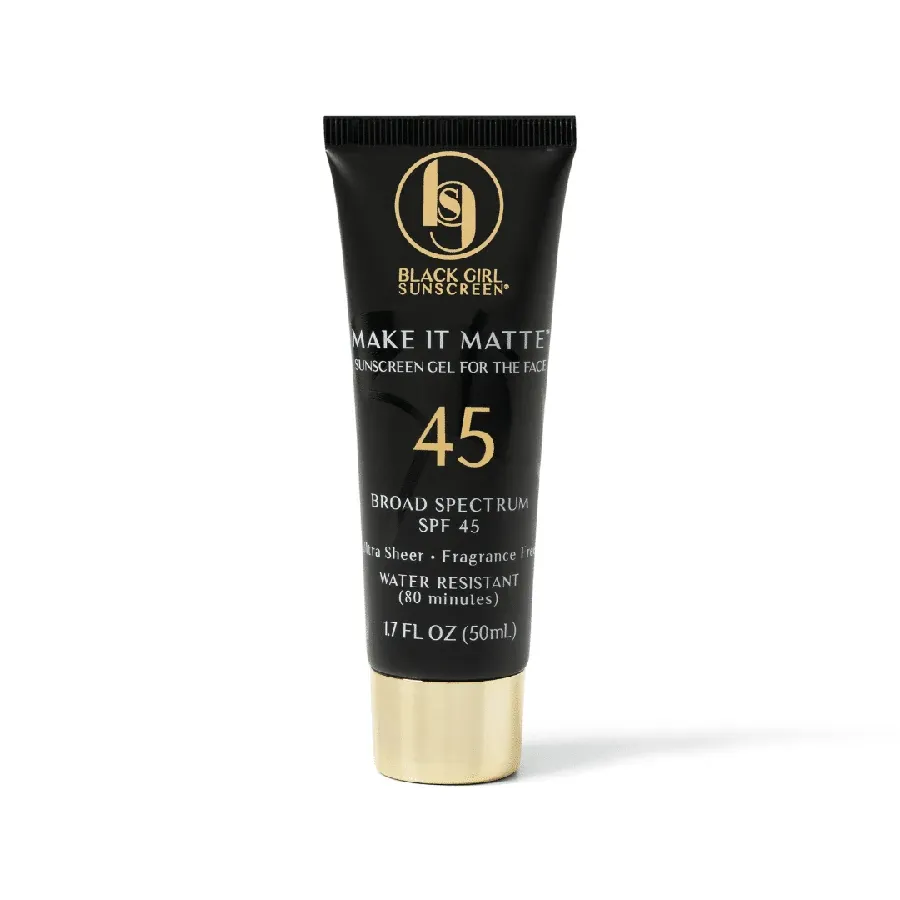
Make It Matte is the most direct answer for someone who wants a transparent finish without turning the face dewy. The current formula is a fragrance-free, broad-spectrum SPF 45 gel using avobenzone, homosalate, octisalate, and octocrylene. The brand lists 80 minutes of water resistance and positions the finish specifically for melanin-rich skin.
The strength is not just the absence of mineral residue. Silica helps create the dry-touch feel, while aloe, squalane, shea butter, and coconut oil keep the gel from feeling like a bare alcohol-heavy primer. That same blend is the watch-out: someone who already knows coconut oil or richer emollients cause facial congestion should patch-test instead of assuming “matte” means universally pore-safe.
Choose it if: your priority is matte, clear daily SPF that can handle sweat. Skip it if: you dislike velvety gel textures or react to its emollient blend. Product details: Black Girl Sunscreen.
Check Make It Matte on AmazonAs an Amazon Associate, we earn from qualifying purchases.
2. Supergoop Unseen Sunscreen SPF 50
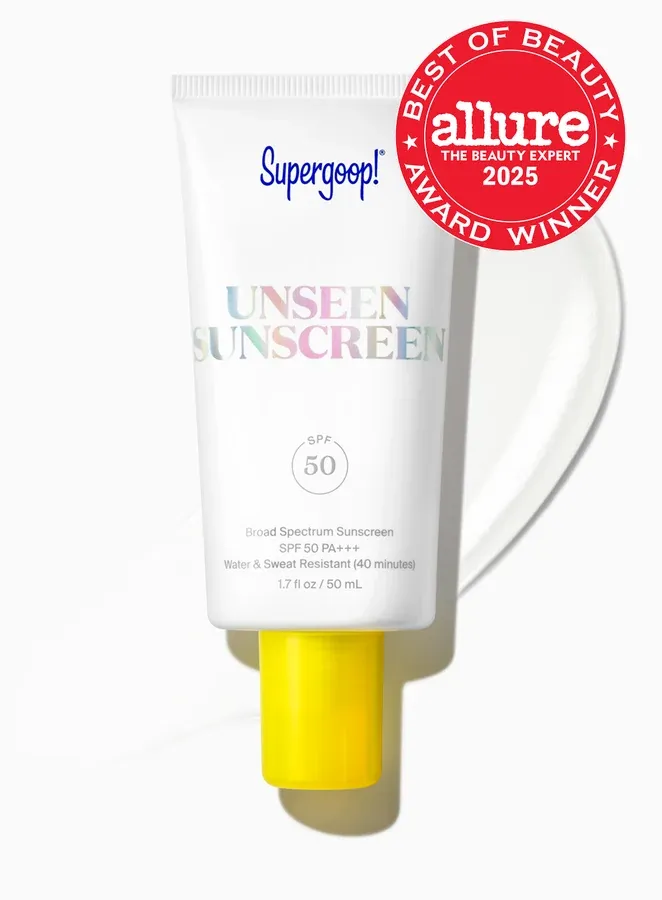
Supergoop’s updated Unseen Sunscreen now carries SPF 50 rather than the older SPF 40 found in many roundups. It is a completely clear organic-filter gel with a natural, pore-blurring finish and 40 minutes of water resistance. That makes it the easiest pick here for people who want sunscreen to double as a makeup primer without adding tint.
The smooth slip comes from a silicone-rich base. Many people like that because foundation moves less and there is no visible cast; others experience it as too primer-like or notice pilling when several silicone-heavy layers are stacked. Apply it over a settled moisturizer instead of rubbing every layer together.
Choose it if: you want a clear, scentless SPF 50 that behaves like primer. Skip it if: you dislike silicone textures, want mineral-only filters, or need 80-minute water resistance. Product details: Supergoop.
Check Unseen SPF 50 on Amazon3. EltaMD UV Clear Deep Tinted SPF 46
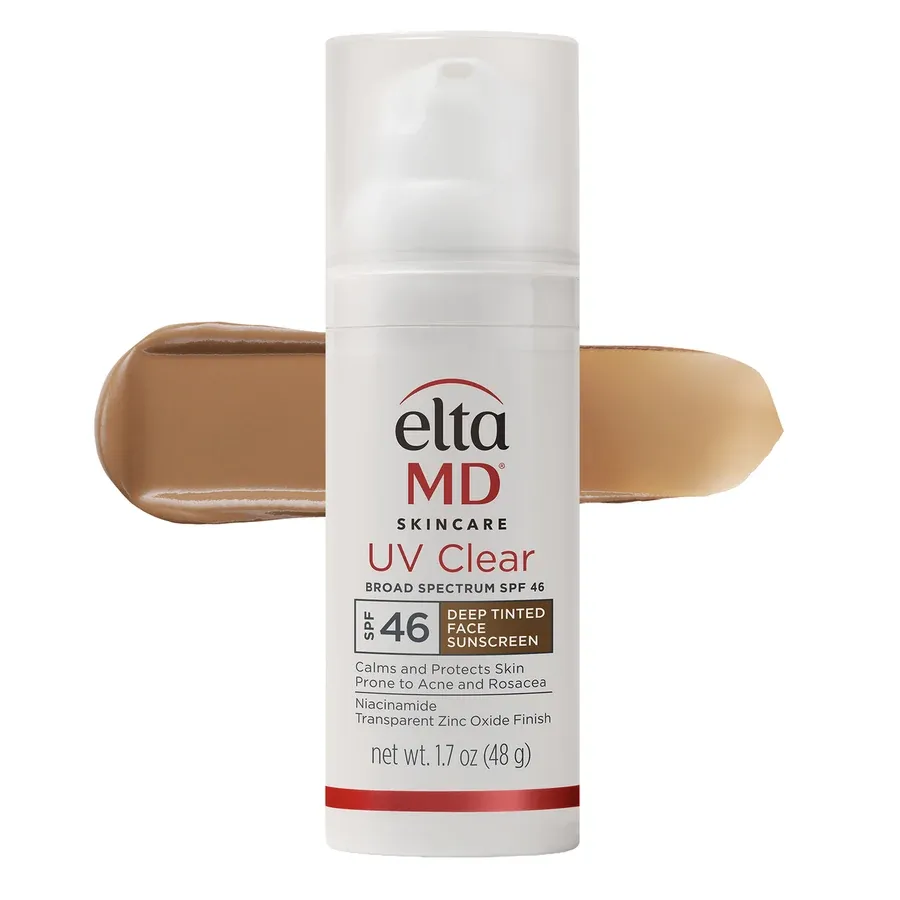
EltaMD UV Clear Deep Tint is a hybrid sunscreen created and evaluated for deeper skin tones. The current active-filter list combines 9% zinc oxide with 7.5% octinoxate. Iron oxides create the deep tint, while the base includes 5% niacinamide and sodium hyaluronate. The finish is lightweight, fragrance-free, oil-free, and non-comedogenic according to the brand.
This is the strongest targeted tint in the lineup, but “deep” is still one shade—not a promise that it will disappear on every depth and undertone. Check the jawline and neck in daylight before committing. It is also not labeled water-resistant, which makes it a daily face option rather than the first choice for a run, beach day, or heavy sweat.
Choose it if: you want a deeper tint and tolerate niacinamide. Skip it if: the tint pulls orange or pale on you, niacinamide stings, or water resistance is required. Product details: EltaMD.
Check EltaMD Deep Tint on Amazon4. Neutrogena Purescreen+ Mineral UV Tint SPF 30
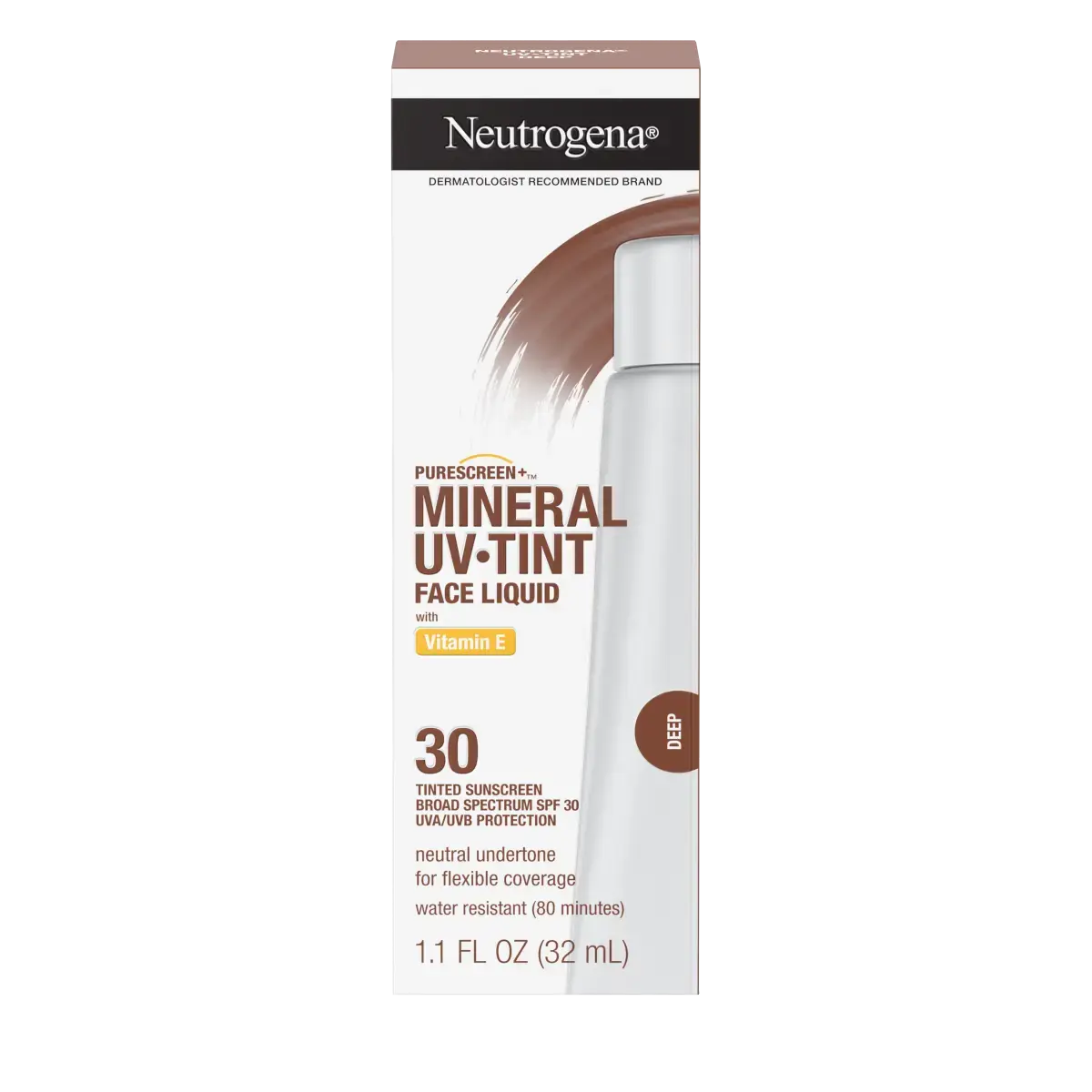
Neutrogena Purescreen+ is the practical mineral option because it comes in Light, Medium, Medium/Deep, and Deep instead of relying on one universal tint. The brand lists 21.6% zinc oxide and 3.2% titanium dioxide, broad-spectrum SPF 30, fragrance-free positioning, and 80 minutes of water resistance.
Four shades are better than one, but they still cannot represent every undertone. The liquid also needs shaking, and a high mineral load can feel drier or more makeup-like than a clear gel. If the Deep shade is too warm, too light, or visibly transfers at your preferred amount, the theoretical benefit does not outweigh poor wearability.
Choose it if: you prefer mineral filters and want a real shade choice plus water resistance. Skip it if: none of the four tints matches your neck or you want a fully transparent finish. Product details: Neutrogena.
5. Shiseido Ultimate Sun Protector Clear Stick SPF 60+
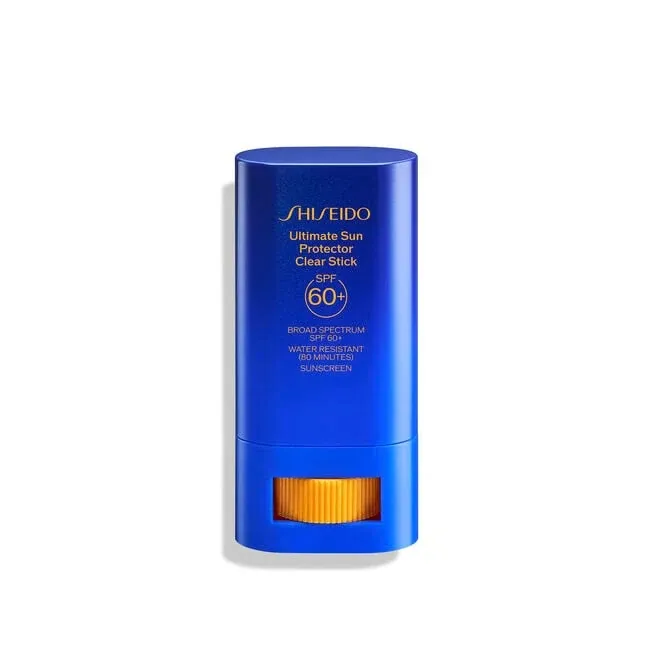
Shiseido’s current Clear Stick upgrades the discontinued SPF 50+ version to broad-spectrum SPF 60+. It applies transparently over or under makeup and is designed for portable face-and-body use. The label lists 80 minutes of water resistance, making it more suitable for active reapplication than a powder SPF.
The limitation belongs to the format: a few quick swipes are not automatically enough. Stick coverage can become patchy around the nose, hairline, and jaw, especially when users avoid overlapping passes. Treat this as a convenient reapplication tool, not permission to use less. Our sunscreen-stick guide explains coverage technique in more detail.
Choose it if: you need a clear, travel-friendly top-up for exposed areas. Skip it if: you cannot make multiple overlapping passes or prefer a lotion whose amount is easier to judge. Product details: Shiseido.
How to Choose: Clear, Tinted, or Matte
The filter category is only one part of the decision. Mineral filters such as zinc oxide and titanium dioxide are white powders, so the finished product needs careful dispersion or tint to reduce visible residue. Organic UV filters are usually easier to formulate as transparent gels or fluids, but the eye feel, shine, and water resistance still differ by product. Our broader everyday sunscreen guide explains how to balance these factors across skin types.
The American Academy of Dermatology recommends broad-spectrum SPF 30 or higher, water resistance, and a tint that matches when white residue is a concern. Its guidance for finding skin cancer in darker skin tones reinforces that sun protection and skin checks matter across skin tones. Sunscreen supports risk reduction; it is not a substitute for shade, clothing, or medical evaluation of a changing spot.
How to Apply and Reapply Without Ashiness
Apply generously and evenly before sun exposure, then follow the specific label. The FDA’s consumer sunscreen guidance emphasizes reapplication at least every two hours and after swimming or sweating according to water-resistance directions. “All-day” makeup wear does not turn the SPF underneath into all-day protection.
| Situation | Best method | Watch-out |
|---|---|---|
| Normal morning routine | Two thin, even lotion layers | Let moisturizer settle first to reduce pilling |
| Over light makeup | Clear stick with overlapping passes | Do not rely on one swipe per area |
| Swimming or sport | 80-minute water-resistant lotion or gel | Reapply after towel drying and label interval |
| Hyperpigmentation routine | Well-matched tint or clear SPF plus shade | Protection prevents new triggers; it does not erase spots alone |
Powder can reduce shine, but it is difficult to apply enough powder alone for dependable primary protection. Mists and sticks are also easy to underapply. Use them as carefully applied top-ups and read our step-by-step sunscreen reapplication guide. If dark marks are the larger concern, combine consistent protection with the measured routine in our hyperpigmentation skincare guide rather than chasing an aggressive brightening stack.
What We Would Avoid
- A “universal tint” accepted without a daylight check. A mismatch is still a mismatch, even if the label says sheer.
- Reducing the amount to hide cast. That solves appearance by undermining protection.
- Choosing SPF makeup as the only layer. Most people do not apply foundation in sunscreen-test quantities.
- Assuming high SPF means no reapplication. Sweat, water, rubbing, and time still change coverage.
- Ignoring a persistent rash or eye reaction. Stop the product and seek qualified advice when symptoms are significant.
Our guide to common sunscreen mistakes covers missed areas, timing, and underapplication. Sensitive readers can compare fragrance-free and mineral options in the sensitive-skin sunscreen guide.
Our Bottom Line
Black Girl Sunscreen Make It Matte SPF 45 is our best matte choice for melanin-rich skin, while Supergoop Unseen SPF 50 is the clearest makeup-primer option. EltaMD UV Clear Deep Tint offers the most targeted deeper tint, and Neutrogena Purescreen+ is the better mineral choice when four shades and 80-minute water resistance matter. Shiseido’s clear SPF 60+ stick earns a separate role for portable reapplication.
The best sunscreen is not the one with the most impressive ingredient story. It is the broad-spectrum formula you can apply generously, wear without visible compromise, and reapply when protection has been disrupted. Start with finish, confirm tint in daylight, then check the activity label.
Frequently Asked Questions About Sunscreen for Dark Skin
Do people with dark skin really need sunscreen every day?
Yes. Melanin does not provide complete UVA and UVB protection. Broad-spectrum SPF 30 or higher helps reduce UV damage and can support routines for concerns such as post-inflammatory hyperpigmentation. Combine sunscreen with shade, protective clothing, and skin checks rather than treating it as the only defense.
Why does sunscreen leave a white or purple cast on dark skin?
Zinc oxide and titanium dioxide are naturally white powders, and a thick or poorly dispersed mineral formula can contrast strongly with deeper skin. Tints, finer dispersion, and transparent organic-filter formulas can reduce that visible residue. The finished formula matters more than the marketing category alone.
Is tinted sunscreen better for hyperpigmentation on darker skin?
A well-matched tinted sunscreen can be useful because it reduces mineral white cast and often includes iron oxides. However, it still needs broad-spectrum SPF, adequate application, and a wearable undertone. A mismatched tint that causes underapplication is not a better choice than a clear sunscreen you use correctly.
Is mineral or chemical sunscreen better for dark skin?
Neither category is universally better. Clear organic-filter formulas usually avoid white cast, while tinted mineral formulas can suit people who prefer mineral actives. Choose by protection label, finish, sensitivity, tint match, water resistance, and how consistently you can apply it.
How often should sunscreen be reapplied on dark skin?
Reapply at least every two hours during ongoing exposure and according to the product label after swimming or sweating. Reapply immediately after towel drying. Skin tone does not change the label’s application and water-resistance directions.
Disclaimer: This article is for informational purposes only and does not replace professional dermatological advice.