Chemical vs. Mineral Sunscreen: Which Is Better in 2026?
Compare mineral and chemical sunscreen by safety evidence, finish, white cast, eye tolerance and skin type before choosing your daily SPF.
In this guide
Is mineral or chemical sunscreen better?
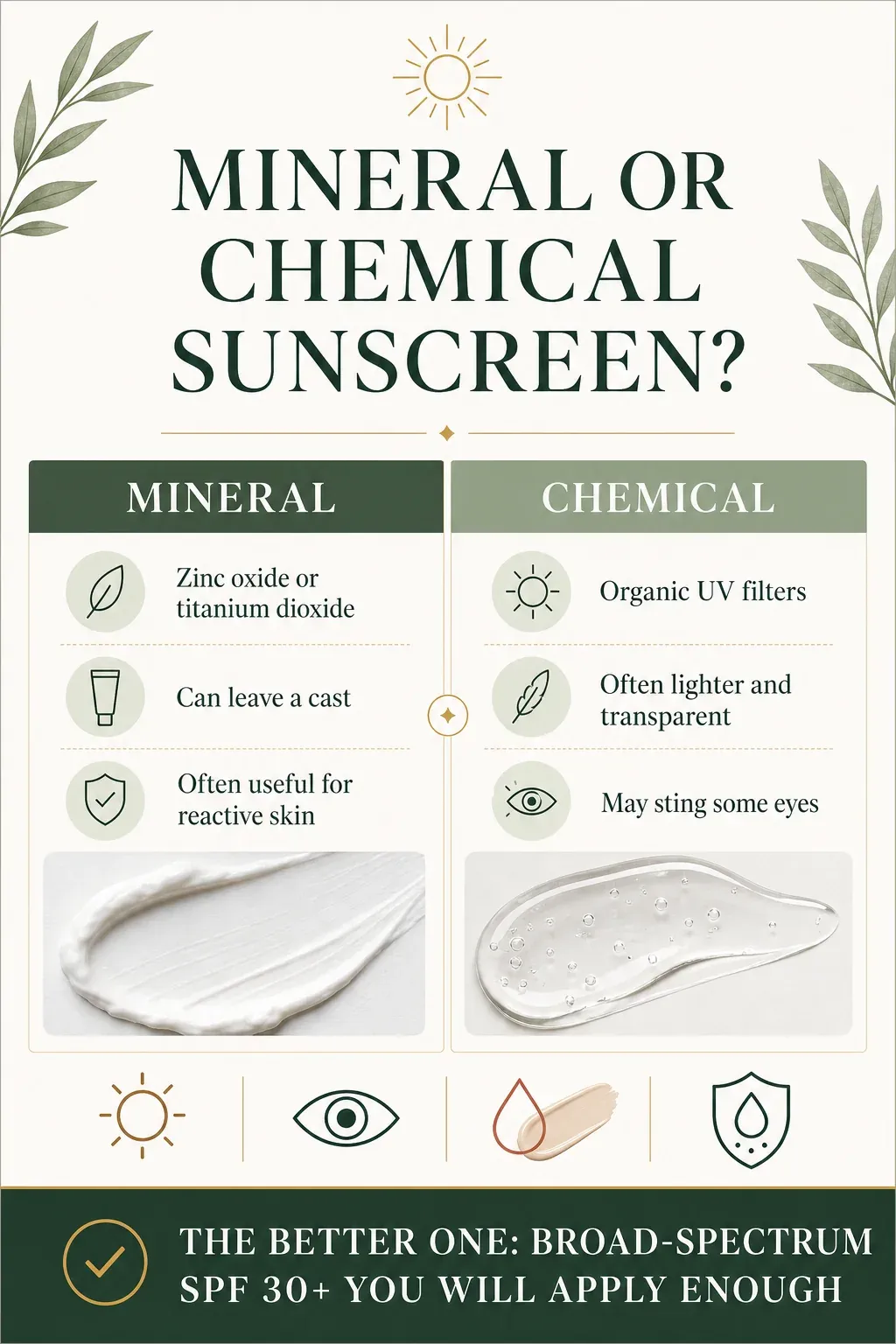
Neither type is automatically better. Mineral sunscreen is a useful starting point for reactive skin and people who prefer zinc oxide or titanium dioxide, but it can feel heavier or leave a cast. Organic, often called chemical, sunscreen is frequently lighter and more transparent, but some formulas sting sensitive eyes. Choose broad-spectrum SPF 30 or higher that you can apply generously; add water resistance for sweat or swimming.
Choose by real-world fit
- Reactive skin: start with a fragrance-free mineral formula, then judge the full ingredient list.
- White cast: try a tinted mineral, organic or hybrid formula.
- Oily skin or makeup: a transparent organic fluid or gel may be easier to wear.
- Outdoor activity: water resistance and correct application matter more than filter ideology.
- Safety headlines: an FDA request for more data is not proof that approved marketed filters are unsafe.
The mineral-versus-chemical debate is usually framed as natural versus synthetic, safe versus unsafe or reflecting versus absorbing. Those binaries are memorable, but they are not a reliable way to choose sunscreen. All sunscreen active ingredients are chemicals in the scientific sense. The more precise distinction is inorganic mineral filters versus organic carbon-based filters.
Your skin does not benefit from winning a category argument. It benefits from a continuous, broad-spectrum film used in a sufficient amount, maintained during exposure and supported by shade and clothing. Our layered UV protection guide shows how those pieces work together.
What Mineral and Chemical Sunscreen Actually Mean
Mineral sunscreen uses zinc oxide, titanium dioxide or both as active UV filters. These particles are inorganic. Modern formulas may use smaller or coated particles to reduce opacity and improve spread. Mineral does not mean the entire formula is natural, fragrance-free, non-comedogenic or suitable for every sensitive person.
So-called chemical sunscreen uses organic UV filters. U.S. examples include avobenzone, octocrylene, octisalate and homosalate. Products often combine several filters to create broad-spectrum protection. A hybrid formula uses mineral and organic filters together.
The reflect-versus-absorb myth
Both filter groups primarily protect by absorbing ultraviolet energy and converting it into a less harmful form. Mineral particles also scatter and reflect some UV, but describing them as a physical shield that only bounces rays away is inaccurate. This mechanism does not make one category inherently stronger.
Broad spectrum matters more than the category
UVA contributes to photoaging and pigmentation, while UVB is closely associated with sunburn; both contribute to skin cancer risk. A broad-spectrum label tells you the formula has met the relevant UVA and UVB test requirements. SPF describes tested sunburn protection, not all-day duration.
The American Academy of Dermatology recommends looking for broad-spectrum protection, SPF 30 or higher and water resistance. Those three label decisions are more useful than treating mineral or organic as a quality grade.
Mineral vs. Chemical Sunscreen: Key Differences
| Question | Mineral sunscreen | Organic sunscreen |
|---|---|---|
| Active filters | Zinc oxide and/or titanium dioxide | Organic filters such as avobenzone, octocrylene, octisalate or homosalate |
| Typical finish | Can be thicker, matte, tinted or visibly white | Often lighter, transparent, gel-like or fluid |
| Reactive skin | Useful starting point, but the full formula can still irritate | Some users tolerate it well; others report eye sting or burning |
| Deeper skin tones | Tint can reduce cast, but shade range matters | Often transparent, but finish and eye tolerance vary |
| Protection | Depends on tested SPF, UVA coverage, film and amount | Depends on tested SPF, UVA coverage, film and amount |
| Water use | Choose a labeled 40- or 80-minute formula | Choose a labeled 40- or 80-minute formula |
What the FDA Status Does and Does Not Mean
In its 2021 proposed sunscreen order, the FDA proposed zinc oxide and titanium dioxide as generally recognized as safe and effective under the specified monograph conditions. PABA and trolamine salicylate were proposed as not GRASE because of safety concerns and are not the modern filters shoppers normally see in U.S. sunscreens.
For several other monograph filters, the FDA requested additional safety data before making a final GRASE determination. This distinction matters: a data gap is not the same as evidence that a marketed sunscreen is dangerous. The FDA also emphasizes that absorption alone does not mean an ingredient is unsafe or that people should stop using sunscreen.
Do not turn regulatory uncertainty into fear marketing
Claims such as toxin-free, clean chemical or endocrine-safe often compress a complex evidence question into a sales message. Read the active-ingredient panel, choose a formula you tolerate and discuss a known allergy, pregnancy concern or medication interaction with a qualified clinician.
Mineral sunscreen is not free of formulation tradeoffs
Particle coating, tint, preservative system, fragrance, inactive ingredients and product vehicle all affect use. A zinc-oxide sunscreen can still sting damaged skin, pill over skincare or trigger a reaction to another ingredient.
Which Sunscreen Type Fits Your Skin?
Sensitive, rosacea-prone or reactive skin
A fragrance-free mineral sunscreen is a reasonable starting point because zinc oxide and titanium dioxide may be less likely to sting some reactive users. Starting point is the important phrase. Damaged skin can burn with almost any lotion, and a botanical-heavy mineral formula may be less comfortable than a simple organic fluid.
Patch test cautiously and compare dedicated options in our sensitive-skin sunscreen guide. Persistent swelling, blistering or a spreading rash is a medical issue, not a reason to cycle through more products.
Oily or acne-prone skin
Filter type does not cause or prevent acne by itself. Organic fluids and gels often feel lighter, while matte mineral tints can work for people who want shine control. Choose non-comedogenic positioning as a screening signal, then judge your own skin. Our oily-skin SPF comparison and acne-prone sunscreen guide separate finish from treatment claims.
Dry or mature skin
Dry skin can use either filter group. Look for humectants, emollients and a flexible finish. Dense mineral lotion may catch on flakes, while an alcohol-heavy organic fluid may feel tight. A separate moisturizer can improve comfort when it does not cause pilling.
Dark or medium skin tones
Untinted mineral sunscreen can leave a visible cast. Tinted mineral formulas use pigments to improve appearance, but one universal shade is not universal. Organic and hybrid formulas often apply more transparently. Our guide to sunscreen for dark skin compares real shade and cast tradeoffs.
Pregnancy and breastfeeding
Some people prefer mineral sunscreen during pregnancy because the FDA's proposed monograph status is easier to interpret. That does not establish that every organic-filter product is unsafe. Use shade and clothing, read the current label and ask your obstetric clinician when you have a specific ingredient concern or high-risk medical history.
Environmental Claims and the “Reef Safe” Label
Sunscreen filters have been detected in aquatic environments, and laboratory research has raised questions about effects on some organisms. However, real-world risk depends on ingredient, concentration, water conditions, exposure and other environmental stressors.
The National Academies review concluded that important data gaps remain and that reef-safe has no regulated definition that guarantees a scientifically meaningful result. Mineral is not automatically environmentally harmless, and organic is not automatically environmentally destructive.
Follow local restrictions, choose water-resistant sunscreen when swimming, avoid unnecessary aerosol drift and use rash guards or other protective clothing. Clothing reduces both UV exposure and the amount of product that can wash into water without encouraging people to skip protection.
How to Apply Either Sunscreen Correctly
Apply sunscreen to all exposed skin before meaningful exposure, covering ears, neck, hairline, hands and the tops of feet. Use enough to create an even film. If the correct amount looks unacceptable, change formula or tint rather than stretching a tiny amount across the face.
Reapply according to the label during continued outdoor exposure and after swimming, sweating or towel drying. Water resistance means the product was tested for 40 or 80 minutes in water; it does not mean waterproof. See the practical steps in our guide to reapplying sunscreen.
Do not mix formulas in your palm
Mixing sunscreen with moisturizer, foundation or another sunscreen can change the tested film. Layer compatible products separately. You also cannot add SPF 30 and SPF 50 to create SPF 80.
Separate daily and outdoor roles
A lightweight non-water-resistant face fluid may be ideal for a normal office day, while a larger water-resistant lotion is better for a hike or beach trip. Our everyday sunscreen guide explains this two-product system.
Seven Mineral and Organic Sunscreen Examples
These are role-based product examples, not a universal ranking. Check the current active ingredients because brands can reformulate and Amazon listings can switch sizes or variants.
| Product | Type | Best for | Main limitation |
|---|---|---|---|
| Blue Lizard Sensitive Mineral Sunscreen SPF 50 | Mineral | Sensitive skin, mineral preference and water-resistant outdoor use | Mineral lotion can leave a visible cast and feel heavier than a daily facial fluid. Verify the current size, seller and Drug Facts. |
| CeraVe Hydrating Mineral Sunscreen SPF 50 | Mineral | Normal-to-dry skin and a low-cost mineral face option | The untinted lotion can leave a cast, especially when applied at the full amount. Richer texture may also feel heavy on very oily skin. |
| Sun Bum Mineral Sunscreen Lotion SPF 50 | Mineral | Body coverage, beach days and mineral water resistance | A mineral body lotion can look white and feel dense. Check the current fragrance information and avoid assuming the words mineral or reef friendly guarantee universal sensitivity or environmental safety. |
| La Roche-Posay Anthelios Melt-In Milk SPF 100 | Organic | Long outdoor exposure, face-and-body use and high SPF | SPF 100 does not last longer than SPF 30 or replace shade, clothing and reapplication. Organic filters can sting some eyes, and the richer lotion is not a matte office finish. |
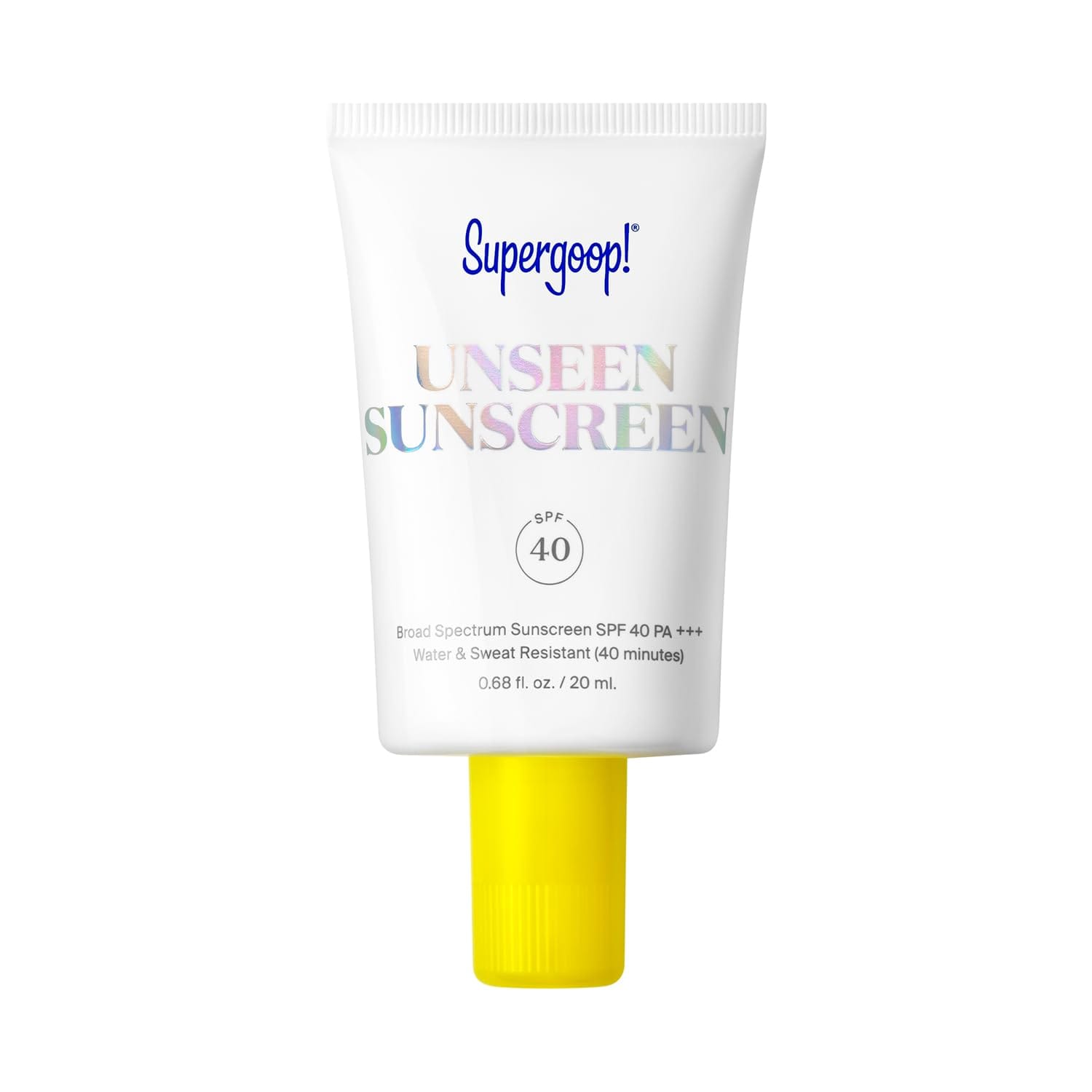
| Supergoop! Unseen Sunscreen SPF 40 | Organic | No-white-cast daily wear and makeup layering | Primer feel can encourage a cosmetic pea-sized amount. Apply according to sunscreen directions, and choose another formula if organic filters repeatedly sting your eyes. |
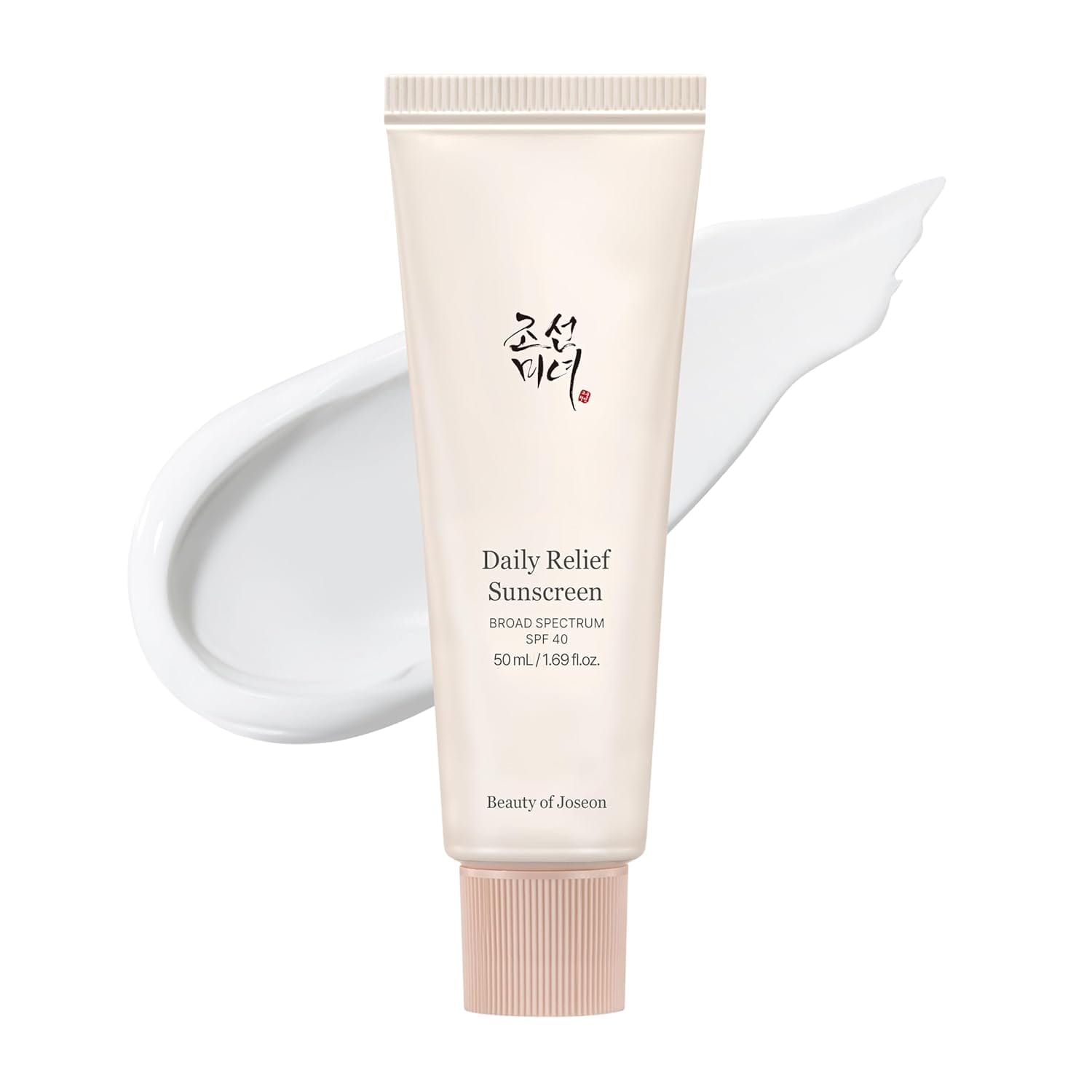
| Beauty of Joseon Daily Relief Sunscreen SPF 40 | Organic | Normal-to-dry daily facial wear and transparent finish | This is a daily facial option, not the dedicated water-resistant sport choice. Confirm the exact U.S. listing rather than assuming it is identical to every Beauty of Joseon formula sold internationally. |
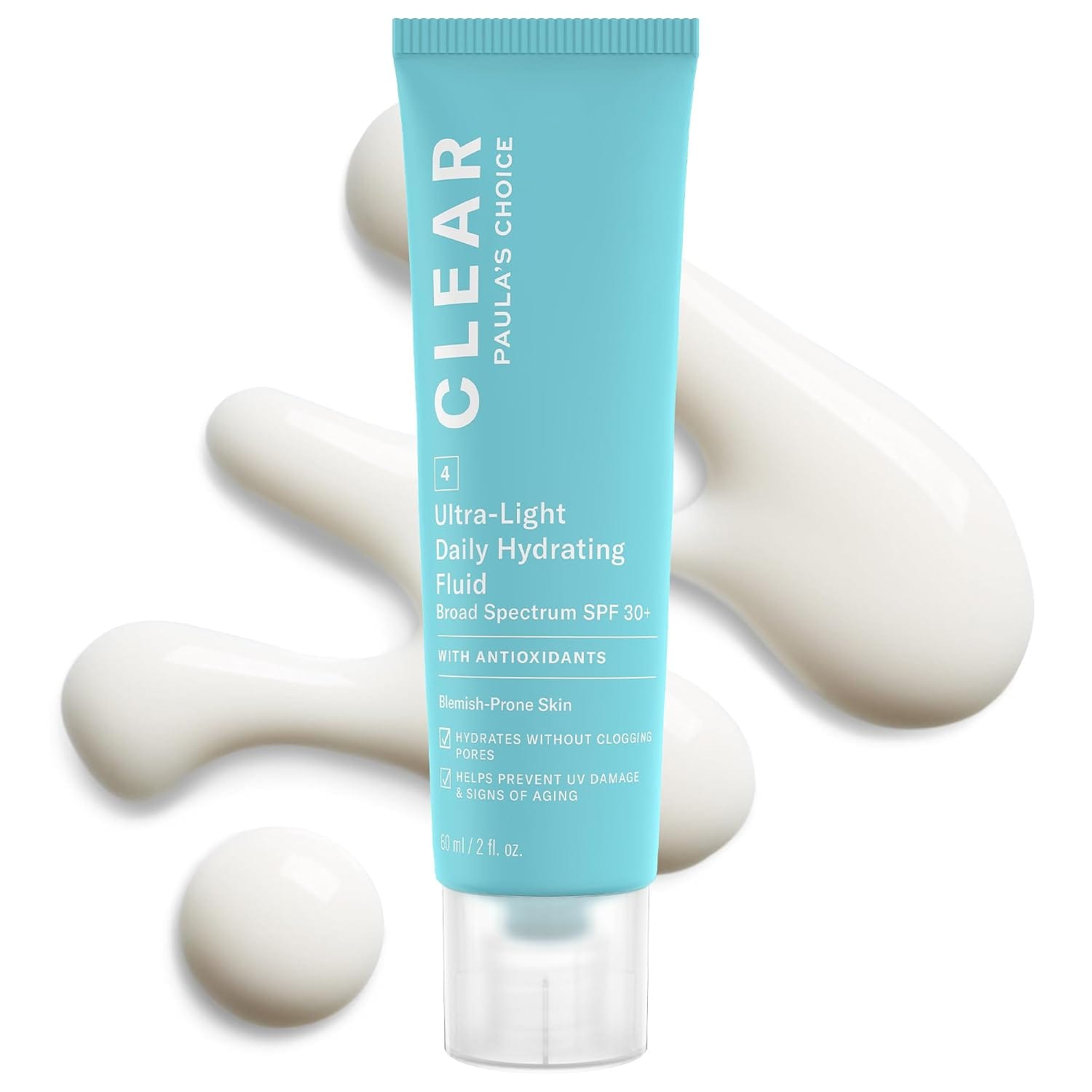
| Paula's Choice CLEAR Ultra-Light Daily Hydrating Fluid SPF 30 | Organic | Oily or acne-prone skin and lightweight daily wear | It is not the high-water-resistance sport product, and no non-comedogenic positioning guarantees that every individual will avoid breakouts. Introduce it without changing the whole routine. |
1. Blue Lizard Sensitive Mineral Sunscreen SPF 50
Why it fits: A fragrance-free zinc-oxide lotion with 80-minute water-resistance labeling. It is the clearest starting point here for readers who specifically want mineral filters and a face-and-body outdoor format.
Watch-out: Mineral lotion can leave a visible cast and feel heavier than a daily facial fluid. Verify the current size, seller and Drug Facts.
- Best for: Sensitive skin, mineral preference and water-resistant outdoor use
- Decision role: Compare finish and tolerance, not just filter category.
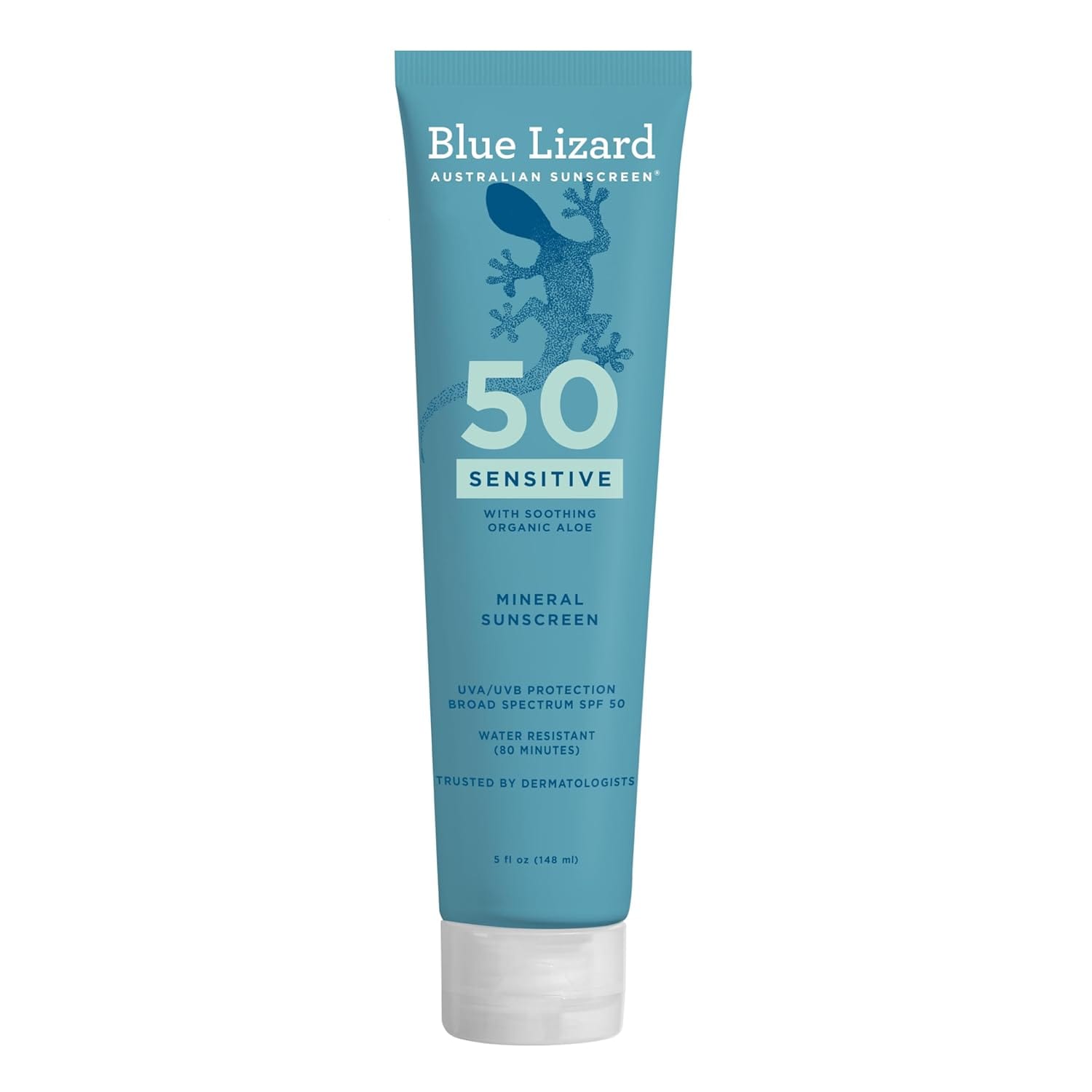
Blue Lizard Sensitive Mineral Sunscreen SPF 50
Best for: Sensitive skin, mineral preference and water-resistant outdoor use.
Before you buy: Mineral lotion can leave a visible cast and feel heavier than a daily facial fluid. Verify the current size, seller and Drug Facts.
View Blue Lizard on AmazonAs an Amazon Associate, SkinOptimizer may earn from qualifying purchases.
2. CeraVe Hydrating Mineral Sunscreen SPF 50
Why it fits: This zinc-oxide and titanium-dioxide facial sunscreen adds ceramides and hyaluronic acid in a budget-positioned lotion. It fits readers who want a mineral formula without moving immediately to a premium tint.
Watch-out: The untinted lotion can leave a cast, especially when applied at the full amount. Richer texture may also feel heavy on very oily skin.
- Best for: Normal-to-dry skin and a low-cost mineral face option
- Decision role: Compare finish and tolerance, not just filter category.
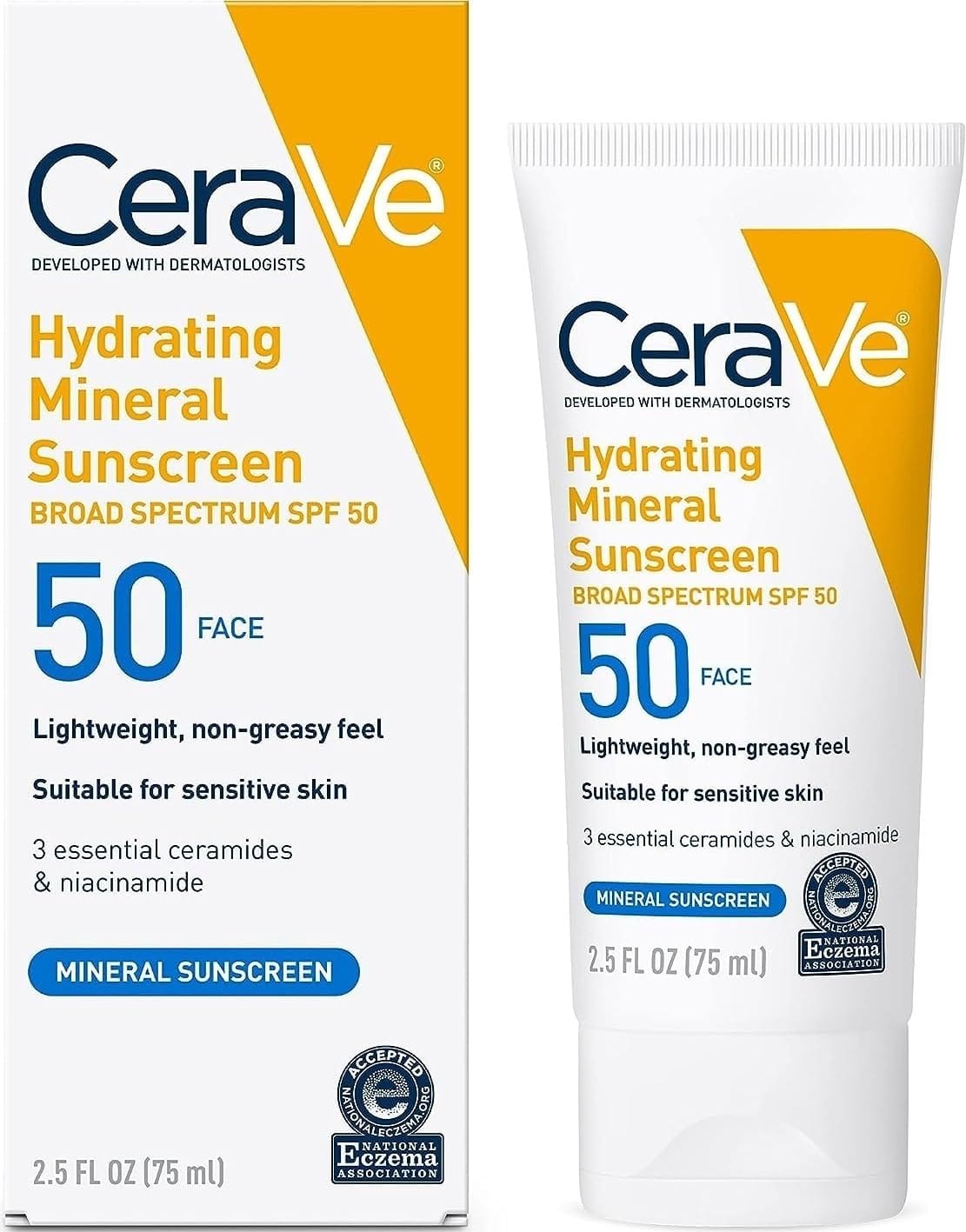
CeraVe Hydrating Mineral Sunscreen SPF 50
Best for: Normal-to-dry skin and a low-cost mineral face option.
Before you buy: The untinted lotion can leave a cast, especially when applied at the full amount. Richer texture may also feel heavy on very oily skin.
View CeraVe Mineral SPF 50 on AmazonAs an Amazon Associate, SkinOptimizer may earn from qualifying purchases.
3. Sun Bum Mineral Sunscreen Lotion SPF 50
Why it fits: Sun Bum Mineral fills the outdoor body role with a zinc-oxide lotion and 80-minute water-resistance labeling. It makes more sense for arms, legs and beach exposure than rationing a small cosmetic face bottle.
Watch-out: A mineral body lotion can look white and feel dense. Check the current fragrance information and avoid assuming the words mineral or reef friendly guarantee universal sensitivity or environmental safety.
- Best for: Body coverage, beach days and mineral water resistance
- Decision role: Compare finish and tolerance, not just filter category.
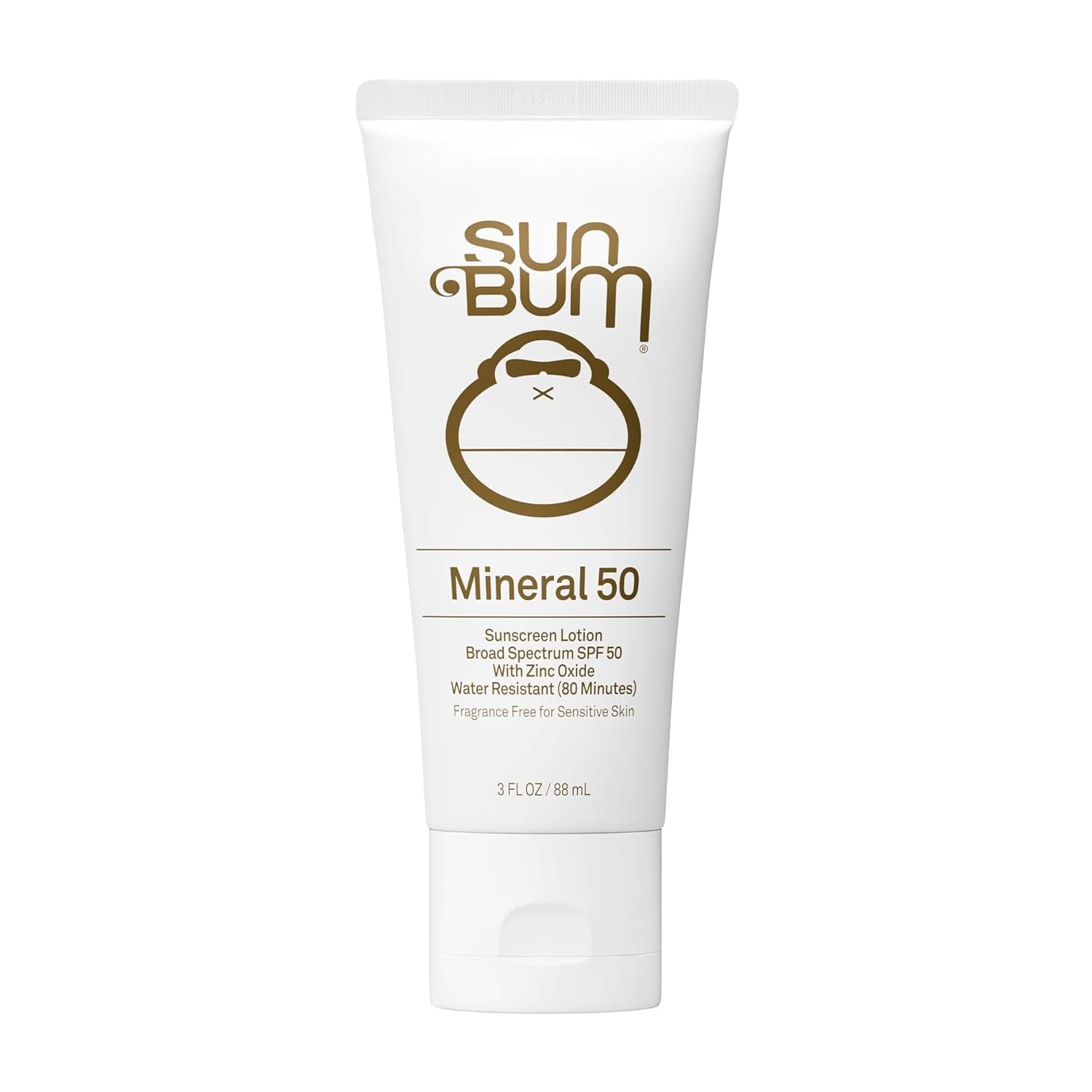
Sun Bum Mineral Sunscreen Lotion SPF 50
Best for: Body coverage, beach days and mineral water resistance.
Before you buy: A mineral body lotion can look white and feel dense. Check the current fragrance information and avoid assuming the words mineral or reef friendly guarantee universal sensitivity or environmental safety.
View Sun Bum Mineral on AmazonAs an Amazon Associate, SkinOptimizer may earn from qualifying purchases.
4. La Roche-Posay Anthelios Melt-In Milk SPF 100
Why it fits: Anthelios Melt-In Milk uses organic UV filters in a high-SPF face-and-body lotion. It is the strongest high-exposure option in this list for readers who want transparent application and 80-minute water resistance.
Watch-out: SPF 100 does not last longer than SPF 30 or replace shade, clothing and reapplication. Organic filters can sting some eyes, and the richer lotion is not a matte office finish.
- Best for: Long outdoor exposure, face-and-body use and high SPF
- Decision role: Compare finish and tolerance, not just filter category.
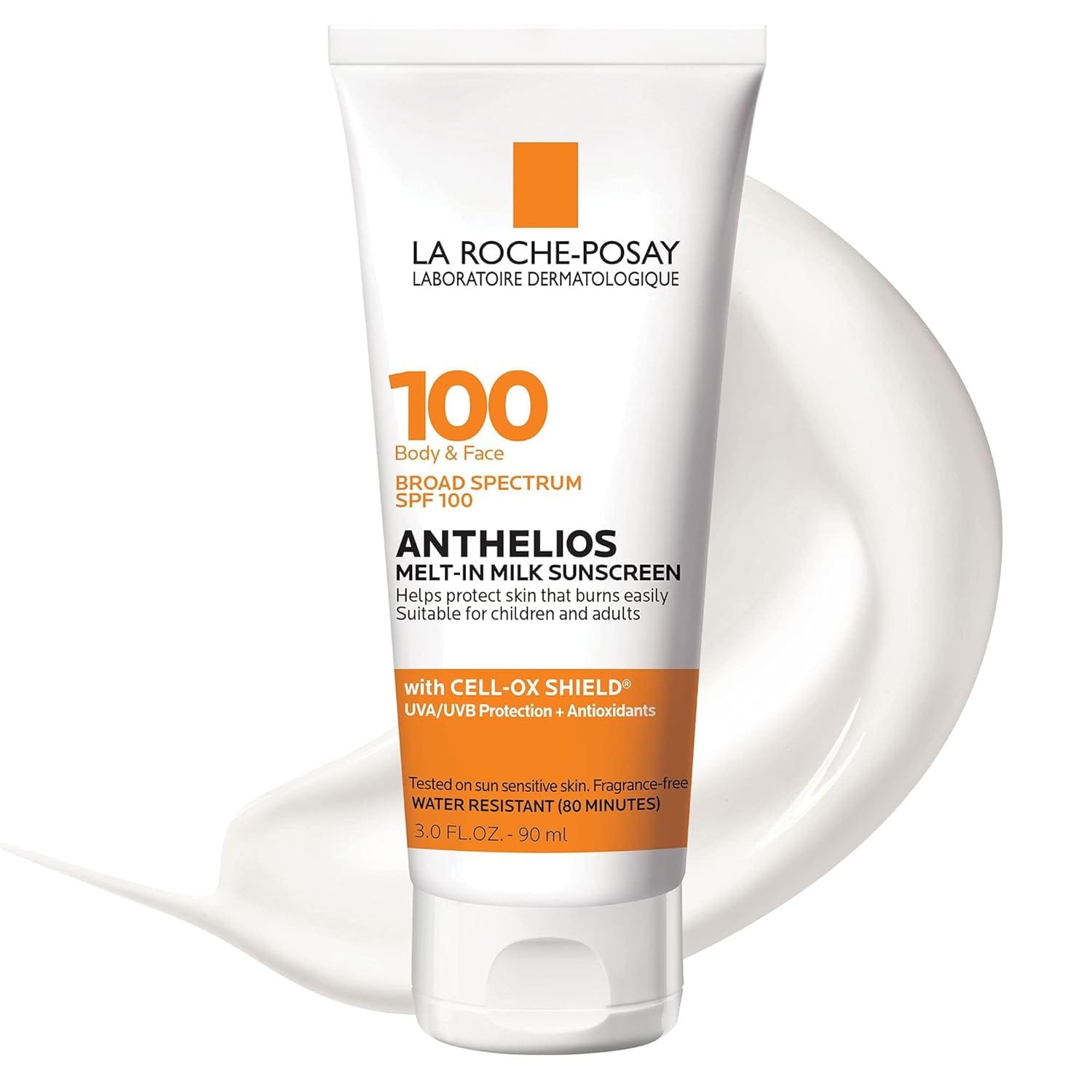
La Roche-Posay Anthelios Melt-In Milk SPF 100
Best for: Long outdoor exposure, face-and-body use and high SPF.
Before you buy: SPF 100 does not last longer than SPF 30 or replace shade, clothing and reapplication. Organic filters can sting some eyes, and the richer lotion is not a matte office finish.
View Anthelios SPF 100 on AmazonAs an Amazon Associate, SkinOptimizer may earn from qualifying purchases.
5. Supergoop! Unseen Sunscreen SPF 40
Why it fits: Unseen Sunscreen is the clearest example of why people choose organic filters: the gel-primer texture applies without a mineral cast and sits naturally under makeup for many users.
Watch-out: Primer feel can encourage a cosmetic pea-sized amount. Apply according to sunscreen directions, and choose another formula if organic filters repeatedly sting your eyes.
- Best for: No-white-cast daily wear and makeup layering
- Decision role: Compare finish and tolerance, not just filter category.
Supergoop! Unseen Sunscreen SPF 40
Best for: No-white-cast daily wear and makeup layering.
Before you buy: Primer feel can encourage a cosmetic pea-sized amount. Apply according to sunscreen directions, and choose another formula if organic filters repeatedly sting your eyes.
View Supergoop! Unseen on AmazonAs an Amazon Associate, SkinOptimizer may earn from qualifying purchases.
6. Beauty of Joseon Daily Relief Sunscreen SPF 40
Why it fits: Daily Relief is a U.S.-market daily sunscreen with a light moisturizing finish and no mineral cast. It suits readers who want an elegant organic-filter face product rather than a dense outdoor lotion.
Watch-out: This is a daily facial option, not the dedicated water-resistant sport choice. Confirm the exact U.S. listing rather than assuming it is identical to every Beauty of Joseon formula sold internationally.
- Best for: Normal-to-dry daily facial wear and transparent finish
- Decision role: Compare finish and tolerance, not just filter category.
Beauty of Joseon Daily Relief Sunscreen SPF 40
Best for: Normal-to-dry daily facial wear and transparent finish.
Before you buy: This is a daily facial option, not the dedicated water-resistant sport choice. Confirm the exact U.S. listing rather than assuming it is identical to every Beauty of Joseon formula sold internationally.
View Beauty of Joseon on AmazonAs an Amazon Associate, SkinOptimizer may earn from qualifying purchases.
7. Paula's Choice CLEAR Ultra-Light Daily Hydrating Fluid SPF 30
Why it fits: Paula's Choice CLEAR offers an oil-free, fluid daily format for breakout-prone routines that reject heavy mineral lotion. It demonstrates that routine fit often matters more than filter ideology.
Watch-out: It is not the high-water-resistance sport product, and no non-comedogenic positioning guarantees that every individual will avoid breakouts. Introduce it without changing the whole routine.
- Best for: Oily or acne-prone skin and lightweight daily wear
- Decision role: Compare finish and tolerance, not just filter category.
Paula's Choice CLEAR Ultra-Light Daily Hydrating Fluid SPF 30
Best for: Oily or acne-prone skin and lightweight daily wear.
Before you buy: It is not the high-water-resistance sport product, and no non-comedogenic positioning guarantees that every individual will avoid breakouts. Introduce it without changing the whole routine.
View Paula's Choice CLEAR on AmazonAs an Amazon Associate, SkinOptimizer may earn from qualifying purchases.
Choose your sunscreen in six steps
- Start with broad-spectrum SPF 30 or higher.
- Add 40- or 80-minute water resistance for sweat or swimming.
- Choose mineral, organic or hybrid based on tolerance and finish.
- Check tint or transparency in natural daylight.
- Apply the directed amount and observe eye sting, cast, pilling and dryness.
- Support sunscreen with shade, clothing, a hat and sunglasses.
The Bottom Line
Mineral sunscreen is not automatically safer, and organic sunscreen is not automatically more effective. Zinc oxide and titanium dioxide can be good starting points for reactive skin, while organic filters often provide lighter, more transparent formats. The winning product is the broad-spectrum SPF 30+ formula that stays comfortable at a complete amount and matches the exposure.
Frequently Asked Questions About Mineral and Chemical Sunscreen
Is mineral sunscreen safer than chemical sunscreen?
Mineral sunscreen is not universally safer. In the FDA's 2021 proposed order, zinc oxide and titanium dioxide had sufficient data for a proposed GRASE finding under stated conditions, while several organic filters needed additional data. Needing more data is not the same as a finding that marketed products are unsafe.
Does mineral sunscreen reflect UV while chemical sunscreen absorbs it?
That popular split is oversimplified. Both mineral and organic sunscreen filters primarily reduce UV through absorption; mineral particles also scatter and reflect a smaller portion. The practical differences are formula, cast, eye sting, finish and tolerance.
Which sunscreen is better for sensitive or acne-prone skin?
Reactive skin often starts with a fragrance-free mineral formula, while oily or acne-prone skin may prefer a lighter organic or hybrid fluid. Neither category guarantees tolerance or prevents clogged pores, so assess the complete formula.
Is mineral sunscreen reef safe?
No sunscreen category can automatically be called reef safe. The term has no single regulated definition, and environmental effects vary by ingredient, concentration and real-world exposure. Follow local rules and use clothing to reduce both UV exposure and product wash-off.
Can mineral and chemical sunscreen be used together?
Yes. Many hybrid products combine mineral and organic filters, and layering compatible products is not inherently dangerous. Do not mix them together in your hand, because that can disrupt each tested film; apply complete layers and avoid relying on added SPF numbers.