Best Sunscreen for Everyday Use in 2026: 8 Daily SPF Picks
Compare eight everyday sunscreens by finish, skin type, makeup fit and water resistance to find a daily SPF you will apply generously.

In this guide
What is the best sunscreen for everyday use?
The best everyday sunscreen is a broad-spectrum SPF 30 or higher that fits the day you actually have. EltaMD UV Clear SPF 46 is our most balanced face pick, CeraVe AM SPF 30 is the practical moisturizer value, and Neutrogena Invisible Daily Defense SPF 60+ is the better choice when commuting or outdoor activity requires water resistance. Choose by finish, exposure and tolerance before choosing by trend.
Choose daily SPF by routine, not hype
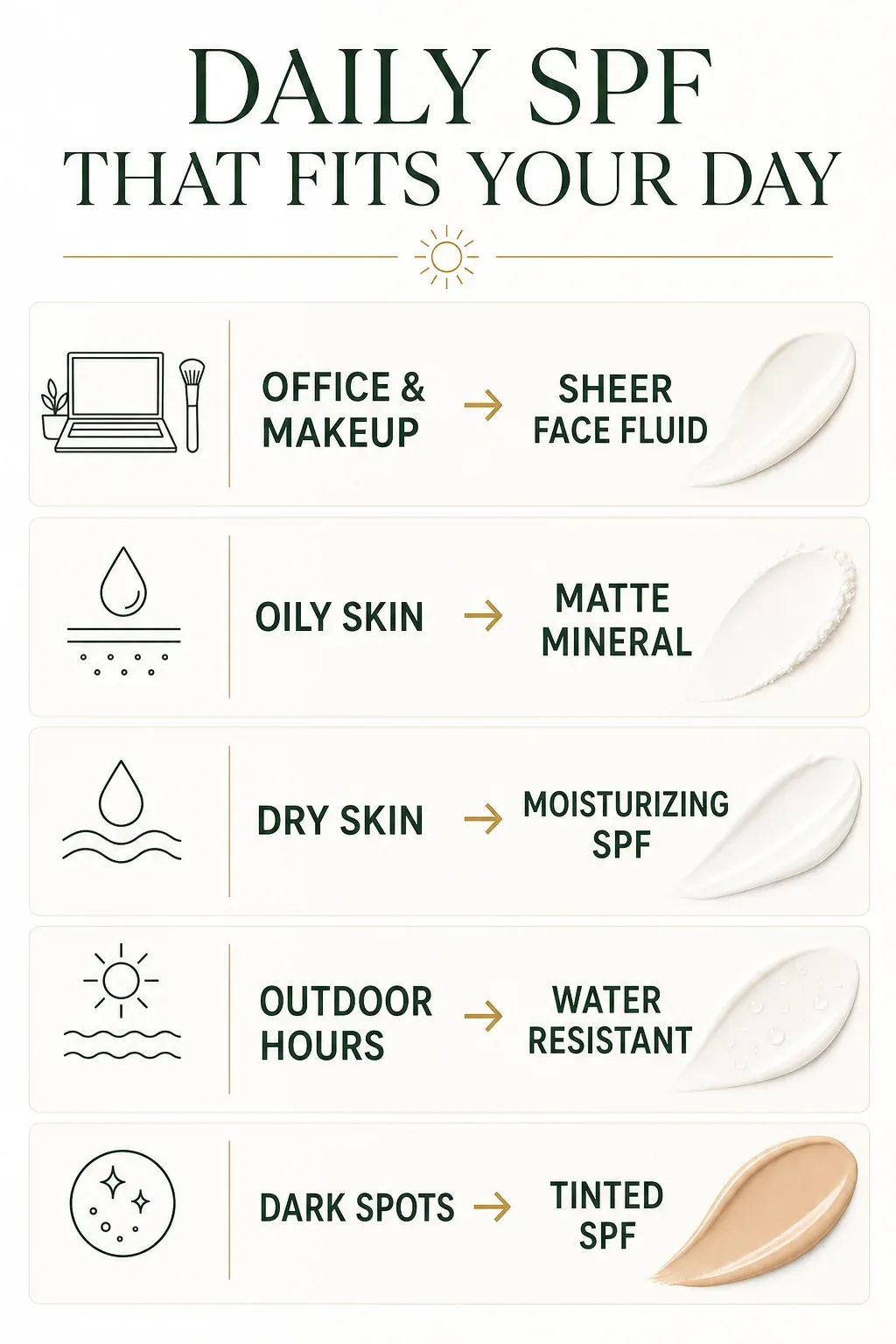
- Office and makeup: use a sheer face fluid that sets without pilling.
- Oily skin: choose a matte or light oil-free finish instead of under-applying a rich lotion.
- Dry skin: use a moisturizing SPF or a simple moisturizer underneath.
- Outdoor hours: prioritize labeled water resistance and a bottle large enough for face and body.
- Dark spots or white cast: consider a correctly matched tinted sunscreen at the full labeled amount.
Everyday sunscreen sounds simple until the same product must sit under makeup, survive a hot commute, avoid the eyes and still feel comfortable at the amount used for testing. That is why a universally “best” sunscreen rarely exists. The useful question is which formula removes the biggest reason you normally skip, rub off or ration SPF.
The baseline is less negotiable. The American Academy of Dermatology recommends broad-spectrum SPF 30 or higher and water resistance. The best daily format then depends on exposure: an elegant non-water-resistant office SPF and a durable outdoor lotion solve different problems.
How to Choose the Right SPF for Everyday Use
Start with broad-spectrum SPF 30 or higher. The FDA sunscreen guide explains that SPF mainly measures UVB protection, while broad-spectrum labeling addresses UVA and UVB testing requirements. A higher number does not mean the product lasts all day.
Then separate the daily setting from the skin type. A person with oily skin may still need a water-resistant lotion for weekend sport, while dry skin can prefer a light serum in humid weather. Choose the first bottle for the weekday routine you repeat most often, then keep a second outdoor option if the exposure changes.
| Your day | Prioritize | Main mistake |
|---|---|---|
| Office and commuting | Comfortable face SPF that sets under makeup | Assuming windows and short outdoor breaks equal zero exposure |
| Outdoor work or sport | Water resistance, larger bottle and face-body coverage | Using a tiny cosmetic tube too sparingly |
| Dry indoor climate | Moisturizing lotion or moisturizer underneath | Choosing a powdery matte finish that catches on flakes |
| Makeup and discoloration | Tinted or primer-like SPF in the correct shade | Applying foundation amounts instead of sunscreen amounts |
| Sensitive eyes | A tested eye-tolerant face formula and cautious patch use | Assuming mineral or fragrance-free guarantees tolerance |
SPF 30 versus SPF 50 for a normal day
Both can be appropriate. SPF 50 offers more tested UVB protection, but the difference does not compensate for a thin layer, missed areas or a product rubbed away during the day. For indoor-heavy weekdays, a comfortable SPF 30 used properly can be more dependable than an SPF 50 you dislike.
Moisturizer with SPF versus dedicated sunscreen
A moisturizer with broad-spectrum SPF is tested as sunscreen, but only at the tested application amount. If the full layer looks greasy or pills, switch to a lighter sunscreen instead of cutting the amount. Readers who need a simple base routine can compare our guide to day and night moisturizers.
Mineral, organic or hybrid filters
Filter type does not determine the whole experience. Mineral formulas may feel drier or appear tinted, while organic or hybrid formulas can feel transparent but sting some eyes. Our detailed chemical versus mineral sunscreen comparison explains the tradeoffs without treating either category as universally safer.
Best Everyday Sunscreens: Quick Comparison
This comparison ranks routine fit, not medical outcome. SkinOptimizer did not independently measure finish, UVA protection or wear time. Check the current Drug Facts, water-resistance statement and selected product variant before ordering.
| Product | Best for | Main limitation |
|---|---|---|
| EltaMD UV Clear Face Sunscreen SPF 46 | Normal, combination or acne-prone skin seeking a polished daily face SPF. | Confirm the exact tint, size and SPF variant; daily elegance is not a substitute for water resistance. |
| Supergoop! Mineral Mattescreen SPF 40 | Oily or combination skin, visible shine and mineral-filter preference. | The tint and matte finish are not universal, and a thin primer layer may underdeliver the labeled SPF. |
| CeraVe AM Facial Moisturizing Lotion SPF 30 | Budget-conscious normal-to-dry skin and simplified weekday routines. | Apply it as sunscreen, not as a thin moisturizer layer; otherwise the labeled protection is not assured. |
| La Roche-Posay Toleriane Double Repair UV SPF 30 | Dry or tight skin that wants moisturizer and SPF in one morning step. | It may look dewy on oily skin and is not the dedicated outdoor option in this guide. |
| Neutrogena Invisible Daily Defense Face Serum SPF 60+ | Humid weather, active commuting and readers who dislike heavy face creams. | Its fluid texture makes under-application easy, and organic filters may sting some eyes. |
| Colorescience Face Shield Flex SPF 50 | Visible discoloration, mineral preference and readers who want light coverage. | Shade selection and premium cost matter; tone-adapting does not mean one shade fits everyone. |
| Eucerin Sun Advanced Hydration Lotion SPF 50 | Dry skin, neck and hand coverage, and readers who need a larger bottle. | The dewy finish may not suit oily skin; verify current water-resistance directions before activity. |
| Supergoop! PLAY Everyday Lotion SPF 50 | Outdoor households, face-and-body coverage and frequent active use. | Organic filters and richer texture may not suit sensitive eyes or a polished makeup routine. |
The 8 Best Sunscreens for Everyday Use in 2026
1. EltaMD UV Clear Face Sunscreen SPF 46
EltaMD UV Clear is the strongest all-around daily face pick for readers who want a light finish without choosing a purely cosmetic primer. The current listing combines zinc oxide with organic UV filters in an oil-free base and is positioned for acne-prone or redness-prone skin. Its compact pump format works well for a morning routine, commuting and makeup days when a dense beach lotion would encourage under-application.
The listing contains several tint, size and SPF variants, so the selected option needs a careful checkout review. It is not the lowest-cost choice, and an elegant facial finish does not make it the correct product for swimming or prolonged sweating. People with known sensitivity to organic filters should compare a mineral-only option instead of relying on the front-label language.
- Best for: Normal, combination or acne-prone skin seeking a polished daily face SPF.
- Skip if: You need a low-cost body sunscreen or mineral-only formula.
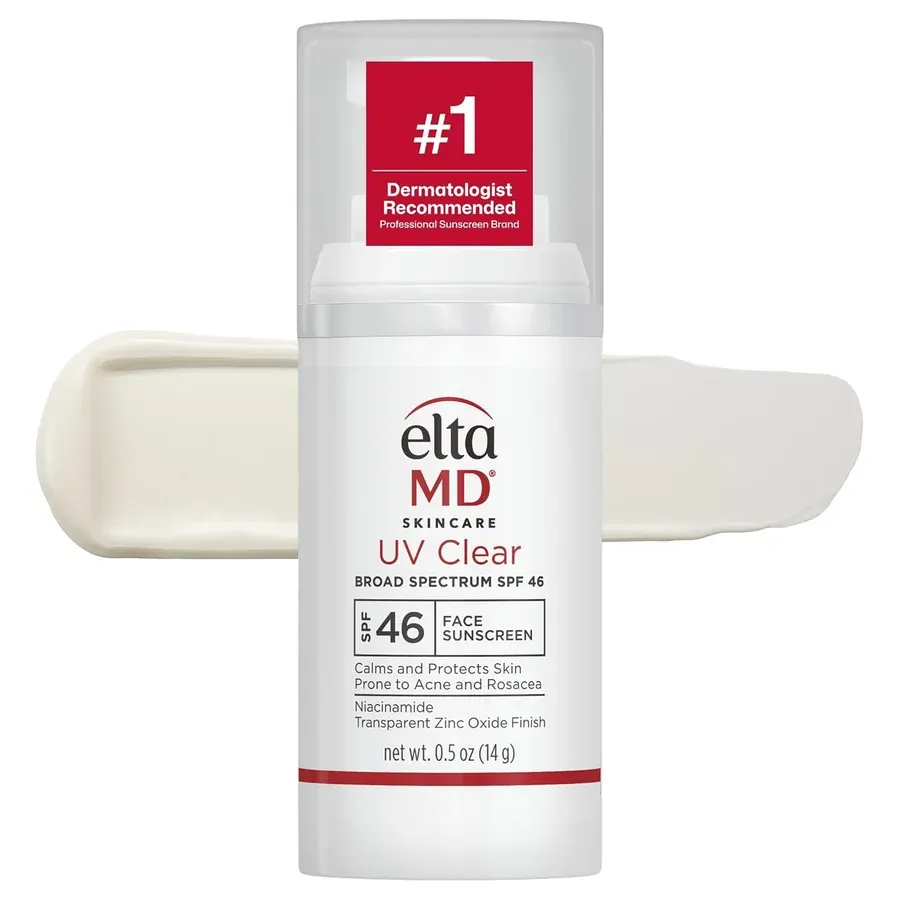
EltaMD UV Clear Face Sunscreen SPF 46
Why it fits: An oil-free facial sunscreen with a light finish that fits commuting, office and makeup routines.
Watch-out: Confirm the exact tint, size and SPF variant; daily elegance is not a substitute for water resistance.
View EltaMD UV Clear on AmazonAs an Amazon Associate, SkinOptimizer may earn from qualifying purchases.
2. Supergoop! Mineral Mattescreen SPF 40
Mineral Mattescreen is the clearest fit for oily skin or anyone who wants sunscreen to behave like a smoothing makeup primer. The zinc-oxide formula is oil-free, has a matte tinted finish and carries water- and sweat-resistance labeling. That combination makes it more useful for humid commutes and shine-prone T-zones than a rich moisturizing sunscreen.
Matte and tinted do not mean invisible on every skin tone. Mineral formulas can catch on flaky areas, while primer-like textures can tempt people to use only a pea-sized cosmetic amount. Moisturize dry patches first, verify the current tint on your complexion and apply enough to meet the sunscreen directions rather than treating it like makeup.
- Best for: Oily or combination skin, visible shine and mineral-filter preference.
- Skip if: Your skin is dry, flaky or the available tint does not match.
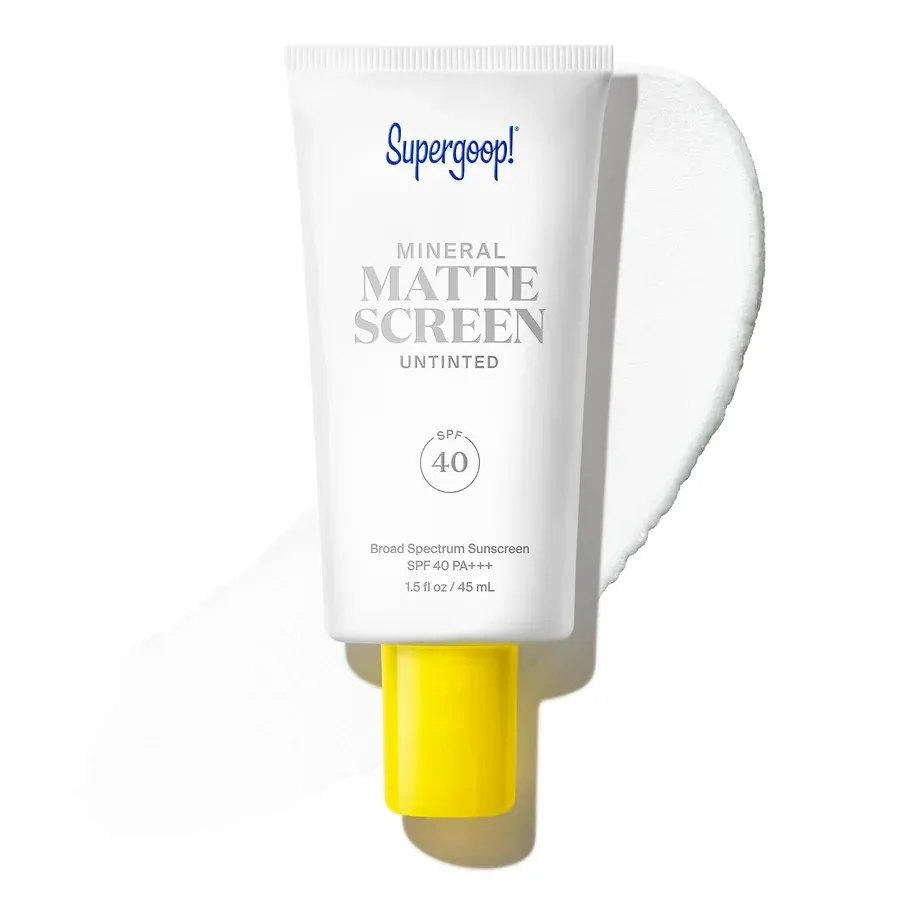
Supergoop! Mineral Mattescreen SPF 40
Why it fits: A tinted zinc-oxide sunscreen that controls shine and can double as a smoothing makeup base.
Watch-out: The tint and matte finish are not universal, and a thin primer layer may underdeliver the labeled SPF.
View Mineral Mattescreen on AmazonAs an Amazon Associate, SkinOptimizer may earn from qualifying purchases.
3. CeraVe AM Facial Moisturizing Lotion SPF 30
CeraVe AM is the practical budget pick for a simple morning routine. It combines broad-spectrum SPF 30 with ceramides, hyaluronic acid and niacinamide in an oil-free moisturizer format. For normal-to-dry skin that tolerates the formula, one correctly applied product can replace a separate morning moisturizer and reduce the number of layers that may pill.
Moisturizer with SPF counts only when enough is applied. Many people use facial lotion in a thin comfort layer that is below the amount used for sunscreen testing. The finish can also feel rich or leave residue on some complexions, so readers who dislike the full amount should choose a lighter dedicated sunscreen rather than deliberately applying less.
- Best for: Budget-conscious normal-to-dry skin and simplified weekday routines.
- Skip if: The full sunscreen amount feels heavy or leaves visible residue.
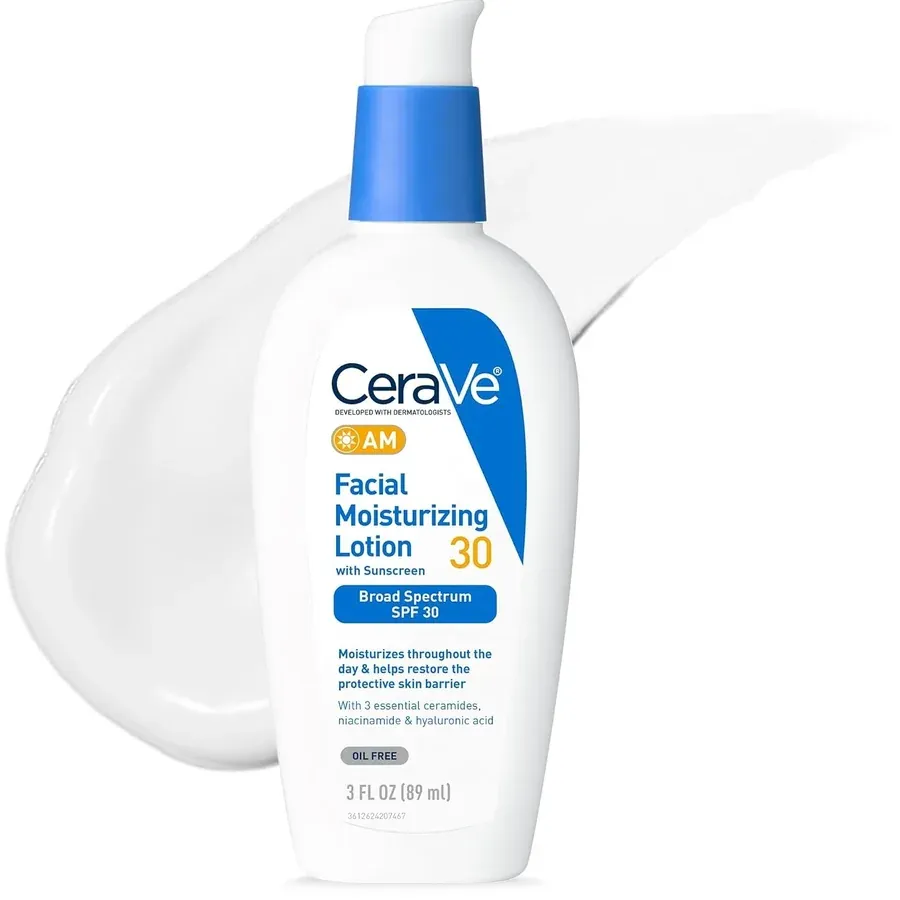
CeraVe AM Facial Moisturizing Lotion SPF 30
Why it fits: A widely available SPF 30 moisturizer with ceramides and niacinamide for simple daily routines.
Watch-out: Apply it as sunscreen, not as a thin moisturizer layer; otherwise the labeled protection is not assured.
View CeraVe AM on AmazonAs an Amazon Associate, SkinOptimizer may earn from qualifying purchases.
4. La Roche-Posay Toleriane Double Repair UV SPF 30
Toleriane Double Repair UV is a stronger fit than a sheer fluid when dryness, tightness or a compromised-feeling routine makes sunscreen uncomfortable. The oil-free moisturizer uses glycerin, niacinamide and ceramide-related barrier support while supplying broad-spectrum SPF 30. It can be especially practical in cool weather or for readers who otherwise stack moisturizer and sunscreen into a pilling combination.
This is a daily moisturizer-SPF, not a sport sunscreen. The richer texture may feel shiny on oily skin and is not the best option for long outdoor exposure without confirmed water resistance. Sensitive users should still patch test because a product positioned for sensitive skin can contain filters or inactive ingredients that an individual does not tolerate.
- Best for: Dry or tight skin that wants moisturizer and SPF in one morning step.
- Skip if: You prefer a matte finish or need water resistance for activity.
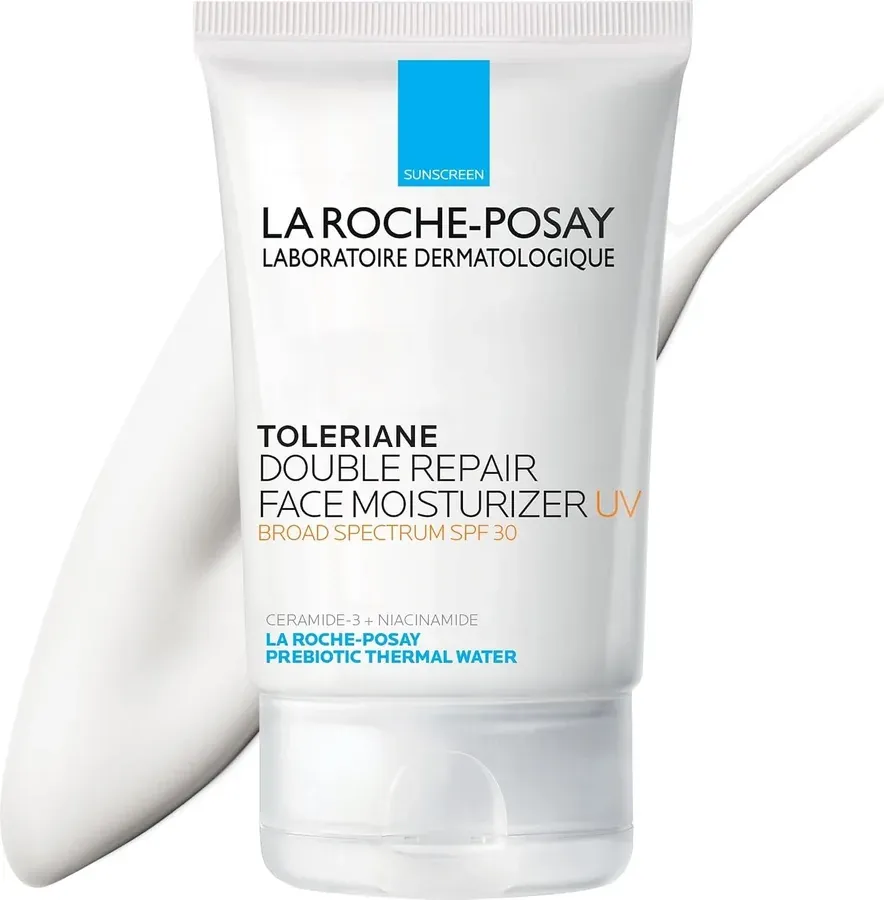
La Roche-Posay Toleriane Double Repair UV SPF 30
Why it fits: A richer oil-free moisturizer with SPF 30 for dry-feeling weekday skin and fewer morning layers.
Watch-out: It may look dewy on oily skin and is not the dedicated outdoor option in this guide.
View Toleriane Double Repair UV on AmazonAs an Amazon Associate, SkinOptimizer may earn from qualifying purchases.
5. Neutrogena Invisible Daily Defense Face Serum SPF 60+
Neutrogena Invisible Daily Defense is the most useful face-only option here for active commuting, humid weather and lunchtime outdoor plans. The fragrance-free serum supplies broad-spectrum SPF 60+ and 80-minute water resistance in a lighter texture than a traditional sport cream. That makes it easier to move from a weekday routine into a walk, run or outdoor event without changing products.
A fluid serum can make under-application feel natural because a small amount spreads quickly. Measure by the label and cover ears, hairline and neck rather than stopping when the face feels silky. The organic filters may sting some eyes or reactive skin, and the word invisible describes appearance rather than guaranteed tolerance.
- Best for: Humid weather, active commuting and readers who dislike heavy face creams.
- Skip if: Organic filters commonly sting your eyes or reactive skin.
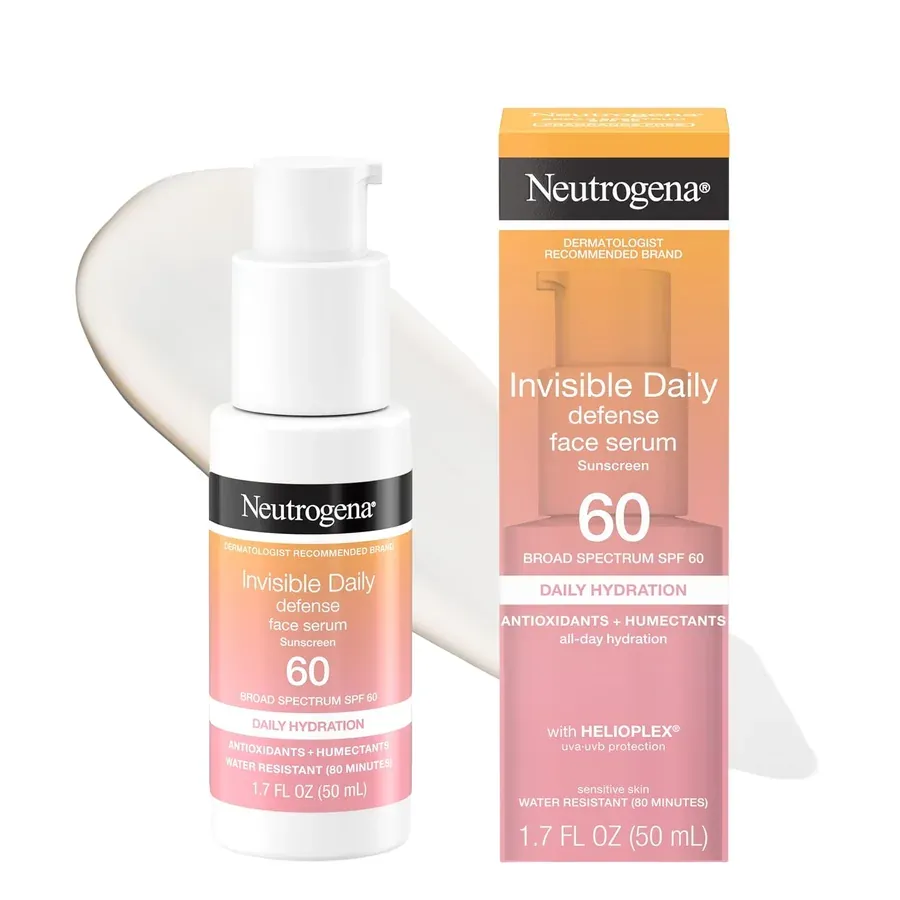
Neutrogena Invisible Daily Defense Face Serum SPF 60+
Why it fits: A fragrance-free SPF 60+ face serum with 80-minute water resistance for active everyday wear.
Watch-out: Its fluid texture makes under-application easy, and organic filters may sting some eyes.
View Neutrogena Face Serum on AmazonAs an Amazon Associate, SkinOptimizer may earn from qualifying purchases.
6. Colorescience Face Shield Flex SPF 50
Face Shield Flex is the premium choice for readers who want mineral protection and complexion coverage in the same step. The zinc-oxide formula provides buildable tint and 40-minute water resistance, making it more functional than a purely cosmetic skin tint. It is especially relevant when visible white cast or uneven tone repeatedly prevents generous sunscreen use.
Tone-adapting pigment is not the same as one universal shade. Depth and undertone still matter, and the premium price can make full-amount daily use expensive. Select the correct shade, avoid stretching the bottle with a foundation-thin layer and check the current seller and sealed packaging before use.
- Best for: Visible discoloration, mineral preference and readers who want light coverage.
- Skip if: You want an inexpensive colorless sunscreen with no makeup effect.
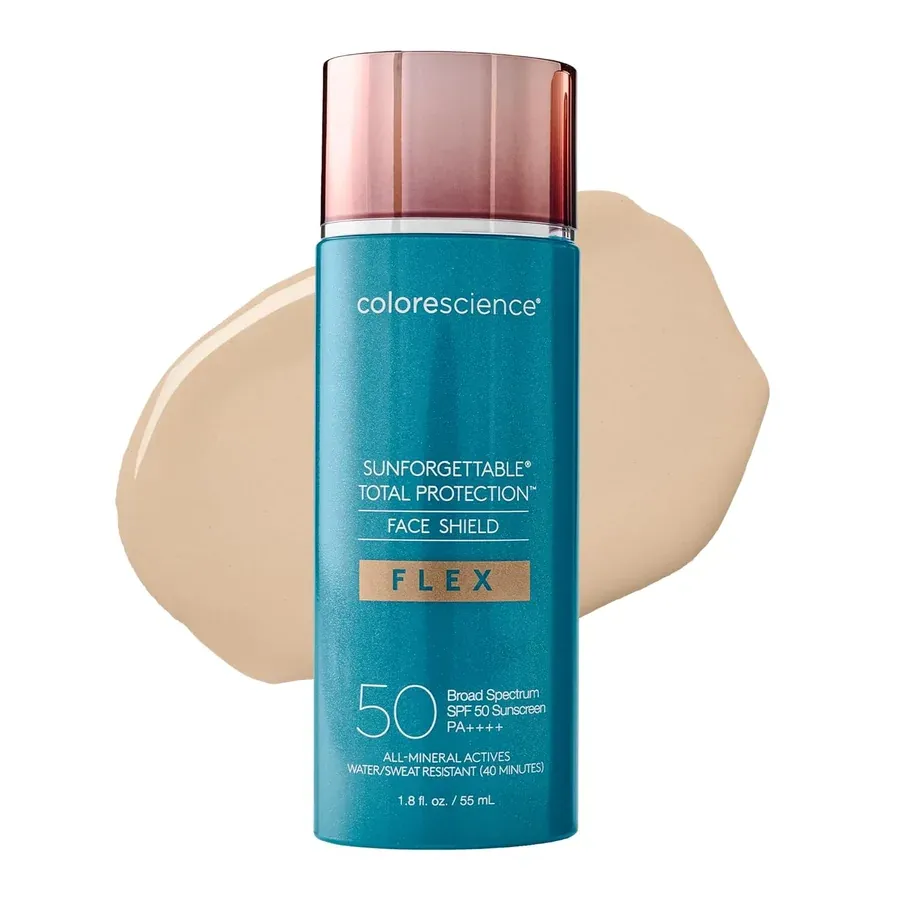
Colorescience Face Shield Flex SPF 50
Why it fits: A buildable tinted zinc-oxide SPF 50 with 40-minute water resistance and complexion coverage.
Watch-out: Shade selection and premium cost matter; tone-adapting does not mean one shade fits everyone.
View Colorescience Flex on AmazonAs an Amazon Associate, SkinOptimizer may earn from qualifying purchases.
7. Eucerin Sun Advanced Hydration Lotion SPF 50
Eucerin Advanced Hydration is the value-oriented choice for people who need more than a tiny facial bottle. The fragrance-free five-ounce lotion includes humectants and broad-spectrum SPF 50, so it can cover the face, neck, chest, hands and arms without treating sunscreen as a scarce luxury product. It fits dry skin and everyday exposure better than a powdery matte formula.
The hydrating finish may be too dewy for oily skin or makeup that already slips. A larger bottle also does not automatically mean it is the correct swimming product, so read the current Drug Facts and water-resistance directions. Let the layer settle before dressing to reduce transfer around collars and sleeves.
- Best for: Dry skin, neck and hand coverage, and readers who need a larger bottle.
- Skip if: You want a compact matte facial fluid.
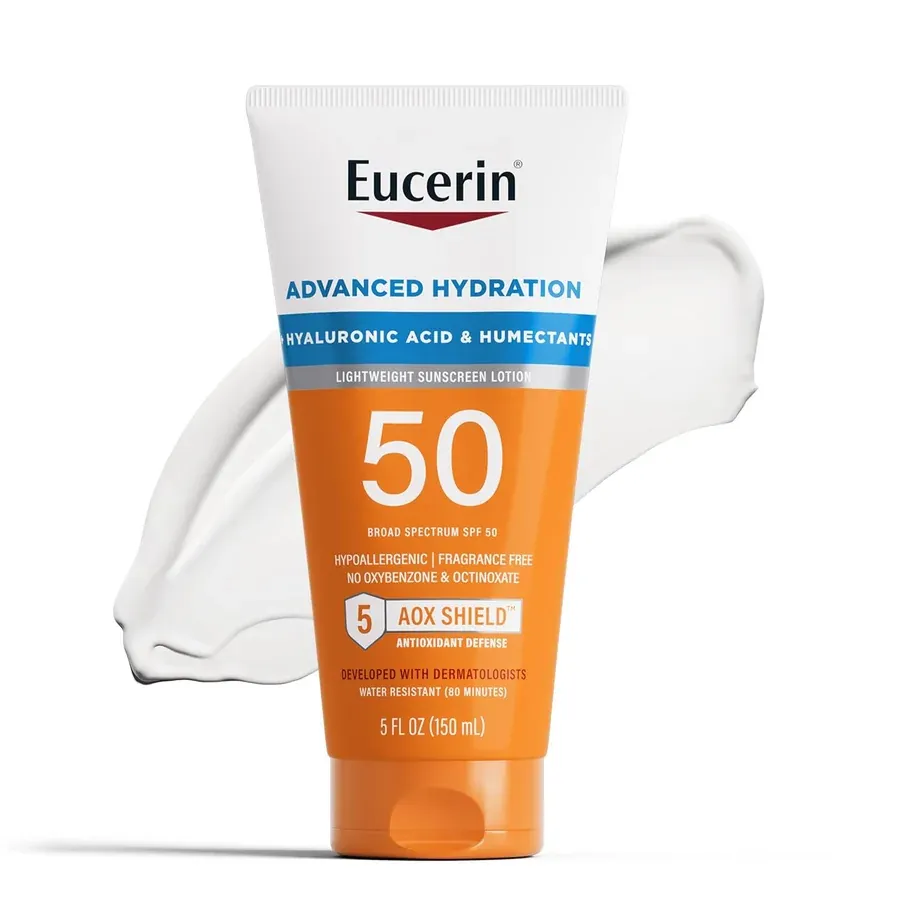
Eucerin Sun Advanced Hydration Lotion SPF 50
Why it fits: A fragrance-free SPF 50 lotion in a practical size for generous face, neck, chest and hand coverage.
Watch-out: The dewy finish may not suit oily skin; verify current water-resistance directions before activity.
View Eucerin Advanced Hydration on AmazonAs an Amazon Associate, SkinOptimizer may earn from qualifying purchases.
8. Supergoop! PLAY Everyday Lotion SPF 50
PLAY Everyday Lotion is the strongest bulk option for families, outdoor work and people who want one face-and-body bottle near the door. The current listing provides broad-spectrum SPF 50, water and sweat resistance and an 18-ounce pump size. That format supports generous coverage far better than rationing a small facial tube across shoulders, arms and legs.
Large-format value only helps if the formula is comfortable enough to use. The lotion contains organic filters and may feel richer or sting sensitive eyes, while a household pump can sit open in heat or direct sunlight if stored carelessly. Use a separate eye-tolerant face SPF when needed and follow the labeled reapplication directions.
- Best for: Outdoor households, face-and-body coverage and frequent active use.
- Skip if: You need mineral-only sunscreen or a compact office-face formula.
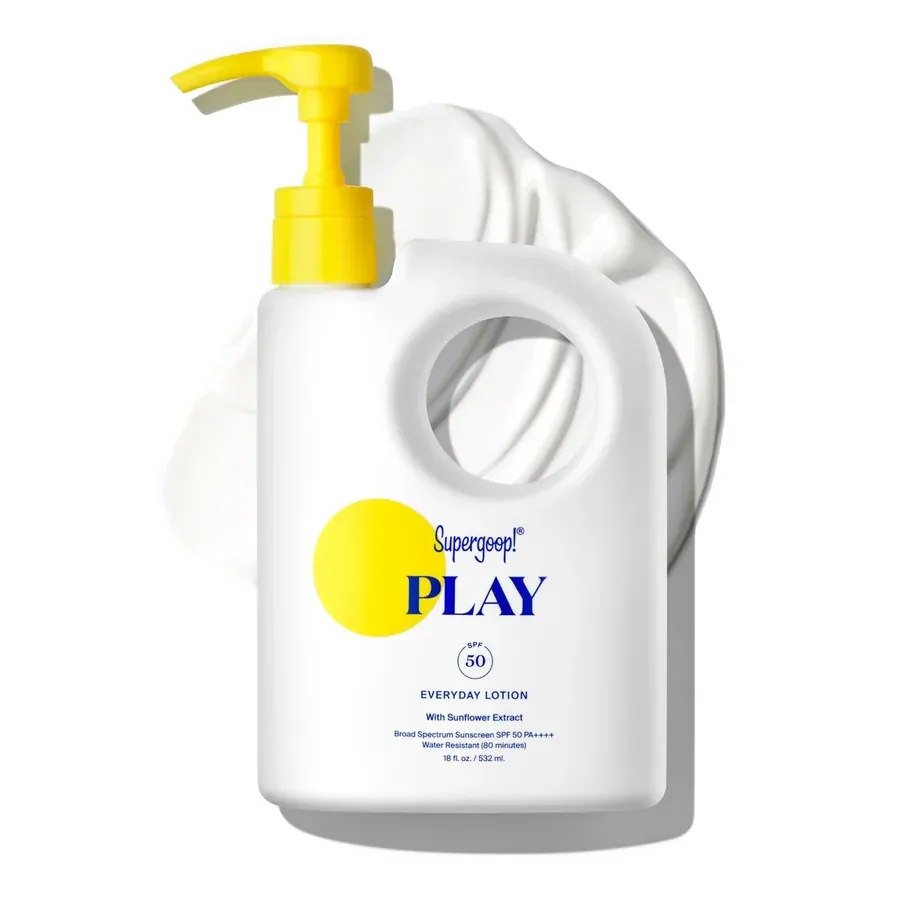
Supergoop! PLAY Everyday Lotion SPF 50
Why it fits: A water- and sweat-resistant SPF 50 in an 18-ounce pump for generous everyday body coverage.
Watch-out: Organic filters and richer texture may not suit sensitive eyes or a polished makeup routine.
View Supergoop PLAY on AmazonAs an Amazon Associate, SkinOptimizer may earn from qualifying purchases.
How to Apply Everyday Sunscreen Without Pilling
Keep the morning order simple: cleanse or rinse, use one treatment serum if needed, add moisturizer only when the sunscreen is not moisturizing enough, then apply sunscreen as the final skincare layer before makeup. Let each wet layer settle. Our guide to layering serum and moisturizer helps reduce incompatible textures.
Apply sunscreen to the face, ears, hairline and exposed neck. Follow the product directions rather than relying on a universal social-media shortcut, because package format and labeled use differ. A two-finger method can be a reminder, but finger length, nozzle width and formula density are not standardized measuring tools.
When pilling occurs, remove one unnecessary layer before blaming the sunscreen. Heavy silicone primers, multiple serums and repeated rubbing can disturb the film. Press makeup on after the sunscreen has set, and do not mix foundation into sunscreen because dilution can create uneven protection.
When and How to Reapply Daily SPF
The two-hour instruction matters during sustained outdoor exposure, not as a claim that sunscreen stops working exactly at minute 120 indoors. Reapply after swimming, sweating and towel drying, and during outdoor lunch, long drives or afternoon errands when exposure continues. The Johns Hopkins morning sunscreen guide reinforces broad-spectrum SPF 30 and routine consistency.
Over makeup, the most reliable method is still another adequate layer of a compatible sunscreen. Cushions, sticks and powders can make touch-ups easier, but casual swipes may not reproduce the labeled protection. Use hats, shade and clothing as part of the plan rather than forcing a cosmetic format to carry every protective job.
| Situation | Practical action | Do not rely on |
|---|---|---|
| Indoor office day | Apply a complete morning layer; reassess before outdoor lunch or commute | A rigid alarm disconnected from actual exposure |
| Outdoor activity | Reapply at least every two hours and after sweat or water, per label | High SPF as permission to skip reapplication |
| Makeup day | Use compatible layers and press on a real sunscreen touch-up | A few powder or mist passes as full replacement |
| Driving or window seat | Use broad-spectrum protection and physical barriers where practical | Assuming glass removes every relevant ray |
Daily Sunscreen Mistakes That Reduce Real-World Protection
The first mistake is buying for prestige rather than amount. A luxury one-ounce bottle can be appropriate for the face, but it becomes poor value if the price makes you ration every pump. Match bottle size to the area you need to cover and the frequency of use.
The second mistake is treating makeup claims as sunscreen instructions. A foundation or tint with SPF can add convenience, yet the cosmetic amount is often much smaller than the sunscreen test amount. Use a real sunscreen layer underneath unless the labeled makeup product can be applied at its tested amount without compromising wear.
The third mistake is ignoring tolerance signals. Brief awareness during application is different from persistent burning, swelling, rash or eye pain. Stop the offending product, simplify the routine and seek qualified care when symptoms are severe or do not settle. Our guide to skin barrier damage explains when adding more actives makes the routine worse.
Which Everyday Sunscreen Should You Buy?
Choose EltaMD UV Clear when you want the most balanced polished face option. Choose CeraVe AM or Toleriane Double Repair UV when a moisturizer-SPF can simplify a dry-skin morning. Choose Mineral Mattescreen for shine, Colorescience Flex for mineral tint, and Neutrogena Invisible Daily Defense when active commuting makes water resistance important.
For larger exposed areas, Eucerin Advanced Hydration and Supergoop PLAY make more sense than rationing a facial bottle. The best purchase is the smallest number of products that covers your normal weekday and your predictable outdoor exception. For specialized concerns, use our focused guides to acne-prone sunscreen, sensitive-skin sunscreen and anti-aging sunscreen.
Frequently Asked Questions About Everyday Sunscreen
What SPF is best for everyday use?
Use a broad-spectrum SPF 30 or higher for daily exposed skin. SPF 50 can provide additional tested UVB protection, but it does not last longer and still requires enough product and reapplication during sustained outdoor exposure.
Do I need sunscreen if I work indoors?
Daily sunscreen is reasonable when daylight reaches you through windows, you commute, take outdoor breaks or spend time near glass. Exposure varies by building and behavior, so combine sunscreen with shade, clothing and distance from strong direct sun rather than treating indoor use as all-or-nothing.
Can moisturizer with SPF replace sunscreen?
Yes, when the product is labeled broad spectrum and you apply enough to meet its sunscreen directions. If that full amount feels heavy, a lighter dedicated sunscreen is more reliable than using a deliberately thin moisturizer layer.
How often should I reapply everyday sunscreen?
Reapply at least every two hours while outdoors and after swimming, heavy sweating or towel drying, following the label. A normal indoor office day may not require a rigid two-hour schedule, but outdoor lunch, commuting and window exposure can create practical reapplication points.
Should everyday sunscreen be mineral or chemical?
Either can work. Mineral formulas may suit some sensitive users but can feel dry or leave a tint or cast; organic or hybrid formulas can be lighter but may sting some eyes. Choose the complete formula you can apply generously and tolerate consistently.