Salicylic Acid for Acne: How to Start Without Overdoing It
How salicylic acid fits blackheads and clogged pores, which format to choose, and how to avoid an irritated over-exfoliated routine.

In this guide

Quick Answer
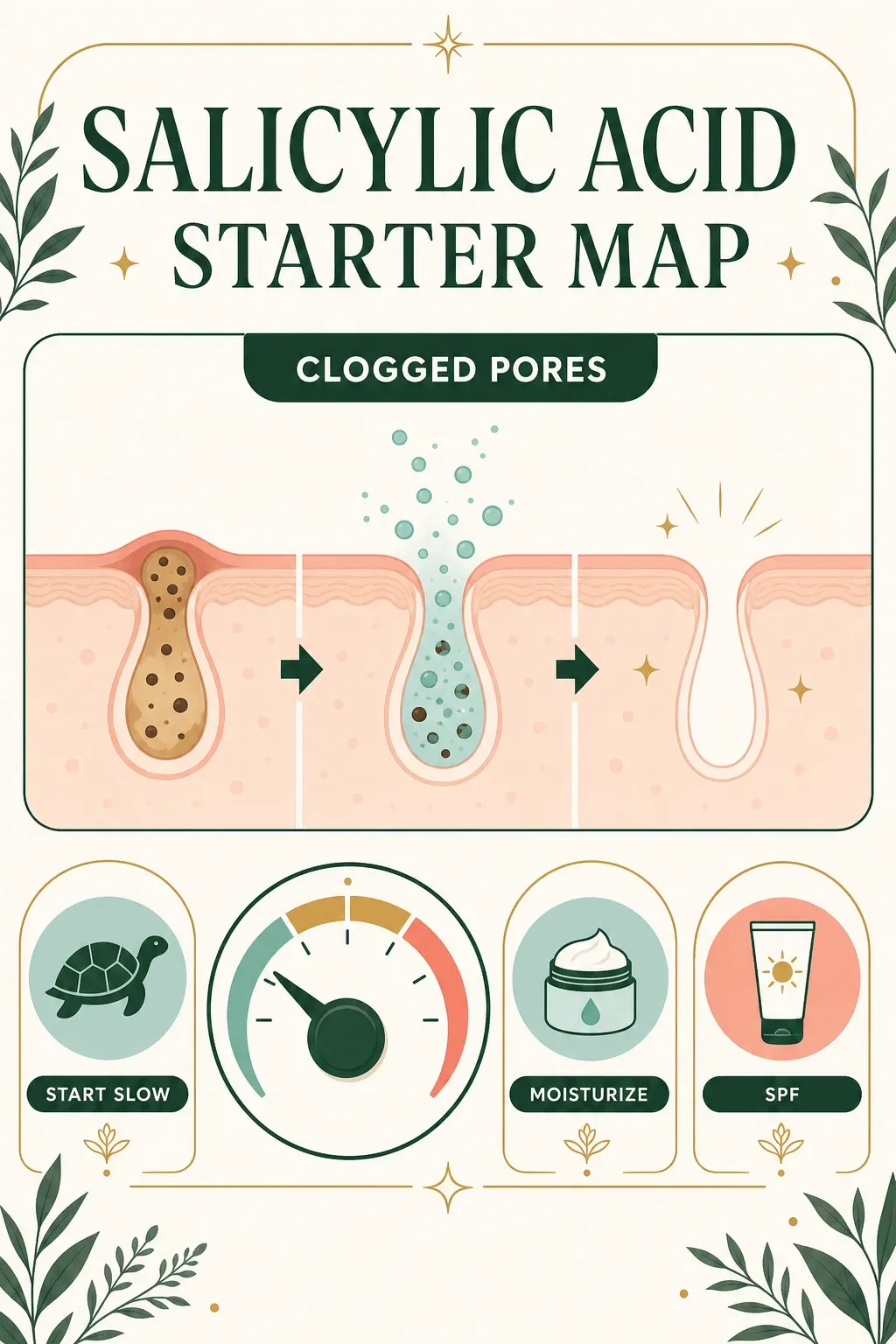
Salicylic acid fits acne dominated by blackheads, whiteheads and clogged texture. Start with one salicylic-acid product at low frequency, moisturize, use sunscreen, and reduce or pause if burning, raw shine or persistent peeling develops.
Quick Summary
- Best fit: comedonal acne and oily congestion.
- Choose one format: cleanser, leave-on liquid or spot application.
- More frequent use is not automatically more effective.
- Inflamed, deep or scarring acne may need a different treatment path.
If you're looking to improve your skincare routine, salicylic acid might be your new best friend.
Putting the ingredient into a product decision? Our Paula's Choice 2% BHA review explains who should use the leave-on liquid, who should skip it, and how to judge results over six to eight weeks.
This powerful ingredient is known for its ability to help clear up acne and promote healthier skin.
In this article, we will explore how salicylic acid works, its benefits, and how to effectively incorporate it into your daily skincare regimen.
Let's unlock the secrets to achieving clearer, healthier skin!
Key Takeaways
- Salicylic acid helps clear acne by exfoliating dead skin and unclogging pores.
- It's effective for oily skin types and can reduce redness and inflammation.
- Using salicylic acid products regularly can lead to smoother skin over time.
- Always follow up with sunscreen when using salicylic acid during the day.
- Consult with a dermatologist if you have concerns about using salicylic acid.
Evidence and safety boundaries
Acne is a medical condition with different lesion types and causes. The American Academy of Dermatology acne-care guidance supports gentle cleansing, avoiding picking and giving treatment time to work. Its diagnosis and treatment overview explains why treatment is not one-size-fits-all.
Introduce one active at a time and follow the product or prescription label. Stop and seek professional care for severe burning, swelling or rash.
Painful deep acne, spreading inflammation, scarring, sudden onset or acne that persists after a consistent over-the-counter trial deserves assessment by a qualified clinician. Prescription retinoids, antibiotics and hormonal therapy require individualized guidance.
The Magic of Salicylic Acid for Acne

How Salicylic Acid Works
Salicylic acid is like a superhero for our skin!
It dives deep into our pores, helping to clear out all the gunk that can cause breakouts. By gently exfoliating, it removes dead skin cells and reduces inflammation, making our skin look clearer and smoother.
This means fewer pimples and less redness!
Benefits of Using Salicylic Acid
Using salicylic acid can be a game-changer for those of us dealing with acne.
Here are some awesome benefits:
- Unclogs pores: It helps to clear out the dirt and oil that can lead to breakouts.
- Reduces redness: Thanks to its anti-inflammatory properties, it calms angry skin.
- Improves skin texture: Regular use can make our skin feel smoother and look more radiant.
Common Myths About Salicylic Acid
There are a few myths floating around about salicylic acid that we should clear up:
- Myth: It’s only for oily skin.
Fact: While it’s great for oily skin, it can also help those with dry or combination skin when used correctly. - Myth: It causes more breakouts.
Fact: When used properly, it actually helps prevent breakouts by keeping pores clear. - Myth: You can’t use it in the sun.
Fact: You can use it during the day, but always remember to apply sunscreen to protect your skin!
Remember, salicylic acid is a fantastic ally in our quest for clear skin. With the right approach, we can unlock its full potential!
Incorporating Salicylic Acid into Your Skincare Routine
Daily Routine Tips
When we think about adding salicylic acid to our daily skincare, it’s super important to start slow.
For beginners, starting with a cleanser or toner that contains 0.5% to 2% salicylic acid is recommended.
If a rinse-off BHA is the better fit, our salicylic acid cleanser comparison compares strengths for oily, sensitive and acne-prone skin and shows when daily use is too much.
This concentration is effective for most skin types and helps us ease into the routine without overwhelming our skin.
Here’s how we can do it:
- Cleanse: Start with a gentle cleanser to wash away dirt and oil.
- Apply Salicylic Acid: Use a toner or serum with salicylic acid after cleansing. Remember to wait a few minutes to allow the serum to absorb completely into your skin.
- Moisturize: Lock in hydration with a good moisturizer.
Weekly Treatments to Consider
To really amp up our skincare game, we can add some weekly treatments:
- Exfoliating Masks: Use a salicylic acid peel once or twice a week to keep our pores clear.
- Charcoal Masks: These can help draw out impurities and detoxify our skin.
- Facials: Treat yourself to a professional facial every now and then to really deep clean those pores.
Combining with Other Ingredients
Salicylic acid works well with other ingredients, but we need to be careful.
Here are some combos that can help:
- Hyaluronic Acid: This helps keep our skin hydrated while salicylic acid does its job.
- Niacinamide: Great for reducing redness and improving skin texture.
- Retinol: Can be used at night to boost cell turnover, but let’s not use them together to avoid irritation.
Remember, consistency is key! Sticking to this routine can make a big difference in how our skin looks and feels. Let’s get started on this journey together!
Choosing the Right Salicylic Acid Products
When it comes to picking the right salicylic acid products, we want to make sure we’re getting the best for our skin. Here’s how we can do that:
Best Cleansers with Salicylic Acid
- Look for gentle formulas that won’t strip our skin.
- Some great options include:
- Cetaphil Gentle Skin Cleanser
- Neutrogena Oil-Free Acne Wash
- La Roche-Posay Effaclar Medicated Gel Cleanser
Top Serums for Acne-Prone Skin
- We should consider serums that not only contain salicylic acid but also other beneficial ingredients. Here are some to check out:
- The Ordinary Salicylic Acid 2% Solution
- Paula’s Choice 2% BHA Liquid Exfoliant
- L’Oréal Paris Revitalift Vitamin C + E + Salicylic Acid Serum
Spot Treatments That Work
- For those pesky breakouts, spot treatments can be a lifesaver. Here are some effective options:
- Benzoyl Peroxide: Helps reduce acne-associated bacteria and inflammation.
- Salicylic Acid: Unclogs pores and exfoliates the skin.
- Tea Tree Oil: Has limited acne evidence and can irritate; it is not a substitute for proven treatment.
Remember, choosing the right products is essential for achieving clear skin. Let’s take our time to find what works best for us!
Natural Alternatives to Salicylic Acid
When it comes to keeping our skin clear, we often think of salicylic acid as our go-to.
But guess what?
There are some awesome natural alternatives that can help us out too! Let’s dive into a few of our favorites:
Tea Tree Oil
Tea tree oil is like nature’s little miracle worker!
Known for its antibacterial properties, it can help reduce inflammation and fight off those pesky acne-causing bacteria.
Just remember to dilute it with a carrier oil before applying it to avoid irritation.
Aloe Vera
Aloe vera is not just for sunburns!
This soothing gel hydrates and calms irritated skin. It’s perfect for those of us who want to keep our skin feeling fresh and smooth. Plus, it’s super easy to find!
Honey
Honey isn’t just for tea; it’s a natural humectant!
This means it helps keep our skin moist while also fighting bacteria. Applying a honey mask for about 15 minutes can work wonders for our skin.
Here’s a quick summary of these natural alternatives:
Remember, everyone’s skin is different, and what works for one person might not work for another. It’s all about finding what suits us best!
Lifestyle Changes to Boost Your Skincare Routine

Healthy Eating Habits
Eating well can really help our skin shine!
Here are some tips to keep in mind:
- Fresh fruits and veggies: They’re packed with vitamins that nourish our skin.
- Foods rich in omega-3, like fish, can help reduce inflammation.
- Let’s try to stay away from processed snacks and sugary drinks. A balanced diet can make a big difference!
Managing Stress Levels
Stress can mess with our skin, so let’s keep it in check. Here are some ways to help:
- Take breaks when we need them.
- Try out yoga or meditation to relax.
- Spend time with friends or pets; it’s a great way to unwind!
Importance of Sleep and Hydration
Getting enough sleep is super important for our skin. Here are some tips:
- Establish a bedtime routine to signal our body it’s time to wind down.
- Limit screen time before bed; the blue light can mess with our sleep.
- Drink plenty of water to keep our skin hydrated and flush out toxins.
Remember, a healthy lifestyle is not just about skincare products. It’s about nourishing our bodies from the inside out. By focusing on our diet, stress levels, and sleep, we can truly support our skin’s natural glow!
Common Mistakes to Avoid When Using Salicylic Acid

Overusing the Product
One of the biggest blunders we can make is thinking that more is better.
Using salicylic acid too often can actually irritate our skin.
Instead, let’s aim for a balanced approach. Here’s a quick guide:
- Daily Use: Start with 1-2 times a week.
- Gradual Increase: If our skin tolerates it, we can slowly increase to daily use.
- Listen to Our Skin: If we notice redness or irritation, it’s time to cut back.
Skipping Sunscreen
We all know how crucial sunscreen is, yet many of us still forget it.
Not applying sunscreen can lead to long-term skin damage. Let’s make it a habit to apply a broad-spectrum SPF every morning, even on cloudy days!
Ignoring Patch Tests
Before diving into a new product, we should always do a patch test. This helps us avoid any unexpected reactions. Here’s how:
- Apply a small amount on our wrist or behind the ear.
- Wait 24 hours to see if any irritation occurs.
- If all is good, we can safely use it on our face!
Remember, our skin is unique, and what works for one person might not work for us. Let’s listen to our skin and adjust our routine accordingly!
Expert Tips for Maximizing Salicylic Acid Benefits

Layering Skincare Products
When we’re using salicylic acid, it’s super important to layer our products correctly.
Here’s how we can do it:
- Cleanse: Start with a gentle cleanser to wash away dirt and oil.
- Toner: Apply a toner to prep our skin.
- Serum: Use a serum that targets our specific concerns.
- Spot Treatment: Apply spot treatments directly on breakouts.
- Moisturizer: Lock in all that goodness with a moisturizer.
When to Use Salicylic Acid
Timing is everything! We should consider using salicylic acid at night.
This way, our skin can absorb it without the sun’s rays interfering. Plus, it gives our skin time to recover while we sleep.
Consulting a Dermatologist
If we’re unsure about how to use salicylic acid or if it’s right for our skin, let’s not hesitate to consult a dermatologist. They can provide personalized advice and help us avoid any potential pitfalls.
Remember, consistency is key! Sticking to our routine can make a big difference in how our skin looks and feels. Let’s get started on this journey together!
Wrapping It Up: Your Journey to Clear Skin
Keeping your skin clear doesn’t have to be complicated.
Just remember to wash your face, use a toner, and moisturize every day. And don’t skip the sunscreen! Finding the right products for your skin is key, so take your time and see what works best for you.
Be patient, as it might take a little while for your skin to adjust. With some care and the right routine, you’ll be on your way to glowing skin in no time.
This article is for informational purposes only and does not replace professional dermatological advice.
How we research and correct content: Editorial Policy.
Choose Format Before Frequency
A cleanser gives short contact and can be easier to integrate. A leave-on product offers more contact but is also easier to overuse, especially beside retinoids, benzoyl peroxide or another exfoliant.
Apply salicylic acid to the acne-prone area rather than chasing individual pores if the product label supports that use. Spot-only application can miss the early clogs that are not yet visible.
- New to acids: start two or three times weekly.
- Already using a retinoid: avoid immediate same-night stacking.
- Sensitive or dehydrated: consider a cleanser format or skip the active.
- Deep tender acne: do not depend on salicylic acid alone.
Compare the Options Before Changing the Routine
Use this table to match the intervention to the visible pattern and to identify the limit that should stop unnecessary escalation.
| Skin pattern or option | Best next step | Important limit |
|---|---|---|
| Cleanser | Short contact; oily or congestion-prone skin | Daily at first may still be too much |
| Leave-on liquid or gel | Persistent blackheads and texture | Start low frequency |
| Spot format | Small defined clogged area | May miss developing lesions |
| Combined routine | Only after tolerance is clear | Avoid multiple new actives together |
Adjust the Plan to Real Teen Life
School mornings reward a short routine that works even when time is limited. Keep the required products visible and in order, and move optional steps out of the way until the base routine is automatic.
Sports, helmets and heavy sweating change the exposure, not the biology of the skin. Rinse or cleanse gently after activity, clean reusable contact surfaces, and avoid compensating with rough cloths or extra exfoliation.
Cold weather, indoor heating and air conditioning can lower tolerance even when the underlying concern has not changed. Reduce active frequency when tightness appears instead of assuming the treatment has stopped working.
Makeup and shaving should be treated as separate routine variables. Remove makeup completely without repeated rubbing, and review shaving technique before applying stronger acne products to irritated follicles.
Budget also affects treatment quality because an unaffordable routine will not be repeated. Prioritize cleanser, moisturizer, sunscreen and one evidence-based treatment before spending on masks, mists or overlapping serums.
Travel and weekends should not require a second routine. Use the same essentials in smaller containers and keep the treatment schedule unchanged unless the environment affects tolerance.
Stress about appearance can also drive picking and constant mirror checking. Use neutral weekly photos, reduce magnifying-mirror time and involve a trusted adult or professional when skin concerns affect school, sleep or confidence.
Finally, build a stop rule before starting. Persistent burning, swelling, rash, painful cracking or a rapid increase in deep lesions is a reason to pause the newest product and seek qualified advice when appropriate. Clear rules protect both skin and consistency.
How to Test the Routine Without Losing the Signal
Keep cleanser, moisturizer and sunscreen stable while testing one treatment variable. When several products change together, a breakout, sting or improvement cannot be assigned confidently.
Use the same amount and schedule unless the label or a qualified professional says otherwise. More product or more frequent application can increase irritation without shortening the biological treatment timeline.
Set the Baseline
Record the main concern, current products and two photos in consistent light.
Protect Tolerance
Track tightness, burning, peeling and whether the routine is easy enough to repeat.
Judge the Trend
Compare new lesions and comfort over weeks, not the appearance of one day.
| Check point | What to assess | Decision |
|---|---|---|
| First 48 hours | Burning, swelling, rash or painful cracking | Stop the newest product and get advice when symptoms are significant |
| Weeks 1-2 | Comfort, dryness and whether the schedule is realistic | Reduce frequency before adding another active |
| Weeks 6-8 | Fewer new lesions, calmer texture or a clearer pattern | Continue, adjust one variable or seek professional help |
| Any time | Deep pain, scars, rapid worsening or major distress | Escalate care rather than waiting for a retail product to solve it |
A routine is not successful merely because it feels active. The useful outcome is a gradual improvement that the skin can tolerate and the teenager can sustain.
Do not measure success by tingling, dryness or how many steps were completed. Those sensations can reflect irritation, while the meaningful measures are fewer new lesions, better comfort, less picking and a routine that remains consistent.
Use weekly rather than daily comparisons because acne and oil fluctuate. A single stressful day, sports session or menstrual-cycle shift should not trigger a complete product change.
Write the planned review date on a calendar before starting. That simple boundary reduces impulsive switching and makes the final decision more evidence-based.
Do not wait through deep pain, scarring, rapid worsening or significant emotional distress. Those are reasons to seek professional care even when the planned test period is not complete.
Frequently Asked Questions About Salicylic Acid for Acne
Does salicylic acid help all types of acne?
It is best suited to blackheads, whiteheads and clogged pores. Deep nodules or widespread inflamed acne often needs a broader treatment plan.
Can I use salicylic acid every day?
Some people tolerate daily use, but beginners should usually start less often and increase only if the skin remains comfortable.
Can salicylic acid and retinol be used together?
They can appear in the same broader routine, but starting both together increases irritation risk. Separate them initially and follow professional advice when needed.
How long does salicylic acid take to work?
Texture can begin to change within several weeks, while a fair assessment often needs six to eight weeks of consistent, tolerated use.
What are signs of too much salicylic acid?
Persistent burning, painful peeling, swelling, cracking or shiny-raw skin are reasons to pause and simplify the routine.