Korean Skincare for Hyperpigmentation: Compare Serums and SPF
Compare Korean skincare for hyperpigmentation with two serum options, US tinted SPF checks, ingredient cautions and a simple way to choose what to skip.
In this guide
Which Korean skincare products make sense for hyperpigmentation?
Choose one optional serum by its complete formula, while keeping daily sun protection in place. AXIS-Y Dark Spot Correcting Glow Serum and Beauty of Joseon Glow Deep Serum offer two different formulas to compare; neither is a niacinamide-free option.
A Korean product name or a familiar ingredient does not establish how well a finished serum will work for your marks. For new, changing or uncertain spots, get professional advice before trying to fade them.
Quick Summary
- Compare alternatives: you do not need both serums or a complete matching-brand routine.
- Read the full formula: AXIS-Y includes rosemary leaf oil; Glow Deep also contains niacinamide.
- Check sun protection: match the exact US label, tint, shade and activity needs.
- Keep expectations specific: ingredient research is not a trial of the product in your shopping cart.
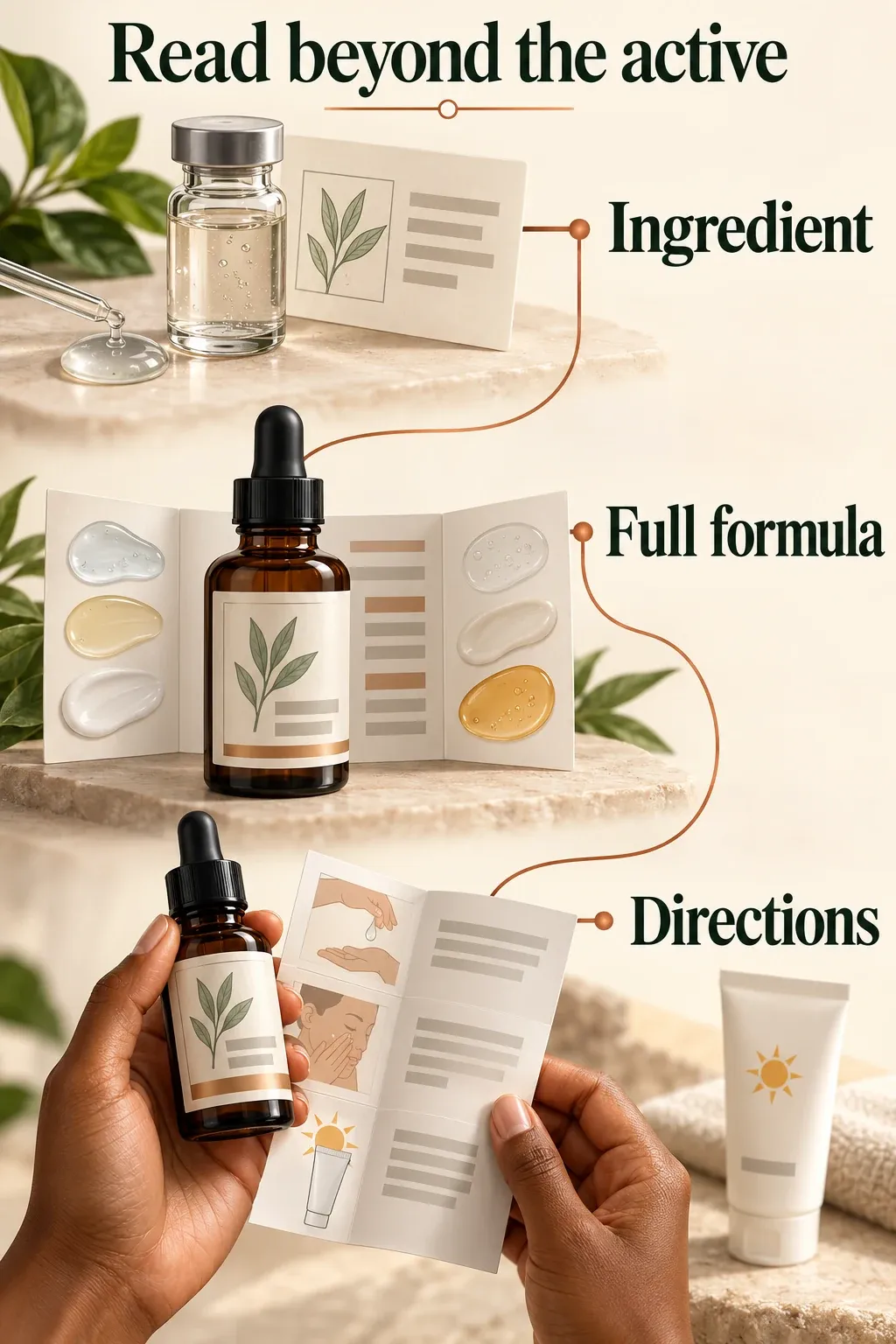
Choose a targeted step
Editorial Note
SkinOptimizer is an editorial skincare resource. We checked manufacturer information, exact product listings and the research described below; we have not conducted a hands-on product trial or clinical comparison.
The examples explain possible fits and limitations. Formulas, packaging and sellers can change, so check the current label before purchase and again when the product arrives.
Shopping for Korean skincare products for hyperpigmentation can quickly become a list of ingredients to add. A serum promises glow, another highlights a higher percentage, and a sunscreen looks almost identical to one recommended in a video.
Begin with the purchase you actually need to make. You might want to replace a serum that irritates, compare a fragrance-free option, or find a tinted sunscreen you can comfortably use as directed.
Compare the two serum formulas and the US-market sunscreen separately. They serve different roles, and the examples do not form a shopping kit.
If you already have a comfortable routine, keep its useful parts. Our hyperpigmentation skincare routine covers the wider plan; the focus here is product selection and what the available evidence can tell you before checkout.
The Skin Insider
Write down one reason for the purchase: a formula you need to avoid, a texture you dislike, or a sun-protection step you are not using consistently. If the reason is simply that another serum is popular, postpone it.
Check what you are trying to address
A brown mark left after a pimple or irritation may be post-inflammatory hyperpigmentation. DermNet describes PIH as pigmentation following inflammation or injury; it is not a diagnosis that a product list or illustration can confirm.
Raised or indented scars and pink or red post-breakout marks are not automatically the same problem. A product sold for dark spots should not be expected to correct every visible change after acne.
Melasma also needs a distinct assessment and care plan. If you are unsure why patches appeared, have persistent pigmentation, or already use prescription treatment, ask a qualified professional how cosmetic products fit your situation.
A new, changing, bleeding or different-looking spot deserves medical assessment. Do not use a cosmetic serum as a test of whether such a spot is harmless.
For a fuller cause-first discussion, see our guide to dark spots on darker skin. Use that context to decide whether product comparison or professional assessment should come first.
Compare a serum role with a sunscreen role
The two serums below are alternatives for an optional targeted step. The sunscreen serves a separate purpose, so a three-product comparison does not mean that all three belong in the same basket.
| Example | Reason to compare it | Main limitation |
|---|---|---|
| AXIS-Y Dark Spot Correcting Glow Serum, 50 mL | A disclosed 5% niacinamide formula | Contains rosemary leaf oil and niacinamide |
| Beauty of Joseon Glow Deep Serum, 30 mL | An alpha-arbutin-containing, fragrance-free option | Also contains niacinamide; current concentration claims need care |
| Beauty of Joseon Tinted Mineral Dayscreen SPF 30, US, 40 mL | A tinted daily sunscreen option | Shade selection matters; choose a water-resistant alternative for swimming or sweating |
Keep nationality separate from product fit. Our broader Korean skincare selection guide explains routine roles; an imported version, a US version and a similarly named replacement still need their own checks.
Three product examples and their trade-offs
Affiliate disclosure: As an Amazon Associate, we earn from qualifying purchases. The two serum buttons are affiliate links; the sunscreen button opens the manufacturer's US page.
AXIS-Y Dark Spot Correcting Glow Serum, 50 mL

AXIS-Y discloses 5% niacinamide and lists glycerin, squalane and rosemary leaf oil in this formula. The oil is a relevant buying fact if you avoid fragrance oils, even when the product is described as soothing.
Buy it if: you tolerate niacinamide and want to compare one serum with a disclosed concentration.
Skip it if: you avoid niacinamide or rosemary leaf oil, or your current routine is already causing a reaction.
Use the current package directions and compare it with what you already own. Matching a study's ingredient percentage does not make this serum the formula used in that study.
Check the AXIS-Y 50 mL listingBeauty of Joseon Glow Deep Serum: Rice + Alpha-Arbutin, 30 mL

The current Glow Deep formula contains alpha-arbutin and niacinamide, and the manufacturer labels it fragrance-free. It is an alternative to consider if you want to avoid the rosemary oil in AXIS-Y.
Buy it if: this exact ingredient list suits you and you prefer a fragrance-free serum containing alpha-arbutin.
Skip it if: you need a niacinamide-free product or require a verified alpha-arbutin concentration before choosing.
We could not verify the often-repeated 2% alpha-arbutin and 68% rice figures on the current manufacturer page. This guide therefore does not use those figures to recommend the present formula.
Check the Glow Deep 30 mL listingBeauty of Joseon Tinted Mineral Dayscreen SPF 30, US, 40 mL

The US product page labels this broad-spectrum SPF 30. Its shade-specific ingredient lists include iron oxides, and the pictured example is 23N.
Buy it if: you want to compare a tinted daily sunscreen and can find a shade and finish you will apply as directed.
Skip it if: you need water resistance for swimming or sweating, or dislike the tint at a full application.
Follow the label's application and reapplication directions. The presence of iron oxides does not tell us the exact visible-light protection of every shade or establish this product as a melasma treatment.
Check the US label and shade optionsGive sun protection its own buying check
The AAD's dark-spot guidance recommends tinted sunscreen with iron oxide, broad-spectrum SPF 30 or higher, water resistance and a shade that blends with your skin. That is a fuller checklist than a prominent SPF number.
The daily BOJ example above has a specific limitation: its directions point to a water-resistant sunscreen for swimming or sweating. It should not be presented as satisfying every part of that checklist for every activity.
Visible light is relevant particularly when discussing melasma. AAD melasma self-care guidance includes tinted sunscreen with iron oxide, shade and sun-protective habits; a cosmetic serum does not replace a clinician's treatment plan.
Compare our tinted sunscreen choices if the BOJ shades or finish do not suit you. Our Korean sunscreen guide also explains why the exact market formula matters.
A tint that looks attractive when dabbed on may be less comfortable at the amount directed on the label. Check that practical fit before committing to a larger purchase; avoid using less sunscreen simply to improve the makeup finish.
What ingredient research can tell you
An original 2002 study by Hakozaki and colleagues included 18 Japanese women using a 5% niacinamide moisturizer against its vehicle in a paired design.
The paper also included a separate tanning study with 120 participants. Its abstract reports differences after four weeks, but neither component tested the two serums in this guide.
The research supports considering niacinamide, with limits. It cannot predict your result or tolerance, or set a four-week deadline for a different finished serum.
For alpha-arbutin, a small randomized melasma pilot compared a cream containing 5% alpha-arbutin plus 2% kojic acid with triple-combination cream. Thirty participants used the treatments on opposite sides of the face for 12 weeks.
That combination and setting differ from the current Glow Deep serum. The trial cannot isolate the contribution of alpha-arbutin, establish the present BOJ concentration, or prove that this cosmetic replaces prescription treatment.
| Evidence | What it addresses | What it cannot establish here |
|---|---|---|
| Niacinamide clinical research | Specific tested moisturizers and participants | The result of AXIS-Y or Glow Deep for your marks |
| Alpha-arbutin combination pilot | A mixed-ingredient cream in people with melasma | Isolated arbutin efficacy or prescription equivalence for BOJ |
| Current manufacturer information | Name, size, formula and directions | A head-to-head clinical ranking |
The studies discussed here did not compare these two serums with each other. We therefore compare their verifiable buying differences rather than naming a clinically superior winner.
The Optimizer's Edge
Use one ingredient exclusion before comparing benefits. If you need to avoid niacinamide, neither serum belongs on your shortlist; changing from one to the other does not solve that requirement.
If fragrance oils are the concern and niacinamide is tolerated, the formula comparison becomes more useful. Your requirement should lead the selection.
When to choose a serum, and when to keep your money
Consider one optional serum when your basic routine is comfortable, you understand the appearance concern, and the current ingredients fit your known tolerances. Choose a texture and cost you can maintain without rationing essential products.
If your moisturizer and sunscreen already contain niacinamide, another niacinamide serum is not automatically necessary. Check for duplication before treating a new ingredient percentage as a reason to buy.
If products have been stinging, do not keep adding targeted steps to chase the marks. Review the reaction and get advice when needed; our guide to signs of an irritated or damaged skin barrier provides broader context without diagnosing the cause.
- Keep a sunscreen you already use comfortably and correctly.
- Skip a duplicate serum when you cannot name the additional job.
- Pause shopping when you are trying to identify a reaction.
- Seek assessment when the diagnosis or a changing spot is uncertain.
Introduce one change you can assess
Keep tolerated basics steady while you compare a replacement. Starting both serums, a new exfoliant and a different sunscreen together makes it harder to understand a reaction or an unwanted finish.
The AAD's small-area testing guidance describes testing a product twice daily for seven to ten days before routine use. Follow its normal contact time and the product directions.
This home check cannot guarantee that later irritation or a breakout will not occur. It is also different from medical allergy testing; stop a product causing a reaction and seek help for severe or persistent symptoms.
| Checkpoint | Useful action | Keep in mind |
|---|---|---|
| Before purchase | Match the current ingredients to what you need to avoid | An ingredient score cannot predict your whole response |
| Before routine use | Use the AAD small-area approach and label directions | This is not a guarantee or a clinical allergy test |
| During use | Change one item and note comfort, finish and any reaction | Keep sunscreen use and prescribed advice in place |
| At review | Revisit the cause and practical fit before adding more | Persistent uncertainty deserves professional assessment |
If you use a prescription or have been given a treatment plan, ask how an optional cosmetic fits before adding it. This guide does not set a universal schedule for combining arbutin, niacinamide, retinoids or exfoliating acids.
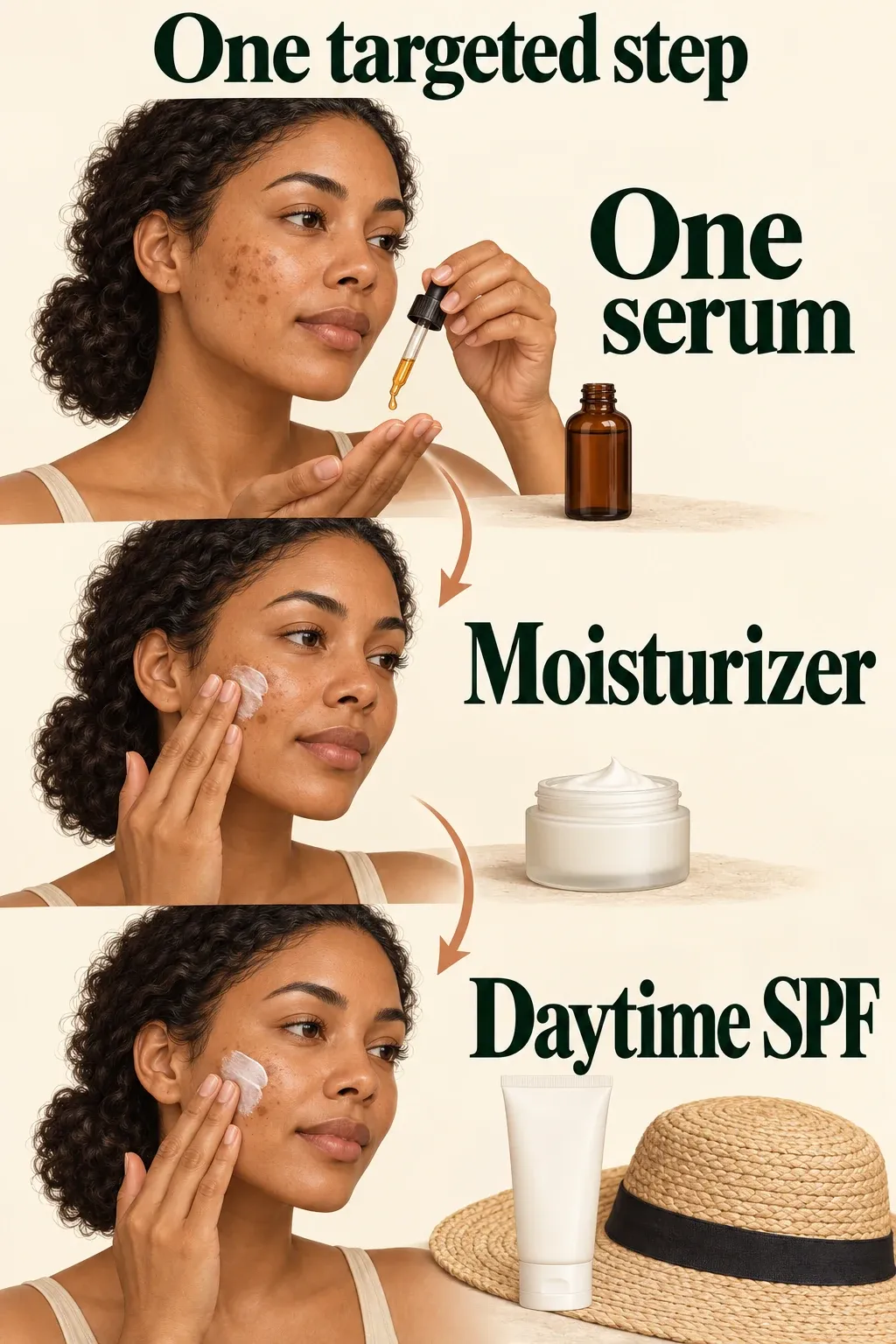
Match the name, size, formula and market
Glow Deep Serum is different from Glow Serum: Propolis + Niacinamide. The current Glow Deep page also offers more than one size; our linked example is 30 mL, so a familiar bottle alone is not enough to match the listing.
Check the full product name, single-item size and current ingredient panel together. Compare the package again on arrival, because a listing title can remain familiar through a later packaging or formula change.
For sunscreen, keep the market attached to every fact. The BOJ example here is the US Tinted Mineral Dayscreen SPF 30, not an untinted Relief Sun formula with a different protection label.
- Name and size: confirm the exact product and intended pack.
- Ingredients: check known exclusions, including niacinamide or fragrance oils.
- Shade and activity: match the US sunscreen label to how you will use it.
- Seller: use the brand's authorized-source guidance and check the seller selected at checkout.
An Amazon brand storefront or familiar logo does not guarantee the seller selected for every order. We verified listing identity for the two serum examples, without promising current stock, a particular seller or a fixed price.
If you need products without niacinamide, our niacinamide-free moisturizer guide provides another starting point. It does not establish that niacinamide caused a previous reaction.
Review comfort and expectations separately
You can decide that a texture is unpleasant or a product causes a reaction before judging its effect on a mark. Do not treat burning or persistent irritation as proof that a dark-spot product is working.
Dark marks may persist for months, with timing depending on their cause and other factors. A study's assessment date or a reviewer's experience should not become your promised clearance date.
Keep notes about what changed, how often you used it and what you noticed. If you compare photographs, similar lighting and an unfiltered image make the record more useful, but they cannot identify a diagnosis or prove which product caused a change.
Before deciding that a stronger serum is the next step, check whether new inflammation or inconsistent protection is still an issue. Review common sunscreen application mistakes and seek advice when pigmentation remains unexplained or concerning.
Frequently asked questions about Korean skincare for hyperpigmentation
We reviewed community questions about judging early results, choosing formulas and tolerability, and what to do when marks persist. These threads helped identify questions; the answers rely on the authority, study and manufacturer sources discussed above.
How long should I try Korean skincare for hyperpigmentation?
There is no verified clearance deadline for the two serums here. Marks can take time, but irritation is a reason to stop and reassess rather than wait for a promised result.
Seek professional advice when the cause is unclear or the pigmentation is persistent or changing.
Can I use AXIS-Y and Beauty of Joseon Glow Deep together?
This guide treats them as alternatives, and both contain niacinamide. The studies discussed do not show that buying this pair produces a better result.
Choose one possible change and check how it fits any existing treatment advice.
Is Glow Deep Serum niacinamide-free?
No. The current manufacturer's ingredient list includes niacinamide as well as alpha-arbutin.
Do not use its ingredient-list position to estimate a percentage, and check the delivered label before use.
Is a Korean sunscreen without tint enough for melasma?
Do not assume that a broad-spectrum SPF number measures visible-light protection. AAD melasma guidance includes tinted sunscreen with iron oxide and a clinician-led plan when needed.
Check the exact formula, shade and activity labeling; a Korean origin does not settle those questions.
Should I switch to a stronger serum if my marks do not change?
A higher percentage is not an automatic solution. Revisit the cause, reactions, current treatment and sun-protection habits before adding more.
Get professional assessment for uncertain or persistent pigmentation, and promptly for new, changing or bleeding spots.
Your Clear Skin Checklist
- I understand the concern or have asked for assessment.
- I checked the complete current formula and exact product size.
- I am choosing one optional serum, not treating this as a kit.
- My sunscreen's shade, label and activity limits fit its use.
- I know when to stop a product and seek advice.
A purchase should have one clear job
Choose Korean skincare for hyperpigmentation with a specific gap in mind. Keep products that serve their intended role comfortably, use sunscreen as directed and skip additions without a clear purpose.
This article is for informational purposes only and does not replace professional dermatological advice.