Can You Shrink Pores? What Actually Makes Them Look Smaller
You cannot permanently shrink pores, but you can make them look less noticeable by matching the routine to clogs, oil, irritation, or lost firmness.

In this guide
Can you actually shrink pores?
You cannot permanently erase pores or make them open and close on command. Their baseline size is shaped by genetics, oil-gland activity, age, and skin structure. You can still make pores look less noticeable by clearing congestion, controlling excess shine without stripping the skin, protecting collagen with daily sunscreen, and using a tolerated retinoid when appropriate. Start by matching the routine to what makes your pores stand out. If the skin is already red, tight, or burning, repair comfort first instead of adding stronger acids.
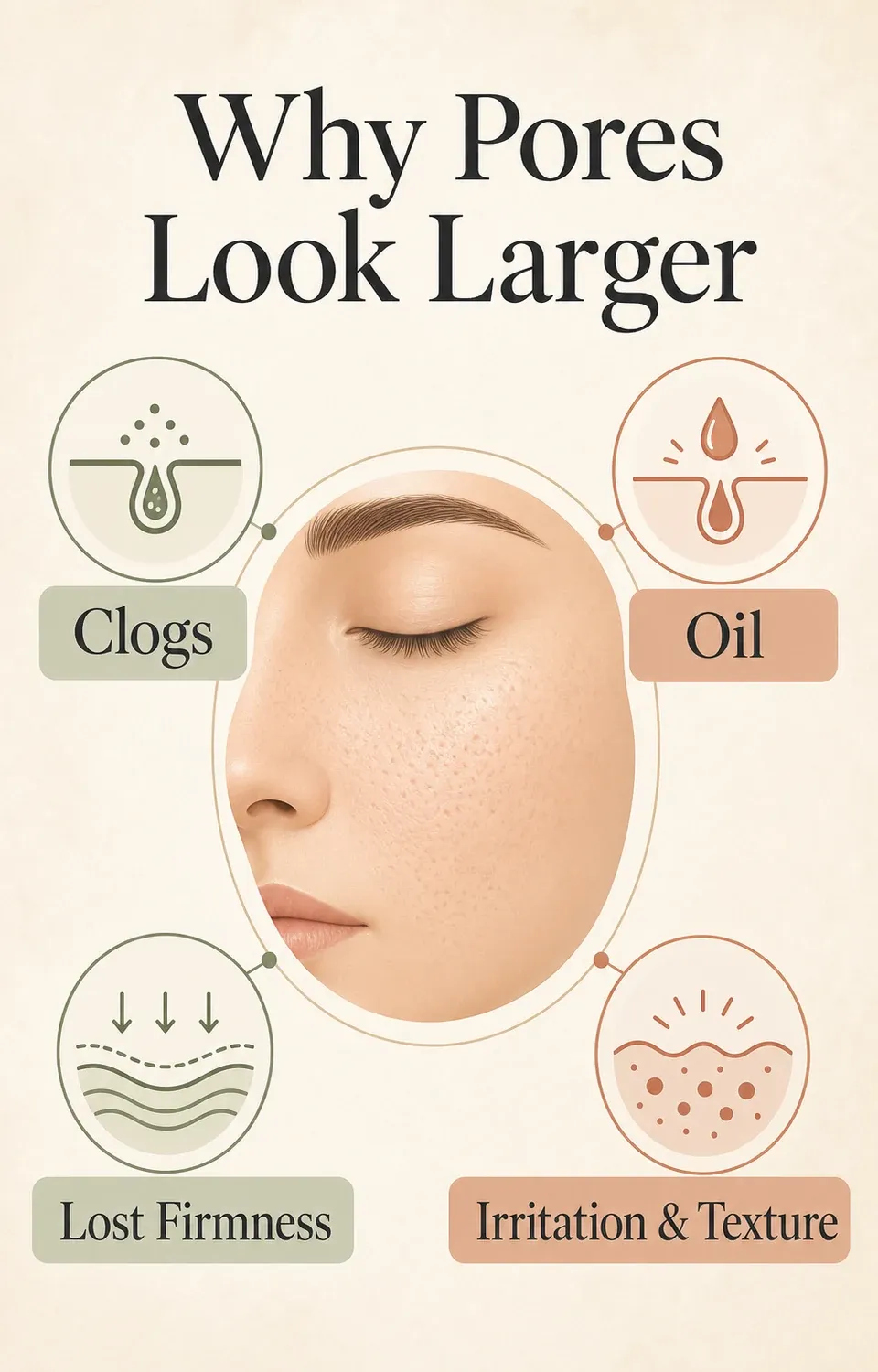
Can you shrink pores? The honest answer sounds negative until you separate pore anatomy from pore appearance. A pore is a normal opening connected to a hair follicle and oil gland. It is not a flaw, and it does not need to disappear. Yet the same pore can look much more obvious when it fills with oil and dead skin, when surrounding skin becomes irritated, or when sun damage and age reduce support around the opening.
That distinction changes the routine. Someone with blackheads on an oily nose needs a different first step from someone whose cheeks look textured after over-exfoliation. A person noticing larger-looking pores with age may need consistent sunscreen and a gradual retinoid, not a harsher clay mask. The useful question is not “Which pore-tightening product is strongest?” It is “What is making my pores look larger right now?”
This guide gives you a cause-first way to answer that question. It covers what topical products can realistically change, what common tricks only create a temporary visual effect, how long improvement may take, and when an in-office conversation makes more sense than another bottle.
What matters most
- Permanent shrinkage is not a realistic skincare promise. Clearer pores and firmer surrounding skin can make them look smaller.
- Match the fix to the driver. Congestion, oil, lost firmness, and irritation need different routines.
- Salicylic acid fits oily clogs. It is not the best first move for dry, burning, or over-exfoliated skin.
- Retinoids and sunscreen work slowly. Think in months, not overnight transformations.
- Pore strips are temporary. They can lift surface material but do not prevent it from returning.
This guide was prepared by the SkinOptimizer Editorial Team. We reviewed current dermatology guidance, published research, ingredient use, product fit, and realistic limitations. SkinOptimizer is an editorial skincare resource, not a medical provider. We do not claim personal clinical testing or dermatologist credentials.
“Smaller pores” usually means a cleaner visual edge
When oil and dead cells collect inside a pore, the opening can look darker and more stretched. Removing that buildup can make the edge look cleaner, but it does not redesign your genetics. The goal is healthier-looking texture and fewer clogs—not poreless skin under a magnifying mirror.
What pores are—and why they do not open and close
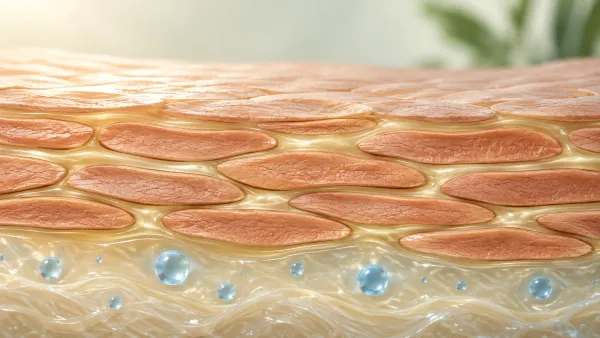
Visible facial pores are usually the openings of pilosebaceous units: hair follicles connected to sebaceous glands. Sebum travels through these openings to the skin surface. Pores do not have tiny ring muscles that swing them open with steam and shut them with cold water. Warmth may soften surface oil, and cold can create a brief tightening sensation, but neither changes pore anatomy.
The American Academy of Dermatology focuses on making pores less noticeable through non-comedogenic products, gentle cleansing, retinoids when appropriate, acne care, sunscreen, safe exfoliation, and avoiding picking. That is a more realistic framework than “opening” pores before cleansing and “closing” them afterward.
Pore visibility varies across the face because oil glands are not distributed evenly. The nose, inner cheeks, chin, and forehead often show more visible openings. Sebaceous filaments in these areas are normal structures that help move sebum. They can look like pale gray or tan dots and refill after removal. Treating them as dirt encourages repeated squeezing and over-exfoliation.
Why do your pores look larger?
Research and clinical guidance point to several overlapping influences. Genetics sets much of the baseline. Oil production, congestion, age-related changes, and sun damage affect how noticeable the openings appear. A small study indexed in PubMed also linked visible facial pores with sebum and elasticity measures, although its small sample means it should not be treated as a universal formula.
| What you notice | Likely cosmetic driver | Best first step |
|---|---|---|
| Dark dots, blackheads, or recurring bumps in the T-zone | Oil and dead-cell congestion | Gentle cleansing plus a slowly introduced salicylic-acid product |
| Shine returns quickly but the skin is not sore or flaky | Higher sebum production | Light, non-comedogenic hydration and targeted oil control |
| Pores look more obvious beside fine lines or sun-exposed texture | Reduced support and accumulated UV damage | Daily broad-spectrum SPF and a tolerated retinoid discussion |
| Texture became worse after acids, scrubs, or frequent masks | Irritation and barrier disruption | Pause optional actives and rebuild a simple soothing routine |
More than one driver can be present. Oily skin can also be dehydrated. Mature skin can still have blackheads. Acne-prone skin can become irritated by an aggressive routine. Choose the most obvious current problem and start with one change. If you cannot tell whether the dots are blackheads, sebaceous filaments, acne scars, or another condition, a dermatologist can assess them more accurately than a product quiz.
Build a pore-minimizing skincare routine by skin need
A useful routine has a stable base—cleanser, moisturizer, and sunscreen—plus one targeted active when the skin can tolerate it. Changing several acids, masks, and serums at once makes it impossible to know what helped or caused irritation.
Routine for oily or congested pores
Use a gentle cleanser in the morning and evening. At night, introduce salicylic acid one to three times weekly on the areas that clog. Follow with a lightweight moisturizer. In the morning, use broad-spectrum SPF 30 or higher. The AAD notes that salicylic acid can help unclog pores, but drying or irritation is a reason to alternate with a mild cleanser rather than escalating.
If you are choosing a leave-on BHA, our Paula's Choice 2% BHA review explains who benefits, who should skip it, and why daily use is not necessary for everyone. For cleanser-first routines, compare the best cleansers for acne-prone skin.
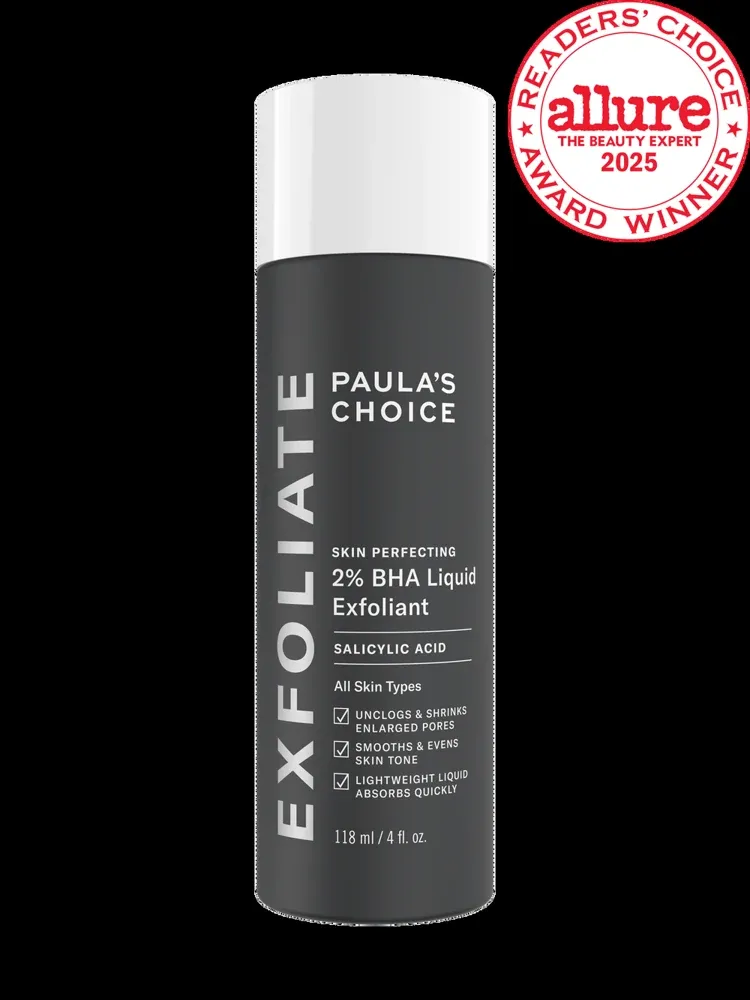
Paula's Choice Skin Perfecting 2% BHA Liquid
Best for: recurring blackheads and oily congestion when you want a leave-on salicylic-acid step. Why it fits: the clearly disclosed 2% BHA level targets pore-lining buildup. Watch-out: it can feel slick or irritate when overused, and it is unnecessary if another salicylic-acid product or retinoid already controls the same problem.
Check current Amazon optionsAs an Amazon Associate, we earn from qualifying purchases.
Routine for dry, sensitive, or over-exfoliated skin
When plain water or moisturizer stings, pore treatment is not the priority. Stop scrubs, peeling pads, strong masks, and optional acids. Use a mild cleanser, a fragrance-free moisturizer, and a sunscreen that does not burn. Once the skin is consistently comfortable, you can decide whether a low-frequency active is still needed.
Our guide to the signs of a damaged skin barrier helps separate temporary dryness from a routine that is doing too much. If your skin reacts to many formulas, use the sensitive-skin moisturizer guide to choose by texture and trigger rather than by “poreless” marketing.
Routine when pores look larger with age or sun exposure
Start with daily sunscreen. UV exposure contributes to the loss of collagen and elastin that helps support the skin around pores. Cleveland Clinic includes sun protection, retinoids, and professional collagen-focused procedures among the options that may reduce pore visibility.
A retinoid may support cell turnover and collagen over time, but it is not a quick cosmetic blur. Begin slowly, moisturize, and avoid stacking it immediately with acids. People who are pregnant, planning pregnancy, or breastfeeding should ask a qualified clinician about retinoid use. If you are unsure whether the step is worth the irritation risk, read our guide to whether retinol is worth adding.
Use zone care instead of treating every inch the same
If the nose is oily and congested but the cheeks are calm and dry, apply BHA only to the nose and chin. Keep the cheeks on cleanser, moisturizer, and sunscreen. Targeted use reduces product waste and lowers the chance that a useful active becomes a full-face irritation problem.
Which ingredients can make pores look smaller?
| Ingredient or step | Best fit | Main watch-out |
|---|---|---|
| Salicylic acid (BHA) | Blackheads, whiteheads, oily congestion | Can dry or irritate; avoid stacking with multiple exfoliants |
| Retinoid or retinol | Recurring clogs, uneven turnover, reduced firmness | Slow introduction, irritation risk, pregnancy-related caution |
| Niacinamide | Oil balance and barrier-supportive routines | Not a permanent pore shrinker; high-strength formulas can still irritate |
| AHA | Dry or sun-roughened surface texture | Does not replace BHA for oily pore congestion; overuse damages comfort |
| Moisturizer | Dehydrated or irritated texture | Choose a texture you will use; avoid assuming heavier is always better |
| Broad-spectrum sunscreen | Every skin type, especially loss-of-firmness concerns | Requires enough product and reapplication during extended exposure |
Salicylic acid: best when the problem is inside an oily pore
Salicylic acid is oil soluble and commonly used for blackheads and whiteheads. A randomized study indexed in PubMed found improvements in acne-related measures, pore density, comedones, sebum, and hydration after eight weeks with studied salicylic- and lipohydroxy-acid regimens. The products and population were specific, and several authors were affiliated with L'Oreal, so the study supports the ingredient category—not a guarantee for every BHA bottle.
Retinoids: slower support for turnover and firmness
Retinoids can help prevent clogging and support collagen-related changes, but tolerance determines whether they stay in the routine. Start with one or two nights weekly, use a pea-sized amount for the face when the product directions allow, and moisturize. If you already use prescription tretinoin or adapalene, ask the prescriber before adding an exfoliant for pores.
Niacinamide: useful support, not pore erasure
Niacinamide can fit an oily or sensitive-leaning routine because it supports barrier function and may help with oil regulation. The common mistake is choosing the highest percentage available. A simple moisturizer or serum with a moderate amount may be easier to tolerate than a 10% or 20% formula paired with several other actives.
Moisturizer and sunscreen: the unglamorous foundation
Dehydrated, flaky skin reflects light unevenly and can make texture look more obvious. Moisturizer improves surface comfort and helps active ingredients remain tolerable. Sunscreen reduces continuing UV damage that can weaken support around pores. Neither closes pores overnight, but both make the rest of the routine more sustainable.
What does not permanently shrink pores?
Many tricks produce a temporary sensation or visual change. That is not always useless, but it should be labeled honestly. Ice may briefly tighten the surface. Steam softens oil. A clay mask absorbs some surface sebum. Primer blurs texture with film-forming or powder ingredients. None changes the fixed architecture of a pore.
May create a short-lived tightening sensation. Wrap cold tools and avoid prolonged contact that irritates skin.
Can soften surface material but does not open pores. Hot water may increase redness and dryness.
Polish the surface temporarily but can inflame the skin and make texture look rougher.
Alcohol or astringents may remove oil and feel tight. Tightness is not proof that pore anatomy changed.
Do not squeeze or dig into pores. Repeated pressure can inflame the area, injure the skin, and increase the risk of marks or scarring. If blackheads remain despite a sensible routine, professional extraction or acne care is safer than turning a magnifying mirror into a treatment plan.
Do pore strips shrink pores?
Pore strips can lift some surface oil, dead cells, and the oxidized tips of sebaceous filaments or blackheads. The nose may look smoother immediately, but the effect is temporary because the follicle continues to produce sebum. They do not prevent clogs or change pore size.
Adhesive can irritate dry, reactive, sunburned, recently exfoliated, or retinoid-treated skin. Avoid pore strips on broken skin and do not combine them with a peel or strong active on the same area. Our dedicated guide to whether pore strips really work covers temporary benefits, safer use, and alternatives without pretending that the material on a strip is a permanent result.
More texture after treatment may mean irritation
Persistent burning, swelling, cracking, spreading redness, or rash-like bumps are reasons to stop the new product. Do not call every reaction “purging.” Return to a simple routine and seek qualified advice if symptoms are severe, involve the eyes, or do not settle.
When professional treatments make sense
In-office options may improve pore appearance by addressing congestion, scarring, or support around the follicle. These include professionally selected chemical peels, microneedling, certain lasers, and other resurfacing procedures. Results vary with device, settings, skin tone, diagnosis, practitioner skill, and aftercare.
| Option | What it targets | What to ask |
|---|---|---|
| Professional chemical peel | Congestion and surface texture | Acid type, depth, pigment-change risk, and downtime |
| Microneedling | Texture and collagen remodeling | Who performs it, sterile technique, depth, and skin-tone experience |
| Laser or energy treatment | Texture, pigment, and dermal support depending on device | Exact device, expected sessions, downtime, and hyperpigmentation risk |
| Prescription acne care | Ongoing comedones or inflammatory acne | Diagnosis, interaction with current actives, and monitoring plan |
A clinic treatment is not automatically better because it is expensive or causes downtime. Ask what problem the procedure is intended to change and how improvement will be measured. Home microneedling and unregulated plasma devices add infection, burn, scarring, and pigment risks without the same screening or control. SkinOptimizer does not recommend them as DIY pore treatments.
See a dermatologist when texture may be pitted acne scarring, acne is painful or scarring, a spot changes in color or shape, or your routine repeatedly causes dermatitis. Those situations need assessment, not a stronger “pore serum.”
A realistic pore plan
- Keep cleanser, moisturizer, and sunscreen stable before adding a treatment.
- Choose one driver: clogs, oil, lost firmness, or irritation.
- Use salicylic acid by zone when oily congestion is the problem.
- Introduce retinoids slowly and avoid an instant active stack.
- Stop squeezing, harsh scrubbing, and chasing daily magnified changes.
- Judge trends over six to twelve weeks, with earlier stopping for irritation.
Frequently Asked Questions About Shrinking Pores
Can pores permanently shrink?
Your baseline pore size is largely shaped by genetics and skin structure, so permanent shrinkage is not a realistic cosmetic promise. Clearing congestion and supporting the surrounding skin can make pores look less noticeable.
How long does it take for pores to look smaller?
Oil removal or cosmetic blurring can change the look for hours. Congestion may improve over several weeks. Retinoid- and collagen-related changes usually require months of consistent use and sunscreen.
Is salicylic acid or retinol better for large pores?
Salicylic acid is usually the more direct choice for oily blackheads and clogged pores. A retinoid may fit recurring clogs and reduced firmness over time. Sensitive beginners should not start both together.
Can you close pores with cold water?
No. Cold water may briefly change surface sensation or redness, but pores do not have muscles that close. Use lukewarm water to reduce unnecessary irritation.
Why do pores look bigger after exfoliating?
Over-exfoliation can cause dryness, inflammation, and rough texture that makes pores look more obvious. Pause acids and scrubs, use a simple moisturizer and sunscreen, and restart only after comfort returns.
Bottom line
You cannot permanently shrink pores, but you can make them look less noticeable when you treat the reason they stand out. Use salicylic acid for oily congestion, sunscreen and a tolerated retinoid for gradual firmness support, and a simple barrier routine when irritation is the real problem. Skip the promise of poreless skin and measure progress by fewer clogs, calmer texture, and a routine you can maintain.
Witch hazel is often marketed as a pore closer, but removing surface oil does not permanently change a follicle. Our witch hazel claim-versus-evidence guide separates limited redness data from pore and acne marketing.
This article is for informational purposes only and does not replace professional dermatological advice.