Paula's Choice 2% BHA Review: Who It Is Best For and Who Should Skip It
A decision-first Paula's Choice 2% BHA review for blackheads and clogged pores, with realistic results, frequency, interactions, and skip conditions.

In this guide
Is Paula's Choice 2% BHA worth it?
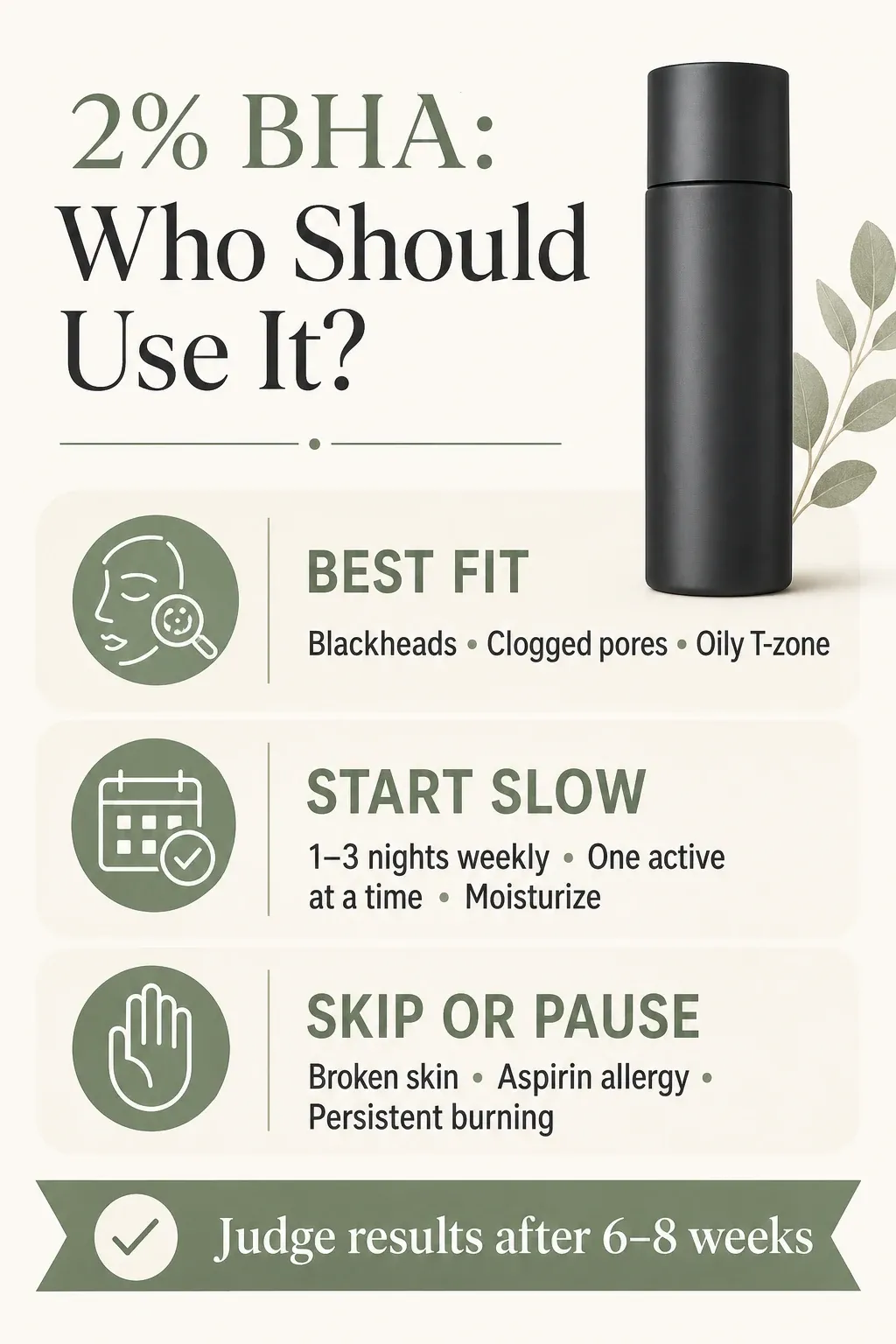
Paula's Choice Skin Perfecting 2% BHA Liquid Exfoliant is worth it for persistent blackheads, clogged pores, an oily T-zone, and rough congestion when you want a leave-on 2% salicylic acid product. It is not the best first choice for broken or actively irritated skin, people with a known salicylate allergy without clinician guidance, or routines already overloaded with retinoids, benzoyl peroxide, AHAs, scrubs, and other exfoliants. Start one to three nights weekly, moisturize, and judge the trend over six to eight weeks rather than chasing an overnight pore change.
Paula's Choice 2% BHA review searches often begin after someone sees the black bottle recommended for pores, blackheads, acne, texture, and glow all at once. That makes the product sound universal, but its clearest job is narrower: deliver 2% salicylic acid in a leave-on liquid that can move through oil and help loosen the dead-cell buildup inside and around pores. It is most persuasive for comedonal congestion—blackheads and whiteheads—rather than every bump, rash, or uneven texture.
We reviewed the current manufacturer page, disclosed 2% BHA level, ingredient and use information, public dermatology guidance, and clinical literature on topical salicylic acid. SkinOptimizer did not conduct a controlled wear trial and does not claim personal results. Texture observations in this article are based on formula type and recurring public feedback, not an invented testing diary.
The buying decision comes down to tolerance and routine design. A proven active can still fail when it is used twice daily from day one, layered with several irritating treatments, or continued through persistent burning. Meanwhile, a slow schedule may look less dramatic on social media but gives you a cleaner answer about whether the product helps. This review focuses on who benefits, who should pause or skip, how to use the liquid, and what results are realistic.
Quick Summary
- Best for: blackheads, whiteheads, clogged pores, and an oily or congested T-zone.
- Active: 2% salicylic acid in a leave-on liquid.
- Finish: a fluid, slightly emollient layer that can feel slick when too much is applied.
- Start: one to three nights weekly, then increase only if the skin stays comfortable.
- Skip or pause: broken, burning, over-exfoliated skin; known salicylate allergy without medical guidance; or an already aggressive active routine.
- Time frame: assess blackhead and congestion trends over roughly six to eight weeks.
Pores do not open, close, or permanently shrink
Salicylic acid can clear material that makes pores look darker or more stretched, so their appearance may improve. It does not erase normal pores or change genetics. Judge the product by fewer clogs, smoother buildup, and better tolerance—not by filtered close-up photos or the promise of poreless skin.
This guide was prepared by the SkinOptimizer Editorial Team. Rankings reflect current formulas, active levels where disclosed, skin-type fit, use case, value, and meaningful tradeoffs. SkinOptimizer did not conduct a controlled product trial, and we do not claim medical credentials or undocumented hands-on testing. Product claims remain manufacturer claims unless an independent source is cited.
Paula's Choice 2% BHA at a glance
| Product | Best for | Main watch-out |
|---|---|---|
| Paula's Choice Skin Perfecting 2% BHA Liquid Exfoliant | blackheads, whiteheads, clogged pores, oily T-zones, and recurring surface roughness linked to congestion. | the finish can feel slick, frequent use can irritate, and it is unnecessary when a retinoid or another salicylic-acid product already controls congestion. |
For the ingredient itself, read our salicylic acid for acne guide. If you are still choosing between acid families, compare AHA and BHA exfoliants before adding both.
Paula's Choice 2% BHA Liquid: the product verdict
Paula's Choice Skin Perfecting 2% BHA Liquid Exfoliant
The formula's value is straightforward: 2% salicylic acid is a familiar over-the-counter strength, and leave-on contact gives the active more time than a rinse-off cleanser. Salicylic acid is oil soluble, so it is particularly relevant when dead cells and sebum contribute to blackheads and whiteheads. The current product page also highlights methylpropanediol, butylene glycol, and green tea. Those ingredients support texture, hydration, and soothing; they do not change the main reason to buy the product.
The liquid can feel surprisingly emollient. That is not oil coming out of pores, and it does not automatically mean the formula is clogging. Methylpropanediol and butylene glycol contribute slip and help dissolve or deliver ingredients. Applying a saturated cotton pad or multiple pours can leave a shiny layer, waste product, and make the routine harder to layer. A few drops spread with clean hands is often enough for the areas that actually need treatment.
Paula's Choice currently permits use in the morning and/or evening and says users may increase in the absence of irritation. Our conservative editorial recommendation is slower: begin one to three evenings a week, especially if you use retinoids, benzoyl peroxide, vitamin C at low pH, or prescription acne treatment. More frequent use is not automatically more effective. The ideal frequency is the lowest one that steadily reduces congestion without creating redness, burning, or persistent flaking.
This liquid is not the correct answer for every form of acne. Deep painful nodules, widespread inflammatory acne, scarring, sudden adult-onset acne, or a rash around the mouth needs a different assessment. Use our acne treatment options guide as orientation, and involve a dermatologist when acne is painful, scarring, or not responding to sensible over-the-counter care.
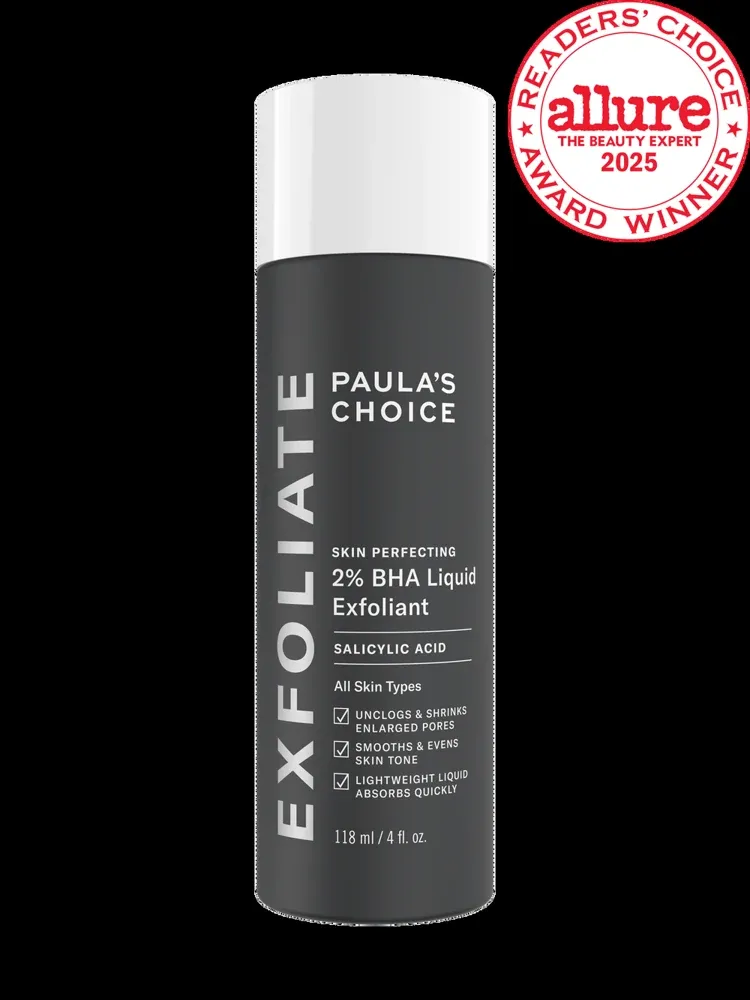
Paula's Choice Skin Perfecting 2% BHA Liquid Exfoliant
Best for: blackheads, whiteheads, clogged pores, oily T-zones, and recurring surface roughness linked to congestion. Why: it provides a clearly disclosed 2% salicylic acid level in a leave-on liquid with green tea and humectant solvents. Watch-out: the finish can feel slick, frequent use can irritate, and it is unnecessary when a retinoid or another salicylic-acid product already controls congestion.
Check current Amazon optionsAs an Amazon Associate, we earn from qualifying purchases.
Product facts checked against the current manufacturer or official product information. Formulas, packaging, availability, and prices can change.
Use BHA where the clogs are
You do not have to treat the full face if congestion is concentrated on the nose, chin, or forehead. Zoned use can reduce irritation and product waste. Normal sebaceous filaments on the nose will return because they are part of pore function; the goal is less visible buildup, not permanent removal. Keep the cheeks out of the routine when they are already dry and clear.
Who should use Paula's Choice 2% BHA—and who should skip it?
Best fit. A leave-on 2% salicylic acid product directly addresses the type of buildup involved in comedonal congestion.
Useful when the T-zone clogs, but apply by zone. Oily skin can still become dehydrated and over-exfoliated.
Possible at low frequency on targeted areas, but not when the barrier already burns, peels, or stings after plain moisturizer.
Not a complete plan. Painful, deep, scarring, or widespread acne often needs other evidence-based treatment and professional care.
Choose this product when blackheads and closed comedones are the main unresolved problem after gentle cleansing, moisturizer, and sunscreen are stable. A treatment should solve a specific gap. If your current routine already contains a 2% salicylic acid cleanser, adapalene, or a prescription retinoid and congestion is improving, adding another exfoliant may increase irritation without adding meaningful benefit.
Skip it temporarily when water or moisturizer stings. That symptom suggests the barrier needs a simpler phase, not stronger exfoliation. Use our skin-barrier recovery guidance, remove scrubs and optional acids, and restart only after baseline comfort returns.
People with a known salicylate allergy should follow the current product warning and speak with a physician before using salicylic-acid products. Avoid the eye area and broken skin. Pregnancy and breastfeeding questions should be discussed with the clinician who knows your health history rather than answered by a generic product review.
For teens, a simple plan is more useful than a shelf of actives. A gentle cleanser, one evidence-based acne treatment, moisturizer, and sunscreen gives a clearer feedback loop. Our teen acne spot-treatment guide explains why blackhead care and inflamed-pimple care are not always the same purchase.
How to use Paula's Choice 2% BHA without wrecking your barrier
- Start with a stable base. Use a gentle cleanser, moisturizer, and daytime sunscreen for several days before adding BHA.
- Apply to clean, dry skin. Use a few drops with clean fingertips on congested areas; avoid eyes, lips, and broken skin.
- Begin one to three nights weekly. Keep retinoids, AHAs, scrubs, and strong acne treatments off the same nights at first.
- Moisturize after. Let the liquid spread, then use a plain moisturizer rather than waiting for deliberate tingling.
- Track a six-to-eight-week trend. Look for fewer new clogs and smoother buildup, not a different pore map after one use.
- Reduce or stop for irritation. Persistent burning, swelling, cracking, or spreading redness is a stop signal, not purging.
There is no mandatory waiting period between BHA and moisturizer. Once the product is spread, apply moisturizer when comfortable. Long waits do not make salicylic acid more scientific; they can make an already irritating routine feel harsher. If the liquid pills under other products, use less and move it to the evening.
Daytime sunscreen matters because acne marks darken with UV exposure and irritated skin is less forgiving. Build a minimal morning skincare routine that you can repeat. The BHA itself does not replace sunscreen, moisturizer, or acne medication.
Before you keep the product
- The main problem is blackheads, whiteheads, or recurring pore congestion.
- No other salicylic-acid leave-on is already doing the same job.
- The skin is comfortable with cleanser and moisturizer before BHA begins.
- Frequency starts low and increases only when there is no persistent irritation.
- Retinoids, AHAs, scrubs, and benzoyl peroxide are not stacked immediately.
- The decision is based on a six-to-eight-week trend, with earlier stopping for a reaction.
What 2% salicylic acid can realistically do
Salicylic acid helps exfoliate within the pore lining and on the surface, which is why it fits blackheads and whiteheads better than a rough facial scrub. The American Academy of Dermatology describes salicylic acid as an ingredient that unclogs pores and works best for whiteheads and blackheads. That does not mean every 2% product behaves identically; vehicle, frequency, other treatments, and tolerance shape the result.
A review of controlled studies published in the dermatology literature found benefit from 0.5% and 2% salicylic-acid acne products. The evidence supports the active category, not a guarantee that this particular bottle will outperform every alternative. Paula's Choice is convenient because the strength is disclosed, the formula is leave-on, and the product is widely documented. Its premium over basic salicylic acid is mainly the vehicle, brand, and user experience.
Use AAD acne self-care guidance and the published salicylic-acid review as context, not as a personal diagnosis.
Purging vs irritation: a more useful rule
Purging is often used online to explain any breakout after an active. A more careful interpretation looks at location, timing, and symptoms. Small acne lesions in areas that normally clog can occur as cell turnover changes, but burning, swelling, rash-like bumps, cracks, or worsening in unusual areas points toward irritation or another reaction. Do not push through those signs to complete an arbitrary adjustment period.
Irritation can also create more visible texture and inflammation, making the product appear to cause acne even when the problem is barrier damage. Reduce frequency, remove other acids and scrubs, and return to a bland routine. Restart only when skin is calm, and stop permanently if the same pattern returns.
If you cannot tell whether lesions are acne, folliculitis, dermatitis, or rosacea, seek a qualified diagnosis. Adding more exfoliation to the wrong condition can make it harder to recognize and treat.
Can you combine BHA with retinol, benzoyl peroxide, or vitamin C?
The ingredients are not universally chemically incompatible on skin, but the combined irritation burden can be too high. When starting BHA, alternate it with a retinoid rather than layering both on the same night. Keep benzoyl peroxide to another time or use it as directed by a clinician. Once tolerance is clear, some people can combine steps; there is no prize for reaching that point quickly.
Vitamin C is a broad category. A low-pH ascorbic-acid serum can sting when paired with exfoliation, while gentler derivatives may be easier. Use vitamin C in the morning and BHA on selected nights if you want both, but sunscreen remains the more important morning step. Our guide to whether retinol is worth adding can help keep escalation controlled; otherwise prioritize one active with one measurable goal.
If prescription tretinoin or another medical treatment already irritates the skin, ask the prescriber before adding exfoliation. A bland supportive routine is not wasted time—it helps the main treatment remain tolerable.
The finish, value, and lower-cost alternatives
The product's slightly slick finish is polarizing. Some users like the cushion; others feel it sits on the skin. Use less, apply only to the T-zone, or reserve it for night before deciding the formula is unusable. Cotton pads absorb product and can encourage over-application, while fingertips make a few drops easier to control.
A less expensive 2% salicylic-acid serum can provide the same headline active strength, but the solvent system and finish will differ. A salicylic-acid cleanser is a lower-contact option for people who dislike leave-ons, though rinse-off exposure may be milder. Our acne-prone cleanser comparison helps decide whether the treatment belongs in cleansing or in a separate step.
Value depends on how little product is needed and whether you use it consistently. A bottle can last a long time when applied with fingertips to targeted areas. Do not buy the largest size before confirming tolerance, and do not stockpile actives that may expire before use.
What competing reviews miss
Current review pages are highly uniform: most call the product cult, viral, or iconic, repeat blackhead and pore claims, describe an oily or silky feel, and publish before-and-after timelines. Public discussions add a more useful counterpoint: some users love the congestion control, while others find the liquid greasy or irritating. Neither enthusiasm nor disappointment can predict your response without a controlled routine.
The missing decision is often whether you need another active at all. If adapalene controls comedones, a salicylic cleanser is already used, or the barrier is chronically tight, the correct answer may be to skip BHA. If blackheads persist despite a simple stable routine, the 2% leave-on format becomes more rational.
That is why this review gives the product a conditional recommendation rather than a universal score. It is a focused tool for pore congestion, not a requirement for clear skin and not evidence that stronger exfoliation is always better.
Frequently asked questions
How often should I use Paula's Choice 2% BHA?
Start one to three nights per week. Increase only when skin remains comfortable and congestion is still improving. Daily or twice-daily use is not necessary for everyone.
Is Paula's Choice 2% BHA good for blackheads?
Yes, blackheads and whiteheads are its clearest use case because 2% salicylic acid helps loosen pore-lining buildup. Expect gradual improvement rather than permanent pore removal.
Can Paula's Choice BHA cause purging?
Some acne lesions may surface in areas that normally clog, but persistent burning, rash, swelling, cracks, or breakouts in unusual areas suggest irritation or a reaction. Stop rather than pushing through those signs.
Can I use Paula's Choice BHA with retinol?
Potentially, but alternate nights at first. Using both together can increase irritation, especially for beginners or people on prescription retinoids. Add only one new active at a time.
Should I apply moisturizer after Paula's Choice BHA?
Yes. Spread a small amount on clean, dry skin, then apply moisturizer when comfortable. There is no required long waiting period, and daytime use should be followed by sunscreen.
Final verdict
Paula's Choice Skin Perfecting 2% BHA Liquid is a strong buy for blackheads, whiteheads, clogged pores, and an oily T-zone when you want a documented leave-on 2% salicylic-acid formula. Its strength is specificity: pore congestion is the problem it solves best.
Skip or pause it when the barrier is irritated, the routine already contains overlapping exfoliants, a retinoid already controls the same concern, or acne is deep, painful, or scarring. Start slowly, use only where needed, moisturize, protect with sunscreen, and make the keep-or-skip decision from a six-to-eight-week trend rather than one dramatic night.
This article is for informational purposes only and does not replace professional dermatological advice.