Teenage Skincare for Sensitive Skin: What to Use and Avoid
Learn the best practices for teenage skincare for sensitive skin. Discover gentle cleansers, moisturizers, and routines to keep your skin healthy and clear.

In this guide
Quick answer: Teenage skincare for sensitive skin should start with three steps: a gentle fragrance-free cleanser, a lightweight moisturizer, and broad-spectrum sunscreen every morning. Add acne treatments, exfoliating acids, vitamin C, or retinoids only after the basic routine feels calm for 10 to 14 days. If a product burns, causes swelling, creates raw peeling, or makes your skin sting when moisturizer touches it, pause the new product and return to basics.
For product-specific options, compare our eight moisturizers for teenage skin by oily, sensitive, dry and acne-treatment use case.
Quick summary:
Need the practical part first?
Jump to the routine table, stop list, acne-active rules, product picks, or FAQ.
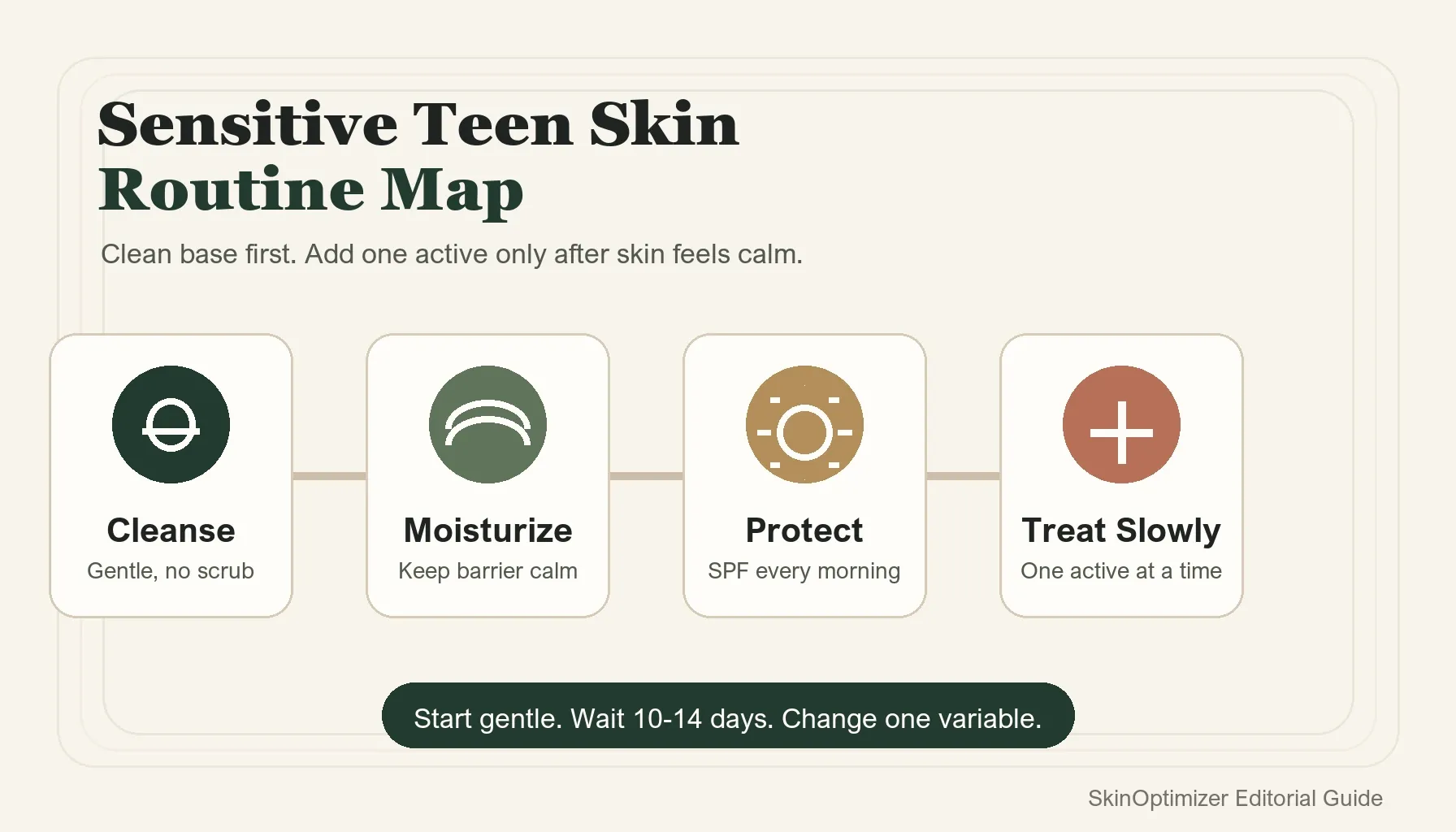
Watch the sensitive teen routine in 10 seconds
Use this quick visual reminder before adding acne treatments: cleanse gently, moisturize first, protect with SPF, then add one active only when the skin feels calm.
Short video guide: keep teen sensitive skin calm before making the routine stronger.
Editorial note: SkinOptimizer is an editorial skincare resource. We review ingredient logic, routine design, product labels, and reputable dermatology sources. We are not doctors, and this guide does not diagnose acne, eczema, rosacea, allergy, or any medical condition.
Teenage skincare for sensitive skin needs a different mindset than adult skincare. The goal is not to use more products, chase every TikTok routine, or dry out every breakout. The goal is to make the skin feel calm enough that you can tell what actually helps.
Teen skin can be oily, breakout-prone, and sensitive at the same time. That combination is frustrating because many acne products feel too harsh, while many rich products feel too heavy. The answer is not a perfect 10-step routine. It is a small routine that protects the skin barrier first, then adds targeted treatment only when the skin can tolerate it.
This guide is written for teens and parents who want clear rules: what to use, what to avoid, how to add acne products without making sensitivity worse, and when to ask a qualified professional. If the skin is already burning or peeling, pair this with our guide to starting skincare slowly.
The Skin Insider: The best early sign is not perfect skin. It is quieter skin. Less stinging after cleansing, less tightness after moisturizer, and sunscreen that feels wearable are real wins for sensitive teenage skin.
Teenage Skincare for Sensitive Skin: The Simple Routine
The safest default routine has three steps in the morning and two at night. Morning is about protection. Night is about removing sunscreen, sweat, oil, and makeup without stripping the skin.
The American Academy of Pediatrics' HealthyChildren guidance warns that trendy tween and teen routines can include too many strong actives, fragrances, and allergens. Their safer direction is simple: gentle cleansing, moisturizer, and sunscreen.
| Time | What to use | Why it matters |
|---|---|---|
| Morning | Water rinse or gentle cleanser, moisturizer, broad-spectrum SPF 30+ | Protects the barrier and lowers UV exposure without starting the day with harsh actives. |
| After sports | Rinse sweat, cleanse if needed, reapply moisturizer or SPF | Sweat and helmets can irritate skin, but scrubbing after every activity can make sensitivity worse. |
| Night | Gentle cleanser, moisturizer | Removes the day without leaving skin tight or shiny-raw. |
| Treatment nights | One acne active only, used after the routine feels stable | Separates helpful treatment from irritation caused by too many changes. |
If your skin feels tight after cleansing, the cleanser is probably too strong or the water is too hot. If moisturizer stings every time, the skin barrier may already be irritated. If sunscreen breaks you out, switch texture before skipping SPF completely. Our guide to sunscreens for acne-prone skin can help if sunscreen is the hard step.
Why Sensitive Teen Skin Reacts So Easily
Teen skin is changing. Oil production often increases during puberty, pores can clog more easily, and breakouts can appear even when the routine is technically gentle. Sensitive skin adds another layer: the skin may sting, flush, peel, or itch faster than expected.
That does not mean the skin is dirty or weak. It means the routine needs fewer variables. Fragrance, scrubs, alcohol-heavy toners, daily exfoliating pads, strong vitamin C, and adult anti-aging products can all be too much at the start.
Nemours KidsHealth gives teen-friendly basics that match this approach: wash gently, avoid scrubbing, use sunscreen, and talk with a dermatologist if acne is not improving. That is the right tone for sensitive teen routines: practical, not extreme.
Use a gentle cleanser. No scrub, no squeaky-clean finish.
Use a light barrier-supporting moisturizer even if skin is oily.
Use SPF every morning and reapply during outdoor time.
Add one active only when the base routine feels calm.
What Sensitive Teen Skin Should Avoid First
The fastest improvement often comes from removing the wrong steps. Sensitive teen skin usually does better when the routine avoids friction, fragrance, and over-treatment.
This does not mean every teen must avoid every active forever. It means the first routine should be stable before stronger products enter.
Stop or pause these first if skin is stinging:
If you prefer natural-leaning products, read our guide on whether natural skincare is always better. Natural does not automatically mean gentle, especially for sensitive skin.
How to Choose a Gentle Cleanser for Sensitive Teen Skin
A cleanser should remove sweat, sunscreen, oil, and makeup without making the face feel tight. For sensitive teenage skin, look for fragrance-free, non-scrubby, low-foam or gentle gel formulas.
Oil-free is not always required, but heavy residue can bother acne-prone teens. Non-comedogenic language can help, though it is not a perfect guarantee. The real test is how the skin feels 10 minutes after rinsing.
If the face feels squeaky, shiny, dry, or hot, the cleanser may be too stripping. If sunscreen is still sitting on the skin at night, the cleanse may be too weak. Teens who wear heavy sunscreen or makeup may need a first cleanse followed by a mild cleanser, but that should still feel gentle.
For acne-focused cleanser choices, use our guide to best cleansers for acne-prone skin. For age-specific product context, see top cleansers for teenage skin.
How to Choose Moisturizer Without Clogging Sensitive Teen Skin
Moisturizer is not optional just because the skin is oily. Sensitive skin often becomes more reactive when it is dehydrated or barrier-stressed. A light moisturizer can make sunscreen, acne treatments, and cleansing easier to tolerate.
Look for ingredients such as glycerin, ceramides, hyaluronic acid, panthenol, niacinamide, or colloidal oatmeal. Avoid choosing by luxury texture or scent. A simple lotion that does not sting is more useful than a rich cream that feels impressive but causes bumps.
If the skin is very dry, use a richer cream at night and a lighter moisturizer in the morning. If the skin is oily, choose a lotion or gel-cream. If a moisturizer stings on every use, stop and simplify. Our guide on day versus night moisturizers explains when two textures make sense.
Daily Sunscreen Rules for Sensitive Teenage Skin
Sunscreen is the morning anchor. It protects skin from UV exposure and becomes even more important if a teen later uses acne treatments, exfoliating acids, or retinoids that can make irritation and sun sensitivity more noticeable.
The American Academy of Dermatology recommends broad-spectrum SPF 30 or higher. For sensitive teen skin, fragrance-free and non-comedogenic textures are usually easier to tolerate. Mineral sunscreens may work well for some sensitive skin, but they can leave a cast. Tinted formulas can help some skin tones avoid a gray finish.
The best sunscreen is the one a teen will actually wear. If a sunscreen burns the eyes, pills under makeup, or feels greasy, try another formula before giving up. For breakouts, choose lighter textures and cleanse well at night.
| Product type | Better choice | Use carefully if |
|---|---|---|
| Cleanser | Fragrance-free gel, cream, or lotion cleanser | The skin feels tight or shiny after rinsing. |
| Moisturizer | Light lotion or gel-cream with humectants and barrier support | It stings every time or leaves acne-prone areas coated. |
| Sunscreen | Broad-spectrum SPF 30+, fragrance-free, wearable texture | It burns eyes, pills badly, or causes repeated clogged bumps. |
| Acne active | One targeted ingredient added slowly | The routine already includes retinoids, acids, or prescription treatment. |
Acne Actives for Sensitive Teen Skin: Add One at a Time
Many teens need some acne support, but sensitive skin changes the starting point. A face wash or leave-on active can help if it matches the breakout pattern. It can also cause dryness, burning, and peeling if the routine moves too fast.
Salicylic acid is usually more relevant for clogged pores, blackheads, and oily texture. Benzoyl peroxide is commonly used for inflamed pimples. Adapalene or other retinoids may be useful in acne routines, but they can irritate during the adjustment period. For a wider overview, read our guide to teenage acne treatment options.
The safest rule is simple: one active, low frequency, no stacking at the start. If a teen is 12 or younger, already using prescription acne medication, has eczema-prone skin, or has painful cystic acne, ask a qualified clinician before adding stronger products.
| Concern | Possible active | Sensitive-skin starting rule |
|---|---|---|
| Blackheads or clogged pores | Salicylic acid cleanser or low-frequency leave-on | Start 1 to 3 times weekly, not with other exfoliants. |
| Red inflamed pimples | Benzoyl peroxide wash or spot treatment | Use short contact or thin layer; moisturize and watch dryness. |
| Texture and recurring acne | Adapalene or retinoid guidance | Start slowly and avoid same-night acids unless instructed. |
| Painful cysts or scarring | Professional acne care | Do not keep escalating over-the-counter products alone. |
The Optimizer's Edge: If sensitive teen skin breaks out and burns, treat burning first. A calm barrier makes acne treatment easier to tolerate. A raw barrier turns even good ingredients into a guessing game.
Patch Testing and the 10-Day Rule
Patch testing is imperfect, but it is still useful for sensitive teen skin. Test one new product on a small area near the jaw or behind the ear for several days. Do not test five products at once. If the test area burns, itches, swells, or develops a repeated bump pattern, stop.
After a product passes a small-area test, use it in the real routine at low frequency. Keep every other step the same for about 10 days. That gives you cleaner information.
A new pimple after one use does not always prove a product is bad. But stinging, rash, swelling, raw peeling, or repeated bumps in the same area are stronger signals. If the reaction is painful, spreading, or severe, ask a qualified professional instead of continuing the test.
Sensitive Teen Skin Starter Products
You do not need these exact products to follow the routine. Use them as examples of the product types that make sense: simple cleanser, simple moisturizer, and wearable sunscreen. Product formulas, labels, packaging, and availability can change, so always check the current label before buying or using.
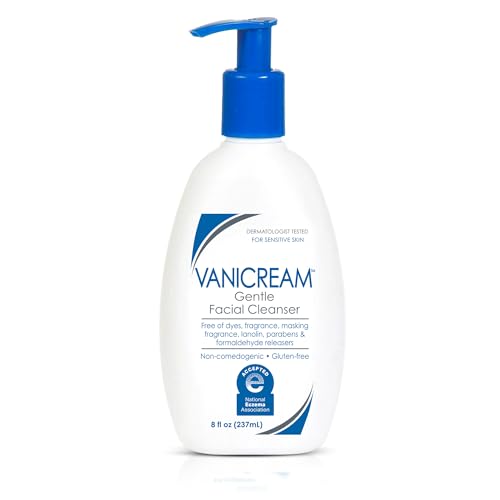
Vanicream Gentle Facial Cleanser
Why it fits: A simple fragrance-free cleanser is a good first step when teen skin is sensitive, reactive, or already irritated by stronger acne washes.
Watch-out: It is not an acne treatment by itself. Use it as the base, then add acne actives only if needed.
Check price on Amazon
Vanicream Daily Facial Moisturizer
Why it fits: A light, fragrance-free moisturizer can support the barrier without making a teen routine feel heavy or complicated.
Watch-out: Very dry skin may still need a richer cream at night, especially in winter or after acne treatments.
Check price on Amazon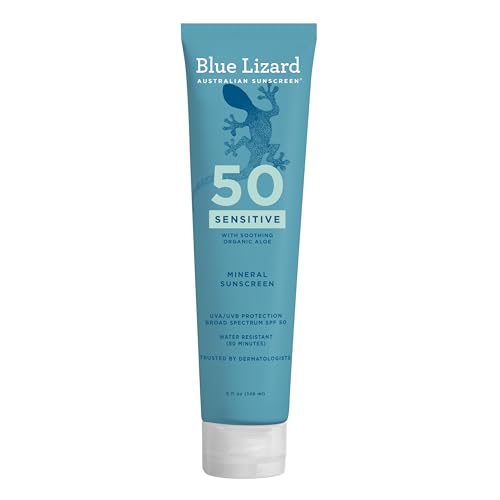
Blue Lizard Sensitive Mineral Sunscreen SPF 50
Why it fits: A fragrance-free mineral sunscreen can be a useful option for sensitive skin that stings from some chemical filters.
Watch-out: Mineral sunscreens can leave a visible cast. Patch test and check whether the finish works for your skin tone.
Check price on AmazonAs an Amazon Associate, we earn from qualifying purchases. Product availability, prices, and packaging can change; always check the current label and patch test when skin is sensitive.
When Parents Should Step In
Teen skincare should support confidence, not become a pressure loop. Parents can help by keeping the routine simple, discouraging harsh trends, and watching for signs that the issue needs medical care.
Step in if acne is painful, cystic, leaving marks, or causing a teen to avoid school, sports, photos, or social situations. Also step in if the skin is swollen, cracked, oozing, rashy, or reacting to many products. At that point, more shopping is not the answer.
A qualified dermatologist or clinician can separate acne, eczema, allergy, rosacea-like redness, infection, and medication-related reactions. That matters because the wrong over-the-counter routine can keep the problem going.
Common Mistakes That Make Sensitive Teen Skin Worse
The first mistake is over-cleansing. Washing three or four times a day does not train the skin to be less oily. It often makes the skin feel stripped, which leads to more irritation and more product switching.
The second mistake is treating every bump as acne. Some bumps are clogged pores, some are irritation, some are rash, and some are acne. If every acne product makes the skin worse, the problem may be barrier stress or another condition.
The third mistake is copying adult skincare. A teen does not need a strong anti-aging retinoid, peeling acid, brightening serum, toner, essence, facial oil, and mask at the same time. Adult routines are often built around different goals.
The fourth mistake is changing everything at once. If cleanser, moisturizer, sunscreen, and treatment all change in one week, there is no way to know what helped or hurt. Change one product at a time and give it enough days to show a pattern.
Your Clear Skin Checklist
Frequently Asked Questions About Teenage Skincare for Sensitive Skin
What is the best skincare routine for a teenager with sensitive skin?
The best starting routine is a gentle cleanser, lightweight moisturizer, and broad-spectrum SPF 30 or higher. Use that base for 10 to 14 days before adding acne treatment, exfoliating acids, vitamin C, or retinoids.
Should sensitive teenage skin use salicylic acid?
Salicylic acid may help clogged pores and blackheads, but sensitive teen skin should start slowly. Use one salicylic acid product at low frequency and pause if skin becomes raw, tight, or more irritated.
Can teenagers with sensitive skin use retinol?
Most teens do not need retinol for anti-aging. Some acne routines use retinoids such as adapalene, but sensitive skin should add them slowly and avoid mixing them with exfoliating acids unless a clinician gives that plan.
Why does every skincare product sting my teen's face?
Frequent stinging can mean the skin barrier is irritated, the product contains a trigger, or another skin condition is involved. Pause non-essential actives, use basic fragrance-free products, and ask a professional if stinging continues.
When should a teenager see a dermatologist for sensitive skin or acne?
A teen should seek professional care if acne is painful, cystic, scarring, or persistent, or if the skin has swelling, rash, oozing, cracking, or reactions to many products. Professional care can prevent more irritation from trial and error.
Final Takeaway
Teenage skincare for sensitive skin works best when the routine is small, consistent, and easy to troubleshoot. Start with cleanser, moisturizer, and sunscreen. Keep those products stable. Then add one acne or treatment product only when the skin feels calm enough to give you a clear signal.
If the skin is burning, peeling, or reacting to everything, do not keep escalating actives. Simplify first. If the problem is painful, spreading, scarring, or emotionally heavy, get help from a qualified professional instead of trying to solve it with more products.
The routine does not need to be perfect. It needs to be calm enough to repeat.
This article is for informational purposes only and does not replace professional dermatological advice.
Keep the sunscreen step simple with the teen application and school reapplication guide. If dryness is the limiting issue, compare moisturizing vehicles and layering options.
When roughness or clogged pores remain, use the teen exfoliation decision guide before adding a scrub, acid toner or peel pad. It separates salicylic acid, acne treatment and barrier-recovery situations.