Anti-Aging Skincare for Melanin-Rich Skin: A Safer Routine
Protect collagen and address uneven tone without creating new dark marks. This routine prioritizes sunscreen, barrier comfort and one active at a time.

In this guide
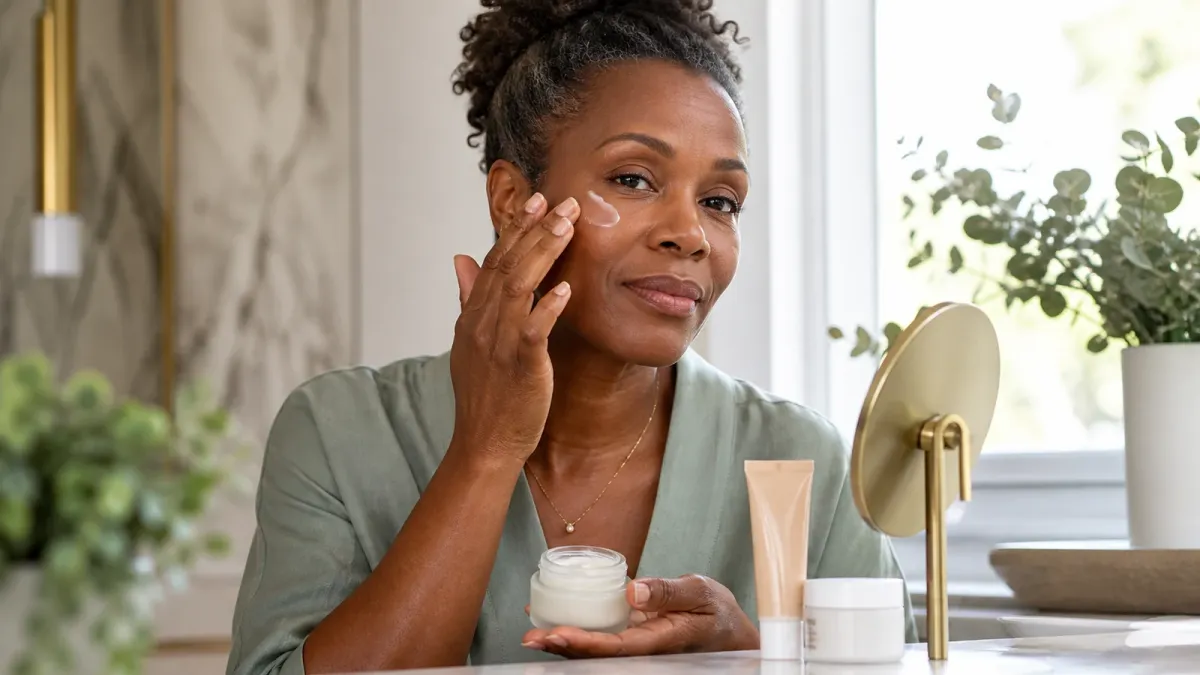
The safest anti-aging routine for melanin-rich skin starts with daily broad-spectrum SPF 30+, a comfortable moisturizer and one slowly introduced active. A tinted sunscreen with iron oxides can help when visible light worsens dark marks. Retinoids have strong photoaging evidence, but irritation can trigger post-inflammatory hyperpigmentation, so frequency matters more than chasing maximum strength.
The Hispanic and Latino skincare routine adds concern-led guidance for melasma, acne marks, dryness and treatment tolerance across varied skin tones.
Quick Summary
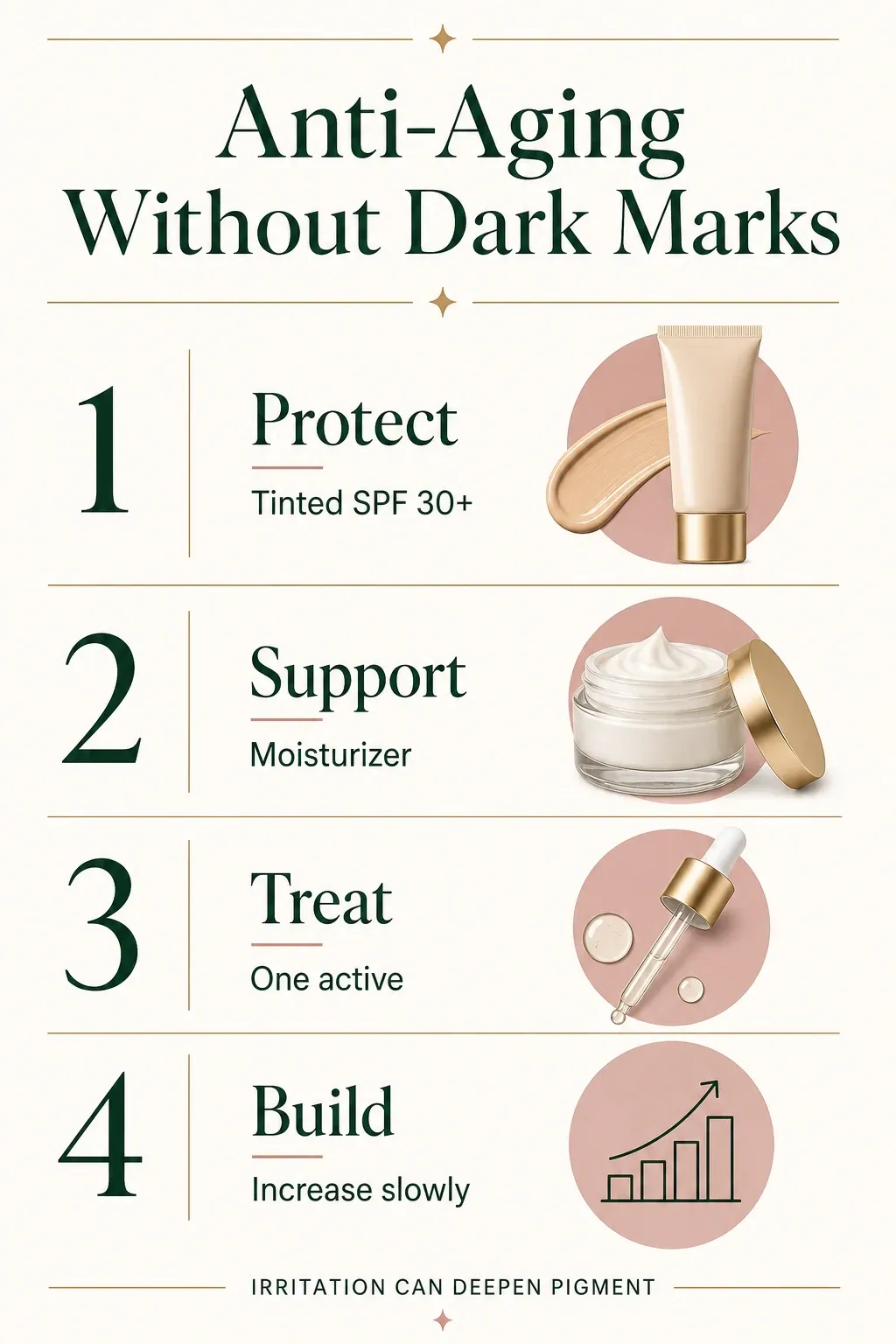
- Protect first: sunscreen prevents collagen damage and pigment worsening.
- Use one active at a time so irritation and benefits are traceable.
- Start retinoids once or twice weekly and increase only when comfortable.
- Treat acne, eczema and irritation that keep creating new dark marks.
Anti-aging skincare for melanin-rich skin should not be a generic wrinkle routine with a darker model added to the page. Uneven tone, post-inflammatory marks and visible-light sensitivity change the practical priorities. The strongest plan protects against new damage, preserves treatment tolerance and corrects one concern without turning inflammation into a second problem.
What Changes With Melanin-Rich Skin
Melanin offers some natural ultraviolet protection, but it does not make photoaging or skin cancer impossible. Aging may present with uneven tone, persistent dark marks, dullness and texture changes alongside fine lines. A useful routine addresses all of these without provoking avoidable inflammation.
Darker phototypes can develop post-inflammatory hyperpigmentation after acne, dermatitis or an overly aggressive treatment. That changes the risk calculation. A product that improves turnover but repeatedly burns can create a pigment problem that lasts longer than the original dryness or blemish.
Skin tone is still not skin type. Mature melanin-rich skin can be oily, dry, acne-prone, sensitive or affected by eczema. Choose cleanser and moisturizer texture individually, then add one treatment for the highest-priority concern.
| Priority | What it protects | Best first move |
|---|---|---|
| UV and visible light | Collagen, tone and pigment stability | Broad-spectrum SPF 30+; consider iron-oxide tint |
| Barrier comfort | Treatment tolerance and lower irritation | Gentle cleanser plus suitable moisturizer |
| Fine lines and texture | Cell turnover and dermal remodeling | Introduce a retinoid slowly if appropriate |
| Uneven tone | Existing and new dark marks | Control inflammation, protect from light, then add one pigment active |
| Firmness | Appearance of elasticity and support | Photoprotection first; use realistic topical expectations |
The order matters. Sunscreen and a tolerable base routine create the conditions for actives to work. Starting with three serums, an acid toner and a high-strength retinol makes it impossible to know which step helped or caused irritation.
Morning Routine: Protect Before You Correct
Use a gentle cleanser or rinse according to oiliness and residue. Apply an optional antioxidant or pigment-support serum only if the base routine is comfortable. Follow with moisturizer where needed and finish with sunscreen.
Broad-spectrum, water-resistant SPF 30 or higher protects against ultraviolet radiation. When melasma or persistent hyperpigmentation is a concern, a tint containing iron oxides can also reduce visible-light-driven pigment. A randomized study found that iron-oxide-containing formulas reduced visible-light-induced pigmentation in people with Fitzpatrick type IV skin compared with untreated skin or a non-tinted mineral SPF 50+ formula.
No sunscreen erases existing dark spots by itself, yet treatment works against a moving target when new light exposure keeps stimulating pigment. The tinted sunscreen guide explains how tint, finish and shade compatibility affect daily use.
A practical morning sequence
- Cleanse as needed: do not begin with tight or squeaky skin.
- Use one optional serum: vitamin C, niacinamide or azelaic acid based on the main goal.
- Moisturize by zone: lighter on oily areas and richer on dry areas.
- Apply sunscreen generously: include ears, neck and exposed chest.
- Reapply with real exposure: especially outdoors, after sweating or after wiping.
The sunscreen reapplication guide offers practical methods without pretending makeup makes reapplication impossible.
Night Routine: One Active, Enough Recovery
Cleanse away sunscreen and makeup without a scrub brush. Apply the selected active to dry skin according to its directions. Finish with moisturizer, or use moisturizer before and after a retinoid when buffering improves comfort.
Do not rotate a strong acid, retinoid and pigment serum merely because they target different labels. They can converge on the same irritation pathway. A calm routine used for months usually outperforms a complicated routine abandoned after ten days.
The serum and moisturizer layering guide explains order without making every product mandatory. Thin-to-thick is a convenience rule, while medication directions and tolerance come first.
How to Introduce a Retinoid Without Chasing Irritation
Retinoids have the strongest topical evidence for photoaging among common cosmetic actives. A 2025 review described tretinoin as the clinical gold standard and found evidence that cosmetic retinol, retinaldehyde and retinyl esters can improve photoaged skin, with differences in potency, stability and tolerance. Read the retinoid review for the compound-level context.
Start with the least intense option that fits the goal and use it once or twice weekly at night. Increase only when there is no persistent burning, rawness or escalating scale. More frequent use is not progress when the barrier cannot recover.
The AAD retinoid guidance specifically warns that irritation in skin of color can trigger hyperpigmentation and recommends starting slowly with moisturizer. Retinoids should not be used during pregnancy.
A four-stage retinoid ladder
- Weeks 1-2: one night weekly on dry skin with moisturizer.
- Weeks 3-4: two non-consecutive nights if the skin remains comfortable.
- Weeks 5-8: maintain rather than increase when dryness appears.
- After week 8: consider another night only when the current schedule is easy.
This is a conservative framework, not a prescription. Follow the label or clinician's directions for the exact product. The retinol evidence guide covers expectations and tradeoffs in more detail.
Choose Supporting Actives by Goal
| Active | Best fit | Main watch-out |
|---|---|---|
| Retinoid | Fine lines, texture, mild pigment irregularity or acne | Dryness, irritation and pregnancy restriction |
| Vitamin C | Antioxidant support and uneven tone | Unstable or acidic formulas may sting |
| Niacinamide | Barrier support, oil balance and uneven tone | High percentages can irritate some users |
| Azelaic acid | Acne, redness and post-inflammatory pigment | Tingling can occur; build slowly |
| AHA | Rough surface texture or selected pigment concerns | Overuse can inflame and deepen marks |
| Peptides | Optional supportive step | Evidence and formula quality vary |
Vitamin C can complement sunscreen but cannot replace it. Choose a concentration and vehicle your skin tolerates rather than assuming 20% must outperform 10%. Oxidized, dark-brown serum should not be treated as active simply because it was expensive.
Niacinamide is useful inside moisturizers and serums. A 2% to 5% formula may be easier to tolerate than a high-strength trend product, though the full formula matters. The niacinamide guide compares fit and concentration without making one percentage universal.
Azelaic acid can suit people who want one ingredient for acne plus post-inflammatory discoloration. It still needs gradual introduction. The azelaic acid product guide explains strength, vehicle and use cases.
Why Stronger Exfoliation Can Backfire
Glycolic acid, lactic acid and other exfoliants can improve surface texture in an appropriate routine. They are not mandatory companions to retinoids. Using both at high frequency can produce the inflammation that pigment-prone skin is trying to avoid.
A stinging peel is not evidence of deeper correction. Stop when burning persists, the surface becomes raw or shiny, or moisturizer suddenly hurts. The over-exfoliation guide explains how barrier damage can resemble breakouts.
Do not use lemon, baking soda or an abrasive kitchen scrub to “speed up” dark-spot fading. The safer exfoliation guide separates method, frequency and stop signs.
Uneven Tone: Treat the Trigger First
Post-inflammatory hyperpigmentation follows inflammation from acne, eczema, picking, burns or irritation. Preventing the next lesion or reaction is therefore part of fading the mark. A pigment serum cannot outrun daily picking or a cleanser that burns.
The AAD dark-spot guidance recommends identifying the cause, using gentle products and beginning with sunscreen. It lists azelaic acid, glycolic acid, kojic acid, retinoids and vitamin C among ingredients that may help, but treatment selection should reflect the cause and tolerance.
Deep or slate-gray discoloration can take years to fade and may require prescription care. A new, changing or symptomatic lesion should not be treated as routine hyperpigmentation. The dark-spots-on-darker-skin guide explains when home care has reached its limit.
Procedures Require Skin-of-Color Experience
Chemical peels, lasers, radiofrequency and microneedling can address selected signs of aging, but device and parameter choices matter. In darker phototypes, excessive heat or injury can cause hyperpigmentation, hypopigmentation or scarring. The provider's experience with similar skin tones is more important than a generic “works on all skin” claim.
Ask which device, wavelength, depth or peel agent is planned and why it fits your diagnosis. Request representative before-and-after photographs under consistent lighting. Discuss herpes history, keloid tendency, medications, active eczema and the post-procedure pigment plan.
A current review of photoaging across skin types notes the increased susceptibility to pigmentary alterations in skin of color and the central role of photoprotection. Procedure strength should never be chosen from age alone.
Build the Routine by Main Concern
Fine lines with otherwise calm skin
Use sunscreen every morning, a suitable moisturizer and a slowly introduced retinoid at night. Add an antioxidant only after the first three steps are stable. Evaluate after several months rather than several days.
Dark marks plus acne
Control acne while minimizing irritation. Adapalene, benzoyl peroxide, salicylic acid or azelaic acid may fit different lesion patterns, but stacking them at full frequency is not required. The acne-prone routine guide helps sequence the base.
Dryness and early lines
Repair cleansing and moisturizing first. Dehydrated surface lines can look better when the outer layer holds water, though moisturizer does not rebuild lost dermal collagen. Introduce a retinoid only after ordinary products no longer sting.
Melasma or recurrent patches
Use broad-spectrum sunscreen and consider an iron-oxide tint. Seek a diagnosis because melasma, post-inflammatory pigment and other causes need different plans. Avoid uncontrolled peels and heat devices.
Realistic Timelines
Moisturizer can improve comfort and temporary surface plumpness quickly. Sunscreen prevents additional exposure but does not create a visible overnight result. Retinoid changes in fine lines and texture usually require months of consistent use.
Post-inflammatory marks may take six to twelve months to fade when they are only a few shades darker, and deeper pigment can take longer. The goal of the first month is often tolerance and prevention, not a dramatic before-and-after.
Use monthly photographs in the same lighting, angle and camera settings. Daily mirror checks exaggerate normal variation. Track irritation, frequency and missed sunscreen days alongside appearance.
Do Not Forget the Neck, Chest and Hands
Photoaging does not stop at the jawline. Apply morning sunscreen to the neck, ears, exposed chest and backs of the hands when clothing does not cover them. Use a comfortable body or face moisturizer on these areas according to dryness.
Introduce actives more cautiously on the neck because it may tolerate retinoids and acids less easily than the face. Do not transfer a full facial schedule automatically. Persistent neck burning or a dark, irritated outline is a reason to stop and simplify.
Protective clothing, shade and gloves during repeated driving or outdoor work can reduce exposure without adding another serum. These habits are especially valuable when handwashing makes sunscreen difficult to maintain.
Common Anti-Aging Mistakes
- Skipping sunscreen because skin rarely burns: UV and visible light still affect pigment and aging.
- Starting with the strongest retinol: irritation can create persistent dark marks.
- Using every brightener together: cumulative exposure is hard to troubleshoot.
- Chasing tingling: sensation is not proof of collagen change.
- Treating pigment before acne or eczema: the trigger keeps creating new marks.
- Assuming every procedure is color-blind: parameters and provider experience matter.
- Expecting supplements to replace topical care: evidence and quality vary.
The collagen-support skincare guide separates topical evidence, lifestyle claims and procedure options.
The Bottom Line
Anti-aging skincare for melanin-rich skin should protect collagen, prevent pigment triggers and respect the barrier. Start with sunscreen, a gentle base routine and one carefully selected active. Retinoids have the strongest topical photoaging evidence, but they only help when the skin can tolerate continued use.
Tinted sun protection, slow retinoid introduction and control of acne or eczema are practical anti-aging steps, not side issues. Avoid escalating strength when irritation appears, and seek qualified skin-of-color expertise before aggressive peels, lasers or devices.
Frequently Asked Questions About Anti-Aging Skincare for Melanin-Rich Skin
Does melanin-rich skin age more slowly?
Higher melanin can reduce some ultraviolet damage, but it does not prevent aging. Uneven pigmentation may be more prominent than early wrinkles, and sun protection remains essential.
What is the best retinol strength for darker skin?
There is no universal percentage. Start with the least intense suitable formula once or twice weekly, use moisturizer and increase only when there is no persistent burning or rawness.
Can retinol make dark spots worse?
Retinoids can help pigment over time, but irritation can trigger new post-inflammatory hyperpigmentation. Reduce frequency or stop and reassess if the skin becomes raw, painful or increasingly dark.
Is tinted sunscreen better for melanin-rich skin?
Tint can improve blend and iron oxides can add visible-light protection. This is especially useful for melasma or persistent dark marks, but the formula still needs broad-spectrum SPF 30+ and adequate application.
Can I use vitamin C and retinol together?
Many people use vitamin C in the morning and a retinoid at night, but both are optional. Stabilize one product first and avoid combining them when the routine already stings or flakes.
Retinoids and pigment treatments are easier to tolerate when the base routine fits the skin. Our melanin-rich skin moisturizer guide compares gel, lotion, cream and ointment by need.
This article is for informational purposes only and does not replace professional dermatological advice.