Hispanic Skin Care: Build by Type, Tone and Concern
Hispanic and Latino skin spans every tone and skin type. Use this concern-led routine for acne, melasma, dryness, sensitivity and daily SPF.

In this guide
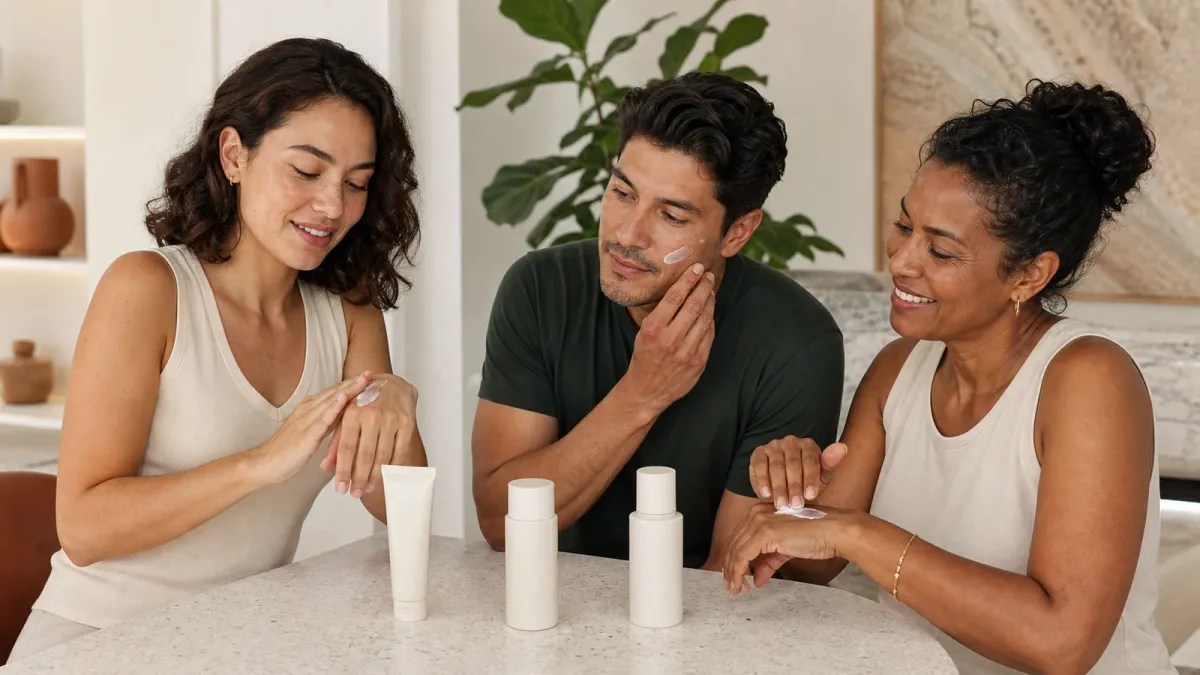
Hispanic and Latino skin is not one skin type. Build the routine around oiliness, dryness, sensitivity, tone and the main concern: gentle cleanser, suitable moisturizer and broad-spectrum SPF 30+ first, then one targeted active. For melasma or persistent dark marks, consider a wearable tinted sunscreen with iron oxides and seek diagnosis before escalating treatment.
Quick Summary
- Hispanic and Latino communities include every skin tone and skin type.
- Build a simple cleanser, moisturizer and sunscreen base before actives.
- Control acne and irritation to prevent recurring post-inflammatory marks.
- Melasma needs diagnosis, daily protection and realistic long-term care.
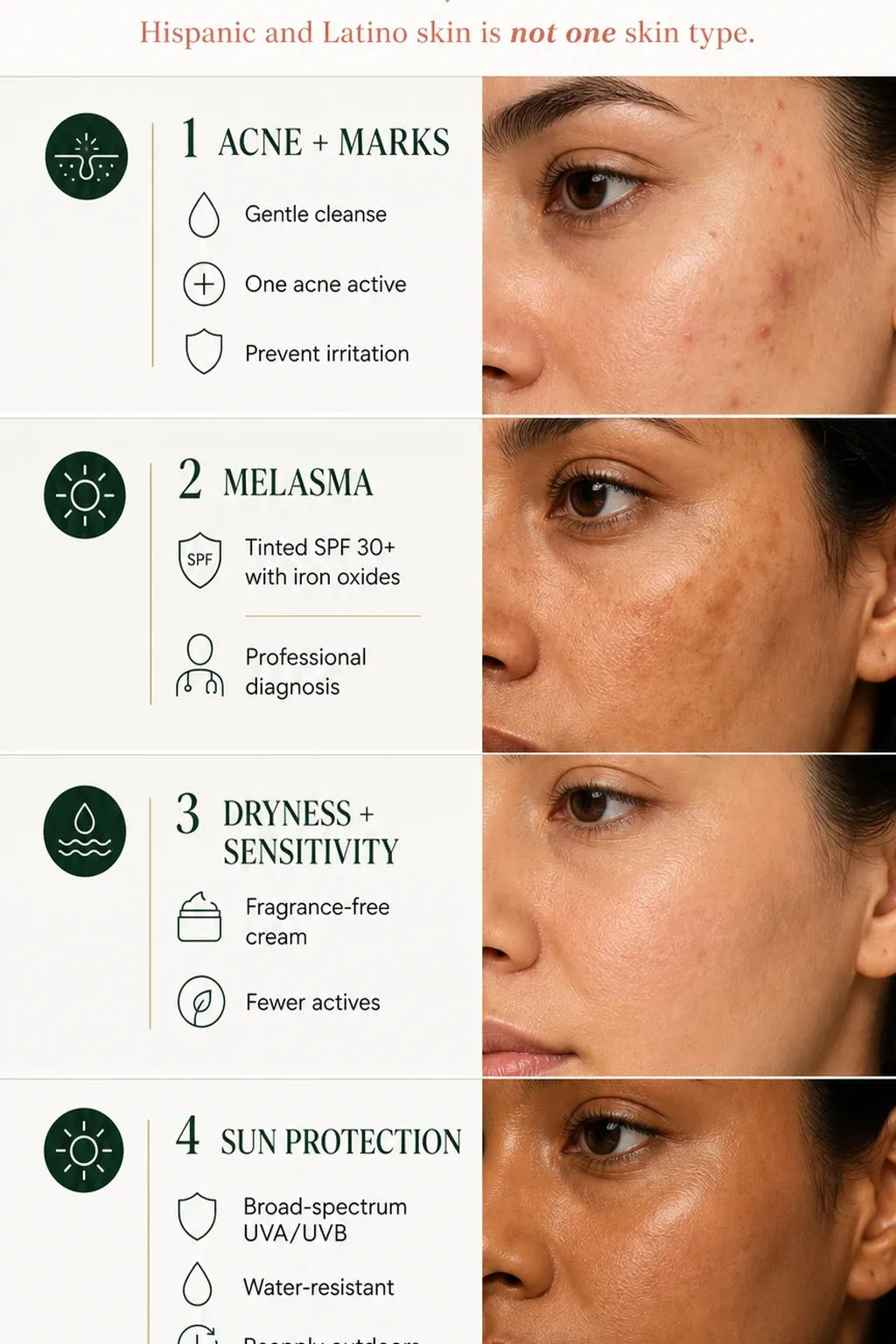
A Hispanic skincare routine cannot be selected from ethnicity alone. Latino communities include many ancestries, climates, tones and skin behaviors. This guide replaces one-size-fits-all beauty advice with a practical selector for acne, post-inflammatory marks, melasma, dryness, sensitivity and daily photoprotection.
Hispanic and Latino Are Ethnicities, Not Skin Types
Hispanic and Latino communities include people with Indigenous, European, African, Asian and mixed ancestry and a full range of skin tones. Oil production, sensitivity, acne, eczema and treatment tolerance also vary. No single cleanser, active or sunscreen can be correct for everyone in the group.
An older clinical review on hyperpigmentation in Hispanic and Latin-American patients explicitly describes diverse phototypes and limited population-specific evidence. That uncertainty is a reason to individualize care, not to replace one stereotype with another.
Use identity as context for communication, access and lived experience. Use skin type, tone, condition, climate and product response to build the routine. These categories answer different questions and should not be collapsed.
| Your main concern | Base routine | One targeted next step |
|---|---|---|
| Oily skin and clogged pores | Gentle gel cleanser, light moisturizer, SPF | Salicylic acid or adapalene as tolerated |
| Inflamed pimples and marks | Non-stripping cleanse, moisturizer, SPF | Benzoyl peroxide or prescribed acne care |
| Melasma-like patches | Gentle care and tinted SPF | Professional diagnosis before escalation |
| Dry or sensitive skin | Creamy cleanser and fragrance-free cream | Treat the cause before adding actives |
| Uneven tone after irritation | Barrier reset and daily protection | One pigment active after comfort returns |
| Shaving or waxing bumps | Low-friction hair removal and moisturizer | Assess recurring folliculitis or ingrowns |
This concern-first approach prevents unnecessary products. Someone with fair, dry, freckled skin and someone with deep, oily, acne-prone skin may both identify as Latino but need different vehicles and treatment strengths. Even siblings can require different routines.
Build a Three-Step Base First
Start with gentle cleansing, moisturizer as needed and broad-spectrum sunscreen every morning. Keep this base stable before adding acne, pigment or anti-aging treatment. A treatment cannot perform well in a routine that already burns or feels impossible to wear.
Choose cleanser texture by residue and comfort. Foaming gels may suit oilier skin, while cream or lotion cleansers can help dry or reactive skin. The cleanser selection guide explains why more foam does not mean a deeper or healthier clean.
Use moisturizer to control tightness and treatment dryness. A gel-lotion may be enough for a humid climate or oily T-zone, while a cream fits dry cheeks, winter weather or an eczema-prone barrier. “Non-comedogenic” can be useful but does not guarantee that every person will avoid breakouts.
Apply broad-spectrum, water-resistant SPF 30 or higher to exposed skin. Choose a tint if it improves blend or if visible light is relevant to melasma and persistent hyperpigmentation. The best formula is one that can be applied generously and used consistently.
Morning routine
- Cleanse according to need: a water rinse may suit dry skin, while oily skin may prefer a gentle wash.
- Add one optional serum: use it only for a defined concern and proven tolerance.
- Moisturize selectively: apply enough to prevent tightness without forcing the same amount on every zone.
- Use sunscreen: cover ears, neck and exposed chest as well as the face.
- Reapply outdoors: follow the product directions after sweating, swimming or prolonged exposure.
Evening routine
- Remove sunscreen and makeup: cleanse thoroughly without rough cloths or brushes.
- Use one treatment: do not stack acne, pigment and anti-aging actives at the start.
- Moisturize: support comfort and buffer treatment when appropriate.
- Check the response: persistent burning, swelling or rawness means stop and reassess.
Follow the slow skincare introduction plan if the routine contains several new products. It creates a simple record of what helped and what caused a reaction.
Acne Care Without Turning Pimples Into More Marks
Acne can occur at every skin tone, but the mark left after inflammation may become the longer-lasting concern. Treat active acne and prevent picking, rubbing and harsh exfoliation. A brightening serum alone cannot stop new pigment while new lesions continue.
Salicylic acid can help blackheads and clogged pores. Benzoyl peroxide can reduce inflammatory acne, while adapalene supports comedonal and inflammatory patterns over time. Choose one route based on lesion type, other treatments and tolerance rather than using all three immediately.
The acne cleanser guide compares gentle and active wash strategies. A rinse-off active may be easier to tolerate, but contact time is shorter and it may not replace an appropriate leave-on treatment.
Start below the maximum label frequency when irritation risk is high. Use moisturizer and sunscreen consistently. If acne is painful, cystic, scarring or not responding, the cystic acne guide explains why early professional care can protect both texture and pigment.
Melasma: Diagnose, Protect, Then Treat
Melasma is a chronic, relapsing pigment condition that often appears as symmetrical facial patches. It is common in many populations and has been extensively studied in Latin America, but it is not the only cause of facial discoloration. Hormones, pregnancy, ultraviolet exposure, visible light and genetic predisposition may contribute.
A 2024 Latin American consensus on melasma emphasizes diagnosis, trigger reduction, rigorous photoprotection and treatment tailored to sensitivity, pregnancy status and prior response. This is more precise than recommending one “brightening” product to every reader.
Broad-spectrum SPF 30+ is the minimum practical foundation. A tinted sunscreen containing iron oxides can add protection from visible light. In a randomized trial, UV-visible-light sunscreen improved melasma outcomes more than UV-only sunscreen when both groups used the same depigmenting treatment.
The sunscreen still needs to match the person's shade, finish and daily life. The tinted sunscreen guide addresses shade range, cast and texture. Hats, shade and exposure timing add protection rather than replacing sunscreen.
Professional treatment may include prescription combinations, azelaic acid, tranexamic acid in selected patients or carefully chosen procedures. The AAD melasma guide notes that results can take months and treatment often requires maintenance. Do not use prescription lighteners or retinoids during pregnancy without medical direction.
Dark Marks After Acne, Rash or Irritation
Post-inflammatory hyperpigmentation begins with inflammation or injury. The first job is to stop the trigger: control acne, treat eczema, change an irritating product or improve hair-removal technique. Existing pigment has a better chance to fade when new marks stop forming.
The AAD dark-spot guidance recommends gentle products and tinted sunscreen with iron oxide when appropriate. It also warns that some imported lightening products contain undeclared steroids or mercury.
Once the barrier is comfortable, one active such as azelaic acid, a retinoid, vitamin C or another well-formulated pigment treatment may help. Pick one based on the pattern, pregnancy status and other products. The dark-spot guide gives a stepwise selection framework.
Expect gradual change. Superficial marks may take months, and deeper pigment can take longer. An aggressive peel that causes a burn can reset the clock and deepen discoloration.
Dryness, Sensitivity and Eczema-Prone Skin
Dryness may appear as fine scale, ashiness, roughness, tightness or itch. It can coexist with acne and melasma. Treating every rough patch with acid mistakes a barrier symptom for “dead skin buildup.”
Use warm rather than hot water, a gentle fragrance-free cleanser and a cream applied to slightly damp skin. Ointment can help selected very dry intact areas, but may feel too occlusive over acne-prone zones. The barrier-first moisturizing guide explains how to choose by site and symptom.
“Unscented” does not always mean fragrance-free. Essential oils and botanical extracts can still trigger contact dermatitis. When skin repeatedly stings, simplify the routine before searching for another soothing serum.
Recurring itch, cracked skin, oozing, crusting or sleep disruption needs professional care. Inflammation may look red, purple, gray, brown or darker depending on tone. Texture, warmth and symptoms should be considered alongside color.
Shaving, Waxing and Ingrown-Hair Prevention
Hair-removal habits can create irritation and post-inflammatory marks. Soften hair, use lubrication and minimize repeated passes. A clean sharp blade and shaving in the direction of growth can reduce friction for many people.
Pause strong retinoids or acids around waxing if the product or professional instructions advise it. Waxing over sensitized skin can lift the surface. Threading should not be followed by an acid toner simply because pores look temporarily visible.
Use a bland moisturizer after hair removal and sunscreen on exposed areas. Recurrent painful bumps, pus, scars or thick raised tissue need assessment.
How Climate and Access Change the Routine
Latino readers live across tropical, arid, temperate and cold climates. Humidity can favor lighter textures, while dry air and indoor heating may require cream. Climate changes product feel but does not create an ethnic skin type.
Availability and cost also matter. A routine does not need imported products, ten steps or a luxury label. Spend first on a tolerable cleanser, suitable moisturizer, sunscreen and the one treatment most likely to address the main concern.
Language access can affect directions and safety. Use the official label, ask a pharmacist about unfamiliar instructions and avoid combining products when active ingredients are unclear. Bring the actual packages or photos to appointments.
| Situation | Keep | Change | Do not assume |
|---|---|---|---|
| Humid summer | Gentle cleanse and SPF | Lighter moisturizer texture | Oiliness means skin needs scrubbing |
| Dry winter | Same treatment goal | Richer cream and lower active frequency | Flakes require exfoliation |
| Outdoor work | Broad-spectrum SPF | Water resistance, hat and reapplication | Darker tone is enough protection |
| Pregnancy | Gentle base and sun protection | Review every active with clinician | A natural label means pregnancy-safe |
| Limited budget | Three-step base | Choose one evidence-based active | More products create faster results |
Pregnancy and Hormone-Related Changes
Pregnancy can trigger melasma, acne changes and sensitivity. A familiar product may no longer feel the same. Keep the base gentle and ask an obstetric clinician or dermatologist to review treatments, especially retinoids and prescription pigment medications.
Do not assume botanical or homemade products are safer. Concentration, contamination and absorption still matter. Sunscreen, shade, moisturizer and gentle cleansing are useful while the treatment plan is clarified.
Hormonal contraception and other medicines can also affect pigment or acne. Do not stop a prescribed medicine because of a skincare article. Ask the prescriber whether the timing and pattern could be related and what alternatives are appropriate.
How to Add an Active Safely
Choose one product for one measurable goal. Patch test when practical, then use it on the intended area at a conservative frequency. Keep other steps stable for at least one to two weeks so the response is traceable.
Increase frequency only when there is no persistent burning, swelling, rawness or escalating scale. More tingling is not proof of effectiveness. If the skin becomes painful or unusually dark, stop and simplify.
A retinoid can address acne and photoaging, while azelaic acid can fit acne, pigment and some sensitive routines. Salicylic acid mainly targets clogged pores. The active should match the concern rather than the most popular video.
Do not combine an exfoliating toner, strong vitamin C, retinoid and benzoyl peroxide simply because each has evidence alone. The combined routine may exceed personal tolerance. The overdoing-skincare guide explains cumulative irritation.
A Four-Week Routine Trial
In week one, use only the base routine and note comfort, shine and sunscreen wear. In week two, add one treatment one or two times if the skin is stable. Keep photographs under consistent lighting.
Weeks three and four are for observation, not constant escalation. Track new acne lesions, new marks, itch, scale and burning. Established melasma or PIH will not be fully judged in this short window, but tolerability can.
At the end, remove steps with no clear job. Continue a comfortable active long enough to assess it realistically. Seek care when the pattern is severe, scarring, painful or diagnostically uncertain.
Common Mistakes
- Treating Hispanic skin as one phototype: tone and ancestry vary widely.
- Using a brightener before controlling acne: new inflammation keeps creating marks.
- Skipping sunscreen because skin rarely burns: UV and visible light still affect pigment and aging.
- Trying to scrub away melasma: irritation can worsen the condition.
- Starting several actives together: the trigger of a reaction becomes impossible to identify.
- Assuming imported or natural means safer: labels and ingredients still require scrutiny.
- Judging treatment after one week: pigment and acne improvement usually require consistent time.
When Professional Care Is the Better Next Step
See a dermatologist for scarring or cystic acne, persistent melasma, recurrent eczema, sudden pigment change or a lesion that changes, bleeds or does not heal. Every skin tone can develop skin cancer. Delayed diagnosis is not prevented by lower average risk.
Ask for a diagnosis before paying for a peel, laser or microneedling series. Procedures can be useful in selected cases, but they can also cause burns or post-inflammatory pigment. Operator experience with the individual's tone and condition matters.
Bring product photos, a medication list and a timeline. Mention pregnancy, breastfeeding, previous reactions and whether pigment followed acne or irritation. Specific history leads to better care than the label “Hispanic skin.”
The Bottom Line
There is no single Hispanic or Latino skincare routine. Build by the individual's skin type, tone, concern, climate and tolerance. The most dependable base is gentle cleansing, enough moisturizer and daily broad-spectrum SPF 30+.
For acne and dark marks, control inflammation before chasing pigment. For melasma, combine diagnosis with rigorous UV and visible-light protection. Add one treatment at a time and get professional help when the condition is painful, scarring, persistent or unclear.
Frequently Asked Questions About Hispanic Skin Care
Is Hispanic skin always oily or combination?
No. Hispanic and Latino people can have oily, dry, combination, sensitive or condition-affected skin. Select cleanser and moisturizer from current symptoms and climate, not ethnicity.
Why do pimples leave dark marks on some Latino skin tones?
Inflammation can stimulate extra pigment, especially in medium to deeper tones. Controlling acne, avoiding picking, limiting irritation and using daily sunscreen can reduce the creation of new marks.
Is melasma more common in Hispanic women?
Melasma is frequently reported in Latin American populations and is influenced by skin phototype, genetics, hormones and light exposure. A dermatologist should confirm the diagnosis because other conditions can look similar.
What sunscreen is best for Hispanic or Latino skin?
Use a broad-spectrum, water-resistant SPF 30+ that you can apply generously. A tint can reduce white cast, and iron oxides may add visible-light protection for melasma or persistent hyperpigmentation.
Can I use retinol for acne marks and aging?
A suitable retinoid can support acne, texture and photoaging, but start slowly because irritation can create more pigment. Do not use retinoids during pregnancy, and follow product or clinician directions.
This article is for informational purposes only and does not replace professional dermatological advice.