Choosing Moisturizers for Melanin-Rich Skin by Skin Need
Skin tone is not skin type. Choose a moisturizer by dryness, oiliness, sensitivity, body site and treatment while preventing irritation-driven dark marks.
In this guide

Choose moisturizer for melanin-rich skin by what the skin does, not by tone alone. Use a gel-cream or lotion for oily or acne-prone areas, a cream for tight or ashy skin and a fragrance-free cream or ointment for eczema-prone patches. Apply to slightly damp skin, use broad-spectrum SPF 30+ afterward and stop products that burn because irritation can leave persistent dark marks.
Quick Summary
- Melanin level does not determine one universal skin type or moisturizer.
- Choose gel, lotion, cream or ointment by area and severity.
- Treat ashiness as visible dryness, not a pigment problem.
- Prevent irritation because inflammation can leave longer-lasting dark marks.
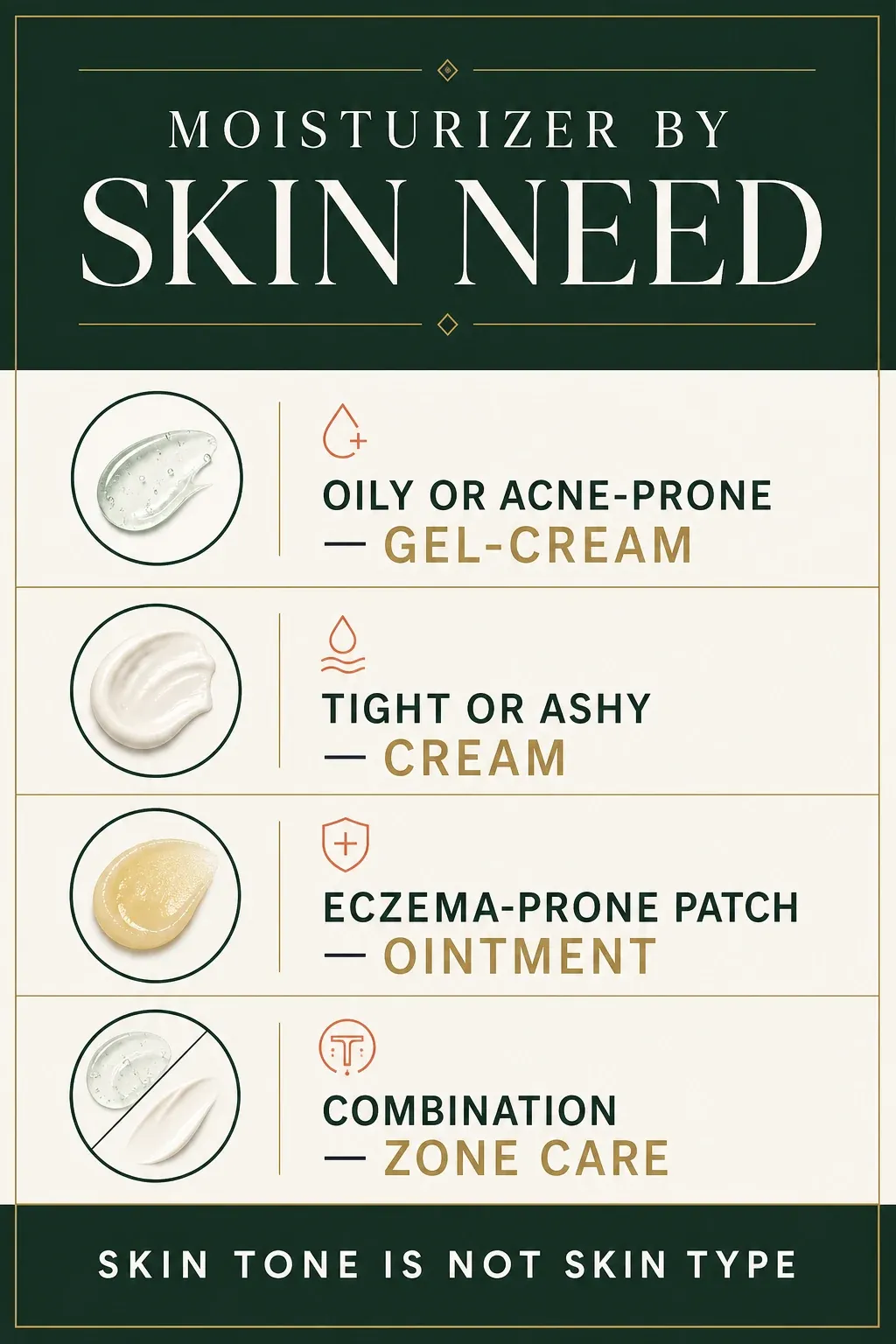
Moisturizer marketing for melanin-rich skin often replaces individual assessment with one heavy butter. This guide does the opposite: it separates tone from skin type, treats ashiness as surface dryness, and selects texture by face, body, climate, acne treatment and sensitivity.
Skin Tone Is Not Skin Type
Melanin-rich skin can be dry, oily, combination, acne-prone, sensitive or affected by eczema like any other skin tone. Choose moisturizer by skin behavior, body site, climate and treatment. The useful difference is that irritation and inflammation may leave more persistent post-inflammatory hyperpigmentation.
A review of racial and ethnic variations in skin barrier found inconsistent definitions and mixed biophysical results across studies. Group averages cannot prescribe one cream to every person. Individual assessment remains essential.
Visible ashiness is dry surface scale reflecting light against darker skin. It is not damage to melanin and does not need bleaching. Gentle washing and a well-matched moisturizer address the barrier.
| Skin behavior | Texture starting point | Useful formula features |
|---|---|---|
| Tight, flaky or ashy | Cream | Glycerin, ceramides, petrolatum or dimethicone |
| Oily but treatment-dry | Gel-cream or lotion | Non-comedogenic humectants and barrier lipids |
| Eczema-prone body skin | Fragrance-free cream or ointment | Short ingredient list and strong occlusion |
| Combination face | Light lotion plus cream on dry zones | Zone-based application |
| Dark marks with irritation | Bland moisturizer | No fragrance; compatible tinted SPF |
Choose Lotion, Cream, Gel or Ointment
Gel moisturizers are water-rich and lightweight. Lotions spread easily and suit larger or oilier areas. Creams contain more oil and help visible dryness, while ointments provide the strongest water-loss reduction for selected cracked or eczema-prone areas.
The AAD recommends cream or ointment rather than lotion for very dry skin. Apply while skin is damp after washing. The current AAD dry-skin guidance also favors fragrance-free formulas.
Use the lightest texture that keeps the area comfortable through the day. A rich body butter is not required for every melanin-rich face. A gel is not a failure if it controls tightness without congestion.
Read Moisturizer Ingredients by Function
Humectants such as glycerin and hyaluronic acid bind water. Emollients smooth rough cells, and occlusives such as petrolatum or dimethicone reduce water loss. Ceramides and other barrier lipids can support the outer layer.
No single hero ingredient determines the entire product. Concentration, emulsion, preservative, fragrance and packaging affect tolerance. Shea butter or plant oils can be useful but are not required because of skin tone.
The barrier ingredient guide explains these roles. Choose by the gap in your routine rather than marketing for a demographic category.
Face Moisturizer for Acne-Prone Melanin-Rich Skin
Choose a non-comedogenic gel-cream or lotion when the face is oily or acne-prone. Moisturizer can improve tolerance to benzoyl peroxide, salicylic acid and retinoids. Comfortable treatment is more likely to be used consistently.
Do not skip moisturizer solely because the T-zone shines. Apply a smaller amount or use it only where treatment creates dryness. The non-comedogenic product guide explains the limits of the label.
Inflammatory acne and picking can leave dark marks. A harsh degreasing routine adds irritation without treating every acne mechanism. Use the hyperpigmentation routine after controlling the trigger.
Body Moisturizer and Ashiness
Apply body cream immediately after a short warm shower while skin is still damp. Pay attention to shins, elbows, knees and hands. Reapply after handwashing or when visible scale returns.
A small study of a lipid-rich moisturizing body wash reported reduced ashiness in darker phototypes, but it was industry-linked and does not establish one universal product. The ashiness study supports the barrier concept more than a specific shopping claim.
Use ointment on cracks or very dry patches when tolerated. Loose breathable clothing can reduce friction. Persistent itch or sharply defined scale may be eczema or psoriasis and needs diagnosis.
Fragrance, Botanical Extracts and Contact Allergy
Fragrance is a common avoidable trigger in dry and sensitive skin. "Unscented" may include masking fragrance, so prefer "fragrance-free." Essential oils are fragrance exposure even when marketed as natural.
Plant butters and oils can still cause contact allergy. Test a new moisturizer on a small area for seven to ten days. Stop for itch, swelling, burning or a delayed rash.
The natural ingredient safety guide separates source from safety. A short formula can make cause tracking easier.
Moisturizer With Retinoids, Acids and Benzoyl Peroxide
Apply moisturizer before or after a retinoid depending on tolerance and professional directions. Buffering can reduce irritation, though it may change penetration. Do not combine several new actives simply because moisturizer is present.
Separate acid and retinoid nights while establishing tolerance. Benzoyl peroxide can dry skin and bleach fabric. A moisturizer supports the plan but does not neutralize excessive dosing.
The slow introduction method helps prevent irritation-driven dark marks. Persistent rawness is a stop signal, not a normal price of progress.
Moisturizer and Dark Spots
Moisturizer does not directly bleach post-inflammatory hyperpigmentation, but reducing irritation can prevent new marks. Treat acne, eczema or another inflammatory trigger first. Give pigment time to fade.
The AAD notes that irritating skincare products can cause dark spots and recommends gentler options. Its dark-spot guidance for darker skin also emphasizes sunscreen, including tint with iron oxide when visible light is relevant.
Use broad-spectrum SPF 30+ every morning over moisturizer. Choose a finish and tint you can apply adequately. Do not mix moisturizer into sunscreen because that can reduce film uniformity.
Season and Climate Adjustments
Humid summer may suit a gel-cream, while winter heating may require cream. Change texture rather than forcing the same product year-round. Air conditioning can also increase dryness.
Use richer product only on dry zones when the T-zone remains oily. Hands and body often need more occlusion than the face. Climate does not change the need for sunscreen.
During travel, keep cleanser and moisturizer stable before testing local products. Hard water and repeated flights can change comfort. Pack a small tube rather than decanting into an unclean jar.
A Two-Week Moisturizer Trial
| Days | Action | Decision |
|---|---|---|
| 1 to 7 | Small-area test twice daily | No itch, swelling or delayed rash |
| 8 to 10 | Use on damp skin in one zone | Tightness and ashiness improve |
| 11 to 14 | Expand without changing actives | No congestion or pilling |
| Day 14 | Compare morning and evening comfort | Keep, change texture or stop |
| Any day | Pause for rawness or rash | Barrier recovery or medical review |
Common Moisturizer Myths
- All darker skin is dry: skin type varies by person and area.
- Shea butter is mandatory: function matters more than cultural marketing.
- Oily skin should skip moisturizer: treatment-dry skin may need a light formula.
- Ashiness needs exfoliation: dry scale often needs cream and gentler washing.
- Natural fragrance is safer: botanical scent can still trigger dermatitis.
- Moisturizer fades every dark spot: it prevents irritation but is not a pigment treatment.
When Dryness Is More Than a Product Problem
Seek care for persistent itch, cracks, bleeding, oozing, sharply bordered plaques or light or dark patches that continue to spread. Eczema, psoriasis, fungal infection and systemic disease require different treatment.
Moisturizer that burns every time may be applied to a severely damaged barrier or contain an irritant. Stop optional actives and use a familiar bland product. The damaged-barrier signs guide helps identify the pattern.
Rapid facial swelling, breathing difficulty or widespread blistering requires urgent care. Keep packaging and the product timeline. Skin tone does not change emergency signs.
Finish, White Cast and Cosmetic Elegance
Moisturizer should disappear into the skin or leave a finish the user accepts. Some zinc, titanium, starch or powder ingredients can look gray or chalky on deeper tones even when the barrier effect is good. Test in daylight before committing.
A visible film is not the same as ashiness, which comes from dry scale. Product residue may improve when less is used or the formula is changed. Do not scrub away cast immediately after application.
Layering with tinted sunscreen can alter appearance. Allow moisturizer to settle and apply sunscreen separately. Choose a tint close enough to wear in the required amount rather than using too little SPF.
Moisturizer for Eczema-Prone Melanin-Rich Skin
Eczema can look red, purple, gray or dark brown depending on skin tone and stage. Itch and texture may be more reliable than color alone. Repeated scratching can create lichenification and pigment change.
Use fragrance-free cream or ointment after bathing and as directed by the clinician. Moisturizer supports the barrier but does not replace anti-inflammatory treatment for a flare. Oozing or crusting may signal infection.
The sensitive-skin routine reduces optional exposure. Seek earlier review when a rash spreads, interrupts sleep or leaves persistent light or dark patches.
Moisturizer for Men, Beards and Shaved Areas
Beard density and shaving change application, not the biology of moisturizer. Use a light lotion or gel that reaches skin beneath hair. Apply with fingertips in the direction of growth to reduce pulling.
After shaving, avoid fragranced alcohol-heavy products when skin stings. A bland moisturizer can reduce tightness. Wait before applying strong acids to freshly shaved skin.
Ingrown hairs and folliculitis need targeted prevention or treatment. Heavy butter over inflamed follicles can be uncomfortable. Use the lightest formula that reaches the skin.
Family and Teen Moisturizer Decisions
Children and teens often need simpler fragrance-free formulas and age-appropriate treatment. A household body cream can work across skin tones when the formula is tolerated. Facial acne may require a lighter separate product.
Do not share open jars during infection or active rash. Use clean hands and close lids. Pumps can reduce repeated contact for family products.
Teen acne treatment can create dryness that looks gray or flaky on deeper tones. The teen moisturizer guide balances non-comedogenic texture with barrier support.
How to Compare Two Moisturizers
Apply one product to each side or comparable body zone for two weeks. Keep cleanser, active treatment and climate exposure as stable as possible. Record morning tightness, ashiness, itch, shine and new bumps.
Use the same amount and apply both to damp skin. Stop one side for burning, swelling or rash. Do not continue simply to complete the comparison.
Choose the product that maintains comfort with fewer adverse effects, not the one with the longest ingredient list. Price and demographic branding are secondary. A reliable inexpensive cream can outperform a luxury butter in daily use.
Packaging, Hygiene and Storage
Pumps are convenient for lotion, tubes protect cream and tubs hold thick formulas. Use clean hands or a clean spatula for jars. Do not add water to thin a product because that can disrupt preservation.
Store according to the label and note the opening date. Discard changed smell, color or texture. Travel decants should be clean, labeled and used promptly.
Keep moisturizer near the sink, shower and bedside when repeated application is needed. Adherence often depends on location and texture more than a novel ingredient. The best formula is one used adequately.
Budget and Value Decisions
A higher price does not guarantee better hydration or better compatibility with deeper skin tones. Compare cost per ounce, amount used and whether the product needs frequent reapplication. Body moisturizers should be affordable enough to use generously.
Spend first on a reliable cleanser, moisturizer and sunscreen rather than several overlapping serums. Sample sizes can help test finish, but tiny jars may hide the long-term cost. Avoid paying more solely for demographic branding.
Generic petrolatum, glycerin creams and fragrance-free lotions can perform core barrier roles. Luxury textures may improve enjoyment, which has value only when the formula remains tolerable and the budget supports consistent use.
The Bottom Line
Melanin-rich skin does not require one special moisturizer texture. Choose a gel, lotion, cream or ointment by dryness, oiliness, treatment and body site. Apply it to damp skin and use fragrance-free formulas when irritation is a concern.
A good moisturizer reduces tightness and ashiness without causing congestion. It also supports treatment tolerance and helps prevent irritation that can leave dark marks. Persistent rash or cracking needs diagnosis.
Frequently Asked Questions About Choosing Moisturizers for Melanin-Rich Skin by Skin Need
Does melanin-rich skin need a special moisturizer?
Not automatically. Skin tone is not skin type, so choose by dryness, oiliness, sensitivity, body site, climate and current treatment.
What moisturizer is best for ashy skin?
A fragrance-free cream applied to damp skin is a useful starting point. Very dry cracked areas may need ointment, while gentle washing prevents repeated barrier loss.
Can oily melanin-rich skin use moisturizer?
Yes. A non-comedogenic gel-cream or lotion can support acne-treatment tolerance without a heavy finish. Apply only where needed if the T-zone stays comfortable.
Does shea butter fade dark spots?
No. Shea butter can act as an emollient, but it does not directly treat melanin. Control inflammation, use sunscreen and choose targeted pigment care.
Why does moisturizer burn my face?
Burning can reflect a damaged barrier or an irritating ingredient such as fragrance or acid. Stop optional actives, use a familiar bland formula and seek care if burning persists.
This article is for informational purposes only and does not replace professional dermatological advice.