Skincare Routine for Acne-Prone Skin: Simple AM and PM Steps
Build a simple acne-prone routine with gentle cleansing, one targeted active, moisturizer, daily SPF and a clear evaluation timeline.

In this guide
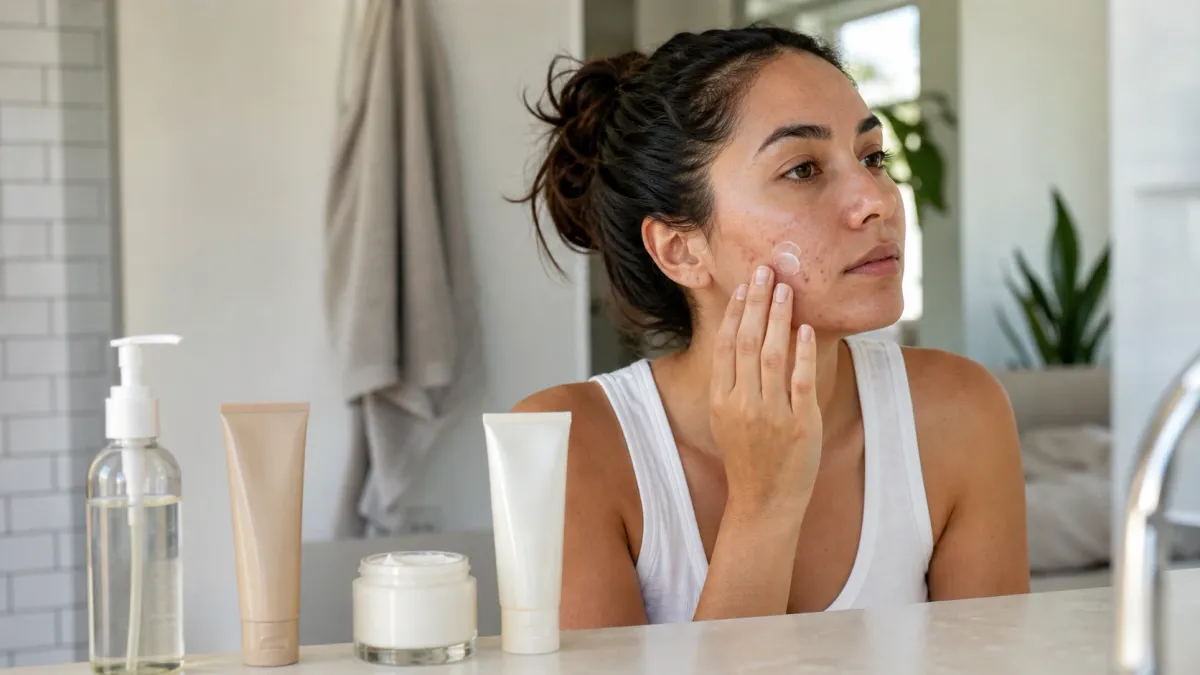
Build an acne-prone skincare routine around four steps: cleanse gently, use one acne active, moisturize and wear broad-spectrum SPF 30+. Match the active to the breakout pattern, then give the routine about six to eight weeks unless it causes significant irritation. Toner, scrubs and multiple acids are not required for clear skin.
Quick Summary
- Use one primary acne active: salicylic acid, benzoyl peroxide, adapalene or another clinician-directed option.
- Keep moisturizer in the routine because irritated, overly dry skin is harder to treat consistently.
- Do not scrub inflamed pimples or change the entire routine after one breakout.
- Seek medical care for deep, painful or scarring acne instead of relying on a stronger face wash.
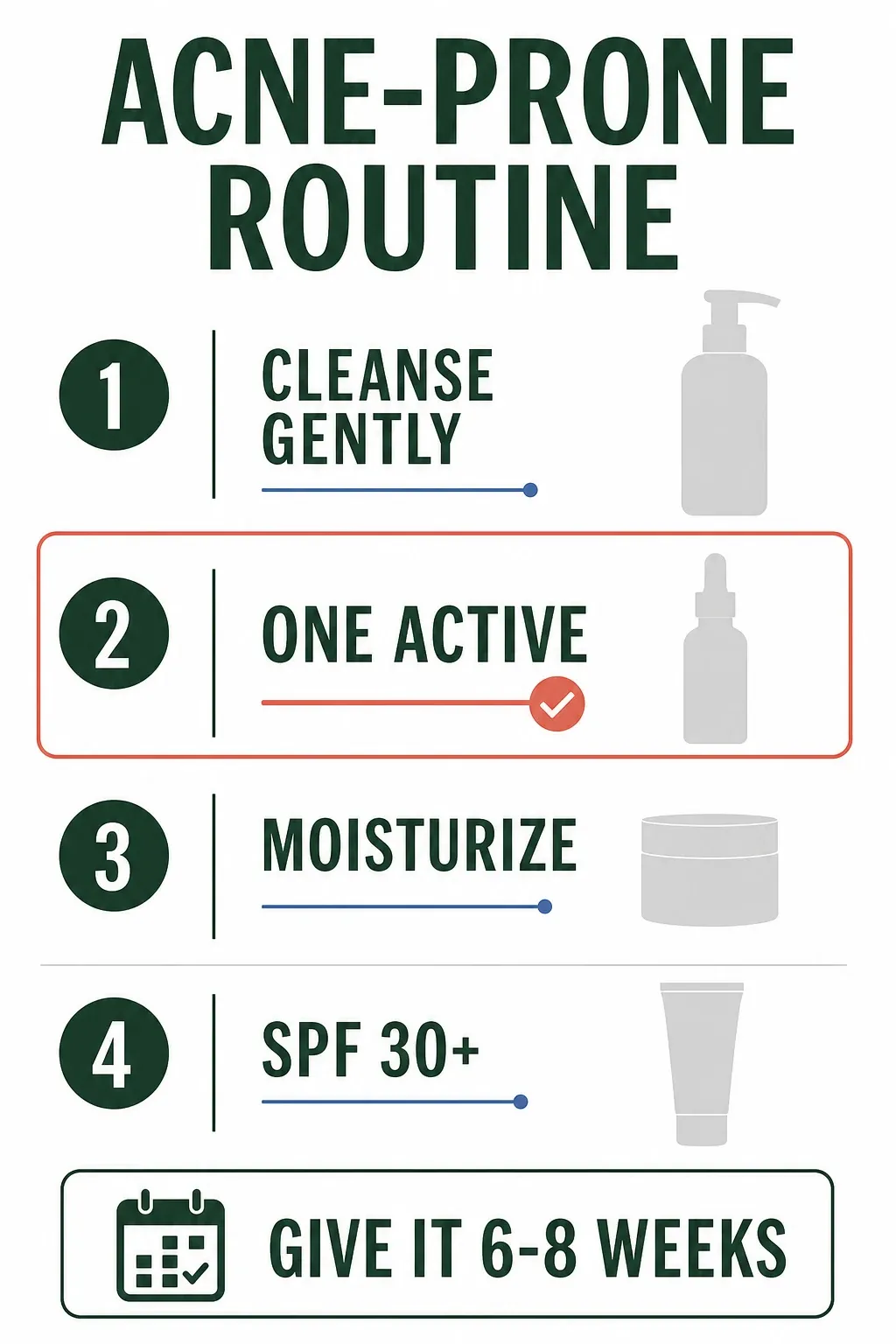
Match One Active to the Breakout Pattern
Start by naming the dominant lesion rather than calling every bump 'acne.' Blackheads, inflamed pimples and deep painful nodules have different treatment needs. Mixed acne is common, but adding several strong products on day one makes tolerability and progress difficult to read.
| What you notice | Priority | Best first move |
|---|---|---|
| Blackheads and closed comedones | Clogged pores | Salicylic acid or adapalene |
| Red inflamed pimples | Inflammatory acne | Benzoyl peroxide or clinician-guided plan |
| Deep painful nodules or scarring | Higher-risk acne | Dermatology assessment |
| Burning, shiny-raw skin and flakes | Irritated barrier | Pause optional actives and simplify |
Morning Routine: Four Steps
The morning routine controls residue, supports the barrier and protects acne marks from additional UV exposure. It should not leave the face tight before the treatment day has even begun.
Cleanse gently
Wash with a mild cleanser and lukewarm water, using fingertips rather than a brush or scrub. An active cleanser can fit some routines, but it should not duplicate a strong leave-on treatment twice daily when the skin is already dry.
Use the planned morning treatment
Benzoyl peroxide or another clinician-recommended product may be used in the morning according to directions. Apply it to the acne-prone area, not only to each visible pimple, when the product is intended for preventive area treatment.
Moisturize
Choose a lightweight lotion or gel-cream that does not sting and does not leave a film you dislike. 'Non-comedogenic' is a useful filter, not a guarantee, so introduce the moisturizer without changing three other products at the same time.
Apply broad-spectrum SPF 30+
Use an even layer over the face, ears and exposed neck. Sunscreen helps limit the darkening of post-acne marks and supports any routine using retinoids or exfoliating acids. Choose a wearable finish instead of applying too little.
Evening Routine: Four Steps
The evening routine removes sunscreen and gives the primary acne treatment a predictable place. More treatment nights are not automatically better if irritation makes the schedule impossible to maintain.
Remove makeup or resistant SPF
Use a gentle first cleanse only when needed, then rinse. Avoid repeated cotton-pad friction over raised pimples. If one mild cleanser removes the day's layers, a second cleanse is optional.
Cleanse without scrubbing
Massage briefly with fingertips, rinse with lukewarm water and pat dry. Washing three or four times daily does not train skin to produce less oil and can increase the tightness that leads to more product changes.
Apply one acne treatment
Use salicylic acid, adapalene or a prescribed treatment according to directions. Start at a lower frequency, especially when the rest of the routine already contains an active cleanser. Retinoids such as adapalene are avoided during pregnancy.
Moisturize and leave the skin alone
Apply moisturizer after treatment, or before and after a retinoid if that improves tolerance and does not conflict with medical directions. Do not pick, extract or cover the entire face with a drying spot treatment before bed.
Salicylic Acid, Benzoyl Peroxide or Adapalene?
These ingredients are not interchangeable. Choose one based on the dominant acne pattern, existing prescriptions and tolerance, then protect the routine from unnecessary overlap.
| Ingredient | Best fit | Starting point | Watch-out |
|---|---|---|---|
| Salicylic acid | Blackheads and clogged pores | Two or three uses weekly | Dryness and stinging |
| Benzoyl peroxide | Inflamed pimples | Wash or thin layer as directed | Bleaches fabric; can be drying |
| Adapalene | Comedonal and inflammatory acne | Pea-size, low frequency first | Irritation; avoid in pregnancy |
| Azelaic acid | Acne plus post-breakout marks | Low frequency first | Tingling and dryness |
Why Toner Is Not a Required Acne Step
Toner once referred mainly to an astringent used after cleansing. Modern toners can be hydrating, exfoliating or simply fragrant water, which means the category itself says little about benefit. A toner earns a place only when its active ingredient solves a defined concern without duplicating the cleanser or leave-on treatment.
An acid toner layered over a salicylic cleanser and under adapalene can create three treatment exposures in one routine. The result may be tightness, burning and flakes that make acne look redder. Remove the toner first when its function is unclear; cleanser, treatment, moisturizer and sunscreen already form a complete routine.
For an optional mist between routine steps, compare our HOCl skincare spray shortlist. It explains why a skin spray does not replace cleansing or an evidence-based acne treatment plan.
Hydrating toner can be pleasant, but moisturizer often covers the same comfort goal with fewer layers. Keep it if it measurably improves wear or comfort. Do not call it necessary because a social routine shows seven steps.
Build a Six-to-Eight-Week Acne Test
Keep the cleanser, moisturizer and sunscreen fixed. Select one primary active for the dominant lesion and record its amount, placement and frequency. Take one photograph weekly in the same light, counting new inflamed lesions separately from old marks. This prevents discoloration from being mistaken for active acne.
During the first two weeks, tolerance matters more than dramatic clearing. Mild dryness may improve with lower frequency and moisturizer, but painful cracking, swelling or a spreading rash is a stop signal. Do not label every new breakout as purging; irritation, menstrual timing, occlusive hair products and ordinary acne fluctuation can all change the pattern.
At six to eight weeks, ask whether fewer new lesions appear and whether current lesions resolve more calmly. If the routine is tolerable but clearly inadequate, a dermatologist can escalate treatment without discarding the useful cleanser, moisturizer and sunscreen base.
How to Pair Acne Treatment Without Stacking It
Salicylic acid is oil-soluble and commonly used for clogged pores. A cleanser provides shorter contact; a leave-on provides longer exposure and may irritate more. Choose one format first. The acne cleanser guide compares gentle, salicylic acid and benzoyl peroxide washes by breakout type.
Benzoyl peroxide has a strong role in inflammatory acne and can reduce acne-related bacteria, but it may dry skin and bleach towels or pillowcases. Lower-strength formats or short-contact use can be easier to tolerate. Do not assume ten percent is automatically better for the face.
Adapalene helps normalize clogged pores and treats multiple acne pathways, but irritation is common during introduction. Use a pea-sized amount for the acne-prone area as directed rather than thick dots on individual pimples. Retinoids are avoided during pregnancy; the pregnancy routine below should replace generic internet advice when that context applies.
Moisturizer and Sunscreen Are Part of Acne Treatment
Moisturizer can reduce treatment-related dryness and make a routine easier to continue. Choose a light lotion, gel-cream or cream based on comfort, not the assumption that all acne-prone skin needs an oil-free gel. The non-comedogenic product guide explains why the label is useful but not an individual guarantee.
Sunscreen helps prevent post-breakout marks from becoming more noticeable and protects skin using retinoids or exfoliating acids. The acne-prone sunscreen guide compares finishes for oily, sensitive and treatment-dried skin.
Apply enough sunscreen for labeled protection. If the face becomes greasy, reduce the moisturizer underneath or try a different sunscreen texture rather than halving the protective layer. Blotting during the day is less disruptive than washing and reapplying the entire routine.
Spot Treatments, Patches and Picking
Hydrocolloid patches can protect a superficial pimple from touching and absorb fluid after it has opened, but they do not treat deep cysts or prevent every lesion. The acne-patch guide separates patches from medicated products.
Picking increases inflammation and the chance of marks or scars. Covering a tempting lesion can be useful, but do not place a patch over irritated skin coated with several strong actives. Deep, recurring or painful acne needs a treatment plan rather than extraction at home; see the cystic acne guide for escalation signs.
Younger readers should keep the same controlled structure but may need help choosing age-appropriate products and building a routine they can repeat around school and sports. The sensitive teenage skincare guide shows how to start without turning every breakout into a high-strength treatment problem.
One Product Example That Fits the Plan
This is not a mandatory purchase or a universal best product. It is one concrete example whose role is clear enough to evaluate without turning the article into a product list.
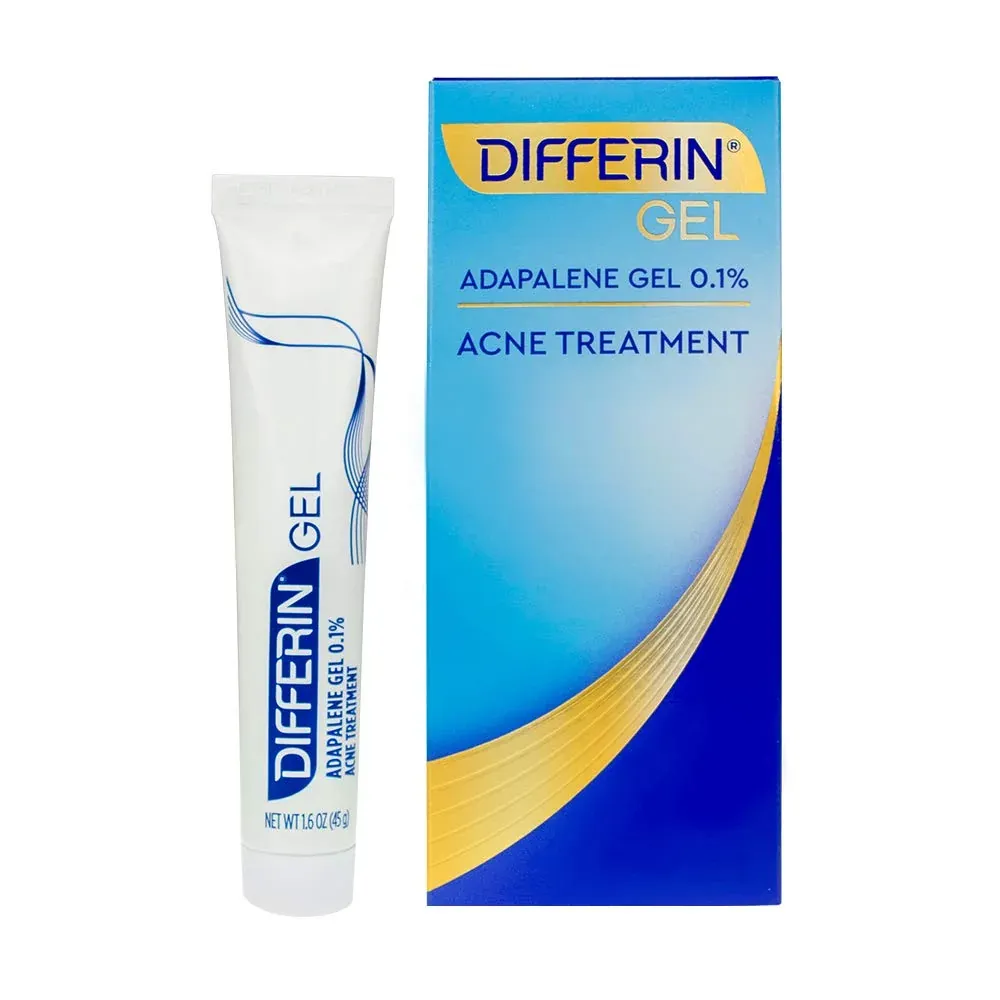
Differin Gel 0.1% Adapalene
Best considered by an adult with persistent comedonal or inflammatory acne who wants one evidence-based leave-on active.
Adapalene is an over-the-counter retinoid with a clear role in acne routines, making it easier to build the rest of the routine around one treatment.
Watch-out: Dryness and irritation are common at first. Use a pea-size amount as directed, wear sunscreen and avoid retinoids during pregnancy. Ask a clinician about breastfeeding or prescription combinations.
View on AmazonAs an Amazon Associate, SkinOptimizer may earn from qualifying purchases. Prices and availability can change.
Timeline: When to Adjust
Set the review date before adding the product. Short-term tolerability and longer-term results are different questions, and both need a defined checkpoint.
| When | What to check | Decision |
|---|---|---|
| Days 1 to 7 | Burning, swelling and excessive dryness | Reduce or stop the newest active |
| Weeks 2 to 4 | Tolerance and new lesion pattern | Keep the base routine fixed |
| Weeks 6 to 8 | Fewer new lesions and calmer texture | Continue, adjust or seek advice |
| Any time | Deep pain, nodules or scars | Book a dermatology assessment |
Common Mistakes That Undermine the Routine
- Treating toner as a required acne step even when it adds no distinct benefit.
- Scrubbing active breakouts or using cleansing brushes over inflamed skin.
- Combining an active cleanser, acid toner, retinoid and spot treatment immediately.
- Skipping moisturizer because the skin is oily.
- Changing products every few days before a pattern can be evaluated.
- Assuming every bump is purging instead of considering irritation or a poor product fit.
- Waiting for scars to form before seeking help for deep painful acne.
When the routine becomes hard to read, return to gentle cleansing, moisturizer and morning sunscreen. The slow skincare method gives a controlled reintroduction plan instead of another shopping list.
When to Ask a Dermatologist
See a dermatologist for deep, painful or scarring acne, widespread inflammation, sudden severe acne, or breakouts that do not improve with an appropriate over-the-counter routine. Seek prompt care for swelling, blistering or a severe rash. Acne can affect confidence and wellbeing; needing prescription treatment is not a failure of cleansing.
How to Evaluate the Routine Without Guessing
Write down the starting concern and use the same cleanser, moisturizer and sunscreen while testing one optional treatment. Photograph the same area in similar light every two weeks. Separate comfort, redness, active breakouts, texture and discoloration because each can move at a different speed.
Immediate burning, swelling, blistering or painful cracking is not a waiting-period problem. Stop the newest optional product and seek appropriate care. For ordinary dryness or mild irritation, reduce frequency and return to the basic routine until skin is comfortable.
At the planned review point, ask three questions: Is the target concern improving? Is the routine comfortable enough to continue? Can the cost and time be maintained? A product that produces a small benefit but repeatedly destabilizes the rest of the routine may not be the best choice.
The Bottom Line
The best acne-prone skincare routine is controlled enough to evaluate. Cleanse gently, choose one active for the dominant breakout pattern, moisturize and use sunscreen every morning. Give a tolerable plan six to eight weeks, but do not wait through deep pain, scarring or severe irritation that needs professional care.
Frequently Asked Questions
What is a simple skincare routine for acne-prone skin?
Cleanse gently, apply one acne treatment, moisturize and use broad-spectrum SPF 30+ every morning. Toner, scrubs and several simultaneous actives are optional and often make the routine harder to evaluate.
Should acne-prone skin use moisturizer?
Yes. Choose a texture that feels comfortable and does not sting. Moisturizer can improve treatment tolerance, which makes consistent use of the actual acne active more realistic.
How long should an acne routine take to work?
Many over-the-counter routines need about six to eight weeks for a useful first evaluation. Stop sooner for severe irritation, and seek care earlier for painful, deep or scarring acne.
Is toner necessary for acne?
No. Toner is a format, not a required step. Keep one only when its active ingredient has a defined role and does not duplicate another treatment.
Can I use salicylic acid and adapalene together?
They can be used in some plans, but beginners should establish tolerance to one active first. Separate them by time or day and ask a clinician when acne is severe or other prescriptions are involved.