What Does Buffering Mean in Skincare? A Safer Active Guide
Buffering uses moisturizer before or around an irritating active to improve tolerance. Compare three methods, tradeoffs and clear stop signs.

In this guide
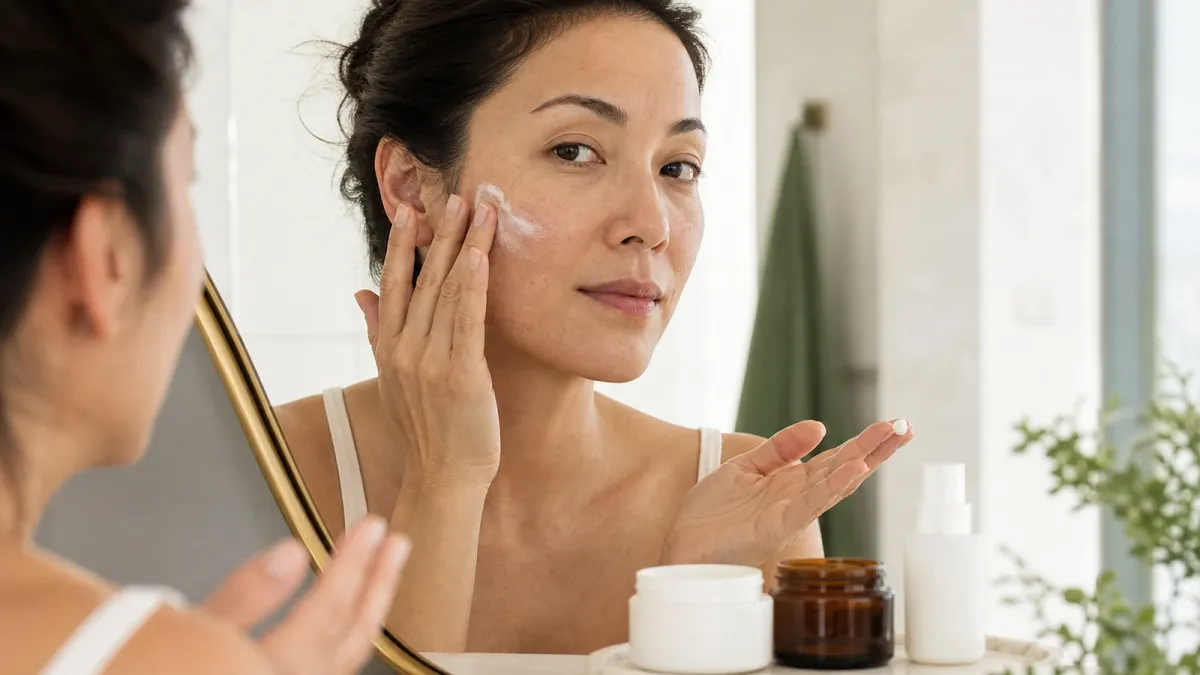
Buffering in skincare means applying moisturizer before or around a potentially irritating leave-on active, most commonly a retinoid, to improve tolerance. The main methods are moisturizer first, the moisturizer-active-moisturizer sandwich, and zone buffering on vulnerable areas. Follow prescription directions first, keep dose and frequency conservative, and stop for persistent burning, swelling or raw peeling.
Quick Summary
- Buffering is a tolerance strategy, not a way to neutralize an active.
- Moisturizer-first, sandwich and zone buffering solve different problems.
- Dose and frequency can matter as much as product order.
- A severe or spreading reaction should not be buffered through.
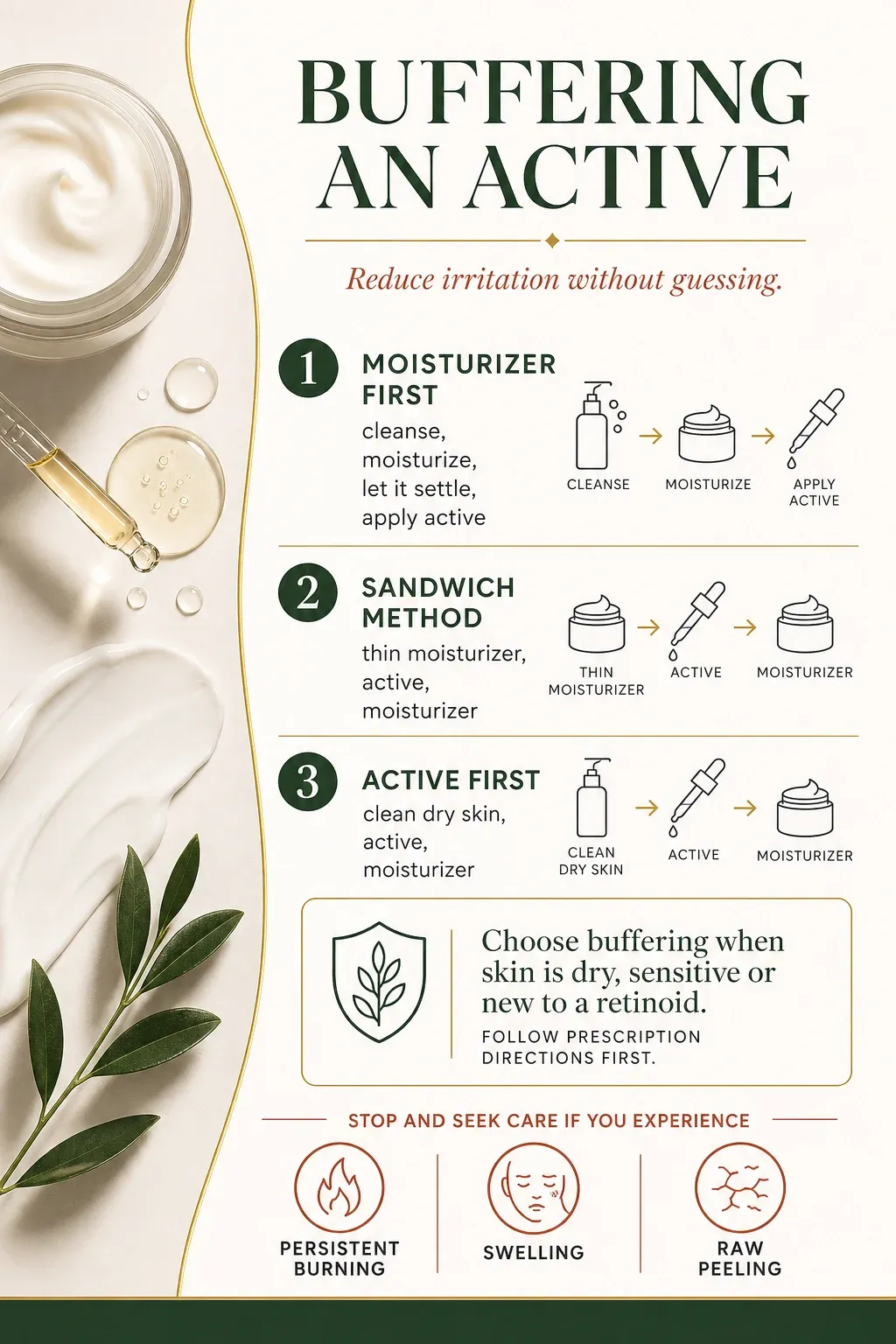
Buffering has become shorthand for making retinol and other actives gentler, but online explanations often skip the formulation, dose and prescription details that determine whether the method is appropriate. This guide compares the actual methods, what the evidence supports and when moisturizer is not enough.
What Buffering Actually Means
In skincare, buffering usually means placing moisturizer before a potentially irritating leave-on active, or around it, to improve tolerance. It is most often discussed with retinoids. The goal is not to neutralize the ingredient; it is to make a useful treatment easier to continue.
The word is informal and brands do not use it consistently. Some people call moisturizer-first buffering, while others call the moisturizer-active-moisturizer sequence the sandwich method. Prescription directions and the exact formulation always take priority over a social-media layering rule.
Buffering is different from mixing two products in your palm. Mixing changes the dose and distribution in an unpredictable way and can increase contamination of the container if tools touch multiple products. Layering measured amounts keeps the steps traceable.
| Method | Order | Best fit | Main tradeoff |
|---|---|---|---|
| Moisturizer first | Cleanse, moisturize, active | Dry or sensitive skin starting a retinoid | May reduce or slow delivery depending on products |
| Sandwich | Moisturizer, active, moisturizer | Very dryness-prone areas | More layers can pill or feel heavy |
| Active first | Clean dry skin, active, moisturizer | Tolerant skin following standard directions | Higher irritation risk for some people |
| Zone buffering | Moisturizer on vulnerable areas, active elsewhere | Corners of nose, lips or eye area | Requires precise placement |
| Frequency buffering | Use active fewer nights | Routine already contains several irritants | Results may take longer but adherence can improve |
Frequency reduction is not literally a layer, but it solves the same practical problem and may be more important than product order. A pea-sized dose twice weekly can be more tolerable than a buffered dose every night. The right method is the one that follows the treatment instructions and prevents persistent barrier damage.
Who Should Consider Buffering?
Buffering is most useful when a leave-on treatment has a known irritation risk and the person has dry, sensitive or newly treated skin. Retinoids are the clearest example. Benzoyl peroxide, azelaic acid and exfoliating acids may also need a gentler schedule, although their labels and vehicles differ.
The American Academy of Dermatology notes that clinicians may recommend applying moisturizer before a stronger retinoid, using less medication or applying it less often. That is not permission to rewrite prescription directions independently. Ask the prescriber when the medication label specifies a particular order.
People whose irritation tends to leave post-inflammatory dark marks have another reason to prioritize tolerability. The AAD's retinoid guidance advises starting slowly and using moisturizer, especially when irritation could trigger hyperpigmentation in darker skin tones.
Buffering is not a solution for an allergy, hives, swelling, blistering or a spreading rash. It also cannot make a contraindicated ingredient appropriate during pregnancy. Stop the product and seek qualified advice when the reaction is more than ordinary transient dryness.
Three Buffering Methods, Step by Step
1. Moisturizer first
Cleanse gently and pat the skin dry. Apply a thin, even layer of a bland moisturizer and let it settle until the surface is no longer wet or slippery. Then apply the instructed amount of active to the intended area.
This method can reduce direct exposure on vulnerable skin and adds barrier support before treatment. A randomized split-face study found that adjunctive moisturizer improved tolerability during tretinoin use. The study evaluated a specific regimen, so it supports the principle rather than proving every moisturizer-first combination equivalent.
2. The sandwich method
Apply a thin moisturizer layer, then the active, then another light moisturizer layer after the active has spread. Keep each layer modest. Heavy application can create pilling, migration around the eyes or an occlusive feel that is uncomfortable for acne-prone skin.
The sandwich method is popular but not universally necessary. It can be useful during early retinoid use or on dry cheeks while the forehead tolerates active-first application. Treat it as a personalized tolerance strategy rather than a mandatory ritual.
3. Zone buffering
Protect highly vulnerable areas with moisturizer or a small amount of ointment before applying the active elsewhere. Common zones include lip corners, creases beside the nose and the immediate eye area. Do not place prescription medication where the directions say to avoid it.
Zone buffering is efficient when only selected areas crack or sting. It avoids diluting the routine across the whole face. The moisturizer and serum layering guide explains order while keeping site-specific instructions ahead of the thin-to-thick rule.
How to Buffer a Retinoid Without Guessing
Begin with the least intense appropriate retinoid and a conservative frequency. Use a gentle cleanser, allow the face to dry and apply only the label or prescription amount. Add moisturizer before or after according to the tolerance plan.
A study of facial retinoid tolerability found that concentration, vehicle, individual retinoid and baseline sensitivity all mattered. The vehicle can change tolerability, which is why a gel and cream at the same named strength may not feel identical.
Use the same method for two to four weeks before escalating. Track persistent redness or color change, burning, scale and tightness. If symptoms build between applications, reduce frequency rather than applying more layers over a dose the skin cannot tolerate.
The retinol evidence guide separates cosmetic retinol from prescription retinoids and explains realistic timelines. Buffering cannot turn a high-strength product into the best beginner choice.
A conservative eight-week schedule
- Weeks 1-2: one night weekly, moisturizer first if needed.
- Weeks 3-4: two non-consecutive nights only if the skin is comfortable.
- Weeks 5-6: maintain the same schedule if dryness appears.
- Weeks 7-8: consider another night only when there is no persistent irritation.
This schedule is an educational example, not a prescription. Follow the exact product directions and clinician plan. Some acne medications are designed for regular use that should not be altered without professional guidance.
Does Buffering Reduce Effectiveness?
It can change delivery, but “less direct” does not automatically mean clinically ineffective. The effect depends on the active, formulation, moisturizer, order, amount and treatment goal. Evidence is stronger for improved tolerability than for a universal percentage change in absorption.
Barrier support may improve adherence, and adherence affects real-world results. A paired study found that barrier-improving moisturizer used before and during tretinoin treatment helped facilitate early retinization. This does not prove every sandwich routine improves efficacy, but it challenges the idea that moisturizer necessarily cancels treatment.
If results are absent despite correct use and adequate time, do not assume buffering is solely responsible. Check diagnosis, dose, frequency, expiration, application area and other products. The product plateau guide provides a six-point audit before changing strength.
Wet Skin, Wait Times and Pilling
Applying an irritating active to wet skin may increase penetration and sting for some formulations. Pat dry and wait until the surface feels dry when the directions or tolerance plan call for it. There is no universal twenty-minute rule for every product.
Wait only long enough for layers to spread without mixing into clumps. Long timer rituals are rarely necessary for ordinary cosmetics. If pilling persists, use smaller amounts, allow each layer to settle briefly and check whether film-forming products are incompatible.
Pilling is a formulation interaction on the surface, not proof that the treatment has become toxic or ineffective. Sunscreen coverage is the priority in the morning. A night active that repeatedly disrupts daytime sunscreen may belong in the evening.
Which Moisturizer Works Best for Buffering?
Choose a bland moisturizer that already feels comfortable and does not contain another strong active. Glycerin, ceramides and other barrier-support ingredients can be useful, but no single ingredient guarantees compatibility. Fragrance-free formulas are preferable when the skin is reactive.
For the supporting product itself, our tretinoin moisturizer comparison separates light lotions from richer creams without changing your prescriber's instructions.
A light lotion may suit oily skin, while a cream can support dry cheeks. Ointment is better reserved for selected vulnerable zones because full-face occlusion may feel heavy. The day-versus-night moisturizer guide helps decide whether one formula can cover both uses.
Avoid a buffering moisturizer that contains exfoliating acids, strong fragrance or another retinoid. The buffer should reduce routine complexity. Adding more active ingredients under the label “moisturizer” defeats that purpose.
Buffering Other Actives
Benzoyl peroxide can cause dryness and may bleach fabrics. Lower frequency, short-contact use when directed, or moisturizer support may improve tolerance. Do not mix it with prescription products unless the plan confirms compatibility.
Azelaic acid can sting during early use, especially on a disrupted barrier. Moisturizer before or after may help, but persistent burning is a reason to reduce frequency or reassess. It does not need to tingle to support acne or pigment goals.
Alpha- and beta-hydroxy acids can be reduced in frequency rather than layered with multiple soothing serums. Do not buffer a home peel to make an unsafe exposure seem acceptable. The overdoing-skincare guide explains how separate actives create cumulative irritation.
| Active | Common problem | Safer first adjustment | Avoid |
|---|---|---|---|
| Retinoid | Dryness, scale, burning | Lower frequency or moisturizer first | Increasing strength during irritation |
| Benzoyl peroxide | Dryness and fabric bleaching | Thin layer or directed short contact | Using more than label dose |
| Azelaic acid | Early stinging | Apply less often with moisturizer | Applying over raw skin |
| AHA/BHA | Tight shiny-raw surface | Pause and rebuild the base | Stacking acid toner, peel and scrub |
| Vitamin C | Stinging or pilling | Use a gentler formula or alternate mornings | Assuming oxidation is skin adaptation |
When Buffering Is the Wrong Fix
Do not buffer through hives, facial swelling, blisters, severe pain or a spreading rash. These can indicate allergy or a significant reaction. Wash off the product and seek appropriate care.
A persistently burning routine may reflect a damaged barrier, rosacea, eczema or contact dermatitis. Temporarily pause non-essential actives and use gentle care. The skin-barrier repair guide gives a staged reset and warning signs.
Moderate or severe acne, scarring or treatment failure also needs diagnosis rather than endless layering changes. Prescription products may have specific vehicles and application instructions. Bring the complete routine to the appointment.
A Two-Week Buffering Test
Keep cleanser, moisturizer, sunscreen and active unchanged. Choose one buffering method and one frequency. Record burning during application, tightness the next morning, visible scale and whether the treatment schedule can be maintained.
After two weeks, continue if comfort improves without a new problem. If the skin remains raw, reduce active frequency or pause and seek advice. Do not judge acne or photoaging results in two weeks; this test measures tolerance.
The slow-start routine offers a broader one-change-at-a-time method. It is useful when moisturizer, cleanser and active are all new.
Common Buffering Mistakes
- Mixing products in the palm: dose and distribution become harder to control.
- Using a medicated moisturizer as the buffer: the routine may contain more actives than expected.
- Applying thick occlusive layers everywhere: pilling and heaviness can reduce adherence.
- Changing method every night: the cause of improvement or irritation remains unclear.
- Buffering over broken skin: barrier injury needs recovery, not a workaround.
- Ignoring prescription directions: online methods do not override medical instructions.
- Calling all peeling purging: irritation and acne progression require different responses.
The Bottom Line
Buffering means using moisturizer before or around an irritating active to improve tolerance. Moisturizer-first, sandwich and zone buffering are practical options, but the best method depends on the formulation, directions and skin state. Frequency and dose are equally important.
Buffering should make a useful treatment sustainable, not disguise a reaction. Keep the base routine simple, test one method consistently and stop when symptoms exceed ordinary mild dryness. Seek professional guidance for prescriptions, severe reactions or a condition that is not improving.
Frequently Asked Questions About What Does Buffering Mean in Skincare? A Safer Active Guide
Does buffering retinol make it less effective?
Buffering can change delivery, but that does not automatically make treatment ineffective. Improved tolerance may support consistency. The result depends on the formulation, moisturizer, order, amount and treatment goal.
How long should moisturizer sit before retinol?
Wait only until the moisturizer has settled and the surface is no longer wet or slippery, unless the product or prescriber gives a specific interval. A universal long timer is not required.
Can I use the sandwich method every night?
Only if the retinoid directions and your tolerance support nightly use. Frequency should be increased gradually, and persistent burning or raw peeling means the schedule needs reassessment.
What moisturizer is best for buffering?
Use a simple, comfortable moisturizer without another strong active. Choose a lotion for lighter texture or a cream for dry skin, and prefer fragrance-free care when skin is reactive.
Can I buffer acids or benzoyl peroxide?
Moisturizer or lower frequency may improve tolerance for some products, but directions differ. Do not use buffering to justify an unsafe peel or exceed a drug label or prescription plan.
This article is for informational purposes only and does not replace professional dermatological advice.