Do You Need a Different Moisturizer for Day and Night?
Learn when one moisturizer is enough, when separate day and night products help, and how to choose by skin type without overbuying.

In this guide
Need the practical answer first?
Skip to the decision table, product options, or skin-type rules before reading the full guide.
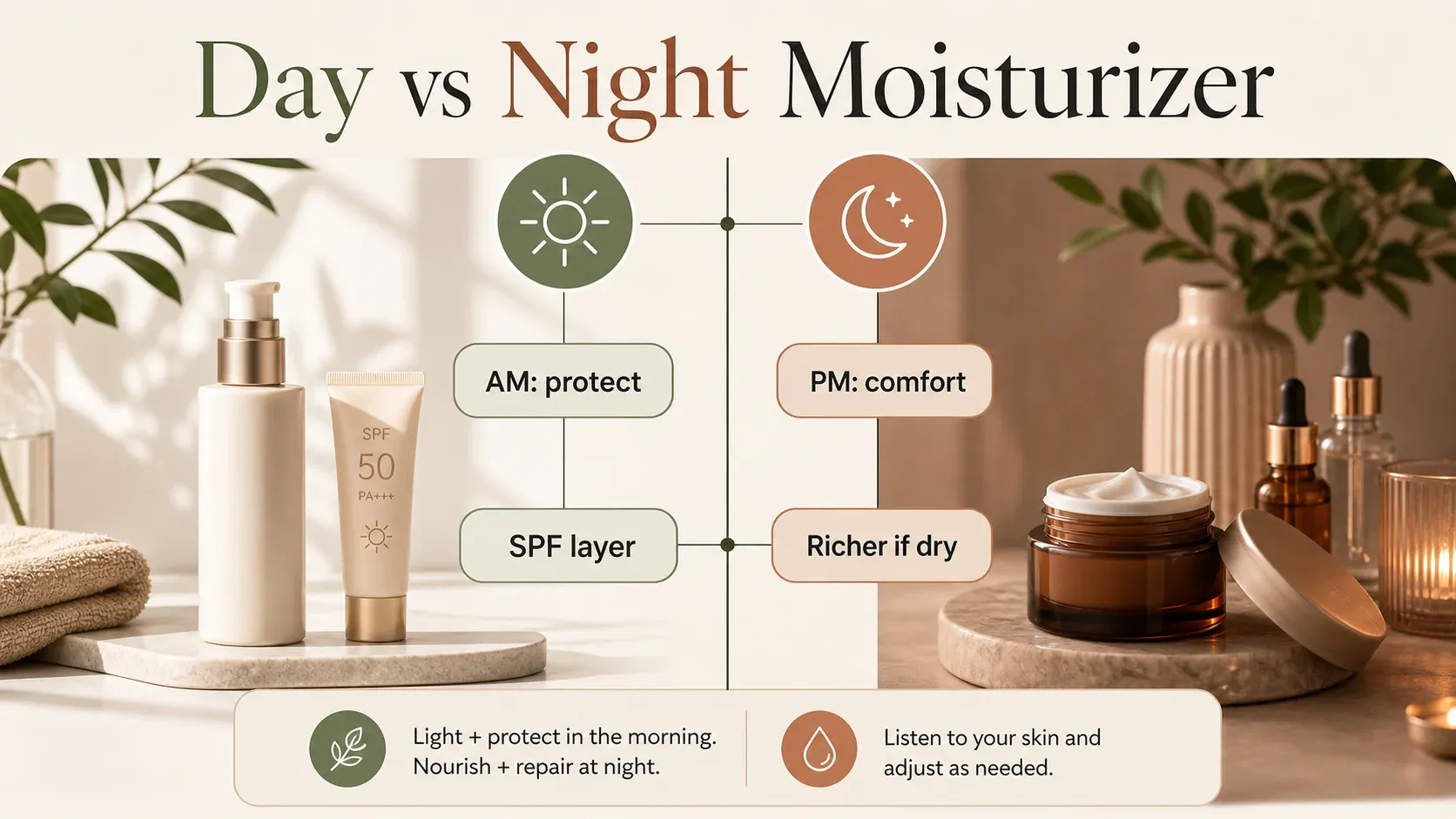
Do you need a different moisturizer for day and night? Usually, not automatically. This is one of those skincare questions where the honest answer is less dramatic than the marketing. Your skin does not know whether a jar says “day” or “night.” It responds to texture, ingredients, sunscreen, weather, your skin type, and the rest of your routine.
If a regular night cream still leaves skin tight, use our overnight hydration mask guide to compare light gel, balanced cream and rich balm textures before adding another layer.
The difference matters because many people buy two moisturizers for the wrong reason. They think a day cream and night cream are mandatory. Then the routine gets expensive, crowded, and harder to judge. A better approach is to ask what each time of day actually needs.
Morning skincare has one job that nighttime skincare does not: it has to work with sun protection. Night skincare has one advantage that morning skincare does not: you do not need makeup or sunscreen to sit on top, so a richer cream may be easier to tolerate. That is the real split.
The smartest routine is not always the longest routine. If your current moisturizer layers well under sunscreen and keeps your skin comfortable overnight, keep it. Upgrade to separate AM and PM products only when there is a clear reason: sunscreen compatibility, oil control, dryness, retinoid use, or seasonal skin changes.
Too many moisturizer jars?
If your shelf is starting to look confusing, use the decision table below before buying another day or night cream.
Short visual note: more jars do not always mean a better routine. Texture, SPF layering, and skin type matter more than the day/night label.
Day vs Night Moisturizer: The Simple Decision Table
Use this table before buying anything. It gives you the direct answer for the most common situations.
| Your situation | Best choice | Why |
|---|---|---|
| Normal skin, no dryness | One moisturizer can work | Use sunscreen separately in the morning |
| Oily or acne-prone skin | Light AM product, optional PM lotion | Heavy creams may feel greasy or clog-prone |
| Dry or tight skin | Separate richer PM moisturizer | Night is easier for comfort and occlusion |
| Using retinoids | Gentle PM moisturizer is useful | Retinoids can make skin feel dry or sensitive |
| Morning pilling under SPF | Switch AM texture | The issue is layering, not hydration alone |
The American Academy of Dermatology emphasizes simple basics: cleanse gently, moisturize, and protect skin from the sun. That is the framework here. A morning moisturizer should not make sunscreen harder. A night moisturizer should not irritate or overload your skin.
What a Daytime Moisturizer Should Do
A daytime moisturizer should feel comfortable under sunscreen, makeup, or both. It does not need to be packed with every active ingredient. In fact, the best morning moisturizer is often the one you barely notice after it settles.
Some day moisturizers include SPF. That can be convenient, but the SPF only helps if you apply enough and reapply when needed. If you apply a tiny amount because you want it to feel like moisturizer, you may not get the labeled protection. This is why many people do better with a normal lightweight moisturizer plus a separate sunscreen.
If your morning skin is oily, use our daily routine for oily skin to keep the rest of the routine light. If your morning skin is tight or flaky, compare this with our dehydrated skin routine.
What a Night Moisturizer Should Do
A night moisturizer does not have to protect against the sun or sit under makeup. That gives you more freedom. It can be a little richer, more cushioning, or more focused on comfort. This is especially useful when your skin feels dry, when you use retinoids, or when the weather is cold.
Night is also when many people use treatment products. Retinoids, exfoliating acids, and acne treatments can make some skin feel dry or reactive. A gentle moisturizer can help the routine feel easier. If your skin feels irritated from too many steps, read our guide on overdoing skincare products before adding more products.
| Night routine issue | What to choose | What to avoid |
|---|---|---|
| Retinoid dryness | Gentle lotion or cream | Fragrance-heavy night creams |
| Winter tightness | Richer cream layer | Too many exfoliating products |
| Acne-prone skin | Light gel-cream or lotion | Very heavy textures if they trigger bumps |
| Barrier stress | Simple barrier-supporting moisturizer | Strong actives every night |
DermNet explains moisturizers and emollients as products that help reduce dryness and support the skin surface. The important point is practical: the right moisturizer is the one your skin tolerates and you will actually use.
Do not choose a night cream because it sounds more advanced. Choose it because your skin has a nighttime problem: dryness after cleansing, discomfort from retinoids, seasonal tightness, or a need for a richer texture that would feel too heavy in the morning.
Can You Use the Same Moisturizer Morning and Night?
Yes. Many people can use the same moisturizer twice daily. This is especially true if the moisturizer is fragrance-free, comfortable, not too heavy, and works under sunscreen. A single product can simplify your routine and help you notice what is actually working.
Using one moisturizer is often the best choice for beginners. It is also useful for sensitive skin because fewer products means fewer variables. If your skin reacts, you have a shorter list of possible causes.
If a simple routine is your goal, see our minimalist skincare routine. If you already use more active ingredients at night, our nighttime skincare routine can help you organize the order.
Skin-Type Rules for Day and Night Moisturizer
Skin type changes how useful separate moisturizers are. The same cream can feel perfect on dry skin and too heavy on oily skin. Use these rules as a starting point, then adjust based on feel.
| Skin type | Morning | Night |
|---|---|---|
| Oily | Light lotion or gel-cream | Light lotion; richer only if dry from actives |
| Dry | Cream under SPF if it layers well | Richer cream usually helps |
| Combination | Light all over, extra cream on dry zones | Use richer texture only where needed |
| Sensitive | Simple, fragrance-free moisturizer | Simple cream; avoid overactive night products |
| Acne-prone | Light, non-greasy texture | Moisturize around acne actives without heavy layering |
Dryness, itching, and sensitivity can be signs that the skin barrier is stressed. The Cleveland Clinic overview of the skin barrier is useful background if your skin feels reactive rather than just dry. For a deeper SkinOptimizer guide, read how to avoid damaging the skin barrier.
Product Options: Simple AM and PM Moisturizers
You do not need to buy all three. Choose the one that solves the actual gap in your routine: an SPF morning moisturizer, a light PM lotion, or a richer comfort cream. These are Amazon options that fit the logic of the article.
As an Amazon Associate, we earn from qualifying purchases.

1. AM Option: CeraVe AM Facial Moisturizing Lotion SPF 30
Best for: someone who wants a simple morning moisturizer with SPF in one step.
Why it fits: it matches the daytime job: moisturize lightly and support morning sun protection.
Watch out: SPF moisturizers only help when applied generously. If you under-apply, use a separate sunscreen.
Check price on Amazon
2. PM Option: CeraVe PM Facial Moisturizing Lotion
Best for: someone who wants a lightweight night lotion without a heavy cream feel.
Why it fits: it can work for combination, oily, or acne-prone skin that still needs night moisture.
Watch out: very dry skin may need a richer cream over or instead of a light lotion.
Check price on Amazon
3. Richer Comfort Option: La Roche-Posay Toleriane Double Repair
Best for: dry, tight, or barrier-stressed skin that needs more comfort at night.
Why it fits: it is a practical upgrade when one light moisturizer is not enough overnight.
Watch out: if rich creams trigger bumps for you, use a thin layer or keep it only on dry zones.
Check price on AmazonIngredients That Matter More Than the Day or Night Label
The label matters less than the formula. A “night cream” can be basic. A “day cream” can be rich. A plain moisturizer can work beautifully. Look for the function.
| Ingredient type | What it does | Best use |
|---|---|---|
| Humectants | Pull water into the outer skin layer | Morning or night |
| Emollients | Smooth and soften the skin feel | Morning or night depending on texture |
| Occlusives | Help reduce water loss from skin | Often better at night or on dry zones |
| SPF filters | Help protect from UV exposure | Morning only |
| Retinoids/acids | Target texture, acne, or aging concerns | Often used at night; moisturize carefully |
If your product includes retinol or exfoliating acids, treat it as more than a moisturizer. Active night creams can be useful, but they also raise the chance of irritation if you stack them with other active products. If you use retinol near delicate areas, read how to use retinol around the eyes safely.
Common Mistakes With Day and Night Moisturizers
The biggest mistake is buying by label instead of need. A day moisturizer is not automatically better for day. A night cream is not automatically more effective. The product has to fit your skin and the rest of your routine.
If products often break you out, see whether facial oils cause breakouts. If you are unsure whether “natural” moisturizers are safer, read the truth about natural skincare ingredients.
Bottom Line
You only need a different moisturizer for day and night if your routine has different daytime and nighttime needs. Morning needs lighter layering and sun protection. Night may need more comfort, especially if your skin is dry, reactive, or using treatments.
If one moisturizer works well twice daily, keep it. If it pills under sunscreen, choose a lighter AM option. If it leaves you tight at night, add a richer PM option. That is the practical answer.
Frequently Asked Questions About Day and Night Moisturizer
Can I use night moisturizer during the day?
Yes, if it feels comfortable and does not interfere with sunscreen. The issue is texture. A heavy night cream may feel greasy or pill under SPF, but it is not automatically unsafe for daytime use.
Can I use day moisturizer at night?
Yes. A simple day moisturizer can work at night if your skin feels comfortable. If it contains SPF, you can still use it, but SPF is unnecessary at night and may not be the most elegant choice.
Is SPF moisturizer enough in the morning?
It can be enough only if you apply enough to get the labeled protection. Many people under-apply SPF moisturizers because they use them like a normal cream. A separate sunscreen is often easier to use properly.
Do oily skin types need a night cream?
Not always. Oily skin may do better with a light lotion or gel-cream at night. A richer night cream is useful only if skin feels dry, tight, or irritated from treatments.
When should I switch to separate AM and PM moisturizers?
Switch when one product no longer fits both jobs. Common signs are pilling under sunscreen, greasy morning shine, dry tight skin at night, retinoid dryness, or seasonal changes.
This article is for informational purposes only and does not replace professional dermatological advice.