Best Moisturizer for Tretinoin: 3 Formulas Compared
Compare three moisturizers for tretinoin by texture, ingredients and routine fit. Includes dry-skin trade-offs, buying checks and Reddit-informed FAQs.

In this guide
Quick Answer
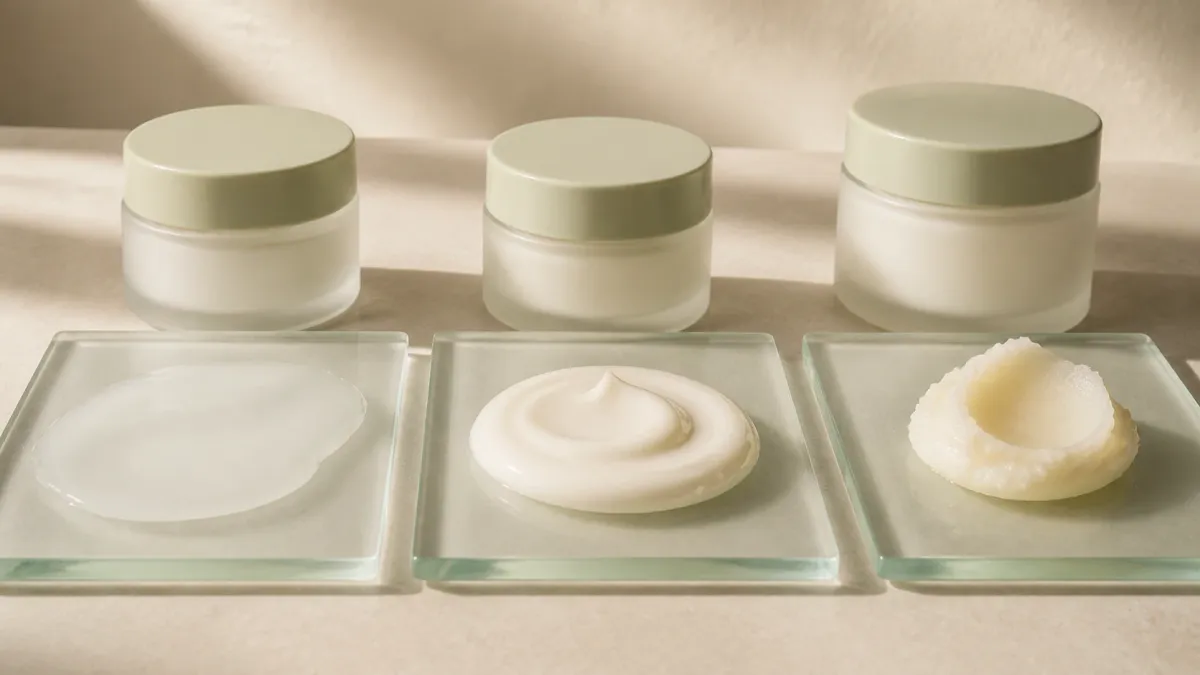
Compare Vanicream Daily Facial Moisturizer for a lighter lotion, CeraVe Moisturizing Cream for a richer ceramide cream, and Vanicream Moisturizing Cream for a different rich base. No moisturizer is guaranteed to prevent tretinoin irritation; persistent burning or dermatitis needs prescriber advice.
As an Amazon Associate, we earn from qualifying purchases. Affiliate links do not change our editorial selection.
Ready to compare the exact products? Check current price, selected variant and seller before buying.
Quick Summary
- Pick the texture that solves an actual comfort problem.
- Keep the exact prescription instructions in charge.
- Check product identity: Vanicream Cream and Daily Facial Moisturizer differ.
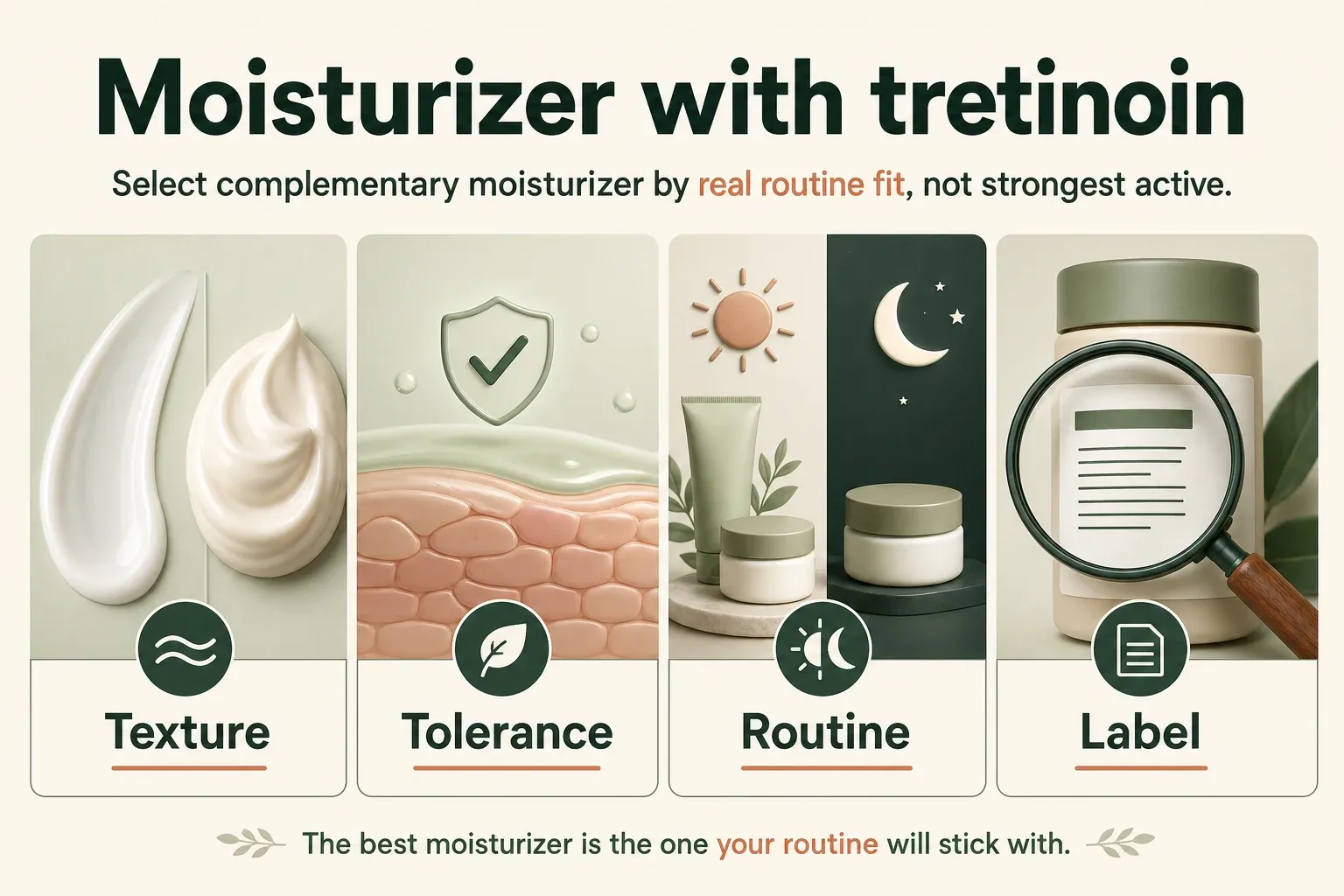
SkinOptimizer Editorial Team. Label and source review: August 31, 2026. This is an editorial buying guide, not hands-on testing or individual medical advice. Reddit informed the questions; manufacturer information and cited clinical sources inform the answers. Illustrations are not evidence of product performance.
The best choice depends on what your current moisturizer fails to do
The best moisturizer for tretinoin is not necessarily the richest cream or the one with the longest barrier-ingredient list. It is the formula that keeps your skin comfortable enough for the treatment plan your prescriber has given you.
Already have a moisturizer that does that? There is no requirement to buy a special “tretinoin-safe” replacement.
This shortlist separates three useful options: a lighter facial lotion, a richer ceramide cream, and a petrolatum-containing cream with a relatively straightforward ingredient list.
We reviewed manufacturer information and product identities on August 31, 2026. These are editorial selections, not the results of a hands-on wear test. None is guaranteed to prevent irritation or breakouts.
Persistent pain, swelling, cracking, or dermatitis are not a shopping problem. A moisturizer should not be expected to compensate for a prescription routine causing those symptoms. Speak with the clinician managing your treatment before another shopping experiment.
| Your main constraint | Start by comparing | The trade-off |
|---|---|---|
| A heavy cream feels uncomfortable during the day | Vanicream Daily Facial Moisturizer | A lighter lotion may not provide enough overnight comfort for very dry areas. |
| You want a rich face-and-body cream with ceramides | CeraVe Moisturizing Cream | The texture can be more substantial than you want under sunscreen. |
| You prefer a rich cream without adding another active ingredient | Vanicream Moisturizing Cream | Its petrolatum-containing base is different from the brand's Daily Facial Moisturizer. |
The three-product shortlist
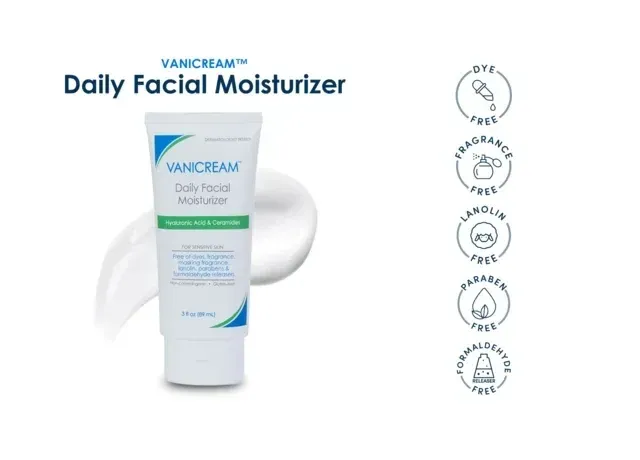
Vanicream Daily Facial Moisturizer
Why compare: Compare for a lighter facial lotion with squalane and ceramides.
Watch out: Different formula from the original Moisturizing Cream; check your full ingredient exclusions.
Manufacturer specifications · Product photo: manufacturer/retailer.
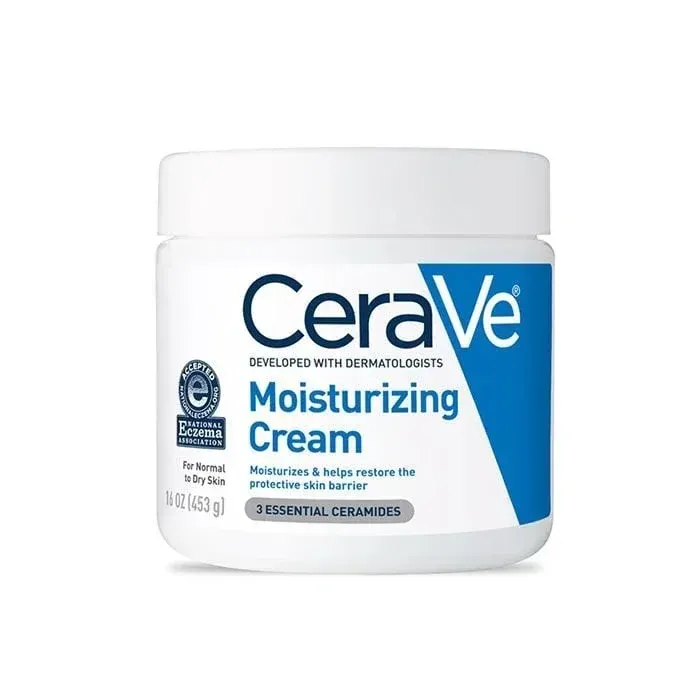
CeraVe Moisturizing Cream
Why compare: Compare for a richer face-and-body cream with ceramides.
Watch out: Not CeraVe PM lotion. A richer finish may not fit every morning routine.
Manufacturer specifications · Product photo: manufacturer/retailer.
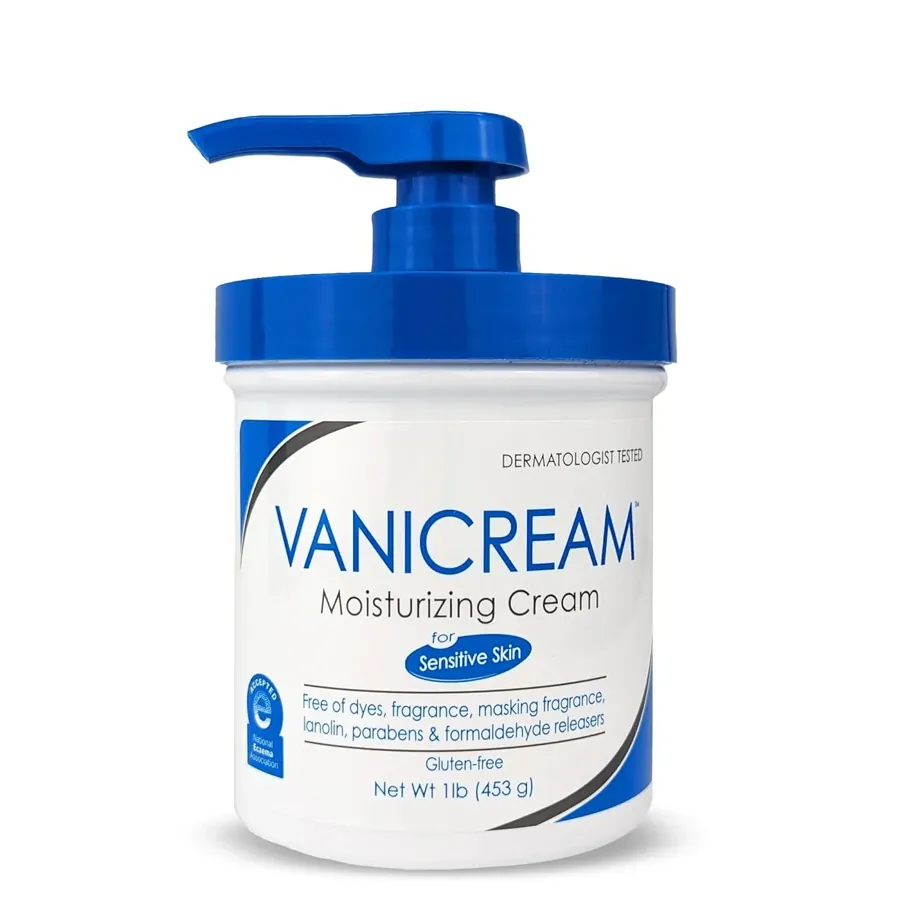
Vanicream Moisturizing Cream
Why compare: Compare for a rich petrolatum-containing face-and-body moisturizer.
Watch out: Contains propylene glycol and cetearyl alcohol; a short formula is not an allergy guarantee.
Manufacturer specifications · Product photo: manufacturer/retailer.
Vanicream Daily Facial Moisturizer: the lighter starting point
Choose this if your main complaint is that your current cream feels heavy, especially in a morning routine. The manufacturer's current US formula includes glycerin, squalane, hyaluronic acid, and ceramides.
It is not a smaller tube of Vanicream Moisturizing Cream. The two products have different bases, and a good experience with one does not predict an identical experience with the other.
Fit and trade-offs at a glance:
- Why it made the shortlist: Not everyone using tretinoin wants the same texture on every part of the face, at every time of day.
- A reason to try it: If a thick cream feels so heavy that you skip moisturizing, a lighter formula you actually use is worth considering.
- A reason to choose something richer: If your cheeks feel tight again soon after application, this may be too light as your only moisturizer.
The watch-out is not that squalane or ceramides are inherently problematic. A complete formula can feel uncomfortable on already irritated skin even when its ingredient list looks reassuring.
Do not interpret a “sensitive skin” label as a promise that stinging is impossible. Check the manufacturer's exact Daily Facial Moisturizer label, particularly if you already avoid a specific ingredient.
CeraVe Moisturizing Cream: the richer ceramide option
CeraVe Moisturizing Cream makes sense when a light lotion does not give you the level of comfort you want and you are looking for a readily recognizable face-and-body cream.
Its current US product information lists ceramides, hyaluronic acid, petrolatum, and dimethicone. That combination is a reason to consider the formula, not proof that it will work better than every simpler cream.
Fit and trade-offs at a glance:
- Evening comfort: A cream can be pleasant at night yet inconvenient under a particular sunscreen or foundation. Texture compatibility matters more than a long ingredient list.
- Face or face and body: Before buying a large tub, decide whether you want one product for both areas or a smaller facial product to trial.
- Value limitation: Larger packaging only represents good value if the contents suit you and get used. A bigger tub is not automatically the better first purchase.
Do not confuse this cream with CeraVe PM Facial Moisturizing Lotion. That is a different product with a different ingredient list.
If you are avoiding niacinamide, check the exact product rather than assuming every product from a brand is the same. Our niacinamide-free moisturizer comparison explains the process. The current CeraVe cream page is the reference for this selection.
Vanicream Moisturizing Cream: a different kind of rich formula
The original Vanicream Moisturizing Cream is the option to compare if you want a rich petrolatum-containing base and do not specifically need a ceramide-focused facial lotion.
Its manufacturer ingredient list is comparatively short, but “short” does not mean universally non-irritating. It contains propylene glycol and cetearyl alcohol; those details matter if you have a documented sensitivity or a previous product reaction.
This is the product most easily mixed up with the Daily Facial Moisturizer in online discussions. “Vanicream worked for me” is not enough information to make a purchase. Ask:
- Which product? A recommendation for the large pump tub cannot automatically be transferred to the small facial tube. Confirm the full cream or lotion name.
- Which market version? Match the recommendation to the label on the product you can actually buy, rather than relying only on a familiar brand name.
- How was it used? A richer evening option may not suit your morning routine. The context behind the recommendation matters as much as the product name.
The Vanicream Moisturizing Cream label supports face and body use. We would compare it first for a richer evening option, not insist that everyone should wear it under makeup.
If its finish bothers you, popularity in tretinoin discussions is not a reason to keep forcing it into your morning routine.
What to check before replacing your moisturizer
Identify the actual failure
Write down what happens, where it happens, and when. “My moisturizer is bad” is hard to act on.
“My cheeks feel tight two hours after the evening routine, but my forehead feels greasy in the morning” is more useful. It suggests a texture or placement problem rather than a need for several new active ingredients.
Separate product feel from symptoms:
- Visible sheen: A cream can leave a shiny finish without causing harm. That may be a texture preference, not a reason to change treatment.
- Pilling: Products rolling into small flakes can be annoying without meaning your skin barrier is damaged. Check how the cosmetic layers work together.
- Burning, a spreading rash, swollen eyelids, or fissures: These belong in a different category and need clinical advice, not a richer-cream recommendation.
A purchasing guide cannot determine the cause of those symptoms, especially when a prescription and several cosmetics are used together.
Look at the whole routine, not just the last step
New dryness may coincide with a new cleanser, exfoliant, acne treatment, or cleansing habit. Replacing the moisturizer while adding another serum makes the result harder to interpret.
Our guide to avoiding skin-barrier damage helps separate a simpler supporting routine from an escalating list of products.
You do not need a “barrier repair” marketing claim on every step. A cleanser that leaves you comfortable, an appropriate moisturizer, and daytime sun protection create a more coherent foundation than several products advertising the same fashionable ingredients.
For a wider shortlist, compare our moisturizers for skin-barrier support. Keep the prescription-specific decision with your prescriber.
Keep prescription instructions in charge
Moisturizer-before-retinoid routines are sometimes called buffering; moisturizer on both sides is often called a sandwich. These terms describe an order of application, not the correct timing, dose, or frequency for every prescription formulation.
The AAD's acne-treatment guidance describes moisturizer and clinician-directed adjustments as possible ways of managing irritation.
Keep these boundaries clear:
- Follow the instructions for your actual prescription; do not increase tretinoin frequency based on this guide.
- Do not change its strength or assume that a thicker moisturizer makes an irritating schedule safe.
- If the layer order is unclear, take the moisturizer name and current routine to your clinician or pharmacist.
Lightweight by day, richer by night: when two textures make sense
Two moisturizers can be useful, but they are not a requirement. Consider a split approach only when you can describe a genuine conflict: a rich cream gives comfortable evenings but sits poorly under your morning sunscreen.
In that situation, a lighter morning lotion and a richer evening cream solve different problems. Buying both before you have tried either is less informative.
You can also have different needs across your face. The sides of the mouth may feel dry while the central forehead feels oily. That does not prove you should stop moisturizing oily areas or give every area the same heavy finish.
Discuss persistent irritation around the nose, mouth, or eyes with your clinician rather than repeatedly covering it with more product.
For morning wear, check the combination:
- Judge the moisturizer with your usual sunscreen at its instructed application amount; a product that looks elegant alone may pill under another layer.
- Let each product settle as directed and avoid repeatedly rubbing the same area while you assess how the layers sit together.
- If the combination remains unpleasant, consider changing the moisturizer texture rather than reducing sunscreen coverage to make the finish lighter.
Our sunscreen-under-makeup guide addresses that separate buying decision.
| What you observe | A reasonable purchasing response | What not to infer |
|---|---|---|
| Comfortable skin, but a greasy morning finish | Trial a lighter morning texture | That all rich creams clog your pores |
| Tightness returns despite a light lotion | Compare a richer bland moisturizer | That more tretinoin will speed “adjustment” |
| Burning, swelling, or a persistent rash | Seek clinical advice before adding products | That a trendy barrier ingredient will necessarily fix it |
How to trial a new moisturizer without losing track
Keep the trial simple enough that you can explain it afterward:
- Record the exact product. Save its full name, country version, ingredient-list photo, and the date you started.
- Change one cosmetic at a time where practical. Do not independently alter prescribed treatment while trying to judge the moisturizer.
- Track useful observations. Note comfort, visible irritation, and how the formula sits under sunscreen. That is more useful than a numerical “glow score.”
The AAD describes a small-area test for a new skincare product. This can help identify a problem before broader use, but it is not the same as dermatologist-administered patch testing for allergy.
A reassuring home trial also cannot guarantee that the product will never cause a reaction later.
Do not repeatedly rechallenge a product that caused a substantial reaction just to decide whether an internet recommendation was correct. Photograph the packaging and symptoms if helpful, stop the suspect cosmetic, and ask for advice.
Seek urgent care for severe allergic symptoms such as breathing difficulty or significant facial swelling. Persistent acne also needs its own treatment assessment; moisturizer shopping is not a substitute for that.

Buying the correct variant on Amazon
Listings can group different sizes or related products, and the default selection may change. Before checking out, verify:
- Product title: “Daily Facial Moisturizer” and “Moisturizing Cream” are different Vanicream products. For CeraVe, select “Moisturizing Cream,” not another lotion.
- Selected size and images: Confirm that the chosen offer matches the formula and package you intended to buy, not just the first listing photo.
- Seller and ingredient panel: Check who supplies the product and compare the exact variant with its manufacturer information, especially for an ingredient exclusion.
We do not quote a fixed price because offers, sellers, and delivery eligibility vary. Compare the total delivered price and usable package size, not just the largest apparent discount.
A very large tub is poor value if you are uncertain about the formula and would not use it on your body if it does not suit your face. The correct first purchase may be the smallest practical size.
If the manufacturer's ingredient information and the received package differ, do not assume one is a harmless abbreviation of the other. Contact the brand or seller before using it when the difference concerns an ingredient you need to avoid.
Keep the product in its original packaging while deciding whether it suits you. That makes identifying the exact formula and batch easier if a question arises.
Reddit-informed questions, answered with label and safety checks
These questions paraphrase recurring concerns in a June 2026 moisturizer discussion and an August 2026 tretinoin-routine thread. The discussions informed the questions, not a clinical ranking of products.
Is Vanicream Cream better than the Daily Facial Moisturizer with tretinoin?
Neither is universally better. The cream is a richer petrolatum-containing product; the Daily Facial Moisturizer is a different, lighter formula with squalane and ceramides.
Compare the exact labels and choose around texture, known sensitivities, and the gap in your existing routine. A Reddit recommendation that says only “Vanicream” does not identify which one to buy.
What if my skin is oily but also peeling?
Oiliness does not tell you whether a moisturizer feels comfortable or whether a prescription routine is irritating your skin. A lighter lotion may be more wearable during the day.
Persistent peeling with burning or redness deserves discussion with your prescriber. Do not add an exfoliant to remove the flakes or assume you should tolerate worsening irritation.
Do I need niacinamide in a tretinoin moisturizer?
No. Niacinamide is optional, not a prerequisite for a supporting moisturizer. If you tolerate and like a niacinamide-containing formula, there is no need to avoid it just because you use tretinoin.
If you need an exclusion, use a verified exact-product list rather than treating every product from a “sensitive skin” brand as niacinamide-free.
Why am I still dry even when I use the sandwich method?
Layer order cannot identify or correct every cause of dryness. Your moisturizer may be too light, another product may be irritating, or your prescription plan may need review.
Check the actual instructions with your prescriber. Adding more layers indefinitely can obscure the problem. A sandwich is not evidence that persistent discomfort is safe to ignore.
Should I keep using a moisturizer if it stings?
Persistent or significant stinging is not proof that a moisturizer is “working.” Stop the suspect cosmetic and seek advice when symptoms continue, worsen, or include a rash or swelling.
Skin that is already irritated can react to products previously tolerated. A clinician can help distinguish irritation, allergy, and other causes more reliably than repeated purchases.
For the next step, use our sensitive-skin moisturizer guide if ingredient tolerability is the main constraint, or our acne-prone barrier-support guide if dryness and breakouts are overlapping. The skincare buying-guide hub keeps those separate decisions in one place.
This article is for informational purposes only and does not replace professional dermatological advice.