How to Start Sunscreen as a Teen: A Simple Daily Guide
Teens need one sunscreen that fits acne, skin tone, school and sports. Learn how to choose, apply and reapply broad-spectrum SPF 30 or higher.
In this guide
Start with one broad-spectrum, water-resistant sunscreen with SPF 30 or higher. Apply it after moisturizer and before makeup to skin not covered by clothing, then reapply during prolonged outdoor exposure and after swimming, sweating or toweling. Choose texture and tint by acne, dryness, sensitivity, skin tone, school access and sports rather than building a complicated routine.
Quick Summary
- One suitable SPF product is enough to start.
- Apply an even full layer after moisturizer and before makeup.
- Plan portable reapplication for lunch, sport, swimming and sweat.
- Use shade, clothing, hats and sunglasses with sunscreen.
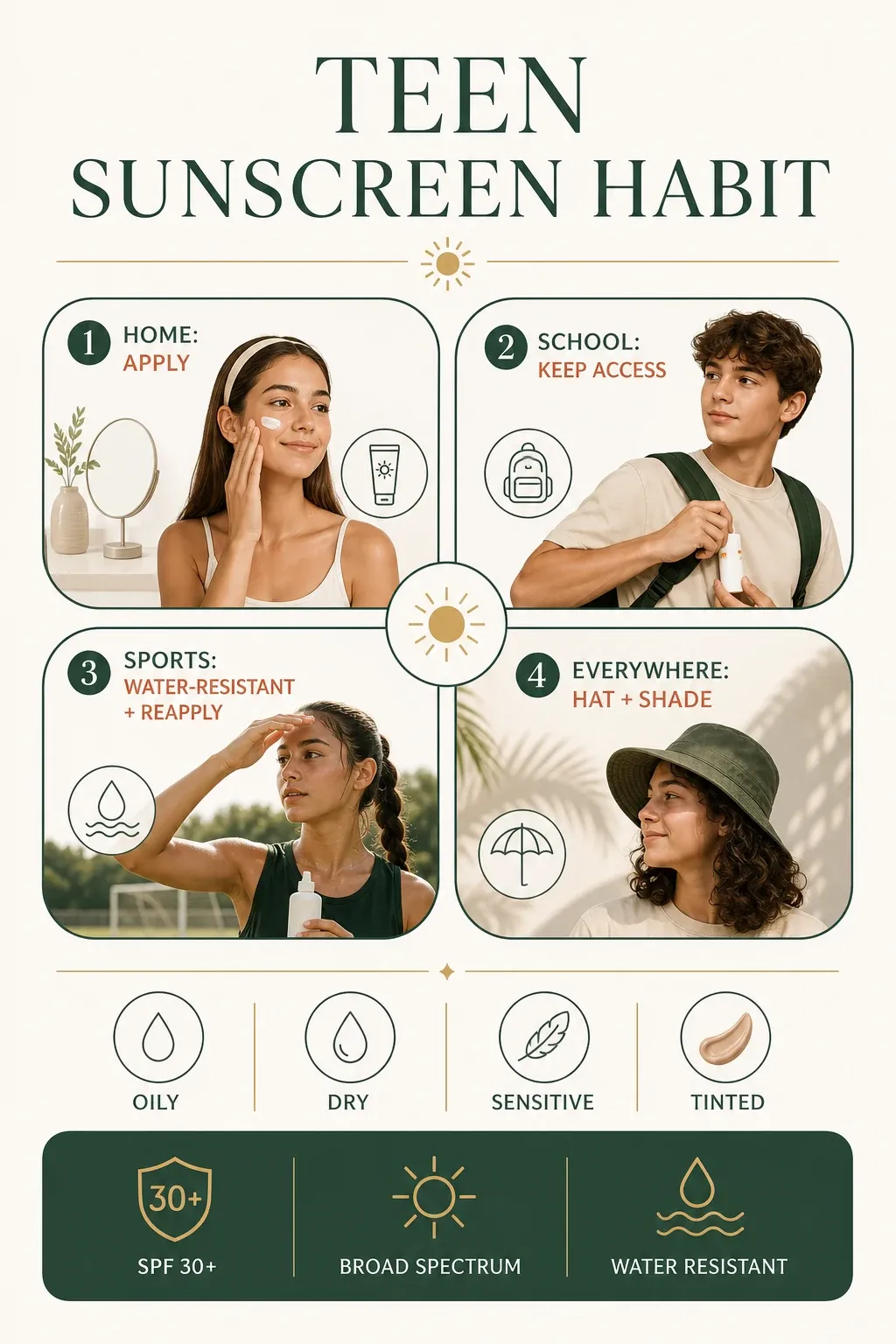
Teen sunscreen advice works only when it survives a real school day. White cast, eye sting, acne treatment dryness, sports and product access are practical barriers that generic reminders miss. This guide builds one simple morning step, a realistic reapplication plan and a two-week habit test without adding age-inappropriate actives.
Teens Can Start Sunscreen With One Simple Product
Choose a broad-spectrum, water-resistant sunscreen with SPF 30 or higher and use it on skin not covered by clothing when outdoors. Apply it after moisturizer and before makeup, then reapply during prolonged outdoor exposure and after swimming, sweating or toweling. No ten-step routine is required.
The AAD's 2025 guide for tweens and teens recommends a gentle cleanser, fragrance-free moisturizer and daily broad-spectrum water-resistant SPF 30 or higher. Acne treatment can be added for a real need without replacing sun protection.
Starting young is mainly a habit decision. The product must fit school, sports, skin tone, acne treatment and budget well enough to be used. A perfect label in a bathroom drawer provides no protection.
| Teen situation | Best starting format | Habit cue |
|---|---|---|
| Oily or acne-prone | Light non-comedogenic fluid or gel | Apply after morning moisturizer |
| Dry from acne treatment | Moisturizing lotion or cream | Keep beside treatment moisturizer |
| Sensitive or reactive | Fragrance-free mineral or tested gentle formula | Patch test on a quiet week |
| Sports | Water-resistant lotion plus portable stick | Reapply before practice and after sweat |
| Deeper skin tone | Transparent or matched tinted formula | Test the full dose in daylight |
| Makeup wearer | Compatible lotion under makeup | Sunscreen before makeup; portable touch-up |
How to Choose the First Sunscreen
Read three essentials on the label: broad spectrum, SPF 30 or higher and water resistance. The AAD label decoder explains that broad spectrum covers UVA and UVB, while SPF mainly reflects sunburn protection.
Choose texture by current skin. Oily skin may prefer a fluid or gel, dry skin a cream, and reactive skin a fragrance-free mineral formula. A tinted sunscreen can reduce white cast on deeper skin tones.
Do not buy several products before one is tested. Use a sample or returnable product for three ordinary days, including school or sport. Observe eye sting, cast, pilling, shine and breakouts at the correct amount.
How Much and When to Apply
The AAD application guide recommends applying sunscreen before going outdoors and covering all exposed skin. For the body, most adults need about one ounce; smaller bodies and exposed areas vary. Face, ears, neck and hands are commonly missed.
Apply an even layer rather than one tiny dot. Use sunscreen after other skincare and before makeup. If it pills, remove a serum or use less moisturizer underneath instead of shrinking the sunscreen dose.
Reapply approximately every two hours while outdoors and after swimming, sweating or toweling. A school day mainly indoors is different from lunch outside, track practice or a beach trip. Build the reapplication plan around the actual schedule.
Make Sunscreen Work at School
Apply the first layer at home. Keep a labeled portable product in the place allowed by school policy, such as a backpack, locker or sports bag. Ask a parent or school office about rules when access is restricted.
A stick can simplify ears, nose and eye-area touch-ups, but it requires repeated passes and rubbing for coverage. A lotion remains easier for large exposed areas. The sunscreen stick guide explains the dose limitation.
Use clothing and shade when reapplication is impractical. A cap, sunglasses and long-sleeved sports top reduce the exposed area. Sunscreen should support those tools rather than carry the whole job.
Sunscreen With Acne and Acne Treatment
Look for non-comedogenic or won't-clog-pores labeling and a texture that does not feel heavy. Individual breakouts can still occur, so keep cleanser and treatment stable during the test. Do not scrub sunscreen off with harsh brushes.
Retinoids, benzoyl peroxide and acids can cause dryness or irritation. Use moisturizer and choose a comfortable sunscreen rather than stopping protection. The acne-prone sunscreen guide compares routine fit.
For the rest of the routine, see the sensitive teenage skincare guide and teen cleanser guide. Three stable products are a better base than trend-driven active stacking.
Mineral or Organic Sunscreen for Teens?
Both can protect effectively when broad spectrum, SPF 30 or higher and used correctly. Mineral formulas use zinc oxide or titanium dioxide and can suit sensitive skin. Organic-filter formulas often feel lighter and more transparent.
Choose by tolerance and finish rather than fear. The sunscreen ingredient guide explains why additional regulatory data needs do not automatically mean an ingredient is unsafe. Avoid a filter for a documented reaction, not a viral list.
A matched tinted formula can improve wear on deeper skin tones. Test the complete face dose in daylight because a tint that disappears on the hand can look different across the face and hairline.
Sports, Swimming and Outdoor Activities
Use a water-resistant sunscreen and check whether the label states 40 or 80 minutes. Apply before practice, then reapply after heavy sweating, swimming or toweling. No sunscreen is waterproof.
Keep a body lotion and a smaller face product if that improves use. A stick is useful for portable touch-ups, but large areas need enough repeated application. Protect scalp parts, ears, neck and the tops of feet.
The CDC sun-safety guidance pairs sunscreen with shade, clothing, a hat and sunglasses. Coaches and families can create planned shade and reapplication breaks.
Sunscreen Under Makeup
Apply sunscreen after moisturizer and let it form an even film before makeup. Makeup with SPF does not reliably replace sunscreen because the amount needed for the label value is much larger than most people wear. Do not mix foundation into sunscreen.
For touch-ups, use a compatible lotion, stick or measured cushion product. Powder alone is difficult to apply at an adequate protective dose. Prioritize the base layer and use shade when a perfect midday cosmetic reapplication is not realistic.
Sensitive Skin and Eye Sting
Choose fragrance-free sunscreen and test a small area. Zinc oxide or titanium dioxide formulas may sting less for some reactive users, but the complete formula matters. Stop for hives, swelling, blistering or a spreading rash.
Use a water-resistant stick around the eyes if lotion migrates with sweat. Apply lotion to the rest of the face at full dose. Sunglasses add protection and reduce squinting.
The sensitive-skin sunscreen guide helps compare fragrance, filter system and finish. A dermatologist can evaluate repeated reactions.
Dark Skin, White Cast and Hyperpigmentation
All skin tones need sun protection. Melanin lowers some UV sensitivity but does not eliminate skin cancer, photoaging or pigment worsening. Post-acne marks can remain darker when exposure continues.
Use transparent organic-filter formulas or a well-matched tinted sunscreen when mineral cast prevents adequate use. Iron oxide tints can add visible-light protection relevant to selected pigment concerns. The tinted sunscreen guide covers shade and finish.
What About Vitamin D?
Do not use intentional sunburn or tanning beds to obtain vitamin D. Diet, fortified foods and supplements when medically appropriate provide alternatives without adding UV injury. A clinician can test and advise when deficiency risk exists.
Real-world sunscreen use does not create a simple guarantee of deficiency. Clothing, outdoor behavior, skin tone, latitude and diet all influence status. Keep the sunscreen decision focused on preventing unprotected UV damage.
Indoor Tanning Is Not a Safe Base Tan
Tanning beds expose skin to ultraviolet radiation and increase skin-cancer and photoaging risk. A base tan provides little protection and represents skin injury. Self-tanner can change color but does not replace sunscreen.
Peer pressure and appearance goals deserve a nonjudgmental alternative. Use a self-tanning product if desired, follow directions and continue broad-spectrum sunscreen. Do not combine tanning beds with acne medications that increase sensitivity.
A 14-Day Teen Sunscreen Habit Plan
| Days | Action | What to learn |
|---|---|---|
| 1 to 3 | Apply at home after moisturizer | Texture, cast and eye comfort |
| 4 to 6 | Wear through a normal school day | Pilling, shine and access |
| 7 | Review missed areas and product amount | Whether the format is realistic |
| 8 to 10 | Add one outdoor reapplication | Best portable method |
| 11 to 13 | Test sport or longer outdoor time | Sweat and water resistance |
| 14 | Keep, adjust or replace one variable | A repeatable personal routine |
Use a phone reminder only until the cue becomes automatic. Pair application with brushing teeth, putting in contact lenses or packing a school bag. Keep the product visible but away from excessive heat.
If the sunscreen fails, name the reason. Change only the texture, tint, eye-area product or access plan. Do not replace the entire skincare routine in the same week.
Common Teen Sunscreen Mistakes
- Using one tiny dot: label protection assumes an adequate film.
- Relying on makeup SPF: cosmetic amounts are usually too low.
- Skipping cloudy days: clouds do not remove all UV.
- Calling a tan protective: tanning is skin injury.
- Choosing trend ingredients over texture: adherence matters more.
- Forgetting sport reapplication: sweat and toweling remove the film.
When a Parent or Dermatologist Should Help
Parents can help with label reading, school access, budget and replacement before a product expires. Avoid turning sunscreen into criticism about appearance. Make it a routine health skill like a helmet or seat belt.
See a dermatologist for painful or scarring acne, repeated sunscreen rash, severe sensitivity or changing skin lesions. Bring the exact products and a list of acne treatments. A clinician can simplify rather than expand the routine.
How Parents and Teens Can Share the Plan
Let the teen choose between two or three products that already meet the protection standard. Autonomy over tint and texture can improve use more than repeating warnings. The adult can handle cost, expiration and school-policy questions.
Agree on where each product lives and who replaces it. Keep one at home and one portable option when the school permits it. Avoid stockpiling several trendy formulas before the first is tested.
Use neutral language about skin tone, acne and appearance. Sunscreen is health protection, not a punishment for breakouts or a demand to stay pale. A self-tanner can meet a cosmetic tan preference without ultraviolet exposure.
Budget and Replacement for a Teen Routine
Protect the budget for cleanser, moisturizer, sunscreen and any prescribed acne treatment. An expensive antioxidant serum should not displace the product that is finished every month. The usage-based restock guide also works for teen households.
Write the open date on the container and note how long a full dose lasts. Running out very slowly can reveal under-application, while a sports season can empty a bottle faster. Replace by real use and expiration rather than influencer launch cycles.
Store sunscreen away from a hot car or direct sun. Keep the cap closed and do not share applicators across irritated skin. A damaged or contaminated package is not worth finishing.
What to Do After a Sunburn
Move out of the sun, cool the skin and use a bland moisturizer. Drink according to thirst and normal needs, and avoid peeling or exfoliating the skin. Severe blistering, fever, confusion, dehydration or extensive pain needs medical care.
Review the plan without blame: amount, missed areas, application timing, water resistance and reapplication. Use the sunburn treatment guide for supportive care. A burn is not proof that every sunscreen fails.
The Bottom Line
A teen can start sunscreen with one product: broad-spectrum, water-resistant SPF 30 or higher in a texture that works with skin tone, acne treatment and school life. Apply it after moisturizer and before makeup, then reapply for outdoor time, water and sweat.
Keep the routine simple and fix practical barriers one at a time. A consistent sunscreen habit plus shade and clothing is more valuable than a complicated shelf of age-inappropriate actives.
Frequently Asked Questions About How to Start Sunscreen as a Teen
What SPF should a teenager use?
Choose broad-spectrum, water-resistant SPF 30 or higher. Use it on exposed skin when outdoors and combine it with shade, protective clothing, a hat and sunglasses.
Can teens use sunscreen every day?
Yes. Daily use is a simple way to cover routine outdoor exposure. Choose a comfortable product that fits acne, dryness, skin tone and school or sport logistics.
Does sunscreen make teenage acne worse?
Not necessarily. Look for non-comedogenic labeling and a light formula, then test it while keeping the rest of the routine stable. Harsh removal can worsen irritation.
Can makeup with SPF replace sunscreen for teens?
Usually no. Most people apply far less makeup than the amount used for SPF testing. Apply sunscreen first and treat makeup SPF as an additional feature.
How should a teen reapply sunscreen at school?
Apply at home, keep an allowed portable product in a backpack or locker and reapply before prolonged outdoor time or sports. Clothing and shade help when access is limited.
This article is for informational purposes only and does not replace professional dermatological advice.