Is Sunscreen Only for Summer? A Year-Round UV Guide
Sunscreen is not only for summer. Match protection to year-round UV exposure, clouds, windows, altitude and outdoor behavior rather than temperature.

In this guide
Sunscreen is not only for summer. Ultraviolet radiation reaches skin year-round, although dose changes with season, latitude, time, altitude, cloud, reflection and behavior. Use broad-spectrum SPF 30 or higher on exposed skin when outdoors, combine it with shade and clothing, and scale texture and reapplication to the real setting rather than the temperature.
Quick Summary
- UV exposure changes by season but does not disappear in winter.
- Snow, altitude, water, sand and windows can change the exposure pattern.
- Keep broad-spectrum SPF 30 or higher while adapting texture by season.
- Reapply during outdoor time and after swimming, sweating or toweling.
Sunscreen advice often swings between beach-only use and anxious indoor rules. Neither extreme helps readers judge real exposure. This guide explains how ultraviolet dose changes through the year, where snow, cloud, windows and medication matter, and how to keep one protection standard while changing texture and reapplication by season.
Ultraviolet Radiation Does Not Follow the Beach Calendar
The sun emits ultraviolet radiation throughout the year. The amount that reaches your skin changes with latitude, season, time, altitude, cloud, reflection and behavior, but winter does not switch it off. Protection should match exposure rather than the month printed on a calendar.
UVB is strongly associated with sunburn and varies more with season and time of day. UVA penetrates more consistently through the day and contributes to photoaging and skin-cancer risk. Broad-spectrum sunscreen is designed to address both parts of the problem.
The American Academy of Dermatology sunscreen FAQ recommends broad-spectrum, water-resistant SPF 30 or higher on exposed skin when outdoors. It also emphasizes shade and protective clothing because sunscreen is one layer, not complete armor.
| Situation | Year-round exposure clue | Practical protection |
|---|---|---|
| Winter commute | Face and hands remain uncovered | SPF on exposed skin; clothing elsewhere |
| Cloudy walk | Cloud does not block all UV | Use broad-spectrum protection for outdoor time |
| Snow sports | Altitude and reflection can increase dose | Water-resistant SPF, goggles and reapplication |
| Office by a window | UVA can pass through ordinary glass | Assess duration, distance and direct light |
| Short indoor day | Minimal outdoor exposure | Use a realistic routine; do not create fear |
| Tropical trip | Higher UV index and more exposed skin | Increase shade, clothing and reapplication |
Why Winter Sun Still Matters
The AAD's cold-weather sun protection guidance explains that snow can reflect UV and higher altitude can increase exposure. Face, ears and lips are often uncovered even when the body is bundled. Wind and cold can also make dry skin less tolerant of a poorly chosen sunscreen.
A 2024 AAD winter protection survey found gaps in public awareness and behavior. A survey measures knowledge rather than individual dose, but it supports the practical concern that people stop protecting exposed skin because the air feels cold.
Choose a cream or moisturizing sunscreen when winter skin feels tight. Apply it after moisturizer if needed and protect lips with broad-spectrum SPF 30 or higher. The dry-skin sunscreen guide explains how to avoid trading protection for comfort.
Clouds, Shade and Reflected Light
Cloud cover changes UV but does not eliminate it. Thin or broken cloud can leave meaningful exposure, while heavy cloud can reduce it substantially. Visible brightness and temperature are poor substitutes for a UV forecast.
Water, sand and snow can reflect radiation toward exposed skin. Shade reduces direct exposure but may not block reflected or scattered light. Combine shade with clothing and sunscreen when the UV index or activity justifies it.
The CDC sun-safety guidance recommends broad-spectrum sunscreen with other protective measures and reapplication after prolonged outdoor time, swimming, sweating or toweling. A hat is not a reason to skip ears, neck or reflected exposure completely.
Do You Need Sunscreen Every Single Indoor Day?
A universal fear-based answer is not necessary. Consider how much daylight exposure you actually receive, whether direct sun reaches you through windows, whether you drive or walk outside, and whether you use a photosensitizing treatment. A daily habit is convenient for many people because it removes repeated decisions.
If you remain indoors away from windows and have virtually no daytime outdoor exposure, the immediate UV dose may be low. Applying sunscreen can still be part of a consistent morning routine, but missing one truly indoor low-exposure day is not equivalent to an unprotected beach day.
People managing melasma, post-inflammatory hyperpigmentation or photosensitizing treatment may choose a more consistent plan. A tinted product with iron oxides can add visible-light protection for selected pigment concerns. See the tinted sunscreen guide for finish and shade considerations.
Windows and driving
Ordinary glass blocks most UVB but can transmit UVA to varying degrees. Long hours beside a bright window or frequent driving create a different pattern from passing through a room. Distance, orientation, glass treatment and time all matter.
Use window film, shade, clothing or sunscreen according to the setting. Do not assume a car side window provides the same protection as a windshield or specialized UV film. Protect the hands and side of the face when exposure is repeated.
A Seasonal Sunscreen Plan That Keeps the Same Standard
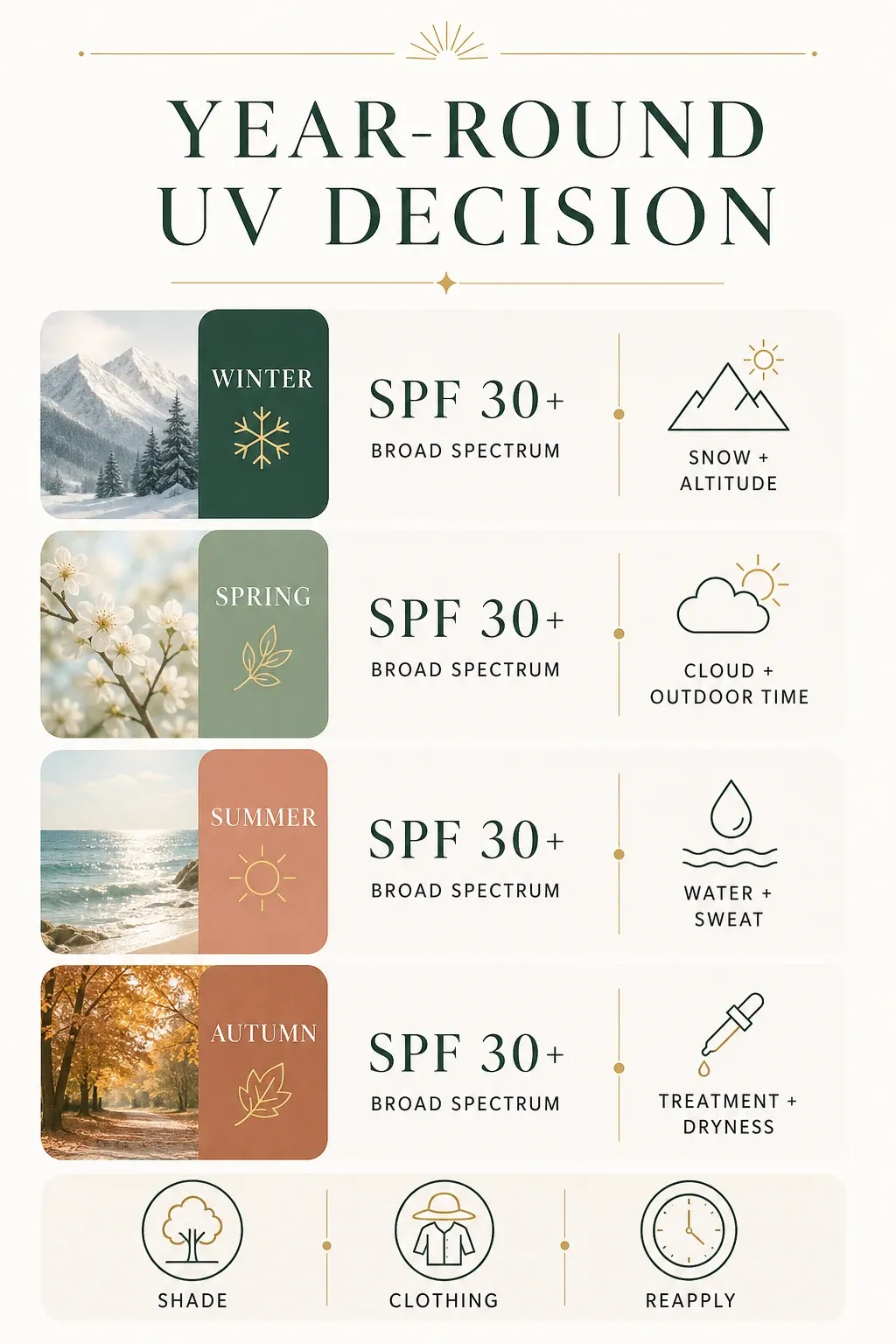
Keep the performance standard stable: broad-spectrum SPF 30 or higher and water resistance when sweating or swimming. Change the texture, area and reapplication plan by season. A rich winter cream and a lighter summer fluid can both meet the same label standard.
| Season or setting | Texture priority | Reapplication trigger |
|---|---|---|
| Cold, dry winter | Cream, moisturizing base, fragrance-free if reactive | Outdoor duration, snow, wiping or sweating |
| Humid summer | Light fluid, gel or non-comedogenic lotion | Every two hours outdoors; swimming and sweat |
| Spring allergies | Low-fragrance eye-compatible formula | Rubbing, tears and outdoor time |
| Autumn treatment restart | Barrier-supporting formula | Follow outdoor exposure and label |
| High-altitude trip | Water-resistant face and lip protection | Frequent reapplication with snow or sweat |
| Daily commute | Comfortable formula under clothing or makeup | Longer unexpected outdoor exposure |
How Much to Apply
Under-application is one reason real-world protection falls below the label test. Apply an even, generous layer to all exposed skin. The AAD describes about one ounce for an adult body and at least a teaspoon for face application, although body size and exposed area vary.
Apply before going outdoors according to the label, then reapply approximately every two hours while outside and after swimming, sweating or toweling. Water-resistant means tested for 40 or 80 minutes in water, not waterproof. Makeup with SPF rarely reaches its labeled protection at the amount normally used.
The common sunscreen mistakes guide covers missed ears, hairline, neck, hands and insufficient reapplication. A correct product used too sparingly is still an application problem.
Choose a Format You Will Actually Use
Creams and lotions make coverage easier to see and can suit dry skin. Gels can feel lighter on oily or hairy areas, while sticks are useful around the eyes and for portable touch-ups. Sprays require careful coverage and should not be inhaled.
The sunscreen stick guide explains why repeated passes and rubbing are needed for an even film. A stick is convenient but does not automatically deliver enough in one swipe.
For acne-prone skin, compare the acne-friendly sunscreen options. Non-comedogenic labeling can help screen products, but individual response and cleansing technique still matter.
Sun Protection for Every Skin Tone
Melanin provides some natural protection but does not eliminate sunburn, photoaging, pigment worsening or skin cancer. Darker skin can also experience delayed diagnosis when people assume risk is absent. Use protection on exposed skin without framing pale skin as the only audience.
White cast is a legitimate adherence problem. Tinted mineral products, transparent organic-filter formulas and newer dispersion technology can improve cosmetic fit. Test tint in daylight and along the hairline before committing.
For post-acne marks or melasma, consistent protection supports the treatment plan. The hyperpigmentation routine explains why irritation control and visible-light considerations can matter.
Medication, Procedures and Photosensitivity
Some medicines and procedures can increase sensitivity to sunlight or make a burn more consequential. Ask the prescriber or clinic for specific timing and protection instructions. Do not stop a necessary medicine without professional advice.
Retinoids, exfoliation and a damaged barrier can also make sunscreen sting even when the UV filter itself is not the only cause. Simplify the routine and use the barrier repair guide. Persistent rash or swelling needs assessment.
A Seven-Day Habit Setup
Place sunscreen beside the morning product you never forget. Apply it after moisturizer and before makeup. Keep a portable option in a bag for outdoor lunch, sports or an unexpected long commute.
For one week, record when the first application and any reapplication occur. Do not judge success by perfect streaks. Identify the practical failure point, such as eye sting, white cast, pilling or lack of access.
Replace the obstacle rather than abandoning protection. A different texture, tinted formula, stick around the eyes or separate body sunscreen may solve the problem. The best sunscreen is one that meets the label standard and is used adequately.
Year-Round Protection at Work, School and Home
Map a normal weekday from morning to evening. A short walk to transit, lunch outside, a bright desk by a window and an after-work run can add several exposures that are easy to dismiss individually. The routine should cover the combined pattern without treating every indoor minute as dangerous.
At school, outdoor recess, sports and the walk home matter more than fluorescent classroom light. At an office, window position, driving and outdoor breaks determine whether a portable reapplication is useful. At home, gardening or sitting on a sunny balcony can turn an indoor day into an outdoor one.
Keep a hat or sunscreen where the unplanned exposure begins. A product in the bathroom cannot help when the decision happens at a desk, locker or car. Store sunscreen away from excessive heat and replace it by the labeled expiration.
How to keep the routine affordable
Use a cosmetically elegant face sunscreen where finish matters and a larger body lotion for neck, arms and legs. The active protection standard can remain the same even when packaging and texture differ. Cost per adequate application is more useful than the front price.
Do not stretch a small bottle by under-applying it. Reduce the exposed area with clothing, choose a larger format or compare a less expensive formula. The price versus evidence guide helps evaluate texture and packaging without treating luxury as stronger protection.
Adjusting After a Missed Day or Sunburn
A missed application is a prompt to fix the cue, not to apply extra sunscreen at night. Resume the routine at the next relevant exposure. Sunscreen does not reverse radiation that has already reached skin.
After sunburn, avoid further exposure, use cool compresses and bland moisturizer, and monitor warning signs. Do not exfoliate peeling skin or use numbing ingredients without appropriate guidance. Replace a formula only after checking dose, missed areas, timing and water resistance.
Common Year-Round Sunscreen Myths
- Cold weather blocks UV: temperature does not measure radiation.
- Cloud means no exposure: cloud changes dose but does not erase it.
- Dark skin cannot burn: melanin lowers some risk but does not eliminate it.
- SPF makeup is enough: normal makeup amounts rarely match test application.
- One morning layer lasts all day outdoors: sweat, water, rubbing and time reduce the film.
- Sunscreen replaces shade: combine protective tools.
When to Seek Medical Advice
Seek care for blistering sunburn, fever, confusion, dehydration, extensive pain or symptoms in a young child. Review any changing, bleeding or non-healing spot with a qualified clinician. Sun protection reduces risk but does not replace skin examination.
After a mild burn, cool the skin, moisturize and avoid additional exposure. The sunburn treatment guide explains supportive care and warning signs. Do not use the burn as a test of whether a sunscreen worked.
The Bottom Line
Sunscreen is not only for summer. Ultraviolet exposure occurs year-round, while the dose changes with season, location, weather and behavior. Protect exposed skin according to the real setting rather than the temperature.
Use broad-spectrum SPF 30 or higher with shade and clothing, and reapply during outdoor exposure. A comfortable seasonal texture is an adaptation, not a reason to abandon protection in winter. Review the plan whenever travel, medication, altitude or daily outdoor time changes.
Frequently Asked Questions About Is Sunscreen Only for Summer? A Year-Round UV Guide
Do I need sunscreen in winter?
Use broad-spectrum SPF 30 or higher on skin not covered by clothing when you will be outdoors. Snow reflection, altitude and uncovered face, ears or hands can make winter exposure meaningful.
Do I need sunscreen on cloudy days?
Cloud changes UV intensity but does not block all ultraviolet radiation. Use the UV forecast, outdoor duration, reflection and exposed area to plan sunscreen, clothing and shade.
Do I need sunscreen indoors?
Indoor need depends on daylight exposure, windows, direct sun, driving and photosensitizing treatment. A daily habit is convenient, but a low-exposure indoor day is not the same as an outdoor day.
Does sunscreen need to change by season?
The protection standard can remain broad spectrum, SPF 30 or higher and water resistant. Change texture, exposed areas and reapplication based on dryness, humidity and activity.
How often should I reapply sunscreen in winter?
Reapply approximately every two hours during sustained outdoor exposure and after sweating, wiping or snow activity. A short indoor commute has a different reapplication need from skiing.
This article is for informational purposes only and does not replace professional dermatological advice.