Moisturizing Darker Skin: A Barrier-First Guide
Choose moisturizer by dryness, oiliness and sensitivity, not skin tone alone. This barrier-first guide covers face, body, ashiness and dark-mark safety.

In this guide

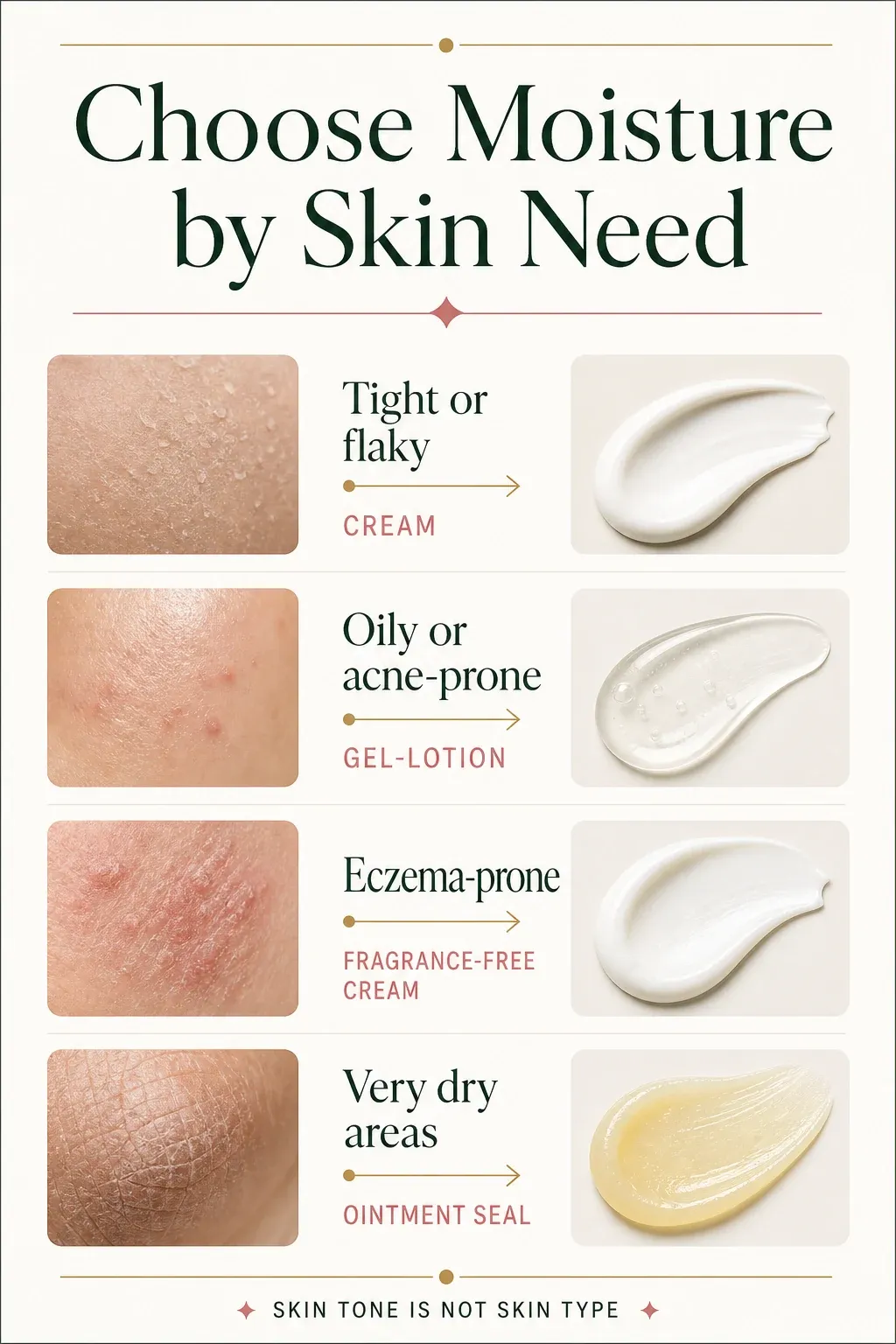
Choose moisturizer by what your skin does, not by skin tone alone. Use a cream for tight, flaky or ashy skin, a lighter gel-lotion for oily or acne-prone areas, and a fragrance-free cream or ointment for eczema-prone patches. Apply to slightly damp skin and use broad-spectrum SPF 30+ every morning.
Quick Summary
- Skin tone is not skin type; assess dryness, oiliness and sensitivity separately.
- Creams suit visible dryness, while gels and light lotions suit oilier areas.
- Apply moisturizer after gentle washing while skin is still slightly damp.
- Persistent itch, cracks, oozing or sharply defined scale needs diagnosis.
Moisturizing darker skin is often discussed as if every brown or Black complexion shares one barrier profile. It does not. This guide uses skin behavior, body site and current treatment to choose a texture, while accounting for the way dryness and inflammation can look more visible or leave longer-lasting pigment.
Start With Skin Need, Not Skin Tone Alone
Darker skin can be oily, dry, combination, acne-prone, sensitive or affected by eczema. Melanin changes how some concerns look and how long discoloration may remain, but it does not tell you which moisturizer texture your face needs.
Visible ashiness is light scattering from a rough, dry surface. It may look more obvious against medium-deep and deep skin tones, yet the underlying problem is still dryness, scale or barrier disruption. The solution is to restore water and surface lipids without creating unnecessary irritation.
Research comparing racial and ethnic groups has reported differences in transepidermal water loss, lipids and pH, but the categories and findings are inconsistent. A review of skin-barrier variation concluded that stronger comparative studies are still needed. Individual symptoms should therefore guide the routine.
| What your skin does | Texture to try first | Adjust if |
|---|---|---|
| Feels tight, looks flaky or ashy | Cream with humectants and lipids | Use ointment only on very dry areas |
| Gets shiny and breaks out | Light gel-lotion or fluid | Use only where needed if the T-zone is comfortable |
| Stings or has eczema patches | Fragrance-free cream or ointment | Seek care for persistent itch, cracks or oozing |
| Feels dry after acne treatment | Non-comedogenic lotion or cream | Reduce treatment frequency if burning persists |
| Dark marks are the main concern | Comfortable moisturizer plus tinted SPF | Stop products that sting or create new inflammation |
A moisturizer should make skin more comfortable within minutes and reduce recurrent tightness over days. It does not need to feel heavy, tingle or leave a glossy film. The best formula is the lightest texture that reliably controls your symptoms.
How Moisturizers Actually Reduce Dryness
Most useful formulas combine three functions. Humectants such as glycerin draw and hold water in the outer layer. Emollients soften rough spaces between surface cells, while occlusives reduce evaporation by forming a partial seal.
No single ingredient does every job for every person. Hyaluronic acid can support hydration but may feel insufficient without an emollient or occlusive layer in dry air. The hyaluronic acid guide explains why a water-binding serum is not automatically a complete moisturizer.
Ceramides, cholesterol and fatty acids are skin-relevant lipids used in many barrier-support formulas. Petrolatum is a strong occlusive for very dry areas, but a full-face layer may feel too heavy for acne-prone users. Shea butter can soften body skin, though fragrance and botanical extras still matter.
The ingredient list cannot tell you the final sensory result. Concentration, delivery system and the complete formula determine whether a cream feels elegant, pills under sunscreen or triggers a reaction. Test the product on your actual routine rather than collecting fashionable ingredients.
Choose the vehicle before chasing actives
Gels and gel-lotions are usually lighter and may suit oily or humid-weather routines. Lotions spread easily across the face and body. Creams add more emollient richness, while ointments are best reserved for the driest or most friction-prone sites.
The American Academy of Dermatology moisturizer guide similarly recommends choosing a richer cream or ointment for dry skin and a lighter gel when oiliness or clogged pores are concerns. Skin tone does not change that basic vehicle logic.
Readers with Middle Eastern or North African heritage can use the Middle Eastern skincare guide by type, tone and climate to adapt moisture without treating regional identity as one skin type.
A Simple Face Routine for Darker Skin Tones
Use a gentle cleanser at night to remove sunscreen, makeup and daily residue. In the morning, a water rinse or brief cleanse may be enough when the face is dry and not oily. Hot water, scrub brushes and repeated foaming are common reasons a moisturizer appears to “stop working.”
Apply moisturizer while skin is slightly damp, not dripping wet. Use enough to cover without forceful rubbing. Add more only to the cheeks, mouth area or other dry zones when the T-zone is comfortable.
Finish the morning routine with broad-spectrum, water-resistant SPF 30 or higher. A tint can reduce white cast, and iron oxides can add visible-light protection when melasma or persistent dark marks are concerns. The sunscreen guide for darker skin tones compares finish and cast considerations.
Morning routine
- Cleanse only as needed: avoid starting the day with tight skin.
- Moisturize by zone: use a lighter layer on oily areas and more on dry areas.
- Apply sunscreen generously: choose a formula you can wear and reapply.
- Watch comfort: persistent sting means the routine needs simplification.
Evening routine
- Remove the day gently: cleanse once without abrasive tools.
- Use treatment deliberately: apply one acne or pigment active, not several at once.
- Moisturize afterward: or buffer a retinoid with moisturizer if irritation is likely.
- Seal selected areas: add a small amount of ointment only where needed.
Separate day and night moisturizers are optional. The day-versus-night moisturizer guide explains when one formula can do both jobs and when sunscreen, texture or treatment layering justifies two.
The Body Routine That Prevents Recurrent Ashiness
Keep showers brief and warm rather than hot. Use cleanser on odor-prone or visibly dirty areas instead of repeatedly soaping every inch of dry skin. Pat rather than rub with a towel.
Apply body lotion or cream within a few minutes of bathing. The AAD dry-skin guidance for darker tones recommends moisturizing while skin is damp and using petroleum jelly on stubborn dry areas. This timing often matters more than adding another serum.
Elbows, knees, heels and hands may need a richer cream or ointment than the torso. Friction, frequent washing and exposed weather create different demands by site. Treating the entire body with one heavy butter can leave acne-prone chest or back areas uncomfortable.
If a lotion appears to vanish within an hour, first check shower temperature, cleanser and application timing. Then move from lotion to cream, or add a thin occlusive layer to selected patches. More layers cannot compensate for ongoing harsh cleansing.
Moisturizing When You Also Have Acne
Acne-prone skin still needs barrier support, especially when benzoyl peroxide, salicylic acid or a retinoid causes dryness. Choose a lightweight, fragrance-free or non-comedogenic formula and apply it consistently. A comfortable barrier can make evidence-based treatment easier to continue.
Do not use cocoa butter, coconut oil or a heavy ointment everywhere merely because dryness is visible. Occlusion can feel useful on a flaky patch but be too much for areas that clog easily. The oily-skin moisturizer guide focuses on vehicle and finish rather than avoiding moisture entirely.
When an acne active burns through moisturizer, reduce frequency and reassess the combination. More moisturizer is not always the answer to an excessive treatment dose. The slow-start skincare plan gives a one-change-at-a-time schedule.
Moisturizing When Eczema or Sensitivity Is Possible
Choose fragrance-free rather than merely “unscented.” Unscented products may still contain masking fragrance. Keep the formula simple and avoid essential oils, harsh exfoliants and home remedies on an active patch.
The National Eczema Association's skin-of-color care guidance emphasizes a moisturizing cleanser and thick emollient moisturizer. Eczema can look purple, gray, dark brown or ashen rather than bright red on darker skin, so texture, itch and warmth also matter.
Seek care for recurrent itch, sleep disruption, painful cracks, oozing, crusting or a rapidly spreading rash. A moisturizer supports the barrier but does not replace anti-inflammatory or antimicrobial treatment when those are needed.
Moisture, Dark Marks and Sun Protection
Moisturizer does not directly erase post-inflammatory hyperpigmentation. Its value is reducing dryness and irritation that can create or prolong new marks. This makes bland barrier support part of a pigment-conscious routine, not a brightening treatment by itself.
The AAD guidance on dark spots in darker skin recommends gentler products when irritation is causing discoloration. It also places sunscreen at the start of treatment and highlights tinted formulas with iron oxide for visible-light protection.
Stop a moisturizer that consistently burns, creates a rash or worsens swelling. “Brightening” fragrance, citrus extract and multiple acids are not necessary in the base cream. Treat dark marks with a separate, carefully introduced active after the barrier feels stable.
Moisturizer Formats by Situation
| Situation | Useful formula features | Watch-out |
|---|---|---|
| Cold or dry weather | Cream with glycerin, ceramides and an occlusive | Indoor heat and hot showers can undo the benefit |
| Hot humid weather | Light lotion or gel-lotion | Do not assume sweat equals hydration |
| Retinoid dryness | Bland lotion or cream before or after treatment | Persistent burning means reduce the active |
| Body ashiness | Cream on damp skin; ointment on selected areas | Fragranced body butter may irritate |
| Hands from washing | Cream after every wash | Apply ointment at night if intact skin tolerates it |
| Eczema-prone patches | Fragrance-free cream or ointment | Diagnosis matters when patches recur |
Seasonal adjustment is normal. A winter cream can become uncomfortable in summer, and a humid-weather gel may not control indoor-heating dryness. Keep one reliable base and change texture before adding more active ingredients.
Use a seven-day texture test
Apply the candidate moisturizer to the same zones for one week while keeping cleanser and treatments stable. Record tightness one hour after washing, midday shine, new clogged bumps and whether sunscreen layers smoothly. This is more useful than judging the product from one rich first application.
If comfort improves without persistent congestion, continue for another two to three weeks. If only the cheeks remain dry, increase product there instead of replacing the entire routine. Stop earlier for swelling, hives, a spreading rash or painful burning.
Common Moisturizing Mistakes
- Buying by skin tone alone: assess oil, dryness, sensitivity and conditions separately.
- Applying only when ashiness is visible: consistent post-bath use works better.
- Using oil without water-binding support: oil can soften but may not correct dehydration alone.
- Scrubbing off flakes: friction can worsen inflammation and pigment.
- Ignoring cleanser: a stripping wash can defeat a good cream.
- Using one texture everywhere: face, body and dry patches may need different vehicles.
- Skipping sunscreen: moisture does not protect against UV or visible-light pigment.
The hydration-mistakes guide separates water intake, humectants, moisturizers and occlusives so each tool has a clear job.
When Moisturizer Is Not Enough
Persistent scale can reflect eczema, psoriasis, a fungal infection, medication effects or another condition. A product cannot be selected safely from color alone. Look for itch, pain, sharply defined borders, hair or nail changes, and whether the problem is spreading.
Seek professional assessment when dryness repeatedly cracks or bleeds, interferes with sleep, develops pus or yellow crust, or fails to improve with a gentle routine. A dermatologist experienced in skin of color may recognize inflammation that does not appear bright red.
Do not respond by escalating scrubs, acids or bleaching products. Inflammation control comes before cosmetic tone correction. The dark-spot guide for darker skin explains the sequence.
The Bottom Line
Moisturizing darker skin is not about finding a product that treats every melanin-rich complexion as one skin type. Choose texture by dryness, oiliness, sensitivity, body site and current treatments. Apply it consistently to damp skin and remove the cleansing or treatment habits that keep recreating dryness.
For visible ashiness, start with a cream and use ointment only on the driest intact areas. For oily or acne-prone skin, use a lighter lotion or gel. Pair either route with comfortable broad-spectrum sun protection and medical assessment when scale behaves like more than ordinary dryness.
Frequently Asked Questions About Moisturizing Darker Skin
Does darker skin need a thicker moisturizer?
Not automatically. A cream helps tight, flaky or ashy skin, while oily or acne-prone areas may prefer a gel-lotion. Choose the lightest texture that keeps the area comfortable.
Why does dark skin look ashy after showering?
Hot water, harsh cleanser and delayed moisturizer can leave a rough dry surface that scatters light. Use warm water, pat dry and apply cream while the skin is slightly damp.
Is shea butter good for every darker skin tone?
Shea butter can be a useful emollient, especially on the body, but it is not universally necessary. Fragrance, texture and acne tendency still determine whether the complete formula fits.
Can oily melanin-rich skin skip moisturizer?
Some oily areas need little or no separate moisturizer, but acne treatments may still create dryness. A light non-comedogenic gel or lotion can support comfort without a heavy finish.
Should I use tinted sunscreen if I have dark marks?
A broad-spectrum SPF 30+ is the base. A tint containing iron oxides can add visible-light protection and may be useful for melasma or persistent hyperpigmentation if the shade is wearable.
For a texture-by-texture decision, use our moisturizer selector for melanin-rich skin, which separates skin tone from dryness, oiliness, sensitivity and body site.
This article is for informational purposes only and does not replace professional dermatological advice.