Hyaluronic Acid for Skin Hydration: How to Use It Well
A practical guide to topical hyaluronic acid, damp-skin layering, moisturizer pairing, product choice and realistic hydration limits.

In this guide
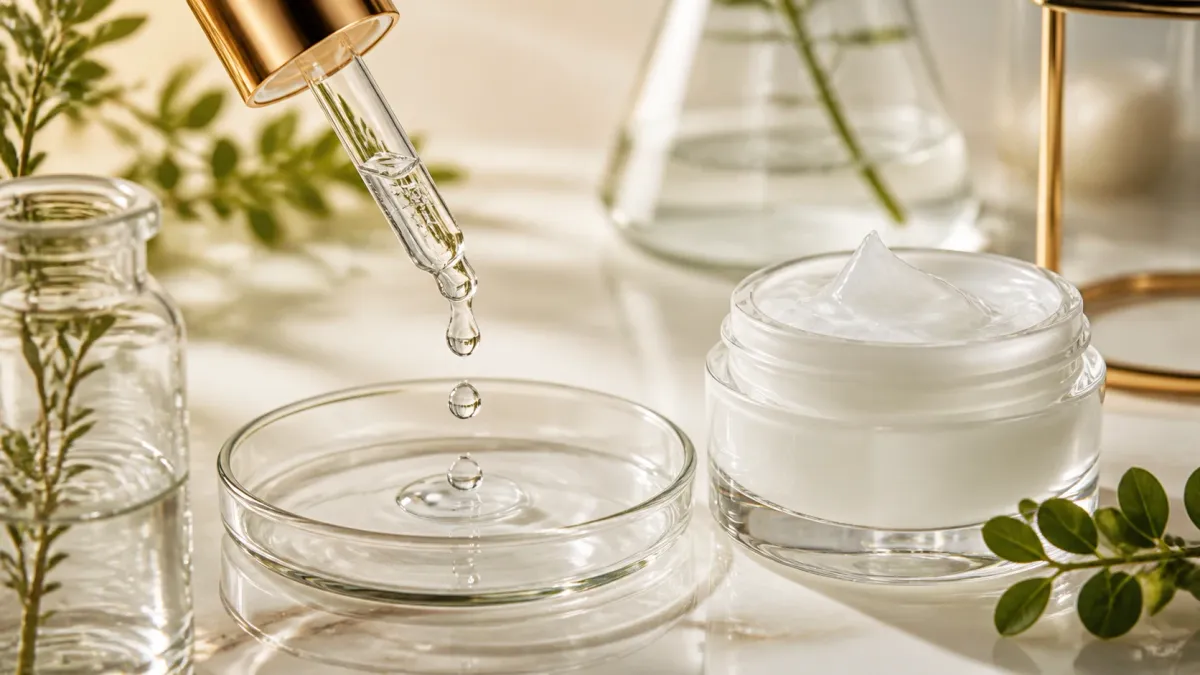
Topical hyaluronic acid is a humectant that can improve surface hydration and temporary plumpness, but it does not act like injectable filler. Apply a few drops to slightly damp skin, follow with moisturizer and use SPF in the morning. A separate serum is optional when your moisturizer already keeps skin comfortable, and more molecular weights do not guarantee a better product.
A hyaluronic-acid serum is optional, not a complete routine. Use the dehydrated-skin reset to compare serum plus moisturizer with moisturizer alone.
Quick Summary
- Use HA to support hydration, not to replace moisturizer or facial volume.
- Apply a thin layer to slightly damp skin and seal it with cream.
- Choose serum or cream by the missing routine job; you may not need both.
- Reduce product amount or layers when the routine pills, feels sticky or stays tight.
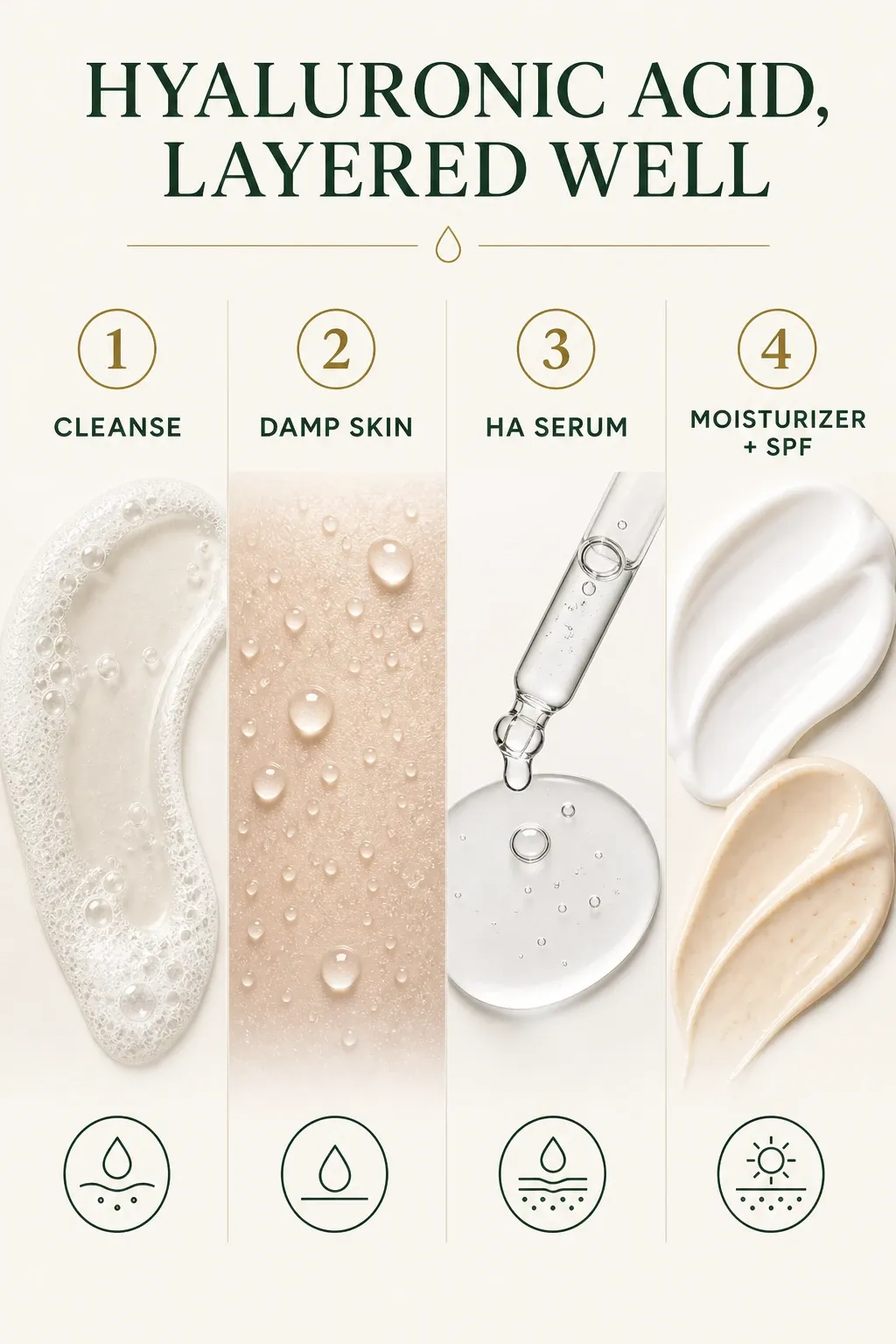
What Topical Hyaluronic Acid Can and Cannot Do
Topical hyaluronic acid is a humectant: it helps a cosmetic formula bind water at the skin surface. It can make dehydrated skin feel smoother and look temporarily plumper, especially when followed by moisturizer. It does not act like injectable filler, replace lost facial volume or permanently erase wrinkles.
Hyaluronic acid is naturally present in skin, but applying it on top does not mean the molecule travels to every layer or rebuilds the face. Molecular size, chemical form, vehicle and the rest of the formula affect where it sits and how it feels. Treat marketing phrases such as “multi-depth” as formula descriptions, not proof of injectable-like structural change.
| Your situation | Separate HA serum? | Better routine decision |
|---|---|---|
| Moisturizer already feels comfortable | Optional | Keep the simpler routine |
| Tight after a light lotion | May help | Use serum, then a richer moisturizer |
| Very dry or flaky | Not enough alone | Prioritize cream or ointment |
| Oily but dehydrated | Light serum may fit | Use a small amount under gel-cream |
| Product pills under SPF | Probably unnecessary | Reduce layers or change texture |
The American Academy of Dermatology lists hyaluronic acid among useful moisturizer ingredients and recommends applying moisturizer while skin is still damp. That advice explains the basic routine: add water, use humectants if helpful, then reduce evaporation with a suitable cream.
A hyaluronic acid serum is therefore a support step, not the foundation. If cleanser leaves the face stripped or moisturizer is too light, buying a serum without fixing those steps can preserve the underlying problem.
Hyaluronic Acid Forms and Molecular Weight Without the Hype
Hyaluronic acid and sodium hyaluronate
Labels may list hyaluronic acid, sodium hyaluronate, hydrolyzed hyaluronic acid or crosspolymers. Sodium hyaluronate is a salt form commonly used in cosmetics. These names describe different materials, but a longer list does not reveal concentration, stability or the finished product's performance.
Crosspolymers are designed to form a film and hold water over time. Hydrolyzed forms use smaller fragments. The sensory result can range from silky to sticky, so choose by the complete formula rather than counting forms.
High versus low molecular weight
Larger hyaluronic-acid molecules mainly form a hydrating film near the surface. Smaller fragments may interact differently with the outer skin, but “lower” is not automatically better. Penetration, irritation potential and clinical relevance depend on the specific material and formula.
A double-blind randomized trial comparing molecular weights in xerosis supports that molecular size can affect outcomes in a tested cream. It does not create a universal shopping rule for every serum, population or percentage.
Ceramides, panthenol and glycerin often matter as much
Many current HA products include glycerin, panthenol, ceramides, betaine, oils or silicones. Those co-ingredients can change hydration, barrier support and finish. A product is not “pure” or superior because hyaluronic acid appears in the title.
Our ceramide moisturizer guide separates water-binding from barrier-lipid support. The hydration versus moisturization guide explains why the two jobs overlap but are not identical.
How to Apply Hyaluronic Acid Without Stickiness or Tightness
Use less product than social media suggests
A few drops are usually enough for the face. Excess creates a tacky film and can roll into pills under moisturizer or sunscreen. Press or spread one thin layer, then move to the next step after it settles.
Do not wait until the serum dries into a tight shell. Apply moisturizer while the skin still feels comfortable. If the formula consistently pills, simplify the routine rather than adding more water and more layers.
Damp skin is useful, not a rigid ritual
Slightly damp application gives a humectant water to work with and helps moisturizer trap it. Dripping skin can dilute or spread products unpredictably, and some prescription directions require dry skin. Follow medical instructions before a cosmetic layering rule.
The claim that hyaluronic acid always “pulls water out of the skin” in dry weather is too simple. Water movement depends on humidity, skin condition, concentration, vehicle and the occlusive layer. The practical fix for tightness is a complete moisturizer or fewer layers, not fear of the ingredient name.
Use sunscreen as the final morning step
Hyaluronic acid does not make skin photosensitive, but it also does not protect against UV exposure. Use broad-spectrum SPF 30 or higher and allow the preceding layers to settle. If sunscreen pills, reduce serum amount or remove the serum from the morning routine.
Our dry-skin sunscreen guide compares moisturizing sunscreen textures. A wearable sunscreen is more important to long-term appearance than an extra hydrating serum.
Two Hyaluronic Acid Products With Different Jobs
The Ordinary is a serum step for readers who want lightweight hydration under an existing cream. COSRX is the cream step itself, combining sodium hyaluronate with glycerin, oils, dimethicone, panthenol and allantoin. Choose the missing job instead of automatically buying both.
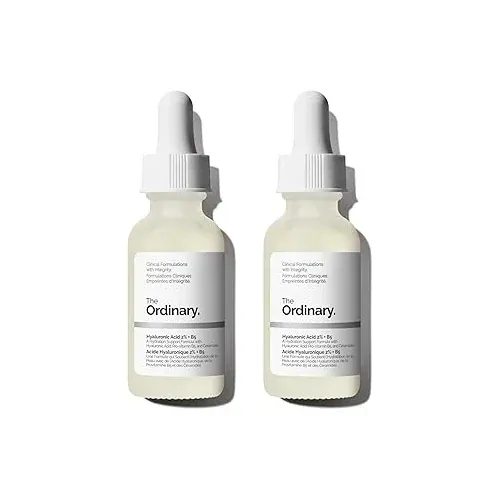
The Ordinary Hyaluronic Acid 2% + B5
Normal, combination or oily-dehydrated skin that already owns a comfortable moisturizer but wants a light humectant layer.
The current formula combines five hyaluronic-acid forms with ceramides and panthenol in a water-based serum.
Watch-out: It is not a replacement for moisturizer. Use only a few drops because over-layering can feel tacky or pill under SPF.
View on AmazonAs an Amazon Associate, SkinOptimizer may earn from qualifying purchases. Prices, sellers and availability can change.
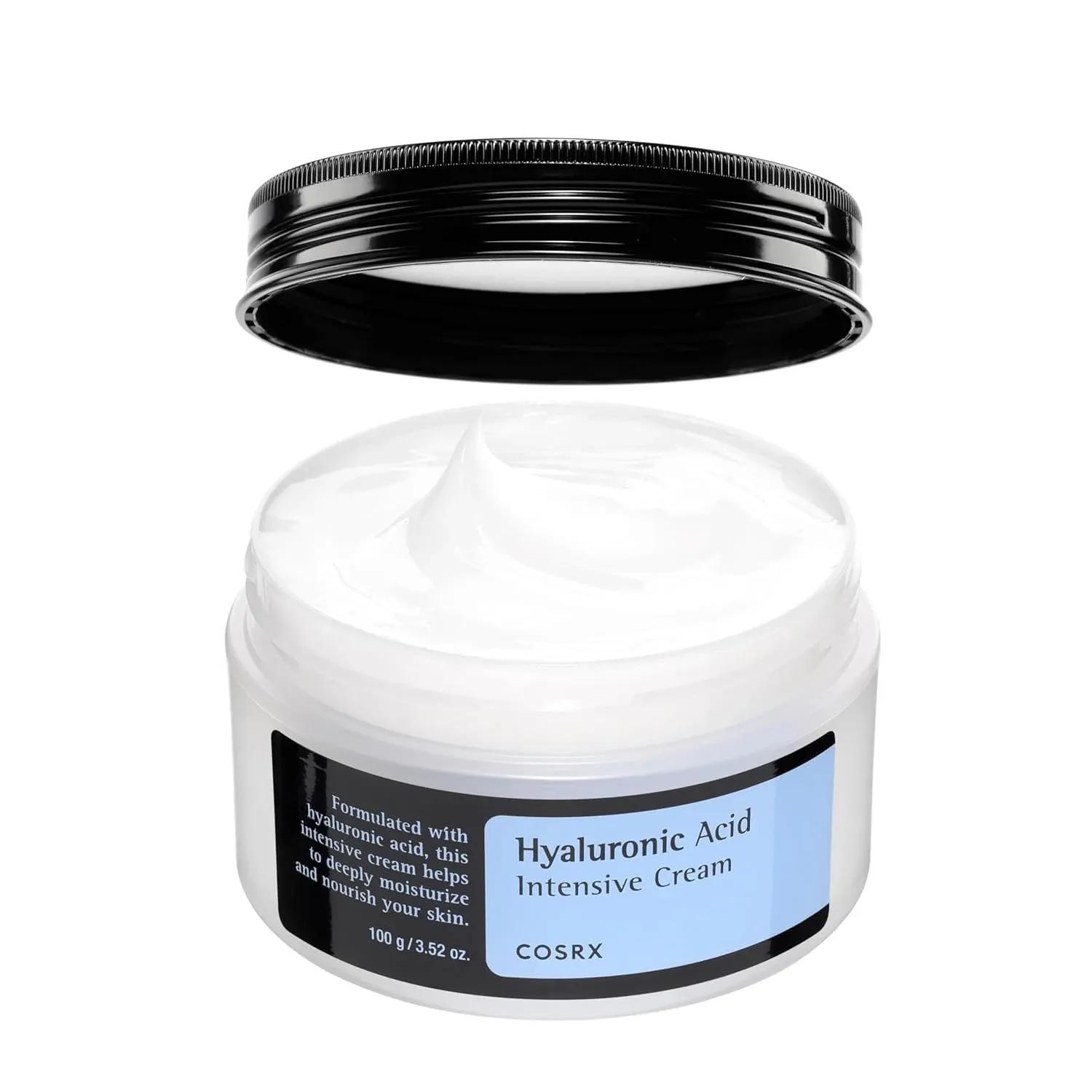
COSRX Hyaluronic Acid Intensive Cream
Normal to dry or dehydrated skin that needs a complete cream rather than another watery serum.
The formula includes 3,000 ppm sodium hyaluronate plus glycerin, sea buckthorn water, oils, dimethicone, panthenol and allantoin.
Watch-out: The richer emollient profile may feel heavy on very oily skin. Start with a small amount and watch the full formula, not only HA.
View on AmazonAs an Amazon Associate, SkinOptimizer may earn from qualifying purchases. Prices, sellers and availability can change.
Current formula details were checked on the The Ordinary official page and the COSRX official page. Verify the package and seller because formulas and marketplace listings can change.
What the Current Evidence Actually Supports
A 2026 randomized study compared cleanser alone, HA serum, moisturizing cream and the serum-plus-cream routine in 123 volunteers. At 30 minutes, serum, cream and the routine increased hydration versus cleanser. At eight hours, only the serum-plus-cream routine remained more hydrating than cleanser.
The result fits the humectant-plus-moisturizer model, but it should not be overstated. It was a short eight-hour study of specific products and had industry involvement. It does not prove that every HA serum must be added to every routine.
Clinical studies of topical HA often test finished formulas rather than the isolated ingredient. Improvements in hydration, roughness or fine dry lines may come from the whole product. The FDA distinguishes cosmetic appearance claims from drug claims; a serum should not be presented as treating disease or rebuilding tissue like a medical procedure.
Hyaluronic Acid by Skin Type
Dry or mature skin
Prioritize a cream or ointment first. Add HA serum only when it noticeably improves comfort under that moisturizer. Temporary plumping can soften fine dry lines, but it does not lift sagging skin or replace retinoids, sunscreen or professional procedures.
The anti-aging moisturizer guide separates hydration from exaggerated firming claims. Use the fine-line guide to distinguish dehydration lines from expression lines and deeper folds.
Oily or acne-prone skin
A light water-based serum may hydrate without a heavy finish, but it still needs an appropriate moisturizer or sunscreen layer. If the face becomes sticky or congested, reduce amount or choose a gel-cream containing humectants already. One well-formulated product can be enough.
HA itself is not an acne treatment and should not replace salicylic acid, adapalene or benzoyl peroxide when those are appropriate. Its role is comfort. The non-comedogenic product guide includes moisturizer choices for acne-prone skin.
Sensitive or eczema-prone skin
Hyaluronic acid is often tolerated, but any finished formula can sting because of preservatives, fragrance, solvents or a disrupted barrier. Patch test and prefer fragrance-free products. Stop if redness, burning, itch or swelling persists.
Do not use a cosmetic serum to self-treat eczema. A fragrance-free cream or ointment may be more useful, and persistent rash, cracking, weeping or pain needs qualified care. Fewer variables make triggers easier to identify.
Common Hyaluronic Acid Mistakes
- Using serum without moisturizer: humectancy does not replace emollient and occlusive support.
- Applying too much: a thick film becomes sticky and pills under later steps.
- Counting molecular weights: more forms are not a universal quality score.
- Expecting filler results: topical products do not restore facial volume like injections.
- Layering several hydrating essences: duplicate steps add complexity without guaranteed benefit.
- Ignoring cleanser damage: a stripping wash can overwhelm a good serum.
- Using “purging” to explain irritation: HA is not an exfoliant and should not cause a required purge.
Troubleshooting Tightness, Pilling and Stinging
| Problem | Likely reason | Best adjustment |
|---|---|---|
| Skin feels tight | Serum without enough cream | Apply moisturizer sooner or use richer texture |
| Product pills | Too much or too many layers | Use fewer drops and simplify |
| Face feels sticky | Film is too thick | Reduce amount or choose HA in moisturizer |
| Persistent stinging | Formula or barrier irritation | Stop and return to familiar basics |
| No visible difference | Routine already hydrates well | Skip the optional serum |
Change one element at a time. If a cream fixes the tightness, the serum may not be needed. If a lighter sunscreen removes pilling, the serum may remain useful at night.
A simple routine makes these decisions visible.
For repeated irritation, review every product rather than blaming a single ingredient name. Fragrance, acids, retinoids, over-cleansing and damaged skin can all change tolerance. Seek a dermatologist when symptoms persist or affect daily life.
When a Separate HA Serum Earns Its Place
A separate serum is most useful when the moisturizer texture is right but hydration fades before the next routine. It can add water-binding capacity without moving immediately to a heavier cream. This is especially practical for combination skin that dislikes rich products across the whole face.
It may also help during a temporary dry period caused by air travel, indoor heating or the careful introduction of a tolerated active. Keep the rest of the routine unchanged and use the serum only where tightness appears. Targeted application reduces pilling and makes the benefit easier to judge.
A serum does not earn its place when it duplicates several essences, toners and gel creams. Look at the first ingredients in every hydrating step; glycerin, glycols, betaine and HA often repeat. Removing duplicate layers can improve sunscreen application without reducing comfort.
If nighttime cream already solves the issue, use HA only in the morning or not at all. The day versus night moisturizer guide helps separate a real texture need from marketing-driven routine duplication.
Run the subtraction test before repurchasing. Stop the serum for one week while keeping cleanser and moisturizer stable, then compare tightness, roughness and pilling. A product that creates no visible or sensory difference is optional, even when the ingredient has a sound hydration mechanism.
If dryness remains despite a suitable cream, inspect cleansing. Foaming twice daily, hot water and long contact can remove more surface lipids than the routine replaces. The dry-skin cleanser guide compares gentler formats that reduce the need for compensating layers.
The Bottom Line
Topical hyaluronic acid can support surface hydration, but it works best as part of a complete routine. Apply a small amount to slightly damp skin, follow with moisturizer and keep it only if it improves comfort without pilling. A serum is optional when your moisturizer already provides enough hydration.
Frequently Asked Questions
Should hyaluronic acid go on wet or dry skin?
Apply it to slightly damp, not dripping, skin unless another product or prescription requires dry skin. Follow with moisturizer before the surface dries tight.
Can I use hyaluronic acid every day?
Yes, many people use it daily when the finished formula is comfortable. Daily use is optional, and you should stop if the product causes persistent stinging, itching, swelling or rash.
Do I need moisturizer after hyaluronic acid?
Usually yes when using a separate HA serum. Moisturizer adds emollient and occlusive support that a watery serum may not provide, especially for dry or dehydrated skin.
Can hyaluronic acid dry out skin?
A serum can leave skin feeling tight when it is used without enough moisturizer, in too large an amount or in an irritating formula. The claim that HA always pulls water out of skin is too simplistic.
Is low-molecular-weight hyaluronic acid better?
Not universally. Molecular size can affect behavior, but penetration, irritation, concentration, vehicle and the complete formula matter. Choose by evidence, texture and tolerance rather than a molecular-weight count.