Skin Hydration Mistakes to Avoid: A Barrier-First Fix
Skin hydration fails when washing, product order or texture increases water loss. Fix the barrier instead of adding more mists and serums.

In this guide
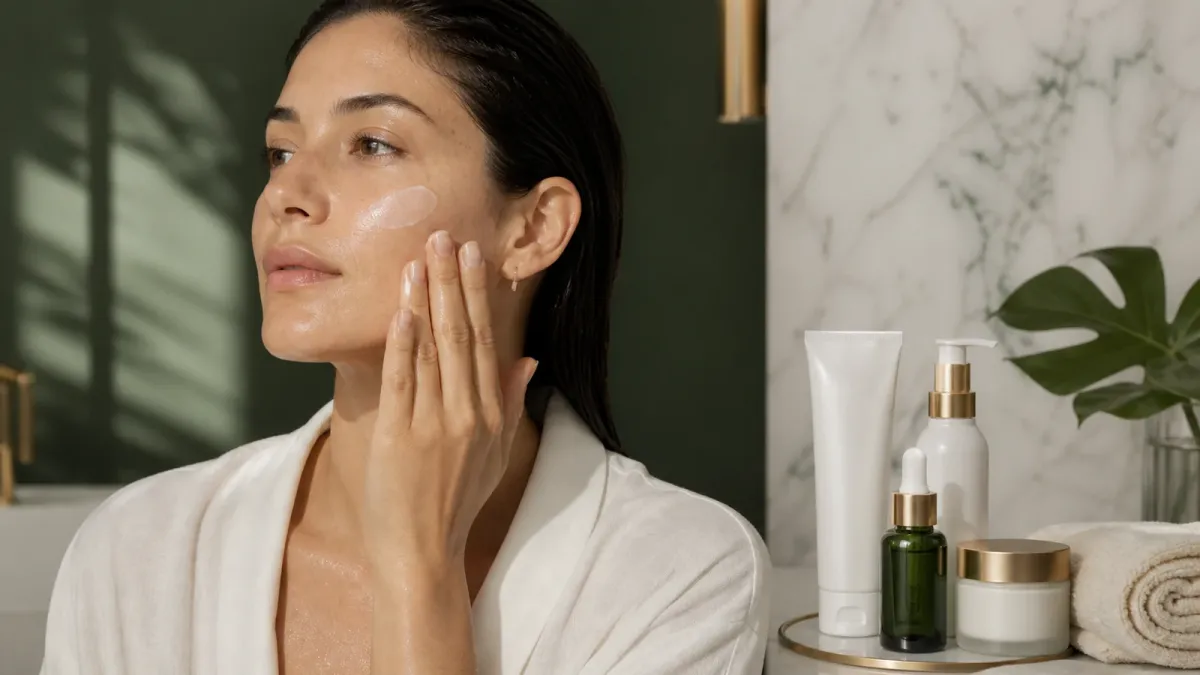
The most common skin hydration mistakes are hot or long washing, waiting until skin is fully dry before moisturizing, using humectant serum without enough emollient or occlusive support, over-cleansing oily skin and stacking repetitive mists or toners. Apply a fragrance-free moisturizer to slightly damp skin, choose a texture that fits the area and simplify for ten days. Persistent itch, cracks, oozing or burning needs medical assessment.
Quick Summary
- Use lukewarm water and stop cleansing when skin feels squeaky or tight.
- Apply moisturizer to slightly damp skin within minutes of washing.
- Do not confuse face oil, mist or extra drinking water with complete barrier care.
- Match gel, lotion, cream or ointment to the body site and severity.
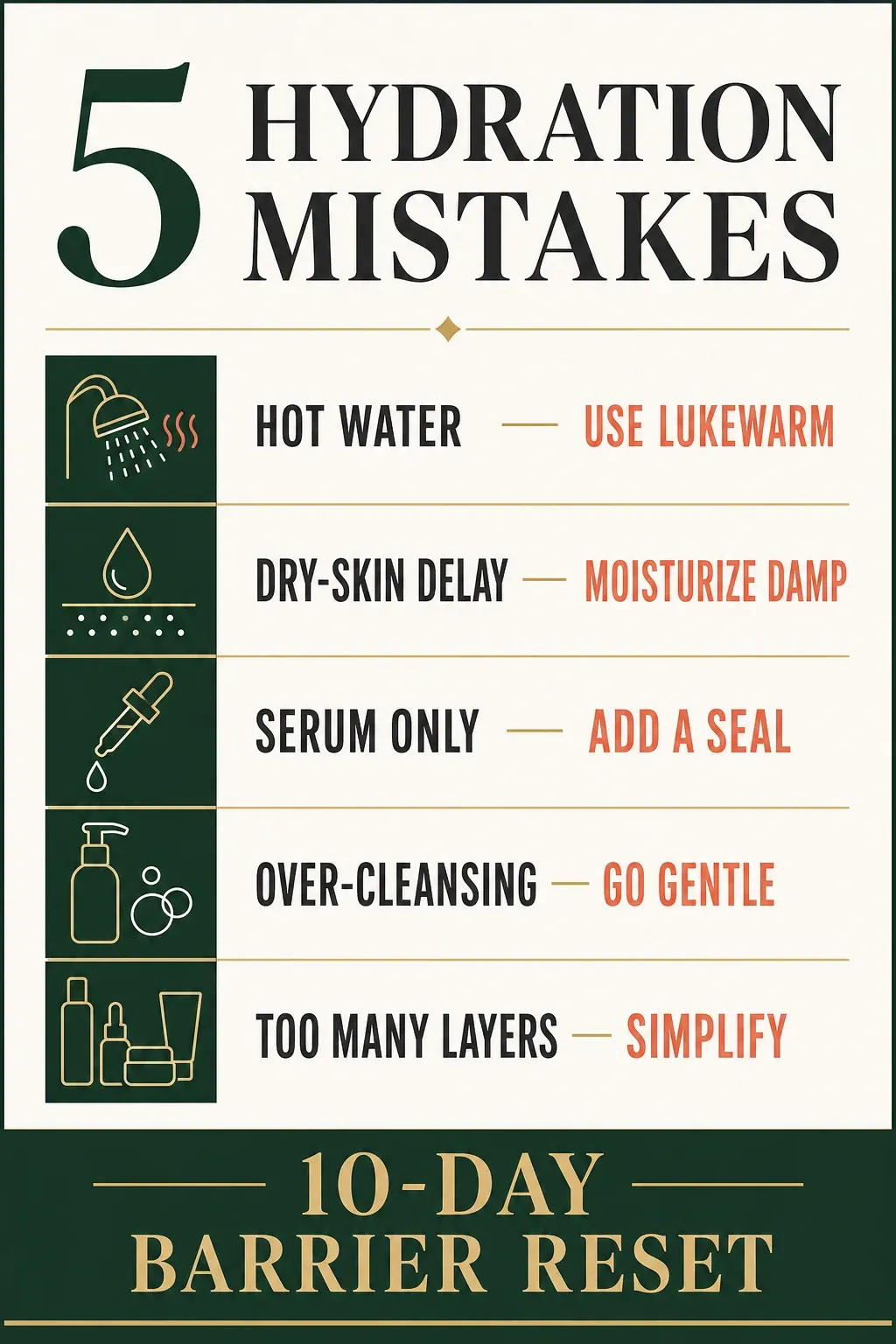
Hydration advice becomes confusing when drinking water, facial mist, hyaluronic acid, oil and moisturizer are treated as interchangeable. This guide identifies the exact step where water is lost, then uses a ten-day reset to restore comfort without turning the routine into a stack of duplicate products.
Hydration, Moisturization and Drinking Water
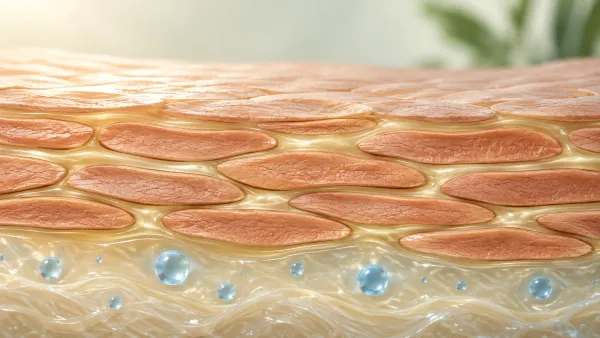
Skin hydration refers to water in the outer skin layers, while moisturization describes products that bind water, smooth lipids and reduce water loss. Drinking enough supports whole-body health, but extra water does not reliably repair a damaged surface barrier. The solution depends on where water is being lost.
The AAD dry-skin guidance recommends short warm washing, fragrance-free products and cream or ointment applied while skin is damp. These steps target the barrier directly. They are more useful than chasing a universal number of glasses.
Dehydrated skin can still be oily, and dry skin can still contain enough body water. Tightness, flakes and stinging require a routine review. Severe thirst, dizziness or reduced urination is a medical hydration issue rather than a skincare problem.
| What you notice | Likely mistake | Better correction |
|---|---|---|
| Tight after cleansing | Harsh wash or hot water | Gentler cleanser and lukewarm rinse |
| Serum dries sticky and tighter | Humectant without enough seal | Moisturizer over damp skin |
| Shiny but flaky | Oiliness mistaken for hydration | Light barrier-support lotion |
| Cream sits on top | Too much product or wrong texture | Use less or choose lighter emulsion |
| Persistent itch and cracks | Disease treated as cosmetic dryness | Dermatology assessment |
Mistake 1: Washing Too Hot or Too Long
Hot water feels comforting but can increase dryness and itch. Keep showers and face washing warm, not hot, and limit contact time. Cleanse only the areas that need cleanser rather than soaping every dry surface repeatedly.
Use fingertips on the face and a mild fragrance-free body cleanser. Scrub brushes, rough cloths and deodorant soaps add friction and surfactant exposure. Pat dry instead of rubbing.
If skin feels squeaky or painfully tight, the wash step is too aggressive. The skin barrier guide gives a reset plan. Do not compensate with more active serum.
Mistake 2: Waiting Until Skin Is Fully Dry
Apply moisturizer within minutes of washing while the surface is still slightly damp. This traps some water before it evaporates. It does not require dripping-wet skin, which can dilute or pill some products.
Use enough cream to remove tightness but not so much that the product rolls off. Hands, lips and eczema-prone areas may need reapplication after washing. Face frequency depends on comfort and treatment.
The AAD also advises moisturizer after handwashing and whenever dry skin returns. Consistency matters more than a complex ingredient stack. Keep a practical product near the place where washing happens.
Mistake 3: Using Humectant Serum Without a Moisturizer
Hyaluronic acid and glycerin bind water, but a thin serum may not provide enough emollient or occlusive support. In dry air or a damaged barrier, the face can still feel tight. Layer a compatible moisturizer over the serum.
More molecular weights and higher percentages are not automatically better. Sticky residue can encourage over-cleansing. A moisturizer that already contains glycerin may make a separate serum unnecessary.
The hydration versus moisturization guide maps humectants, emollients and occlusives. Use it to identify the missing role rather than adding another bottle.
Mistake 4: Treating Oil as Water
Face oil can reduce water loss and soften the surface, but it does not add water. Apply a water-containing moisturizer first when skin is dehydrated. Oil alone can leave tight skin shiny.
Use one or two drops only on dry zones if needed. Avoid mixing oil into sunscreen. The face-oil layering guide explains order and compatibility.
Petrolatum and ointments are stronger occlusives than many plant oils. They can help selected very dry areas but may be too heavy for the full face. Match texture to location.
Mistake 5: Over-Cleansing Oily or Acne-Prone Skin
Washing more often does not switch off sebaceous glands. It can increase tightness and reduce tolerance for acne medication. Cleanse gently up to twice daily and after sweating when needed.
The AAD notes that moisturizer can help people tolerate benzoyl peroxide, salicylic acid, retinoids and isotretinoin. Use a non-comedogenic formula. The AAD acne moisturizer guidance supports applying after washing.
Use the oily-skin routine to separate shine control from barrier stripping. If a product burns, reduce variables rather than adding toner.
Mistake 6: Choosing Fragrance or "Unscented" for Dry Skin
Fragrance can irritate dry and eczema-prone skin. "Unscented" may still contain masking fragrance, while "fragrance-free" is the more useful label. Botanical scent is still fragrance exposure.
Patch test new products for seven to ten days. Allergy can appear after repeated use, so a single comfortable application is not proof. Stop for itch, swelling or a delayed rash.
Use the sensitive-skin routine when several products sting. Persistent reactions may require medical patch testing.
Mistake 7: Using a Texture That Does Not Match the Area
Lotions spread easily over large body areas, creams provide more oil and ointments offer the strongest occlusion. The face may prefer a lighter emulsion than shins, elbows or hands. One product does not need to serve every site.
Acne-prone areas can use a non-comedogenic gel-cream or lotion, while cracked hands may need ointment. Body ashiness usually responds to richer cream applied after bathing. Choose the lightest texture that maintains comfort.
Pump packaging is convenient, but very thick ointments often come in tubes or tubs. Use clean hands and close the container. Packaging is part of consistent use.
Mistake 8: Stacking Too Many Hydrating Products
A mist, essence, toner, serum, ampoule, lotion and cream can repeat humectants without adding a new function. More layers can pill, sting or complicate allergy tracking. Start with one effective moisturizer.
Add a separate serum only for a measured gap. Compare half-face or alternate weeks. If comfort is unchanged, remove the extra step.
The slow skincare guide prevents simultaneous changes. A simpler routine also makes treatment adherence easier.
Mistake 9: Ignoring Climate, Heating and Air Conditioning
Cold weather, low humidity, indoor heating and strong air conditioning increase evaporation. A routine that works in humid summer may need a cream or ointment in winter. Reassess seasonally rather than labeling skin permanently.
A humidifier can improve comfort in a dry room, but it needs regular cleaning. Clothing and gloves reduce exposure for hands and body. Sunscreen remains important outdoors year-round.
Travel changes water, climate and product availability. Bring one reliable cleanser and moisturizer before optional serums. Do not test several new hotel products during a flare.
A 10-Day Barrier Hydration Reset
| Days | Routine | What to monitor |
|---|---|---|
| 1 to 3 | Gentle cleanse, damp-skin moisturizer, SPF | Burning, tightness and flakes |
| 4 to 6 | Maintain; stop optional mists and acids | Morning comfort and treatment tolerance |
| 7 to 10 | Adjust texture by zone | Less itch without congestion |
| After day 10 | Reintroduce only one needed active | Stable barrier before escalation |
| Any day | Seek care for cracks, oozing or severe pain | Cosmetic reset is no longer enough |
Hydration Myths to Reject
- Eight glasses fixes every dry face: topical barrier loss needs topical care.
- Oily skin cannot be dehydrated: sebum and water content differ.
- Hyaluronic acid replaces moisturizer: a serum may lack enough seal.
- Tingling means water is entering: burning is an irritation signal.
- Facial mist hydrates all day: evaporation can leave skin unchanged.
- More layers equal more hydration: duplicated roles can add pilling and allergy risk.
When Dryness Needs Medical Assessment
See a clinician for persistent itch, cracks, bleeding, oozing, sharply defined rash or dryness that does not improve with fragrance-free cream. Eczema, psoriasis, thyroid disease, kidney disease and medication effects can require different care.
The AAD advises professional review when dry skin persists despite recommended self-care. A moisturizer that consistently burns also deserves attention. Do not cover severe symptoms with more fragrance.
Urgent care may be needed for rapidly spreading redness, fever, severe swelling or breathing symptoms. Keep the product list and timeline. Skin hydration content cannot diagnose the cause.
Hydration Mistake 10: Ignoring Medication and Medical Conditions
Retinoids, benzoyl peroxide, isotretinoin and some systemic medicines can change dryness. Follow the treatment plan and add supportive moisturizer rather than stopping prescription medication without advice. Record when symptoms began relative to the dose.
Eczema, psoriasis, thyroid disease, diabetes and kidney disease can affect skin comfort. Persistent whole-body dryness may need medical evaluation. A serum cannot diagnose or correct the underlying condition.
The AAD's atopic dermatitis skincare guidance recommends fragrance-free cream or ointment and damp-skin application. Disease-specific advice should override a generic hydration trend.
Hydration Mistake 11: Exfoliating Away Every Flake
Flakes can come from dry barrier, retinoid adjustment, eczema or over-exfoliation. Removing them with acids and scrubs may increase inflammation. First reduce irritation and moisturize for several days.
Once skin is comfortable, decide whether a low-frequency exfoliant has a separate job. Do not use a peeling product solely because dry scale is visible. The controlled exfoliation guide applies to any routine with overlapping actives.
Persistent thick scale, scalp involvement or sharply bordered plaques may indicate another condition. Seek diagnosis instead of rotating peels. Photograph the pattern before changing products.
Face, Hands, Lips and Body Need Different Plans
Hands lose moisture with every wash and may need cream after each exposure. Lips lack the same barrier structure and benefit from bland ointment plus SPF outdoors. Shins and elbows often need richer cream than the face.
Use separate textures rather than forcing one facial gel over the entire body. Tubes or pumps placed near sinks improve adherence. The chapped lip reset addresses flavor and licking triggers.
For body care, apply within minutes of bathing and reapply to rough zones. Cotton clothing and gloves can reduce friction. Avoid fragranced body oil on active rash.
How to Read a Hydrating Product Claim
"72-hour hydration" may come from instrument measurements under study conditions and does not guarantee comfort through cleansing, weather or treatment. Review population, comparison and product amount. Marketing duration is not a dosing instruction.
Look for humectant, emollient and occlusive roles rather than a long ingredient list. Ceramides, glycerin, petrolatum and dimethicone can be useful in different formulas. The finished product determines feel and tolerance.
A review of acne and the skin barrier supports gentle cleansers and ceramide-containing skincare as part of treatment maintenance. It does not prove every ceramide product is superior for every person.
How to Test Whether the Reset Worked
Score morning tightness, visible flakes, itch and stinging from zero to ten before the reset. Repeat on days three, seven and ten under similar conditions. Record climate and treatment changes.
A successful reset reduces symptoms without new congestion or pilling. Reintroduce one active only after comfort stabilizes. If symptoms rebound immediately, the active or frequency may be incompatible.
No improvement despite correct use suggests the cause is not simple routine dryness. Take the record to a clinician. Avoid extending a self-test through cracking, oozing or significant pain.
Hydration During Exercise and Travel
After sweating, rinse or cleanse gently and reapply a light moisturizer where skin feels dry. Do not let salt, friction and tight clothing sit for hours. Use a richer product only after the skin has cooled.
On flights, a familiar cream is more useful than repeated fragranced mist. Keep normal fluid intake and follow medical advice for travel. Skin tightness in cabin air is primarily a barrier-management problem.
The Bottom Line
Most skincare hydration mistakes come from excessive washing, delayed moisturizer, humectants without enough barrier support and textures that do not match the area. Apply a fragrance-free moisturizer to damp skin and simplify before adding more layers.
Drink according to health needs, but treat surface dryness at the surface. Persistent itch, cracking or burning may be a skin condition rather than a missing serum.
Frequently Asked Questions About Skin Hydration Mistakes to Avoid
Can drinking more water fix dry skin?
Normal hydration supports health, but extra water does not reliably repair surface barrier loss from weather, cleanser, eczema or retinoids. Topical moisturizer is more direct.
Why does hyaluronic acid make my skin feel tight?
A thin humectant serum may not provide enough emollient or occlusive support, especially in dry air. Apply it to damp skin and follow with moisturizer.
Can oily skin be dehydrated?
Yes. Sebum and outer-skin water are different, so oily skin can still feel tight or flake after treatment. Use a light non-comedogenic moisturizer.
Should moisturizer go on wet or dry skin?
Apply it to slightly damp skin within minutes of washing. Dripping water can dilute or pill some formulas, while fully dry skin loses the water you meant to trap.
When should dry skin be checked by a dermatologist?
Seek care for persistent itch, cracks, bleeding, oozing, sharply defined rash, severe burning or dryness that does not improve with fragrance-free cream.
This article is for informational purposes only and does not replace professional dermatological advice.
If several hydration mistakes are happening at once, follow the dehydrated-skin AM and PM routine to simplify the order and choose a less stripping cleanser.