Best Eye Cream for Sensitive Eyes: 3 Fragrance-Free Picks
A guide that separates eyelid skincare from eye-surface disease and prioritizes careful placement.

In this guide
What is the best eye cream for sensitive eyes?
La Roche-Posay Toleriane Dermallergo Eye Cream is our best overall eye cream for sensitive eyes because its fragrance-free formula and protected pump are designed for the delicate eye area. Avène is the simple soothing alternative and CeraVe the budget barrier-support pick. Eye cream treats skin, not dry-eye disease, infection or persistent dermatitis.
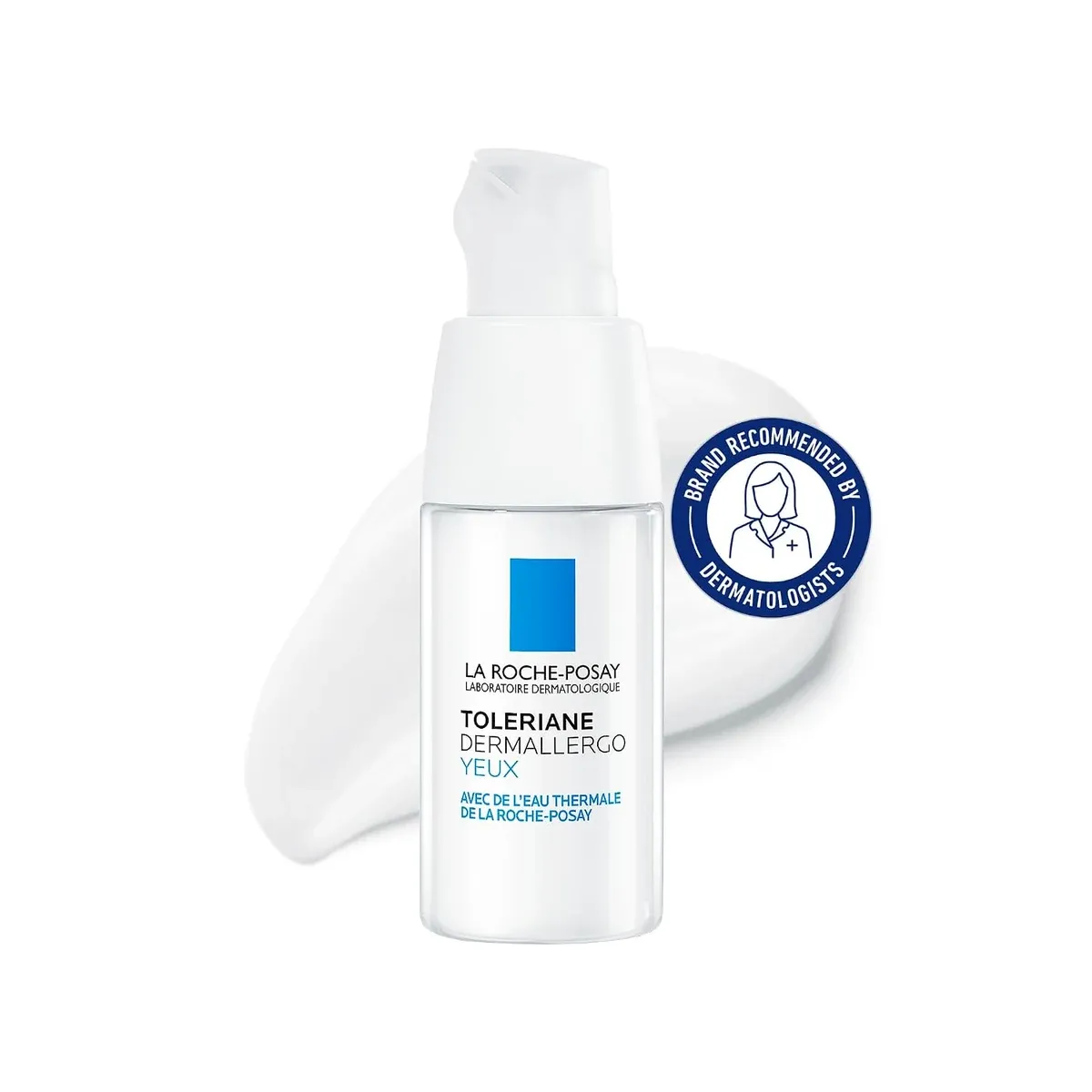
La Roche-Posay Toleriane Dermallergo Eye Cream
Best for: very sensitive eye-area skin wanting a minimalist cream Why it leads: its fragrance-free formula and protected pump are designed for eyelids and sensitive eyes. Watch-out: testing claims cannot guarantee no individual reaction
Check current Amazon optionsAs an Amazon Associate, we earn from qualifying purchases. Price and availability can change.
Sensitive eyes can mean reactive surrounding skin or symptoms from the eye surface. Watering, pain, light sensitivity, discharge or vision change needs assessment beyond cosmetics.
Quick Summary
- La Roche-Posay leads overall.
- Avène is the simple option.
- CeraVe is the budget pick.
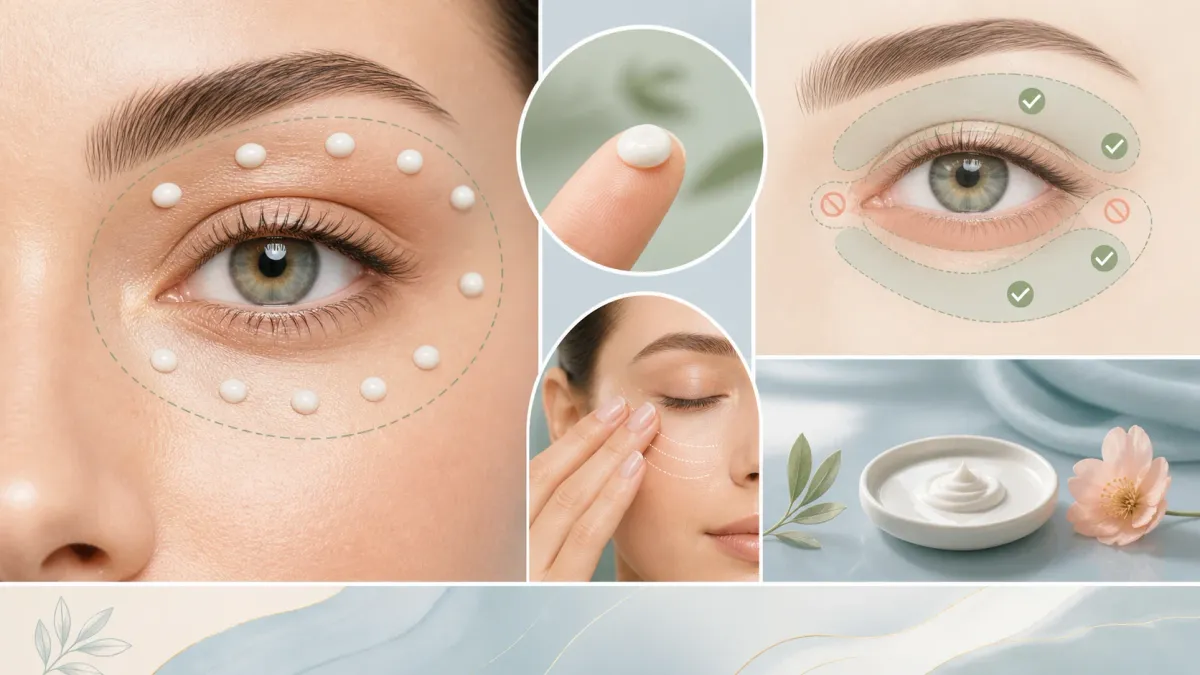
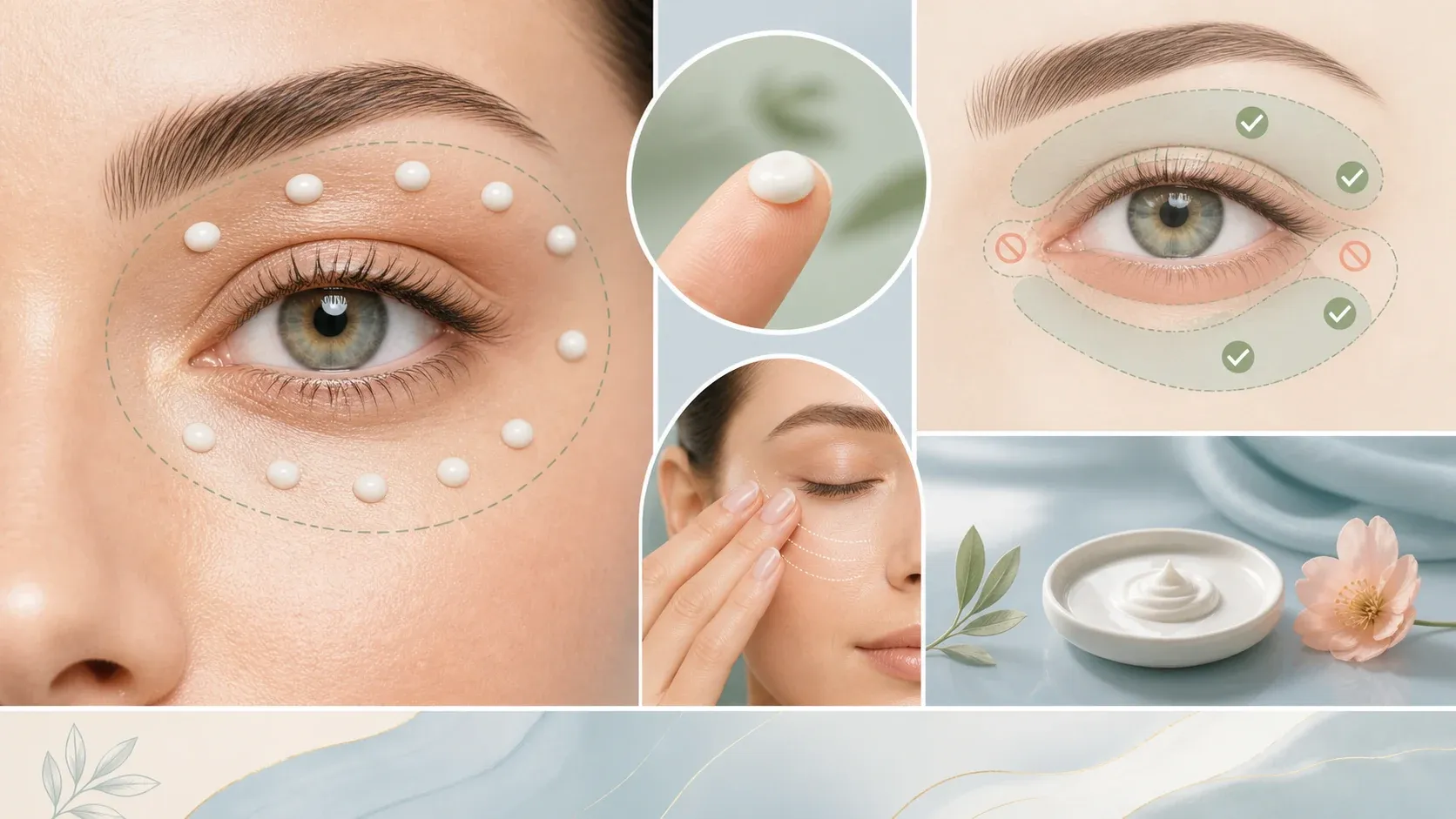
- Use a rice-grain amount outside the lash line.
- Stop for pain, swelling or vision symptoms.
Placement matters as much as formula
Blinking and warmth move product. Too much or placement near the lash line increases migration even when the formula looks gentle.
This guide was prepared by the SkinOptimizer Editorial Team. Rankings reflect current formulas, active levels where disclosed, skin-type fit, use case, value, and meaningful tradeoffs. SkinOptimizer did not conduct a controlled product trial, and we do not claim medical credentials or undocumented hands-on testing. Product claims remain manufacturer claims unless an independent source is cited.
Eye creams for sensitive eyes
| Product | Best for | Main watch-out |
|---|---|---|
| La Roche-Posay Toleriane Dermallergo Eye Cream | very sensitive eye-area skin wanting a minimalist cream | testing claims cannot guarantee no individual reaction |
| Avène Soothing Eye Contour Cream | dry easily irritated eye-contour skin | marketplace packaging can vary |
| CeraVe Eye Repair Cream | budget users wanting ceramides and niacinamide | niacinamide or botanical components may still irritate some eyelids |
Testing claims reduce uncertainty but never guarantee tolerance.
Our best sensitive-eye cream picks
La Roche-Posay Toleriane Dermallergo Eye Cream
La Roche-Posay Toleriane Dermallergo Eye Cream earns the best overall position because its fragrance-free formula and protected pump are designed for eyelids and sensitive eyes. This is a use-case judgment, not a claim that one product is universally superior.
The current official product information identifies glycerin, squalane, shea butter and niacinamide without fragrance. That information helps define texture, routine fit, and obvious exclusions; it does not prove every marketing outcome or predict an individual reaction.
Routine fit: Use a rice-grain amount outside the lash line. The main tradeoff is that testing claims cannot guarantee no individual reaction Check the current package and Drug Facts or ingredient list when it arrives because formulas and sizes can change.
La Roche-Posay Toleriane Dermallergo Eye Cream
Best for: very sensitive eye-area skin wanting a minimalist cream Why: its fragrance-free formula and protected pump are designed for eyelids and sensitive eyes. Watch-out: testing claims cannot guarantee no individual reaction
Check current Amazon optionsAs an Amazon Associate, we earn from qualifying purchases.
Product facts checked against the current manufacturer or official product information. Formulas, packaging, availability, and prices can change.
Avène Soothing Eye Contour Cream
Avène Soothing Eye Contour Cream earns the best simple soothing cream position because its fragrance-free positioning avoids strong actives. This is a use-case judgment, not a claim that one product is universally superior.
The current official product information identifies a fragrance-free soothing eye-contour cream. That information helps define texture, routine fit, and obvious exclusions; it does not prove every marketing outcome or predict an individual reaction.
Routine fit: Tap a small amount around the orbital bone. The main tradeoff is that marketplace packaging can vary Check the current package and Drug Facts or ingredient list when it arrives because formulas and sizes can change.
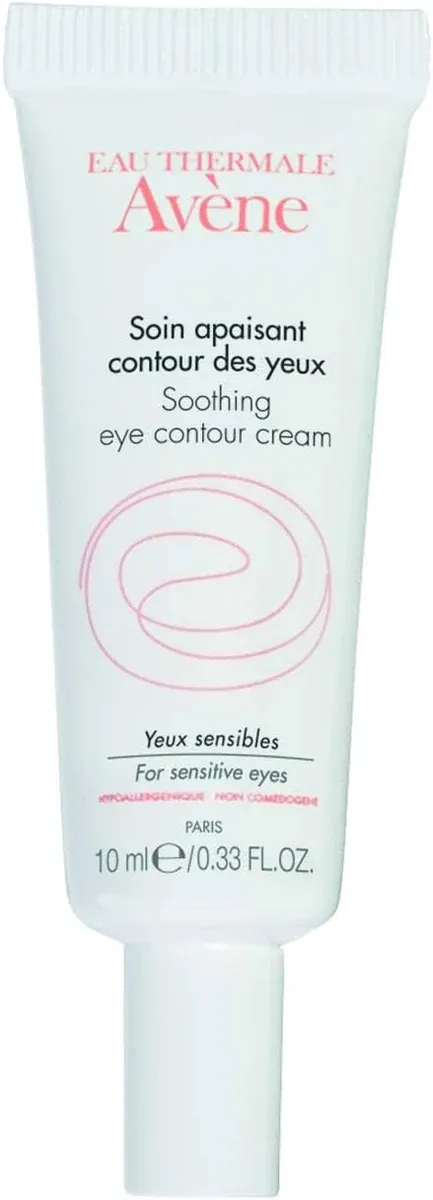
Avène Soothing Eye Contour Cream
Best for: dry easily irritated eye-contour skin Why: its fragrance-free positioning avoids strong actives. Watch-out: marketplace packaging can vary
Check current Amazon optionsAs an Amazon Associate, we earn from qualifying purchases.
Product facts checked against the current manufacturer or official product information. Formulas, packaging, availability, and prices can change.
CeraVe Eye Repair Cream
CeraVe Eye Repair Cream earns the best budget option position because it supplies barrier-support ingredients without retinol. This is a use-case judgment, not a claim that one product is universally superior.
The current official product information identifies ceramides, hyaluronic acid and niacinamide. That information helps define texture, routine fit, and obvious exclusions; it does not prove every marketing outcome or predict an individual reaction.
Routine fit: Use a tiny amount outside the waterline. The main tradeoff is that niacinamide or botanical components may still irritate some eyelids Check the current package and Drug Facts or ingredient list when it arrives because formulas and sizes can change.
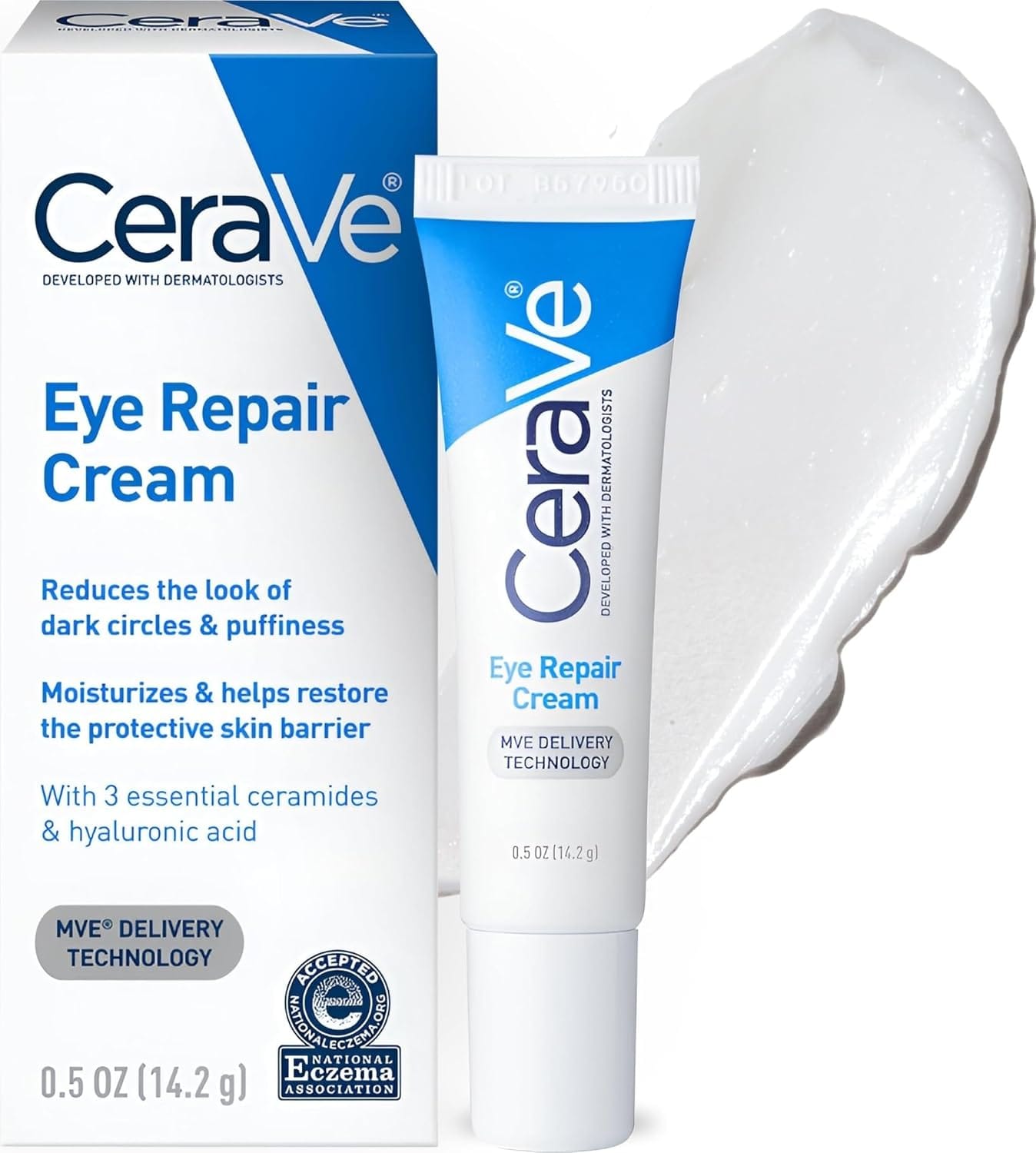
CeraVe Eye Repair Cream
Best for: budget users wanting ceramides and niacinamide Why: it supplies barrier-support ingredients without retinol. Watch-out: niacinamide or botanical components may still irritate some eyelids
Check current Amazon optionsAs an Amazon Associate, we earn from qualifying purchases.
Product facts checked against the current manufacturer or official product information. Formulas, packaging, availability, and prices can change.
Do not let the ranking replace the fit check
The top-ranked option is the most balanced starting point, not a universal winner. Re-check the main watch-out, current label and your actual routine before buying; a lower-ranked product can be the better decision when its format removes a barrier to consistent use.
How to choose eye cream
Simple formulas avoid unnecessary exposure. A useful pick should make this tradeoff explicit rather than hiding it behind a single overall score.
Protected pumps reduce repeated jar contact. A useful pick should make this tradeoff explicit rather than hiding it behind a single overall score.
A small stable amount should stay outside the eye. A useful pick should make this tradeoff explicit rather than hiding it behind a single overall score.
Eyelid dryness and eye pain need different responses. A useful pick should make this tradeoff explicit rather than hiding it behind a single overall score.
Skip retinol, strong vitamin C, acids and fragrance as a first experiment when eyelids are reactive.
Ophthalmologist-tested is not a universal promise.
How to apply eye cream
- Clean hands. Remove makeup gently.
- Use a rice-grain amount. Divide it between both eyes.
- Map the orbital area. Stay outside lash line and waterline.
- Tap gently. Do not stretch skin.
- Observe. Stop if watering or swelling recurs.
Do not test new eye cream and new makeup on the same day.
Reactions may come from nail products, shampoo, drops or airborne allergens—not only eye cream.
Before you keep the product
- The symptom is on skin, not a painful eye.
- Formula is fragrance-free.
- Only a rice-grain amount is used.
- Product stays outside waterline.
- Red flags have a care plan.
What eye cream for sensitive eyes means
Eye cream for sensitive eyes is a cosmetic moisturizer chosen for surrounding skin, usually with a fragrance-free low-active formula and careful placement. It does not treat the eyeball, tear film, infection or allergy.
Eyelids are exposed to transferred products, so the trigger may be makeup, cleanser, shampoo, nail polish or airborne allergen.
The buying question is therefore not simply “Which is strongest?” It is “Which option fits eyelid dryness, reaction history, migration and eye-surface symptoms without adding a tradeoff that makes consistent use unlikely?” A technically impressive formula or device has little value when the finish, sensation, schedule, or application burden causes it to be abandoned.
How we evaluated the shortlist
We ranked the shortlist around four decision axes: fragrance and actives, packaging, migration, symptom type. Official product pages supplied current specifications and use directions. Independent editorial result pages were used to identify the questions shoppers repeatedly face, not as proof that a product works for every reader.
SkinOptimizer did not run a controlled head-to-head trial for this guide. We therefore do not award points for sensory observations we did not make, and we do not repeat retailer star ratings as efficacy evidence. Rankings can change when formulas, device specifications, packaging, or availability change.
We excluded options when the formula centered on strong actives or exact product was unclear. We also avoided hard-coded prices because a temporary promotion can make a weak match look artificially attractive. Value here means that the product's format and role justify its place in a realistic routine.
What the evidence can—and cannot—promise
DermNet explains eyelid contact dermatitis. The American Academy of Ophthalmology outlines eye red flags.
A cosmetic testing claim cannot diagnose the source of irritation or prove treatment for an inflamed eyelid.
Our editorial threshold is practical: a claim must be traceable to current official labeling or an identified authority source, and the language must match the evidence. Expect improved skin comfort, not treatment of medical eye symptoms. This is why the ranking emphasizes adherence, formulation or device specifications, and predictable tradeoffs instead of dramatic before-and-after promises.
Common sensitive-eye mistakes
Applying to waterline: Product can migrate into the eye. Using too much: Extra cream raises migration. Testing multiple cosmetics: The trigger becomes impossible to isolate. Treating eye pain as dryness: Pain needs evaluation.
Change one variable at a time and document the product, amount, frequency, and body or face area. A simple note after each use is more informative than trying to remember whether irritation began before or after several simultaneous changes.
Stop and reassess when eye pain, light sensitivity, discharge, major swelling, hives or vision change occurs A product that repeatedly causes a meaningful adverse reaction is not a better value because it was expensive or highly ranked.
How this decision fits the rest of your routine
A product decision works better inside a coherent routine. Start with our sensitive-skin routine and eye-care guide when the surrounding cleanser or moisturizer is still unsettled. Those steps often determine tolerance more than switching between two similar products.
If darkness is your main concern, our gentle dark-circle routine explains daily care, irritation precautions and what creams cannot change.
For the adjacent concern, use the focused guides to anti-aging eye creams, barrier repair, and gentle cleanser. Each solves a different decision; stacking every active or tool at once makes it impossible to identify what helped or irritated.
If you need to simplify further, compare our retinol around eyes and moisturizer guide. These internal references are deliberately specific so the guide remains useful after the purchase decision instead of ending at the checkout link.
When professional evaluation matters
Seek urgent eye care for vision change, severe pain, light sensitivity, injury or swelling. Dermatology can help persistent eyelid dermatitis.
Bring the product packaging, a complete ingredient list, and a short timeline of symptoms to an appointment. That is more useful than describing a product only as “gentle” or “clean,” terms that do not identify the ingredient, exposure, or condition involved.
Pregnancy, breastfeeding, prescription treatment, a recent procedure, photosensitizing medication, or a diagnosed skin or eye condition can change the safest choice. Product-label directions and advice from your own clinician take priority over a general shopping guide.
Use a 30-day decision log instead of guessing
Before the first use, photograph or describe the baseline under ordinary consistent conditions and write down the exact product, variant, application amount, body or face zone, and every other active used that day. For this decision, the most useful context is eyelid dryness, reaction history, migration and eye-surface symptoms. That record prevents a familiar shopping error: attributing a change to the newest purchase when the weather, shaving, makeup, medication, menstrual or menopausal transition, outdoor exposure, or another product changed at the same time.
During the first month, record comfort immediately after use and again several hours later. Use simple observations—comfortable, tight, itchy, burning, watery, pilling, heavy, or difficult to reapply—rather than inventing a numerical clinical score. Note whether the product was used at the intended amount and whether you skipped it because of texture, taste, fit, brightness, migration, or time. Those adherence failures are product-performance data because a theoretically ideal option cannot help when its format repeatedly prevents correct use.
Review the log once weekly, not after every mirror check. Keep the product when the intended role is clear, use is repeatable, and adverse effects remain absent or minor and transient. Reduce frequency or simplify surrounding layers when irritation or application conflict accumulates. Stop when the defined warning signs appear. At day 30, decide among three actions: continue unchanged, adjust one variable, or discontinue. Do not add a second new treatment merely because the first product has not produced a dramatic cosmetic change in four weeks.
Authority source trail
For independent context beyond brand pages, review the primary clinical or regulatory guidance source and the supporting authority source used for this guide. These sources define the safety and evidence boundaries; they do not endorse the commercial ranking or individual products.
Frequently asked questions
Can eye cream make eyes water?
Yes. Product can migrate or an ingredient can irritate. Use less, apply farther away and stop if it recurs.
Where should I apply it?
Use tiny dots around the orbital bone and dry eyelid only when allowed. Avoid waterline and direct eye contact.
Is ophthalmologist-tested reaction-proof?
No. It indicates testing, not a guarantee for every allergy or condition.
Can eye cream treat dry eyes?
No. Dry-eye disease involves the tear film and eye surface and needs appropriate eye-care advice.
What should sensitive eyes avoid?
There is no universal blacklist, but fragrance, strong retinoids, acids and migrating textures are poor first choices.
Final verdict
La Roche-Posay is the strongest overall fit, Avène the pared-back route, and CeraVe the budget option. Use less than you think and do not ask a cosmetic to solve an eye-surface condition.
This article is for informational purposes only and does not replace professional dermatological advice.