Best Ingredients for Skin Barrier Repair: What Actually Works
Choose skin barrier repair ingredients by function, skin type, and routine stage—not front-label hype.

In this guide

Quick answer: The best ingredients for skin barrier repair do different jobs. Ceramides, cholesterol, and fatty acids replace lipids. Glycerin and hyaluronic acid add hydration. Petrolatum or dimethicone reduce water loss. Niacinamide and panthenol can support recovery, but they are optional. Start with a gentle cleanser, a well-formulated moisturizer, and sunscreen. Pause products that sting until your skin feels calm again.
- Best foundation: a moisturizer containing ceramides plus other barrier lipids.
- Best hydration support: glycerin; hyaluronic acid can help but must be sealed with moisturizer.
- Best moisture seal: petrolatum for very dry areas or dimethicone for a lighter finish.
- Best routine: fewer steps, fragrance-free products, lukewarm water, and daily SPF.
Need the practical answer first?
Jump to the decision tools that match your next step.
Best ingredients for skin barrier repair is a deceptively broad search. I would not choose one fashionable serum and expect it to fix every form of dryness, burning, or sensitivity. A useful decision begins with the job your routine is failing to do.
Your outermost skin layer needs an organized mixture of cells and lipids to slow water loss and keep irritants out. Over-cleansing, strong exfoliation, dry weather, and irritating products can stress that structure. The useful response is usually less dramatic than social media suggests.
The practical goal is to hydrate the outer layer, replace missing lipids, and reduce further water loss while avoiding the trigger. That may require one moisturizer rather than five serums. It may also require a temporary pause from retinoids or acids.
This guide ranks ingredients by function, not popularity. It also explains which textures fit dry, oily, acne-prone, and reactive skin. If you are unsure whether your symptoms match barrier damage, first review the signs of a damaged skin barrier.
What a Damaged Skin Barrier Actually Needs
The common brick-and-mortar analogy is useful. Corneocytes act like bricks. A lipid matrix containing ceramides, cholesterol, and fatty acids acts like mortar. This organized surface slows transepidermal water loss and helps limit exposure to irritants.
DermNet's overview of skin barrier function explains that the skin's acidic surface and lipid-producing enzymes help maintain this protective layer. This is why harsh cleansing and repeated irritation can create more than temporary tightness.
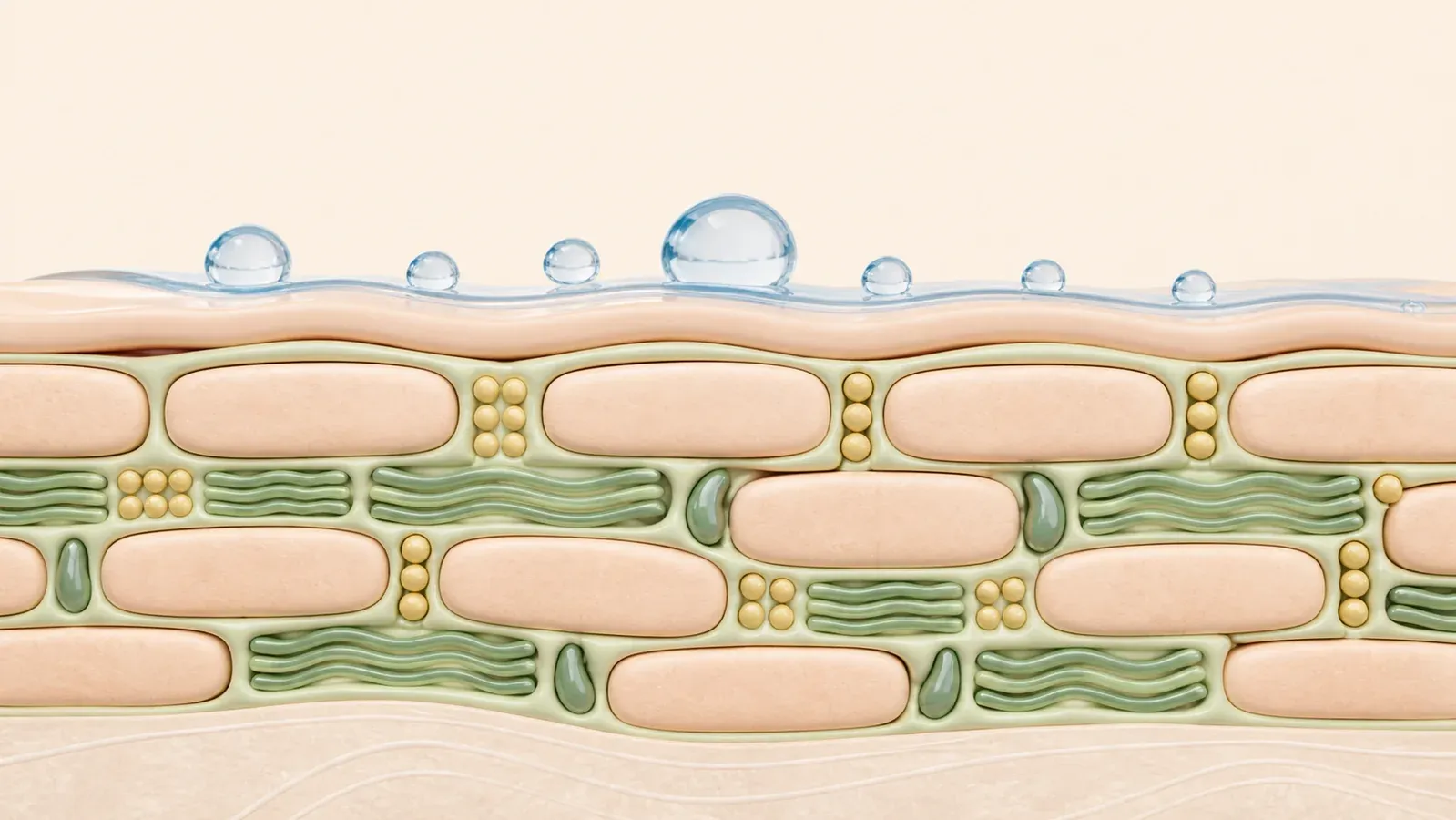
Products support this system in four different ways. Humectants attract water. Physiological lipids replenish components found in the barrier. Emollients smooth rough gaps. Occlusives create a surface film that slows evaporation.
One ingredient can perform more than one job. Panthenol is both a humectant and an emollient. Squalane mainly softens and supplements surface lipids. A well-designed cream may combine several categories, making a separate hydrating serum unnecessary.
Best Ingredients for Skin Barrier Repair: A Decision Table
No single row is the universal winner. Choose the missing function first. Then select a texture that you can apply consistently without burning, clogging, or making your face uncomfortably greasy.
| Ingredient group | Best first use | Watch out for |
|---|---|---|
| Ceramides + cholesterol + fatty acids | Dry, flaky, over-exfoliated, or chronically tight skin | The full formula and lipid balance matter more than one front-label claim |
| Glycerin + hyaluronic acid | Dehydration and uncomfortable tightness | Apply moisturizer afterward; a humectant-only serum may feel insufficient |
| Petrolatum + dimethicone | Reducing water loss and protecting fragile areas | Heavy occlusion may feel uncomfortable or aggravate some acne-prone users |
| Niacinamide + panthenol | Supportive hydration and a calmer-feeling routine | High-strength niacinamide can sting; more is not automatically better |
| Squalane + other emollients | Roughness and flexibility without a very heavy film | They soften but may not replace a complete moisturizer |
Ceramides, Cholesterol, and Fatty Acids: The Structural Core
Ceramides are often treated as the star ingredient. They are important, but the barrier contains a mixture of lipids. Formulas that combine ceramides with cholesterol and fatty acids try to support that broader structure rather than supplying one isolated component.
This group is the strongest default for very dry, flaky, eczema-prone, or over-exfoliated skin. Look for multiple ceramide types, cholesterol, and fatty acids on the ingredient list. Do not worry if the label does not advertise a precise ratio.
A “3:1:1 ratio” is frequently repeated online as if every user needs the same recipe. Research on physiological lipid mixtures is more nuanced. Formulation, concentration, delivery, and the condition being studied all affect results.
Treat the ratio as a formulation concept, not a shopping commandment.
For a deeper ingredient explanation, see our guide to ceramides for skin barrier health. If you want complete formulas rather than individual ingredients, compare the best moisturizers for skin barrier repair.
Glycerin and Hyaluronic Acid: Hydration Before Sealing
Glycerin is an excellent, unfashionable workhorse. It attracts water and appears in many cleansers, lotions, creams, and serums. Because it is commonly built into complete moisturizers, you may already be using enough without purchasing a separate product.
Hyaluronic acid can make the surface feel more hydrated and plump. Claims that every low-molecular-weight version travels deeply into the dermis are often oversimplified. For barrier care, its practical value is surface hydration and comfort.
Apply a humectant product to slightly damp skin, then follow with moisturizer. In very dry air, do not rely on a watery hyaluronic acid serum alone. The next cream or lotion supplies emollients and occlusives that help keep the added water from escaping.
The American Academy of Dermatology's moisturizer guidance highlights ceramides and hyaluronic acid while emphasizing that moisturizer format should match skin needs.
Petrolatum and Dimethicone: The Moisture-Loss Reducers
Petrolatum is one of the most effective simple occlusives. A very thin layer over moisturizer can help rough patches, lips, and irritated areas retain water. You do not need to coat your entire face if only the corners of the nose or mouth are struggling.
Dimethicone usually feels lighter. It creates slip, reduces friction, and can help a moisturizer protect without the heavy finish of an ointment. Acne-prone users often find a silicone-containing lotion easier to tolerate than full-face petrolatum.
Niacinamide and Panthenol: Helpful, Not Mandatory
Niacinamide can support the skin's own lipid production and may improve barrier function. Lower concentrations are often enough for barrier-focused routines. A 10% or 20% serum is not automatically more restorative and may be harder to tolerate when skin already stings.
Panthenol, also called provitamin B5, acts as a humectant and emollient. It is common in calming creams and balms. It can be a useful supporting ingredient, especially when dryness and discomfort occur together.
Neither ingredient should become a mandatory extra step. If your moisturizer already includes one, test that formula first. If niacinamide burns, stop it. “Barrier support” on a label does not override your skin's response.
Squalane, Colloidal Oatmeal, and Centella: Situational Support
Squalane is a lightweight emollient that can soften flaky areas. A few drops over moisturizer may suit people who dislike thick balms. It does not supply the same broad mixture as a complete barrier cream, so treat it as an optional finish.
Colloidal oatmeal can soothe dry, itchy skin and is useful in many fragrance-free creams. Centella products may feel calming, but extract strength and formula quality vary. Neither botanical is a reason to accept fragrance, essential oils, or a long list of sensitizing extras.
Readers interested in plant-based options should use our natural versus synthetic skincare guide to avoid assuming that natural automatically means gentler.
Choose the Right Texture for Your Skin Type
The best ingredient list can still fail if the texture is wrong for daily use. A rich ointment may be ideal for cracked areas but miserable across an oily T-zone. A gel may feel elegant but leave very dry skin tight an hour later.
| Your skin situation | Best starting texture | Useful formula clues |
|---|---|---|
| Oily or acne-prone | Fragrance-free lotion or gel-cream | Glycerin, ceramides, dimethicone; labeled non-comedogenic when possible |
| Normal or combination | Lotion by day, cream on dry areas at night | Humectants plus ceramides or squalane |
| Dry or flaky | Cream, with ointment on the driest zones | Ceramides, cholesterol, fatty acids, glycerin, petrolatum |
| Reactive or rosacea-prone | Short-ingredient fragrance-free cream | Simple base; avoid multiple new extracts and high-strength actives |
Best Ingredients for Skin Barrier Repair by Skin Type
For acne-prone skin, begin with a lotion containing glycerin, ceramides, and dimethicone. Add occlusion only where needed. “Oil-free” can help with preference, but it is not the only sign that a product will suit acne.
For very dry skin, choose a cream with both humectants and occlusives. Apply it while skin is slightly damp. Use a thin ointment layer on cracking or peeling zones at night if the underlying moisturizer does not sting.
For rosacea-prone or unusually reactive skin, minimize variables. Fragrance-free is more useful than “unscented,” which can still contain masking fragrance. Persistent flushing, burning, or visible blood vessels deserve professional assessment rather than endless product switching.
For eczema-prone skin, moisturizer is important, but a flare may need diagnosis and treatment. The Cleveland Clinic's skin barrier guidance notes that eczema, rosacea, psoriasis, and other conditions can be associated with poor barrier function.
A Simple Skin Barrier Repair Routine
A reset routine is not a punishment or permanent ban on active skincare. It is a controlled period with fewer variables. The goal is to identify what your skin can tolerate while giving hydration and protection a consistent chance to work.
| Time | Minimal routine | Adjustment |
|---|---|---|
| Morning | Rinse or gentle cleanse → moisturizer → broad-spectrum SPF 30+ | Skip morning cleanser if water alone leaves skin comfortable |
| Evening | Gentle cleanse → moisturizer | Add a thin occlusive layer only on very dry areas |
| During the reset | Repeat the same products consistently | Avoid introducing several “soothing” serums at once |
Step 1: Stop the Likely Trigger
Pause scrubs, peeling pads, strong acids, retinoids, benzoyl peroxide, and other products that cause active stinging. You may not need to stop a prescribed medication without advice, so ask the prescriber if treatment itself appears to be creating severe irritation.
Also remove fragranced products, essential oils, and newly introduced formulas. Hot water, rough washcloths, cleansing brushes, and repeated washing can prolong discomfort even when the product list looks gentle.
Step 2: Cleanse With Less Friction
Use lukewarm water and your fingertips. A mild cream or low-foaming cleanser is usually easier to tolerate than a strong gel cleanser. If sunscreen or makeup requires double cleansing, choose two gentle steps and avoid prolonged rubbing.
Pat the face lightly and leave a little water on the surface. Apply moisturizer within a few minutes. This routine is more useful than waiting for skin to become completely dry and tight.
Step 3: Moisturize Before Adding Serums
A complete moisturizer is the center of the reset. Test it on a small area first if your skin is highly reactive. A brief cool sensation may occur with damaged skin, but persistent burning, swelling, or worsening redness is a reason to stop.
If the moisturizer already contains glycerin, ceramides, panthenol, or niacinamide, do not add separate versions immediately. One product can perform several jobs while making reactions easier to trace.
Step 4: Protect From UV Exposure
Use a broad-spectrum SPF 30 or higher that your skin tolerates. Mineral sunscreen is not automatically gentler, and chemical filters are not automatically irritating. The best choice is a fragrance-free formula you can apply at an adequate amount.
If sunscreen burns on very compromised skin, do not abandon protection. Use shade, a hat, and shorter exposure while testing a simpler formula. Our guide to preventing sun damage explains the broader protection strategy.
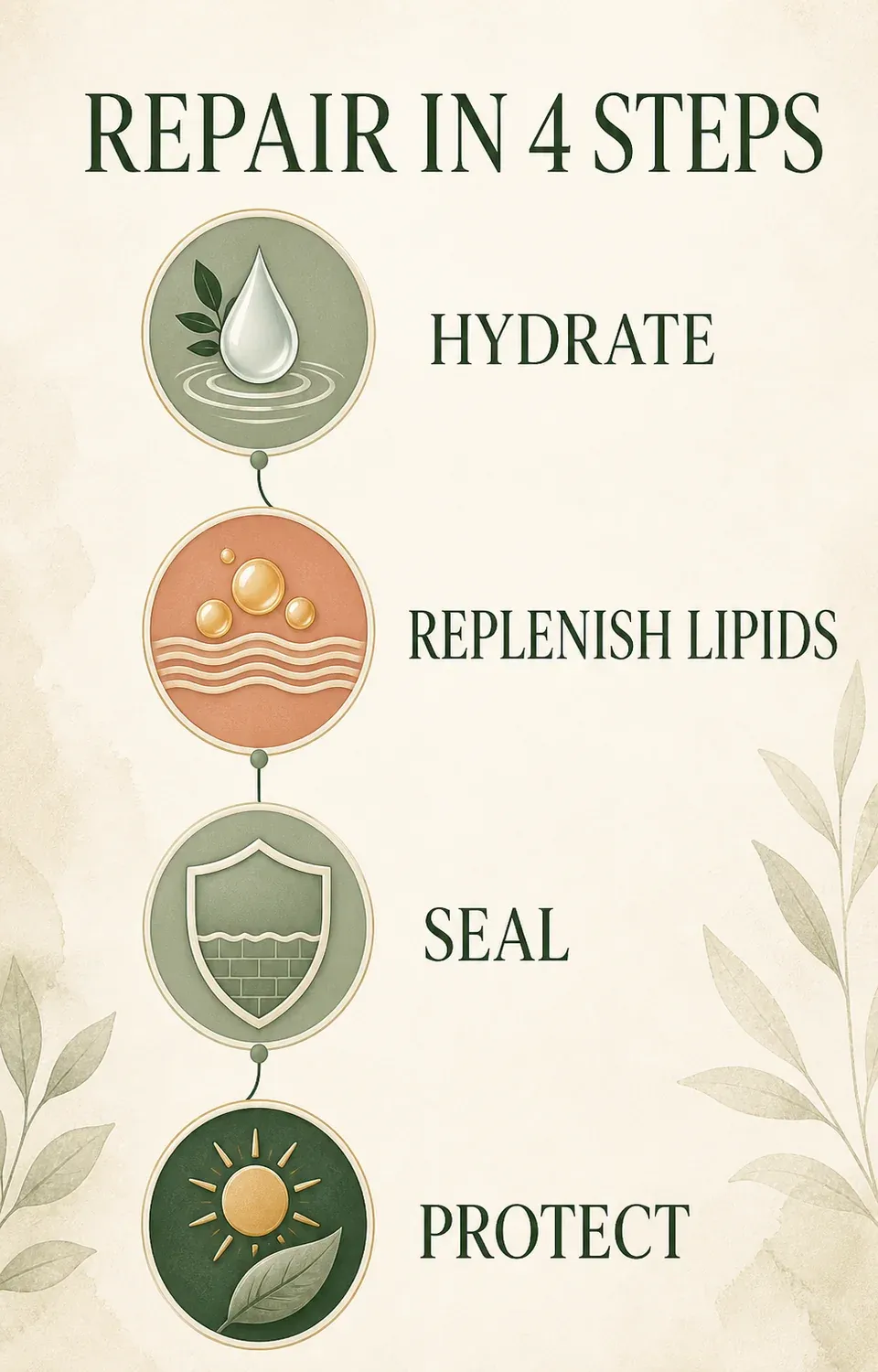
Video: the four-step barrier reset—pause irritation, hydrate, replenish lipids, and protect. Captions are included; playback does not start automatically.
Two Practical Product Fits
These are examples, not universal winners. One is a richer all-purpose moisturizer. The other is an optional low-cost niacinamide step for skin that already tolerates the basic routine.
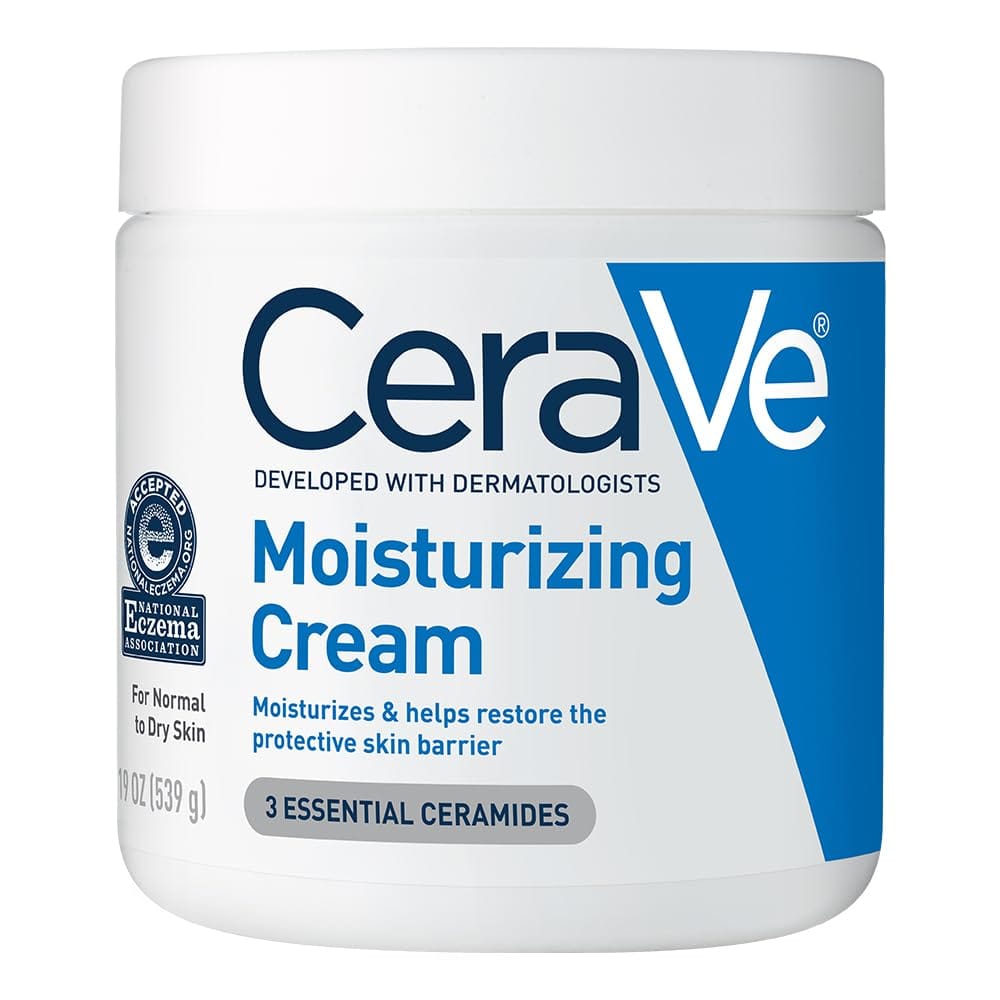
CeraVe Moisturizing Cream
Best for: dry or combination skin that needs one fragrance-free cream with ceramides and stronger occlusion.
Why it fits: it combines humectants, emollients, ceramides, and petrolatum in one step.
Watch-out: the texture may feel too heavy across very oily or congestion-prone areas.
Check current Amazon priceAs an Amazon Associate, we earn from qualifying purchases.
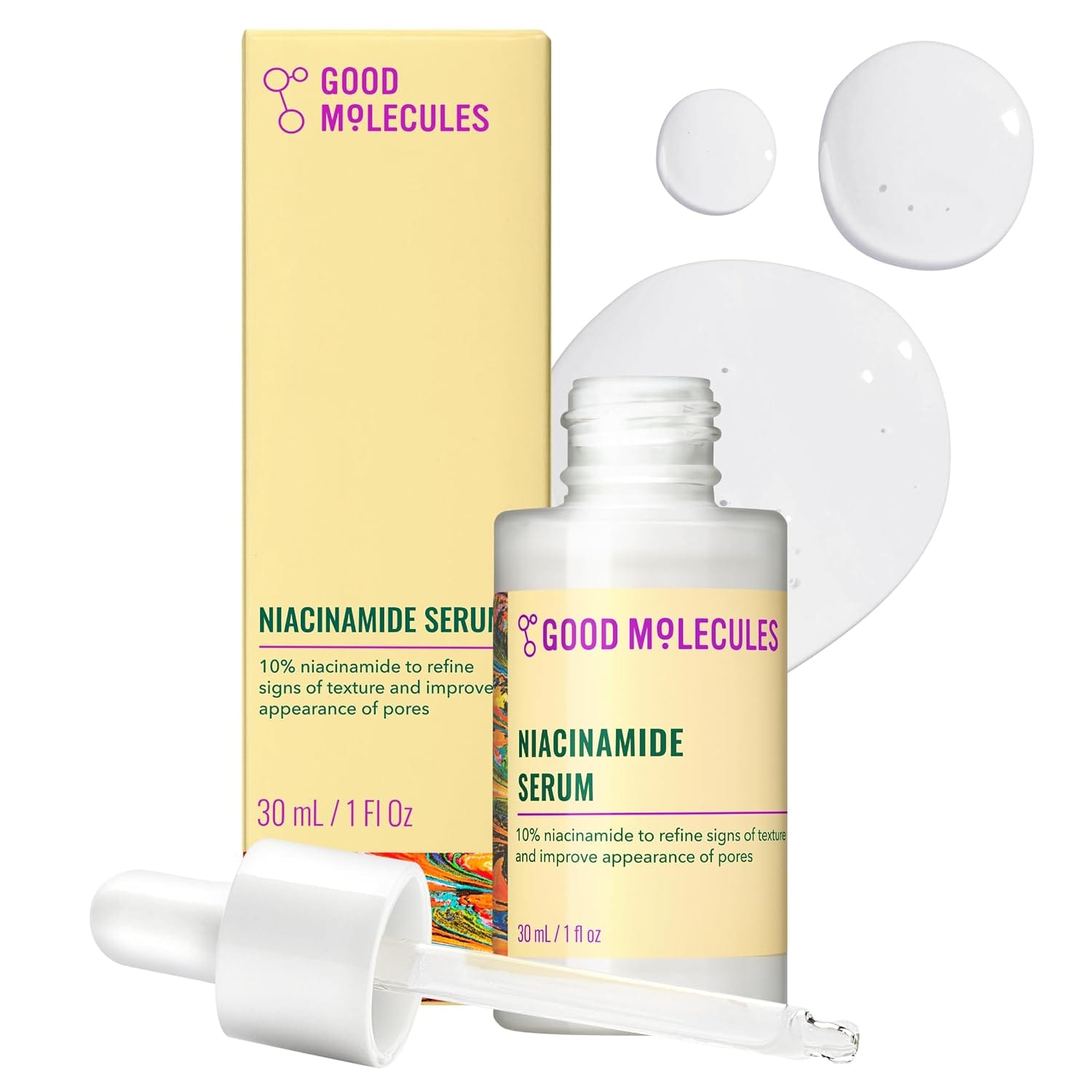
Good Molecules Niacinamide Serum
Best for: oily or combination skin that already tolerates cleanser, moisturizer, and SPF.
Why it fits: it is an affordable optional step for readers who want niacinamide without replacing moisturizer.
Watch-out: skip it during active burning, and stop if redness or stinging increases.
Check current Amazon priceAs an Amazon Associate, we earn from qualifying purchases.
If you prefer a lighter formula, use our fragrance-free moisturizer guide. Readers with oily skin can compare the best moisturizers for oily skin instead of forcing a heavy cream.
When and How to Restart Active Ingredients
Do not restart actives because a fixed number of days has passed. Use function-based signs. Cleansing and moisturizer should no longer burn. Flaking should be settling. Skin should tolerate the basic routine for several consecutive days.
Wait at least several days before adding the next product. If irritation returns, remove the most recent addition and return to the basic routine. Our guide to avoiding skin barrier damage covers common overuse patterns.
Some readers can continue a prescribed acne or rosacea treatment with a modified schedule. Others need a temporary pause. Medication decisions belong with the prescribing clinician, especially if symptoms are severe.
When “Barrier Damage” Needs a Dermatologist
Barrier language is popular online, but it is not a diagnosis. Persistent redness, intense itching, cracking, weeping, swelling, crusting, eye-area involvement, or a rapidly spreading rash can reflect conditions that moisturizer alone will not resolve.
Seek timely medical help for facial swelling, breathing difficulty, signs of infection, severe pain, blistering, or a reaction involving the eyes or mouth. Stop the suspected product and do not repeatedly patch-test it on already inflamed skin.
If a simple routine produces no meaningful improvement after a few weeks, bring the product list and symptom timeline to a dermatologist. Contact allergy, eczema, perioral dermatitis, acne treatments, and rosacea can overlap with what users call a “broken barrier.”
Conclusion: Build the Formula, Not the Hype
The best skin barrier routine is usually a small system. Hydrate with glycerin or another humectant. Replenish and soften with a cream containing ceramides and emollients. Seal dry areas with petrolatum or another occlusive. Protect the result with sunscreen.
Niacinamide, panthenol, squalane, oatmeal, and centella can be useful. They are supporting choices, not mandatory tickets to recovery. A product that feels comfortable and combines several functions is often more valuable than a shelf full of single-ingredient serums.
If you need a complete sequence after the reset, continue with our step-by-step skin barrier restoration guide.
Frequently Asked Questions About Skin Barrier Repair Ingredients
Question methodology: These FAQs reflect recurring uncertainties reviewed in discussions on r/SkincareAddiction, a routine-help thread, a recovery discussion, and r/AsianBeauty. Reddit was used for question discovery, not evidence; answers follow dermatology sources and bounded editorial reasoning.
Should I stop all active ingredients while repairing my skin barrier?
Pause nonessential products that sting, burn, or visibly worsen dryness. This often includes exfoliating acids, scrubs, strong retinoids, and high-strength vitamin C. Do not stop a prescribed treatment without asking the prescriber. Keep the routine simple until cleanser, moisturizer, and sunscreen feel comfortable.
Do I need ceramides, cholesterol, and fatty acids in the same product?
Not every moisturizer must list all three, but combining physiological lipids can offer broader structural support than relying on a single ceramide claim. The complete formulation still matters. Glycerin, emollients, and occlusives may make a simple mixed formula more useful than a specialized serum.
Can I use petrolatum if I have acne-prone skin?
Many acne-prone users tolerate a thin layer on dry patches, but full-face use can feel too heavy. Apply it over a moisturizer that does not sting. Avoid sealing in irritating actives, and stop if congestion worsens. A dimethicone-based lotion is a lighter alternative.
How do I know when my skin barrier is repaired?
Look for function rather than perfection. Water and moisturizer should no longer sting. Tightness and flaking should be reduced, and the basic routine should remain comfortable for several days. Persistent redness or itching can indicate another condition even after dryness improves.
How long does skin barrier repair take?
Mild irritation may feel better within days, while visible dryness and sensitivity can take several weeks. There is no reliable universal deadline. Improvement depends on the trigger, severity, environment, and whether an underlying condition is present. Seek professional advice if symptoms persist or worsen.
This article is for informational purposes only and does not replace professional dermatological advice.