The Complete Guide to Choosing the Right Moisturizer for Every Skin Type
The complete guide to choosing the right moisturizer for every skin type. Learn humectants, emollients, and occlusives, plus 7 derm-approved picks for oily, dry, combination, and sensitive skin.
In this guide
Walk into any drugstore and the moisturizer aisle will offer you gels, creams, lotions, balms, and ointments. The labels promise hydration for oily skin, repair for dry skin, balance for combination skin, and soothing for sensitive skin. Despite this abundance, many people choose a moisturizer that feels pleasant at the counter but leaves their skin either greasy by midday or still tight by noon.
Readers with medium-deep or deep skin tones can also use the darker-skin moisture guide for ashiness, post-inflammatory pigment and eczema-aware adjustments.
Product picks included
If a cream is the right texture, compare our updated best cream moisturizers. The guide separates value, minimal, colloidal-oatmeal, premium lipid-rich, and smoothing options with clear skip reasons.
The problem is not a lack of options. It is a lack of clarity about the three functional categories that actually matter: humectants, emollients, and occlusives. Every moisturizer is a blend of these three ingredient types. The ratio determines whether it works for your skin or against it. This guide explains how to identify your skin’s true needs and match them to the correct formulation.
If you are unsure whether your skin barrier is currently healthy enough to absorb a moisturizer effectively, start by reading our guide to the early signs of a damaged skin barrier.
⏹ TL;DR — The Complete Guide to Choosing the Right Moisturizer
- Three functional categories matter, not labels. Humectants draw water in. Emollients smooth and soften. Occlusives seal moisture in. Your skin needs a specific ratio of these three.
- Skin type is not skin condition. Oily skin can be dehydrated. Dry skin can be oily in some areas. Choose based on your current skin state, not just your lifelong skin type label.
- Application timing changes everything. Applying moisturizer to damp skin within 60 seconds of cleansing doubles its effectiveness regardless of the formula.
- Gel does not mean oil-free. Many gel-creams contain silicones and emollients that can feel heavy on truly oily skin. Read the ingredient list, not the marketing.
- One moisturizer is rarely enough year-round. Humidity changes, seasonal shifts, and hormonal fluctuations alter your skin’s needs. Adjust your moisturizer accordingly.
🧪 The Skin Insider
Product labels and dermatology guidance show a practical pattern: first-application feel does not predict all-day barrier support. Compare humectants, emollients, occlusives, fragrance, climate and how the formula behaves under sunscreen.
The Three Functional Categories of Moisturizers
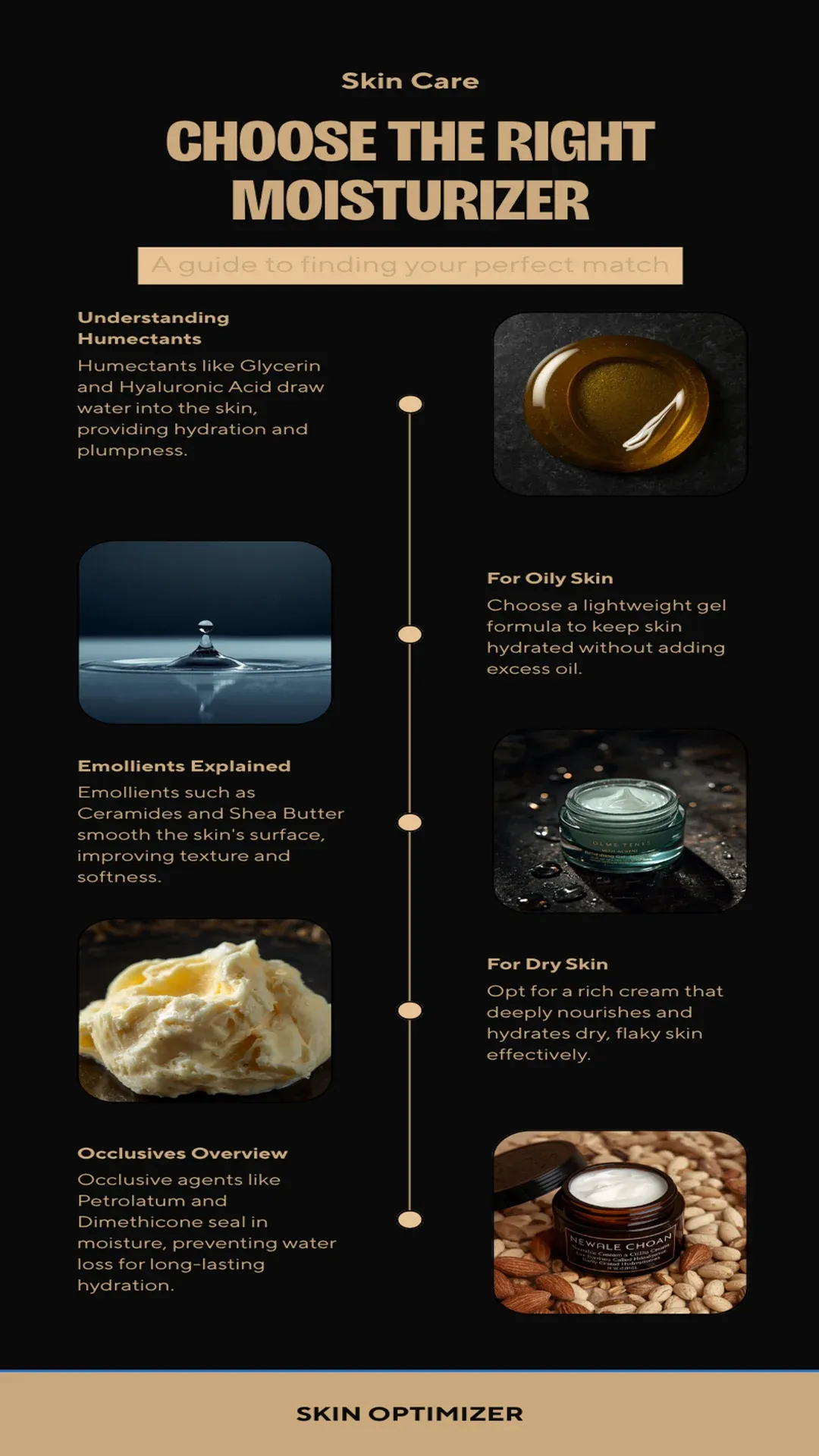
Every moisturizer on the market can be understood through three functional ingredient categories. The proportion of each determines the texture, the feel, and the clinical effect.
| Category | Function | Common Ingredients | Best For |
|---|---|---|---|
| Humectant | Draws water from the environment and deeper skin layers into the stratum corneum | Glycerin, hyaluronic acid, urea, lactic acid, panthenol | Dehydrated skin, all skin types in low-humidity environments |
| Emollient | Fills gaps between corneocytes, smooths surface, and softens skin texture | Squalane, shea butter, ceramides, fatty acids, jojoba oil | Rough, flaky, or mature skin; barrier repair |
| Occlusive | Forms a hydrophobic layer on the skin surface to reduce transepidermal water loss | Petrolatum, dimethicone, lanolin, beeswax, mineral oil | Very dry, compromised, or post-procedure skin |
The American Academy of Dermatology explains that the best moisturizer depends primarily on your skin type, but the formulation category you choose is equally important (AAD, How to Pick the Right Moisturizer).
How to Match a Moisturizer to Your Skin Type
Oily and Acne-Prone Skin
Gel and water-based formulations are the standard recommendation for oily skin. These products contain a higher proportion of humectants with minimal emollients and occlusives. The goal is to provide hydration without adding surface lipids that could contribute to congestion.
Key ingredients to look for include glycerin, hyaluronic acid, and niacinamide. Avoid products with heavy emollients like shea butter or coconut oil near the top of the ingredient list. Non-comedogenic labeling is helpful but not regulated; reading the actual ingredient list is more reliable.
Best for: Gel-creams and water-based lotions. Examples include Neutrogena Hydro Boost Water Gel and CeraVe Oil Control Gel-Cream.
Dry and Dehydrated Skin
Dry skin requires a moisturizer that includes all three functional categories. A humectant draws water into the skin, an emollient fills the gaps in the lipid matrix, and an occlusive prevents the water from escaping. Creams and balms are the most effective textures.
For a short product shortlist, the dry-skin moisturizer guide compares CeraVe, Vanicream and a body-focused Eucerin option by job.
Look for glycerin or hyaluronic acid (humectant), shea butter or ceramides (emollient), and dimethicone or petrolatum (occlusive). The richest options, such as CeraVe Moisturizing Cream or Vanicream Moisturizing Cream, contain a balanced ratio of all three.
For a dedicated overview of rich formulations, read our guide to the best face moisturizers for dry skin.
Combination Skin
Combination skin requires a targeted approach. Many people with combination skin find that a single moisturizer cannot adequately address both oily and dry areas. The practical solution is to use a lightweight gel-cream as a base and apply a richer cream or a few drops of facial oil to the dry areas only.
Products labeled gel-cream often provide the right middle ground. They contain enough humectants and light emollients to hydrate without making the T-zone greasy, while still offering some occlusive protection for the cheeks.
Sensitive and Reactive Skin
Sensitive skin needs a moisturizer with a short ingredient list, no fragrance, and no essential oils. Emollients such as squalane and ceramides are generally well tolerated. Occlusives like dimethicone provide a protective layer without irritation.
The ingredient list should be short enough to read in under thirty seconds. If you know specific triggers, check for them. Our guide to skin barrier repair for sensitive skin covers additional protocols for reactive skin types.
Fragrance, even natural fragrance from essential oils, is the most common irritant in moisturizers for sensitive skin.
| Skin Type | Recommended Texture | Key Ingredients | Example Product |
|---|---|---|---|
| Oily | Gel, water-based | Glycerin, hyaluronic acid, niacinamide | Neutrogena Hydro Boost Water Gel |
| Dry | Cream, balm | Ceramides, shea butter, petrolatum | CeraVe Moisturizing Cream |
| Combination | Gel-cream, lotion | Squalane, glycerin, dimethicone | Vanicream Daily Facial Moisturizer |
| Sensitive | Fragrance-free cream | Ceramides, squalane, colloidal oatmeal | Vanicream Moisturizing Cream |
| Acne-prone | Oil-free gel, mattifying | Niacinamide, salicylic acid, zinc | La Roche-Posay Toleriane Double Repair Matte |
Skin Condition vs. Skin Type: The Missing Variable
The single most overlooked factor in choosing a moisturizer is the difference between skin type and skin condition. Skin type is largely genetic and stable over time. Skin condition changes weekly, sometimes daily, based on climate, diet, stress, product use, and hormonal cycles.
Oily skin can become dehydrated in winter. Dry skin can develop congestion from heavy creams. Sensitive skin can tolerate more after a period of barrier repair.
💡 The Optimizer's Edge
Most articles sort moisturizers by skin type and stop there. The missing insight is that your skin’s condition at this moment is a better guide than your lifelong skin type label. Oily skin that is dehydrated from over-cleansing needs a humectant-rich gel, not an oil-free mattifying cream. Dry skin that has become clogged from a heavy balm needs a lighter emollient, not more occlusion. Learn to read your skin’s current state, not just its permanent label, and you will never waste money on the wrong moisturizer again.
The 7 Best Moisturizers for Every Skin Type
The following products represent the best current options across different skin types and conditions. Each was selected based on formulation quality, ingredient transparency, and clinical relevance.
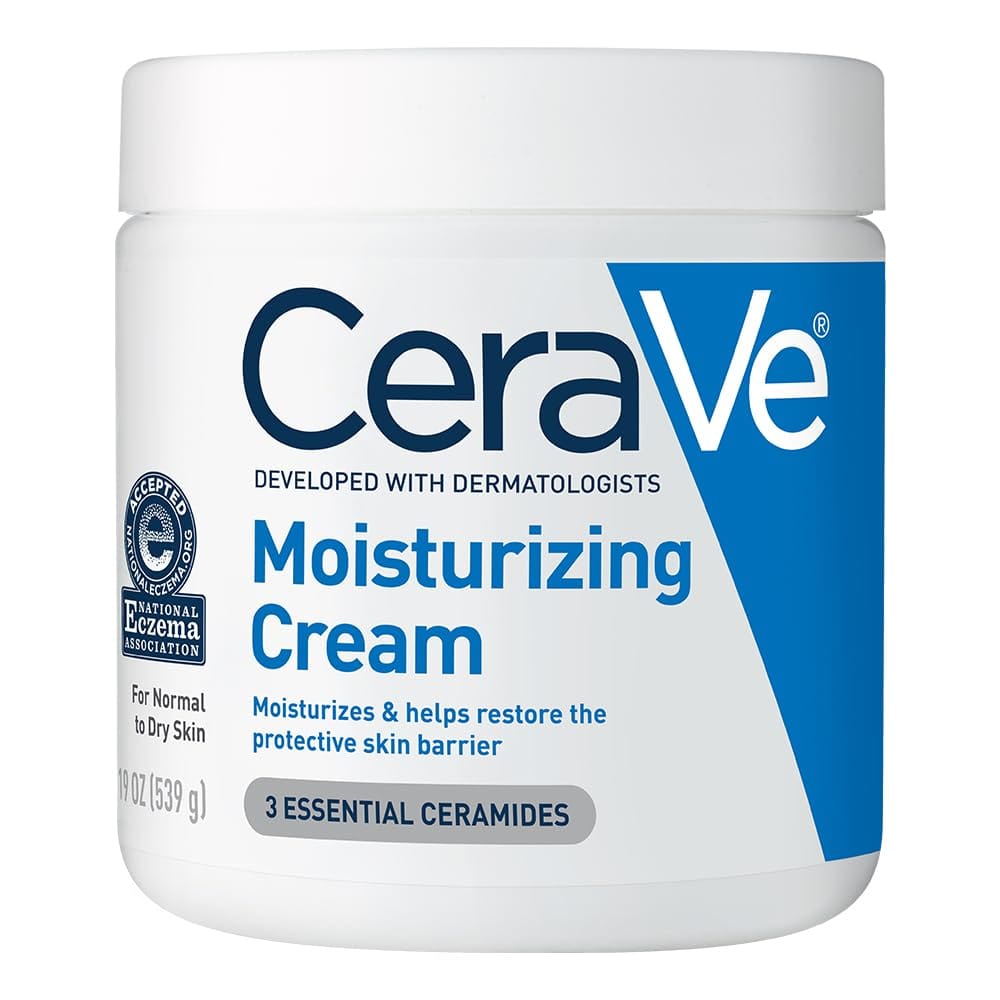
1. CeraVe Moisturizing Cream
CeraVe Moisturizing Cream contains three essential ceramides combined with cholesterol and fatty acids in a cream base. It includes all three functional categories: glycerin as a humectant, ceramides as emollients, and petrolatum as an occlusive. The MVE delivery technology releases ingredients gradually throughout the day.
Best for: Dry, very dry, and eczema-prone skin.
Product pick
CeraVe Moisturizing Cream
Why it fits: Three essential ceramides, cholesterol, and MVE delivery. Complete humectant-emollient-occlusive profile in one cream.
Watch-out: Check the ingredient list and introduce it slowly if your skin is reactive.
Shop on Amazon →As an Amazon Associate, we earn from qualifying purchases.
✦ As an Amazon Associate, we earn from qualifying purchases.
🧠
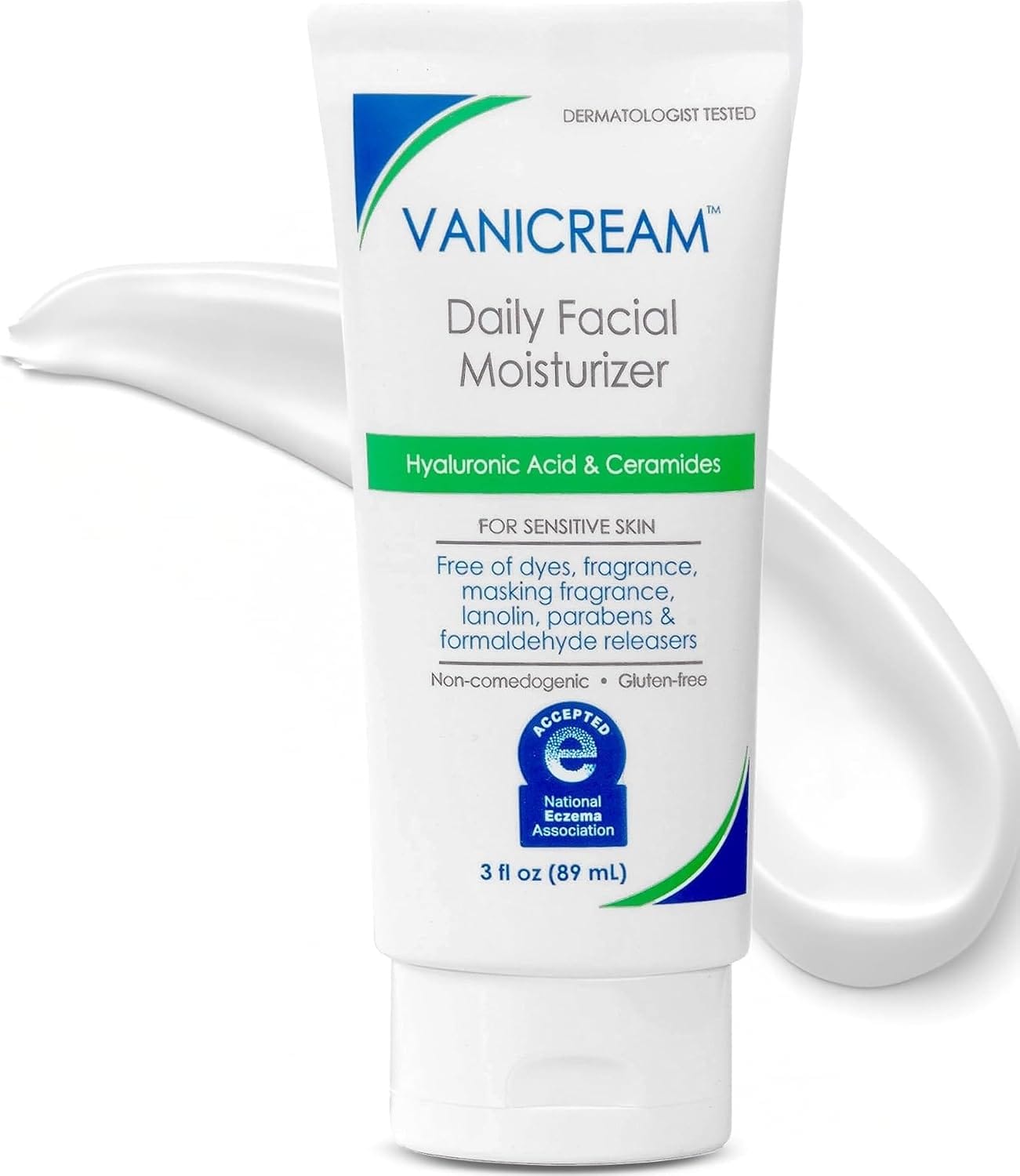
2. Vanicream Daily Facial Moisturizer
Vanicream Daily Facial Moisturizer contains ceramides and hyaluronic acid in a base formulated without dyes, fragrance, lanolin, parabens, or formaldehyde. It provides humectant hydration through hyaluronic acid, emollient support through ceramides, and light occlusive protection through dimethicone.
Best for: Sensitive and reactive skin. Also suitable for combination skin seeking a balanced daily moisturizer.
Product pick
Vanicream Daily Facial Moisturizer
Why it fits: Ceramides, hyaluronic acid, and minimal ingredient list. Fragrance-free and dye-free for reactive skin.
Watch-out: Check the ingredient list and introduce it slowly if your skin is reactive.
Shop on Amazon →As an Amazon Associate, we earn from qualifying purchases.
✦ As an Amazon Associate, we earn from qualifying purchases.
🌐
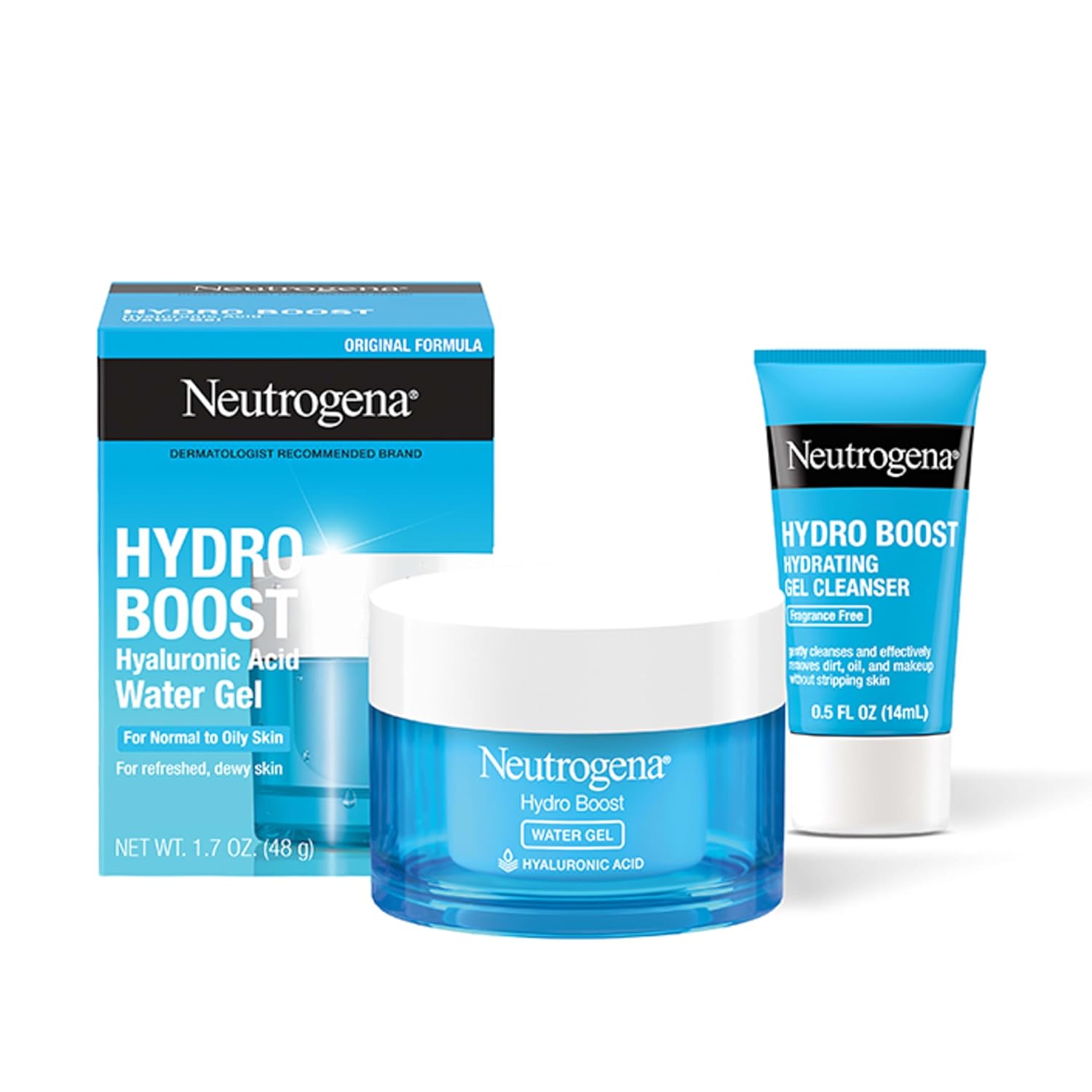
3. Neutrogena Hydro Boost Water Gel
Neutrogena Hydro Boost Water Gel uses hyaluronic acid as the primary humectant in a lightweight, oil-free gel base. It contains glycerin and dimethicone for balanced hydration without heavy emollients. The gel formula absorbs quickly and leaves no visible residue.
Best for: Oily and combination skin. Also suitable for normal skin seeking a lightweight daytime moisturizer.
Product pick
Neutrogena Hydro Boost Water Gel
Why it fits: Hyaluronic acid gel with oil-free formula. Lightweight hydration that absorbs instantly without residue.
Watch-out: Check the ingredient list and introduce it slowly if your skin is reactive.
Shop on Amazon →As an Amazon Associate, we earn from qualifying purchases.
✦ As an Amazon Associate, we earn from qualifying purchases.
💧
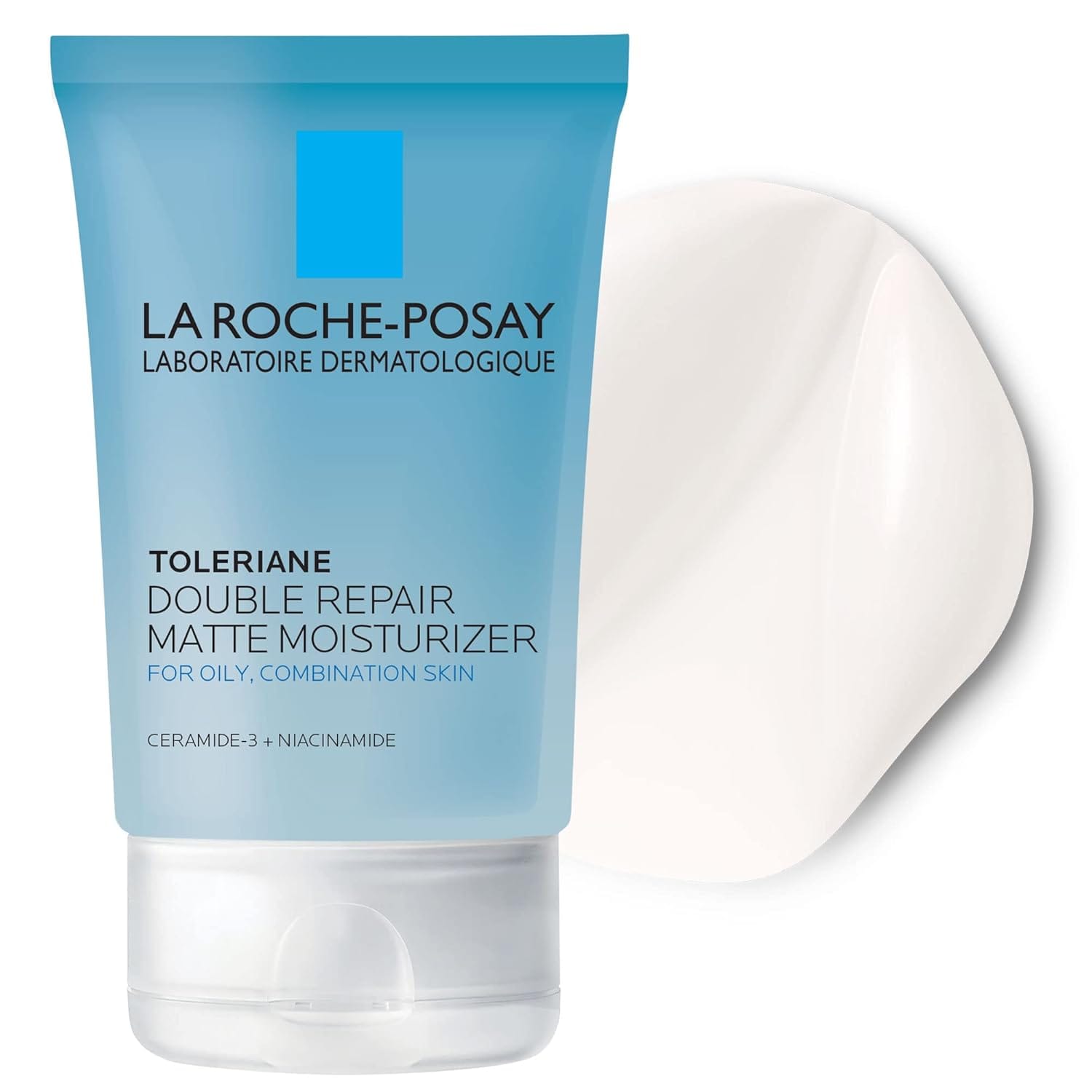
4. La Roche-Posay Toleriane Double Repair Matte Moisturizer
This mattifying moisturizer contains niacinamide, ceramide NP, and glycerin. It is formulated specifically for oily and acne-prone skin. The matte finish helps control shine throughout the day without causing dryness or flaking.
Best for: Oily and acne-prone skin. Also useful for those who dislike the feel of traditional moisturizers.
Product pick
La Roche-Posay Toleriane Double Repair Matte
Why it fits: Niacinamide, ceramide NP, and matte finish technology. Oil-controlling hydration for acne-prone skin.
Watch-out: Check the ingredient list and introduce it slowly if your skin is reactive.
Shop on Amazon →As an Amazon Associate, we earn from qualifying purchases.
✦ As an Amazon Associate, we earn from qualifying purchases.
🌿
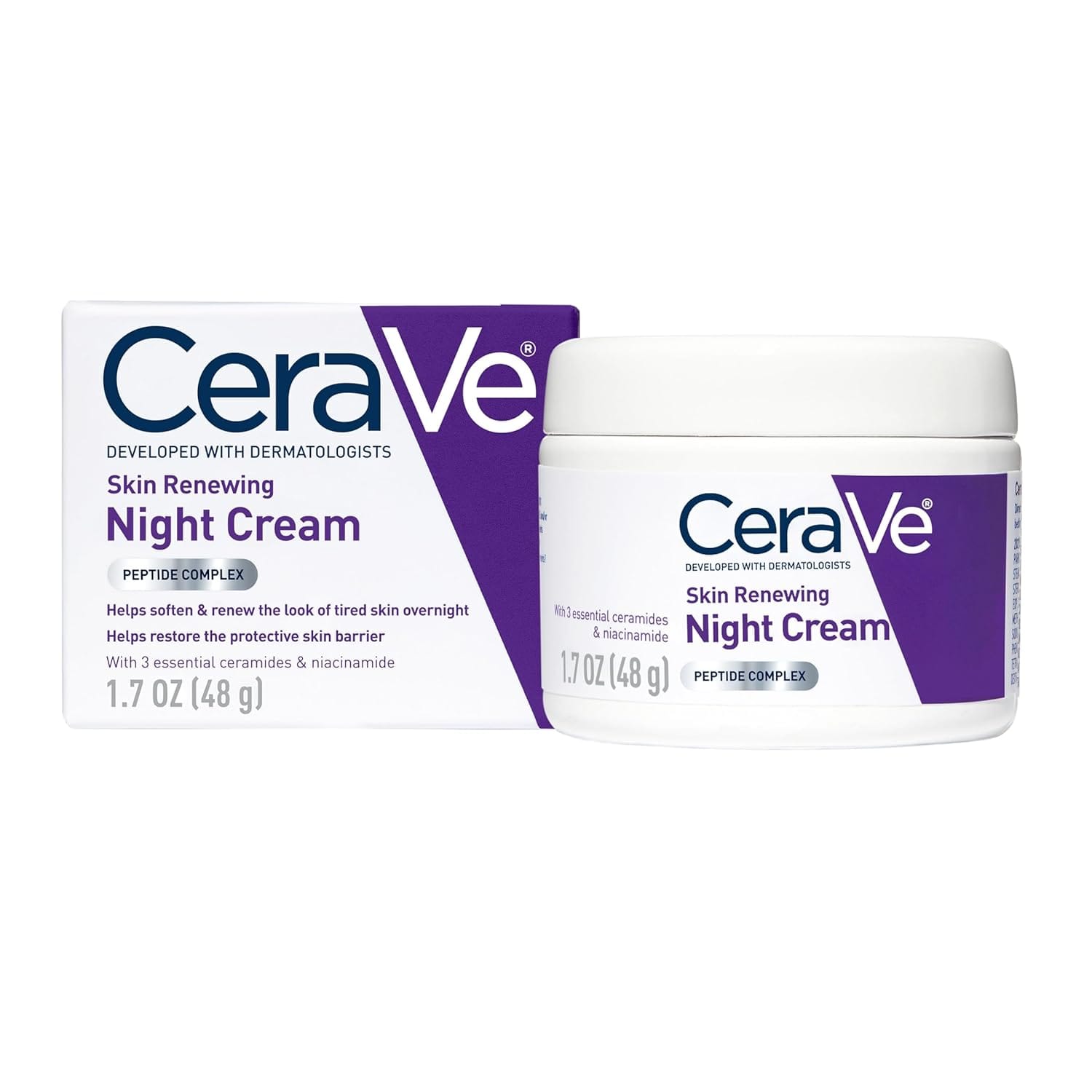
5. CeraVe Skin Renewing Night Cream
This night cream is the safer direct Amazon.com choice for the mature-skin slot because the SkinCeuticals product did not have a verified direct Amazon.com product page. CeraVe Skin Renewing Night Cream uses ceramides, hyaluronic acid, niacinamide, and a peptide complex in a richer overnight texture.
Best for: Mature, dry, or tired-looking skin that needs a richer overnight moisturizer without fragrance.
Product pick
CeraVe Skin Renewing Night Cream
Why it fits: Ceramides, hyaluronic acid, niacinamide, and peptides. A richer night cream for dry or mature-looking skin.
Watch-out: Check the ingredient list and introduce it slowly if your skin is reactive.
Shop on Amazon →As an Amazon Associate, we earn from qualifying purchases.
✦ As an Amazon Associate, we earn from qualifying purchases.
🎨
6. Aveeno Calm + Restore Oat Gel Moisturizer
Aveeno Calm + Restore uses prebiotic oat and feverfew to calm sensitive skin. The gel-cream texture provides humectant hydration without heavy occlusion, making it suitable for sensitive skin that still has some oiliness.
Best for: Sensitive and reactive skin types seeking lightweight hydration.
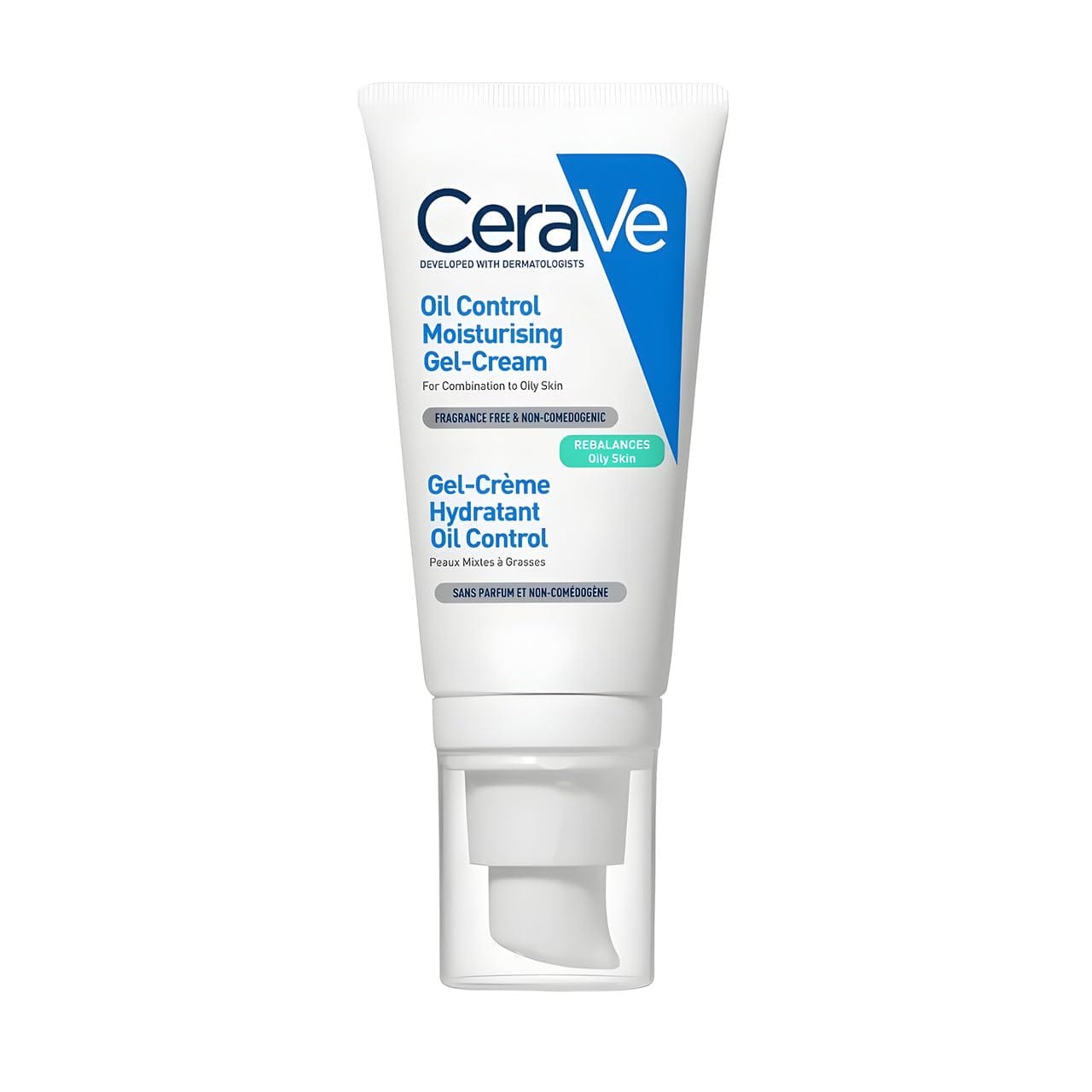
7. CeraVe Oil Control Moisturizing Gel-Cream
CeraVe Oil Control Gel-Cream contains ceramides, niacinamide, and a patented Oil Control Technology. It provides barrier support while absorbing excess surface oil. The gel-cream texture makes it suitable for combination skin.
Best for: Combination and oily skin types.
Product pick
CeraVe Oil Control Gel-Cream
Why it fits: Ceramides, niacinamide, and Oil Control Technology. Barrier support that absorbs excess surface oil.
Watch-out: Check the ingredient list and introduce it slowly if your skin is reactive.
Shop on Amazon →As an Amazon Associate, we earn from qualifying purchases.
✦ As an Amazon Associate, we earn from qualifying purchases.
🧠
How to Apply Moisturizer for Maximum Effectiveness
Product selection determines the ceiling of your results. Application technique determines whether you reach that ceiling.
The 60-Second Rule
Apply moisturizer within 60 seconds of cleansing while the skin is still damp. This allows humectants to draw water from the surface moisture into the deeper layers. Applying to dry skin reduces absorption significantly.
The Correct Amount
Most people use too little moisturizer. A nickel-sized amount for the face and another nickel-sized amount for the neck is the standard recommendation. For dry skin, increase the amount slightly. For oily skin, the same amount with a lighter texture is appropriate.
Seasonal Adjustments
Your moisturizer should change with the seasons. In humid summer months, a gel or gel-cream is sufficient. In dry winter months, a richer cream or balm is necessary to maintain barrier function. If you use only one moisturizer year-round, you are likely over-hydrating in summer and under-hydrating in winter.
For a comprehensive overview of gel-based options, see our guide to the best gel moisturizers for every skin type.
What the Research Says About Moisturizers
A 2005 review in the Journal of Dermatological Treatment examined the role of emollients and moisturizers in dry skin barrier disorders. The authors found that moisturizers with a balanced combination of humectants, emollients, and occlusives improved barrier function more effectively than single-category products, and that formulations containing physiological lipids such as ceramides produced superior long-term results compared to non-physiological alternatives (PubMed, 14572299).
The American Academy of Dermatology confirms that moisturizers are not cosmetic luxuries but essential tools for maintaining skin barrier health. Dry skin, regardless of its cause, benefits from consistent moisturizer use with the correct formulation category (AAD, How to Pick the Right Moisturizer).
✔ Your Clear Skin Checklist
- Step 1: Identify your skin’s current condition, not just your lifelong skin type. Is it dehydrated, congested, irritated, or balanced right now?
- Step 2: Choose a texture based on your current condition. Gel for oily or dehydrated, cream for dry, gel-cream for combination or sensitive.
- Step 3: Check the ingredient list for ingredients from at least two of the three functional categories (humectant, emollient, occlusive).
- Step 4: Apply within 60 seconds of cleansing on damp skin. Use a nickel-sized amount for face and neck.
- Step 5: Adjust with the seasons. Switch to a lighter gel in summer and a richer cream in winter.
- Step 6: Give it two weeks. Skin adaptation to a new moisturizer takes up to 14 days. Do not judge a formula after one use.
Frequently Asked Questions About Choosing a Moisturizer
How do I know if a moisturizer is right for my skin?
Pay attention to how your skin feels two to three hours after application. If it feels tight or looks flaky, it lacks enough emollient or occlusive content. If it feels greasy or develops congestion, it has too many heavy emollients. The right moisturizer leaves your skin feeling comfortable, not tight and not greasy.
Can I use the same moisturizer day and night?
Yes, but it is not ideal. Daytime moisturizers should be lighter and layer well under sunscreen and makeup. Nighttime moisturizers can be richer since there is no need to worry about texture or SPF layering. Many people find that using a gel in the morning and a cream at night produces the best results.
Should I change my moisturizer when the seasons change?
Yes. Humidity levels and temperature affect how well a moisturizer performs. In summer, a lightweight gel or gel-cream is sufficient. In winter, a cream or balm provides the occlusive protection needed to prevent water loss in dry air.
Is a higher price always better for moisturizers?
No. Many drugstore moisturizers, including CeraVe and Vanicream, are formulated by dermatologists and backed by clinical testing. The ingredient list and formulation quality matter more than the price tag. A $20 moisturizer with the right humectant-emollient-occlusive balance will outperform a $100 product with the wrong ratio.
Do I need moisturizer if I have oily skin?
Yes. Oily skin still needs hydration. When oily skin is not moisturized, it can produce even more oil to compensate. The key is using a lightweight, water-based gel or gel-cream that provides hydration without adding heavy oils or emollients.
This article is for informational purposes only and does not replace professional dermatological advice.
How we research and correct content: Editorial Policy.