Best Acne Serums: Choose the Right Active First
Choose an acne serum by breakout type and active ingredient, then introduce one treatment without stacking irritation.

In this guide
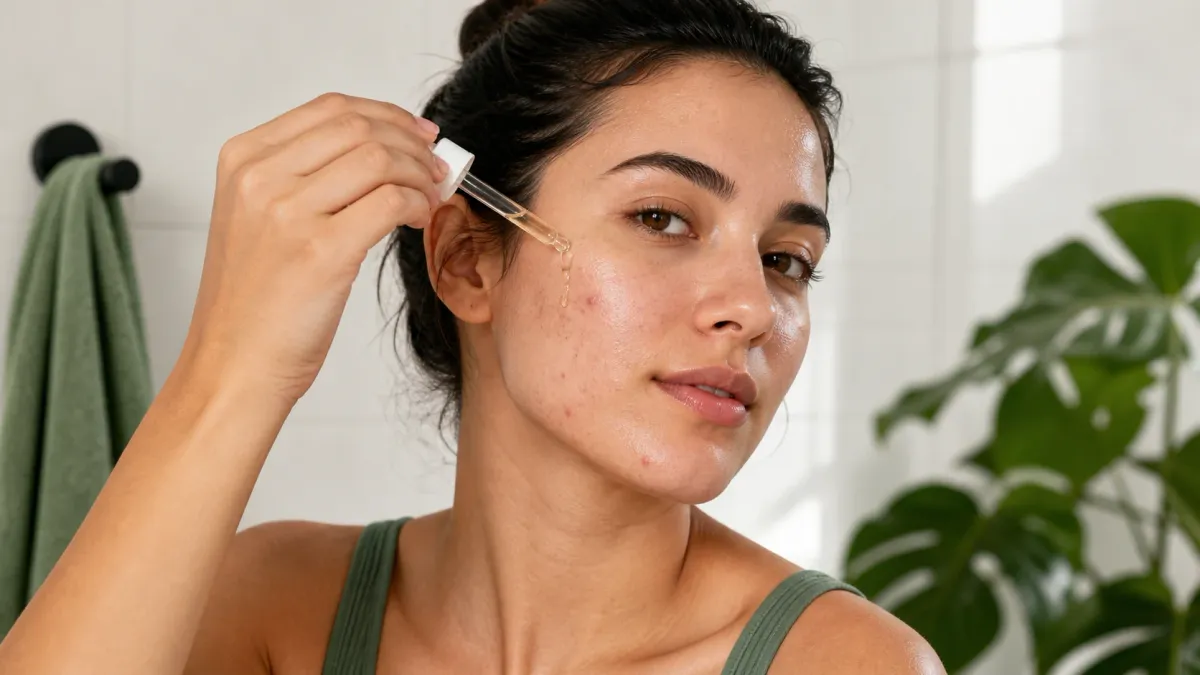
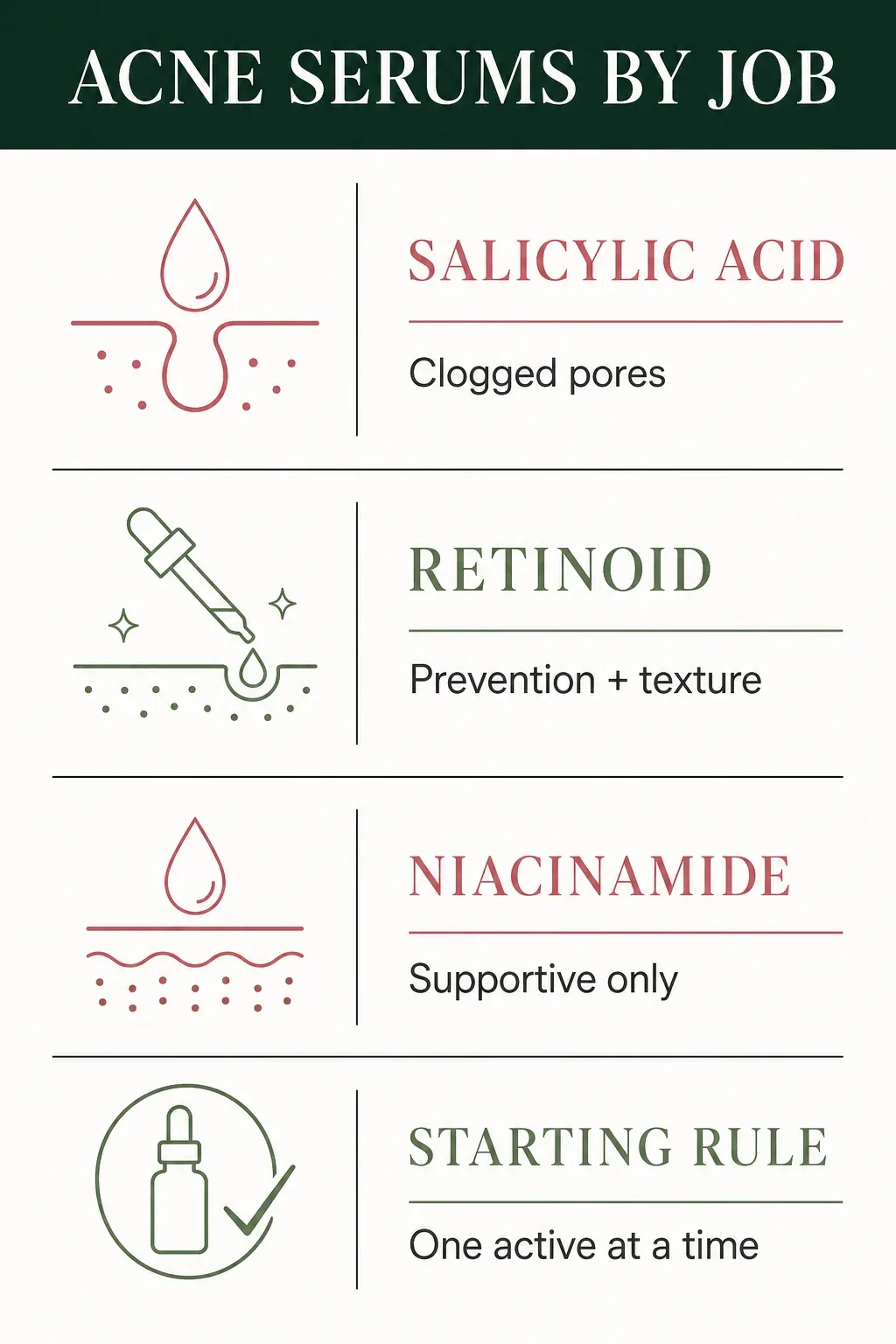
Choose an acne serum by job: salicylic acid for blackheads and clogged pores, a retinoid route for recurring comedones and texture, and niacinamide only as supportive care. Do not use multiple leave-on acids or two retinoids together. Start one active two or three nights weekly, moisturize and use SPF 30+. Deep, painful or scarring acne needs professional treatment.
Quick Summary
- The active matters more than the word serum.
- Salicylic acid fits clogged pores; retinoids fit prevention and texture.
- Niacinamide supports a routine but is not a complete moderate-acne treatment.
- Introduce one active at a time and stop for persistent burning or raw peeling.
First Decide Whether You Need an Acne Serum
The word serum describes texture, not treatment quality. Salicylic acid, retinoids and benzoyl peroxide have acne evidence, but they are sold as liquids, serums, gels, lotions and washes. Choose the active that matches the breakout pattern before choosing the bottle style.
The American Academy of Dermatology acne guideline strongly recommends benzoyl peroxide, topical retinoids and combinations of topical therapies. Salicylic acid and azelaic acid receive conditional recommendations. Niacinamide may support comfort and oil balance in a cosmetic formula, but it should not be presented as an equal substitute for established acne medication.
| Main concern | Best serum job | When it fits | When to choose something else |
|---|---|---|---|
| Blackheads and clogged texture | Salicylic acid leave-on | Oily or congestion-prone skin | Skin is already raw or peeling |
| Recurring comedones and post-acne texture | Retinol or acne retinoid route | Stable nighttime routine | Pregnancy or active barrier flare |
| Redness and oil support | Niacinamide support | As a gentle extra | Moderate inflammatory acne needs treatment |
| Red inflamed pimples | Usually benzoyl peroxide | Wash or leave-on treatment | Do not force the problem into a serum format |
One well-chosen active is easier to evaluate than a serum stack. Keep cleanser, moisturizer and sunscreen stable for two weeks, then introduce the serum below maximum frequency. If the face burns when water or bland moisturizer touches it, pause optional actives first.
Our acne cleanser guide helps determine whether an active is already present in the wash step. A salicylic acid cleanser plus a 2% leave-on serum plus an exfoliating toner may create duplicate irritation without a proportional benefit.
Acne Serum Ingredients by Job
Salicylic acid for clogged pores
Salicylic acid is oil-soluble and can work within the follicular environment, which makes it a logical choice for blackheads, whiteheads and congestion. A 2% leave-on formula is not automatically gentle. It can still cause dryness, especially when paired with retinoids, benzoyl peroxide or scrubs.
Start two or three nights per week. Apply a small amount over the acne-prone area rather than repeatedly dabbing several layers on one spot. Reduce frequency when tightness, shiny-raw skin or persistent peeling develops.
Retinoids for prevention and texture
Retinoids normalize cell turnover and help prevent clogged follicles. Adapalene is an over-the-counter acne medication in the United States, while cosmetic retinol products are generally milder and marketed for texture or post-acne appearance. They are not interchangeable in strength or evidence.
The serum pick below uses cosmetic retinol, not adapalene. It fits someone who wants a gentler post-acne texture route and is not already using another retinoid. People who need established acne treatment should read the acne treatment options guide or discuss adapalene with a clinician or pharmacist.
Niacinamide as a supporting ingredient
Niacinamide can support barrier function, uneven tone and sebum regulation in a well-formulated product. Higher percentages are not automatically better. If niacinamide already appears in the moisturizer and sunscreen, a separate 10% serum may duplicate the same role.
Use niacinamide as support, not as the sole plan for painful inflammatory acne. A supportive serum should make the routine easier to tolerate, not delay treatment that has stronger evidence.
Azelaic acid for acne and post-acne marks
Azelaic acid can address acne and post-inflammatory discoloration. It is commonly sold as a suspension, gel or prescription foam rather than a classic watery serum. That is another reason to choose by active and vehicle instead of searching only for “serum.”
Azelaic acid can sting at first, especially on damp or recently exfoliated skin. Introduce it on separate nights from other leave-on acids and use a moisturizer. Our azelaic acid product guide compares format and strength.
Compare Acne Serum Formats
| Format | Typical feel | Best fit | Main limitation |
|---|---|---|---|
| Water-based acid serum | Light and fast-drying | Oily skin and simple routines | Can sting or pill with multiple layers |
| Anhydrous salicylic serum | Oil-like and slower-spreading | Users who dislike watery acid sting | May feel slick and is still a 2% acid |
| Creamy retinol serum | Lotion-serum texture | Nighttime post-acne texture support | Irritation and pregnancy restrictions |
| Niacinamide serum | Usually light gel | Supportive oil/barrier step | Not a complete moderate-acne treatment |
The Ordinary's current Salicylic Acid 2% Anhydrous Solution places the acid in a water-free, squalane-based format and carries a sun-sensitivity warning. The unusual vehicle may feel gentler to some users, but it does not remove the need for slow introduction.
Paula's Choice positions its 2% BHA Liquid Exfoliant as a leave-on liquid rather than a serum. It belongs in this guide because the job is the same: a 2% salicylic acid leave-on for clogged pores.
Three Acne Serums With Different Jobs
These picks are deliberately not three versions of the same formula. Two are salicylic-acid routes with different vehicles, and one is a retinol route for post-acne texture. Do not use all three together.
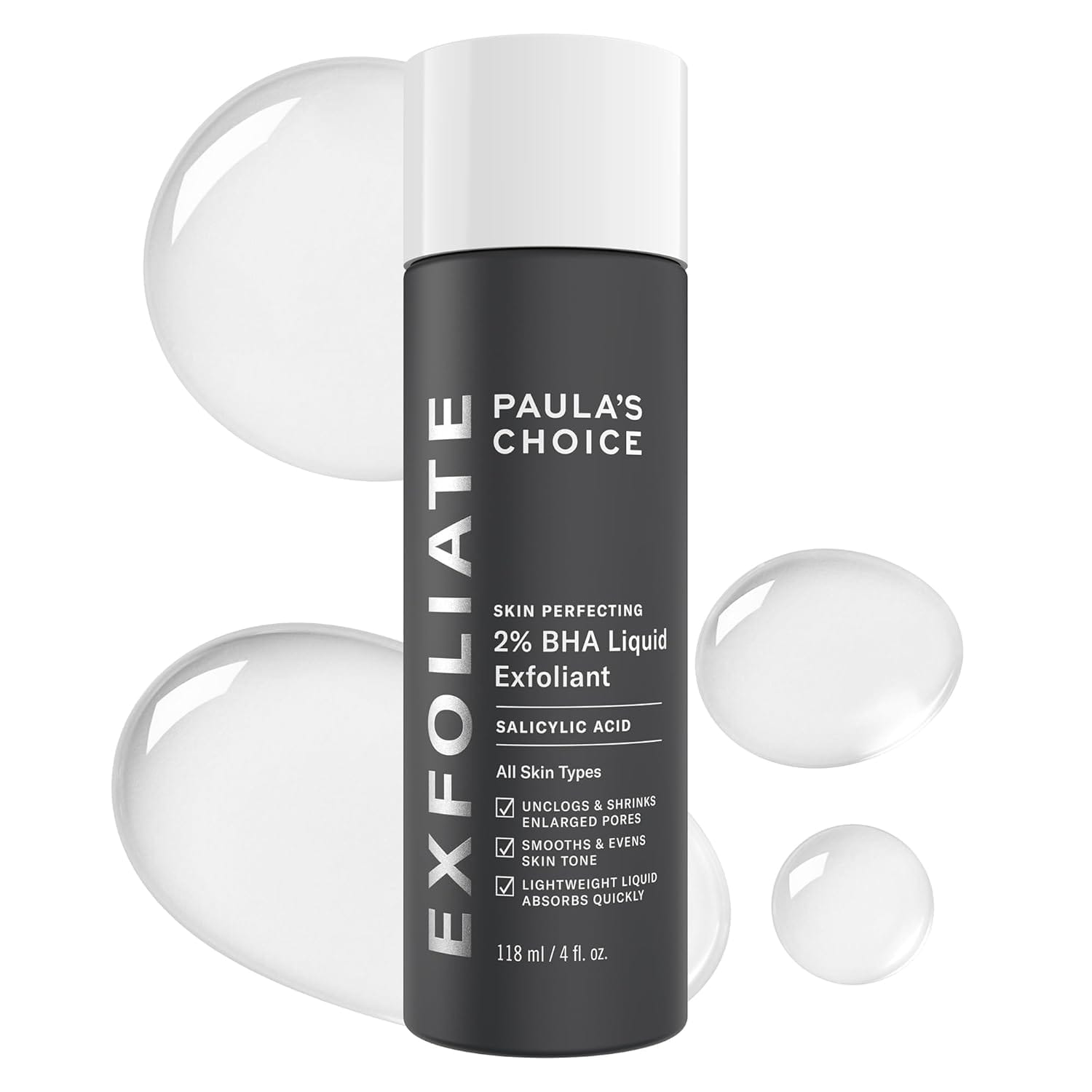
Paula's Choice Skin Perfecting 2% BHA Liquid
Blackheads, visible congestion and oily texture that can tolerate a water-light leave-on acid.
The product has one clear job: 2% salicylic acid exfoliation across a clogged area rather than an instant spot-drying promise.
Watch-out: It is a liquid exfoliant, not a classic serum, and can irritate when stacked with retinoids or other acids.
View on AmazonAs an Amazon Associate, SkinOptimizer may earn from qualifying purchases. Prices, sellers and availability can change.
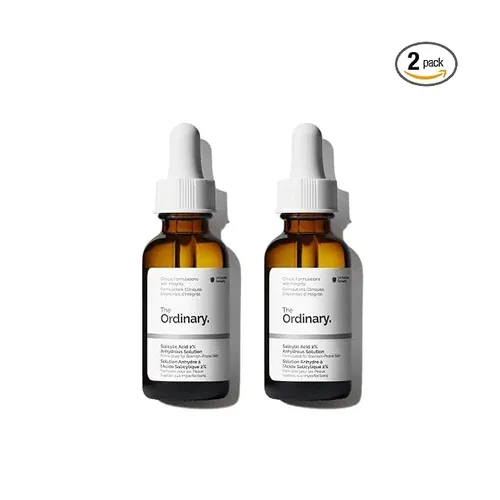
The Ordinary Salicylic Acid 2% Anhydrous Solution
Clogged, blemish-prone skin that prefers an anhydrous squalane vehicle over a watery acid solution.
It offers the same 2% salicylic-acid job in a distinctly different water-free texture, which creates a meaningful format choice.
Watch-out: The oily feel will not suit everyone. It remains an active acid and should not be combined with several exfoliants at once.
View on AmazonAs an Amazon Associate, SkinOptimizer may earn from qualifying purchases. Prices, sellers and availability can change.
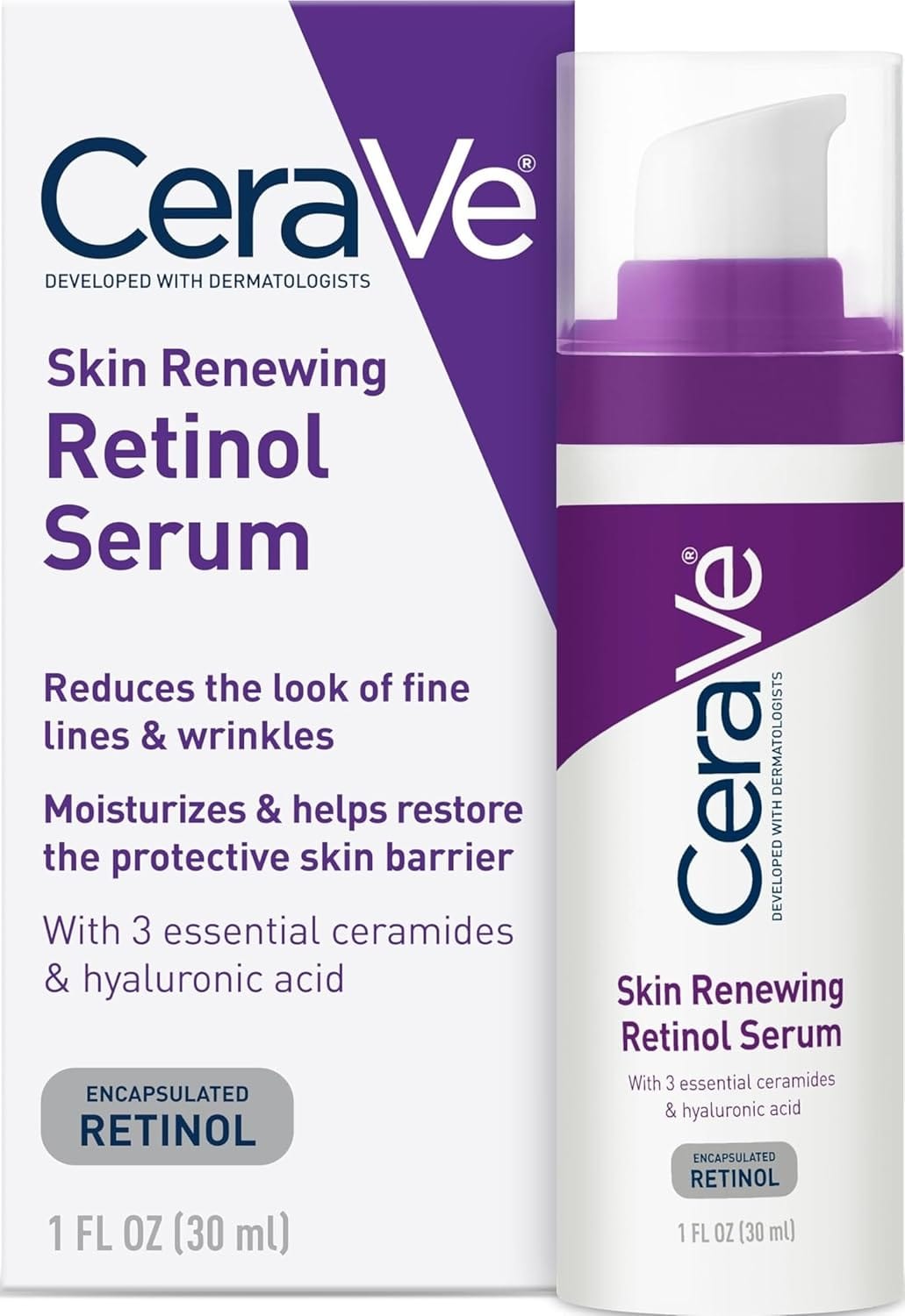
CeraVe Skin Renewing Retinol Serum
A retinol beginner focused on texture and marks who is not already using adapalene or another retinoid.
Encapsulated retinol is paired with ceramides and hyaluronic acid in a fragrance-free nighttime serum.
Watch-out: Retinol can irritate and is not a rapid spot treatment. Avoid retinoids during pregnancy and use daily sunscreen.
View on AmazonAs an Amazon Associate, SkinOptimizer may earn from qualifying purchases. Prices, sellers and availability can change.
How to Introduce an Acne Serum
Week one: protect the baseline
Keep cleanser, moisturizer and sunscreen unchanged. Patch test the new product on a small area, then use it once at night. Do not add an acne cleanser, peel or mask in the same week. The goal is to detect irritation before it spreads across the face.
Weeks two to four: build a stable frequency
Use salicylic acid two or three non-consecutive nights weekly, or retinol one or two nights weekly. Increase only when the skin remains comfortable. More frequent application is not useful when it causes burning that forces a complete stop.
Weeks six to twelve: judge the right outcome
Compare blackheads, clogged texture and new-breakout frequency in similar lighting. Do not expect a serum to erase deep scars. Post-acne color and shallow texture can improve gradually, while pitted or raised scars usually need procedural advice.
The AAD's updated acne guideline summary emphasizes combining therapies with different mechanisms for meaningful acne. Combination does not mean starting several harsh products on the same night. It means constructing a tolerable plan, often with clinician guidance when acne is moderate or severe.
Build a Simple Morning and Night Routine
| Step | Morning | Night |
|---|---|---|
| Cleanse | Gentle cleanser or water rinse | Remove sunscreen and makeup gently |
| Treat | Usually none at first | One serum on scheduled nights |
| Moisturize | Light non-comedogenic lotion or cream | Enough to prevent tightness |
| Protect | Broad-spectrum SPF 30+ | No sunscreen during sleep |
Morning sunscreen matters because inflammation and UV exposure can deepen post-acne discoloration. Choose a formula you can apply generously. The acne-prone sunscreen guide compares lightweight and mineral-first options.
At night, use only one primary acne active until the routine is stable. If a dermatologist prescribes adapalene, tretinoin, clindamycin or another treatment, ask before adding a cosmetic retinol or acid serum. Duplicating mechanisms can increase irritation without improving adherence.
Who Should Skip an Acne Serum for Now?
Skip optional serums when the face has widespread stinging, shiny-raw patches, swelling, active eczema, severe rosacea or painful peeling. Use a gentle cleanser, moisturizer and sunscreen while arranging professional advice. The sensitive-skin barrier reset provides a simpler temporary routine.
People who are pregnant or trying to become pregnant should avoid retinoids and discuss acne treatment with a clinician. Salicylic acid use during pregnancy also deserves individualized advice, especially for large areas or frequent use.
Deep painful nodules, scarring, rapidly worsening acne or significant emotional distress are reasons to see a dermatologist. A serum shopping list should not delay effective prescription treatment.
Choose the Starting Route by Skin Type
Oily skin with blackheads
A salicylic acid leave-on is the most direct serum-style choice. Start two nights weekly and keep the morning routine simple. If oiliness is accompanied by tightness after cleansing, use a gentler wash rather than increasing acid frequency. The daily routine for oily skin shows how moisturizer and sunscreen prevent an oil-control routine from becoming a stripping routine.
Dry skin with occasional clogged pores
Use salicylic acid only on the clogged zone or at a lower weekly frequency. Apply moisturizer before or after according to product directions and tolerance. An anhydrous formula can feel less immediately sharp, but its 2% active level can still over-exfoliate dry skin.
Retinol is not automatically the gentler choice. Both salicylic acid and retinoids can dry the surface. Choose one, stabilize it for several weeks and use the dry-skin moisturizer guide to correct the supporting cream.
Sensitive or reactive acne-prone skin
Begin with cleanser, moisturizer and sunscreen only. If all three are comfortable for two weeks, introduce one active to a small area once weekly. A cosmetic niacinamide product can be supportive, but even niacinamide can sting at high percentages or in a complex formula.
When bland products already sting, follow the damaged-barrier warning signs before adding an acid. Widespread burning, swelling or a persistent rash may be dermatitis rather than ordinary acne sensitivity.
Post-acne marks without active breakouts
First identify whether the mark is flat red, flat brown or a true depressed or raised scar. Sunscreen is essential for discoloration. Retinol or azelaic acid may support gradual tone and texture change, but a serum will not fill a pitted scar. For flat brown marks, see the hyperpigmentation routine.
Take a baseline photograph in indirect daylight and compare at eight and twelve weeks. Daily mirror checking exaggerates short-term changes in redness, lighting and hydration. Stop when discomfort is increasing even if the breakout count has not yet changed.
Common Acne Serum Mistakes
- Buying by the word serum: the active and vehicle matter more than the format label.
- Using two 2% salicylic products together: duplication increases dryness.
- Calling a patch a serum: hydrocolloid is a surface covering for selected whiteheads.
- Using cosmetic retinol with adapalene: this duplicates the retinoid job.
- Expecting niacinamide to clear cystic acne: support is not a complete treatment plan.
- Applying acids to raw skin: burning is a warning, not proof of effectiveness.
- Changing the whole routine: too many variables make reactions impossible to trace.
The Bottom Line
The best acne serum is the one that fills a missing treatment job. Choose salicylic acid for clogged pores, a retinoid route for prevention and texture, and niacinamide only as supportive care. Do not buy a serum because the format sounds concentrated. Introduce one active slowly, protect the barrier and seek professional treatment for deep, painful or scarring acne.
Frequently Asked Questions
Which serum is best for acne?
Use salicylic acid for blackheads and clogged pores, a retinoid route for prevention and texture, and niacinamide as supportive care. Inflamed acne may need benzoyl peroxide or a prescription plan rather than a serum.
Can I use an acne serum every day?
Not necessarily. Start an acid or retinol serum two or three nights weekly and increase only when the skin remains comfortable. Daily use is not better when it causes persistent irritation.
Can I use salicylic acid and retinol together?
They can exist in one long-term plan, but beginners should introduce them separately and usually use them on different nights. Stop or reduce frequency if the skin becomes raw, painful or very flaky.
Does niacinamide clear acne?
Niacinamide can support barrier function, oil balance and uneven tone, but it should not replace established acne treatments for moderate inflammatory or scarring acne.
How long do acne serums take to work?
Judge tolerance in the first two weeks and clogged pores or new-breakout frequency over six to twelve weeks. Deep scars and cystic acne require different expectations and often professional care.