Best Cleansers for Acne-Prone Skin: What to Use and Avoid
Choose the best cleansers for acne-prone skin by breakout type, ingredient, and sensitivity so you can cleanse without stripping your skin barrier.

In this guide
Quick answer: The best cleansers for acne-prone skin are gentle enough to protect the barrier but targeted enough for your breakout pattern. Choose a mild gel or cream cleanser if your skin stings or feels tight, a salicylic acid cleanser if clogged pores and blackheads are the main issue, and a low-strength benzoyl peroxide wash if red inflamed pimples are frequent. Do not use the strongest acne cleanser twice daily just because your skin breaks out.
For two widely available gentle-cleanser brands, compare CeraVe and Cetaphil by exact formula and skin type. Neither brand name alone guarantees an acne-friendly fit.
For red inflammatory pimples or body acne, compare our best benzoyl peroxide washes from 2.5% to 10%. It explains face-versus-body strength, contact time, dryness, and fabric bleaching.
If clogged pores are the deciding problem, compare our best salicylic acid cleansers by 0.5% or 2% strength. The guide also explains when a lower frequency or a plain cleanser is the safer choice.
The best cleansers for acne-prone skin are not always the strongest ones. A cleanser sits on the skin for a short time, then rinses away.
When makeup or water-resistant sunscreen is the problem, use a first cleanse instead of making the acne wash harsher. Our cleansing balm comparison for acne-prone and sensitive skin shows which formulas rinse clean and where residue or fragrance may be a drawback.
That means it should support the rest of your acne routine, not act like the whole treatment plan. If it leaves your face tight, shiny, burning, or flaky, it may make breakouts harder to manage by weakening the skin barrier.
Cleansing is only one acne variable. The sugar, high-glycemic diet and acne guide shows how to examine diet without replacing direct treatment or creating unnecessary restriction.
This guide takes a decision-first approach. Instead of ranking cleansers only by hype, we will match cleanser type to the problem you are trying to solve.
That may be oil, clogged pores, inflamed pimples, makeup removal, sensitivity, or a routine that already includes retinoids. A person using adapalene at night does not need the same cleanser as someone with oily skin and blackheads but no leave-on acne treatment.
A cleanser cannot carry the entire acne plan. Our simple acne-prone AM and PM routine shows how to add one targeted active, moisturizer and sunscreen without stacking irritation.
Quick summary:
In This Guide
Need the practical part first? Jump to the cleanser decision table, product picks, ingredient rules, or FAQ.
Watch the cleanser routine in 10 seconds
Use this quick visual reminder before choosing a stronger acne cleanser: cleanse gently, keep the barrier calm, and add actives only when they match the breakout pattern.
Short video guide: a cleanser should support the routine, not punish the skin.
Editorial note: SkinOptimizer is an educational skincare site. We evaluate cleanser choices by ingredient logic, irritation risk, routine fit, and published dermatology guidance. We do not diagnose acne, and persistent, painful, scarring, or sudden acne deserves care from a qualified professional.
Best Cleanser Picks for Acne-Prone Skin
The picks below are organized by use case, not by hype. Each one has a clear role.
You do not need all three. In fact, most acne-prone routines work better when you choose one targeted cleanser and keep the rest of the routine boring.

Vanicream Gentle Facial Cleanser
Why it fits: A non-active, fragrance-free cleanser is the smartest first pick when acne-prone skin also feels tight, reactive, retinoid-dry, or easily irritated.
Watch-out: It is not an acne treatment by itself. Use it as the steady base, then add salicylic acid or benzoyl peroxide only when your skin can tolerate an active.
Check price on Amazon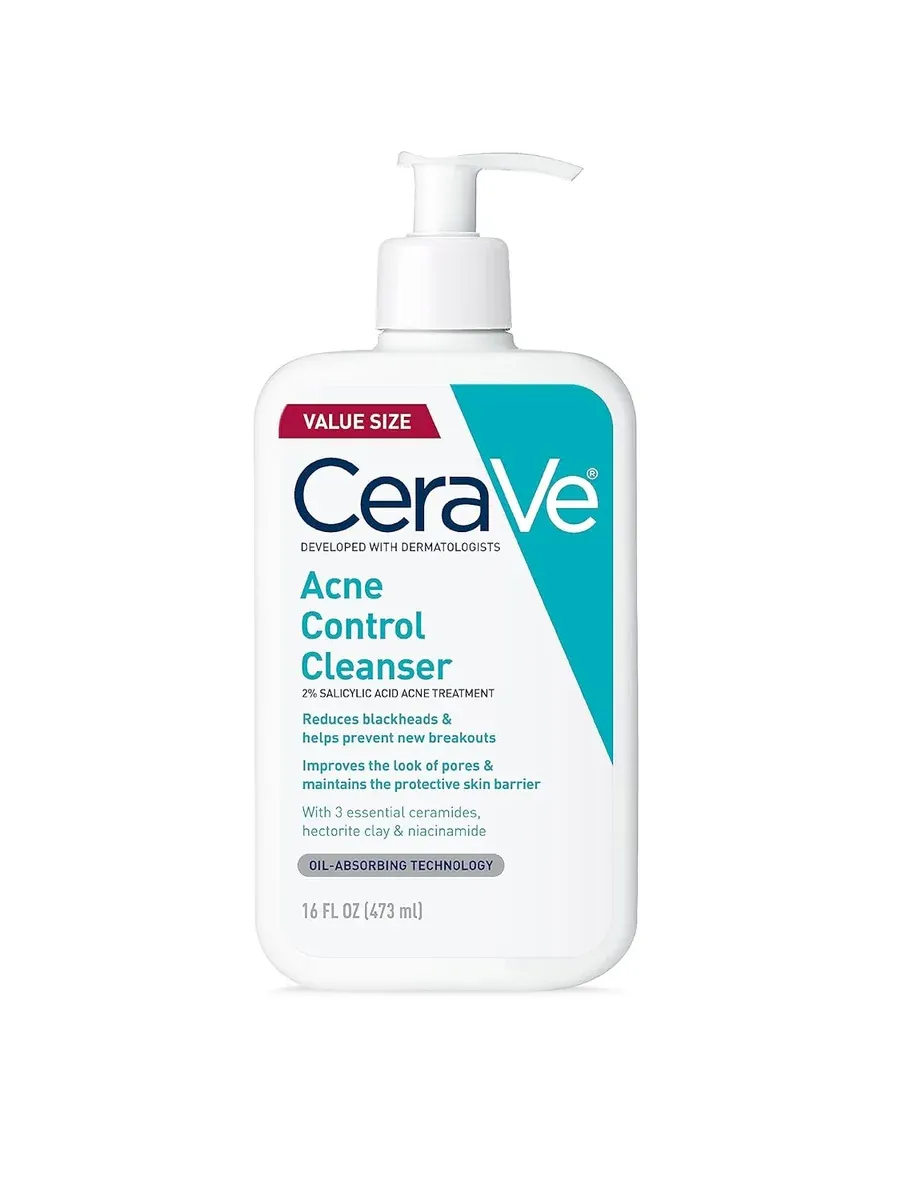
CeraVe Acne Control Cleanser
Why it fits: A salicylic acid cleanser makes sense when the main issue is pore congestion, blackheads, and oily texture rather than burning sensitivity.
Watch-out: Do not pair daily with multiple leave-on acids at the start. If skin gets shiny-raw, reduce frequency.
Check price on Amazon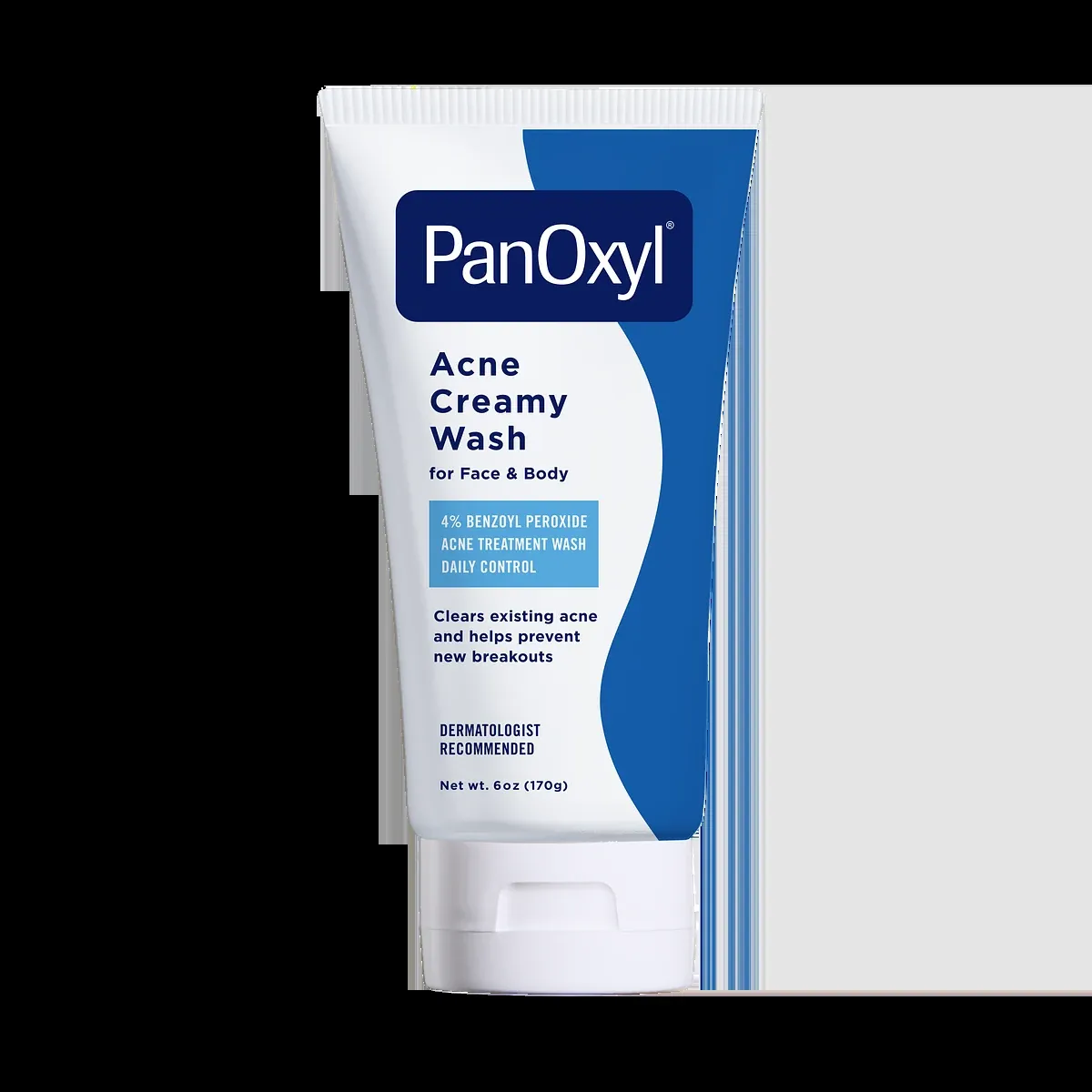
PanOxyl 4% Benzoyl Peroxide Creamy Wash
Why it fits: A 4% benzoyl peroxide wash can be useful for recurring inflamed pimples and can also fit chest, shoulder, or back breakouts.
Watch-out: Keep contact time short at first. More strength is not automatically better for the face.
Check price on AmazonAs an Amazon Associate, we earn from qualifying purchases. Product availability, prices, and packaging can change; always check the current product label before use.
Best Cleansers for Acne-Prone Skin: Choose by Breakout Type
A cleanser should answer one question: what does your skin need before the next step of your routine? For acne-prone skin, that usually means removing sunscreen, oil, sweat, and makeup without leaving the face raw.
For the rest of the routine, our non-comedogenic acne-prone product guide compares a gentle cleanser, active cleanser, moisturizer, sunscreen, BHA and adapalene without treating the label as a zero-breakout guarantee.
Dermatology guidance from the American Academy of Dermatology recognizes ingredients such as benzoyl peroxide and salicylic acid as acne-relevant options. The right format and frequency still matter.
Current product roundups often list many excellent face washes, but they can make acne care feel like a shopping contest. The better first move is to identify your main pattern.
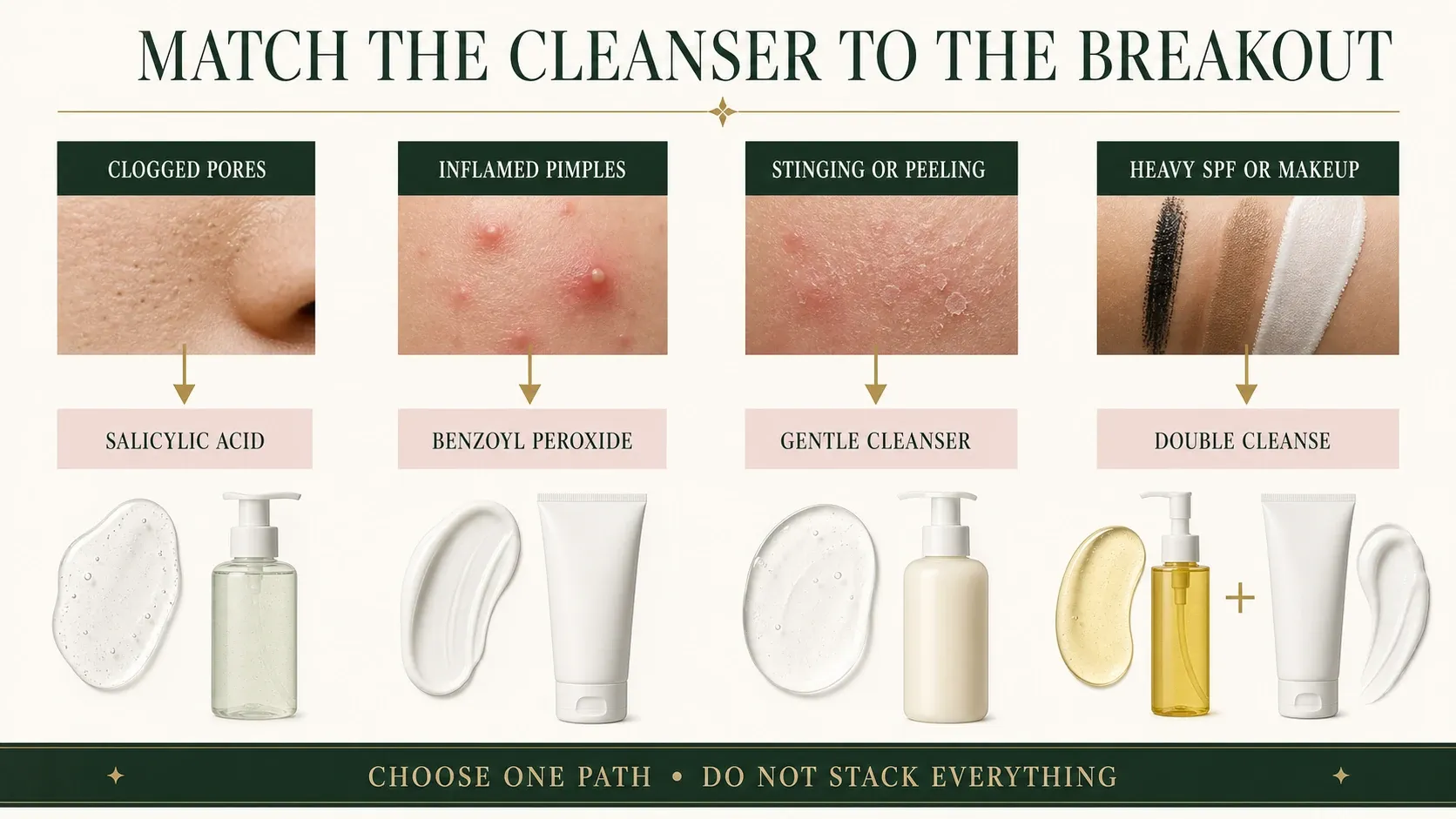
If you mainly get blackheads, closed comedones, and rough texture, a salicylic acid cleanser can make sense. If your acne is red and inflamed, benzoyl peroxide may be more useful.
If your skin burns from almost everything, a bland cleanser is not a failure. It is the base that lets treatment work.
| Skin situation | Best cleanser type | What to avoid |
|---|---|---|
| Blackheads, clogged pores, oily T-zone | Salicylic acid cleanser a few times weekly or once daily if tolerated | Layering acids in cleanser, toner, and serum at the same time |
| Red inflamed pimples, chest or back breakouts | Low-to-moderate benzoyl peroxide wash, used carefully | Leaving it on too long, using white towels only after damage is done |
| Stinging, peeling, retinoid dryness | Gentle non-scrub cleanser with a simple rinse | Foaming until skin feels squeaky or washing more to "dry acne out" |
| Heavy sunscreen or makeup plus breakouts | Balm, oil, or micellar first cleanse followed by a mild second cleanse | Sleeping in sunscreen because acne skin fears richer textures |
What Makes an Acne Cleanser Good in 2026?
A good acne cleanser should rinse clean, leave your face comfortable, and fit around the actives you already use. That sounds simple, but many breakouts get worse because the cleanser is too aggressive.
People often respond to acne by washing longer, scrubbing harder, or using an active cleanser morning and night. That can create the exact cycle they are trying to escape: tightness, more oiliness, irritation, and new bumps that look like acne but behave like barrier stress.
For most routines, cleansing twice daily is enough. Some dry or sensitive faces only need a full cleanse at night with a water rinse in the morning.
Cleveland Clinic's acne cleanser guidance also emphasizes choosing benzoyl peroxide or salicylic acid thoughtfully instead of stacking every possible active at once. This is especially important if your routine includes leave-on products such as adapalene, prescription treatments, exfoliating acids, or strong vitamin C.
Before duplicating an active cleanser, compare the best acne serum routes and decide whether a leave-on salicylic acid or retinoid step is actually missing.
Use the cleanser as one step in a system. If you need help building that system, pair this guide with our acne-focused articles on skincare mistakes that cause acne, retinoids for acne treatment, and sunscreens for acne-prone skin.
The cleanser matters, but it cannot replace a balanced routine.
How to start without making acne worse:
Ingredient Rules: Salicylic Acid, Benzoyl Peroxide, and Gentle Cleansers
Salicylic acid and benzoyl peroxide are the two ingredients most people search for in acne cleansers. They are not interchangeable.
Salicylic acid is oil-soluble and commonly used for clogged pores, whiteheads, and blackheads. Benzoyl peroxide is commonly used for inflammatory acne because it helps reduce acne-related bacteria and has a long history in acne treatment.
The 2024 acne guideline abstract indexed on PubMed lists benzoyl peroxide among strongly recommended topical therapies. Salicylic acid appears as a conditional recommendation in the broader guideline context.
That does not mean every acne-prone face should use an active cleanser every day. A rinse-off active has less contact time than a leave-on treatment, but irritation still counts.
If your cheeks burn when moisturizer touches them, the best acne cleanser may be a basic cleanser for two weeks while you repair the routine. For a deeper reset, read our guide on skin barrier damage and the slower routine approach in starting skincare slowly.
Fast ingredient rule:
| Ingredient | Best fit | Use carefully if |
|---|---|---|
| Salicylic acid | Blackheads, closed comedones, oily texture, clogged pores | You are already using leave-on acids or your skin peels easily |
| Benzoyl peroxide | Inflamed pimples, recurring breakouts, some body acne routines | Your skin is dry, eczema-prone, or you use towels and pillowcases that can bleach |
| Gentle non-active cleanser | Retinoid routines, sensitive skin, barrier repair, morning cleanse | You expect the cleanser alone to clear persistent inflammatory acne |
| Cleansing balm or oil | Removing water-resistant sunscreen, makeup, or heavy base products | It leaves a film and you skip a mild second cleanse afterward |
How Often Should Acne-Prone Skin Use an Active Cleanser?
Start lower than the label allows. If you are new to salicylic acid or benzoyl peroxide, use it two to four times per week, then increase only if skin stays comfortable.
This is especially important if you already use a retinoid, benzoyl peroxide gel, azelaic acid, exfoliating toner, or prescription acne medication. Acne routines fail when every step tries to be the treatment step.
A simple schedule works well for many people: gentle cleanser in the morning, active cleanser at night a few times weekly, moisturizer after every cleanse, and sunscreen in the morning.
If your skin is oily but dehydrated, see our guide to moisturizers for oily skin. If your skin is sensitive, build from a sensitive skin routine before adding acne actives.
Pause the active cleanser if:
Best Routine Pairings for Acne Cleansers
Your cleanser should not fight the rest of your products. If you use a retinoid for acne, a gentle cleanser is often the smarter daily base because retinoids already do the heavy work of normalizing clogged pores.
If you use benzoyl peroxide as a leave-on gel, you may not need benzoyl peroxide in the cleanser too. If you use a salicylic acid serum, a salicylic acid cleanser twice daily may be too much.
Keep teen and beginner routines simple:
| Current routine | Cleanser pairing | Reason |
|---|---|---|
| Using adapalene or another retinoid | Gentle cleanser most days; active cleanser only if tolerated | Retinoids already increase irritation risk during adjustment |
| No acne treatment yet, oily clogged pores | Salicylic acid cleanser a few times weekly | Targets congestion without starting with the strongest option |
| Inflamed pimples on face or body | Benzoyl peroxide wash, short contact, moisturize after | Useful for inflammatory breakout patterns but can be drying |
| Makeup or water-resistant sunscreen daily | First cleanse plus mild second cleanse | Residue can worsen clogged texture if not removed fully |
Common Cleanser Mistakes That Make Acne-Prone Skin Worse
Most cleanser mistakes come from treating acne-prone skin like dirty skin. The goal is not to scrub breakouts away.
The goal is to cleanse well enough that the rest of the routine can work without adding irritation.
Fix these before choosing a stronger cleanser:
Use one cleanser change at a time. Give it about two weeks unless it clearly burns, causes swelling, or worsens irritation.
If the cleanser feels good but acne is not improving, the next step may be a leave-on active, prescription conversation, or better sunscreen and moisturizer pairing, not a harsher face wash.
Best cleanser for sensitive acne-prone skin: use a sensitivity-first branch
Sensitive acne-prone skin does not automatically need a medicated cleanser. Start with a plain, fragrance-free cleanser when moisturizer stings, the face is peeling, or a retinoid or leave-on acid already provides the active step. A salicylic acid cleanser can fit stable skin with clogged pores; benzoyl peroxide can fit inflamed acne, but both can add irritation when the barrier is already stressed.
The AAD's acne skin-care guidance emphasizes gentle washing and avoiding scrubbing. Compare a non-active option in our dry and sensitive cleanser guide, use the skin barrier stop list when products sting, and see the rosacea cleanser guide when redness or a rosacea diagnosis changes the decision.
Practical limit: a cleanser is a short-contact support step. Persistent, painful, cystic, scarring, or treatment-resistant acne deserves professional care rather than progressively harsher washing.
Who Should Skip Active Acne Cleansers?
Skip active cleansers temporarily if your skin barrier is already compromised. In that state, a salicylic acid or benzoyl peroxide cleanser may feel productive but can keep the irritation cycle going.
Use a plain gentle cleanser first if you notice:
People using prescription acne treatments should also be cautious. Ask the clinician who prescribed your treatment whether an active cleanser fits.
This is especially important if you use multiple acne medications, have eczema-prone skin, are pregnant, or are treating acne alongside rosacea-like redness. Acne-prone skin is common; your exact skin context is still individual.
Frequently Asked Questions About Best Cleansers for Acne-Prone Skin
What is the best cleanser for acne-prone skin overall?
The best overall choice is the cleanser that matches your acne pattern without stripping your skin. For clogged pores, consider salicylic acid. For inflamed pimples, consider benzoyl peroxide. For sensitive or retinoid-treated skin, start with a gentle non-active cleanser.
Is salicylic acid or benzoyl peroxide better in a cleanser?
Salicylic acid is usually better for blackheads, closed comedones, and oily clogged texture. Benzoyl peroxide is usually better for red inflamed pimples. Some people need neither in a daily cleanser if they already use strong leave-on acne treatments.
Should acne-prone skin use a cleanser twice a day?
Many people can cleanse morning and night, but twice-daily active cleansing is not always necessary. If your skin is dry, sensitive, or adjusting to a retinoid, use a gentle cleanser and reserve active cleansers for limited use.
Can cleansing balms clog acne-prone skin?
They can if they leave residue or are not rinsed well, but many acne-prone people tolerate a balm or oil as a first cleanse for sunscreen and makeup. Follow with a mild second cleanser if your skin feels coated.
Why does my acne cleanser make my skin tight?
Tightness usually means the cleanser is removing too much oil or irritating the barrier. Reduce frequency, switch to a gentler cleanser, moisturize after washing, and avoid adding new exfoliants until the skin feels calm.
Final Takeaway
The best cleansers for acne-prone skin are targeted, not punishing. A cleanser should remove what needs to come off, support the barrier, and make the next steps of your routine easier to tolerate.
If you are choosing your first acne cleanser, start with your breakout pattern: clogged pores, inflamed pimples, sensitivity, or heavy sunscreen and makeup. Then choose the mildest cleanser that can do that job.
If your acne is painful, scarring, sudden, or not improving after a consistent routine, do not keep escalating cleanser strength. A dermatologist or qualified clinician can help you decide whether you need prescription acne treatment, hormonal evaluation, or a different plan.
For daily use, judge a cleanser by the next ten minutes after rinsing. Comfortable skin that accepts moisturizer well is a better sign than a harsh "deep clean" feeling.
Acne routines need consistency more than intensity. The cleanser that you can use without provoking dryness is often the one that helps the whole routine work.
This article is for informational purposes only and does not replace professional dermatological advice.