Daily Skincare Routine for Oily Skin: Simple AM and PM Steps
Follow a simple four-step morning and evening routine for oily skin, then choose one targeted active for shine, clogged pores or acne.

In this guide

What is the best daily skincare routine for oily skin?
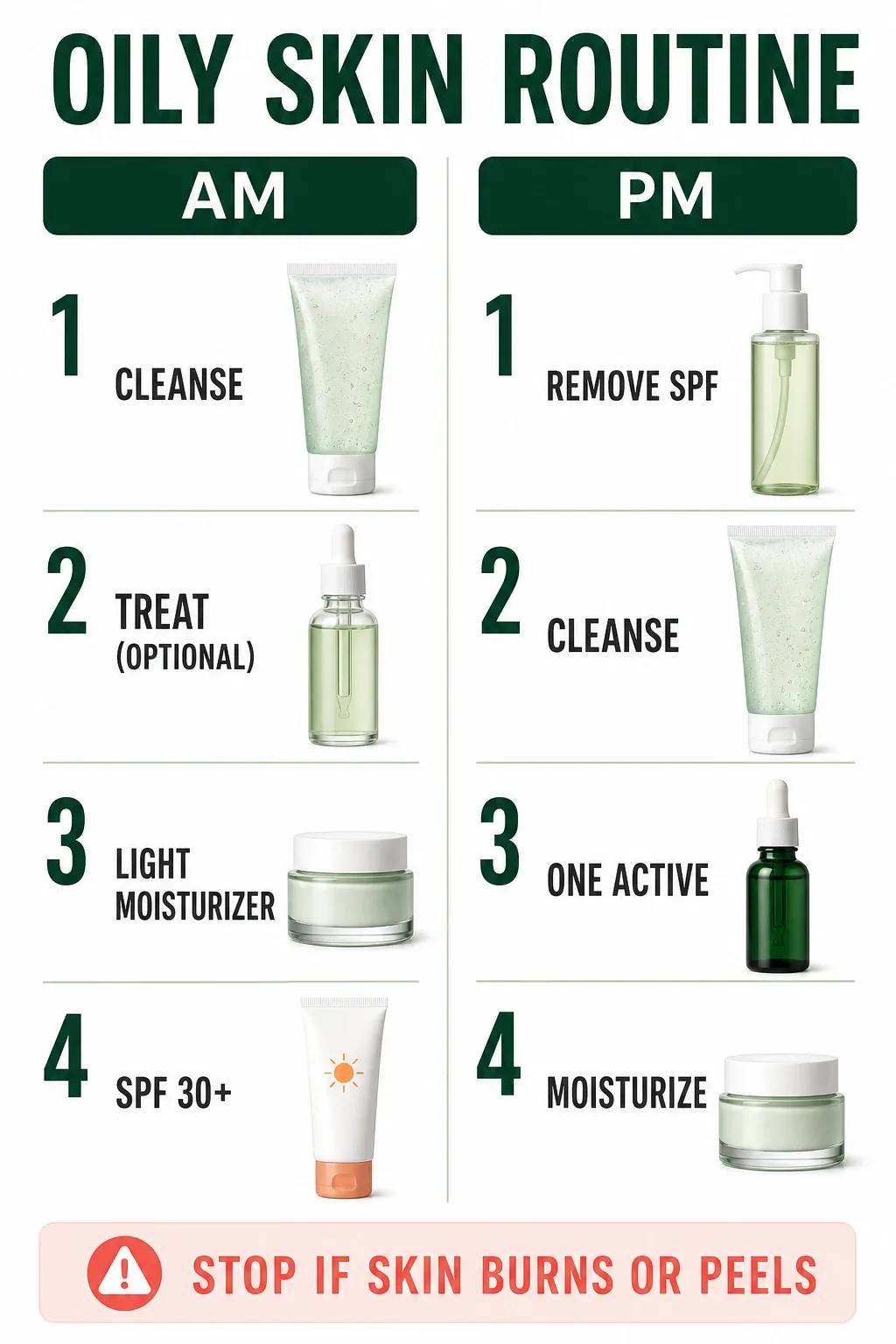
Keep it to four steps: cleanse gently, use one optional oil-control or acne treatment, apply a lightweight moisturizer, and finish the morning with broad-spectrum SPF 30 or higher. At night, remove sunscreen or makeup, cleanse, use only one active treatment, and moisturize. Do not stack salicylic acid, benzoyl peroxide, scrubs and retinoids just because skin looks shiny.
If diet seems to affect oil or breakouts, keep the routine stable and use the sugar-and-skin evidence guide to test one repeatable pattern instead of blaming one dessert.
The routine in 30 seconds
- Morning: gentle cleanser, optional niacinamide, light moisturizer, sunscreen.
- Evening: remove makeup or resistant SPF, cleanse, one targeted active, moisturizer.
- For blackheads: introduce salicylic acid two or three times weekly.
- For inflamed acne: choose an acne treatment plan instead of adding more oil-control products.
- If skin feels tight: reduce cleansing and actives before skipping moisturizer.
- Midday shine: blot rather than washing or scrubbing again.
Oily skin does not need to feel dry to be clean. The goal is to remove excess sebum, sunscreen and makeup while preserving enough comfort that you can use the routine consistently.
Choose oily-skin care by your own shine and comfort. Our men's vs women's skincare comparison explains how to separate study averages from your routine needs.
That distinction is where many older oily-skin routines fail. They treat shine as proof that the skin needs stronger cleanser, more toner and daily exfoliation. In practice, that approach often creates tightness, peeling and a routine that becomes impossible to evaluate.
The better strategy is decision-first: build a gentle base, identify whether the main problem is shine, clogged pores, inflamed acne or dehydration, and add one targeted step only when it has a clear job.
First, Is Your Skin Oily, Dehydrated or Combination?
Oily skin produces noticeable sebum across much of the face. Dehydrated skin lacks water and can feel tight while still looking shiny. Combination skin is usually oily through the forehead, nose and chin while the cheeks feel normal or dry.
These patterns can overlap. A person can have oily, acne-prone skin and still develop dehydration from cold weather, a harsh cleanser or several active ingredients. That is why product texture and skin comfort matter more than using the word "oil-free" as the only decision rule.
| What you notice | Most likely pattern | First adjustment |
|---|---|---|
| Shine across most of the face without tightness | Oily skin | Use light textures and blot midday; do not add extra cleansing |
| Shine plus tightness, stinging or fine surface flakes | Oily and dehydrated or irritated | Pause extra acids, use a gentler cleanser and moisturize |
| Oily T-zone with comfortable or dry cheeks | Combination skin | Use one light routine and add cream only to dry zones |
| Blackheads and whiteheads with persistent shine | Oily and congestion-prone | Introduce salicylic acid gradually |
| Painful or widespread inflamed breakouts | Possible acne requiring treatment | Use an evidence-based acne plan or seek professional advice |
Morning Skincare Routine for Oily Skin
The morning routine protects the skin and controls how layers sit through the day. Each step should dry down before the next one, especially if sunscreen or makeup tends to pill.
Cleanse gently
Use a mild gel or foaming cleanser with lukewarm water. Massage with fingertips for about 20 to 30 seconds and rinse thoroughly. Avoid brushes, rough cloths and repeated washing until the face feels tight.
If skin is comfortable and not greasy when you wake, a water rinse may be enough. If it is oily or you used a heavy overnight product, use cleanser. The AAD's oily-skin guidance emphasizes mild cleansing rather than harsh oil removal.
Add one optional treatment
Treatment is optional when shine is the only concern. A niacinamide serum in a simple formula can fit a morning routine, but a high percentage is not automatically better. If you already use a salicylic acid cleanser or prescription acne treatment, you may not need another active serum.
Apply a thin layer and stop if persistent redness, itching or burning develops. Readers with blackheads can compare our salicylic acid cleanser guide before deciding between a rinse-off and leave-on product.
Use a lightweight moisturizer
Choose a gel-cream or lotion that leaves the skin comfortable without a thick residue. Apply a small amount to slightly damp skin. Oily skin still benefits from moisturizer, especially when the routine includes salicylic acid, benzoyl peroxide, adapalene or another drying treatment.
The AAD explains that an acne-friendly moisturizer can improve treatment tolerance. If the face becomes shiny immediately, reduce the amount or choose a lighter texture rather than removing the step entirely.
Finish with broad-spectrum SPF 30+
Sunscreen is the final morning skincare step. Look for a fluid, gel or light lotion that dries down comfortably. Apply the labeled amount and let it settle before makeup.
Do not mix sunscreen with moisturizer, serum or face oil. Mixing changes the film and makes even coverage difficult. If a single heavy layer feels greasy, apply two thinner passes while still reaching the full labeled amount. Our sunscreen guide for oily skin compares current formulas by finish and wear.
Evening Skincare Routine for Oily Skin
The evening routine removes the day's film and creates room for one targeted treatment. It does not need to become a ten-step ritual.
Remove makeup and resistant sunscreen
If you wear makeup or a water-resistant sunscreen, remove it with micellar water, a cleansing balm or a cleansing oil that you already tolerate. This is a removal step, not proof that every oily skin type needs double cleansing every night.
When a normal cleanser removes the day's layers without residue, one cleanse is enough. For heavier makeup, compare our makeup remover guide and choose the least complicated format that does the job.
Cleanse without scrubbing
Use the same gentle cleanser as in the morning. If skin becomes tight after a double cleanse, use less remover, shorten contact time or return to a single cleanse on lighter days.
A cleanser should support the routine, not carry the full acne-treatment burden. Our oily-skin cleanser comparison separates gentle daily options from stronger active cleansers.
Choose one active for one concern
Use salicylic acid for recurring blackheads and clogged pores, benzoyl peroxide for inflamed acne when appropriate, or a retinoid-based plan for persistent acne or texture. Do not begin all three at once.
DermNet explains that topical salicylic acid helps reduce follicular clogging, but stronger or more frequent use can irritate healthy skin. Follow the label, keep it away from broken skin and reduce frequency when stinging or peeling persists.
Moisturize and stop there
Use a thin layer of the same lightweight moisturizer. Add a richer cream only to flaky zones if treatment makes them dry. You do not need a separate sleeping mask, facial oil and night cream unless each step solves a distinct problem.
If the barrier feels raw or products that once felt fine suddenly sting, pause optional actives and use our skin-barrier reset guide before introducing anything new.
Choose the Active by Concern, Not by Skin Type Alone
"Oily" describes sebum production; it does not identify the treatment your skin needs. Match the active to the problem you can actually see and keep the basic routine stable while you assess it.
| Main concern | Possible starting option | Starting rhythm | Reduce or stop if |
|---|---|---|---|
| Shine only | No active required; blot and use light layers | Daily base routine | Skin becomes tight from extra cleansing |
| Blackheads or clogged pores | Salicylic acid cleanser or leave-on | Two or three times weekly | Persistent stinging, peeling or redness |
| Inflamed pimples | Benzoyl peroxide wash or leave-on | A few times weekly at first | Painful dryness, swelling or cracking |
| Persistent acne and texture | Adapalene or professional treatment plan | Follow label or clinician guidance | Severe irritation or pregnancy-related uncertainty |
| Red marks after acne | Daily sunscreen; consider azelaic acid | Introduce one product slowly | Rash, burning or worsening sensitivity |
A 14-Day Oily-Skin Starter Plan
This reset is useful when the current shelf is crowded or the skin feels both greasy and irritated. It is not a promise to clear acne in two weeks; it creates a reliable baseline.
| Days | Use | Observe |
|---|---|---|
| 1 to 4 | Gentle cleanser, light moisturizer, morning SPF | Tightness after washing and midday shine |
| 5 to 7 | Keep the same base; adjust product amount only | Pilling, residue and dry zones |
| 8 to 10 | Add one active on one evening | Stinging, redness and the next-day feel |
| 11 to 14 | Repeat the active once if skin stayed comfortable | Whether the target concern changes without new irritation |
After day 14, increase frequency gradually only when the skin remains comfortable. Readers who tend to add too much too quickly can use our slow skincare routine as a longer introduction framework.
Shop the Oily-Skin Routine by Step
These links lead to SkinOptimizer's dedicated buying guides, where products are compared with direct Amazon links, product images, limitations and affiliate disclosure. Use one guide for the step you actually need rather than buying a full routine at once.
1. Choose a cleanser
Start with a gentle daily cleanser. Move to salicylic acid only when clogged pores justify an active wash.
Compare oily-skin cleansers2. Choose a moisturizer
Compare gels and light lotions by finish, barrier support and how well they sit under sunscreen.
Compare oily-skin moisturizers3. Choose a sunscreen
Use finish and wearability as the decision rule; the best sunscreen is one you can apply in a protective amount.
Compare sunscreens for oily skinHow to Control Midday Shine Without Restarting the Routine
Blotting paper is the simplest fix. Press it against oily areas for a few seconds and lift; do not rub it across the face. The AAD recommends blotting rather than spreading oil and friction over the skin.
If makeup separates, use less moisturizer, allow sunscreen more time to settle and apply thinner makeup layers. Do not wash the face at lunch unless sweat, dirt or another clear reason makes cleansing necessary.
Persistent shine is not evidence that sunscreen failed or that moisturizer is clogging pores. Change one amount or texture at a time. If the routine pills, check our guide to stopping skincare pilling before replacing every product.
Weekly Treatments: What Is Actually Optional?
A clay mask can absorb surface oil temporarily, but it is not required and does not shrink pores permanently. Use it only when it feels comfortable, keep the session short and skip it when the face is already irritated from acne treatment.
Scrubs, cleansing brushes and peel pads are also optional. They are poor additions when the weekly routine already contains salicylic acid, benzoyl peroxide or a retinoid. More exfoliation may create a smoother first hour and a more reactive next week.
Sheet masks and face oils are not standard oily-skin steps. Use them for a specific comfort or dry-zone need, not because a routine diagram says every category needs a product.
Common Oily-Skin Routine Mistakes
- Washing three or four times daily: extra cleansing adds irritation without changing genetics or hormones.
- Using alcohol-heavy astringent toner: a temporary dry feel can hide growing irritation.
- Skipping moisturizer: treatment-dry skin may become tight, flaky and harder to manage.
- Using an active cleanser plus an acid serum every day: duplicate exfoliation is easy to overlook.
- Adding every acne treatment at once: you lose the ability to identify the useful step.
- Buying only by a non-comedogenic label: the label narrows choices but cannot guarantee zero breakouts.
- Mixing sunscreen into other products: this makes even, labeled application unreliable.
For a complete routine built around congestion and breakouts, compare our non-comedogenic acne-prone product guide. It explains why the label is a filter, not a promise.
Adjust the Routine for Weather, Exercise and Makeup
In humid weather, reduce the amount of moisturizer before removing it entirely. In cold or air-conditioned environments, add a slightly richer lotion to the cheeks while keeping a gel texture through the T-zone.
After exercise, rinse or cleanse soon enough to remove sweat and sunscreen residue, then reapply moisturizer only if the skin feels tight. Reapply sunscreen when returning outdoors according to the product directions.
When wearing makeup, use water-based or oil-free textures if they perform better for you, but do not assume every oil ingredient causes acne. Remove makeup before bed and clean brushes regularly. The routine should remain recognizable on makeup and no-makeup days.
When Oily Skin Needs Professional Help
Oily skin itself is common and not a disease. Seek professional advice when acne is painful, cystic, scarring, widespread or not improving with a consistent over-the-counter plan.
A sudden major change in oil production, especially with other hormonal symptoms or medication changes, also deserves a qualified assessment. Persistent rash, swelling, severe burning or cracked skin is not a normal adjustment period.
The AAD's acne skin-care guidance recommends gentle, non-abrasive cleansing and sun protection alongside treatment. A clinician can help distinguish ordinary oiliness from acne, dermatitis or another condition that needs a different plan.
The Bottom Line
The best daily skincare routine for oily skin is not the driest or longest routine. It is a stable four-step base: gentle cleanser, one optional targeted treatment, lightweight moisturizer and morning sunscreen.
Use salicylic acid when clogged pores justify it, choose an acne treatment for inflamed breakouts and reduce actives when the face becomes tight or reactive. Shop one missing step at a time, give the routine a fair trial and judge success by comfort and the specific concern you wanted to change - not by whether the skin remains completely matte all day.
Frequently Asked Questions About Oily-Skin Routines
Should oily skin use moisturizer every day?
Yes. Oily skin can still become dehydrated or irritated, especially when a routine includes salicylic acid, benzoyl peroxide or a retinoid. Choose a light gel or lotion if creams feel heavy, and reduce irritating actives before deciding that moisturizer is the problem.
How often should I wash an oily face?
Cleanse up to twice daily and after heavy sweating. More washing is not automatically better. If the face feels tight, squeaky, hot or flaky after cleansing, switch to a gentler product or cleanse with water only in the morning.
Is salicylic acid necessary for oily skin?
No. It is most useful when oiliness comes with blackheads, whiteheads or clogged pores. Start a low-frequency salicylic acid product two or three times weekly and reduce use if persistent stinging, redness or peeling develops.
Can I skip sunscreen because it makes my skin greasy?
Do not skip sun protection. Try a lighter fluid or gel sunscreen, apply it in two thin layers and let moisturizer settle first. A separate lightweight sunscreen often feels better than one thick moisturizer-SPF hybrid.
How long does an oily-skin routine take to work?
Texture and comfort can improve within days, but clogged pores and acne usually need a longer, consistent trial. Keep the basic routine stable for two weeks before adding an active, then assess that active over several weeks unless it causes significant irritation.
A rinse-off mask is optional, not the foundation of oil control. The clay mask benefits and safe-use guide shows how kaolin or bentonite can reduce shine temporarily without detox claims, daily use or active-ingredient overlap.
A toner is optional even when skin is shiny. Before using an astringent, read the witch hazel evidence and irritation guide; it explains why temporary tightness is not pore shrinkage or long-term oil control.