Nighttime Skincare Routine: The Correct Order for Every Skin Type
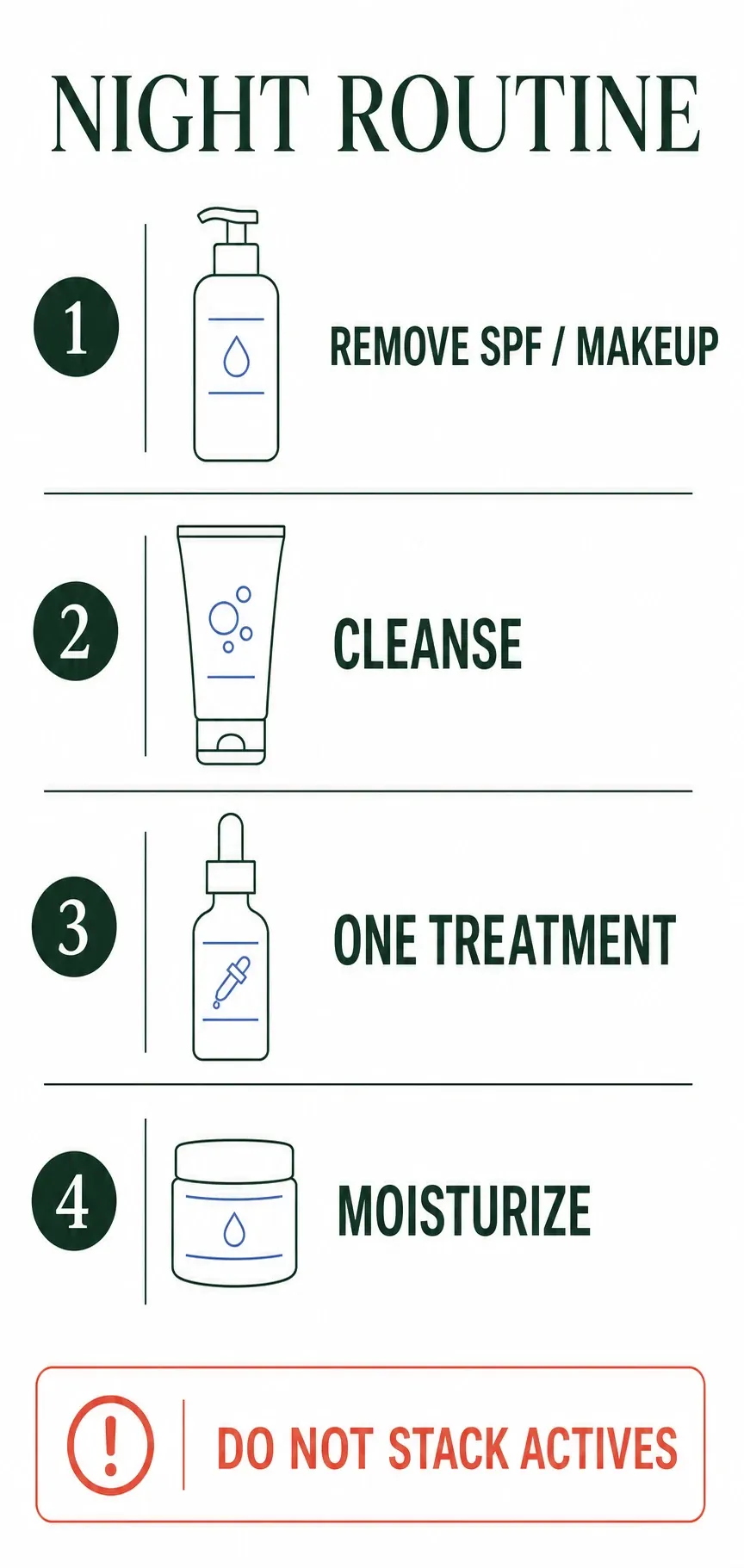
Follow the correct nighttime order: remove makeup and SPF, cleanse, use one targeted treatment and finish with moisturizer.

In this guide

The correct nighttime skincare order is remove makeup or resistant sunscreen when needed, cleanse gently, apply one targeted treatment and moisturize. Toner, eye cream, face oil and sleeping masks are optional categories, not required steps. Keep the routine short enough that you can identify irritation and use it consistently.
Quick Summary
- Remove makeup and water-resistant SPF before cleansing; one cleanse is enough when it removes the day's layers.
- Apply one treatment for one concern instead of stacking retinoids, exfoliating acids and acne products.
- Moisturizer is the final required step; eye cream, oil and sleeping masks are optional.
- Reduce active frequency when skin burns, becomes raw or starts peeling persistently.
The Four Jobs of a Night Routine
A useful night routine does not need a fixed number of products. It needs a clear sequence so removal products are rinsed away, treatments reach clean skin and moisturizer reduces avoidable dryness.
If your last step needs an upgrade, the night cream guide for aging skin explains when to choose retinol, ceramides or a richer moisturizer.
| Signal | Likely pattern | Best first adjustment |
|---|---|---|
| Makeup or resistant SPF remains | Remove | Micellar water, balm or cleansing oil |
| Sweat, oil and residue remain | Cleanse | One gentle water-based cleanser |
| One defined concern needs care | Treat | One active used at a tolerable frequency |
| Skin needs comfort and barrier support | Moisturize | Lotion, gel-cream or cream by skin need |
Removal And Cleansing
Night routines begin before the first product: decide whether the day created a removal problem. Makeup, water-resistant sunscreen and heavy layers may need a dedicated first step; a light day may not.
Remove makeup and resistant sunscreen
Use micellar water, cleansing balm or cleansing oil when one normal cleanser leaves pigment or a water-resistant film behind. Massage gently and follow the product directions; aggressive wiping around the eyes can create irritation before treatment even begins.
Cleanse the skin
Use a mild water-based cleanser with lukewarm water and fingertips. Twenty to thirty seconds is usually enough for the face. If the skin feels tight or squeaky afterward, choose a gentler cleanser or shorten the double-cleanse routine.
Pat dry and assess comfort
Do not wait for the face to become painfully tight before continuing. Pat with a clean towel and note whether redness, burning or flaking is already present; those signals should change the treatment decision for that night.
Pause when the barrier is irritated
When even water or bland moisturizer stings, skip optional actives. Use a simple moisturizer and reassess over several nights. A routine reset provides better information than covering irritation with another serum.
Treatment And Moisture
After cleansing, move from the thinnest necessary treatment to moisturizer. The order is less important than avoiding unnecessary overlap and following the directions of prescription products.
Apply one targeted treatment
Choose a retinoid for acne or texture, salicylic acid for recurring clogged pores, benzoyl peroxide for inflammatory acne or another evidence-based treatment for a defined concern. Begin at a low frequency and do not start several actives together.
Add a hydrating layer only if useful
A hydrating serum can help when moisturizer alone does not prevent tightness, but it is optional. Apply it before cream and stop using it if the formula adds fragrance, irritation or pilling without improving comfort.
Moisturize
Use a gel, lotion or cream based on how the skin feels after cleansing and treatment. Apply enough to remove tightness without forcing a heavy texture onto skin that dislikes it. Richer cream can be limited to dry zones.
Use optional finishing products selectively
Eye cream, face oil and sleeping masks belong after moisturizer only when they solve a separate problem. A normal facial moisturizer can often be used around the orbital bone, and an oil seals rather than replaces water-based hydration.
Build a Weekly Treatment Schedule
A night routine is easier to tolerate when active nights alternate with recovery nights. Frequency should respond to the skin, not to the number of products owned.
| Concern or product | Best use | Starting rhythm | Watch-out |
|---|---|---|---|
| Retinoid | Acne, fine lines or texture | One or two nights weekly | Do not combine with a new exfoliating acid |
| Salicylic acid | Blackheads and clogged pores | One or two nights weekly | Avoid on raw, peeling skin |
| Benzoyl peroxide | Inflamed acne | Targeted or label-directed use | Can dry skin and bleach fabrics |
| Recovery night | Comfort and barrier support | As often as needed | Cleanse and moisturize only |
Adapt the Order to Your Skin Type
Dry or sensitive skin
Use a creamy cleanser, fewer active nights and a richer moisturizer. Applying moisturizer before and after a retinoid can reduce direct exposure, but follow medical directions when using a prescription.
Oily or acne-prone skin
Choose lighter moisturizer and one acne treatment for the dominant concern. Do not assume oiliness protects against irritation; benzoyl peroxide, acids and retinoids can still damage tolerance when stacked.
Combination skin
Use one light base, apply pore-focused treatment to the T-zone and add cream to dry cheeks. The order stays the same while placement and amount change.
Turn the Four Steps Into a Weekly Schedule
The order can stay the same every night while the treatment step changes. Recovery nights are not empty nights; they allow the cleanser and moisturizer to do their jobs without another potential irritant. This is especially useful when retinoids, acids or acne treatment have made the routine hard to interpret.
Pregnancy changes the treatment step in this sequence. Use the pregnancy-safe morning and night routine to identify retinoids to avoid and review acne or dark-spot actives with your clinician.
| Night | Removal | Treatment | Finish |
|---|---|---|---|
| Monday | As needed, then cleanse | Retinoid or primary active | Moisturizer |
| Tuesday | As needed, then cleanse | Recovery: no active | Moisturizer |
| Wednesday | As needed, then cleanse | Salicylic acid only if needed | Moisturizer |
| Thursday | As needed, then cleanse | Recovery: no active | Moisturizer |
| Friday | As needed, then cleanse | Primary active if skin is comfortable | Moisturizer |
| Weekend | As needed, then cleanse | Recovery or targeted treatment | Moisturizer |
This is an example, not a universal prescription. A product label or clinician may require another rhythm, and very sensitive skin may need fewer active nights. Increase frequency only when the skin remains comfortable for several weeks.
Which Nighttime Products Can Be Combined?
Hydrating serum and moisturizer are usually compatible because both support water and comfort. Niacinamide also fits many routines, but a separate niacinamide serum is not required when the cleanser or moisturizer already contains it. More repetition does not guarantee a better result.
Retinoids and exfoliating acids can each cause dryness and irritation, so beginners should use them on separate nights. Benzoyl peroxide can also complicate a new retinoid routine. Establish one product first, follow its directions and ask a clinician how to combine prescription treatment.
Vitamin C is commonly used in the morning under sunscreen, which naturally separates it from a night retinoid. The guide on layering moisturizer and serum explains functional order, while the slow skincare plan provides a controlled introduction schedule.
Eye Cream, Face Oil and Sleeping Masks
Eye cream is optional. A fragrance-free facial moisturizer can often be used carefully around the orbital bone, avoiding direct contact with the eyes. Choose a dedicated eye product when its texture, applicator or ingredient profile solves a specific puffiness, dryness or pigment concern without causing irritation.
Face oil belongs near the end because it seals more than it hydrates. Press one or two drops over moisturizer on dry areas; do not expect oil alone to replace the water and emulsified ingredients in a lotion or cream. Acne-prone readers can review whether facial oils cause breakouts before adding one.
A sleeping mask is an occasional richer finish, not a required nightly category. If it performs the same job as moisturizer, choose one or the other. Keeping duplicate functions out of the routine reduces cost, pilling and the number of ingredients involved when a rash appears.
Troubleshoot Pilling, Tightness and Morning Grease
When products pill, use less serum and moisturizer, allow each layer to spread fully and stop rubbing repeatedly. Film-forming ingredients from several formulas can roll together even when the order is technically correct. The detailed pilling guide helps isolate the layer responsible.
When skin feels tight after the routine, examine cleansing first. Hot water, long massage and unnecessary double cleansing can remove more surface lipids than moisturizer replaces. Then review treatment frequency and add a richer moisturizer only if the earlier steps are already gentle.
When the face wakes greasy, reduce the amount of the final layer rather than skipping moisturizer automatically. A very occlusive mask or oil may be unnecessary, but treatment-related dehydration can also produce tight skin beneath surface shine. Change one amount for several nights and compare the result.
Night-Routine Myths
- “Skin repairs only before midnight.” Sleep supports health, but there is no universal cosmetic deadline that makes an 11 p.m. serum inherently better than the same routine later.
- “Every routine needs toner.” Toner is a product format, not a required biological step. Keep it only when its formula provides a distinct benefit.
- “More actives produce faster results.” Overlap can create irritation that delays consistent treatment and makes redness or texture look worse.
- “Night cream must be different from day cream.” A normal moisturizer can serve both periods when its texture works under sunscreen and provides enough night comfort.
- “Peeling is a normal goal.” Persistent raw peeling, burning and swelling mean the routine needs adjustment, not celebration.
Shop the Routine by Step
Buying guides should support one missing function, not turn the night routine into a shopping list. Start with removal, treatment or moisturizer based on the actual gap.
Choose a makeup remover
Compare micellar water, balms and cleansing oils for the first step.
Compare optionsChoose a retinol serum
Compare beginner and higher-strength retinoid options by routine fit.
Compare optionsChoose a barrier moisturizer
Compare moisturizers when treatment leaves skin tight or flaky.
Compare optionsCommon Mistakes That Make the Routine Harder
- Double cleansing every night even when one gentle cleanser removes the day's layers.
- Using toner as a mandatory step despite no clear benefit from the chosen formula.
- Applying retinoid, exfoliating acid and acne treatment in the same session.
- Waiting until skin is completely dry and tight before applying moisturizer.
- Assuming tingling, peeling or redness proves an active is working.
- Adding face oil before water-based products and then wondering why they apply unevenly.
- Changing the entire night routine after one breakout without tracking other variables.
When a routine becomes confusing, return to cleanser, moisturizer and morning sunscreen for several days. Then reintroduce one optional step at a time. The slow skincare method gives a longer reset framework, while the skin-barrier guide explains signs that irritation has overtaken the original concern.
When to Ask a Dermatologist
Seek professional advice for painful or scarring acne, persistent rash, swelling, blistering or sudden severe sensitivity. Skin that burns with water or bland moisturizer may need a simple recovery period and, if it does not improve, a qualified assessment. Prescription products, pregnancy and chronic skin conditions can change which treatments are appropriate.
How to Judge Whether the Routine Is Working
Define success before introducing another product. Comfort can change within days, while clogged pores, discoloration and fine lines usually need a longer observation window. Photograph the same areas in similar light and record burning, tightness, flakes, breakouts and product wear as separate signals instead of relying on a general impression.
Keep cleanser, moisturizer and sunscreen stable while testing one optional step. Note the date, amount, placement and frequency of the change. When several products change together, an improvement cannot be attributed confidently and an irritation trigger becomes much harder to identify.
Evaluate tolerability every morning after an active night. Mild temporary dryness may be manageable by lowering frequency, but persistent burning, swelling, painful cracking or a spreading rash is a stop signal. Do not increase strength merely because the first application did not produce a visible sensation.
At four to six weeks, compare the specific concern that motivated the change. A successful routine should be repeatable, comfortable and affordable enough to maintain; a product that creates a short cosmetic effect while repeatedly destabilizing the rest of the routine has not earned its place.
Also check whether the routine fits real mornings and evenings. A theoretically perfect sequence that is skipped when work runs late is less useful than a shorter version used consistently. Keep the essential steps visible, store optional treatments separately and write their weekly rhythm on the package or calendar to prevent accidental overlap.
The Bottom Line
The best nighttime skincare routine is not the one with the most categories. Remove what the day left behind, cleanse without stripping, use one treatment for one concern and moisturize. Optional products can stay when they earn their place, but the four-step structure should remain clear enough to repeat and troubleshoot.
If you are deciding between two similar rinse-off products, use the cleanser versus face wash comparison to choose by formula, daily layers, and post-rinse comfort.
Frequently Asked Questions
What is the correct nighttime skincare order?
Remove makeup or resistant sunscreen, cleanse, apply one targeted treatment and finish with moisturizer. Hydrating serum can sit before moisturizer; oil or a sleeping mask goes last when needed.
Do I need to double cleanse every night?
No. Double cleansing is useful when one cleanser does not remove makeup, resistant sunscreen or heavy layers. If a single gentle cleanser leaves skin clean and comfortable, a second cleanse adds little value.
Can I use retinol and exfoliating acid on the same night?
Beginners should generally separate them because both can irritate skin. Establish tolerance to one product first, alternate nights and follow professional directions for prescriptions.
Is toner necessary at night?
No. Toner is optional and should solve a specific problem. A routine can be complete with cleanser, one treatment and moisturizer.
How long should I wait between nighttime products?
Usually only long enough for the previous layer to spread and stop feeling very wet. Longer waits are rarely necessary unless the product directions or a clinician specify them.