Cleanser vs Face Wash: What's the Difference and Which Should You Use?
A formula-first guide to choosing cleanser or face wash by skin type, routine and post-wash comfort.

In this guide
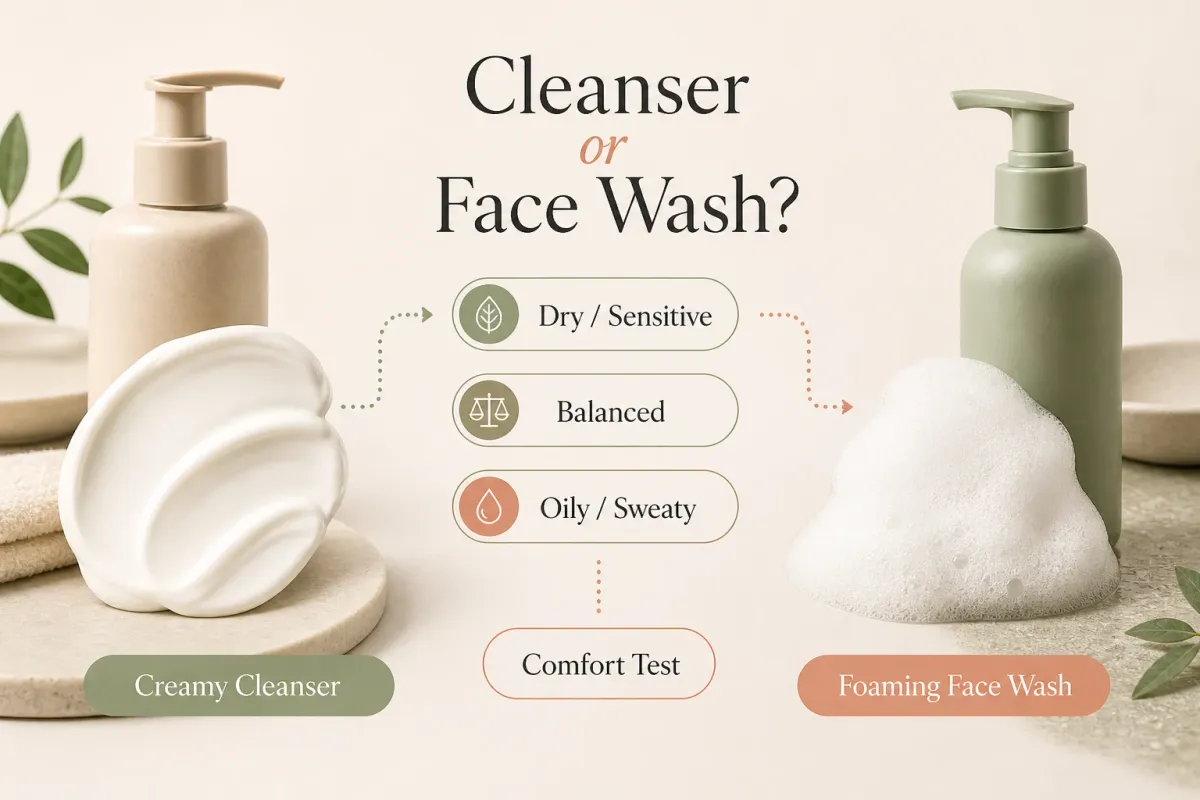
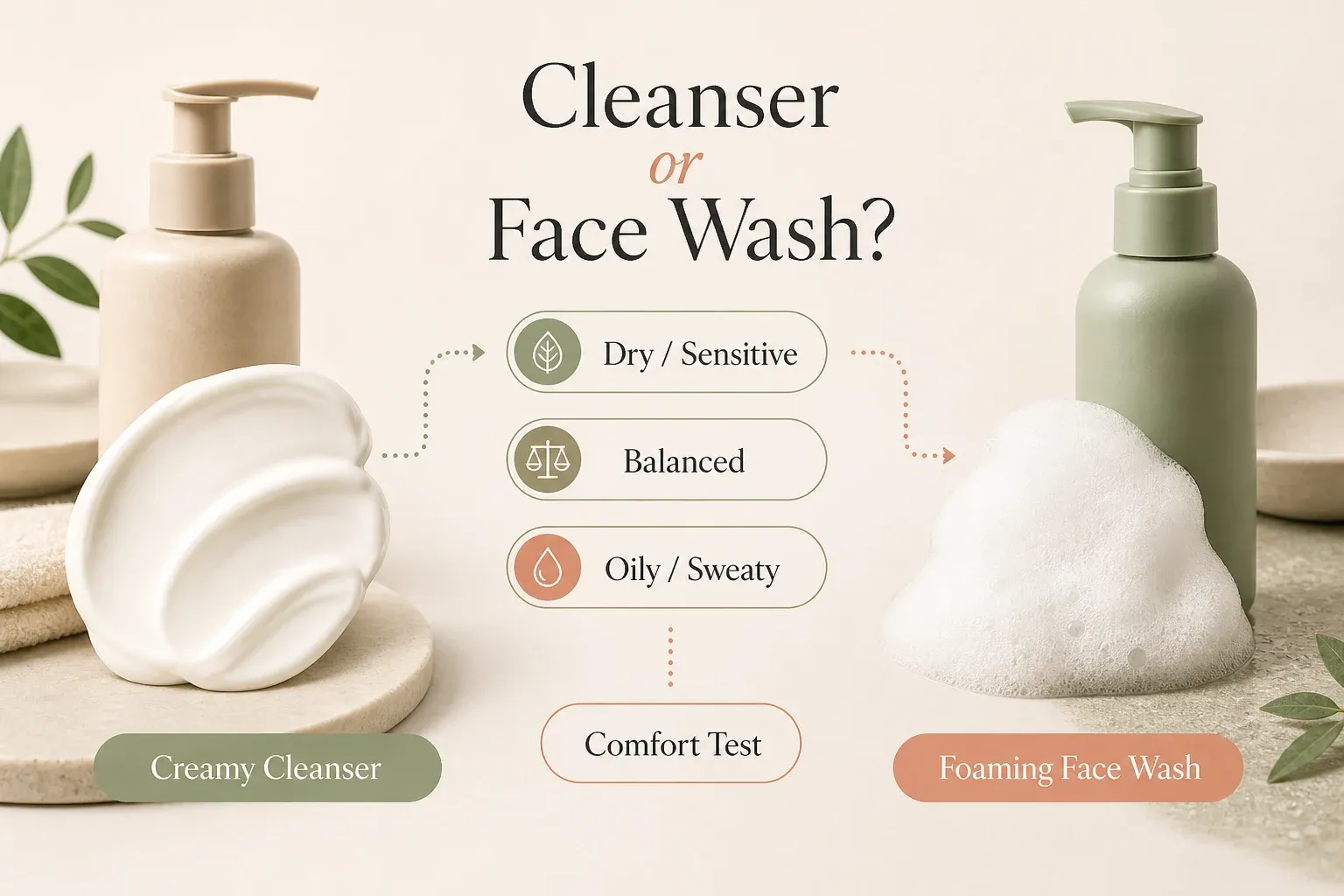
Quick Answer: Cleanser and face wash are not regulated formula categories, so the name on the front label does not reliably tell you how gentle or powerful a product will be. In everyday beauty language, “cleanser” often describes a creamier or lower-foam formula, while “face wash” often describes a foaming gel. But either one can be mild or stripping. Choose by the full formula, the job you need it to do, and how your skin feels about ten minutes after rinsing. Comfortable skin that is clean but not tight is a better signal than abundant foam.Quick Summary
- Cleanser is the broad category; face wash is usually a marketing name for a rinse-off facial cleanser.
- Dry or reactive skin often prefers cream, lotion, or low-foam formulas, but texture alone is not a guarantee.
- Oily skin needs effective removal, not a squeaky finish. Over-cleansing can create irritation without solving oil production.
- Use one suitable water-based cleanser unless makeup, water-resistant sunscreen, or heavy grime creates a clear need for a first cleansing step.
Find your answer faster
Compare the labels, choose by skin situation, or skip to the practical cleansing method.
See the Difference Choose by Skin Type Use It Correctly See Two ExamplesOpen the Full-Size Cleanser GuideEditorial Note: SkinOptimizer is an editorial skincare resource, not a dermatology practice. We compare current labels, ingredient roles, routine logic, and reputable sources. We do not claim to have personally tested these products, and this guide does not diagnose skin conditions.
Cleanser vs face wash sounds like a choice between two clearly different products. In reality, the labels overlap. A bottle called a cleanser can foam. A bottle called a face wash can be fragrance-free and gentle. Both generally use surfactants to loosen oil, sunscreen, makeup residue, sweat, and particles so water can carry them away.
The useful question is not “Which word is better?” It is “Which formula removes what I need without leaving my skin tight, hot, itchy, or coated?” That shifts the decision away from marketing and toward a repeatable comfort test. It also prevents a common mistake: assuming dry skin must avoid every gel or oily skin must use the strongest foam available.
Cleanser vs Face Wash: What Is the Real Difference?
“Cleanser” is the wider term. It can include creams, lotions, gels, oils, balms, micellar waters, powders, bars, and foaming liquids. “Face wash” usually refers to a water-based product made to be massaged over wet skin and rinsed. In shops and search results, the face-wash label often appears on gel or foaming formulas, but there is no universal rule forcing brands to use the terms consistently.
| What you see | What it often means | What to verify |
|---|---|---|
| Facial cleanser | A broad rinse-off or wipe-off cleansing product | Texture, surfactants, fragrance, active ingredients, directions |
| Face wash | Often a foaming gel or liquid used with water | Whether the foam feels comfortable and removes your actual daily layers |
| Cream or lotion cleanser | Usually lower foam with a conditioned finish | Whether it rinses clean enough for your sunscreen, makeup, and skin preference |
| Acne wash | A cleanser containing an active such as salicylic acid or benzoyl peroxide | Active concentration, frequency, irritation risk, and other acne treatments |
The DermNet overview of soaps and cleansers explains that cleansing systems differ in pH, surfactant type, and irritation potential. A review of soap and synthetic detergent cleansers likewise describes why formula design matters more than a simple product name. This is the evidence-based reason to treat front-label terminology as a clue, not a verdict.
The Skin Insider
Foam is a sensory cue, not a cleanliness score. A high-lather product can feel satisfying while removing more surface lipids than your routine requires. A low-lather cleanser can still remove daily oil and particles. Judge the result after rinsing: clean, flexible, calm skin is the target.
How Cleansers Actually Remove Oil, Sunscreen, and Debris
Water alone does not mix efficiently with oily material. Surfactants solve that problem because parts of each molecule interact with water while other parts interact with oils. During cleansing, these molecules help surround and disperse sebum, product residue, and grime so they can be rinsed away. That useful action can also interact with proteins and lipids in the outer skin layer, especially when the formula is harsh, contact time is long, water is hot, or cleansing is repeated.
A face wash is therefore not automatically “deeper” than a cleanser. Removal depends on the complete cleansing system, concentration, massage time, water temperature, and what is sitting on the skin. A gentle cream cleanser may remove light daily sunscreen well but struggle with a water-resistant formula. A mild foaming wash may remove sweat and oil effectively without leaving tightness. The post-wash result matters more than the category stereotype.
Surfactant system
Determines how the product lifts oils and how strongly it interacts with the skin.Texture and foam
Change spread, rinse feel, and user preference, but do not prove gentleness by themselves.Added actives
Salicylic acid or benzoyl peroxide changes an everyday cleanser into a treatment-adjacent step with more irritation potential.Your technique
Hot water, scrubbing, and repeated washing can make a reasonable formula feel harsh.
Which Is Better for Your Skin Type?
Skin type is a starting point, not the entire decision. Climate, retinoid use, acne treatments, shaving, eczema, rosacea, makeup, sunscreen, and recent over-exfoliation can all change what feels comfortable. A person with naturally oily skin may temporarily need a very gentle cleanser while using a drying acne treatment. Someone with dry skin may still need a more capable first cleanse on days with water-resistant sunscreen.
| Skin situation | Best first experiment | Watch for |
|---|---|---|
| Dry, tight, or easily stinging | Fragrance-free cream, lotion, or low-foam cleanser once nightly | Tightness, burning, flaking, or a need to “rescue” skin immediately |
| Oily without irritation | Mild foaming cleanser once or twice daily as needed | Squeaky feel, rebound discomfort, or combining too many acne actives |
| Combination | One mild gel or low-foam cleanser over the whole face | Using separate harsh products on the T-zone without a clear reason |
| Acne-prone and sensitive | Gentle base cleanser; add an active wash only for a defined acne goal | Stacking an acne wash with leave-on acids and retinoids too quickly |
| Heavy makeup or resistant SPF | Oil or balm first, then a mild water-based cleanser if residue remains | Scrubbing to make one unsuitable cleanser do both jobs |
Dry or sensitive skin: prioritize the comfort test
If your skin feels tight before you reach for moisturizer, the cleanser may be too aggressive, the water may be too hot, or you may be washing more often than needed. Start with a fragrance-free, low-lather formula and use a small amount. Our dedicated guide to the best cleansers for dry and sensitive skin provides a more detailed texture and product decision path. If sensitivity is persistent, the broader sensitive-skin routine helps simplify the steps around cleansing.
Oily skin: remove excess, not every trace of comfort
A foaming face wash can be practical when the skin is oily, sweaty, or exposed to humid conditions. The goal is not to make the face feel rigid. If oil is your main concern, compare options in our face cleanser guide for oily skin. If breakouts are also present, use the decision rules in the acne-prone cleanser guide rather than assuming stronger foam treats acne.
Normal or combination skin: choose the simplest adequate formula
Most balanced routines do not need a cream cleanser in the morning and a separate face wash at night merely because both categories exist. One mild cleanser that removes the day's layers and leaves both cheeks and T-zone comfortable is usually the more efficient choice. Change the routine only when the current product leaves residue, causes tightness, or fails during a specific use case.
The Optimizer's Edge
Run a ten-minute test for one week. After rinsing, apply no product for ten minutes unless your skin is very dry or medically compromised. Notice tightness, stinging, redness, greasy residue, and whether sunscreen or makeup remains. This short observation is more useful than guessing from “cleanser” or “face wash” on the bottle.
Do You Need Both a Cleanser and a Face Wash?
Usually, no. Using two water-based cleansers in sequence often duplicates the same job. Double cleansing is more logical when the first product is oil-based or balm-based and is used to dissolve makeup or resistant sunscreen, while the second is a mild water-based cleanser used to remove remaining residue. Even then, a second cleanse is optional if the first product rinses cleanly and the skin feels comfortable.
Readers who regularly wear long-wear makeup can compare cleansing balms and cleansing oils. Those formats are not automatically better; they simply solve an oil-soluble removal job efficiently. If you wear only light moisturizer and non-resistant sunscreen, one appropriate water-based cleanser may be enough.
Use two steps only when the second step solves a remaining problem:
- Visible makeup or tinted sunscreen remains after the first rinse.
- A water-resistant sunscreen leaves a persistent film.
- An oil or balm cleanser leaves a residue you dislike.
- Your skin tolerates the sequence without tightness or burning.
How to Use a Cleanser or Face Wash Without Overdoing It
The American Academy of Dermatology's face-washing guidance recommends a gentle, non-abrasive cleanser, lukewarm water, fingertips instead of abrasive tools, and limiting routine washing to twice daily and after heavy sweating. Those basic technique choices can matter as much as moving from one product label to another.
- Wet with lukewarm water. Very hot water can increase discomfort and dryness.
- Use fingertips. A brush, rough cloth, or aggressive scrub adds friction without making a daily cleanser more intelligent.
- Massage briefly. Cover the face evenly for roughly 20 to 30 seconds unless an active product label gives different directions.
- Rinse thoroughly. Pay attention around the hairline, nose, and jaw.
- Pat, do not rub. Apply moisturizer while skin is slightly damp when dryness is a concern.
Washing in the morning is optional for some dry or reactive routines. A water rinse may be enough if the skin is comfortable and there is no overnight product that needs removal. At night, cleansing is more consistently useful because it removes sunscreen, makeup, oil, and daily debris. Our nighttime skincare order shows where cleansing fits before treatment and moisturizer.
Two Formula Examples for Different Jobs
These are examples, not universal winners. Compare the current ingredient list and directions before buying because formulas and packaging can change.
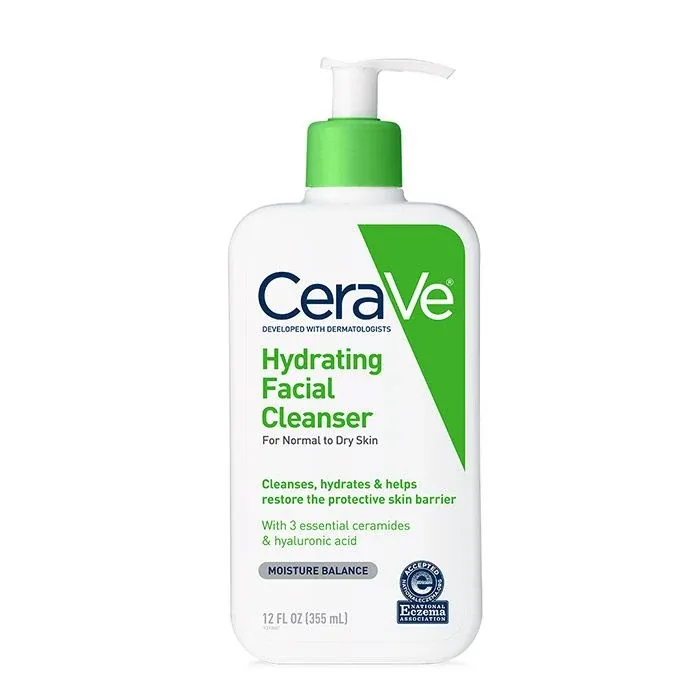
CeraVe Hydrating Facial Cleanser
Who it fits: normal-to-dry skin wanting a fragrance-free, non-foaming rinse.
Why it fits: It is a straightforward lotion-cleanser example for readers who dislike abundant foam.
Watch-out: The conditioned finish may feel too lotion-like for oily skin and may not remove resistant makeup alone.
View Hydrating Cleanser on Amazon
CeraVe Foaming Facial Cleanser
Who it fits: normal-to-oily skin wanting a fragrance-free foaming wash.
Why it fits: It demonstrates that a face wash can offer foam without relying on a harsh scrub.
Watch-out: Naturally dry, retinoid-irritated, or over-exfoliated skin may prefer a lower-foam option.
View Foaming Cleanser on AmazonAs an Amazon Associate, we earn from qualifying purchases. Product availability, labels, and prices can change.
Common Cleanser and Face-Wash Mistakes
| Mistake | Why it fails | Better move |
|---|---|---|
| Choosing by foam alone | Lather does not measure gentleness or removal quality | Compare formula, use case, and post-wash comfort |
| Using an acne wash for every concern | More active cleansing can compound dryness from leave-on treatments | Keep a gentle base cleanser and use actives deliberately |
| Scrubbing off resistant sunscreen | Friction can irritate before the product dissolves | Use an oil or balm first when needed |
| Changing several products together | You cannot identify what improved or irritated the skin | Test one cleanser consistently for one to two weeks |
If a new cleanser causes persistent burning, swelling, hives, cracked skin, or a worsening rash, stop using it. A simple routine can support comfort, but it cannot diagnose allergic contact dermatitis, eczema, rosacea, or another condition. Seek qualified care when symptoms are severe, spreading, painful, or not improving.
What About pH-Balanced and Soap-Free Claims?
These labels can be useful clues, but they still require context. Traditional soap is generally alkaline, while many modern facial cleansers use synthetic detergent systems that can be formulated closer to the skin's naturally acidic surface. “Soap-free” tells you that traditional soap is not the cleansing base; it does not tell you the exact pH, surfactant concentration, fragrance content, or how your skin will respond.
Similarly, “pH-balanced” has little value without a stated range and a formula that remains comfortable in use. Do not buy a cleanser only because one number appears in marketing. A low-pH face wash with multiple exfoliating acids can still be too active for a damaged barrier. A cream cleanser without a public pH value may still feel excellent. Treat pH as one variable beside removal ability, fragrance, actives, frequency, and the ten-minute comfort test.
Your Clear Skin Checklist
- Ignore the marketing label until you have checked texture, fragrance, actives, and directions.
- Match removal power to sunscreen, makeup, sweat, and oil rather than chasing maximum foam.
- Use lukewarm water, fingertips, short contact, and no scrub tools.
- Reassess after ten minutes: comfortable, flexible skin is the target.
- Change one routine variable at a time and stop if irritation persists.
Readers balancing an oily T-zone with drier cheeks can continue with our decision guide to the best cleansers for combination skin.
Final Takeaway
The cleanser-versus-face-wash debate becomes simpler once you stop treating the labels as scientific categories. Both products clean through a formulated surfactant system. The best option is the mildest formula that reliably removes your real daily layers and leaves your skin comfortable. Start with one suitable cleanser, use better technique, and add a separate first cleanse only when makeup or resistant sunscreen gives it a clear job.
Frequently Asked Questions About Cleanser vs Face Wash
Is cleanser the same as face wash?
Face wash is generally a type of facial cleanser. Beauty brands often use “face wash” for foaming gels and “cleanser” for creamier products, but the terms are not applied consistently. Compare the formula and directions.
Which comes first, cleanser or face wash?
Most routines need only one water-based product. If you double cleanse, an oil or balm cleanser usually comes first to dissolve makeup or resistant sunscreen, followed by a mild water-based cleanser only if residue remains.
Can I use a cleanser instead of face wash every day?
Yes, if it removes your daily sunscreen, makeup, oil, and debris without leaving uncomfortable residue. A product does not need the words “face wash” to work as the routine's daily cleansing step.
Is face wash better for oily skin?
A mild foaming wash can suit oily skin, but stronger foam is not automatically better. Choose enough removal power for oil and sweat while avoiding tightness, burning, or excessive active ingredients.
How often should I wash my face?
Many people do well with cleansing at night and, when useful, in the morning or after heavy sweating. Dry or reactive skin may prefer a water rinse in the morning. Persistent irritation deserves professional advice.
This article is for informational purposes only and does not replace professional dermatological advice.