Rosewater for Skin: Benefits, Limits and How to Use It
Rosewater can be a pleasant facial mist, but it is not an acne or wrinkle treatment. See the realistic benefits, risks and best use.
In this guide
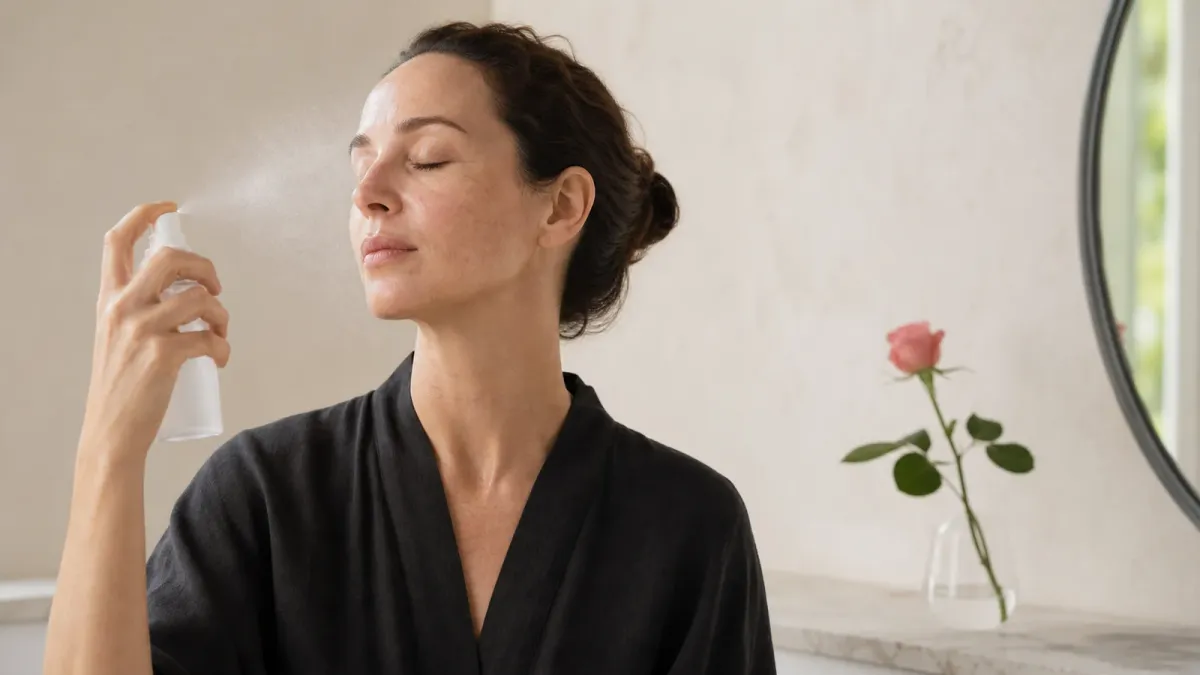
Rosewater can lightly dampen and refresh skin, especially before moisturizer, but it does not reliably treat acne, shrink pores or reduce wrinkles. Check the full formula for fragrance, alcohol, glycerin and essential oils. Patch test if your skin is sensitive, and stop for itching, swelling, rash or persistent burning.
Quick Summary
- Use rosewater as an optional mist, not a treatment step.
- Apply moisturizer afterward when dryness is the problem.
- Rosewater, rose essential oil and rosehip oil are different ingredients.
- Fragrance-sensitive or reactive skin may do better without it.
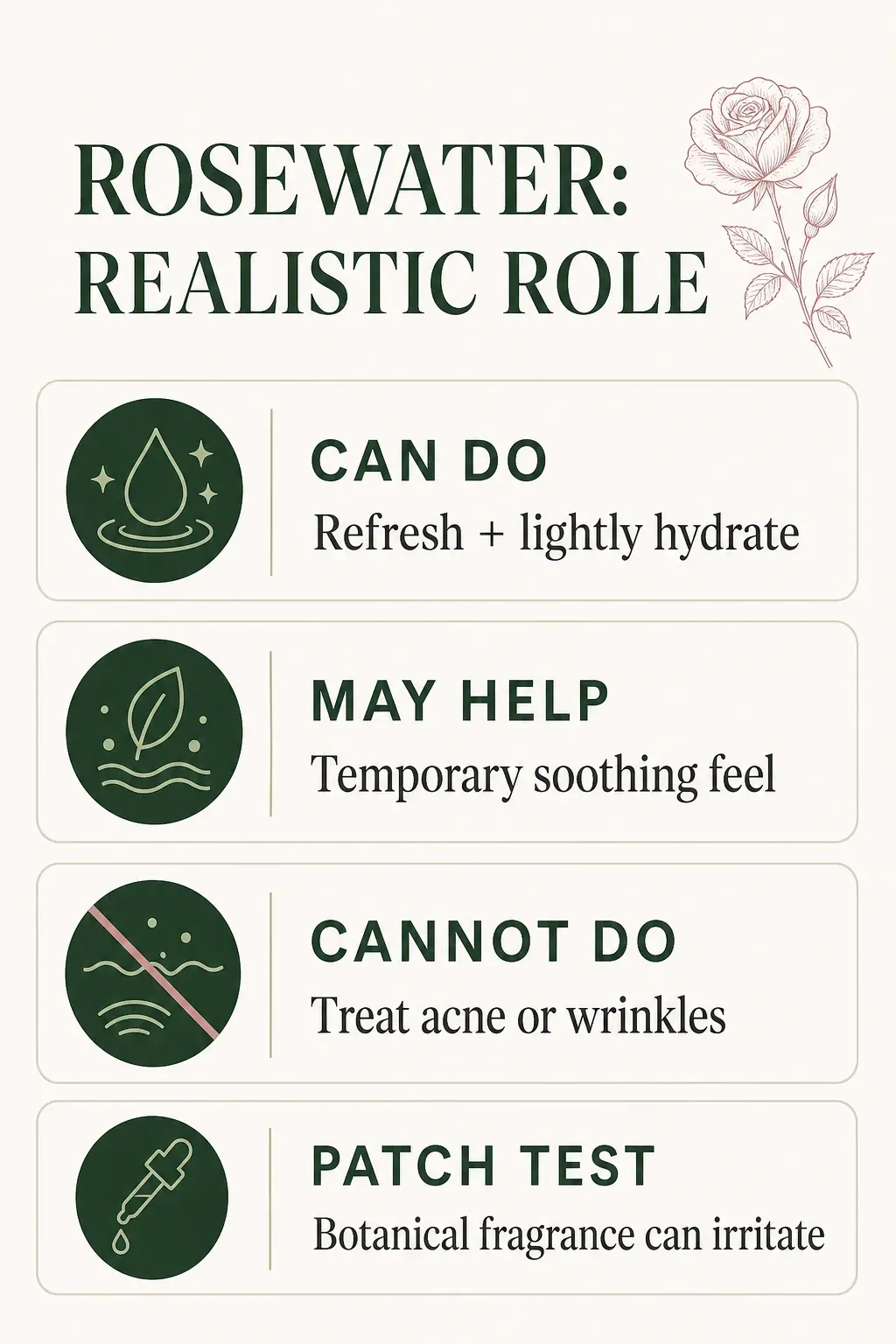
What Rosewater Can Realistically Do for Skin
Rosewater is a fragrant botanical water used in mists and toners. It can make skin feel refreshed, lightly damp and temporarily comfortable. It is not an evidence-based acne treatment, wrinkle treatment, pore shrinker or replacement for moisturizer and sunscreen.
That distinction corrects the biggest problem in the legacy article. Rosewater is often credited with every benefit associated with roses, antioxidants or hydration, even when the finished mist contains mostly water and fragrance components. A pleasant sensory step can still be useful, but it should earn its place through comfort and enjoyment rather than medical promises.
| Claim | Realistic verdict | Better tool when needed |
|---|---|---|
| Refreshes dry-feeling skin | Yes, briefly | Apply moisturizer to damp skin for lasting comfort |
| Soothes the feel of heat | May feel cooling | Treat persistent redness by cause |
| Hydrates all day | Not by itself | Use glycerin or a complete moisturizer |
| Clears acne | No reliable evidence | Use established acne treatments |
| Shrinks pores or wrinkles | No | Use sunscreen and goal-specific treatment |
The published clinical literature on Rosa damascena includes traditional uses and studies of rose oil, but it does not establish a simple facial rosewater mist as a treatment for acne or photoaging. A review of clinical evidence for rose oil covers several uses, yet rose oil is chemically and functionally different from a highly diluted flower water.
The Cosmetic Ingredient Review safety assessment discusses Rosa damascena-derived ingredients and reported irritation or sensitization evidence. Safety in permitted cosmetic use does not mean every fragranced botanical suits every sensitive face.
Rosewater, Rose Oil and Rosehip Oil Are Different
Rosewater
Rosewater is the aromatic water produced during distillation or a cosmetic water scented with rose-derived material. It is usually used as a mist, toner base or sensory ingredient. Its direct moisturizing effect is limited unless humectants such as glycerin are added.
The Heritage Store formula discussed below lists water and natural Rosa damascena flower extract fragrance. The brand positions it as a refreshing mist. That is a more defensible role than claiming it treats acne, rebuilds collagen or permanently balances skin pH.
Rose essential oil
Rose essential oil is a concentrated volatile oil. It has a different chemical profile and a greater fragrance-allergen concern than a simple floral water. Do not apply undiluted essential oil to the face or assume that natural fragrance is automatically gentle.
People with eczema, fragrance allergy, rosacea-like reactivity or a history of contact dermatitis should be especially cautious. Our redness and rosacea routine guide prioritizes bland, fragrance-free steps when flushing and burning are active.
Rosehip seed oil
Rosehip seed oil is pressed from the fruit or seeds of rose plants. It behaves like a facial oil, not like a water mist. It can provide emollient fatty acids, but it does not hydrate by adding water and it is not interchangeable with rosewater in a recipe.
The facial oil guide explains which oils soften the surface and why they usually belong after water-based steps. The facial oils and breakouts guide covers acne-prone use without labeling every oil comedogenic.
How to Use Rosewater Without Replacing Essential Steps
| Routine position | How to use it | What comes next |
|---|---|---|
| After cleansing | Mist lightly or press on with clean hands | Apply serum or moisturizer while damp |
| Before makeup | Use a fine, even mist | Let excess droplets settle before base products |
| Midday refresh | Mist only if the formula stays comfortable | Do not rely on it as sun protection |
| After irritation | Usually skip fragranced mist | Use a bland moisturizer and identify the trigger |
For dry skin
A water-only mist evaporates. If the skin feels tight, apply a cream shortly after misting so the added water is not the entire routine. A glycerin-containing facial mist may retain water better, but it still does not replace the emollient and occlusive roles of a moisturizer.
Use the hydration versus moisturization guide to separate adding water from reducing water loss. The dry-skin moisturizer guide compares creams and body-focused treatments when a mist is not enough.
For oily or acne-prone skin
Rosewater does not dissolve clogged pores or reduce acne-causing bacteria in a proven treatment plan. A fine mist can be an optional sensory step, but it should not replace salicylic acid, benzoyl peroxide, adapalene or professional treatment when those are appropriate.
Fragrance can also complicate a routine that already includes active acne treatment. If the face stings after benzoyl peroxide or retinoid use, remove optional mist before adding another soothing product. The acne serum guide matches active ingredients to breakout type.
For sensitive skin
Patch test on a small area beside the jaw or behind the ear for several days. A single comfortable spray does not rule out delayed contact dermatitis. Stop if itching, swelling, persistent burning or an expanding rash appears.
The AAD's home patch-testing guidance recommends repeated use on a small test area before full application. It also notes that fragrance and botanical ingredients can trigger reactions in susceptible skin.
A product described as hypoallergenic can still contain a personal trigger. When the barrier is already reactive, choose the sensitive-skin barrier reset before introducing a scented botanical.
One Rosewater Product With a Clear Optional Role
This guide includes one product because several nearly identical rosewater mists would create false choice. The pick is for someone who specifically enjoys a rose-scented refresh step and understands that it is not an acne or anti-aging treatment.
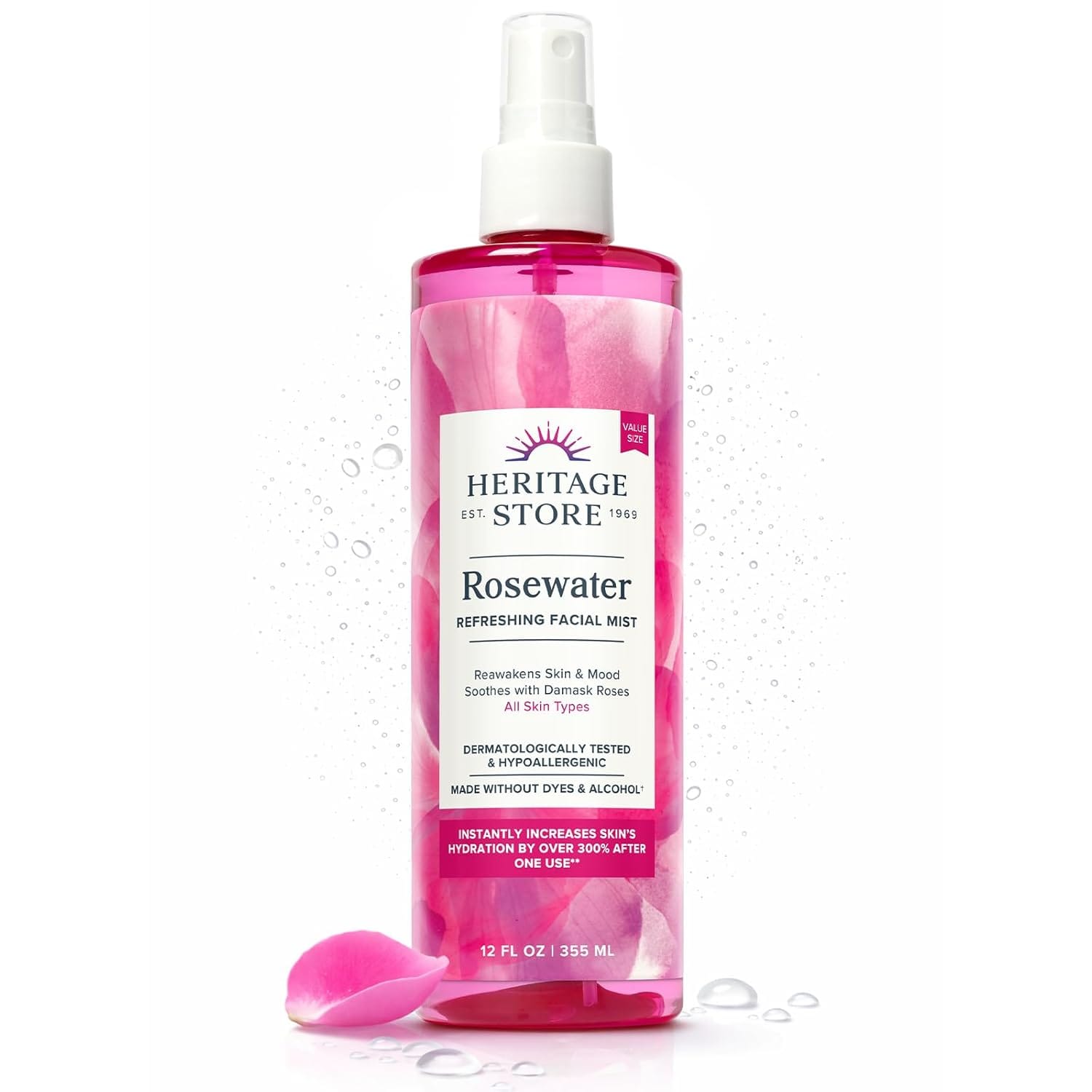
Heritage Store Rosewater Facial Mist
Someone who enjoys a simple rose-scented mist before moisturizer or as an occasional sensory refresh.
The brand's current ingredient list is short and the product has a clear mist role rather than pretending to be a complete treatment.
Watch-out: It contains rose-derived fragrance. Patch test, avoid when fragrance triggers reactions and do not use it instead of moisturizer or SPF.
View on AmazonAs an Amazon Associate, SkinOptimizer may earn from qualifying purchases. Prices, sellers and availability can change.
The current Heritage Store product page lists the formula and directions and describes the product as a refreshing facial mist. Verify the current seller, size and package ingredients on Amazon because listings and formulas can change.
Benefits That Come From Added Ingredients, Not Rosewater Alone
Glycerin is a humectant that can help a mist retain moisture at the surface. Hyaluronic acid can also add water-binding capacity. Niacinamide can support barrier function and uneven tone in a complete formula.
When a rosewater product contains these ingredients, attribute the role accurately instead of giving every benefit to rosewater. A mist with glycerin is not evidence that rosewater itself is a strong humectant.
Alcohol changes the experience in the other direction. A high-alcohol toner may feel cool and fast-drying but can worsen tightness or irritation. Essential oils and added perfume create more fragrance variables.
Preservatives are necessary in water-based products; their presence is not evidence that a product is harsh. The relevant question is whether the complete preserved formula remains comfortable and safe during its intended shelf life.
Read the ingredient list from top to bottom and identify the product's main jobs. A mist with water, glycerin and rose fragrance is primarily a light humectant mist. A cream with niacinamide, ceramides and rose extract is primarily a moisturizer.
A rosehip oil is an emollient oil. The plant family does not make these formats interchangeable in a routine.
Can Rosewater Help Redness?
A cool mist can temporarily feel soothing, but redness has many causes. Heat, irritation, acne, rosacea, allergic contact dermatitis and eczema require different responses. A scented product can worsen some of those problems even when the first spray feels refreshing.
If redness is persistent, painful, itchy or accompanied by swelling or scale, stop experimenting and seek qualified advice. Use a bland cleanser, fragrance-free moisturizer and sunscreen while the cause is clarified. Do not repeatedly mist a rash to keep it wet.
Botanical laboratory studies cannot be translated directly into a claim that a retail rosewater spray treats inflammatory skin disease. Formula concentration, delivery and human clinical outcomes matter. The evidence gap is a reason for modest language, not a reason to fill the gap with tradition.
Can Rosewater Help Acne or Pores?
There is no good reason to call rosewater a pore cleanser or pore shrinker. Pores do not open and close like doors. Oil, keratin buildup, elasticity and lighting affect how visible they look.
A temporary astringent feel is not structural pore reduction. Our pore-size guide explains realistic appearance changes.
For blackheads and congestion, salicylic acid has a more relevant mechanism. For red inflamed pimples, benzoyl peroxide may fit. For recurring comedones, adapalene can be discussed with a clinician or pharmacist.
Rosewater can remain in an acne routine only when it does not irritate and does not crowd out treatment. Remove it first when the routine becomes complicated, because it is optional. Keep moisturizer and sunscreen before preserving a scented mist.
Can Rosewater Help Fine Lines?
Any water-based mist can make a dry surface look slightly plumper for a short time, especially when followed by moisturizer. That is not collagen remodeling. Rosewater should not be compared with retinoids or sunscreen as an anti-aging active.
The fine-line routine guide separates temporary dehydration lines from expression lines and photoaging. If anti-aging is the goal, allocate the budget to daily sunscreen, a comfortable moisturizer and a tolerable retinoid when appropriate.
Antioxidant compounds identified in a plant do not prove that a dilute mist changes wrinkles in people. Product-specific concentration, stability and controlled outcomes would be needed. Until then, describe rosewater as sensory care rather than treatment.
DIY Rosewater: Why Homemade Is Not Automatically Safer
Water-based homemade products can support microbial growth when they lack a validated preservative system. A pleasant smell and clear appearance do not show that a mixture is microbiologically safe. Refrigeration slows some growth but does not validate a cosmetic formula.
Adding essential oil introduces another problem because oil does not disperse evenly in water without a solubilizer. Concentrated droplets can contact the skin. If you want a facial mist, a properly preserved commercial formula with a readable ingredient list is the safer practical route.
Do not use kitchen rosewater intended for food unless the label also supports facial use and the complete ingredients suit your skin. Flavor ingredients, color or storage conditions may differ from a cosmetic mist.
Packaging matters after opening. Keep the nozzle clean, close the cap and discard the mist if the smell, color or spray pattern changes unexpectedly. Do not refill a cosmetic bottle with homemade liquid because residue and the pump mechanism are difficult to sanitize reliably.
A travel decant also shortens traceability. If you decant for short-term use, label the product and date and avoid sharing the bottle. The original package preserves the ingredient list, lot information and directions if a reaction occurs.
Common Rosewater Mistakes
- Treating it as moisturizer: water alone evaporates and does not supply enough emollient or occlusive support.
- Using it on a fragrance reaction: rose-derived scent can add another trigger.
- Calling it acne treatment: refreshment is not evidence of follicular treatment.
- Expecting pore tightening: temporary sensation does not change pore structure.
- Mixing essential oil into water: undispersed droplets create concentrated exposure.
- Keeping homemade mist for weeks: a water product needs validated preservation.
- Layering repeated sprays over sunscreen: rubbing or wetting can disturb the protective film.
The Bottom Line
Rosewater can be a pleasant, lightly hydrating facial mist when the formula suits your skin. It cannot reliably treat acne, shrink pores, rebuild collagen or replace moisturizer and sunscreen. Use it before moisturizer or as an occasional refresh, patch test scented formulas and remove it first if a sensitive routine becomes reactive.
Frequently Asked Questions
What are the real benefits of rosewater for skin?
Rosewater can lightly dampen the surface, feel cooling and add a pleasant sensory step. Lasting hydration usually requires humectants and a moisturizer, and treatment claims for acne or wrinkles are not established.
Can rosewater help acne?
Rosewater is not an established acne treatment. It may remain as an optional mist if it does not irritate, but salicylic acid, benzoyl peroxide, adapalene and professional care have clearer treatment roles.
Can rosewater shrink pores?
No topical mist permanently shrinks pores. A temporary clean or tight feeling can change appearance briefly, while oil, congestion, elasticity and lighting affect pore visibility.
Should sensitive skin use rosewater?
Only with caution. Rose-derived fragrance can irritate some people, so patch test for several days and skip the product during an active flare or known fragrance reaction.
Do I use rosewater before or after moisturizer?
Use it before moisturizer so the cream can trap some of the water. Spraying it over moisturizer can still feel refreshing, but it adds less to the hydration structure of the routine.